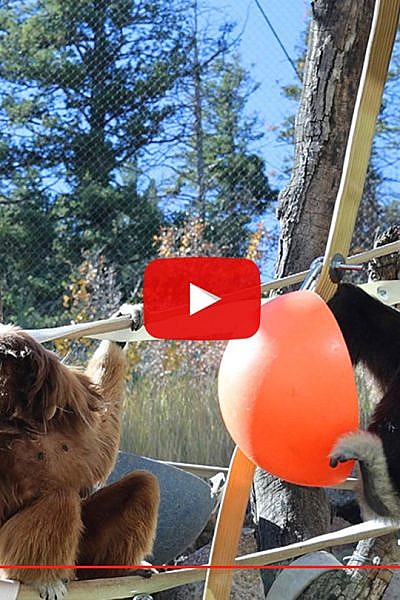

IN PARTNERSHIP WITH CHILDREN’S HOSPITAL COLORADO – Two new fluffy faces are getting to know each other and learning the ropes in Primate World! Meet Keoki (pronounced key-OH-key) and Holmes, CMZoo’s new lar gibbons. While they’ve settled in since their arrivals in August and September, their CMZoo care team has been helping them adjust to their new home.
Similarly, CMZoo’s year-round partner, Children’s Hospital Colorado, offers research-backed tips to help parents and caregivers nurture resilience in their own children. Read more from their child psychologist here: https://www.childrenscolorado.org/just-ask-childrens/articles/resilience-in-children/.
Keoki and Holmes are growing in confidence as they explore new spaces, engage with enrichment and participate in training together, building positive relationships with each other and their care team along the way.
Eight-year-old female lar gibbon, Keoki, arrived at CMZoo in August, and seven-year-old male lar gibbon, Holmes, joined her in September. The two recently started sharing space and quickly took an interest in each other. Since Keoki arrived first, she’s been helping Holmes settle in exploring his new home.
The arrivals of Keoki and Holmes support the Gibbon Species Survival Plan, helping to manage a diverse and healthy population in human care while inspiring gibbon preservation for their wild counterparts. Lar gibbons usually live in small family groups made up of a bonded pair and their offspring — and these two have a breeding recommendation!
Lar gibbons, also known as white-handed gibbons, are endangered primates native to the tropical forests of Indonesia, Laos, Malaysia, Myanmar and Thailand. Similar to orangutans, lar gibbons are impacted by unsustainable palm oil production, which has led to deforestation and the loss of their natural habitat. When produced sustainably, palm oil is the most productive edible oil available. Oil palms – the trees that palm oil comes from – produce four to ten times more oil than alternatives like soy, olive, canola and coconut. Switching to these alternatives would cause even more deforestation in tropical areas.
Luckily, you can help save their rainforests from the comfort of your own smartphone. Download the World Association of Zoos and Aquariums (WAZA) free mobile smartphone app, PalmOil Scan, from the Apple App Store or Google Play today. Next time you go shopping, just open your app, scan a product’s barcode, and see how that company ranks. If they haven’t committed to sustainable palm oil, consider instead supporting a similar company that has. This app was developed under the direction of WAZA, and is managed in North America by Cheyenne Mountain Zoo. PalmOil Scan is available in the United States, Canada, the United Kingdom, Singapore, Australia and New Zealand.
Download the app today and learn more at cmzoo.org/palmoil — and stop by to welcome Holmes and Keoki next time you’re at CMZoo!