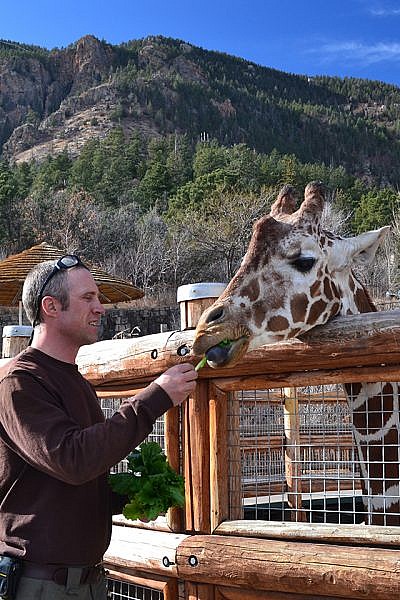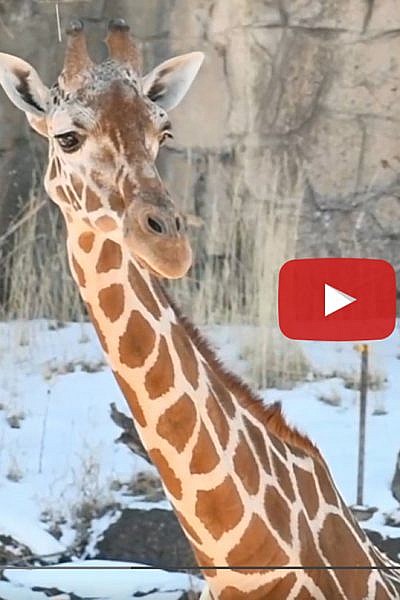
Have you experienced the magic of CMZoo in the winter yet? Some people think there’s less to see and do at the Zoo in the cooler months, but the CMZoo giraffe tower stays busy all year long, regardless of the weather.

Thanks to Colorado’s famous 300 days of sunshine, the 17-member herd explores its outdoor spaces more often than you might think. One member, Ohe, seems to like the additional natural snow ‘enrichment,’ while others get lots of yummy browse and lettuce snacks from guests.

When they’re indoors, keepers get creative with enrichment activities and spend time training the giraffe for husbandry behaviors, like hoof care. Guests can feed the herd from inside their warm barn, too, so there’s no excuse for leaving the Zoo without making a memorable connection with a new tall friend.

We’re open all year, so come and see for yourself! Advance tickets are required: cmzoo.org/visit.

Back to The Waterhole
 

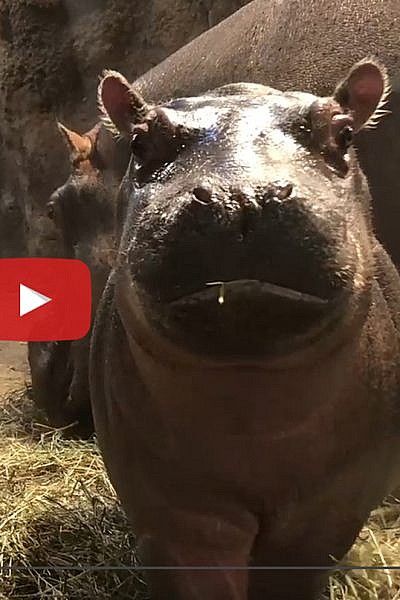
It has been six months of Omo goodness, so we’re taking a little trip down memory lane AND showing you some new up-close Omo footage. Spoiler alert: incoming Omo window boops.

From watching Zambezi embrace motherhood for the first time with such a gentle nature to seeing Omo wild out in the pools, and every nap, plop and ear wiggle in between, it’s been a joy sharing these two with you all. Happy six-month birthday, Omo!

Back to The Waterhole
 

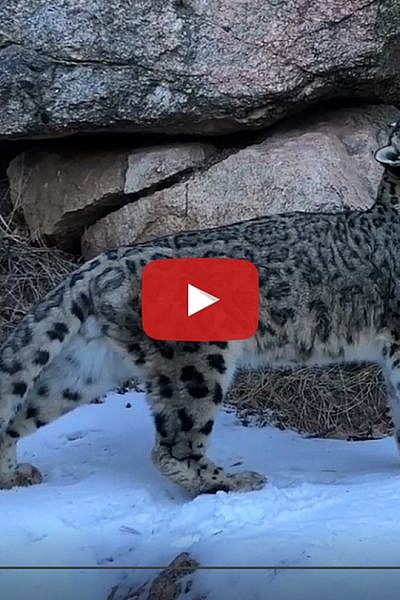
Join Bhutan, our 13-year-old snow leopard, and his keepers for snow day enrichment and training! Learn about Bhutan’s personality, his favorite scent-masking seasoning, which husbandry behaviors he’s working on, and how Bhutan is contributing to the future of his species. Make sure your volume is up to hear Bhutan’s impressive growls during his training session.

Snow leopards’ wild populations are listed as ‘vulnerable,’ according to the International Union for the Conservation of Nature’s (IUCN) Red List. Bhutan’s genetics are extremely valuable to the Snow Leopard Species Survival Plan, but he prefers a life with plenty of his own space, so traditional breeding isn’t in his future. Bhutan’s sperm is valuable because he doesn’t have offspring and has an extremely high sperm count. His sperm has been collected and is kept in a ‘frozen zoo.’ If the need arises, conservationists can pair Bhutan with a genetically valuable female snow leopard without having to involve Bhutan.

Back to The Waterhole
 

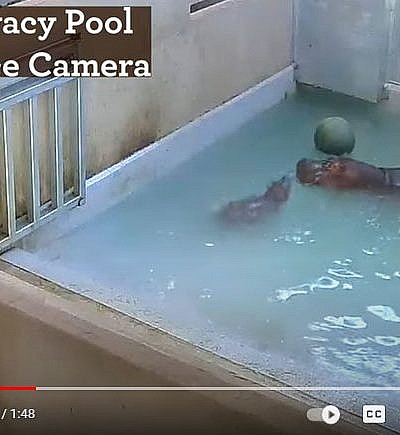
CMZoo’s four hippos have access to multiple indoor and outdoor climate-controlled pools, grassy yards, a waterfall and indoor land areas, which they take turns sharing. Omo and Zambezi chose to spend time in their privacy pool the other day, and the adorable duo had quite the pool party!

Surveillance camera footage caught 5-month-old Omo jumping, splashing, playing with floating enrichment and climbing on Zambezi. 29-year-old Zambezi, Omo’s mom, gets in on the fun, too, encouraging him to ‘chase’ her in the water and having her own fun with the floaties.

Learn more about Omo here: https://www.youtube.com/playlist?list=PLUd9bK-IbrIMxpwuRlrLaZfU4fFwB9cPG

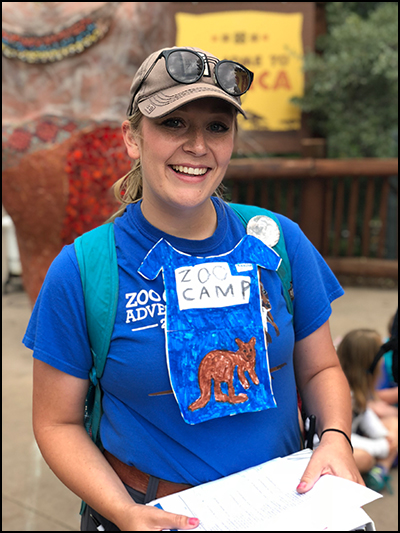
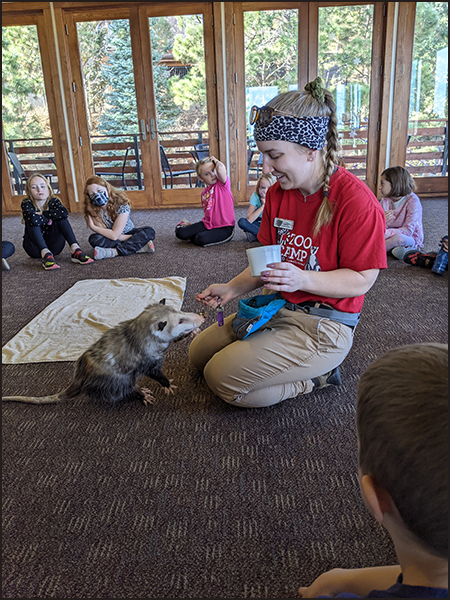
Winter break is coming to an end, and that means spring break will be here before you know it. Spring Break Zoo Camp registration is open now at cmzoo.org/camp. Young explorers from first to sixth grade can sign up now for fun (and educational) opportunities with Cheyenne Mountain Zoo.
Spring Break Zoo Camp is from 9 a.m. to 4 p.m. daily, March 21-25, 2022. Campers can sign up for one day, or all five! Each day features new activities, so campers who attend for multiple days will have unique animal experiences every day.

This year’s Spring Break Zoo Camp theme is Incredible Innate Behaviors! Innate behaviors are unlearned, instinctual acts, like geese migrating or opossums ‘playing dead.’ The animal world is full of incredible actions that animals are born to do. Come discover how these almost involuntary acts help animals throughout the wild world!

Campers should sign up for the camp that reflects the grade they are currently enrolled in. All camps include hands-on experiences, up-close animal encounters, games, and more every single day! Register for the whole week, or just a few days. Camps will fill up fast, so don’t delay.

Space is limited, so visit www.cmzoo.org/camp to register your campers today!

Back to The Waterhole
 

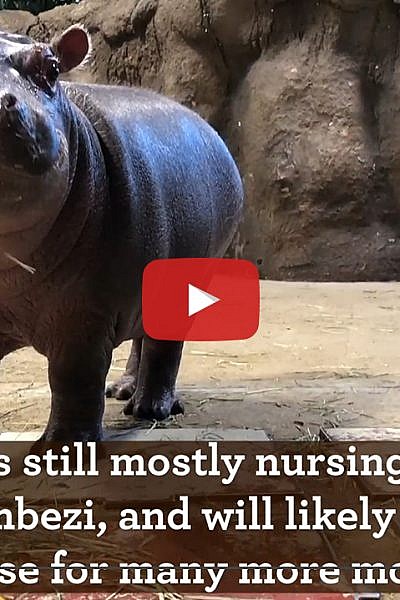
December was a big month for CMZoo’s smallest hippo. He just broke the 300-pound mark! Five-month-old Omo is consistently eating solid foods now, but he’ll continue nursing for several months to come. He’s also getting more confident, showing he’s comfortable around new enrichment items, like big boxes and boomer balls.

Omo is also meeting his neighbors. Watch as he says hello to common warthogs, Alexander and Penelope, through a fence, and gets nose-to-nose with his aunt, Kasai.

Back to The Waterhole


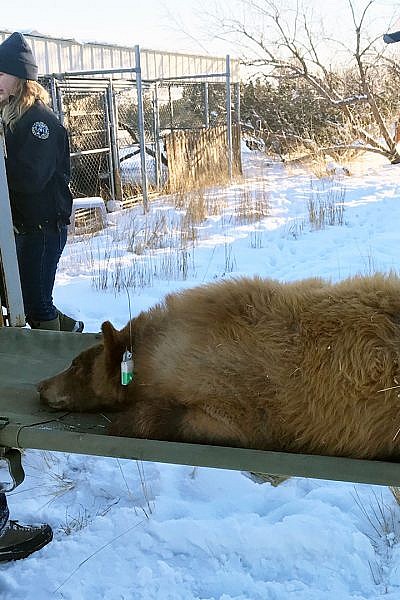
It’s officially winter, when many people wonder if Emmett and Digger, CMZoo’s grizzly bears, go into hibernation. The short answer is no, but it’s a more complicated topic than some might expect. Scientists continue to study seasonal animal dormancy and are finding that animals experience a wide spectrum of behavioral and physiological changes in the winter months.

Various states of dormancy, including torpor or hibernation, are caused by seasonal changes including less sunlight, lower ambient temperatures and reduced food availability in the wild. But, animals in human care can also experience seasonal changes, even though they have plenty of food and shelter available. When animals go into these dormant states, their body temperatures, heart rates, metabolisms and respiratory rates are reduced. Generally, they slow down.

“Although bears have become the poster children of hibernation in popular culture, bear experts maintain that not all bears hibernate,” said Kelsey Walker, Rocky Mountain Wild keeper. “Wild bears naturally slow down to conserve energy, since they don’t have regular access to food. Even with consistent access to food, our boys experience changes each winter, so dormancy could be an adaptation developed over generations of bears surviving in the wild, and it has to do with more than food availability. Like I said, it’s complicated.”

Emmett and Digger sleep more and eat less during the winter months, even though they have access to warm dens and plentiful food year-round. Still, they stay pretty active during the winter, and continue training with their keepers and exploring their multi-yard exhibit and pond.

“In the winter, they will still interact with us, but they expect higher rewards for participation,” said Courtney Rogers, lead keeper in Rocky Mountain Wild. “What seems like a tasty snack during the summer isn’t worth the effort in the winter. I’ve seen Emmett and Digger square up over a single blueberry in the summer. In the winter, we can toss them a whole fresh trout and if it doesn’t land in their mouths, they don’t want it right away.”

Keepers say Emmett and Digger still play-wrestle, splash in their pond, and train in the winter months, but in a less energetic way. To maintain a good relationship while their normal food rewards aren’t as interesting to the grizzles, the keepers give them extra-rewarding items, like salmon.

“We want to make sure they’re still mentally stimulated while their bodies are in a more restful state, so we give the bears opportunities for mental stimulation, through training and enrichment options, while their bodies rest,” said Walker. “If you’ve seen them in the summer, you’ve got to come out and watch them in the winter. Although they slow down a bit, they’re as captivating as ever and guests can see them snuggling together, training with us or investigating enrichment items all winter long.”

Back to The Waterhole
 

The Loft is now home to three domestic ferrets! Nine-month-old female domestic ferret, Cyclone, has joined Alfred Pennyworth and Harley Quinn at CMZoo. Watch as Cyclone enjoys one of her favorite enrichment activities: a ball pit!

Cyclone has lighter fur than Harley. Her markings are similar to Alfred’s, except her nose is black, as his is pink. Next time you’re at CMZoo, swing by The Loft to say hello to this energetic trio!

Back to The Waterhole


Keepers recently noticed Anja, a 5-month-old ring-tailed lemur pup, appeared to be consistently clenching her hands. The extremely energetic little lemur didn’t appear to be having any mobility issues as a result, but because lemurs use their hands to grip trees and move around, keepers wanted to keep a close eye on her. She was keeping up with her twin brother, Elo, and older half-brother, Maky, just fine.

“Once Anja gained independence and wasn’t spending most of her time clinging to her mom, we noticed she wasn’t opening her hands all the way,” said Grace Sullivan, Water’s Edge: Africa keeper. “She’s constantly leaping around with her brothers, so we’re not concerned about her well-being, but if there’s something we can do now to help her avoid any potential future limitations, of course we want to do that.”

Water’s Edge: Africa keepers and CMZoo’s veterinary staff teamed up to check on little Anja, and didn’t see any injuries or unusual bone structure. There’s no formal diagnosis at this point, but it appears she has tight ligaments.

After consulting with a veterinary sports medicine and rehabilitation specialist, her team built a physical therapy routine for Anja. The routine has similar goals as the exercises prescribed by physical therapists at Children’s Hospital Colorado’s Sports Medicine Center, partners of CMZoo.

“During her therapy, we ask Anja to hold onto a wooden pole and then we turn the pole slightly so her fingers open up,” said Sullivan. “She’s really smart, and she loves the training rewards she receives during the sessions, so she’s usually eager to participate.”

Anja doesn’t appear to experience discomfort during these training sessions and keepers have seen some improvement in her range of motion since starting the therapy in mid-November. Keepers do this behavior with Anja three times a week.

In addition to training, the team added some obstacles to Lemur Island that encourage her to stretch those tight ligaments as she moves around throughout the day. There’s a series of bamboo poles attached perpendicularly to another pole, which the lemurs have all enjoyed exploring. The poles are a wider circumference than other climbing opportunities on Lemur Island, so Anja’s fingers get a good stretch while she navigates, as has fun at the same time.

“The lemurs also share a new rope hammock made of thick ropes set far apart,” said Sullivan. “It’s enriching for all of the lemurs to explore these new items, but we’re especially happy to see Anja using them successfully.”

The team will continue working with Anja to gain flexibility in her fingers.

“We talk about how there’s always a balance when you’re addressing any potential struggles an animal might face,” said Sullivan. “We want to make sure Anja is okay, but we don’t want to go too far with treatments or diagnostics if she can clearly do all of the lemur things she needs to do with her hands as they are. Her hands might just be another thing that make this little one so special, in the long run. For now, we’re seeing the exercises help, so we’ll keep doing them.”

Back to The Waterhole
 

ANNUAL HOLIDAY LIGHTS CELEBRATION CONTINUES THROUGH SATURDAY, JANUARY 1, 2022 – USA TODAY 10Best Readers’ Choice Awards today announced that Cheyenne Mountain Zoo’s Electric Safari ranked third in the national Best Zoo Lights category for the third year in a row. This is the sixth year running that Electric Safari has ranked in the top ten.

Cheyenne Mountain Zoo’s 31st annual month-long celebration of the season continues through Saturday, Jan. 1 (except Christmas Eve, Friday, Dec. 24), featuring 50 acres of twinkling lights, 60 artisan-made light sculptures and breathtaking nighttime city views. New this year, giant illuminated animal inflatables, including a 30-foot tall inflatable giraffe duo, add to the holiday celebration.

Electric Safari wouldn’t be complete without visiting select animal exhibits. Electric Safari offers paid feeding opportunities with CMZoo’s famous giraffe herd and budgie flock. Water’s Edge: Africa, the giraffe barn, the elephant and rhino barn, the African lion relaxation room, Rocky Mountain Wild (except grizzly bears), Asian Highlands, Scutes Family Gallery and Budgie Buddies are open.

Advance e-tickets are required for members and the general public, and they are going fast! Members and their accompanying paying guests are granted early admission with a reserved ticket from 4 to 5 p.m. Admission closes at 7:30 p.m. Electric Safari ends at 8:30 p.m. Some entry times and nights are sold out; check availability and reserve tickets now at cmzoo.org/electric.

Electric Safari is supported by our partners at Children’s Hospital Colorado, Colorado Springs Pediatric Dentistry, Raising Cane’s Chicken Fingers, U.S. Bank and your Colorado Springs Toyota dealers. For more information, visit: cmzoo.org/electric.

About Cheyenne Mountain Zoo

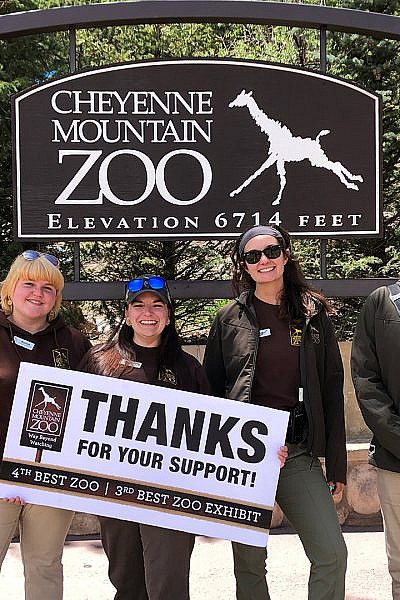
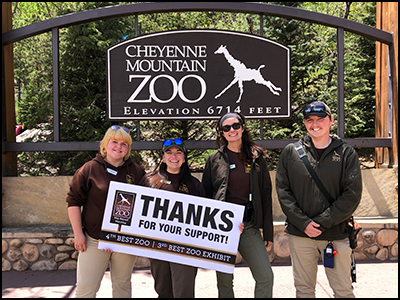
Cheyenne Mountain Zoological Society was founded in 1926. Today, Cheyenne Mountain Zoo, America’s mountain Zoo, offers comprehensive education programs, exciting conservation efforts and truly fantastic animal experiences. In 2021, Cheyenne Mountain Zoo was voted #4 Best Zoo in North America and CMZoo’s Rocky Mountain Wild was named #3 Best Zoo Exhibit in North America by USA TODAY 10Best Readers’ Choice Awards. It is Cheyenne Mountain Zoo’s goal to help guests fall in love with animals and nature, and take action to protect them. Of the 242 zoos and aquariums accredited by the Association of Zoos and Aquariums (AZA), Cheyenne Mountain Zoo is one of just a few operating without tax support. Cheyenne Mountain Zoo depends on admissions, membership dues, special event attendance and donations for funding.