Although Water’s Edge: Africa’s opening date hasn’t been set, Cheyenne Mountain Zoo is steadily preparing to welcome home Zambezi (zam-BEE-zee) and Kasai (kuh-SIGH), two female Nile hippopotamuses who are taking an extended vacation at Dickerson Park Zoo, in Springfield, Missouri. They moved there in 2016 to allow us to build a new state-of-the-art exhibit for them.

Patty Wallace, Water’s Edge: Africa lead animal keeper, worked with Zambezi and Kasai for six years at Cheyenne Mountain Zoo. Wallace spent five of those years as their primary trainer. She is excited for guests to get to know the girls again and to see them in their brand-new home.

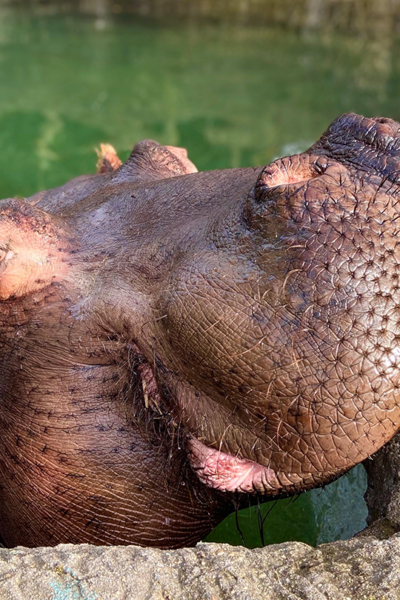
Kasai is 20 years old and larger than her older sister, Zambezi. Kasai is easily identifiable by the pink spots on the tops of all four of her feet. Zambezi is 27 years old and has a more consistent skin tone than Kasai. Both hippos enjoy participating in training, but Kasai tends to have a more dominant personality, which often means she’s the first to investigate new enrichment or food.
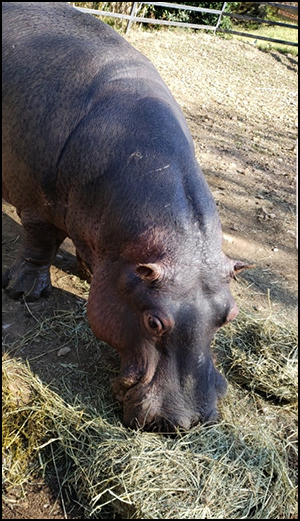
Zambezi, Nile hippo eating
“I’m really excited about rekindling our relationship and getting to know the hippos again,” said Wallace. “We can expect them to be a little cautious coming into this new building, because they’ve never been there before. Part of the challenge is getting them back to the level of comfort they had before. They’re both really food motivated, so I expect it will take a lot of patience, understanding and watermelon to help the girls gain confidence in their new space and with keepers again.”

Only 30 organizations accredited by the Association of Zoos and Aquariums in North America house hippos. In addition to their somewhat rare presence in zoos, Wallace says part of the CMZoo hippos’ appeal is their generally calm and gentle demeanors.

“Hippos are known as one of the most dangerous animals in the world, with incredibly impressive strength and size,” said Wallace. “Zambezi and Kasai have grown up in human care, so they’re used to people. They may scuffle with each other from time to time, but they really are gentle giants.”

A big part of helping the hippos gain confidence in their new home is training the keepers to control the myriad of new building features that will help them care for Zambezi and Kasai. Keepers are getting accustomed to underwater shift doors, hydraulic doors, garage doors, cable-and-bollard systems, water filtration systems, heating and cooling systems, lighting, behind-the-scenes kitchen and enrichment preparation areas, and more.

“We’re also planning our animal demonstrations and enrichment activities, considering how the girls might like to interact with us in this space and what will give our guests a memorable experience,” said Wallace. “We have a ton of opportunities to help guests fall in love with hippos, thanks to the design of this awesome new space.”

Water’s Edge: Africa’s indoor hippo demo space allows guests to get right up close to the hippos, with only bollards in between them and the animals. In the same area, guests can stand on a scale that helps them see how many humans it takes to weigh the same as a hippo. Near the outdoor hippo yard, a nature trail takes guests to a rope bridge that hangs above the hippo yard, giving guests a first-time bird’s eye view of the girls in water and on land. A knife-edge outdoor pool will help guests see the hippos as the hippos see them – just above the water line.

“You can be eye-level with a basking hippo at the knife-edge pool’s viewing area,” said Wallace. “It is going to be such a cool experience. I can’t wait for everyone to visit the new exhibit and hopefully form long-lasting relationships with these beautiful girls.”

At Dickerson Park Zoo, keepers are working with the girls to make them as comfortable as possible for their trip home to CMZoo, including building the hippos’ comfort level with their transport crates.

“We situated their transport crates so they’re part of the entrance to their yard, which allows them to travel through them and be around them regularly,” said Tracy Campbell, senior zookeeper at Dickerson Park Zoo. Campbell has worked with the girls since they arrived in 2016 and has worked with hippos for 20 years. “Once we have an exact timeline for their trip back to Cheyenne Mountain Zoo, we’ll increase their crate training time, but for now we’re keeping them acclimated by walking through them.”

Wallace was part of the transport training when the girls first traveled to Springfield.

“We trained with them for about three months before their last transport,” said Wallace. “They traveled in separate crates made of wood and steel. Like Dickerson Park Zoo is doing, we positioned the crates as entrances to the building, so they could walk through them and gain confidence with them over time. They were hesitant at first, but since they’re so food motivated, it didn’t take them long to get the hang of it.”

The trip between Dickerson Park Zoo and Cheyenne Mountain Zoo takes about 11 hours. The hippos travel in their crates inside an enclosed and climate-controlled flatbed truck. Once the hippos are comfortably in their crates, a large crane is used to move the 1.5-ton animals onto the truck. During the transport, the hippos are monitored to address any needs along the way. All went smoothly last time, and CMZoo keepers stayed with the girls at DPZ for about a week to help them settle in.

“I’m excited to have the girls home again,” said Wallace. “In the mornings, I would call ‘good morning, hippos!’ and they’d vocalize and poke up out of the water to look for me. They’d watch and wait for me to prepare their breakfast – and they’d let me know if I was being too slow. They’d walk up the ramp and stare at me, watching my every move. I can’t wait to see them and our guests exploring this amazing new exhibit.”

About Nile Hippos

The International Union for Conservation of Nature (IUCN) Red List categorizes Nile hippopotamuses as a species vulnerable to extinction in the wild, estimating 125,000 to 150,000 remain in their native habitats. The primary threats are habitat loss and illegal and unregulated hunting. Hippos are hunted for ivory, which is found in hippopotamuses’ canine teeth, and meat.
Back to The Waterhole


Seasonal illnesses, like influenza, can wreak havoc on humans this time of year. But, did you know great apes, like orangutans and gorillas, are also susceptible to the flu virus, which impacts an estimated 3 million humans annually?

As Cheyenne Mountain Zoo’s year-round sponsor, Children’s Hospital Colorado, provides tips for staying healthy during flu season, Primate World keepers take steps each year to help great apes stay as healthy as possible.

“The great apes are the most susceptible to illnesses that impact human primates, like you and me,” said Dina Bredahl, senior lead keeper in Primate World. “Any primate at the Zoo can catch illnesses from humans, but the risk is increased for great apes because they’re so similar to humans. Orangutans share 97 percent of the same DNA as humans.”
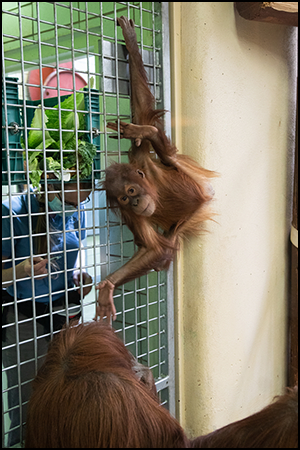
Orangutan Kera doing injection training
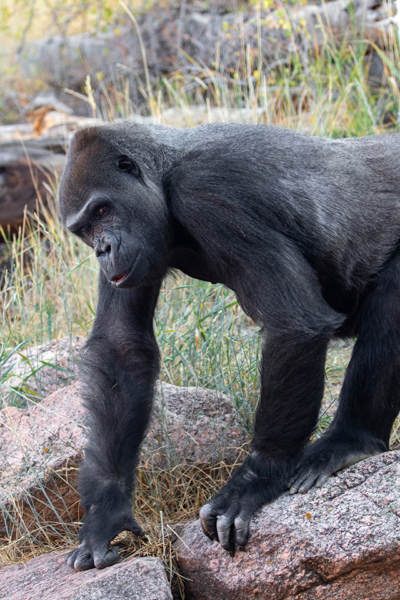
To protect the Bornean and Sumatran orangutans and the Western lowland gorillas at CMZoo, the apes receive the flu vaccine. The flu vaccine is administered by injection, which the Primate World residents train to accept voluntarily. Flu shots are available each fall, but injection training continues throughout the year nearly every day. The training can take months and requires the apes to build upon the trust they have in their keepers. Some of them choose not to participate in injection training, or may not be at a point in their training that keepers feel confident a real injection won’t derail the progress.

“We rely on ‘herd immunity’ to protect the population, so not every single great ape will receive a flu shot,” said Bredahl. “As long as a majority of the gorillas and orangutans receive the vaccine, we drastically reduce their overall risk.”

One example is one-year-old Sumatran orangutan, Kera. Little Kera was at a point in her training that her primary keeper thought a real first-time ‘poke’ might risk a regression in her training. Because the majority of the other primates were further along in training, Kera didn’t receive a shot during the fall flu shot clinic. However, her primary trainer continued training, and Kera has made incredible progress. So much progress, in fact, that she gets excited for the training.

“We’ll use a syringe that doesn’t have a needle, so they get used to seeing the shape and being touched with it,” said Bredahl. “Eventually, we move on to a dull needle, so it looks more similar to the needle we’d use for an actual injection. Kera’s trainer has been so successful that Kera now knows if she presents her hip and then holds still for a moment for the pretend injection, she’ll get a special reward. She presents her hip pretty enthusiastically, which is adorable and impressive since she’s still just an infant!”

Keepers also take steps to avoid transmitting diseases to the great apes.

“Primate World keepers receive flu shots yearly to protect ourselves and the great apes in our care,” said Bredahl. “We also wear medical masks when we prepare their food or are in close protected proximity to them. We wash our hands constantly and practice good hygiene before and after we handle anything they’ll touch or eat.”

Guests can visit CMZoo’s three Bornean orangutans, three Sumatran orangutans and five Western lowland gorillas – and can even see their training during scheduled demonstrations – in Primate World.

Back to The Waterhole


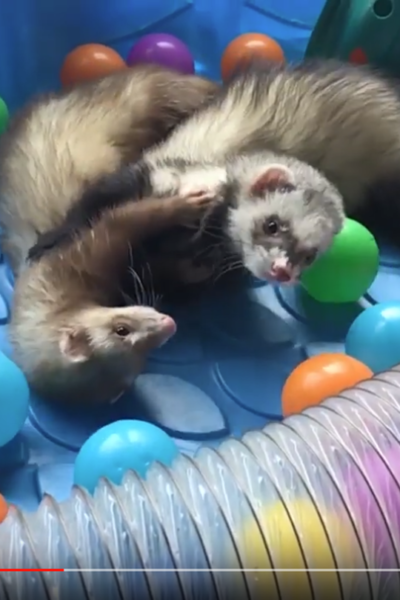
Cheyenne Mountain Zoo has welcomed two domestic ferrets to The Loft! 1-year-old male, Alfred Pennyworth, and 3-year-old female, Harley Quinn, are already target training, create training, meeting guests and learning how to interact on ZOOMobile programs. Come by The Loft and meet this energetic duo next time you’re at the Zoo!

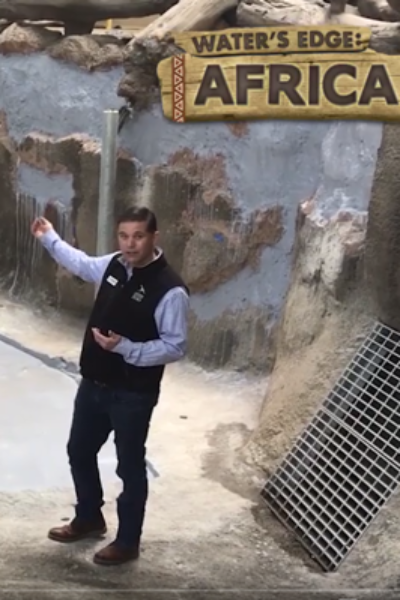
Bob Chastain, CMZoo president and CEO, is back with the latest update from Water’s Edge: Africa. We’ve refilled the void in the soil under the indoor hippo pool and waterproofed the new concrete. Soon, we’ll do another water test to measure continued water loss.

Get an up-close view of the micro cracks that we’re repairing with a filler product that has some elasticity. We hope the lining material we apply next will stop those leaks.

Also, in this video, we’re giving you a first-time sneak peek at the Water’s Edge: Africa vacation yard. This outdoor yard and pool will be used by a variety of animals and will be visible to guests on their way to Primate World.

Although we don’t yet have an opening date, we’re getting closer! We’re still aiming to begin introducing animals to the building sometime in March. We’ll keep you posted!

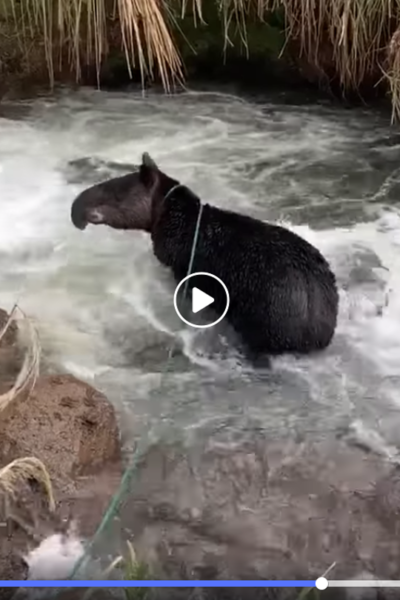
A team of four CMZoo staff members traveled to Ecuador in December to track critically endangered mountain tapir and speak to local school children about the native species.

They successfully studied and attached GPS collars to five wild tapir. The collars will relay data to prove the roaming ranges of tapir in the Andes Mountains, which we hope will be used to establish protections for their threatened natural habitats.

CMZoo members have voted three times to support ongoing mountain tapir research and conservation efforts in Ecuador. During the upcoming Membership Conservation Grant Vote, members will help us decide again which projects receive part of the $75,000 of membership revenue annually allocated for these grants.

https://www.facebook.com/CMZoo/videos/236694087334330/

Male Canada moose, Tahoma portrait
As the oldest Canada moose in human care in the United States, CMZoo’s 12-year-old male, Tahoma, has received specialized care for years. Until recently, his issues – including arthritis in his limbs and spine, and an on-and-off cough – haven’t seemed to decrease his long-term quality of life.

Now, Tahoma is showing signs that his pain is increasing, so keepers and CMZoo veterinary staff are working to keep him comfortable for his remaining time. Tahoma’s care team says he’s still eating well, which is a good sign.

Because moose are rare in human care, there’s widely varying data about their average life expectancy. The range we have seen from reputable sources is from 5 to 15 years. But, they have been known to decline quickly once issues become widespread, like this.

“We’ve seen a general slowing down in Tahoma over the last several weeks,” said Rocky Mountain Wild Animal Keeper Allison Rosing. “Specifically, he’s dealing with a significant arthritis-related limp in his front left leg, which he’s been compensating for by shifting weight to his right leg. Because he’s putting more weight on his right leg, we’re seeing inflammation in his right knee. We’ve also seen him ‘hiking’ his head up when he walks, to lessen the weight on his left leg.”

X-rays on Tahoma show severe arthritis in his left leg and other limbs, and advancing arthritis in his spine. His care team has been managing his arthritis for a few years, but recently it seems to be advancing more aggressively.

“We know we’re not going to be able to correct any of this for him, but we can do things to make him more comfortable,” said Rosing. “We’re managing his pain by increasing his anti-inflammatory medications, pain medications and laser therapy sessions. We’re also providing more spaces for him to lie down and rest.”

His team moved some large branches, which he’d previously enjoyed sparring with, out of his barn to make space for a big pile of pine shavings that he can lie on.

“He loves it,” said Basia Dann, Rocky Mountain Wild animal keeper. “He comes in to his barn every night and curls up in his pine shavings.”

Tahoma receives laser therapy on his joints three times per week. Laser therapy is thought to reduce pain and inflammation. Keepers have noticed his limp improving since starting the more frequent therapy regimen.

“Lately he seems more willing to come over and train, which is great because it gives us more opportunities to give him his medications, lots of love and special treats,” said Dann. “In addition to the laser therapy, we have vet appointments with him weekly, so we can track the progression of his issues and make adjustments to his treatment quickly.”

Tahoma’s keepers offer his oral medications – which Tahoma doesn’t seem to enjoy taking – with treats like bananas, kiwi and rye crackers with honey and molasses.

“There’s not a lot known about moose in human care, because there are so few of them,” said Dann. “We’re tracking Tahoma’s issues and overall quality of life, so we can help him stay comfortable for as long as we can, and so we can share information with other organizations whose moose could benefit from it.”

We will continue to keep Tahoma as comfortable as possible while continuing to track multiple factors for his overall quality of life. Stay tuned for more updates on Tahoma as we have them.

 
Back to The Waterhole


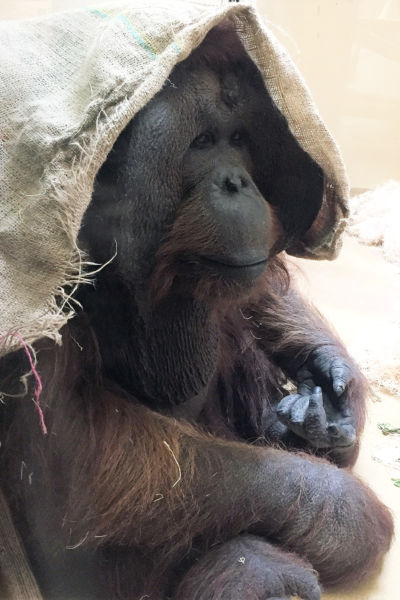
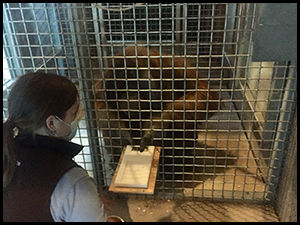
Tujoh, a 25-year-old male Bornean orangutan, recently made CMZoo husbandry training history. Tujoh and his primary trainer, Amy Tuchman, successfully completed a voluntary electrocardiogram (EKG) – a test that measures the electrical activity of the heart.

As Tujoh ages, Tuchman and the rest of his care team are looking for ways to take advantage of new technologies to diagnose medical issues common in great apes, like cardiovascular disease.

“It’s especially prevalent in middle-aged male great apes, and all of our guys in Primate World fall into that category,” said Tuchman. “This device allows us to monitor them as often as we like. Early detection could be the difference between life and death, especially for a big guy like Tujoh.”

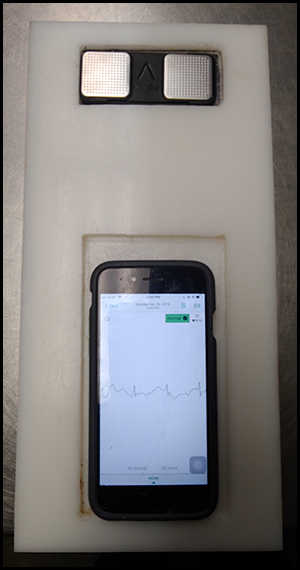
This new pocket-sized equipment is a welcome advancement for 340-pound Tujoh, who Tuchman describes as a “straight-A student.” The test requires Tujoh to place his two index fingers through the protective barrier between him and Tuchman, onto the quarter-sized metal discs that take the reading. Then, he needs to keep his fingers on the discs with consistent pressure for thirty seconds, continuously.

It only took Tujoh a month to learn how to successfully complete the test. Perhaps that’s in part thanks to his intense focus. Tuchman says Tujoh likes to maintain direct eye contact with her throughout the training.

“He learns incredibly fast,” said Tuchman. “He already knew a ‘hold’ cue, and we built the behavior from there. Once he was sitting on the other side of the mesh from me, I held up my finger and asked him to touch his finger to mine. He’d never done it before, but he got it right away.”

Tuchman cleans Tujoh’s two fingertips before he places them onto the device to ensure the best connection for the reading.

“Now he holds out each finger individually for me to clean before we start, like he’s getting a manicure,” said Tuchman, with a laugh. “He learns how to do something, and he remembers every step you’ve asked of him. Then, he wants to do it that exact way every single time.”

As with most behavior training, the trainers learn from the animals, too.

“The device is made for humans, so we needed to customize how we could present it in a way that allowed trainers to be hands-free to reward his participation,” said Tuchman. “We also needed to securely present it at a level that he could access it while sitting and relaxed on the other side of the protective barrier between us, so we could get an accurate reading.”

Compared to the oversized and complicated readers of the past, these test results will likely be more accurate, because the testing equipment and overall experience are less invasive, thus less stressful for Tujoh.

“It’s still sensitive equipment,” said Tuchman. “That’s a good thing because we know it’s picking up the tiniest abnormalities for us to track, but it also requires a lot of patience and participation from Tujoh to complete the test.”

Tuchman and her team were inspired to pursue the ability to provide regular EKGs for the great apes in their care and attended a conference with Great Ape Heart Project – a coordinated clinical approach targeting cardiovascular disease across all four non-human great ape taxa: gorillas, orangutans, chimpanzees and bonobos. Studies have shown cardiovascular disease is a primary cause of mortality among great apes.

“I’m the primary keeper for Goma [28-year-old Western lowland silverback] and Tujoh, so I was interested in learning how other zoos are managing cardiac care, what tools are available and what we could do to improve our great apes’ cardiac care,” said Tuchman. “Any little improvement we can make to monitor their cardiac health and stay ahead of any issues will be really important.”

Tuchman and her team will share Tujoh’s data with Great Ape Heart Project so they can learn and share data that benefits great apes in human care around the world. They will also continue training with other great apes at Cheyenne Mountain Zoo to utilize this life-saving, non-invasive diagnostic tool with as many participants as possible.

 
Back to The Waterhole


We often tell stories about animals who have been brought together on breeding recommendations, like CMZoo North American porcupines, Kale and Quilliam, or Mexican wolves, Luna and Navarro. With the annual celebration of love just around the corner, we’re taking a closer look at how animal matches are made and how zoos work together to help species survive, long before the howdies begin.

“In a nutshell, Species Survival Plans support healthy genetics in animals in human care,” said Ashley Arimborgo, CMZoo registrar, who often oversees the coordination between Zoos that are transferring animals on breeding recommendations to and from Cheyenne Mountain Zoo. “Species Survival Plans contribute to the success of an assurance population of animal ambassadors that advocate for their wild relatives, and inspire people to support important conservation efforts.”
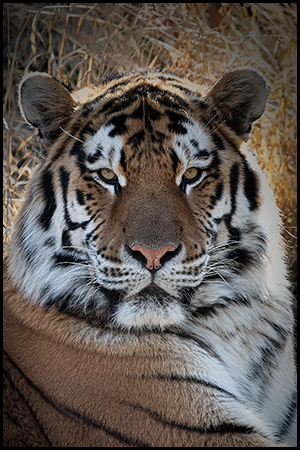
Amur tiger portrait
The Association of Zoos and Aquariums (AZA) is the standard-setting accreditation organization for zoos and aquariums in the U.S. The AZA champions Species Survival Plans (SSP) managed by SSP coordinators. SSP coordinators are professional volunteers who often work at AZA-accredited organizations, but don’t work for the AZA.

SSP coordinators work with Taxon Advisory Groups (TAG) which track five-year population projections for their respective species, including population trends for animals in human care and in the wild. Also instrumental in the matchmaking process are studbook keepers. They track the genetic data of each animal in human care (at organizations participating in SSPs) and bridge gaps in documentation. That data is collected and presented in graph form, with the most unrelated animals of the same species being the most valuable potential matches.

“It’s a pretty complicated process, but the matches are largely data-driven and based on genetics, health and age,” said Arimborgo.

Every two or three years, SSPs release species-specific breeding and transfer draft plans. Organizations that have animals impacted by the plan – known as holding institutions – provide input including whether or not the organization would like to transfer an animal or host animals to breed. Then, the plan is finalized and published to the participating organizations. Holding institutions work together to arrange animal transportation.

“It’s not unusual to see a big shuffle in a single species among participating organizations when a new plan is released,” said Arimborgo. “We saw that in the fall with Amur tigers because of new recommendations. Thimbu went to Rosamond Gifford Zoo on a breeding recommendation, and Savelii came to us on a match with Chewy.”

The SSP also tracks trends and genetics to address future potential pitfalls to a species’ survival. They may find one species has an abundance of older females and younger males, which could determine urgency of breeding or breeding prevention.

The team also works together to track available housing for future populations. If one species grows quickly, organizations participating in the SSP may run out of room to house additional individuals.

One example of that is the Mexican wolf. In the last two years, Luna and Navarro, CMZoo Mexican wolves who were introduced on an SSP breeding recommendation, welcomed six pups to their pack. One pup, Lupa, moved to an organization in Arizona in November 2018. The remaining seven Mexican wolves have brought CMZoo’s wolf habitat to its maximum capacity. Since other participating organizations don’t have room for more wolves either, the male and female wolves will live in separate areas during breeding season this year.

Beyond that, it’s up to each individual zoo to manage introductions and breeding interactions.

“The SSP breeding recommendations don’t typically take an animal’s individual personality or preferences into account.” said Arimborgo. “The keepers and management staff factor in individual histories as well as behaviors when introductions start taking place. Through careful observations and training, trust can be built and the stage can be set for the animals to be most successful. ”

 
Back to The Waterhole


Cheyenne Mountain Zoo has welcomed a new red-necked wallaby to the mob! Australia Walkabout Lead Keeper, Bailey Jones, introduces us to the two-year-old male wallaby, P. Sherman, and provides an update on how introductions are going with CMZoo’s existing group of wallabies.

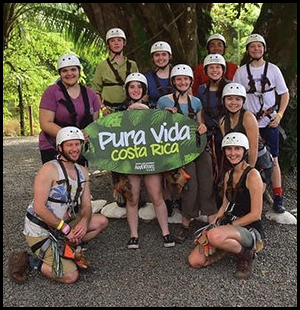
In December, nine members of Cheyenne Mountain Zoo’s Teen Program traveled to Costa Rica. In line with CMZoo’s mission to inspire people to protect wild animals and wild places, this trip helped the teens experience the impact these protected wild places can have on people – and how people can impact wild places.
Teen CMZoo group in Costa Rica, December 2019
“We’ve seen how our Teen Program’s international trips refuel our teens’ conservation fire,” said Stacey Graham, director of CMZoo’s EdVenture Programs. “We always talk about thinking globally and acting locally. Trips, like this one to Costa Rica, really allow them to think globally because they can visualize it, smell it and feel it. They come home understanding better how their local environmental stewardship impacts these important wild places, which now mean even more to them.”

Lindsey Mitchell, a Junior Zookeeper, has been in the CMZoo Teen Program for seven years. She and eight other teens went to Costa Rica on this most recent trip.

“This experience has influenced my life and increased my love and care for the natural world and the animals and people who live in it,” Mitchell said. “Throughout the trip, we had so many amazing opportunities to see wildlife and experience the country to its fullest.”

The teens stayed in Costa Rica for ten days, contributing to rainforest conservation and exploring the natural places and native animals of the Central American country.
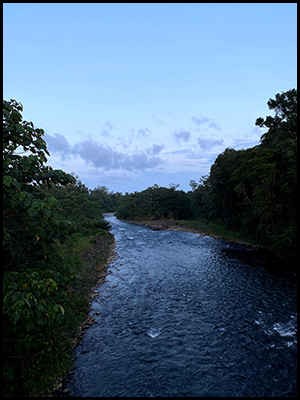
Costa Rican river scene
“Looking back on this experience, there are a few key moments that highlighted the trip for me,” Mitchell said. “One of those was on a hanging bridge above a fast-flowing river that contained caiman, in a rainforest that had howler monkeys, macaws and even aye-ayes. It was almost surreal. We also embraced the term ‘Pura Vida!’ which translates to ‘Pure Life’ in English. Costa Ricans used that phrase a lot, and I think it helped me immerse myself in every experience.”

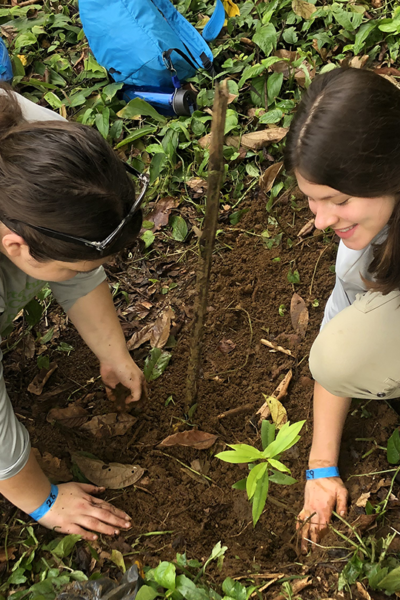
The teens also participated in a reforestation project, which Mitchell says was the highlight of her trip.

“We were sweaty and covered in dirt, but we were all able to say that we helped migratory birds in Costa Rica by planting trees to create a corridor for them to travel,” she said. “This trip has influenced me in many different ways. Looking back, I think I am able to look at conservation through a new lens. I have been lucky enough to see and talk to people in Costa Rica whose lives revolve around the protection of animals and the environment. Now I can share my experience and the love for the natural world that was projected on me during my time there. The trip was a life-changing experience for me and all of the other teens on the trip. Pura Vida!”

Cheyenne Mountain Zoo’s Teen Program is accepting applications for their summer program, beginning February 1. More information and applications are available at cmzoo.org/teenprograms.

 
Back to The Waterhole