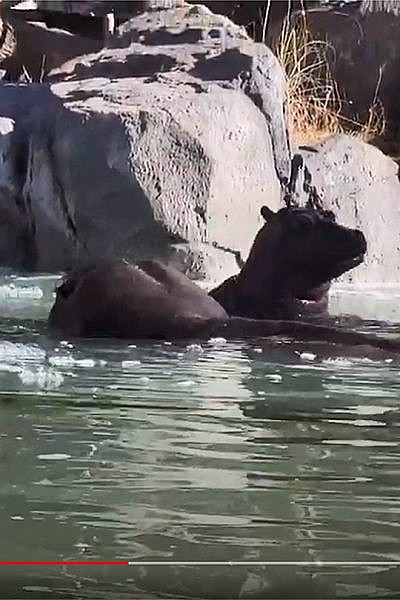
As Omo grows bigger by the day, so does his playfulness! Lately, our 3-month-old hippo has been spending his days practicing his porpoising, a behavior that hippos can exhibit to express excitement and playfulness. Instead of pushing off slowly from the bottom of the pool, like they usually do to resurface, porpoising hippos leap from the bottom, causing them to erupt from the water and make a big splash. Omo has a little way to go with his splashes, but we’re here to share his adorable efforts.

Are you busy preparing your own epic feast this Thanksgiving? CMZoo’s commissary team prepares hundreds of meals every day for the animals in our care. Learn more about what goes into feeding and enriching our animals from our commissary manager, Chelsea!
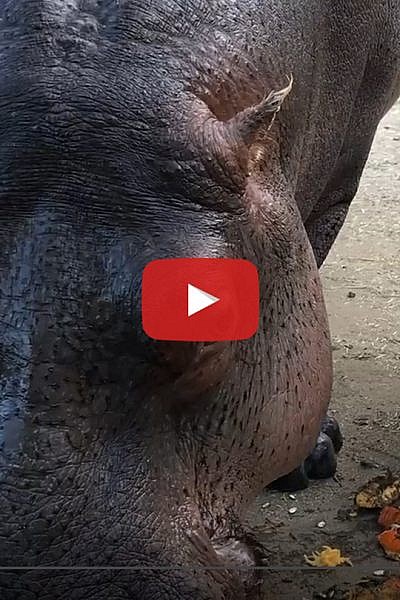
CMZoo’s four Nile hippos, Zambezi, Omo, Biko and Kasai, have had a busy summer and fall! If you’ve been following our newsletter updates and social media channels, you know that our three-month-old hippo, Omo, and his mom, Zambezi, have been bonding well and exploring all of the hippo spaces in Water’s Edge: Africa, while Omo grows like a weed. Zambezi’s sister, Kasai, and Omo’s dad, Biko, have also been staying busy meeting other Water’s Edge: Africa residents, participating in training and enrichment, and exploring their hippo home’s various yards and pools. Get the latest on our hippos with Water’s Edge: Africa keeper, Al, in this quick video update.
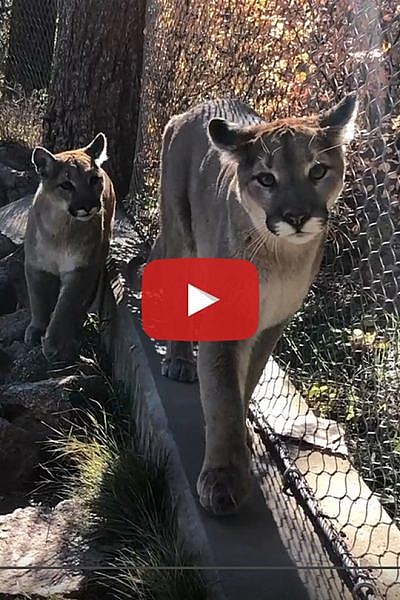
It’s been a year since our mountain lions moved in together, so join us for an update with Adira, Sitka and Koda! We’ll show you around their three yards and take a little hike up above their exhibit to get up-close with the three young lions. Rocky Mountain Wild Lead Keeper, Courtney, tells us how to identify each lion, why they came to live at the Zoo, and a little about their unique behaviors and preferences. Then, we’ll watch how they respond to their festive pumpkin enrichment.
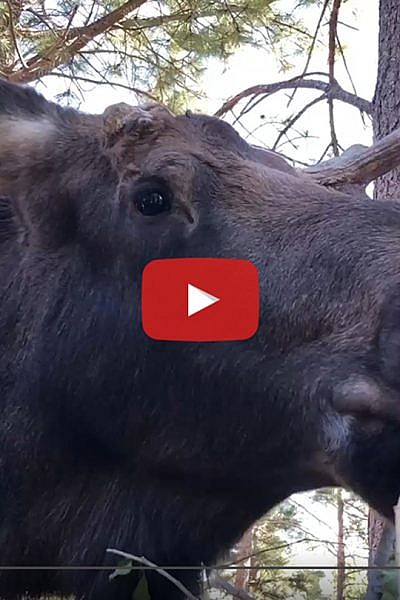
Join us for an update on one-year-old Alaska moose, Atka! Fall is a busy time for a moose, because they finish growing their antlers and enter ‘rut,’ which is breeding season in the wild. At the Zoo, we mimic the wild environment by giving Atka lots of items to spar with. Male moose, like Atka, would spar with other males for territory or female attention in the wild. Once breeding season is over, wild moose tend to go their separate ways, so Atka doesn’t share his space with other moose at the Zoo.
If you’ve missed our #AtkaAntlerUpdates this year, you might be wondering why he’s sporting a one-sided look this year. In June, young Atka knocked one of his antlers off, so his 2021 antlers are quite unique looking. In the next few months, Atka will shed his first set of antlers. Next spring, he’ll start growing a new set, and that cycle will continue throughout his life. Learn more at Atka and see his antler updates on his playlist, here: https://www.youtube.com/playlist?list=PLUd9bK-IbrIPyGTBSj3cxYeR6r-kz57I1.
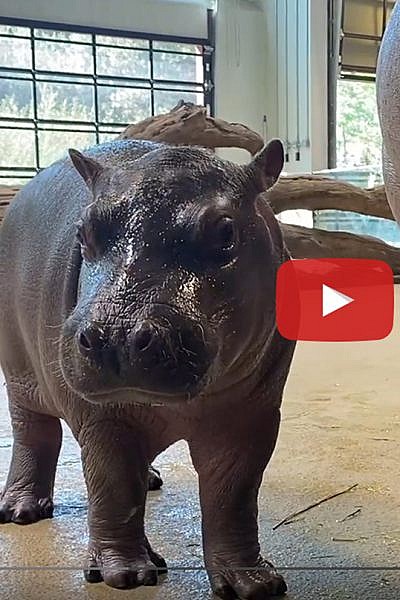
September was a big month for our quickly growing Nile hippo calf. He got a name, explored new spaces and tried new foods. One thing didn’t change for young Omo, though: his love for naps.
Join Water’s Edge: Africa keeper, Grace, for an update on our two-month-old calf, and hear about how Omo’s following in mom’s footsteps literally and figuratively. Zambezi is a confident hippo, and her little boy is showing signs he’ll be just the same!
Check out Omo’s complete video playlist, here: https://www.youtube.com/playlist?list=PLUd9bK-IbrIMxpwuRlrLaZfU4fFwB9cPG.
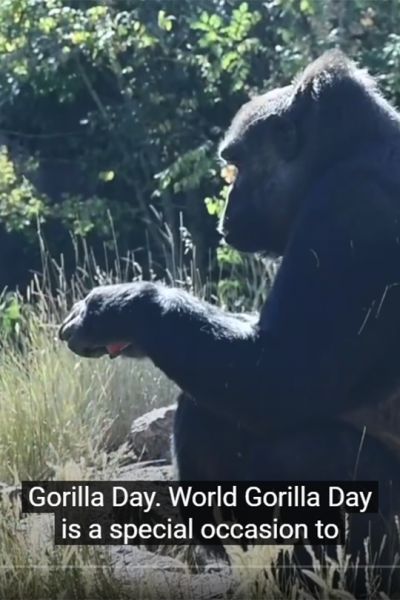
Today is #WorldGorillaDay! Here to help us celebrate are Primate World keeper, Carrie, and our Western lowland gorilla troop: 29-year-old Kwisha, 45-year-old Roxie, 40-year-old Juju, 28-year-old Asha and our silverback, 30-year-old Goma.
World Gorilla Day isn’t just about celebrating these incredible animals, but also about protecting them for years to come. Western lowland gorillas are critically endangered, and their numbers continue to decrease in the wild. In addition to disease and poaching, a threat they face in the wild is loss of habitat due to logging for agricultural use, human settlements and mining. Many of the west African lowland forests and swamps that these animals call home are also natural deposits of coltan, a mineral used in cell phones and other electronics. Due to the ever-increasing demand for cell phones across the world, the destruction of these gorillas’ habitats for mining purposes has unfortunately only increased.
There is, however, something we all can do to help! Coltan is recyclable, and by donating your old cell phones, you can help supply valuable coltan for future phone production. Here in the Primate World building, we have a new cell phone recycling collection bin. When guests visit, they can drop off their old and unused cell phones in the bin, and we will send them to Eco-Cell, an organization that recycles the phones, as well as tablets, smart watches, Bluetooth devices, GPS devices, e-readers, digital cameras, handheld gaming systems and their accessories.
Since installing the box in July of this year, we have collected 194 electronic devices, all of which will be sent to Eco-Cell to be recycled! If you have any old devices please consider bringing them to the Zoo on your next visit. We will be collecting phones in this bin in Primate World every day. Thanks again for celebrating World Gorilla Day with us, and for supporting Cheyenne Mountain Zoo, where every visit is conservation in action.
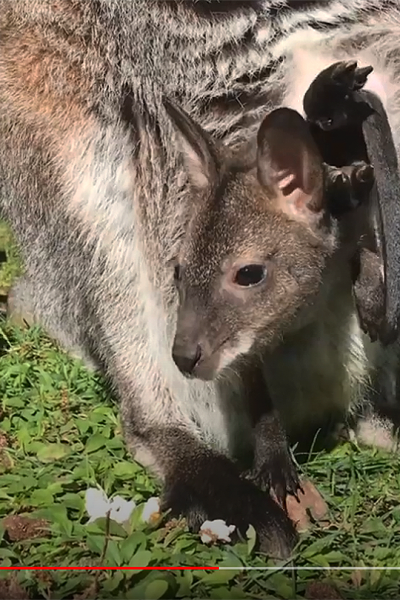
Gidgee’s joey has been making more appearances out of the pouch, and it’s time to reveal his name! As a nod to wallabies’ native Australia, we named our newest joey Tim Tam (Tim, for short), after a popular cookie there.
At 7 months old, he has grown his full coat, and has begun popping out of mom’s pouch for quick zoomies, or to explore small bits of the grass of the wallaby yard. It usually isn’t long before he’s somersaulting back into mom’s pouch. We expect him to continue popping in and out of mom’s pouch for another two months, or until mom decides it’s time for him to move out.
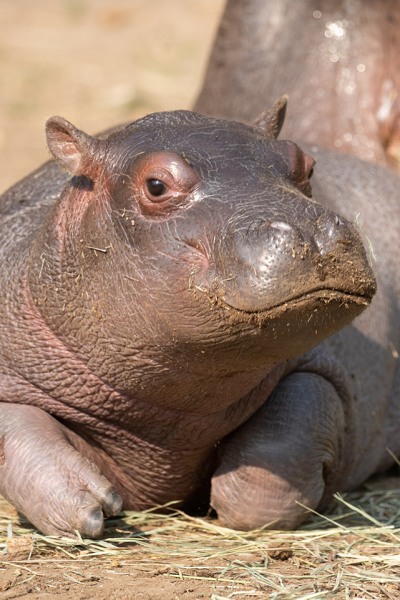
The #CMZoo staff votes are in, and it’s time to reveal the name of our baby hippo! Keepers set up an extra-special breakfast of carrots, oranges and hay for Zambezi in the shape of her calf’s new name. As we show you the video in reverse, his name will be revealed!
Following the theme of the names of his mom, Zambezi, and aunt, Kasai, the calf was named after a river in Africa. The seasonal flooding of this river is vital for food cultivation by the indigenous groups that live along it. Water conservation is an important focus of Water’s Edge: Africa, and our hope is that the calf’s name will help us share these stories with guests and inspire them to take action to save water.
Next time you visit the Zoo, be sure to say hello to….watch the video to find out the name!
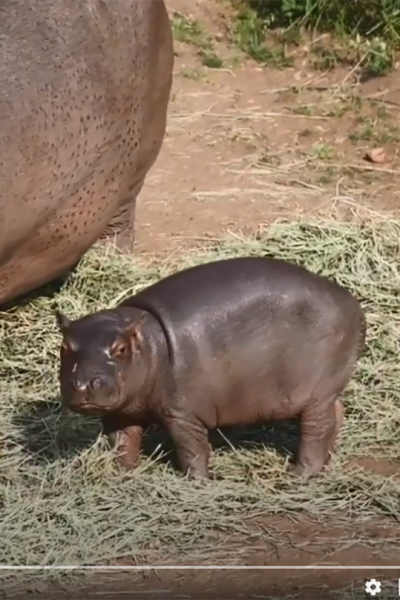
Zambezi’s mini-me is learning how to hippo! At eight weeks old, the little calf is still nursing, but that doesn’t stop him from attempting to eat hay, just like mom. The pair have been spending more time on land, both early in the morning and late in the afternoon. Hippo-ing is a lot of work when you’re a little guy, so naps are required in between bouts of mimicking mom. We’re loving his signature sleepy ‘plop!’
As a celebration of all the hard work and dedication our employees put in every day, Zoo management has decided to give the honor of naming the calf to our staff. We’re in the final stages of choosing that name, and we will share it with you, as soon as it’s final!