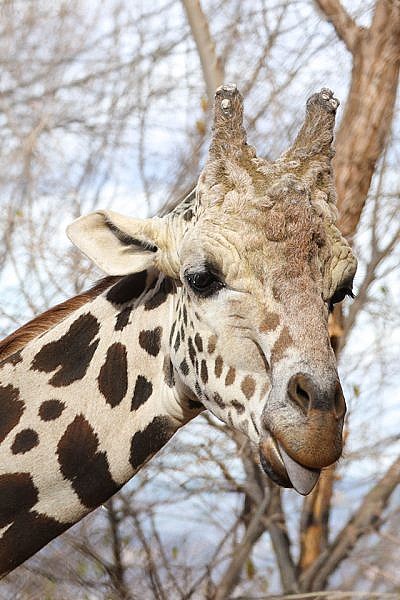

Cheyenne Mountain Zoo is reflecting on the incredible legacy of Khalid (pronounced “Kuh-LEED”), a 17-year-old breeding male giraffe. Khalid was humanely euthanized on Fri., Dec. 12. His care team had been supporting him through mobility issues, and Khalid’s health rapidly declined over the past week.
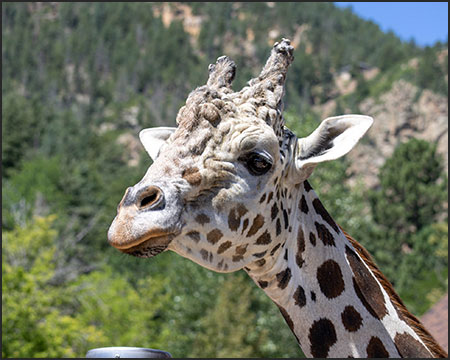
After exhausting all possible humane treatments for Khalid, and considering his advanced age, they made the compassionate decision to say goodbye. Khalid would have been 18 years old in May, and the median life expectancy for male giraffe in human care is sixteen-and-a-half years.
Known affectionately by many as “Big Daddy,” Khalid’s presence at CMZoo was as big as the legacy he leaves behind. Weighing in at 2,500 pounds and standing sixteen-and-a-half feet tall, he was the Zoo’s only breeding bull since he arrived in June 2010. He fathered seven calves, including 6-year-old Viv and 3-year-old Wednesday – two female giraffe that currently live at CMZoo. Giraffe are critically endangered in the wild, and Khalid’s kids represent important contributions to the genetic diversity of the assurance population of giraffe in human care. He recently became a grandfather when his daughter, BB, gave birth to Thorn, a male, in March 2025 at Denver Zoo Conservation Alliance.
“He was a gentle giant,” Kacie Meffley, giraffe animal care manager at CMZoo, says. “He had this huge imposing head and body paired with a surprisingly gentle demeanor. Many people will remember him leaning over the fence into the nursery stall when his babies were born, so he could delicately smell them and lick their heads. He was also gentle with guests, who would save lettuce especially for Khalid when feeding our herd.”
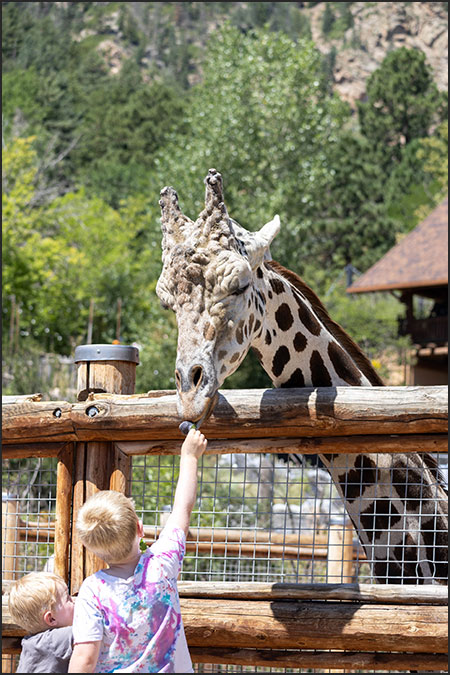
Khalid had an enormous fan club. They would visit him on his birthday, World Giraffe Day and every day of the year, making sure they fed Big Daddy after visiting the rest of the herd. He met thousands of people through up-close encounters over the years, when guests would remark at the size of his hooves, often exclaiming, “They’re bigger than dinner plates!” His care team remembers one very special moment between Khalid and a blind guest who visited the Zoo.
Khalid’s head was bumpier than the rest of the herd’s, which is a natural occurrence for male giraffe whose testosterone encourages calcium deposits to grow on their heads and around their ossicones (the horn-like points on top of giraffe’s heads). Noticing the visually impaired guest exploring the Zoo with her hands, Khalid’s keeper team asked if she wanted to feel his head – an offer she quickly accepted. Khalid calmly leaned his big, bumpy head into her. She gasped with delight at the sensation and size of his head, and the time he spent with her. She made an incredible connection with Khalid that day, and he enjoyed the head scratches.
Khalid’s relationship with his keepers was vital in his care. His trusted team provided a myriad of treatments and environmental changes, like different ground substrates to stand on, enriching activities and places to explore. The team, led by leading hoof care experts at CMZoo’s International Center for the Care and Conservation of Giraffe, worked tirelessly for Khalid, and consulted with giraffe care experts around the world on his case.
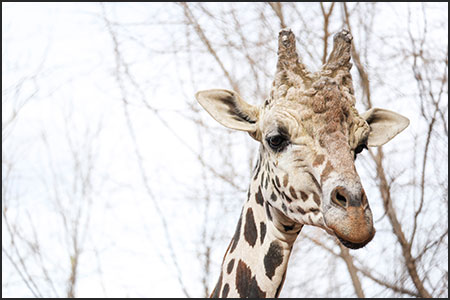
Care teams at CMZoo always work hard to give animals their Last Best Day. For Khalid, it was a peaceful passing, and his expertise in training allowed him to receive his injection cooperatively and calmly.
“He was the best boy today, as always, and he will be deeply missed,” Diana Miller, giraffe specialist at CMZoo’s International Center for the Care and Conservation of Giraffe, says. “He got lots of head scratches, bananas and browse. He nuzzled some of the giraffe and then he came over to train for the most beautiful voluntary hand injection, then shifted into spaces where we could give him his final care. He had a good last day and that’s all we could hope for. His legacy will live on in all of the things we learned from him.”
Khalid’s care knowledge will be shared with other giraffe care professionals in workshops, educational videos, consultations and network through the Giraffe Center. Even after his death, Khalid will continue to make contributions to his species. Veterinarians will perform a necropsy (an autopsy for animals) and his hooves will become part of a groundbreaking study on giraffe hoof anatomy that will benefit giraffe in human care and in the wild for decades to come.
Committed to continuing to grow and diversify the population of giraffe in human care, CMZoo plans to welcome another breeding bull to the Zoo as soon as possible. There are no concrete plans at this point, and CMZoo will share more when the time is right.
About Cheyenne Mountain Zoo
Cheyenne Mountain Zoological Society was founded in 1926. Today, Cheyenne Mountain Zoo, America’s mountain Zoo, offers comprehensive education programs, exciting conservation efforts and truly fantastic animal experiences. In 2025, Cheyenne Mountain Zoo was voted #2 Best Zoo in North America and CMZoo’s Rocky Mountain Wild was named #2 Best Zoo Exhibit in North America by USA TODAY’s 10Best Readers’ Choice Awards. It is Cheyenne Mountain Zoo’s goal to help guests fall in love with animals and nature, and take action to protect them. Since 2008, CMZoo’s Quarters for Conservation program has raised more than $6 million dedicated to frontline conservation efforts around the world. Of the 237 zoos and aquariums accredited by the Association of Zoos and Aquariums (AZA), Cheyenne Mountain Zoo is one of just a few operating without tax support. Cheyenne Mountain Zoo depends on admissions, membership dues, special event attendance and donations for funding.