
Part 1: Past
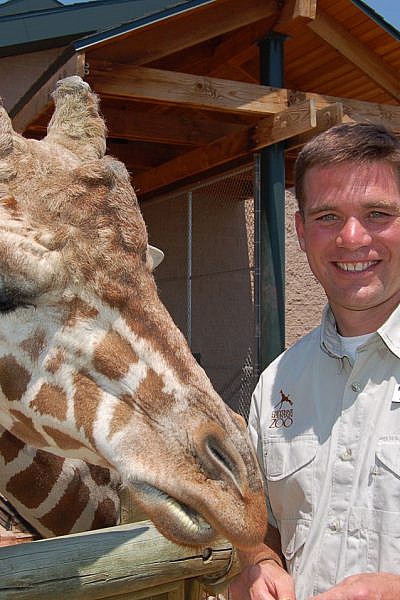
Two years ago, we announced that our 20-year President & CEO, Bob Chastain, is retiring after 30 years of service to Cheyenne Mountain Zoo. On Feb. 10, CMZoo’s board of directors announced Dave Ruhl, current executive vice president at CMZoo, will step into the role of president & CEO on June 12, 2026.
As we embark on our centennial year and Bob’s final four months at the Zoo (he retires in June!), we asked Bob to look back on three decades of the progress and growth that made Cheyenne Mountain Zoo a financially-stable community gem, national destination and leader in animal care and conservation. Over the next six months, Bob will share three letters in our newsletter, focusing on his early memories, what the Zoo is like today and what he’s excited about for the future of CMZoo.
Please enjoy a letter from Bob Chastain about his early experiences at the Zoo.
——
Feb. 14, 2026
I came to the Zoo in the summer of 1995 as the horticulture curator. The 90s were iconic for many reasons. Many of them were watershed moments that somehow shaped who we are as adults, and continue to shape ideas and culture. To some degree this is true, whether you experienced the 90s first-hand or learned about it through pop culture. For example, my 26-year-old daughter is watching Friends now. The only difference is she does not have to wait a week between episodes!
There were certainly iconic moments that today would be viral news but spread then via traditional media. The OJ Simpson Trial, Dr. Kevorkian was making news, the Nancy Kerrigan and Tonya Harding drama was unfolding, Forest Gump debuted, as did Titanic – which still elicits the iconic poses of youth and adults on the point of anything resembling a ship. The “Dream Team” played in The Olympics, Princess Diana died amongst an unusual and debated set of circumstances, Mike Tyson rose as one of the greatest heavy-weight boxers of all time and began his decline by biting a chunk of ear from his opponent, Evander Holyfield, in the anticipated rematch.
There were tragic events in the 90s., Waco unfolded before our eyes, the images of Rodney King beating caused the country to boil over, the Oklahoma City Bombing happened and the tragedy of the Columbine High School shooting occurred.
Huge world events also unfolded largely in traditional media forms. Nelson Mandela became the first black South African President, The U.S. went to war in the Gulf, Black Hawk Down happened, which lives on as a successful movie to this day, and the horrific images of the famine in Somalia and Sudan spread around the world and spurred a generation of people who cared about human rights and foreign aid.
There were also many things happening that were the beginning of something big, even though we did not realize it at the time.These small clouds on the horizon were going to turn into something big. Business like Amazon launched. There were unnoticed traces of computer AI even then. Garry Kasparov, considered the greatest chess player of all-time, was beaten in his final match of six by a computer in just 19 moves. Showing how fast technology was moving even then because he had beaten “Deep Blue” only the year before.
Finally, there were events that inspired us. In 1999, the U.S. Women’s National Soccer Team won the FIFA Women’s World Cup in front of a sold-out crowd. 30-year-old Brandi Chastain’s (no relation) penalty kick clinched the victory, and a history-making celebration ensued. Brandi tore off her jersey, waved it overhead and fell to her knees before being mobbed by her team. It was one of the most famous moments in sports history.
What does all that have to do with the Zoo? Like the rest of the world in the 90s, the Zoo had iconic moments, tragic events, quiet beginnings and moments that would inspire us for years to come.
Before I muse a little on what was happening in the Zoo back then, let me acknowledge that I’m speaking of this time through only my lens. This is not to suggest in any way that I mattered much at all during this time, but without interviewing the countless others who were on the team back then, my lens is the only lens I have.
So what was it like to work at the Zoo back then? A couple things come to mind. First, the turnover at the Zoo was crazy high at that time. After only a year or two, I had seniority on the Zoo’s ‘senior staff’ leadership team. Everyone except me and the veterinarian had left – and she had only been here a few months longer than I had.
It’s worth noting here that if you are going to turn a ship around, the leaders and the team need to stay with it. My predecessor was trying to turn the ship amongst high turnover and likely often felt alone. It had almost become trendy to leave. Because of this experience, my encouragement to you is… if you find yourself in a situation where everyone around you is abandoning ship, ask yourself: what would happen if you stayed?
Let me be clear, there were plenty of reasons to leave. I think back then the keepers made around $6.50 an hour. I remember 23 years ago, when I became the vice president of the Zoo, I asked the senior staff team what it would take to get everyone at the Zoo to $10 an hour. They thought I had lost my mind and it would be impossible. It wasn’t. Today, we beat the minimum wage in every regular position at the Zoo, are pursuing the idea of livable wages and do wage studies every two years to make sure we don’t lose ground. We have a strong, tight-knit culture. We’re proud of our Zoo, and we take care of each other. Our staff turnover is low.
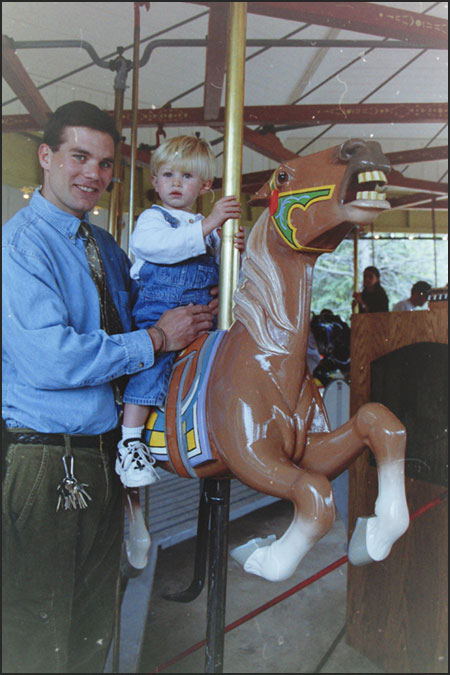
Another strong memory is the former road up the Zoo. Many of you will remember when you entered the front of the Zoo, you basically walked straight uphill past a line of cages with rhino, bongo, chamois, tapir and takin. They were simple dirt pens with chainlink fencing. Past that was an old building that held the entire giraffe herd and the two elephants in one building that was smaller than either building today. After that, you continued up a very steep hill to the carousel and old petting zoo. All in all, you spent the first 30 minutes of your visit walking a steep hill from the bottom of the Zoo to the top with no modern exhibits. Even the iconic giraffe area in the 90s was very outdated and undersized. Now, that upper road is off limits to our guests and leads to our horticulture, grounds, conservation, maintenance, vet and a few other department shops and offices. I remember thinking, in 2003, when we finished the new giraffe exhibit, that we finally had something worth seeing at our front entry. That was the beginning of something special. That was the first construction project I managed along with My Big Backyard.
Back in the day we did everything with very little. For example, there was one tractor for the whole Zoo, and on snow days, it was used for animal food deliveries plus snow removal. The only other mechanical snow moving device was a golf cart that we put a snow plow on that you lifted with a lever and your arm strength. Another example is even though we had a vet back then, when one of those european chamois goats escaped and was found running outside of Manitou Springs, because I had the most real-world shooting experience, I was the one who tranquilized it to safely return it to the Zoo. I will never forget watching it drowsily stagger closer and closer to a 100-foot cliff after I darted it in 30 mile-per-hour winds. Luckily it fell asleep a few feet from the cliff. Tragedy averted.
Times were not easy back then. The Zoo was very near to closing. At one time, leadership very seriously considered moving to the eastern side of the city where things were flat and where the population centers were growing. One reason it did not is because Spencer Penrose’s foundation, El Pomar Foundation, kept us going by helping us many years in a row financially.
El Pomar paid some of our bills and they supported our new projects. Just like Amazon starting and a computer beating a grand master, life was already changing with their help but it would not be truely seen for many years.
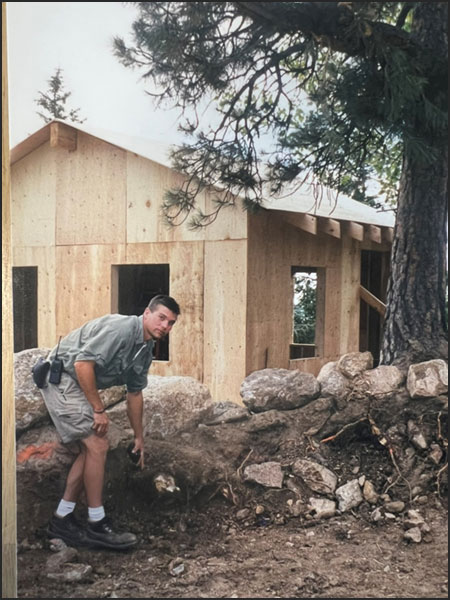
Wolf Woods had just opened and Asian Highlands was the first project that my horticulture team and I planted as the newly hired horticulture curator. I still cannot walk though that exhibit and look at all those big trees without reminiscing about planting them all.
There is one white poplar tree in the tiger exhibit that was only about 4 feet tall in a five-gallon pot when we planted it. Over its early years it was nearly killed by tigers many times. It stayed small and barely survived. One day, I went out and it was nearly 30 feet tall. Tigers never again bothered it. It had survived and began to grow into something quite special.
That is how my journey at the Zoo began and why I am so proud to see what it has become. So many employees have shed tears and sweat here, donors have donated the funds necessary to improve, board members have given their expertise, time and money and our visitors and members have watched it all – supporting us year after year.
Thank you for staying with us and not leaving when everyone else was abandoning ship. You helped us become what we are today – an internationally recognized leader in animal care and conservation, and a special place where our community comes to make memories, connect with each other and feel inspired to save wildlife and wild places.