Written by Lauren Phillippi, lead animal keeper

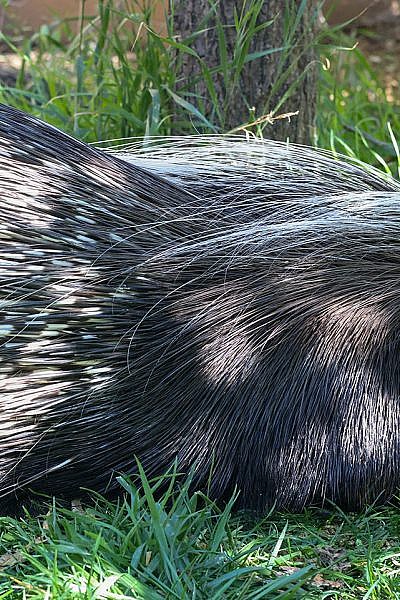
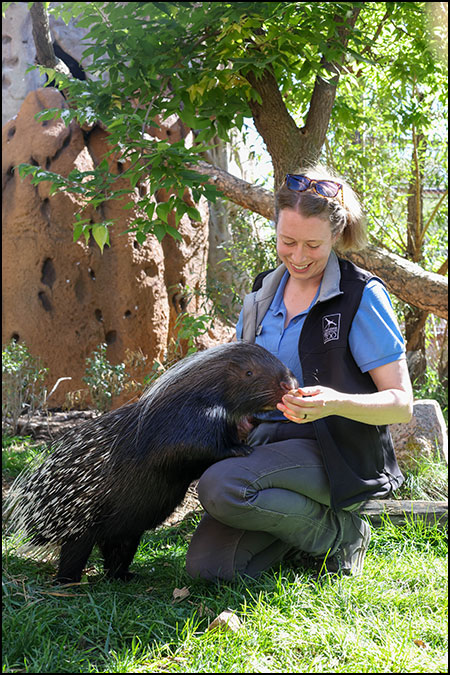
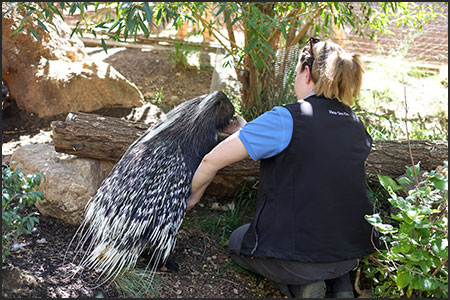
Zoo Keeper Lauren with African Cape porcupine, Waffles

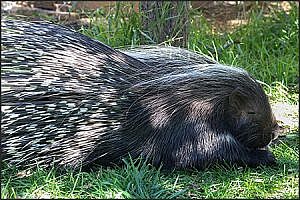
There have been many changes in African Rift Valley recently, in addition to the brand-new giraffe habitat we’re building. One of the most notable this summer was the opening of the new outdoor mixed species habitat built for three of my favorite animals at the Zoo: our Cape vultures, Godric and Hedwig, and our own prickly superstar, Waffles the Cape porcupine.

Guests can see vultures flying and exploring their perching in their new aviary across from the current giraffe barn. The habitat doubles as a home for one of the most adorable animals at our Zoo – Waffles.

Although the vultures were introduced to the habitat first, when Waffles arrived, she strutted out of her travel crate with a confidence that seemed to say, “Yes of course, this is all for me!” She explored every space during her first day and we watched with awe as she kept interacting with new parts of her exhibit. Even with large vultures keeping a close eye perched in trees above her, and a few curious giraffe neighbors following her along the mesh as she explored, Waffles kept on without a care.

It was exciting when she started using the exhibit features that were designed just for her. Porcupines are nocturnal, meaning many times when you go by to see Waffles during the day, she’ll likely be resting or sleeping. There is an elevated dugout in the new termite mound feature in their yard that she often climbs on to take a nap. Most often, guests can see her resting near or in her burrow at the baobab tree. There is even a viewing window inside of the tree where people can get a unique view of her underground. Next time you visit, you might see her resting there, or doing one of her favorite activities: digging!

Zoo Keeper Lauren with African Cape porcupine, Waffles

The burrow was designed so we can add fresh substrate, like dirt or mulch, to the habitat. Waffles is a real earth-mover and she uses her claws and her strong legs to dig and move dirt around until it is just where she wants it. She chooses digging over most other enrichment opportunities when given the choice, so we are happy to provide her environment with opportunities to do what she does best as a Cape porcupine.

Waffles also shines during training. I’ve worked at the Zoo for 12 years, and during that time I’ve trained a wide variety of animal species and behaviors. The past four years working with Waffles have been especially rewarding as she brings incredible energy and enthusiasm to every training session. Animal training continues to be one of the most fulfilling parts of my day as a keeper.

Waffles knows many voluntary behaviors that allow her to be an excellent ambassador for her species by getting up-close with guests during her unscheduled walkabouts around the Zoo. Waffles also knows behaviors that help us keep track of her health, like stepping on a scale to check her weight and stationing voluntarily for vaccines. Most recently, she has started learning something new (and pretty exciting!): ultrasound training.

Waffles and I have only worked on ultrasound training a few times so far, but she learns fast, making each training session exciting. I plan for one step ahead in each session, as she often masters her training criteria quickly. You might say she’s really sharp – pun intended. At the start of each session, I cue Waffles to place her front paws up on a log stump, creating more room to view her belly, which usually stays low to the ground.

Zoo Keeper Lauren with African Cape porcupine, Waffles

When designing the training plan, I break the behavior into smaller steps so Waffles can choose to participate at each step. We start with stationing on the stump, gently parting her quills on her stomach, introducing the ultrasound equipment, and building a duration hold – which helps her learn how long I need her to stay in that standing position for our veterinary team to get a good ultrasound image. When Waffles was first introduced to the ultrasound wand touching her abdomen, she stayed calmly on her station, eager to earn almonds and walnuts as positive reinforcement for participating. I am so proud of the progress we’ve made!

This will be an extremely helpful behavior for her to know in the future because she has a breeding recommendation by the Cape porcupine Species Survival Plan (SSP) to be matched with a male. Training an ultrasound behavior now will give us the chance to track and monitor a potential pregnancy in Waffles’ future.

Porcupines have a special place in my heart, so naturally I’m very excited to welcome another porcupine to the Zoo, especially if it means the potential for porcupettes (the scientific name for baby porcupines)!

Introducing Waffles and her future mate will require a lot of planning, patience and expertise in reading the animals’ responses to each other. We will follow the porcupines’ lead as we support Waffles and the new porcupine getting to know each other. It will be an honor to be a part of this next journey with her.

Back to The Waterhole

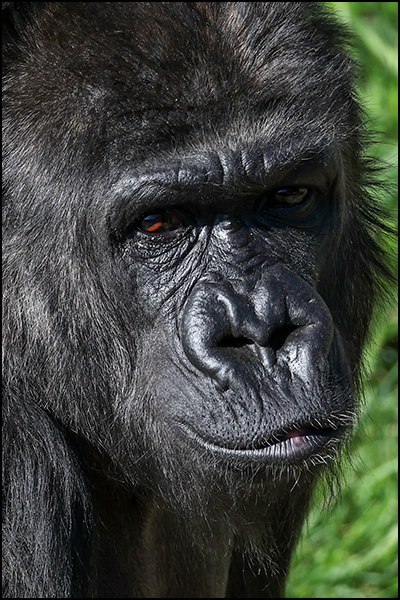
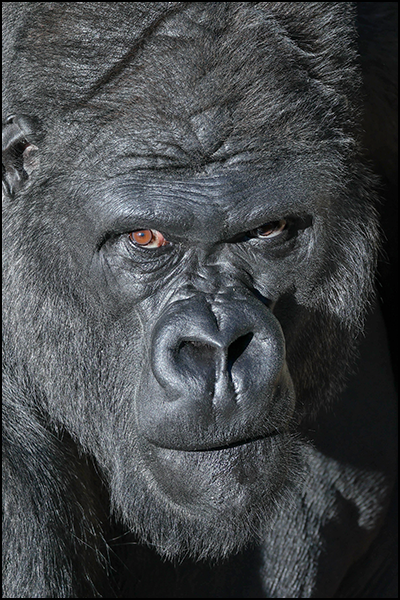
Western Lowland gorilla, Asha portrait
Western lowland gorilla, Asha

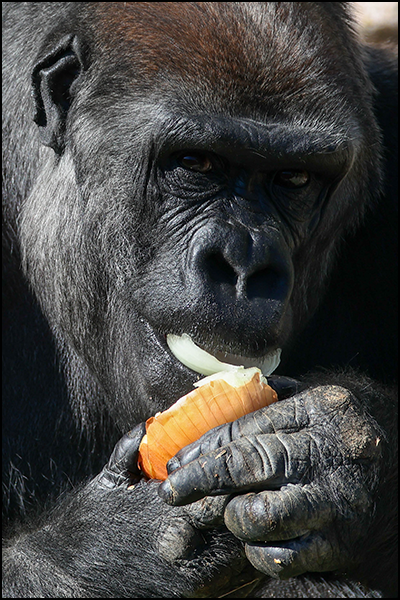
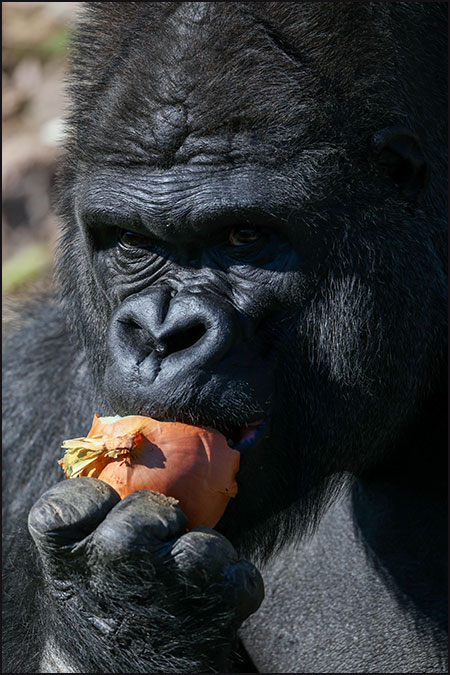
Of the many gorilla aspects to observe and adore, it’s worth taking a minute to focus on their noses. Conservationists do the same for scientific purposes.

“All of our gorillas have very different noses, so in addition to their other distinguishing features, we can identify them that way,” Ashton Asbury, Primate World animal keeper, says. “Being able to identify them here at the Zoo helps us track their qualities of life, health, social interactions and more. In the wild, conservationists use this method to identify wild gorillas, too.”

Each gorilla has a unique nose, just like humans. While there are other ways to identify gorillas individually, noses were efficient identifiers for conservationists who were often observing from afar or via photos and videos.

Western lowland gorilla, Goma

Wild gorilla research has been documented since the 1950s. Using consistent identifiers, like noses, helps researchers learn more about each individual long-term, which reveals how gorillas socialize and move through wild places. With information about how gorillas use habitats, conservationists can present data that helps support policies that protect the habitats gorillas need to survive.

As gorillas mature and naturally move out of their initial family groups to join other groups, conservationists noted their noses to identify and continue observing them in new groups.

Western lowland gorilla, Kwisha

“Once they have fully developed, gorillas’ nose shapes typically stay the same,” Ashton says. “Their body shapes and sizes and hair colors may change with age. Because they move between social groups, it’s not as dependable to rely on comparisons with other gorillas to identify individuals.”

By identifying individual gorillas, conservationists can track family dynamics, group movements, diets, migrations and even life spans – all foundational information that still benefits gorilla conservation efforts and care for great apes in human settings.

At CMZoo, gorilla fans can easily tell the gorillas apart by comparing their sizes, hair colors and more. Identifying Asha is especially simple now, because she’s the gorilla carrying an adorable baby! But, their noses are worth appreciating, too.

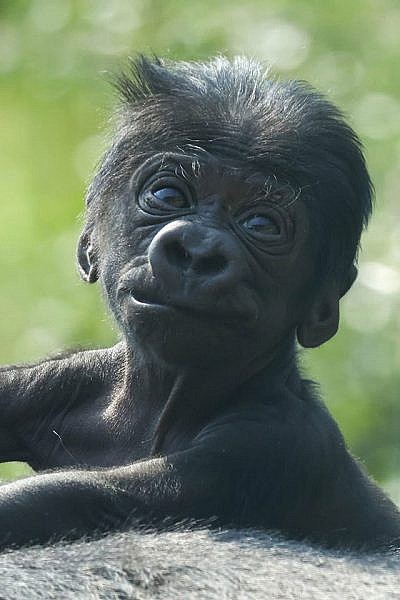
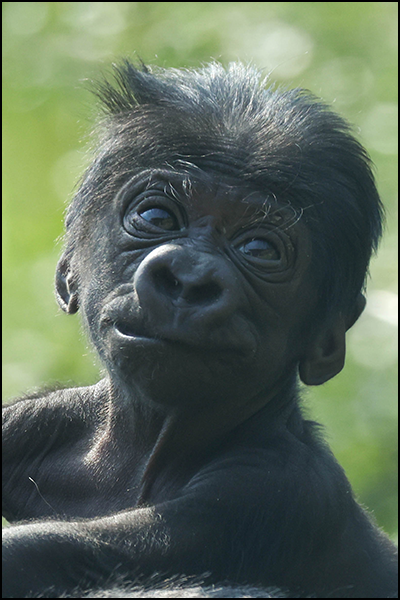
Western lowland gorilla baby

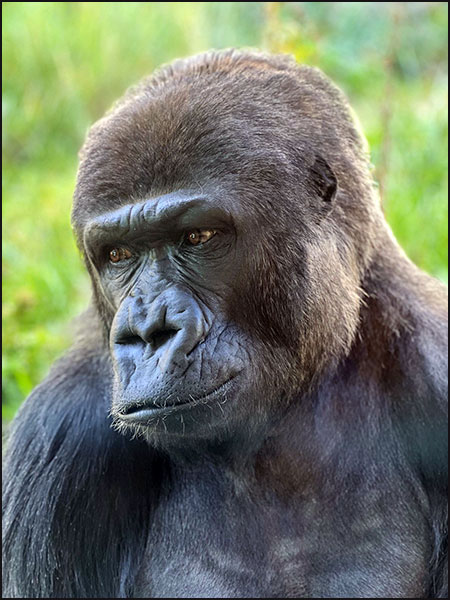
Asha’s nose is heart-shaped. In between her nostrils is a U-shaped indent. She’s also identifiable as the shortest adult gorilla in the group.

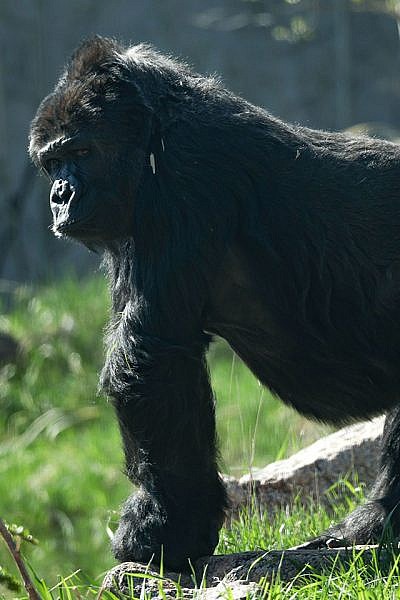
Goma’s nose is also heart-shaped, but he has a strong line between his nostrils. Goma is the largest gorilla in the CMZoo troop, and he has grayish-silver hair on his back.

Kwisha’s nose is longer and her nostrils are more upright than Asha’s and Goma’s. Kwisha has brownish-red hair on her head, and she’s the ‘middle sized’ gorilla at CMZoo.

• So far, the baby’s nose is heart-shaped, like his parents’, but his nose is still developing.

Next time you’re in Primate World at CMZoo, test your gorilla knowledge and see if you can identify the adults by their noses.

Back to The Waterhole

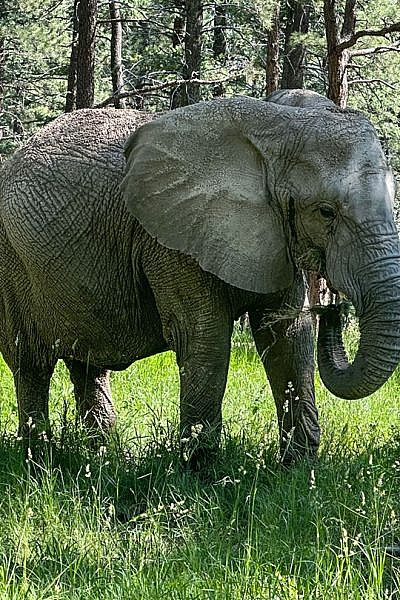
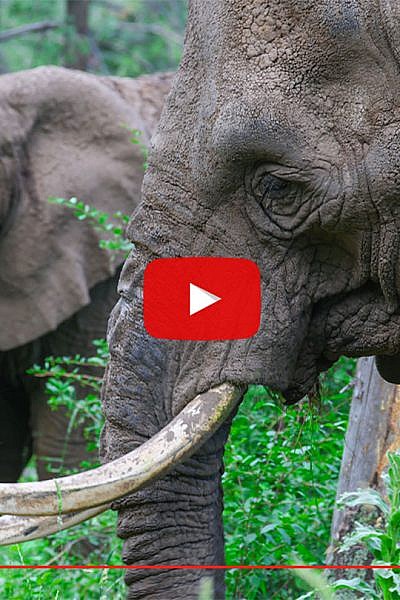
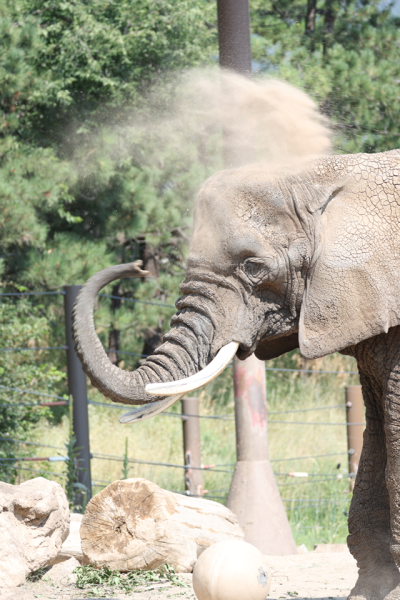
Catch up with Missy, CMZoo’s eldest African elephant!

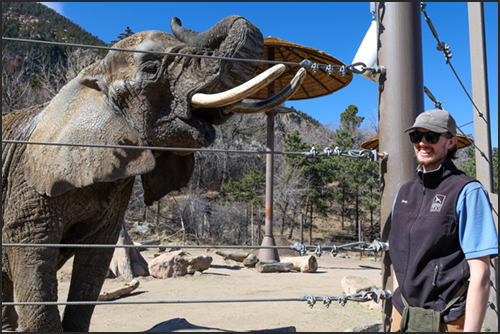
Missy, who recently turned 56 years old, shares space with her longtime companion, LouLou. Some of her favorite activities include wallowing in mud puddles, training with her keepers, munching on hay and tree branches, and exploring the trek space, vacation yard and main elephant yards.

Our elephant care and veterinary teams tailor individualized health and exercise programs for Missy (and all of our elephants), based on her unique needs and preferences. Missy excels in training and participates in cooperative blood draws and injections. This helps her care team closely monitor her health as she ages and administer medications — like pills or injections — to ease inflammation, arthritis and other age-related aches and pains. She especially enjoys a ‘direct deposit’ snack delivery during these training sessions — tossing her trunk over her head while keepers gently lob her favorites straight into her wide-open mouth.

Back to The Waterhole

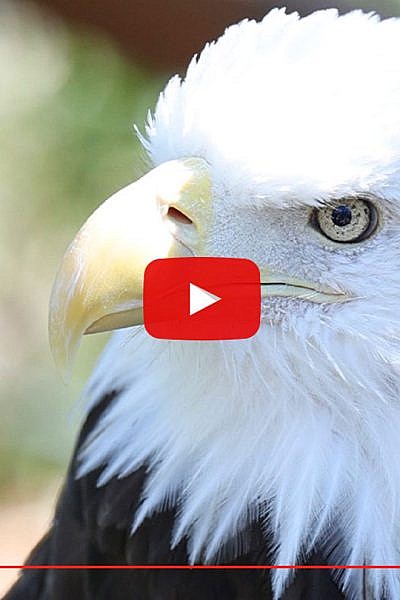
Help us wish Ouray a happy 32nd birthday! The Fourth of July isn’t just America’s birthday—it’s also Ouray the bald eagle’s designated hatchday!

Ouray is a bald eagle, but she’s also a ‘golden eagle’ because she’s well into her golden years. The median life expectancy of a bald eagle in human care is 16 years, according to the Association of Zoos and Aquariums! We don’t know Ouray’s exact age or hatchday because she came to us after being injured in the wild. Bald eagles are federally protected and illegal to own for falconry purposes in the United States. However, some organizations, like CMZoo, have special permits to care for bald eagles that cannot be released back into the wild, like Ouray. Ouray came to CMZoo in March 2006, from our friends at Denver Zoo Conservation Alliance, who took her in after a wing injury left her unable to fly in 2002.

For 18 years, her signature calls have been like a soundtrack for CMZoo guests and staff. You can visit Ouray in Rocky Mountain Wild. Stay a while to see if she’ll grace you with a call during your next trip to CMZoo!

Back to The Waterhole

Mother’s Day is extra special in Primate World, at Cheyenne Mountain Zoo, this year. Asha, a 32-year-old critically endangered Western lowland gorilla, is pregnant. She is due between mid-May and the end of July.

Western Lowland gorilla Asha,

“It has been nearly 13 years since a gorilla was born here, so many visitors will get to experience this for the first time, along with our silverback, Goma, who will become a first-time dad with this little one,” Jon Wild, lead animal keeper in Primate World, says. “It’s not Asha’s first time, and she has been a great mom in the past.”

Asha is mom to two gorillas who have moved on to other troops now: 12-year-old male, Dembe, who lives at North Carolina Zoo, and 18-year-old female, Tumani, who lives at Audubon Zoo, in New Orleans.

Asha was born at CMZoo on Oct. 5, 1992. Thirty-four-year-old Goma moved to CMZoo, in 2016, on a breeding recommendation from the Western Lowland Gorilla Species Survival Plan, supported by Association of Zoos and Aquariums-accredited organizations, including CMZoo.

Before he came to CMZoo, Goma lived with a bachelor troop, so he had to learn how to lead a troop of females. As an experienced mom, Asha helped Goma learn how to breed.

“Since Goma moved here, nine years ago, the gorilla care team has been working to integrate him into the troop, and the troop has been helping him learn to lead as a silverback, with this pregnancy as a goal,” Wild says. “It’s incredibly exciting to see the gorillas achieve a healthy cohesive troop dynamic, and knowing there’s a baby on the way makes it even more meaningful to see this family grow.”

Asha’s previous experiences have helped Goma learn, and they have helped her care team provide prenatal check-ups throughout her pregnancy. Asha participates in cooperative care, like ultrasounds that have revealed a healthily growing baby. The Zoo first confirmed her pregnancy in December 2024 with a positive urine pregnancy test.

“Asha is super smart, and she approaches a training panel and presents her stomach so we can touch it with the ultrasound wand,” Wild says. “She’ll stand and get training rewards for participating, and her methods of presenting her stomach to us are adorable.”

Western Lowland gorilla Asha

During ultrasounds, Asha stands next to the mesh training panel and leans her stomach sideways against the mesh, with her arms outstretched above her. Keepers, from the other side of the protective barrier, slip an ultrasound wand through the mesh and press it against her abdomen. Animal keepers say the ultrasound gel is often off-putting for animals – even if they warm it up. Animals typically don’t like the texture, but Asha doesn’t mind. She participates in the ultrasound sessions for around 30 minutes, and is free to leave the sessions any time she pleases. She offers her belly to keepers in a more ‘theatrical’ way, too.

“She has an especially graceful stomach presentation, where she lifts one leg straight up against the mesh, like a ballerina, so we can position the wand on the underside of her round tummy,” Wild says. “Guests get a real kick out of seeing that, and it gives us great wand placement options to see the baby moving around.”

Gorilla gestation typically lasts eight-and-a-half months. As long as Asha and her baby continue to do well, guests can visit her in Primate World. When she gives birth, the Zoo will share updates.

Gorilla babies are typically on their mothers for the first year, taking time to crawl, explore and play periodically. In the first 15 days, the gorilla care team will be looking for the baby to hit milestones that indicate good development, including grasping onto its mother, nursing, holding its head up independently, making eye contact and following movement with its eyes.

In its first month, they’ll look for the baby to smile, laugh quietly, roll over from its stomach to its back, initiate soft play and start teething.

Western Lowland gorilla Asha, side portrait pregnant May 2025

Western lowland gorillas are critically endangered in the wild, and their numbers continue to decrease in the wild. Gorilla fans can help preserve wild gorilla habitats by recycling small electronic devices and cell phones at CMZoo.

In addition to disease and poaching, gorillas face habitat loss due to logging for agricultural use, human settlements and mining. Many of the West African lowland forests and swamps that these animals call home are also natural deposits of coltan, a mineral used in cell phones and other electronics. Due to the ever-increasing demand for cell phones across the world, the destruction of these gorillas’ habitats for mining purposes has unfortunately increased.

Coltan is recyclable, and by donating old cell phones, we can help supply valuable coltan for future phone production. Guests can bring electronics to CMZoo admissions or Primate World, where there’s a recycling collection bin near the gorillas’ indoor dens. CMZoo will send them to Eco-Cell, an organization that recycles the phones, as well as tablets, smart watches, Bluetooth devices, GPS devices, e-readers, digital cameras, handheld gaming systems and their accessories.

About Cheyenne Mountain Zoo

Cheyenne Mountain Zoological Society was founded in 1926. Today, Cheyenne Mountain Zoo, America’s mountain Zoo, offers comprehensive education programs, exciting conservation efforts and truly fantastic animal experiences. In 2025, Cheyenne Mountain Zoo was voted #2 Best Zoo in North America and CMZoo’s Rocky Mountain Wild was named #2 Best Zoo Exhibit in North America by USA TODAY 10Best Readers’ Choice Awards. It is Cheyenne Mountain Zoo’s goal to help guests fall in love with animals and nature, and take action to protect them. Since 2008, CMZoo’s Quarters for Conservation program has raised more than $5 million dedicated to frontline conservation efforts around the world. Of the 237 zoos and aquariums accredited by the Association of Zoos and Aquariums (AZA), Cheyenne Mountain Zoo is one of just a few operating without tax support. Cheyenne Mountain Zoo depends on admissions, membership dues, special event attendance and donations for funding.

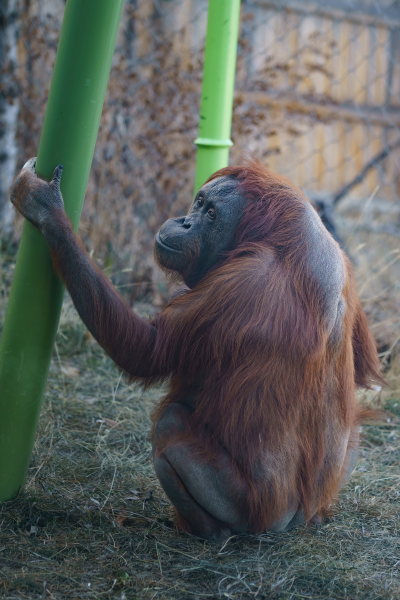
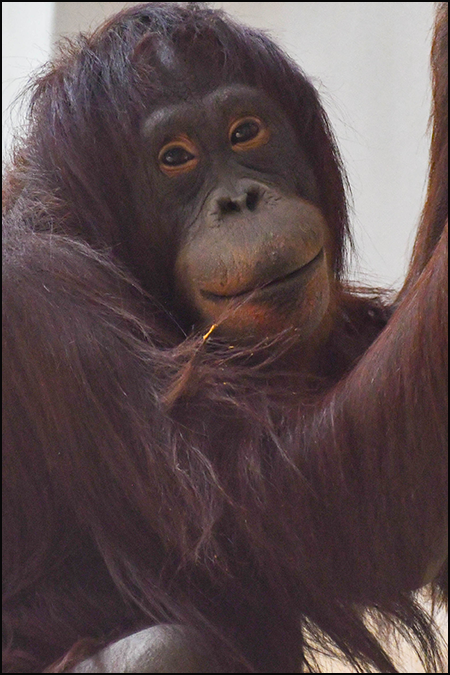
With Mother’s Day around the corner, staff at Cheyenne Mountain Zoo are reflecting on one mother-daughter relationship that stands out: Bornean orangutans, Hadiah [huh-DEE-uh] and Ember.

Sumatran orangutan, Ember
Bornean orangutan, Ember

“They’re incredibly close,” Ashton Asbury, animal keeper in Primate World, says. “Great apes are intelligent and complex beings, and we see different parenting types in each of them. Hadiah, as a mom to her only child, Ember, is a supportive, patient and rose-colored-glasses kind of mom.”

Ember is known for her in-your-face playfulness and high-energy approach to life. Her mom sometimes inadvertently finds herself in the path of her rambunctious nature, but she doesn’t seem to mind. After being the recipient of a rogue toy to the head, Hadiah has been seen handing the toy back to Ember patiently, and returning to her own activity without skipping a beat.

Often that activity is people watching.

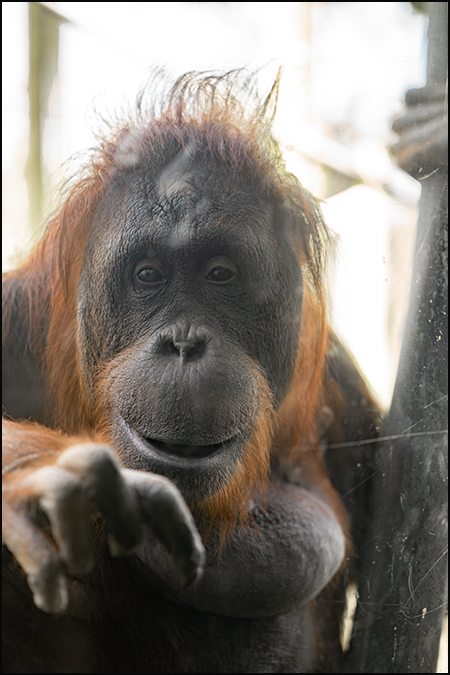
“Hadiah has connections with so many visitors and staff because she’s truly curious and recognizes people who return to see her,” Ashton says. “She’s got great facial recognition, and she’ll play with people through the glass. If she’s ever rolled over onto her back or folded her arms over her head to one side and looked at you upside down, she’s playing with you. She does that with her favorite humans and new guests who catch her eye.”

Orangutans are mostly solitary as adults, unless they are interacting for breeding or they have young with them, and many orangutan mothers are ready for their offspring to ‘spring off’ by around age seven or eight. Thirty-seven-year-old Hadiah is content with her daughter-turned-bestie, who is ten years old.

“These two still nest together every night,” Ashton says. “They eat together and play. It’s rare to see that kind of relationship in orangutans, when offspring are as old as Ember, and it really speaks to the respect and affection they have for each other.”

On the rare occasion that confident Ember feels unsure about something new, she runs to Hadiah, grabs her arms and wraps them around her. Despite their similar size, Hadiah occasionally still carries Ember.

“Their dynamic can be playful and outgoing, but also so patient and calm,” Izzy Dones, animal keeper in Primate World, says. “They’re usually together, but Ember and Hadiah also enjoy doing things separately sometimes. They’re both confident training and exploring separately, but, any time Hadiah is training with us, we’re ready with an activity for Ember nearby, because she’s going to want to do whatever Mom is doing.”

Hadiah grew up at the Zoo and was close with her own mother, Sabtu, until she passed away, in 2006. That strong family foundation seems to have shaped Hadiah’s parenting style.

“At least partly because of Hadiah’s unwavering support, Ember is one of the most confident and intelligent orangutans we’ve seen,” Izzy says. “She’s outgoing and curious about staff and guests, just like Hadiah, and she picks up training fast. She’s always pushing boundaries in a way that helps her grow, but still stays very close to Hadiah.”

Ember’s favorite enrichment activities include wearing fabric on her head, mimicking a behavior observed in wild orangutans who use leaves for shelter, like a hat or umbrella. She’s also a skilled problem-solver who enjoys dismantling enrichment items and ‘trading them’ through the mesh for snacks from keepers. She has learned that she gets one snack for every item she passes through the mesh, so instead of passing an assembled puzzle feeder, she takes it apart into several pieces – earning several snacks.

“Ember is really sharp,” Izzy says.

The apple didn’t fall far from the tree. Hadiah participates in cooperative care, like brushing and water-flossing her teeth, nail trims, target training, voluntary injection, abdominal ultrasound, scale training, ear and eye presentations, and more. Of course, through modeling behaviors learned by watching Mom, Ember is also a whiz at most of these, too.

Not to be outdone by her vivacious daughter, Hadiah is learning new climbing behaviors, and her fascination with guests is building her confidence and strength to climb high in the orangutan yard.

“She likes to climb down like a sloth, and because she’s so outgoing, she seems to enjoy the guests’ reactions,” Izzy says. “She’ll hear guests ‘oohing’ at her while she climbs, and will stop and look over at them with excitement.”

When guests aren’t ‘oohing’ at her, she calls them over by knocking on the glass to get their attention. Visitors usually get the hint, and Hadiah presents opportunities to play, or brings a blanket over to the glass to make a nest to rest near them.

Bornean orangutan, Hadiah portrait
Bornean orangutan, Hadiah

Their “perfect day” includes novel training sessions, new spaces to explore and enrichment items like ice treats, bubbles, coconuts and even painting sessions. Hadiah is especially thoughtful with her artwork, while Ember seems to embrace the Jackson Pollock painting style.

As members of a critically endangered species, Hadiah and Ember play an important role in orangutan conservation.

“Most people won’t get the chance to see an orangutan in the wild,” Izzy says. “But when they meet Hadiah and Ember, they connect. They stop, they watch, and they feel seen by an animal. That connection makes all the difference.”

Every visit to CMZoo helps fund international efforts to save wild orangutan habitats, through the Zoo’s Quarters for Conservation (Q4C) program. “Orangu-fans” can save the rainforests from the comfort of their smartphone with a free global mobile app called PalmOil Scan.

Palm oil is an edible oil sourced in about half of consumer products. Unsustainable palm oil production results in deforestation in Indonesia and Malaysia – the only places where critically endangered orangutans live in the wild. Although the majority of palm oil production is in Southeast Asia, it has also expanded to other tropical areas, which means more animal species could lose the habitats they need to survive.

When produced sustainably, palm oil is four to ten times more productive than any other edible oil. Using PalmOil Scan, conscientious consumers can scan the barcodes on tens of thousands of products in the app’s extensive database (which is being updated and expanded continually) to see if they are produced by a company that has committed to sourcing sustainable palm oil. By choosing products made by companies that have committed to sustainable palm oil, consumers can show companies that they’re armed with the information they need to demand action for wildlife conservation.

Developed under the direction of the World Association of Zoos and Aquariums and regionally managed by CMZoo, in the U.S. and Canada. The PalmOil Scan is a global app that can also be downloaded in the UK, Australia and New Zealand, which are all managed by other partner zoos. The free app can be downloaded from the App Store and Google Play. Orangutan enthusiasts can learn more about palm oil, and download the free app before their next shopping trip, at cmzoo.org/palmoil.

Back to The Waterhole

Visitors to Primate World, at Cheyenne Mountain Zoo, may soon notice two crates in the orangutan yard. These crates are part of the Zoo’s careful preparations to help two iconic Sumatran orangutans, 6-year-old Kera and her mother, 37-year-old Sumagu, get ready for their next chapter.

Sumagu portrait, orangutan.

The mother-daughter duo is scheduled to move to another AZA-accredited zoo, likely later this summer, as part of a breeding recommendation through the Association of Zoos and Aquariums’ Species Survival Plan (SSP) for Sumatran orangutans.

Sumagu has a breeding recommendation with a male at another zoo, and keepers are working diligently to ensure the move is as smooth and low-stress as possible.

“Crate training is one of the more advanced behaviors we work on with our orangutans,” Ashton Asbury, Primate World animal keeper, says. “We’re teaching Kera and Sumagu to voluntarily enter the crates and to be comfortable spending time in them.”

Using positive reinforcement training, keepers are helping both orangutans associate the crates with rewards and calm experiences. In addition to watching for subtle behaviors, the team teaches the orangutans to signal when they’re ready to end a training session. This method allows Kera and Sumagu to feel empowered throughout the training process.

“Our goal is for them to enthusiastically enter the crates and allow the doors to close behind them,” Ashton says. “That way, when it’s time for the big move, it’s a familiar and positive experience.”

Thanks to this voluntary approach, neither orangutan will require sedation during their trip. Experienced animal transport professionals will make stops along the way to check on the great ape travelers, offering food and water, and making visual health checks. The teams also collaborate with AZA-accredited zoos along the way, in case the orangutans need care mid-trip.

Sumagu, who was born at CMZoo, will be stepping into a new world as she heads to her new home.

“We’re excited for Sumagu to have this new life experience,” Ashton says. “She’s such a wise and savvy orangutan. She’s very confident, and we’re encouraging her choice and control as she trains. She’s a great communicator. If she needs us to make adjustments, she’ll let us know.”

Sumagu’s daughter, Kera, is also preparing for this next stage in life. At her age, orangutans naturally begin to seek more independence, and Sumagu encourages that independence in Kera. To support this, Kera and Sumagu will travel in separate crates, and then settle into their new home together.

“It’s important for young female orangutans, like Kera, to observe their mothers raising another baby,” Ashton says. “She doesn’t have a breeding recommendation, but she could later. Young female great apes who get to be older siblings become more successful mothers later. Great apes’ offspring typically stay with their moms longer than any animal species, and learning how to be a mom from their own mom is the best-case scenario.”

Keepers at CMZoo will be working closely with the orangutans’ future animal care team, sharing training histories and behavioral nuances, which is essential for complex and intelligent animals like orangutans.

Sumagu portrait

“Kera is such a fun kid,” Ashton says. “She’s serious about orangutan things, like nest-building, but she’s also super engaging and outgoing with people. We will definitely miss both of them, but we’re proud to support this breeding recommendation that supports the population in human care, and continues to inspire conservation for wild orangutans.”

Fans of Kera and Sumagu, and all orangutans, can save the rainforests from the comfort of their smartphones with a free global mobile app called PalmOil Scan, available for free on the App Store and Google Play. It is available in the United States, Canada, the United Kingdom, Australia and New Zealand, with further expansion planned in the future. Orangutan enthusiasts can learn more about palm oil, and download the free app before their next shopping trip, at cmzoo.org/palmoil.

Palm oil is an edible oil that can be found in about half of consumer products. Unsustainable palm oil production results in deforestation in Indonesia and Malaysia, the only places where critically endangered orangutans live in the wild. Although the majority of palm oil production is in Southeast Asia, it has also expanded to other tropical areas, which means more animal species could lose the habitats they need to survive.

When produced sustainably, palm oil is 4 to 10 times more productive than any other edible oil. Using PalmOil Scan, conscientious consumers can scan the barcodes on tens of thousands of products in the app’s extensive database (which is being updated and expanded continually) to see if they are produced by a company that has committed to sourcing sustainable palm oil.

“Orangutans are incredibly intelligent and complex animals,” Ashton says. “Our animal care team knows these great apes really well, and we’re planning for the best opportunities for all of the orangutans in our care as these changes take place.”

Primate World is currently home to six orangutans: three Sumatran orangutans, including Kera and Sumagu, and three Bornean orangutans. When Kera and Sumagu move, male Sumatran orangutan, Baka, will continue his current lifestyle, with access to interactions through a safety barrier with Ember and Hadiah, mom-and-daughter Bornean orangutans. Tujoh, a male Bornean orangutan, will continue to have the same access.

Back to The Waterhole

Raccoon portrait

Baldwin, Benton and Baker, the raccoon brothers who call Rocky Mountain Wild home, recently took up a new hobby, thanks to their keepers’ creativity and Cheyenne Mountain Zoo’s commitment to environmental enrichment. Their habitat now features an exciting new addition: an elevated stream where they can fish, forage and explore on their own schedules.

“Raccoons love to solve problems, splash in water and, of course, eat,” Kelsey Walker, Rocky Mountain Wild animal keeper, says. “This stream is a dream come true for them, and our guests seem to love watching their adorable methods.”

Inspired by the old-fashioned gold panning stations of the American West, the new wooden enrichment feature consists of three connected elevated ‘streambeds,’ each about eight feet long and two feet wide. The beds are full of about five inches of dirt, sand, rocks and shells, and flooded with water. Keepers bury shrimp, mussels and crab legs in the substrate, encouraging the raccoons to rely on their natural foraging skills.

The enrichment was introduced in February, and from the very beginning, the raccoons took to it immediately.

“These raccoons were born in human care, but they instinctively knew how to fish right away,” Kelsey says. “They perch on the rocks or wade into the streams, patting the surface with their paws until they detect food. They dig it out, roll it in their paws to find the weakest spot to crack into it, and then settle somewhere dry to eat.”

Raccoons are incredibly tactile animals. Seventy-five percent of the part of their brain that manages the sense of touch is dedicated to their forepaws. Their paws often tell them more about their environment than their noses or eyes. That makes ‘blind fishing’ in muddy streams a cinch. They can solve the ‘mud problem’ and locate prey underwater – or under rocks – just by feeling around the surface.

Raccoon fisihing in exhibit area

The brothers typically spend 15 to 30 minutes fishing before moving on to other activities, but they return to the streams multiple times each day and night. It’s safe to say that fishing is their new favorite hobby. In addition to fishing, they have a variety of enrichment opportunities throughout their space, including a dry foraging bin filled with hay, shavings, peas and corn, and fruit hanging from trees to encourage climbing. Keepers also scatter treats in mulch and hay across the habitat floor.

“Our three raccoons are really living the good life,” Kelsey says. “It’s like they have retired on waterfront property. They sleep in every day, then they go fishing, hang out with their brothers, take a nap and fish some more. That’s their routine.”

The Zoo’s enrichment philosophy focuses on creating engaging and stimulating environments that encourage animals to do wild-type behaviors at their own pace, without depending on keepers’ schedules. Keepers still train with animals, because husbandry behaviors are important for their care. The new streambeds are a great example of environmental enrichment.

“This has been a really successful way to provide enriching and interesting activity for them for an entire day,” Kelsey says. “They don’t need us, beyond stocking the stream each morning. It’s incredibly rewarding to set up an environment and to know they’re having a great day, getting good physical and mental exercise, and using their natural instincts.”

Guests visiting Rocky Mountain Wild will also benefit from the new feature. Since the stream beds are elevated, visitors get an even better view of the raccoons’ fishing techniques and playful behavior.

“When they’re in the troughs, they’re right up by the mesh, so it gives guests a great angle of what they’re doing,” Walker added. “If they happen to be sleeping when you stop by, be sure to come back later. They’ll probably be up to something fun, whether it’s fishing, climbing or foraging.”

Back to The Waterhole

At 9 years old, our golden dairy girls – Cotija, Asiago, Queso, Mozzarella, Colby, Muenster, Ricotta and Brie – are enjoying their golden years to the fullest! These goats spend their days sunbathing, training, climbing, playing, going on walkabouts and meeting guests. Visitors can feed the goats for $1 per feeding, depending on weather, or interact with them through goat encounters, where they can pet and brush the goats.

If you’ve tasted goat cheese, it was probably made from milk from a goat like one of ours! Nubian and Nubian-Saanen goats are among the most common dairy goat breeds found on farms worldwide. Our goats originally came from a local cheese farm, inspiring their cheesy names.

Stop by and share some moments with these gouda girls!

Back to The Waterhole

A group of ferrets is called a business! Our business is made up of Alfred, Tsunami, Cyclone, Avalanche and Blizzard! These playful, social animals thrive in small groups. A mix of ages helps the group maintain strong bonds as it evolves. Alfred, at 6, and Tsunami, almost 5, are the oldest, while Cyclone, Blizzard, and Avalanche are 3-year-old females. Though there’s no real hierarchy, Cyclone and Avalanche often lead playtime. Unlike their solitary black-footed ferret cousins, domestic ferrets have been bred for social traits, making them more interactive with humans and each other. Stop by The Loft at CMZoo to see them playing, snuggling and training together!

Back to The Waterhole