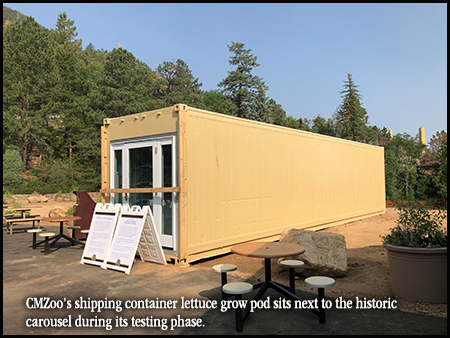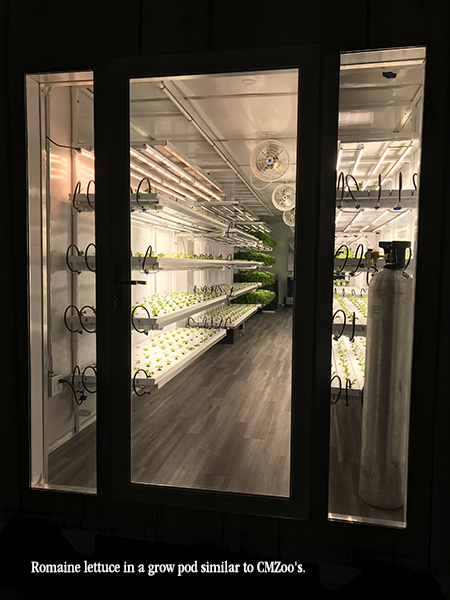
Have you noticed the shipping container next to Cheyenne Mountain Zoo’s historic carousel and wondered what’s going on? CMZoo is planning to grow lettuce using a retired shipping container. But, that’s simplifying things. Inside the modified shipping container’s sturdy walls lies a high-tech, energy efficient, and bio-safe grow house.

It’s hard to find a project much greener than this. The new grow house is energy-, water- and space-efficient. Because the grow pod’s shell was a freezer shipping container in its previous life, it’s heavily insulated. That will protect the plants from Colorado’s extreme temperature ranges.

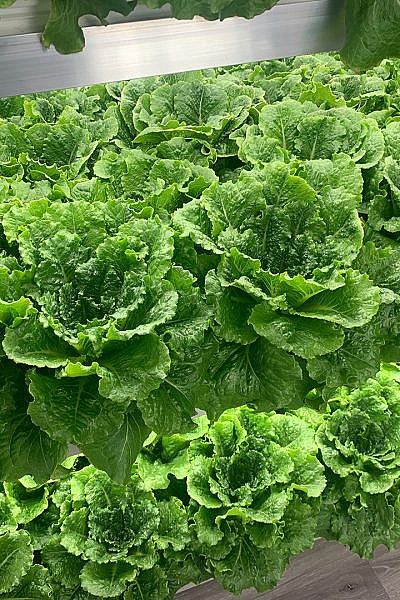
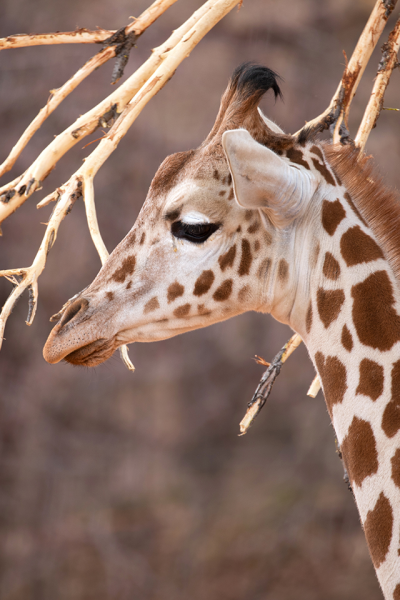
The hydroponic lettuce growing system inside the container is one of the most efficient ways to grow lettuce – and anyone who has visited our 17-member giraffe herd knows we go through a lot of lettuce.

“It fluctuates throughout the year, but on average, we use more than 3,500 heads of romaine lettuce per month,” said Alex Crochet, CMZoo horticulture curator. “It’s just a small part of the giraffes’ diet, but it’s a huge part of our guests’ experience. The goal is to grow about 55% of the Zoo’s lettuce using grow pods like this one, if this test is successful.”

Crochet’s excitement for this project is contagious, and his hope is to inspire gardeners who visit the Zoo.

“It’s a whole new adventure for our horticulture team, and we’re really excited about all we’re going to learn,” said Crochet. “Eventually, we hope to have our grow pod set up in a way that our guests can learn more about sustainable farming, too. As residents of a drought state, we Coloradans can take advantage of technologies like these to save water and still grow our own produce.”

The single grow pod should produce about an acre’s worth of lettuce using only 40 gallons per day. The system also uses a dehumidifier to capture excess water from the air and filter it back into the watering reservoirs. The ebb-and-flow hydroponic system uses less than a typical shower to fuel hundreds of heads of lettuce, which Crochet hopes to plant and harvest on a schedule that produces delicious fresh lettuce on a weekly basis – eventually.

The test pod is now connected to electricity, and next, it will be hooked up to a water supply. After that, the team will get started on planting. Swing by and take a peek through the glass doors of the container to see the progress for yourself.

Back to The Waterhole


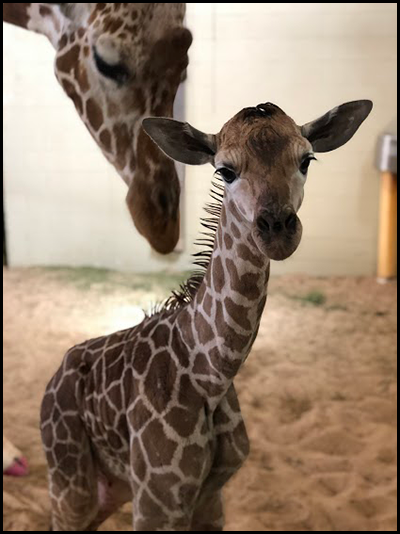
Our ‘firecracker,’ Viv, is turning two years old! Born two days after the Fourth of July, on July 6, 2019, Msitu and Khalid’s daughter gained her nickname pretty much immediately and has lived up to it ever since. Just six hours after she was born, Viv famously leap-frogged over Msitu’s back (while she was lying down), gaining an adorable reputation as independent, strong and super-charged.

Our partner, Children’s Hospital Colorado, is also celebrating the ‘terrific twos!’ They opened southern Colorado’s first pediatric-only hospital, right here in Colorado Springs, on July 17, 2019. To celebrate, Children’s Hospital Colorado is throwing our ever-vivacious Viv a birthday party – and you’re invited. Join us for a belated birthday on Sat., July 17, 2021, from 10 a.m. to noon in African Rift Valley for Viv’s second birthday party, complete with a ‘birthday cake’ for Viv, served at 11:15 a.m. The celebration will include opportunities for Viv’s fans to write her a birthday card, sing her happy birthday and visit our 17-member herd of giraffe.

“Knowing our Viv, she’ll continue to keep us on our toes as she has from day one,” said Amy Schilz, senior lead keeper in African Rift Valley, and Viv’s primary trainer. “This girl has become known for her adorable antics, like running after the cranes and guinea fowl in the yard, or stretching to reach a tree we didn’t intend to be giraffe food. Pretty much any time we get a radio call that one of the giraffe is up to something, we know it’s probably Viv!”

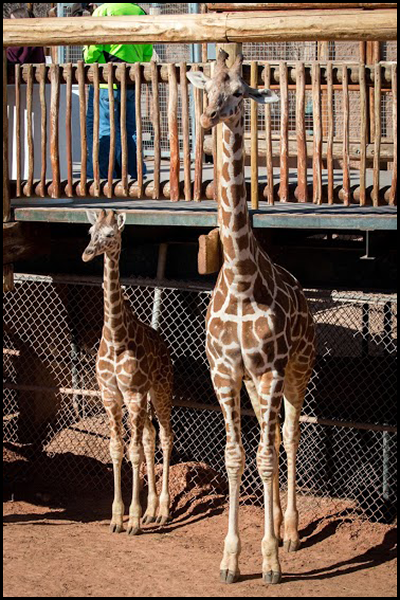
Viv seemed to surpass giraffe calf milestones with ease, but her independence meant that she seemed to prefer to be alone more than other giraffe, too. That has all changed since 2-year-old Ohe, 9-month-old BB and 3-year-old Panya joined the herd. Viv’s keepers say she seems to have come out of her shell with guests and the herd, since her three ‘besties’ have boosted her confidence.

“She has become really outgoing since becoming part of the four ‘littles’ group,” said Schilz. “You can usually find Viv and Ohe together. They get each other going in the yard, and will kick up the dirt and encourage each other to run around. We’ve also seen them ‘cuddling,’ when they take naps and lie down right next to each other in the barn mid-day. Because they seem to really like to be together, we have ‘baby training days,’ in the barn.”

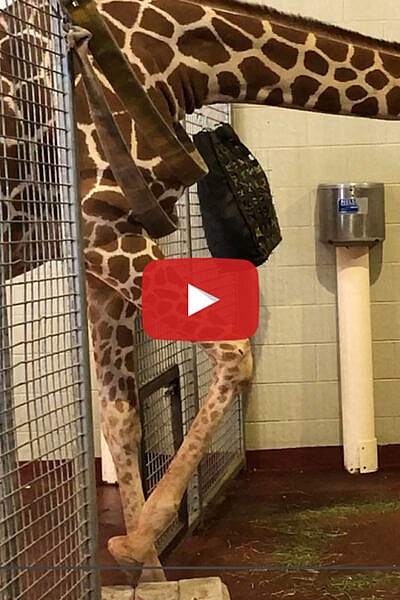
To perform the important hoof care work that is vital the giraffe’s overall health, keepers train the giraffe to voluntarily participate. Through positive reinforcement training, the giraffe learn to approach a hoof care block, place one foot on the block and keep it there while their trainers trim their hooves. Viv has mastered the approach and placement, but has other plans about what happens next. Each time a giraffe completes a successful step in the training, they get a reward. Smart and sassy Viv is well aware.

“Sometimes she outsmarts me in those training sessions,” said Schilz. “She’s learned if she touches her hoof to the block and then takes it off and puts it on again, she gets more treats. So now I’m having to go back in my training and figure out a new way to move forward. It’s been a really great team bonding experience, because we all share what works for her unique needs. We tailor training to each giraffe, and she is certainly pushing us and challenging us to stay flexible. We’ll get there.”

Please join us in wishing Viv a very happy second birthday, and in thanking our friends at Children’s Hospital Colorado for their partnership!

Viv’s 2nd Birthday Party
In Partnership with Children’s Hospital Colorado
All are invited; Zoo admission is required
Saturday, July 17, 2021
African Rift Valley
10 a.m to noon
11:15 a.m. ‘birthday cake’ for Viv

Back to The Waterhole


Learn all about Ohe, Viv, BB and Panya, our four giraffe under four years old!

Their primary trainers detail their personalities, roles in the herd, training progress, and relationships as the herd’s youngsters. You’ll also get to see behind-the-scenes training footage of each giraffe and its trainer, as well as a mini-zoomie session in the main yard.

Back to The Waterhole


CMZoo’s oldest male giraffe, Mahali, is dealing with progressive foot disease and suspected ligament injuries in his legs. The intelligent and confident ‘grandpa’ of the herd will be 18 years old on May 10. He has lived a good quality of life, well beyond the median life expectancy of male giraffe – 14.7 years – because of his dedicated team and their resources and expertise.

“Mahali has been dealing with leg and hoof issues for about five years, but because he’s received ongoing proactive and reactive care, he has been able to enjoy what we call ‘bonus years,’ in good health, after he’s recovered from periods of decline that he may not have survived otherwise,” said Dr. Liza Dadone, CMZoo vice president of mission and programs and a veterinarian specializing in mega vertebrates. Dr. Dadone has worked with Mahali for 11 years. “Unfortunately, he has started backsliding again recently. We’re watching how he responds to conservative treatments before we decide if he needs to go under anesthesia again.”

Anesthesia is risky for any animal, but is especially risky for larger animals, like giraffe. In 2017 and 2020, Mahali went under anesthesia to receive simultaneous treatments for his chronic foot and leg issues. Those risky procedures successfully helped him heal and return to a good quality of life.

Recently, Mahali started limping again, shifting his weight and hyperextending his wrists – which are halfway up a giraffe’s leg, and are often confused for their knees.

“His care team has been tracking Mahali’s quality of life with indicators that tell us if he needs additional care,” said Dr. Dadone. “Because he’s showing signs of discomfort relatively quickly after his treatment in 2020, we were more concerned this time around. But, after rest, pain management and topical treatments, he seems to be recovering. Still, we’re not out of the woods.”

Mahali has been resting in the barn for a few weeks with access to a sand bed that provides extra cushion for his 2,000-pound body. Giraffe don’t always lie down to sleep, but he’s been lying down in his sand bed regularly. He’s also on pain and anti-inflammatory medications and receives laser therapy. That care regimen has helped somewhat. Mahali is having mostly good days now, but his team is still watching him closely and listening to him when he shows them he’s not comfortable.
Recently, Mahali’s team asked him to participate in training so they could adhere a therapeutic shoe to his front right foot. During that session, he needed to hold his foot still while the glue set for two minutes. He stood steadily for about a minute and then decided to walk away.

“If you think about what we’re asking giraffe to do during a hoof care session – shifting weight off one leg then lifting it onto a hoof work block to bend and hold it so we can safely access it – you can see why they might tell us they don’t want to participate if it’s causing more pain,” said Dr. Dadone. “Mahali is normally a total rock star at hoof care training, but he’s been holding back, probably because it’s uncomfortable.”

“We were so close with Mahali, but he told us we were asking a lot of him lately with daily training for shoe placements and his treatments, so we respected that,” said Dr. Dadone. “Since that shoe fitting, perhaps because of treatments and rest, Mahali’s diagnostics show less inflammation in his right front leg. For now, we’re going to continue pain and inflammation management and keep a really close eye on him.”

Another male giraffe, 11-year-old playful ‘uncle’ Mashama, who can often be found zooming around the yard with the younger giraffe, deals with similar issues. What the team continues to learn from Mahali’s case benefits Mashama, as they work to slow the progress of Mashama’s foot disease.
In early 2019, Mashama’s care team saw him limping after he stumbled during an especially playful day in the main yard. Initial x-rays revealed no significant damage, so his care team administered pain medications and moved him to a sand stall to let a perceived muscle strain heal with rest. After normally effective sand stall rest for Mashama, the team noticed he wasn’t improving as much as they would have liked to see, so they did more x-rays.

Those diagnostics revealed that he had developed a fracture in his right front foot. At that time, he participated in having a custom shoe adhered to help stabilize the foot fracture. Almost immediately, from the time the shoe was in place, Mashama appeared to be putting more weight on his right front foot, indicating he was much more comfortable. He has been steadily comfortable since beginning treatments in 2019.

Because of Mashama’s inspiring relationship with his primary trainer, Amy, he seems to love training. That enthusiasm allows his team to try treatments that would only be possible for a giraffe under anesthesia.

Three times since his injury – which will likely never fully heal – he has received stem cell therapy, which is intravenously administered into the jugular vein in his neck. The treatment requires him to stand relatively still to receive the large volume of cold injection for about five minutes. Mashama willingly stands, with every opportunity to walk away, while Amy holds his attention at his target stick – a long, wooden stick with a giant tennis ball on the end, which the giraffe are trained to touch with their noses for rewards – and bucketloads of his favorite treat: rye crackers. Mashama is the only giraffe known in AZA circles to have received stem cell therapy voluntarily.

Although Mashama isn’t currently declining, he seems to be on the same trajectory as Mahali. He received his third dose of stem cells on April 21, 2021, as a sort of ‘booster’ after his other two treatments.

Stem cell therapy is still largely experimental, and because it is often administered in conjunction with a variety of other treatments to take advantage of precious time under anesthesia, its efficacy is difficult to document. Mashama’s ongoing stem cell treatments could be an indication of their success treating soft tissue injuries and inflammation, and could lead to the wider acceptance of the treatment, making the therapy an option for more animals with similar issues.

We will continue to keep you updated on Mahali’s condition and treatment options, and Mashama’s ongoing trailblazer status as a voluntary recipient of innovative therapies.

Back to The Waterhole


Join us as we check in with BB, our six-month-old reticulated giraffe calf. BB is sassy, smart and outgoing, which means she’s a natural when it comes to training. Check in with Lead Animal Keeper, Amy, as she tells us what BB’s been up to, and how she’s making a name for herself in our herd of 17 long-necked friends.

Back to The Waterhole


Hoof care for ungulates (hooved animals) helps keep them healthy and happy, much like well-care visits to your doctor. During International Hoof Care Month, learn why we celebrate the importance of hoof care all year long, as we get up close with giraffe and Atka, the moose, to learn more about this specialized care.

Back to The Waterhole


Cheyenne Mountain Zoo’s conservation partners are still hard at work on the front lines, despite the pandemic that has slowed much of the world. The Zoo and our supporters continue to send funding to important efforts around the world, including Operation Twiga, a giraffe conservation project in Uganda, and Tsavo Trust, an elephant and rhino conservation organization in Kenya.

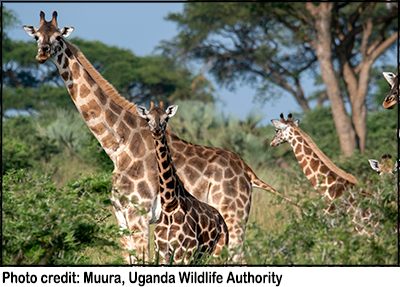
Operation Twiga began in 2016 to establish new populations of giraffe in safe habitats by translocating healthy, breeding giraffe from existing populations to form new herds in safer habitats.

“It takes a village to save giraffe,” said Stephanie Fennessy, Giraffe Conservation Foundation director. “Operation Twiga V is another conservation success realized by the Uganda Wildlife Authority in partnership with the Giraffe Conservation Foundation and financially supported by CMZoo, the Kratt family and many other donors.”

Thanks to CMZoo’s Quarters for Conservation program, whereby 75¢ from every admission to the Zoo is contributed to conservation, our guests are once again making an impact for wildlife and wild places. Although COVID-19 prevented CMZoo staff from attending the Operation Twiga V translocation, as they have in previous years, teams on the ground in Uganda continued this important work, with Operation Twiga V – the sixth giraffe conservation translocation.

Operation Twiga V (2020) was a continuation of Operation Twiga IV (2019). Both translocations contributed to populations in Pian Upe Wildlife Reserve, an historic habitat in Uganda where giraffe hadn’t existed for more than 20 years.

“We’re so grateful for our guests’ continued support of the Zoo, which allows us to continue supporting these important conservation efforts,” said Dr. Liza Dadone, vice president of mission and programs at CMZoo. “Last year, CMZoo assisted on-site with Operation Twiga IV, in Uganda, but because of COVID-19, we couldn’t attend this time. That’s another reason why it’s so valuable to continue partnering with front line organizations. They can keep the work going, and we can keep supporting them while we can’t be there with them.”

For more information about Operation Twiga V, please read this article from Giraffe Conservation Foundation.

Cheyenne Mountain Zoo’s Quarters for Conservation program also allowed us to send more support to Tsavo Trust – a field-based non-profit organization in Africa that uses aerial surveillance and on-the-ground field efforts to protect wildlife in Tsavo National Park, the largest national park in Kenya.
Richard Moller with community member of new water borehole
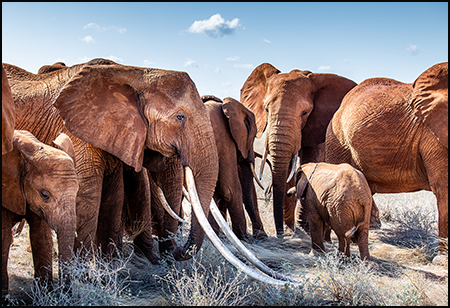
The organization was founded to help protect the last of the “big tuskers,” which are likely the last viable genetic pool of African elephants with tusks weighing more than 100 pounds each. The park is also home to a number of black rhino sanctuaries established by the Kenya Wildlife Service (KSW) and supported by the Zoological Society of London. The black rhino is critically endangered, due primarily to illegal poaching for their horns.

In partnership with the Kratt Family Foundation, CMZoo and its guests funded two clean water stations, known as boreholes, in communities near Tsavo National Park. The effort is a project under Tsavo Trust’s Community Conservancy Program. The program aims to improve local wildlife relations with local community members, by creating secure buffers bordering protected areas of Tsavo National Park. Tsave Trust also reaches out to nearby communities who have, “faced serious hardships, such as lack of water, food insecurity, and constant human-wildlife conflicts, resulting in a negative perception towards wildlife,” according to Tsavo Trust’s most recent conservation update to CMZoo.

The availability of clean drinking water improves the quality of life for members of these important nearby communities, and helps foster goodwill between Tsavo Trust and their neighbors, who can help save wildlife. Tsavo Trust representatives say the community members have been made aware that “the water has come from the elephants.”

Since 2008, CMZoo’s Quarters for Conservation program has helped guests send more than $3 million to conservation efforts around the world, and right here in Colorado. Every visit to CMZoo is conservation is action.

Back to The Waterhole


Tune in for an update on BB! Keepers estimate that this growing girl now weighs about 160 pounds, up more than 40 pounds since her birth on September 28. She has also started eating solid foods, like elm browse. Because she is interested in solid foods, her keepers can tell that her rumen – the first chamber of a giraffe’s four-chambered stomach – is developing well.

BB is becoming more curious about her keepers, which is really fun for them. It’s also helpful in building a trusting relationship with BB that will support future training efforts. On warm days, she is outside with the herd, enjoying the sun and zooming around the yard. See BB daily on our giraffe cams and on the temporary indoor cam, available while buildings are closed due to COVID-19 restrictions, at cmzoo.org/giraffecam.

Our little giraffe calf is one month old today! Two of her keepers, Amy and Tori, are here with the update we know you’ve all been waiting for. It’s time to name the baby! This calf has the honor of being named by the care team that has helped her grow over the past month.