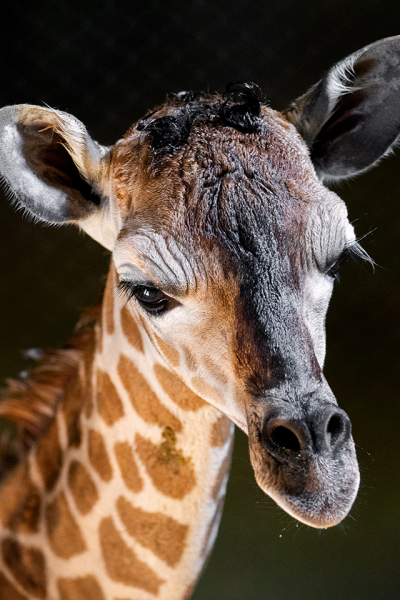
The Cheyenne Mountain Zoo family is celebrating the long life of the eldest member of the Zoo’s reticulated giraffe herd, Riyadh, today. Since her birth at CMZoo in 1990, she made countless connections with guests, members and fans, who would delight at her small-but-mighty personality and regal nature.

As she grew older, Riyadh began showing normal signs of aging, including dealing with arthritis. Over the last several months, she responded well to medications and seemed to be comfortable. But yesterday, her keepers noticed she wasn’t bearing weight on her hind right leg. With the CMZoo vet team, they made the difficult decision to humanely euthanize Riyadh, as her treatments were no longer providing enough relief for her to continue having a comfortable quality of life.

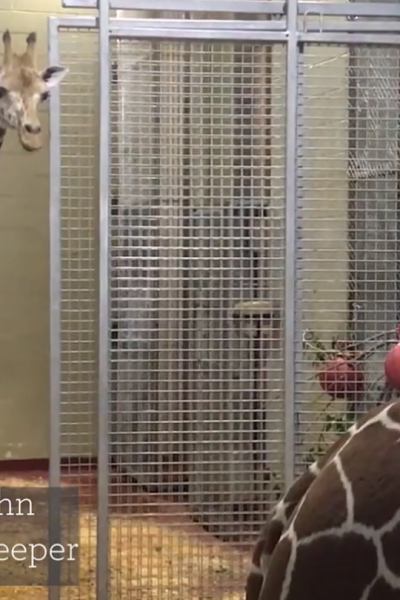
“Despite the fact that we’ve been mentally preparing for this time to come, it’s still sad to say goodbye,” said Rachael Hahn, animal keeper for giraffe and Riyadh’s primary trainer. “This was the right decision for her, and I’m so glad she was able to spend her last day in the beautiful Colorado sunshine.”

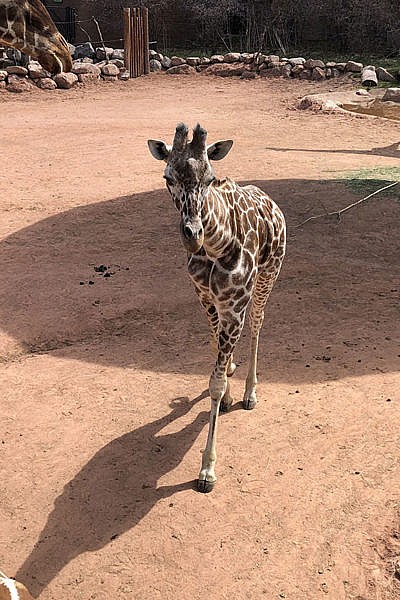
Riyadh was loved for her small stature and confident personality. She was much shorter than the majority of the herd, and was often mistaken for a calf.

“People really fell in love with her because she was easy to tell apart from the rest of the herd,” said Amy Schilz, senior lead keeper for giraffe. “Those who didn’t know her sometimes thought she was a baby, and she would benefit by getting extra lettuce from guests who wanted to feed ‘the little one.'”

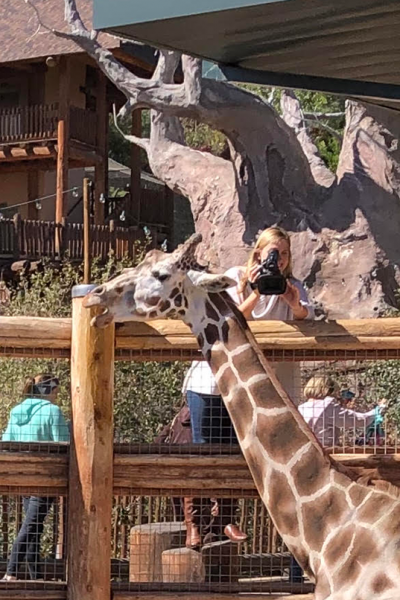
“She was also one of our giraffe that was more willing to let guests give her scratches on her neck, which was a special experience that not every giraffe will allow,” said Diana Miller, senior animal keeper for giraffe. “For some reason, she was hesitant to let keepers touch her neck, but she didn’t mind at all when guests would pet her.”

Her shorter legs made her easy to identify in the herd, but didn’t impact her confidence if she was ever nudged by a larger herd mate.

“She was hilarious to watch interact with the other giraffe because of how tenacious she was,” said Hahn. “She could get whatever she wanted, despite her size. Most of our giraffe get out of the way when Mahali, who’s one of our tallest giraffe, comes around. But not Riyadh! She would push him around to get the best browse or whatever she wanted. All of the other giraffe got out of the way for Riyadh.”

The keepers describe Riyadh as having a “regal” way about her – so much that they had nicknamed her “Princess Ri.”

Riyadh helped the newest herd member, 2-year-old Panya, settle in to the herd, spending nights with Panya in a stall separate from the herd while Panya, who has a shy demeanor, adjusted to her new surroundings.

“Panya and Riyadh developed a strong bond,” said Miller. “It seemed like they found a soulmate in each other, since they’re both smaller in stature.”

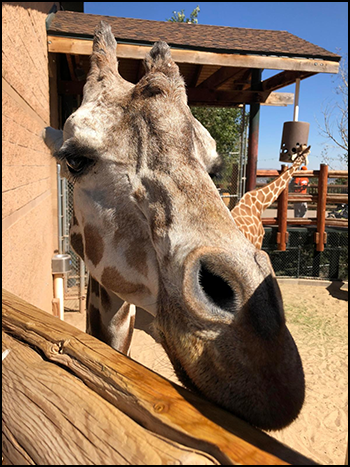
Riyadh, pictured here in Sept. 2019 sharing the side yard with Viv, was known for her small stature and unique markings

Throughout her life at CMZoo, Riyadh contributed to her species as a well-loved animal ambassador and through her individual reproductive contributions. Riyadh gave birth to eight healthy calves, leaving a legacy of six healthy grandcalves and one healthy great-grandcalf. Two of Riyadh’s daughters, 19-year-old female giraffe, Twiga, and 22-year-old female, Muziki, are still members of the herd at CMZoo.

Riyadh participated in voluntary training that allowed our vets and staff to help giraffe in human care and in the wild. All giraffe in our herd can choose to participate in trainings that allow vet staff to perform research on hoof care and even build a life-saving plasma bank.

“Riyadh was a little difficult to train in the beginning,” said Schilz. “She would outsmart me on every maneuver! Once we figured out a way to give her full control over everything that was happening, we started to make headway. She learned to touch a target stick, which was our cue that we could touch her hooves or do some other contact that we needed. If she gave us ‘permission’ by using the target stick, we were good. But she could still throw out a stern ‘side-eye’ look, if she didn’t approve of something we were doing.”

Once Riyadh and her keepers figured out the key for her training, she became a training superstar. She was often the giraffe that helped teach other giraffe professionals from around the world how to train during CMZoo’s annual Giraffe Care Workshop. Since she was smaller, she was less intimidating for participants to work with, and she was solid in responding to cues, even for those who didn’t have a relationship with her or have as much experience with training giraffe.

“Even as her primary trainer, she taught me so much about training and caring for giraffe,” said Hahn. “She was just so smart! She was super special.”

She also helped to pioneer groundbreaking care for our herd, as she was one of the first to voluntarily accept shoes on her hooves as a treatment for her arthritis. She also voluntarily allowed a veterinary ophthalmologist to take her eye pressure readings using a puff of air (non-contact tonometry) – something many humans have trouble tolerating.

In the past 30 years, there has been an estimated 50 percent decline in wild reticulated giraffe populations. Giraffe Conservation Foundation estimates only 15,780 reticulated giraffe remain in the wild.

Riyadh’s role as an ambassador for her species helped countless CMZoo guests fall in love with giraffe, inspiring them to take action to protect her wild relatives. CMZoo has partnered with the Giraffe Conservation Foundation to support conservation efforts. One recent example is Operation Twiga, a giraffe translocation project in Uganda, Africa. The Zoo’s visitors and members contribute significantly to those efforts through Quarters for Conservation, a program by which 75¢ of every Zoo admission is allocated to conservation. Annually, Quarters for Conservation raises half a million dollars for conservation partners around the world.

Children’s Hospital Colorado, our year-round sponsor, offers helpful guidance for helping children cope with stress and anxiety related to the ‘new normal’ of life during the coronavirus pandemic. In addition to a recent blog, they will be hosting a virtual talk on the topic, just for members and fans of Cheyenne Mountain Zoo, on Friday, May 8. (See all the details on the talk at the end of this article.)

Similarly, Cheyenne Mountain Zoo’s animal care department has found ways to help the animals in their care stay engaged and healthy, despite the changes in their daily lives.

“We’re working to help them feel as little interruption to their normal routines as possible,” said Jeff Halter, vice president of animal care. “Our animals are participating in training, husbandry behaviors, enrichment activities and daily interactions with their keepers. Through our Abnormally Normal series on social media, they’re participating in keeper talks and demonstrations. But, we can tell they know there’s something important missing from their normal lives: our guests and members.”

In May 2019, more than 80,000 people visited Cheyenne Mountain Zoo. Going from an average of 2,500 visitors per day to none has been an adjustment for everyone – including most of the animals. We told you last month about how the great apes of Primate World have shown us they miss guests, and they’re not the only ones.

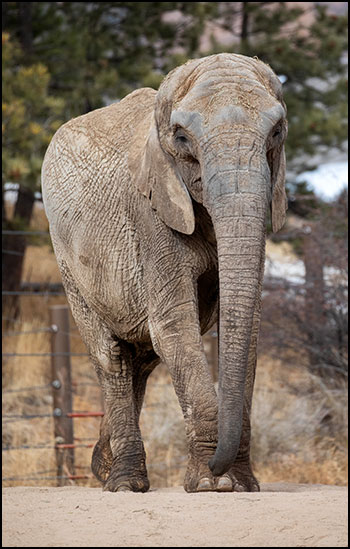
The African elephants have noticed a difference in their routines, too. The elephant herd of six females usually stays in groups of two or sometimes three in various areas of the yard and barn. One of those groups is Missy and LouLou.

“When we first closed, the elephants were used to their regularly scheduled feeding experience with guests, which always takes place right after the elephant demonstration,” said Stacey Smith, elephant and rhino keeper in Encounter Africa. “LouLou would see Missy going to the demo yard, so LouLou would head over to the elephant ‘snack time’ area in anticipation of her time with guests. After completing Missy’s training, we keepers would call for LouLou for her time to train in the demo yard. This only happened a few times, but LouLou would hesitate at the ‘snack time’ area, seemingly disappointed that there wasn’t a line of guests waiting to give her attention and treats.”

Keepers have been getting creative with ways to keep the animals in their care mentally and physically enriched. To replace keeper talks, giraffe keepers say they’re doing more frequent training and providing more enrichment items. The elephants are continuing daily training and foot care in the demonstration yards, and recently enjoyed a whole watermelon each for Easter. Last week, the elephants got special tree trunks and a mud wallow, which they thoroughly enjoyed in a light spring rain.

“Since we’ve been closed almost six weeks now, they’re getting more used to this new routine and not having those 30-minute snack times with guests,” said Smith. “We don’t offer those snack time experiences in the winter, either, so it’s not entirely new for the elephants. We’ve been providing extra enrichment and training so they’re staying engaged, but I’m sure they’ll be excited to get that time back with people once we reopen.”

However, not all animals seem to notice a lack of guest interactions in their daily lives. Keepers say the CMZoo pack of seven Mexican wolves, for example, isn’t experiencing much out of the ordinary. The wolf pack, unlike most animals at CMZoo, doesn’t participate in training or interact with guests. The wolf exhibit is expansive and the guest viewing area has one-way glass, so the wolves don’t see as much of our guests than most other animals. They are intentionally kept as wild as possible because the hope is that their future offspring could be released to supplement the endangered species in the wild.

Most members of CMZoo’s reticulated giraffe herd of 16 seem to miss guests and get particularly interested in the staff who visit them – with or without lettuce. The giraffe boardwalk in African Rift Valley puts giraffe and guests face-to-face during daily lettuce feeding opportunities, so most of the giraffe are used to interacting with large numbers of people.

One member of the CMZoo giraffe herd may be benefitting from the quiet time, though. Panya, a 2-year-old reticulated giraffe who joined the CMZoo herd in September, recently started spending time with the full herd after slowly meeting various members over the winter.

“Panya has been shyer than a lot of our herd members,” said Kayla Ringuette, African Rift Valley keeper who works closely with Panya. “Because of the closure, we’ve been able to help Panya gain confidence in the big yard more quickly than we might have been able to with guests, because she has been pretty hesitant in the past.”

Panya began her introductions to the herd in the barn, over the winter. She started going outside in mid-April with some of the herd and later in the month with the whole herd.

“While the majority of our herd definitely misses guests, this time has allowed Panya to get really comfortable with the yard and the herd, which could have been intimidating for her with large numbers of people,” Ringuette said. “When we reopen she’ll be confident in the yard with the herd, and she’ll be ready to meet our awesome herd fans. If there is a silver lining, it’s that Panya got this extra time she’s using to adjust. She’s doing so well.”

Animals can be an inspiration during difficult times, showing us how they adapt to changes and show resilience through challenges. We’re working to continue fostering connections between our members and guests and the animals they love.

The Zoo is embracing its role as a community resource, even while we can’t invite our community inside our gates. Through online activity videos, keeper talks, animal demonstrations and moments of #CMZooZen, our team continues to reach our fans and inspire a love for animals and the natural world. CMZoo’s social media platforms are buzzing with our timely series called Abnormally Normal.

Although we’re temporarily closed, we’re permanently committed to caring for our animals and keeping you connected to our mission, our animals and the natural world. It’s definitely an abnormal time in the world, but we’re providing special glimpses at how normal things are at the Zoo. Follow our Abnormally Normal Video Series on Facebook and YouTube! As always, our guests are enjoying the giraffe herd remotely, using our two live streaming Giraffe Cams overlooking the outdoor yard.

In effort to serve as a continued resource for children and families during these uncertain times, Children’s Hospital Colorado is hosting a live webinar on Friday, May 8 at 12 p.m. MT. Dr. Jessica Hawks, clinical child and adolescent psychologist at Children’s Hospital Colorado, will be presenting on the topic of COVID-19 and Mental Health. Dr. Hawks will describe unique challenges children, teens and parents are facing during the COVID-19 crisis, how parents can talk to their kids about COVID-19, warning signs that a child or teen may be experiencing mental health concerns, and how children, teens and parents can best cope during this difficult time. Time will be reserved for Q&A to address any specific questions families may have regarding this topic. Click this link on Friday, May 8, 2020 at 12 p.m. to join the live webinar on Zoom, hosted by Children’s Hospital Colorado: https://ucdenver.zoom.us/j/95899621728.

Back to The Waterhole


For giraffe, hoof health is vital to overall health. As the zoo profession evolves to further embrace animal husbandry training, and new veterinary technologies allow for better diagnostics, Cheyenne Mountain Zoo is working to improve the future of giraffe care.

“Horses have been domesticated for thousands of years, and the mantra has been ‘no hoof, no horse,’ meaning the overall health of a horse is connected to the health of its hooves. More and more, we’re embracing that for giraffe,” said Dr. Liza Dadone, vice president of mission and programs at CMZoo. “We don’t yet have all the answers, but we have seen that hoof overgrowth changes how the foot supports the weight of a one-ton body. When an animal distributes that much weight differently because of hoof overgrowth, it can have a huge impact on their joints, ligaments and bones.”

Giraffe hooves grow continuously throughout a giraffe’s life. Ongoing hoof maintenance can help prevent issues commonly associated with hoof overgrowth, like lameness and early onset arthritis. Training giraffe to voluntarily participate in hoof maintenance makes preventive care possible, hopefully avoiding these ailments for future generations of giraffe.

Because it’s such an integral part of CMZoo’s work today, some may be surprised to learn that giraffe hoof care is still in its pioneering phase.

“Before our training program started in 2013, we had limited options for managing hoof overgrowth,” said Dr. Dadone. “We also didn’t fully understand what a ‘normal’ giraffe hoof should look like, because we didn’t have consistent access to the underside of the hoof. Training giraffe to participate in their health care has been a total game changer in the level of care we can provide.”

In the last ten years, CMZoo’s Zoo-wide training programs have flourished. The giraffe care team has been recognized nationally for its training success. In just two years, the giraffe care team, led by Animal Care Manager, Jason Bredahl, and Lead Giraffe Keeper, Amy Schilz, developed safety and training protocols and trained the entire herd of giraffe for front foot hoof trims and x-rays.

“It was unheard of,” said Dr. Dadone. “The giraffe were way smarter than we had given them credit for, and this training gave us opportunities to provide ongoing care without anesthesia.”
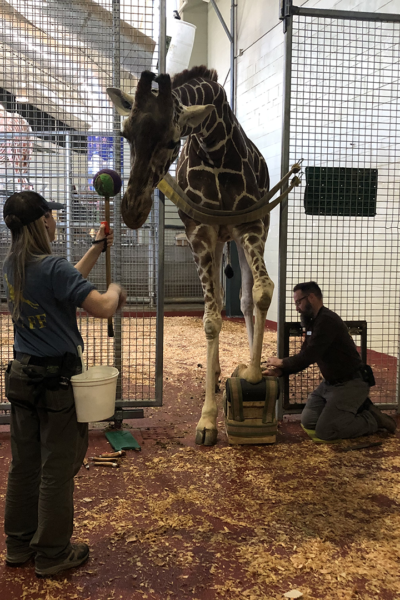
Hoof care training techniques include asking the animal to voluntarily approach the team, then lift, position and hold its foot so staff can access it safely.

When working around the feet of a 17-foot-tall, one-ton animal, human safety is crucial. The team developed co-working communication that allows one person to train and keep the giraffe’s attention while the other person performs a hoof trim (or other necessary hoof work). Staff learned which kinds of barriers would best protect them and provide adequate access while working safely around giraffe feet. They also studied behaviors in the giraffe so they could recognize when a giraffe might need a break from hoof work.
Zoo campers fingerpainting
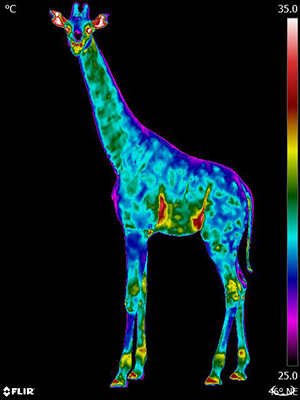
Once the herd trained to receive x-rays, the care team found that arthritis, ligament injuries, bone damage, and sometimes fractures were present at a rate they weren’t expecting. This discovery led the team to establish a program that included routine front foot x-rays, thermography, visual assessments and monthly hoof trims.

“We can more accurately diagnose and manage giraffe foot health with less invasive procedures, thanks to training,” said Dr. Dadone. “Now that we know giraffe are prone to these issues, we prioritize training of animals from an early age. The goal is that every giraffe, from one year of age, can have its front feet handled and can receive baseline x-rays. The hope is that we can help the next generation of giraffe avoid some of the issues our older giraffe might be experiencing.”

Young giraffe, like Viv, born at CMZoo in July 2019, start training to participate in their care from an early age. Nearly 8-month-old Viv already participates in prerequisite training that will lead to hoof care training. Her keepers say she is shift-trained, which means she will voluntarily move to another area of the barn or outdoor yard when asked. Viv also shifts into ‘the chute,’ which is a narrow part of the indoor barn that some giraffe move through to receive hoof care and other care.

She participates in target training, as well, which means she will touch her nose to a target held by her trainers. For hoof care or x-ray training, target training helps trainers communicate the very specific location the animal is being asked to move to. Likewise, the target helps animals understand what’s being asked of them.

Viv’s keepers have taught her a ‘back up’ command, which helps Viv get into position for hoof care, among other things. They recently started training Viv to get comfortable with being touched, beginning with her shoulders. Once she’s comfortable with being touched on the shoulders, they will continue progress to eventually touch her hooves, which will get Viv even closer to receiving ongoing hoof care.

As CMZoo’s giraffe care team continues finding new ways to improve the health of animals in their care, they learn from and share best practices with the wider giraffe care community. They do this by attending conferences, hosting CMZoo’s annual giraffe care workshops, and through studies, programs and partnerships with Equine Lameness Prevention Organization, Colorado State University Veterinary Teaching Hospital, Giraffe Conservation Foundation and more.

Back to The Waterhole


In October and November 2019, Cheyenne Mountain Zoo joined Giraffe Conservation Foundation, Colorado State University Veterinary Teaching School and other worldwide partners to support Uganda Wildlife Authority in establishing a new population of critically endangered Nubian giraffe.

CMZoo VP of Mission and Programs, Dr. Liza Dadone, traveled to Uganda to assist with the reintroduction of 15 giraffe to an historic habitat where they haven’t existed in nearly 25 years. Dr. Dadone assisted with research and anesthesia, and provided care for the giraffe during the translocation from Murchison Falls National Park to Pian Upe Wildlife Reserve.

“The reintroduction of this founding population of Nubian giraffe to Pian Upe is important because the established population in Murchison Falls is facing threats due to oil exploration, road development for drilling vehicles and other human impact issues, like snaring,” said Dr. Dadone. “The population is also dealing with a skin disease, which we have been studying and were able to do additional research on while we were there for the translocation.”

Uganda Wildlife Authority protects and monitors the Nubian giraffe in Murchison Falls National Park. When oil was recently discovered in the park and construction to support drilling began, Dr. Robert Aruho, Uganda Wildlife Authority senior wildlife veterinarian, coordinated with partners to lead the effort to establish the population in Pian Upe, a protected wildlife reserve.

Uganda Wildlife Authority identified giraffe from the population in Murchison Falls National Park that were ideal for establishing the new population. The giraffe would need to be young and healthy, but old enough that they weren’t dependent on their mothers’ milk.

After identifying key members of the population, the team went into the park to capture them. The process involves locating the giraffe, administering anesthesia, reversing the anesthesia, doing a quick health assessment, collecting blood and flies from the giraffe, and then fixing guiding ropes and a harness to the giraffe. All of this happens within a few minutes.

“Members of the team have to be quick once the giraffe is down, because it’s dangerous for the giraffe to be under anesthesia for very long,” said Dr. Dadone. “While a few members of the team hold the giraffe, others apply a blindfold and put cotton in the giraffe’s ears to minimize stimulation and keep the giraffe as calm as possible. At the same time, we administer the anesthesia reversal; take blood, fecal and skin samples; and document other measurements that we use to advance care for giraffe in the wild and in human care.”

Dr. Dadone and Dr. Matt Johnston, from Colorado State University Veterinary Teaching School, are part of a team studying a skin disease found in wild giraffe. They also expanded their ongoing studies of field anesthesia, which will be shared with organizations internationally. The anesthesia research continues to make field immobilizations safer for giraffe.

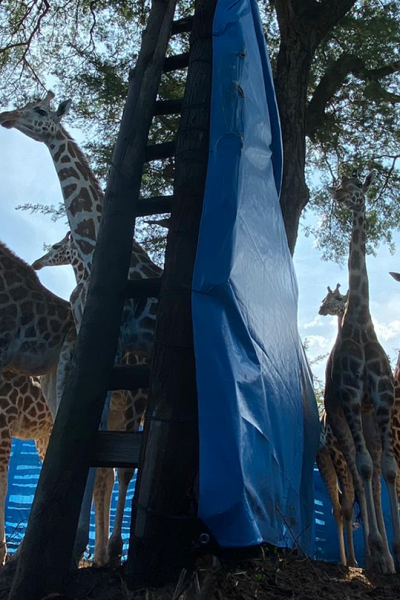
Once the giraffe wakes up from anesthesia, it is guided by ropes onto a trailer and transported to a boma – a temporary holding paddock where the giraffe are monitored and prepared for their trip to Pian Upe.

“While they’re in the boma, we’re bringing in additional giraffe to transport and are monitoring their health before the trip,” said Dr. Dadone. “The time in the boma also gives the giraffe an opportunity to bond. They’re social animals and the trip can be less stressful for a group of giraffe rather than an individual.”

One of the giraffe selected to establish the Pian Upe population is a young male named Mr. Kevin, who the team quickly realized could make an ideal founding father.

“Mr. Kevin is one of the largest males in the founding group,” said Dr. Dadone. “After a day in the boma, we saw him representing himself well with the females, so we’re optimistic he will be a great founding father for this new population.”

The trip from Murchison Falls National Park to Pian Upe Wildlife Reserve is about 300 miles. Because of flooding on portions of unpaved roads along the way, each of the three trips took between 12 and 16 hours.

“We experienced quite a bit of flooding along the way to Pian Upe,” said Dr. Dadone. “There were times the trailer got stuck in the mud, and we had to be towed out. The bright side was that some of the locals got more time to see the giraffe in the truck. Many people think giraffe are everywhere in Africa, but they’re not. Giraffe are locally extinct in seven countries, and a lot of local people have never seen them before, so in a way, this group of giraffe served as ambassadors for their species along the way, too.”

After the arduous travel, the giraffe were released, five at a time, into the protected Pian Upe Wildlife Reserve in Eastern Uganda.

“Watching the giraffe leave the trailer and run free into their new home was such a joyous moment,” said Dr. Dadone. “We’re hopeful this new population will thrive in their new home, providing Nubian giraffe another population and a better chance at survival.”

Having multiple populations of the same subspecies helps avoid what Dr. Dadone calls having, “all of your eggs in one basket.” Geographically diversifying populations means that if one location succumbs to disease or habitat destruction, the subspecies will live on in another region.

Our contribution to this effort is possible thanks to ongoing support from our CMZoo members, guests and donors. Through our Quarters for Conservation program, each ticket to the Zoo raises 75 cents to support wildlife conservation around the world. CMZoo guests and members contribute half a million dollars annually to critical conservation projects, like Operation Twiga, simply by visiting the Zoo.
 
Back to The Waterhole


CMZoo year-round sponsor, Children’s Hospital Colorado, has created a guide to first-year doctor visits for human babies. Similarly, Cheyenne Mountain Zoo’s experience with our prolific giraffe breeding program, founded in 1954, gives us some great milestones for the first year of life for a giraffe calf. Let’s see how Viv, CMZoo’s giraffe calf born to Msitu in July 2019, compares to the average timelines.

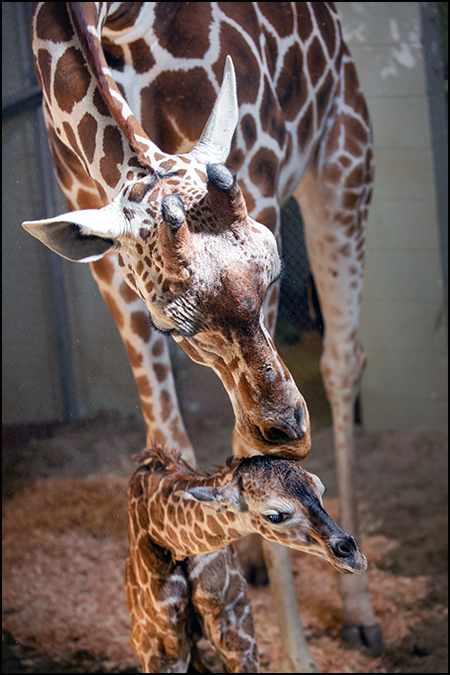
The first day of a giraffe calf’s birth is full of important milestones. Within the first couple of hours after birth, the calf is expected to stand. It usually takes several very wobbly attempts before the calf is stable on those long legs. When calves are born, they drop about five feet from the birth canal to the floor. In human care, a birth stall usually has several inches of sand, hay or shavings on the ground to help cushion that fall. Once the calf has landed, it usually needs to ‘untangle’ its long legs and neck, and then can attempt to stand.

“Viv’s legs were wrapped up sort of like a pretzel when she landed, so it took her a few minutes to get them where they needed to be,” said Jason Bredahl, giraffe animal care manager. “Once she got those straightened out, she was the fastest calf we’ve ever seen take its first steps. She was up and walking within about 35 minutes of being born, and she really hasn’t slowed down since.”

Within the first three hours after birth, the calf is expected to nurse from its mother. It’s important for the calf to nurse within this window, because it ensures the newborn calf consumes the colostrum that contains important antibodies from its mother.

“Viv was on the slower side when it came to getting her first milk,” said Bredahl. “But, Msitu is a great mom, and she and Viv quickly bonded. Once they did, we saw her nursing a lot that first night and throughout the next few months.”

Normally, giraffe calves nurse for about four months without eating any solid foods, like leaves or grain. The average weaning period is anywhere from six months to a year. The baby usually starts investigating solid foods between two and three months of age.

Viv had other plans.

“We started noticing Viv nibbling on browse and being curious about crackers at about a month old,” said Bredahl. “She is still nursing, so she’s getting the nutrients she needs from mom, but at this point, her diet contains a lot of browse, alfalfa, grain and romaine lettuce from our guest feeding opportunities.”

Unless it’s medically necessary, CMZoo staff doesn’t intervene with animals’ births, and has found it’s beneficial to the mother/baby relationship to allow them uninterrupted time together to bond. Since Viv showed all the signs of being a strong calf, staff never took exact height or weight measurements.

On average, giraffe calves weigh between 100 and 200 pounds at birth, and measure about six feet tall.

“We guessed that she was about 200 pounds at birth and stood about six feet tall,” said Bredahl. “Since then, she’s growing and growing. As of the end of October, we estimate she’s about seven feet tall and over 300 pounds.”

The next big milestone for giraffe in care at CMZoo is to start training. Most giraffe calves born at CMZoo participate in behaviors, like shifting from one area to another, by following their mothers. This allows keepers to care for them by relying on training their mothers have received.

Not Viv.

“Viv has been a total firecracker from the very beginning, when she leap-frogged over her mom’s back as her mom was lying down only six hours after she was born,” said Bredahl. “She’s one of the most independent giraffe calves we’ve ever experienced, which is fantastic because she’s such a great ambassador for her species. She’s interested in guests, keepers and the rest of the herd. It also means she’s not necessarily interested in doing what her mom is doing. That makes shifting into the barn from the yard, or vice versa, or moving from one part of the barn to another an ‘adventure’ each day.”

Keepers rely on a calf’s interest in solid foods to train. The food is the positive reinforcement keepers need to encourage positive behaviors from an animal.

“In our experience, we usually start working with calves on trained behaviors at about four months,” said Bredahl. “Viv was a lot younger than that.”

Because Viv took interest in browse, alfalfa and other solid foods at such an early age, keepers started training with her at just a month old.

Keepers will continue working with Viv on her training, which is still largely focused on asking her to move from one location to another. Once she has mastered shifting behaviors, Viv will eventually graduate to more complicated training activities. Like her herd mates do now, she will later have the choice to participate in varieties of training that allow her to participate in her own health care.

“Our giraffe train to have their hooves trimmed and cared for, their blood drawn, their eyes examined, and of course they train to shift in and out of different areas of their yards and barn,” said Bredahl. “Khalid, our breeding bull, even trains to participate in giraffe ‘yoga,’ which helps him stretch and stay limber. Our giraffe training programs help us take great care of our herd. It also allows us to share what we learn and participate in research studies that benefit giraffe in human care and in the wild, around the world.”

(Try to) keep up with Viv and the 16-member CMZoo giraffe herd every day of the week in African Rift Valley at Cheyenne Mountain Zoo. No matter the weather, giraffe feeding opportunities are available to guests daily from 9 a.m. to 4 p.m., either on the outdoor boardwalk or inside the giraffe barn.
 
Back to The Waterhole


We had a baby boom in 2019! From meerkat pups to mountain lion kittens to a giraffe calf and more, the seven species of babies are growing up fast. (Make sure you watch until the end to meet our latest addition: five meerkat pups!)

On Monday, Sept. 23, CMZoo giraffe lovers said a heartfelt goodbye to two-year-old Rae, a reticulated giraffe who moved from CMZoo to Lincoln Park Zoo, in Chicago, Ill. That same day, two-year-old female reticulated giraffe, Panya, joined the CMZoo herd from Memphis Zoo, on a breeding recommendation from the Association of Zoos and Aquariums (AZA) Species Survival Plan (SSP).

“We were pleasantly surprised because about 20 minutes after she came into the barn from her transport, she took food from us,” said Rachael Hahn, African Rift Valley animal keeper. “That’s not something we anticipated, but she took a few pieces of elm browse and some lettuce right away. That was a really exciting indication that it could be a smooth transition for her into her new home and herd.”

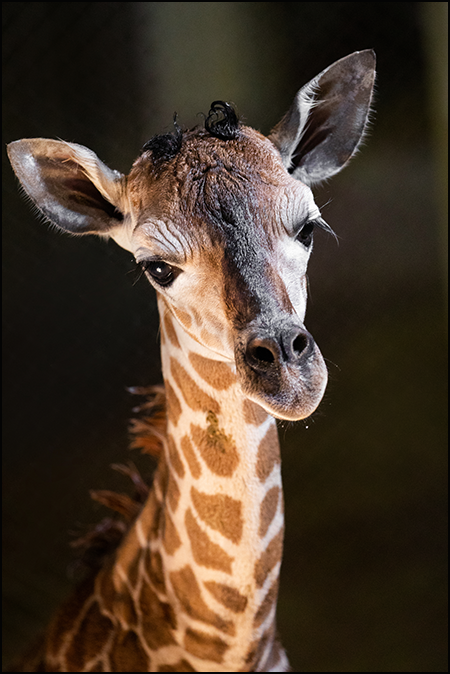
The name ‘Panya’ comes from the Swahili word for ‘mouse.’ Memphis Zoo keepers tell CMZoo that Panya was the one of the smallest calves they have ever seen, weighing in at just about 95 pounds at birth.

With tips from giraffe keepers, when visitors can meet Panya they should quickly be able to identify her. The first clue is her stature.

“She is adorable and really tiny. She’s even smaller than Rae,” said Amy Schilz, senior lead animal keeper in African Rift Valley. “Fans should be able to easily identify her in the herd, because she has a fuzzy young-giraffe coat, short legs and a tall body, like [29-year-old female CMZoo giraffe] Riyadh and spot patterns similar to Mahali [16-year-old male CMZoo giraffe], with lots of white splotches in her spots. She also has really long tail hair, for now, since the rest of the giraffe herd haven’t ‘styled’ it yet.”

Panya’s keepers at Memphis Zoo describe her demeanor as, “a mixture of personality. She can be very timid at times, but also has a curious side, often watching intently as her keepers work in nearby stalls. She is sassy and full of attitude, as well.”

CMZoo giraffe keepers have observed Panya getting excited and spreading her feet to play a little bit, which may be interpreted as a sign of nervousness, so keepers are taking the introduction to the herd slowly and carefully.

“She’s doing really well, getting to know us and the herd while she completes her quarantine period in the barn,” said Hahn. “She can see and smell all of the other giraffe from her current space, and [17-year-old] Msichana, one of our female giraffe, is spending some time with her. Msichana historically has been a good companion, so we chose her to help Panya settle in. Female giraffe are herd animals, and usually prefer to have a buddy.”

Quarantine periods last about a month. Msichana and Panya are sharing a space for about 30 minutes at a time, for now. Keepers will work to increase that time together over the coming days.

“We’re following her lead, like we do with all of our animals, so we’re moving at her pace,” said Hahn. “She’s telling us that a new place, new keepers and a new herd are enough for now. We wanted to give her a little more time to settle in, which we know our giraffe fans will understand.”

“The SSP looks at the genetics of all giraffe in AZA-accredited zoos, and Panya is a great match for our breeding bull, Khalid,” said Schilz. “Hopefully she’ll join our herd as a breeding member and will someday have a calf of her own. We’re really excited for her to be a part of our herd, and for everyone to meet her.”

Guests can already come and see Panya in her quarantine area of the giraffe barn. Stay tuned to CMZoo’s social media channels to learn when visitors can come and meet Panya with the rest of the herd, in African Rift Valley at Cheyenne Mountain Zoo.

TWO-YEAR-OLD RAE SETS OFF FOR LINCOLN PARK ZOO IN SEPTEMBER

In September 2019, Rae, two-year-old CMZoo reticulated giraffe, will be embarking on her next adventure as an animal ambassador at Lincoln Park Zoo, in Chicago, Ill. The daughter of Msitu and Khalid, and sister of newborn, Viv, and six-year-old, Emy, who now lives in Peoria, Ill., will be dearly missed by CMZoo staff and giraffe fans. But, as she joins a new herd, she will have the opportunity to reach and inspire a new group of people who are sure to fall in love with the curious and social giraffe, as so many did during her time at CMZoo.

In anticipation of Rae’s move, Kayla Ringuette, a CMZoo giraffe keeper who has a special bond with Rae, shared some of her favorite memories of Rae.

“We didn’t have live cameras for Rae’s birth in 2017, so I was the first keeper to meet her,” said Ringuette. “Once Rae started taking food when she was a few months old, I would feed her every opportunity I got in order to build our relationship before asking her to do behaviors. I may have gotten carried away, since she was the first animal I’ve ever trained that had no prior training history with people. I think it’s because of that relationship building that she follows me around everywhere I go. I actually created a montage of pictures where you can see every other giraffe doing something in the background, interacting with enrichment or browse, and she’s right nearby staring at me.”

Over the next two years, Ringuette and Rae continued to develop a trusting relationship, which Ringuette says is in large part because of Rae’s natural curiosity about people.

“Rae was eager to interact with keepers and staff right from the very beginning,” Ringuette said. “In training sessions, she is always really curious. She likes to sniff at hoof trimmings on the barn floor after we do our routine hoof work with the herd. We’ve even had to stop a training session because she refused to stop sniffing the person’s gloves while they were trying to work on her feet. We eventually realized we didn’t need food to reinforce her behaviors during those trainings, because she would rather smell the trainer’s gloves.”

As Ringuette and her fellow keepers continued building relationships with Rae, her trust in them stood out, especially in one memory Ringuette recalls of Rae’s first time going into a narrow area of the barn, called a chute. Making sure the giraffe are comfortable in this area is extremely important. If a giraffe ever needs medical attention or needs to be transported, they need to be comfortable in this space. The chute isn’t as wide open as the rest of the barn, which can make the giraffe unsure.

“One of my favorite memories is the first time Rae came into the chute,” Ringuette said. “The chute can be kind of a scary place for a giraffe going through it for the first time. You’re asking this naturally skittish animal to enter a space alone, where they can’t see very well because of the blind corners. Even after being able to investigate the area with mom, Msitu, Rae still wasn’t comfortable. I decided to try walking her through myself while I reinforced her with food, and it worked! Building trust with an animal to the point that they will follow you into an uncertain place that they wouldn’t even go into with their mom was the most rewarding experience I could ask for as her caretaker.”

Rae has spent a lot of her time with herd mate, Bailey, a seven-year-old female who is equally as energetic and curious about people.

“They’ve always been mischievous together, testing off-limits areas of the yard and running around, making the rest of the herd excitable,” Ringuette said. “Bailey is our other really social giraffe, so it’s typically one of them breathing on your neck from the other side of the barrier, when you’re focusing on something else.”

Rae’s outgoing demeanor is sure to serve her species well, as an ambassador that makes connections with people, which we hope will inspire them to take action to protect their relatives in the wild.

“Her gregarious nature makes people fall in love immediately, since it seems like she is picking you out of a crowd,” Ringuette said. “She makes you feel very special. Creating connections with people is ultimately her job, and she’s so great at it.”

As part of the Species Survival Plan (SSP), Rae will join Lincoln Park Zoo female giraffe, 21-year-old Etana, and a young male giraffe, Finely, who is three. Under the same recommendation, a female giraffe who could breed with Khalid will join CMZoo’s herd later in the month.

“I will miss my little shadow, but I have very high hopes for this girl in her new home,” Ringuette said. “She is a rockstar with training, and she is already such a great ambassador to her species at two years old, that she is going to make many guests fall in love with her for the rest of her life in her new home.”

Guests are welcome to come and visit Rae to share their well wishes before her move, every day of the week at Cheyenne Mountain Zoo.

Back to The Waterhole Home Page

PLACENTA FROM PENNY THE GIRAFFE CALF’S BIRTH CONTRIBUTES TO GROUNDBREAKING GIRAFFE VETERINARY CARE AND RESEARCH

Waterhole picture
When Penny, a reticulated giraffe calf, was born at Cheyenne Mountain Zoo on June 4, 2018, Dr. Liza Dadone, head veterinarian and VP of mission and programs, couldn’t have known that the next few months of care for the sixteen-member giraffe herd would present such complicated cases. Since Penny’s passing late last summer, her legacy has continued both by helping people around the world fall in love with giraffe and by helping advance giraffe medicine in zoos.

Within months of Penny’s birth, the giraffe care team was managing unprecedented rare cases including a brand-new calf who needed intensive medical care, a chronic ligament strain in a mature male, and a mature female who would eventually reveal a false-positive pregnancy – one of only four such cases of the false diagnostic result ever documented.

Dr. Dadone did, however, know how precious a placenta could be to help improve both therapies and diagnostics for giraffe medicine. Minutes after then-20-year-old Muziki gave birth to Penny, Jason Bredahl, giraffe animal care manager at Cheyenne Mountain Zoo, picked up the placenta and handed it off to Dr. Dadone.

New Diagnostics: A New Giraffe Pregnancy Test

“I had been speaking with Dr. Priya Bapodra-Villaverde at Columbus Zoo and Aquarium about a new, more accurate giraffe-specific pregnancy test she had been working on. Although the test had been used successfully on other hoofstock species, we knew that part of the giraffe placenta could contribute to this research,” said Dr. Dadone. “We split the placenta between Dr. Bapodra-Villaverde’s team and the vet team at Colorado State University, who would use it to develop a line of giraffe stem cells that can be used to help manage arthritis and other conditions.”

In late July 2018, CMZoo had to say a heartbreaking goodbye to Penny, whose story had captured the hearts of people around the world. As CMZoo put Penny to rest, her legacy continued with her placenta’s research contributing to creating a new, more accurate giraffe pregnancy test, and to creating a giraffe stem cell line.

Laikipia was the first giraffe in our herd to be tested with the new pregnancy test. Laikipia was thought to be pregnant at the same time Muzuki was pregnant with Penny, but the fact that she never gave birth puzzled giraffe experts at CMZoo and beyond. Throughout the international network of AZA-accredited organizations with whom CMZoo shares and gains input on rare cases, like hers, she was one of only four giraffe ever known to consistently falsely test positive for pregnancy.

Ever since breeding with CMZoo giraffe bull, Khalid, Laikipia had tested positive for pregnancy – but did not test positive before breeding. The CMZoo giraffe care team used the usually reliable methods of confirming pregnancy in a giraffe, including a lack of menses and elevated progesterone levels in blood and fecal samples. They even attempted logistically challenging ultrasounds, which proved inconclusive, as they often do in giraffe.

By October 2018, Laikipia had surpassed her gestation window without signs of miscarriage and with consistently elevated progesterone levels, and Dr. Dadone and her team continued to look for ways to diagnose Laikipia’s condition.

The timing was almost perfect. The new pregnancy test, developed by Columbus Zoo’s lab partner BioTracking, Inc. was ready for real-world trials in spring 2019, after being used to successfully detect pregnancy in two giraffe at the Columbus Zoo. Knowing there was no way Laikipia was still pregnant, despite her continued positive pregnancy test results, Dr. Dadone knew Laikipia was the perfect candidate to test the accuracy of the new test.

“We thought, ‘if any giraffe could break this new test, it’d be Laikipia,’” said Dr. Dadone. “We also knew Msitu was pregnant, so we tested her pregnancy to validate the accuracy of this new diagnostic.”

The new blood test, which detects a protein only present in pregnant giraffe, called Pregnancy-Specific Protein B (PSPB), could also help confirm pregnancy sooner than traditional progesterone-detecting pregnancy tests. Even more helpful for veterinary staff and animal care managers everywhere, early results suggest it could more precisely predict when a calf might be born.

“On the anniversary of Penny’s birth, we got the news that the new pregnancy test, developed in part thanks to Penny’s contribution, appears to be a great new diagnostic tool for giraffe,” said Dr. Dadone. “Laikipia’s pregnancy test came back negative and Msitu’s came back positive. While the lab is still running samples from more pregnant giraffe, this is hugely promising. We have Penny and her mom, Muziki, to thank for helping us detect and confirm this new test can work in giraffe.”

Dr. Dadone and Columbus Zoo and Aquarium will continue collaborating on ways to better diagnose and monitor giraffe pregnancy. The new pregnancy test, once fully validated, should help the zoo community more accurately predict when their giraffe are pregnant and due to give birth.

At this stage, the vet team believes Laikipia has a hormone-secreting cyst, which isn’t life-threatening and doesn’t appear to be causing her any pain or discomfort, but can cause long-term elevations in progesterone. The team now plans to start her on hormone therapy to try to help her return to normal cycling. This is a therapy used in cattle and sometime other hoofstock, but has not been previously reported for giraffe.

New Treatments in Giraffe Medicine: Stem Cell Therapy

The second half of Penny’s placenta was sent to Colorado State University, to grow a new line of stem cells used for therapeutic purposes in giraffe.

The Zoo previously used stem cell treatments grown from blood collected from a giraffe in our herd, that already trained to donate blood. However, there was some indication that stem cell lines developed from placentas could provide even greater therapeutic benefits for giraffe with chronic issues like arthritis.
Waterhole picture
Penny’s stem cell line was used on two patients, the first of which was herself. Some of the cells were used to try to help Penny recover from a splay injury and infection. While that ultimately wasn’t enough to turn around her case, a second giraffe was also treated with stem cells grown from her placenta. At Blank Park Zoo in Des Moines, Iowa, a 21-year-old giraffe named Zuri was treated with cells to help manage her advanced age-related conditions. Following this treatment, Zuri’s coat grew in thicker and she had some clinical improvement. While Zuri passed away in May 2019, both of these cases are helping the zoo community learn more about clinical applications and potential benefits of stem cell therapy in zoo giraffe.

Stem cell therapy is now being used for 9-year-old CMZoo giraffe Mashama.

“Mashama has been dealing with sprained ligaments and a fracture in his right foot,” said Dr. Dadone. “Combine those issues with a ligament strain in his right front wrist [that looks like the right front knee], which preceded the fracture, and we have a pretty complex case to solve. We have tried therapeutic shoes, laser therapy, rest, and more. The next logical step is a cell stem treatment.”

While Penny’s placental stem cells have all been used with those first two cases, in July, Mashama was treated with a stem cell line grown at CSU. CMZoo is watching him closely and is hopeful the stem cell therapy can help him continue to heal, and help the zoo community learn more about applying novel therapies like stem cells to better manage health issues in giraffe.

The placenta from the calf born at CMZoo on July 6, 2019, will also be used to contribute to scientific advancements to make a stem cell line, like Penny’s did. Dr. Dadone and CMZoo staff will continue contributing to research and studies that will benefit the health of giraffe in human care, and in the wild.
 
 
Back to The Waterhole Home Page