For nearly 100 years, Cheyenne Mountain Zoo has actively worked to connect guests of all ages to wildlife and wild places. Starting next year, CMZoo’s EdVenture team will take people into the wild to experience wildlife in a whole new way.

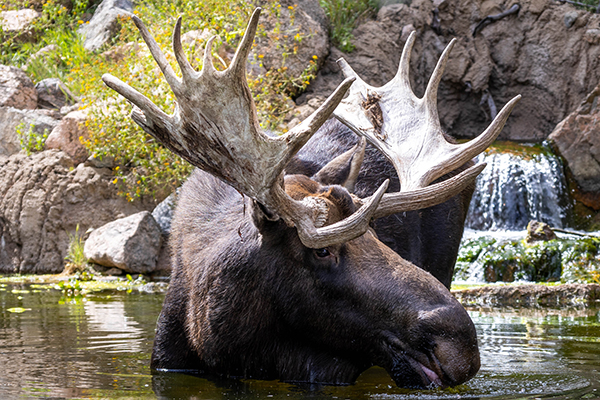
Alaska moose Atka enjoying the pond.

Experiences like feeding giraffes at the Zoo, getting to observe animal demonstrations and training sessions with keepers, and off-site ZOOMobile programs help people learn about the existence and importance of the animals that we share this planet with, and feel inspired to help conserve their wild counterparts.

Now, the EdVenture team at CMZoo is offering a new opportunity for guests to connect with wildlife and wild places, by taking them into the natural environments, with a brand-new program that launches in April 2026! Edventure Excursions will provide a fun and educational journey to local wildlife projects that they might not be aware are happening right here.

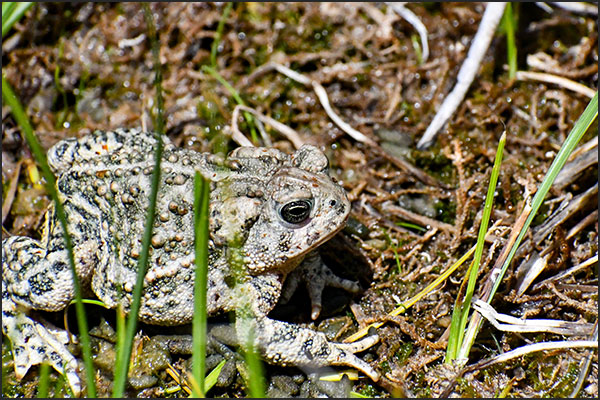
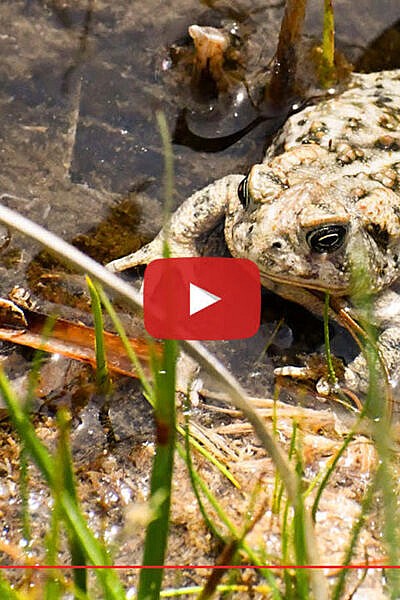
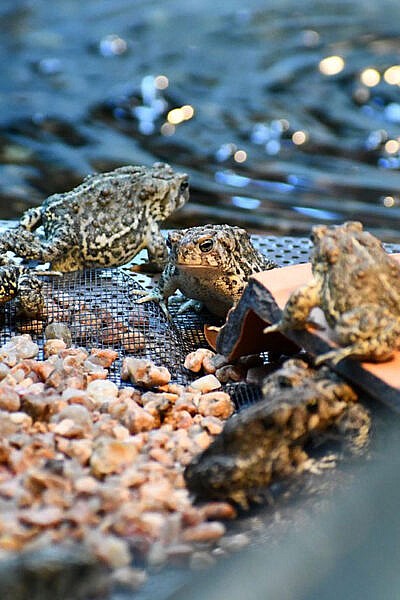
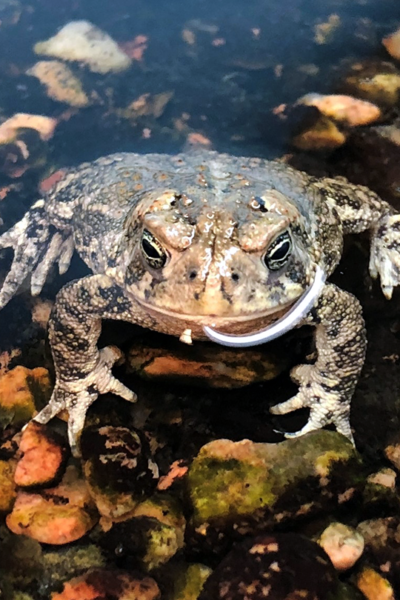
Wyoming toad in a wetland area up-close

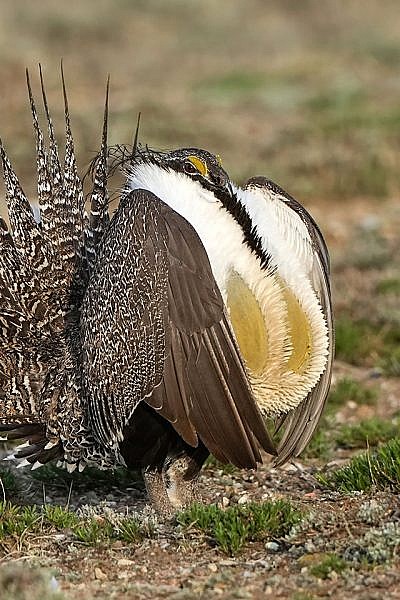
The program’s inaugural adventure into the wild is a 5-day expedition to northern Colorado and southern Wyoming to learn about the importance of prairie ecosystems and the animals that call them home. Guided by CMZoo staff, the group will explore the wild habitats of critically endangered animals, like black-footed ferrets, Wyoming toads and sage grouse.

Each reservation supports funding to provide free classroom programming for schools in the Front Range region. The EdVenture team receives dozens of requests every year to bring Zoo animals to schools, and this program will help fund even more of those opportunities.

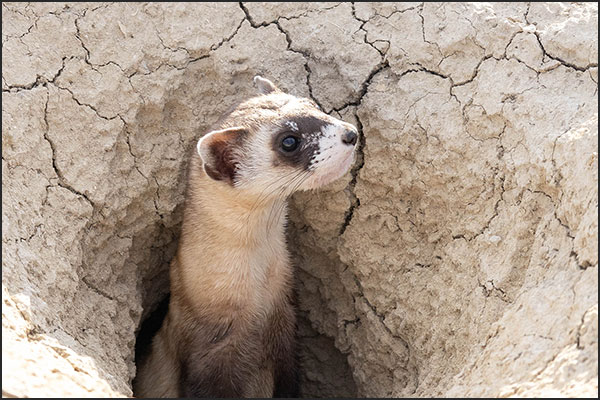
Black-footed ferret peering out

Sign up for the first-ever EdVenture Excursion, Sage Grouse Annual Display, at cmzoo.org/excursions.

Sage Grouse Annual Display Trip Details

Dates: April 20 – 24, 2026
Group size: 8
Cost: $1,250 per person / $2,100 per pair (shared bed)**
Transportation: provided; leave from Cheyenne Mountain Zoo
Not included in cost: meals


Accommodations:

● 2 nights at a bed-and-breakfast in Laramie, Wyoming (multi-bedroom house shared with other program participants)
● 1 night at hotel in Walden, Colorado (separate rooms)
● 1 night at hotel in Fort Collins, Colorado (separate rooms)

Back to The Waterhole

QUARTERS FOR CONSERVATION PROGRAM HELPS MEMBERS AND GUESTS CONTRIBUTE DIRECTLY TO FRONTLINE CONSERVATION ORGANIZATIONS WORLDWIDE – Cheyenne Mountain Zoo and its members and guests are celebrating a huge milestone, having raised $6 million for wildlife and wild places, since the Zoo’s Quarters for Conservation (Q4C) program launched in 2008.

Every visitor to the Zoo receives three ‘quarter’ tokens representing the 75¢ Q4C allocation from their admission fee. They can then show support for the legacy projects they love by placing their tokens in the corresponding slots in the Q4C kiosks near admissions.

Before launching Q4C in 2008, CMZoo was supporting conservation, but at a fraction of what is possible now. As more people visit the Zoo each year, the Zoo can contribute more money to conservation. In the past few years, CMZoo has collected approximately one million dollars every 20 months through Q4C. The Zoo’s membership, special events, admissions and EdVenture programs also contribute to conservation. CMZoo’s current Q4C beneficiary species include giraffe, Panama frogs, orangutans, black-footed ferrets, African elephants and black rhinos, Wyoming toads and Amur tigers.

About Our Current Q4C Legacy Projects

Q4C beneficiary species truly run the gamut, from 18-foot-tall giraffe in Africa to tiny toads in Wyoming.

Q4C supports Giraffe Conservation Foundation and their efforts to study, protect and grow wild giraffe populations. While CMZoo staff help raise awareness of giraffes’ silent extinction by inspiring guests at the Zoo, Q4C funds on-the-ground giraffe conservation efforts. CMZoo and the Kratt Family Fund (KFF) support efforts such as giraffe translocations to safer habitats, population monitoring and surveying, removal of illegal snare wires and veterinary treatment for giraffe and other wildlife injured by snares. They also provide veterinary support with vehicles and supplies. In addition, CMZoo’s contributions fund critical medications to treat injured animals, giving them a second chance at life.

Q4C also funds CMZoo’s on-site breeding programs for black-footed ferrets and Wyoming toads. These endangered prairie species were declared extinct in the wild in the 1980s and early 1990s, and are only around today because of decades of recovery efforts from U.S. Fish & Wildlife Service, zoos and partner organizations.

Wyoming toads are like so many amphibian species in decline all over the world, including Panamanian frogs, which also receive support thanks to Q4C funds and CMZoo staff support in the field. CMZoo staff members assist the Panama Amphibian Rescue and Conservation Project by sharing ideas and information from Wyoming toad breed-and-release efforts, and travel to Panama to help research strategies to reintroduce these endangered amphibians into their natural habitats.

CMZoo’s work to save habitats for orangutans through advocacy for sustainable palm oil production is also largely supported by Q4C. Thanks to that financial support, CMZoo’s sustainable palm oil team consults staff at other conservation organizations on starting their own palm oil programs. The CMZoo sustainable palm oil team continues to focus on international work through the World Association of Zoos and Aquariums (WAZA). The team was instrumental in the creation of WAZA’s PalmOil Scan – a global free sustainable palm oil shopping smartphone app, which allows shoppers to scan the barcodes of items to learn whether producers have committed to using sustainable palm oil – and to choose to support companies that have committed to sourcing sustainable palm oil.

Through Q4C, CMZoo also supports Tsavo Trust – a conservation organization in Kenya that works to protect the last of the big tuskers, which are African elephants with tusks weighing more than 100 pounds, and Eastern black rhinos. CMZoo’s funds helped Tsavo Trust build out their headquarters and provide a clean water source for the local community, who are partners in conservation efforts. It also paid for vital infrastructure for aerial and ground vehicles that rangers use for surveillance that protects rhinos and elephants from illegal hunting, in addition to collecting data on how these endangered giants utilize the habitat.

The seventh Q4C legacy partner is Wildlife Conservation Society, whose dedicated staff work to protect and define secure habitats for wild Amur tigers in Eastern Russia. Amur tigers, previously known as Siberian tigers, are critically endangered. Their numbers in the wild continue to be treacherously low at around 500. CMZoo supports efforts to prevent human-wildlife conflicts as well as anti-poaching efforts and funding for field conservationists to study this species in the wild.

For more information about these projects and Quarters for Conservation, visit cmzoo.org/conservation.

About Cheyenne Mountain Zoo

Cheyenne Mountain Zoological Society was founded in 1926. Today, Cheyenne Mountain Zoo, America’s mountain Zoo, offers comprehensive education programs, exciting conservation efforts and truly fantastic animal experiences. In 2025, Cheyenne Mountain Zoo was voted #2 Best Zoo in North America and CMZoo’s Rocky Mountain Wild was named #2 Best Zoo Exhibit in North America by USA TODAY 10Best Readers’ Choice Awards. It is Cheyenne Mountain Zoo’s goal to help guests fall in love with animals and nature, and take action to protect them. Of the 237 zoos and aquariums accredited by the Association of Zoos and Aquariums (AZA), Cheyenne Mountain Zoo is one of just a few operating without tax support. Cheyenne Mountain Zoo depends on admissions, membership dues, special event attendance and donations for to fund animal care, conservation, Zoo operations and improvements.

Earlier this month, a group of volunteers and conservation experts gathered to release hundreds of critically endangered Wyoming toads back into their native habitat. Wyoming’s Laramie Basin is the only place in the world where Wyoming toads live. Since 2008, Cheyenne Mountain Zoo, along with partners from the U.S. Fish & Wildlife Service and others, has driven the year-round effort to breed, raise and release Wyoming toads.

None of this work is possible without the support of CMZoo guests and members. Over $5 million has been raised for conservation through our Quarters for Conservation program. Every Zoo guest receives three “quarter” tokens, representing the 75¢ Q4C allocation from their admission fee. Guests can show support for their favorite legacy conservation projects, including the breed-and-release program helping Wyoming toads recover in their native prairie lakes, by placing their tokens in the corresponding slots in the Q4C kiosks located in the Zoo’s admissions plaza.

Thank you for saving wildlife and wild places!

Back to The Waterhole

Last month, volunteers and conservation experts gathered in Wyoming’s Laramie Basin to release hundreds of critically endangered Wyoming toads to their wild native habitat. 200 of the toads were raised at Cheyenne Mountain Zoo, including 10 little toads that CMZoo fans and guests named and followed online as they prepared for their big job: helping restore their species, which was once considered extinct in the wild.
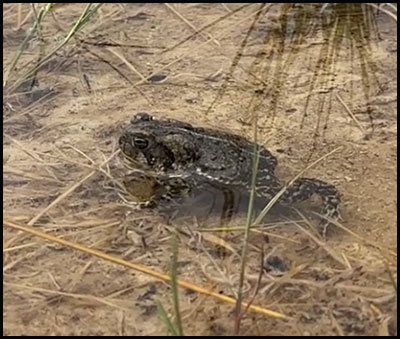
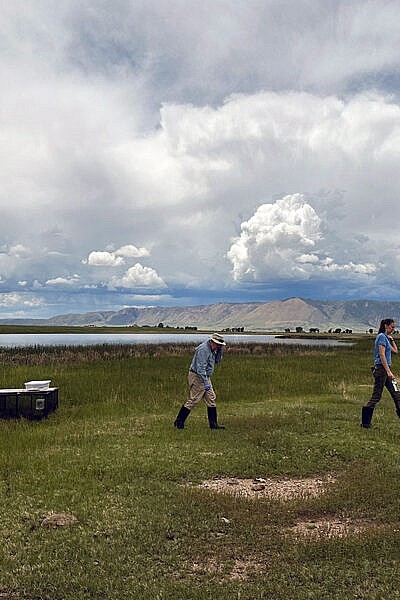
Wyoming toad release with Zoo staff into the wild.
Jeff Baughman, field conservation coordinator at CMZoo, has led the effort for the Zoo’s contribution to this multi-organization effort since 2008, along with partners from U.S. Fish & Wildlife Service and others. The year-round effort to breed, raise and release the toads culminates each year in June, as he helps the toads – and thousands of tadpoles – make their debut in four designated reintroduction sites.

For many years, 1-year-old toads and tadpoles have been released each summer. This year, for the first time, 2-year-old toads were also released. This summer, CMZoo released 200 adult toads, bringing to total ever released to 1,425. The Zoo has released 46,651 tadpoles (yes, they count every single tadpole!), and 215 metamorphs and young toads over the years.

Baughman’s goal is for toads to breed and survive in the wild. The hope has been for the 1-year-old toads to overwinter and breed the next year. The 2-year-olds released this year could potentially reproduce this summer, so even if they don’t make it through the year, their offspring could.

“We have seen wild egg strands during surveys and releases, which is always so exciting,” said Baughman. “Maybe next year we’ll see even more egg strands, or we’ll see 1-year-old toads that hatched in the wild this summer. We’re going to continue testing ways to help more toads survive from year to year.”

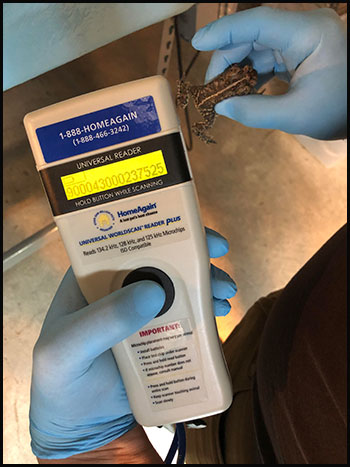
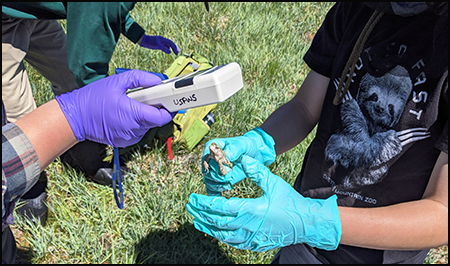
Some of the toads are microchipped, so that any toads found in the wild can be scanned to see where they were born. Ten of those microchipped toads have names – pretty unusual for an endangered animal intended for wild release, but CMZoo social media fans chose a name theme for the ten tiny toadlets born last summer. Jim, Pam, Dwight, Michael, Phyllis, Oscar, Kevin, Angela, Kelly, and Stanley are now playing the most important roles of their lives, supporting their ecosystem or maybe, hopefully, bringing a new generation of toads to the Laramie Basin.
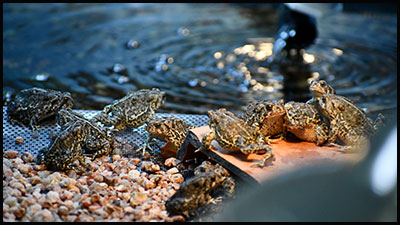
Each year on the day of the release, the team from CMZoo meets in the early morning hours to load the toads, already safely stored in tubs of cool and misty moss, from the conservation center into a van. That van will also transport CMZoo keepers, volunteers, board members and supporters on a nearly 4-hour drive to the meetup spot at a local fairground parking lot.

That’s where teams coordinate, learn how to safely handle the delicate toads, and pick up their waterproof boots before splitting up to see the toads off into the wild. After another drive, way off the main highway, and traipsing through knee-high waters, thick mud and mosquito breeding grounds, the teams arrive at the edge of a beautiful, crystal clear pond that’s brimming with life.

Pelicans, dragonflies, blackbirds, chorus frogs and more make their summer home in the basin, surrounded by the Medicine Bow and Laramie Mountains in the distance. In between steps – painstakingly placed to protect the well camouflaged toads hopping through the tall, wet grasses – the team stops to remember that wild places like this are well worth early mornings, boots full of pond water, mosquito bites and Denver traffic. Not to mention the daily dedication CMZoo’s conservation team and their partners have for the effort year-round.

“Being out in the Laramie Basin to release toads every year, and getting to bring volunteers who haven’t been before, really cements my passion for this ongoing effort,” said Baughman. “This is the only place in the world Wyoming toads live, and it’s up to us to help them recover. I always try to take a moment to reflect on the year we spent preparing these toads for release. It gets me excited for the year ahead.”
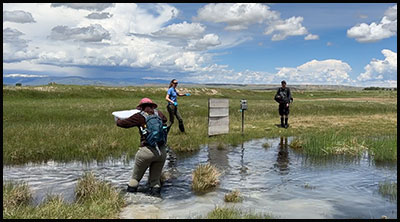
Wyoming toad release with Zoo staff into the wild.
In addition to the toads released each year, CMZoo makes a second summer trip to the basin to release tadpoles to the wild. The toads and tadpoles are vital to the health of the ecosystem, serving as insect control, food sources for other creatures, and indicators of the health of their homes.

“I used to hear people asking why we put so much effort into saving a toad,” said Baughman. “Amphibians are facing the biggest mass extinction since the dinosaurs, and we’re their biggest hope. Without amphibians, insect populations would become out of control, and birds and other animals would lack an important food source.”

Pesticides, drought and a deadly amphibian fungus are the leading causes for the worldwide decline in amphibians. Chytrid fungus causes a skin infection that prevents amphibians from absorbing water and breathing through their skin, a process called cutaneous respiration. This often leads to organ failure and death.

For a long time, the approach has been to look for ways to address the fungus. Water adventurers can prevent the spread by disinfecting fishing gear, kayaks and other equipment used in water. But now, Chytrid is present in most wild waters, so Baughman and fellow scientists are looking for ways to help the toads become resilient to the fungus, or even adapt to it. That means intentionally exposing them to it.
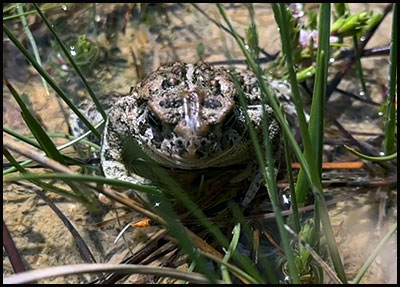
Wyoming toad release with Zoo staff into the wild.
“We think the tadpoles that hatch in Chytrid-infested waters might be more resilient to it than those born in Chytrid-free environments,” said Baughman. “Of course, introducing Chytrid to our breed-and-release facilities would pose a huge risk, because of the potential for it to wipe out entire populations. So, we need more wild-born toads to test the theory for us. In the meantime, we’ll continue building the numbers in the best way we know at this point, which is in breed-and-release facilities like ours, while we continue to test new methods.”

None of this work is possible without the support of CMZoo guests. Through CMZoo’s Quarters for Conservation program, 75¢ of every admission is dedicated to frontline conservation efforts like this, so guests can enjoy a day on the mountain with their favorite animals and support important programs dedicated to saving wildlife and wild places. Since 2008, when Q4C started, CMZoo’s guests and members have contributed more than $4 million to conservation projects worldwide.

Back to The Waterhole
This summer, Cheyenne Mountain Zoo conservation keepers introduced ten tiny tadpoles to the world. The ‘poster tadpoles’ of their endangered species, the Wyoming toad, morphed into toadlets within weeks. At the end of July, CMZoo fans submitted naming ideas for the ten amphibian siblings on the Zoo’s social media channels, and one theme was a big hit in ‘the office’ at the Zoo. The toads were named Jim, Pam, Michael, Dwight, Stanley, Kelly, Phyllis, Angela, Oscar and Kevin. Since then, they have fine-tuned their hunting skills and are growing big and strong in the conservation center above Cheyenne Mountain Zoo.

In the 90s, Wyoming toads were considered extinct in the wild, and only one population remained in human care. That population became the foundation for a breeding program in nine zoological and governmental facilities, including CMZoo, producing tadpoles and toadlets for reintroduction to the wild.

Over its 26-year commitment to Wyoming toad recovery, CMZoo’s conservation team has released 44,695 tadpoles and 1,510 toads into the wild. Next summer, these ten toads and hundreds of others born at CMZoowill take their first hops into the wild as part of this ongoing conservation effort.

“Each summer, we travel to the Laramie Basin, in Wyoming, to release toads and tadpoles to their wild native habitats,” said Jeff Baughman, field conservation coordinator at CMZoo. “We also prepare toads for breeding in the summer, and we welcome new tadpoles to their tanks. It is a really exciting and busy time, but our winter efforts are also important.”

For the conservation team, winter and spring are all about growing healthy toads and preparing them for the next summer’s release. Of course, educating and inspiring the public to care for toads is a year-round priority.

“Toad conservation may not be front-of-mind for most people mid-winter, but we’re always working to help this native species recover,” said Baughman. “Toads are worth saving. They play a vital role at the center of the prairie environment as the best bug control available and as sustenance for migrating birds and native animals in search of food. If the toads don’t survive, the whole ecosystem suffers.”

Amphibians worldwide are facing mass extinction due to a pandemic caused by the chytrid fungus. Chytrid fungus results in a skin infection that hinders amphibians’ ability to breathe and absorb water. This often leads to organ failure and death. Disinfecting outdoor recreation gear used in and near water can help stop the spread of the deadly chytrid fungus. Outdoorspeople who explore waterways can leave their gear in a hot car or the sun for about 3 hours to kill the fungus and prevent transferring it to another body of water.

In winter, Baughman and his colleagues also continue year-round work on the Wyoming toad Species Survival Plan (SSP). SSP managers make recommendations on which breeding toads should be paired next year to achieve the greatest possible genetic diversity for the population, many of which will be released into the wild and some of which will stay in human care to contribute to continued breeding efforts.

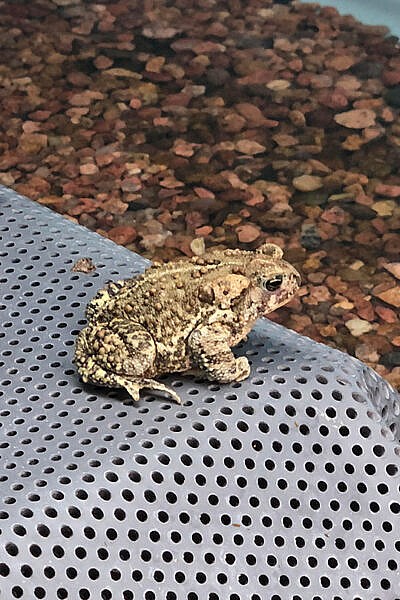
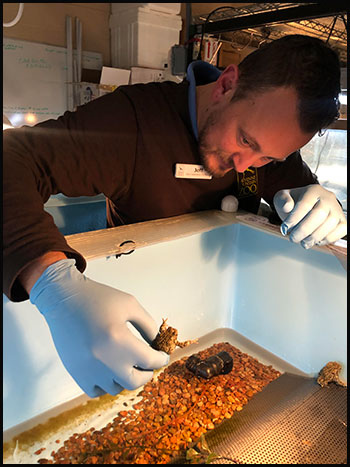
A key to making those breeding recommendations, and giving each toad the best chance at wild survival, is identifying each individual. The team can ID each toad by its unique wart patterns. Since those patterns can change as a toad grows in size, each toad is microchipped.

“By scanning each microchip, we have a more reliable way to track important data for each toad,” said Baughman. “For example, we can see if Michael is gaining weight or if Pam is doing well in artificial hibernation prior to being released, without depending totally on their wart patterns. They get their chips around 6 to 8 months of age. The ten we’ve been following on social media and many others in the cohort recently got theirs.”

In addition to tracking important data while the toads are in human care, the microchips also allow conservation teams to check up on the toads once they’re released. During releases, the teams will scan toads they find in the wild to see how many were bred in human care and released into the wild versus a number of toads without microchips, which biologists can safely assume were either born in the wild or grew from the tadpoles released from human care.

“The goal is to encourage wild breeding,” said Baughman. “It’s not sustainable for us to dream of continuing to release thousands of toads and tadpoles every year f We have to discover what the toads need to breed and survive naturally in the wild.”

So far, age seems to have a lot to do with it. In past years, conservationists focused on releasing ‘headstart toads,’ aptly named for their headstart on life. These toads are released into the wild at one year of age, instead of as tadpoles or toadlets. Their bigger size and self-sufficiency, gained from their first year in a safe environment in human care, meant they were less likely to become fish food. At a year old, the toads are not typically mature and ready to breed so a new strategy will be tested.

“This year, we’re going to start releasing two-year-old headstart toads,” said Baughman. “Conservation is a science, and science is all about experimenting to find better ways of doing things. We think that two-year-old toads might be more likely to breed.”

Because Baughman and his colleagues have seen a small increase in wild Wyoming toad egg strands, they know toads are breeding, but they want to further increase wild breeding events. Rather than completely change their approach to release only two-year-old toads, they will also continue to release one-year-olds, including Jim, Pam, Michael, Dwight, Stanley, Kelly, Phyllis, Angela, Oscar and Kevin, in 2023. We will continue to give updates during the spring as their summer release date approaches.

Just by visiting CMZoo, members and guests are making an impact to help toads and other species. Through CMZoo’s Quarters for Conservation program, 75¢ of every admission is dedicated to frontline conservation efforts like this, so guests can enjoy a day on the mountain with their favorite animals and support important programs dedicated to saving wildlife and wild places. Since 2008, when Q4C started, CMZoo’s guests and members have contributed more than $4 million to conservation projects worldwide.

Back to The Waterhole

Jim, Pam, Michael, Dwight, Angela, Phyllis, Stanley, Kelly, Oscar and Kevin, our ten Wyoming toadlets, have been fine-tuning their hunting skills up in CMZoo’s conservation center. These critically endangered toads, and many other amphibians, have a special way of distracting and attracting their meals: toe tapping. It brings a whole new meaning to the phrase, “dancing for your dinner.”

We’re taking you on a wild adventure this year as we follow these ten individuals throughout their year in our conservation center and then as they’re released to the wild. The little toads have a big job: helping their critically endangered species recover in the wild waterways of Wyoming.

Why give a hop? Toads are worth saving. They play a vital role at the center of the prairie environment as the best bug control available and as sustenance for migrating birds and native mammals in search of food. If the toads don’t survive, the whole ecosystem suffers. They’re also what’s known as an indicator species, meaning they indicate the overall health of their ecosystem – and it’s in desperate need of attention.

Amphibians worldwide are facing mass extinction due to a pandemic known as the Chytrid fungus. Chytrid fungus causes a skin infection that hinders amphibians’ ability to breathe and absorb water. This often leads to organ failure and death. But, thanks to zoos like CMZoo, these hoppers stand a chance.

Over its 26-year commitment to Wyoming toad recovery, CMZoo’s conservation team has released 44,695 tadpoles and 1,510 toads into the wild. Next summer, these ten toads, and hundreds of their siblings currently growing up in the CMZoo conservation center, will take their first hops into the wild as part of this ongoing conservation effort.

Follow our Facebook playlist A Year in the Life of a Wyoming Toad

The soft serenade of Wyoming toad mating calls will soon echo through the hallways of the Cheyenne Mountain Zoo conservation center, as Field Conservation Coordinator Jeff Baughman welcomes ten breeding pairs of critically endangered amphibians back from 38 days of hibernation.

“It’s a busy time of year for us,” said Baughman, who has been intimately involved in Wyoming toad recovery at CMZoo since 2008. “The next several weeks are really crucial as we help bring this species back from the brink of extinction. Our adult toads are waking up from hibernation and moving into their breeding suites. Soon, we’ll have our hands full, welcoming thousands of their babies into our care.”

It may sound dramatic, but we believe it is. Wyoming toads are listed as “EW” or “Extinct in the Wild,” on the International Union for the Conservation of Nature (IUCN) Red List of Threatened Species.

Why give a hop? Toads are worth saving. They play a vital role at the center of the prairie environment, as the best bug control available and as sustenance for migrating birds and native mammals in search of food. If the toads don’t survive, the whole ecosystem suffers. They’re also what’s known as an indicator species, meaning they indicate the overall health of their ecosystem – and it’s in desperate need of attention.

Amphibians worldwide are facing mass extinction due to a pandemic known as the Chytrid fungus. Chytrid fungus causes a skin infection that hinders amphibians’ ability to breathe and absorb water. This often leads to organ failure and death. But, thanks to zoos like CMZoo, these hoppers stand a chance.

Over its 26-year commitment to the cause, CMZoo’s conservation team has released more than 41,629 tadpoles and nearly 1,444 toads into the wild. Next week, 66 more one-year-old toads will take their first hops into the wild to join them in the Laramie Basin of Wyoming.

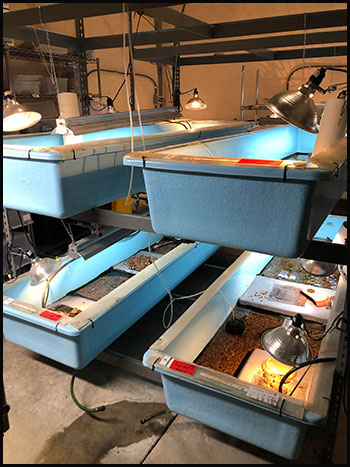
Although the releases happen each June, the team works year-round to prepare for the toads’ and tadpoles’ hopeful sendoff. The yearly process begins by simulating hibernation for the toads. They’re placed in moss-lined containers inside a hibernaculum, which reduces their temperature slowly over a few days to 38 degrees Fahrenheit. The toads, very much alive, stay at that temperature for 35 days, receiving periodic checks from the conservation team who mist and monitor the sleeping beauties.

Over the last few days of their low-temp slumber party, the hibernaculum’s temperature is slowly raised back to around 70 degrees Fahrenheit, and they start to wake up. The cycle triggers their instinct to breed, as they would in the wild after winter, and that’s when the magic happens.

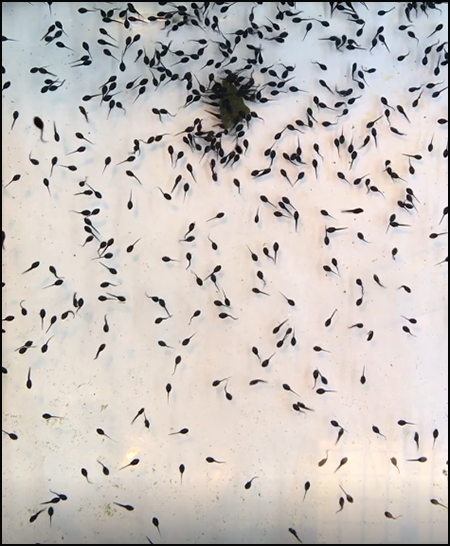
“We bring them out of the hibernaculum and place genetically desirable breeding pairs into tanks,” said Baughman. “We also play audio tracks from the Laramie Basin, which include Wyoming toad breeding calls, so the environment is just right. It only takes about a week for fertilized eggs to develop into tadpoles.”

The team will release thousands of those tadpoles into ponds and streams in Wyoming at the end of June. Some of the tadpoles hatched this year will stay at the Zoo, under the care of the conservation team, to grow into yearling toads before being released the following summer. The tadpoles held back get a yearlong head start at the Zoo, hence the term ‘headstart toads.’ New this year, others will be held back for two years to see if wild reproduction increases with more sexually mature toads being released. Clean Chytrid-free water, climate controls and plenty of yummy meals of crickets and cockroaches give them all a better chance at surviving in the wild. Not to mention, they won’t be on the menu themselves. Most importantly, it means there are more toads ready to breed in the wild because they will have survived and reached reproductive maturity at two years old.

When they’re about eight months old, each toad is microchipped, so when the team goes back to the release location, they can track survivorship or prevalence of the Chytrid fungus. The microchips also help the team identify and monitor individuals during their stay at CMZoo.

Amphibian allies don’t need a hibernaculum or a fresh supply of crickets to help these little guys. Disinfecting outdoor recreation gear used in and near water can stop the spread of the deadly Chytrid fungus. Leaving your fishing or kayaking gear in a hot car or the sun to dry it out for 3 hours, will kill the fungus and prevent water enthusiasts from accidentally transferring it to another body of water.

“Recovering a species definitely takes time,” said Baughman. “But we’ve seen some promising signs that the toads are starting to bounce back – or hop back – in the wild. During field surveys, we’ve seen wild egg strands, which means toads or tadpoles that have been released, or the offspring of released toads, are starting to do the work for us. As a conservationist, there’s nothing you want more than to be out of work.”

This year, Baughman and his team are taking CMZoo followers on a wild real-time adventure, following a group of tadpoles throughout their year of development in the CMZoo conservation center. We’ll share the successes and the struggles these tiny creatures face, even in the safety of their nursery under the care of our team.

“We have a pretty good record of raising tadpoles to adulthood, but they really struggle in the wild,” said Baughman. “In the wild, only about four of every thousand tadpoles makes it to maturity, and that’s on a good year. On a bad year, only about two survive to breeding age, on average.”

Starting in early June, tune into CMZoo’s social channels, on Facebook, Instagram and YouTube, to get closer than ever to ten little tadpoles. Watch in awe as eggs turn into tadpoles. Be mesmerized by metamorphosis, as they grow legs and absorb their tails, earning the title of toadlet. Root for them as they learn to hunt and grow into dime-sized defenders of their species. Then, follow along as they go through the year-long preparation for their eventual wild release in June 2023. We’ll keep you posted.

Back to The Waterhole