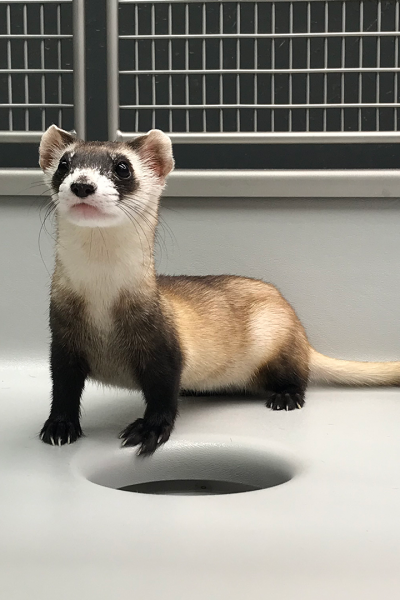
It’s easy to see why the black-footed ferret (BFF) is considered the ambassador of the prairie ecosystem. With its black-and-white bandit-esque markings, small stature and curious demeanor, many consider this species adorable. That’s true; but they’re also highly trained hunters with a big job: restoring balance in their ecosystem while helping their own species recover from near extinction. Luckily, the ‘Ghosts of the Prairie’ have some help.

During the western frontier exploration in the early 1900s, cargo ships from Europe and Asia inadvertently brought sylvatic plague to North America. The spread of this disease, combined with poisoning and eradication programs led by newly settled farmers and ranchers, who saw prairie dogs as pests, drastically reduced the prairie dog population. Because prairie dogs are black-footed ferrets’ main food source, the BFFs’ population declined dramatically. By the 1980s, black-footed ferrets were thought to be extinct.

Sept. 26, 2021, marked the 40-year anniversary of the rediscovery of this spunky species. On that day in 1981, a ranch dog named Shep caught a black-footed ferret. Shep’s catch led to the discovery of a small population of BFFs in Meeteetse, Wyoming. Since then, zoos, U.S. Fish and Wildlife and other organizations have banded together to breed, prepare, release and monitor black-footed ferrets to increase the population. Numbers fluctuate, but recent reports estimate 350 BFFs are thriving in the wild, thanks to this program.

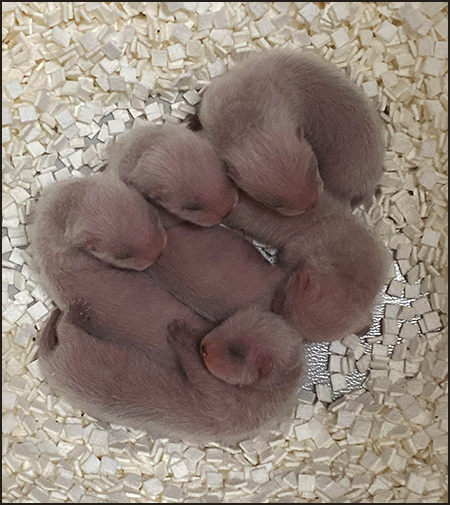
This year, the CMZoo conservation team welcomed 15 healthy BFF kits, six of which will be released into the wild in the coming months. Since 1991, when CMZoo established its breed-and-release black-footed ferret program, the team has bred 585 BFF kits.

“It’s really amazing to be part of a conservation program that impacts a native local species,” said Jeff Baughman, CMZoo conservation coordinator. “Each breeding season, we learn more about their species and use what we’ve learned to benefit them in the wild. This year, we focused on developing their hunting and defense skills by providing new enrichment and feeding opportunities.”

Since the BFFs are intentionally kept away from guests and the keepers who care for them to preserve their wild instincts, their enrichment looks different than most animals at CMZoo.

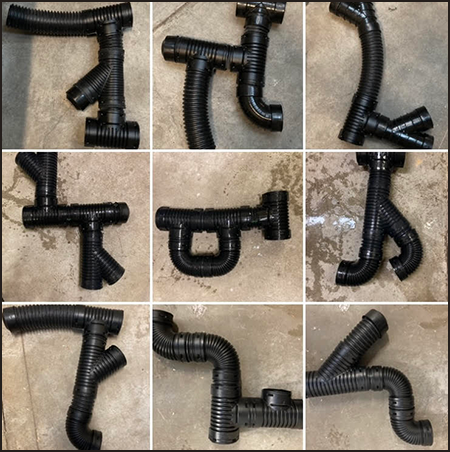
“We built new tunnel systems for them to navigate, which we hope will better prepare them for their underground lives in the wild,” said Baughman. “They’re nocturnal and spend most of their time hunting prairie dogs, which are about three times the size of black-footed ferrets. We want them to be agile, curious, confident and creative individuals as they explore prairie dog tunnels in the wild.”

BFF ‘boot camp’ is the next step for the six born-to-be-wild CMZoo ferrets. Boot camp puts their survival skills to the test in a contained prairie setting. Biologists monitor the BFFs during boot camp, and if they see any individuals are struggling to hunt, find shelter, or defend themselves, they’ll be returned to human care. Those who prove they can live wild will be released into the prairie beyond the contained boot camp setting.

Although guests can’t visit our breeding BFFs or their kits, they can visit Yippee, a black-footed ferret ambassador who lives in The Loft at CMZoo.

Every visit to CMZoo is conservation in action. Through CMZoo’s Quarters for Conservation program, by which 75¢ of every admission is dedicated to frontline conservation efforts like this, guests can enjoy a day on the mountain with their favorite animals and support important programs dedicated to saving wildlife and wild places. Since 2008, when Q4C started, CMZoo’s guests and members have contributed $3.4 million to conservation projects worldwide.

Back to The Waterhole


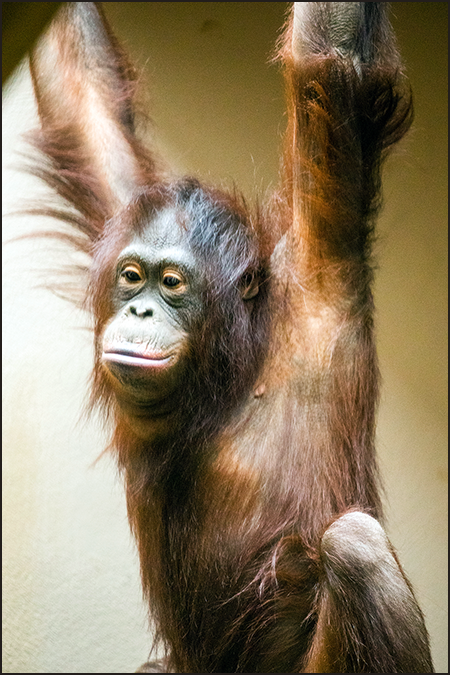
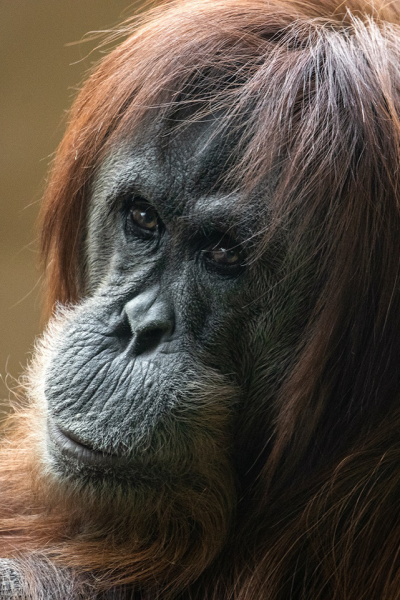
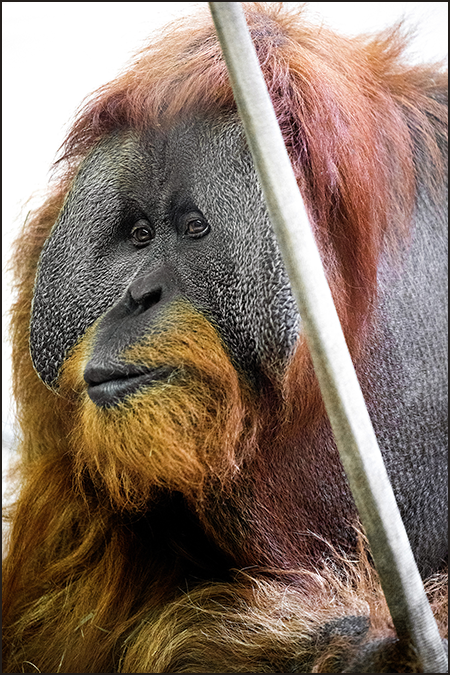
With spooky season just around the corner, many people are stocking up on candy. It may come as a surprise, but the type of candy you purchase has an impact on wild orangutan habitats because it likely contains palm oil.

Palm oil is a form of edible vegetable oil obtained from the fruit of the African oil palm tree. Palm oil is widely used in about half of the products we buy, ranging from food to cleaning supplies to cosmetics and more. As the demand for palm oil increased, unfortunately, so did unsustainable farming practices. Rainforests were cleared to quickly make way for more oil palm crops. It is grown in tropical areas, including Borneo and Sumatra, which are home to orangutans and other unique endangered species, like Sumatran rhinos and tigers.

Palm oil, when farmed responsibly, is really efficient compared to other edible oils. Oil palm trees – the plants palm oil comes from – produce four to ten times more oil per hectare than other popular oil crops like soy, olive, rapeseed and coconut. Boycotting palm oil would lead to increased demand for these other edible oils that require more land and resources to be cultivated.

Additionally, for many of the people who live in Indonesia and Malaysia, palm oil cultivation is their main source of income. If these people cannot rely on palm oil cultivation then they could turn to a different economic endeavor such as planting rubber trees, planting a less efficient oil crop, or even, unfortunately, illegal wildlife trading and hunting. Asking for sustainable palm oil means asking for the most efficient oil crop to be grown and harvested correctly with the least amount of impact on our planet.

“Palm oil isn’t the enemy, so we don’t think boycotting is the answer,” said Chelsea Wellmer, palm oil and conservation programs coordinator at CMZoo. “Boycotting is really difficult because there are over 600 names for palm oil on ingredient labels. You could be eating and using palm oil every day without being aware of it. Learning about palm oil and adding it to your list of things to consider as an ethical and conscientious consumer can make a big difference. With our free shopping app, we’ve made that easy for consumers in the U.S. and Canada.”

Cheyenne Mountain Zoo has been integral in promoting the worldwide effort to support sustainably produced palm oil. The Zoo’s free sustainable palm oil shopping guide mobile app, which consumers can use to discover their favorite companies’ level of commitment to using sustainable palm oil, has now been downloaded over 155,000 times and is being promoted by other zoos across the country.

To download the free app, search “Cheyenne Mountain Zoo palm oil” in the Apple App Store or Google Play, and look for the logo with the green orangutan. Once the app is installed, consumers can scan the bar codes of their favorite products to see how the Zoo has rated that company’s progress towards sourcing 100% certified sustainable palm oil.

All products listed in the app are from companies that are members of the Roundtable on Sustainable Palm Oil (RSPO). The Roundtable on Sustainable Palm Oil (RSPO) has established global standards for environmentally and socially responsible palm oil, and engages stakeholders as part of the solution to make sustainable palm oil the norm.

As long as the company is in the app, they have made a commitment to work towards using only certified sustainable palm oil that is deforestation-free. There are three ratings on the app:

  • Green – excellent
  • Yellow – good
  • Orange – needs improvement

The best way to help protect wild orangutan habitats from destruction due to unsustainable palm oil production is to show large companies that consumers will choose products made by companies that have committed to sustainable production over those that have not.

“We understand there are a myriad of issues to consider as a conscientious consumer,” said Wellmer. “As animal advocates and palm oil experts, our goal is to arm consumers with the knowledge that this is another important aspect to consider as they make decisions.”

CMZoo’s palm oil team can also help consumers encourage their favorite companies to make the commitment to using sustainably produced palm oil in their products.

“If there’s a company that you love, because they meet the rest of your ethical standards, but they’re falling short of protecting wild places through sourcing sustainable palm oil, we can help,” said Wellmer. “Our online palm oil resource tool kit has free letter-writing resources that we have seen make an impact with companies. Information is power, and we can help companies learn why they should commit to using only sustainable palm oil in their products.”

Next time you’re visiting CMZoo’s orangutans at Primate World, check out the palm oil resources and activities available. You can also learn more about the use of certified sustainable palm oil and download the Zoo’s free palm oil shopping app by visiting cmzoo.org/palmoil.

Back to The Waterhole


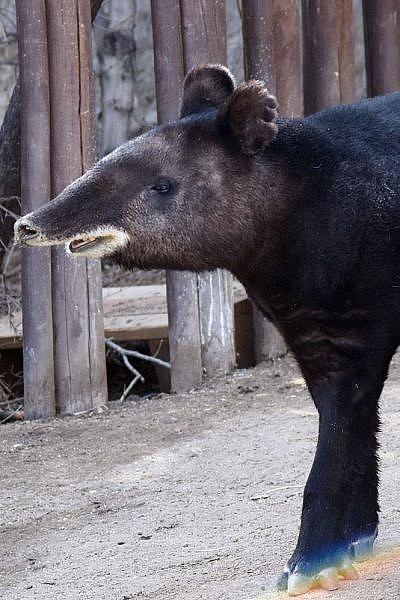
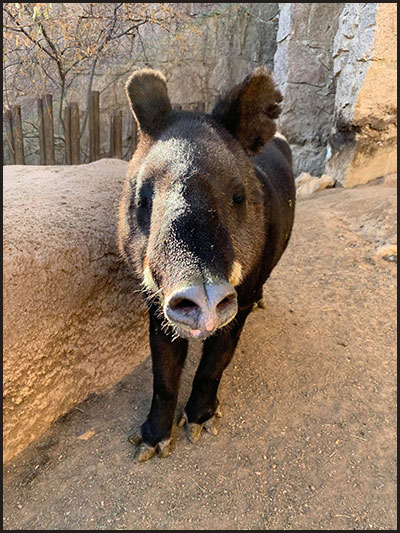
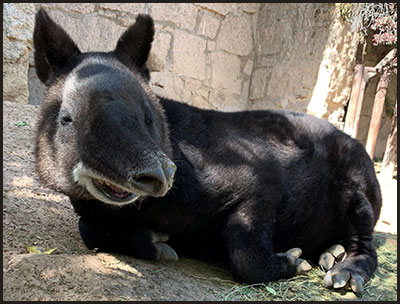
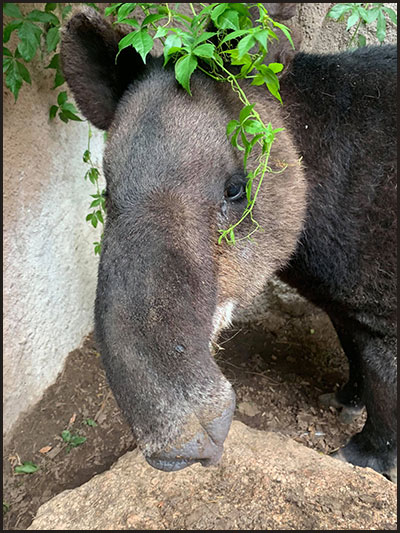
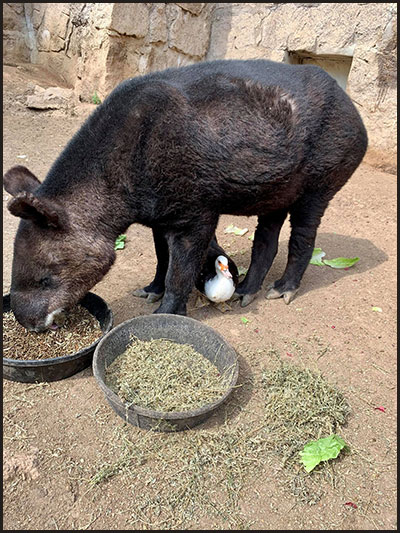
When something or someone so unique is part of your everyday life, it could be easy to lose sight of how lucky you are to know them. Yesterday, Cheyenne Mountain Zoo lost an incredibly rare and special individual named Carlotta, a 27-year-old mountain tapir.

“Carlotta’s passing made me stop and think about how lucky we were to know her,” said Bob Chastain, CMZoo president and CEO. “It’s not only because she was a wonderful ambassador for her species in the wild, but because her species is so rarely seen at any zoo in the world.”

Carlotta was one of only seven mountain tapir in the U.S., housed at just two zoos. Cofan, a 17-year-old male mountain tapir who lives at CMZoo, is now one of the remaining six in human care. The other five live at Los Angeles Zoo.

“Losing her made me think of the many unique individuals in our care, and how it’s our honor and responsibility to help people learn about them,” said Chastain. “I try to convey how lucky we are to give our community the chance to meet Amur leopards, an Eastern black rhino or a black-footed ferret. These animals are endangered in the wild and in human care, it’s a rare opportunity for our community to be able to experience them all in one place.”

Cheyenne Mountain Zoo believes that we can save wildlife and wild places by connecting guests and animals, which may inspire them to take action to protect them.

Of 241 organizations accredited by the Association of Zoos and Aquariums (AZA), only 32 have homes for Amur leopards. Only 24 are home to Eastern black rhinos, and only six facilities in the U.S. house black-footed ferrets. Hippos can be seen at only 31. Asiatic black bears are only visible in five, and Pallas’ cats are in just 16. All of these rare animals have homes at Cheyenne Mountain Zoo, where guests can see them and fall in love.

“Most people had never heard of a mountain tapir before coming to Cheyenne Mountain Zoo,” said Michelle Salido, lead tapir keeper. “Once they met Carlotta, they fell in love with her and her species. She was sweet and gentle. She loved to get chin scratches from guests. I love knowing that we helped thousands of people connect with an animal that’s critically endangered in the wild and extremely rare in zoos.”Carlotta-farewellTapir-4.jpg

In the wild, there are fewer than 2,500 adult mountain tapir remaining in their native Andes Mountains in South America. CMZoo members – many of whom have met Carlotta and Cofan at World Tapir Day celebrations at the Zoo – sent Salido and a team of CMZoo conservationists to track wild mountain tapir in Ecuador to learn more about them. Carlotta, through voluntary blood draw training, also contributed to the care of all mountain tapir in human care, by allowing her team to study her. She also helped to test-fit early prototypes of GPS collars, which were later used to learn about free-ranging wild tapir. Her favorite reward for participating in husbandry behaviors was a belly scratch.

“When we would scratch her belly, she would extend her legs and we knew that meant she’d like an armpit scratch, too,” said Salido. “Of course, we were happy to do that.”

At 27 years old, Carlotta was the oldest female mountain tapir ever in human care in the U.S. She was the oldest living mountain tapir in human care by three years at the time of her death. Because mountain tapir are so rare in human care, not much is known about their life expectancies. Carlotta’s cause of death is suspected to be gastrointestinal issues complicated by her advanced age.

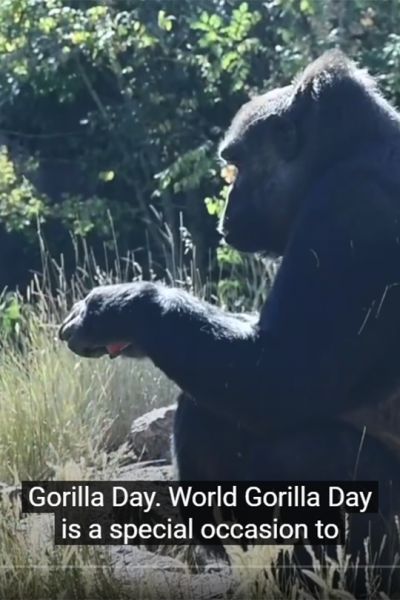
Today is #WorldGorillaDay! Here to help us celebrate are Primate World keeper, Carrie, and our Western lowland gorilla troop: 29-year-old Kwisha, 45-year-old Roxie, 40-year-old Juju, 28-year-old Asha and our silverback, 30-year-old Goma.

World Gorilla Day isn’t just about celebrating these incredible animals, but also about protecting them for years to come. Western lowland gorillas are critically endangered, and their numbers continue to decrease in the wild. In addition to disease and poaching, a threat they face in the wild is loss of habitat due to logging for agricultural use, human settlements and mining. Many of the west African lowland forests and swamps that these animals call home are also natural deposits of coltan, a mineral used in cell phones and other electronics. Due to the ever-increasing demand for cell phones across the world, the destruction of these gorillas’ habitats for mining purposes has unfortunately only increased.

There is, however, something we all can do to help! Coltan is recyclable, and by donating your old cell phones, you can help supply valuable coltan for future phone production. Here in the Primate World building, we have a new cell phone recycling collection bin. When guests visit, they can drop off their old and unused cell phones in the bin, and we will send them to Eco-Cell, an organization that recycles the phones, as well as tablets, smart watches, Bluetooth devices, GPS devices, e-readers, digital cameras, handheld gaming systems and their accessories.

Since installing the box in July of this year, we have collected 194 electronic devices, all of which will be sent to Eco-Cell to be recycled! If you have any old devices please consider bringing them to the Zoo on your next visit. We will be collecting phones in this bin in Primate World every day. Thanks again for celebrating World Gorilla Day with us, and for supporting Cheyenne Mountain Zoo, where every visit is conservation in action.

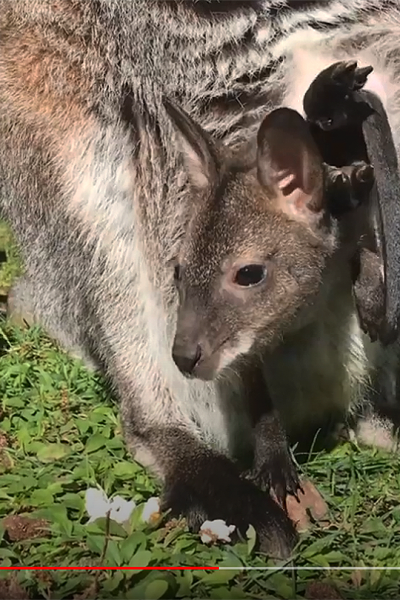
Gidgee’s joey has been making more appearances out of the pouch, and it’s time to reveal his name! As a nod to wallabies’ native Australia, we named our newest joey Tim Tam (Tim, for short), after a popular cookie there.

At 7 months old, he has grown his full coat, and has begun popping out of mom’s pouch for quick zoomies, or to explore small bits of the grass of the wallaby yard. It usually isn’t long before he’s somersaulting back into mom’s pouch. We expect him to continue popping in and out of mom’s pouch for another two months, or until mom decides it’s time for him to move out.

ACTIVE DUTY AND VETERAN MILITARY MEMBERS RECEIVE 50% OFF ADMISSION FOR ENTIRE HOUSEHOLD – Cheyenne Mountain Zoo’s annual Military Appreciation Week kicked off Monday, Sept. 13 and continues through Sunday, Sept. 19, 2021. All active-duty, veteran and retired military members and their dependents who live in the same household will receive 50% off the base Zoo admission cost for the day and time they choose to attend. Timed-entry e-tickets are required and must be purchased in advance at cmzoo.org/military.

To validate their pre-purchased tickets at the front gate, military personnel and their dependents must present a valid military ID at Cheyenne Mountain Zoo’s admission booth. Accepted IDs include: a valid military / retired military ID; a copy of form DD214; state driver’s license printed with veteran indicator or military identifier; or ID issued by the VA, VFW or American Legion. If a service member is deployed or absent, dependents are still entitled to this discount with a spouse’s valid military ID.

Fast Facts

Military Appreciation Week at Cheyenne Mountain Zoo

Monday, September 13 through Sunday, September 19

9 a.m. to 5 p.m. daily

Advance e-tickets are required

Active-duty, veteran or retired military and their immediate family in the same household

50% off base Zoo admission

For more information and to purchase required advance e-tickets, visit: www.cmzoo.org/military

Cheyenne Mountain Zoo’s Military Appreciation Week is possible because of the generous support of our partners, Black Bear Diner, Children’s Hospital Colorado, Colorado Springs Pediatric Dentistry, ENT Credit Union, and your Colorado Springs Toyota Dealers.

About Cheyenne Mountain Zoo

Cheyenne Mountain Zoological Society was founded in 1926. Today, Cheyenne Mountain Zoo, America’s mountain Zoo, offers comprehensive education programs, exciting conservation efforts and truly fantastic animal experiences. In 2020, Cheyenne Mountain Zoo was voted #4 Best Zoo in North America and CMZoo’s Rocky Mountain Wild was named #3 Best Zoo Exhibit in North America by USA TODAY 10Best Readers’ Choice Awards. It is Cheyenne Mountain Zoo’s goal to help guests fall in love with animals and nature, and take action to protect them. Of the 241 zoos and aquariums accredited by the Association of Zoos and Aquariums (AZA), Cheyenne Mountain Zoo is one of just a few operating without tax support. Cheyenne Mountain Zoo depends on admissions, membership dues, special event attendance and donations for funding.

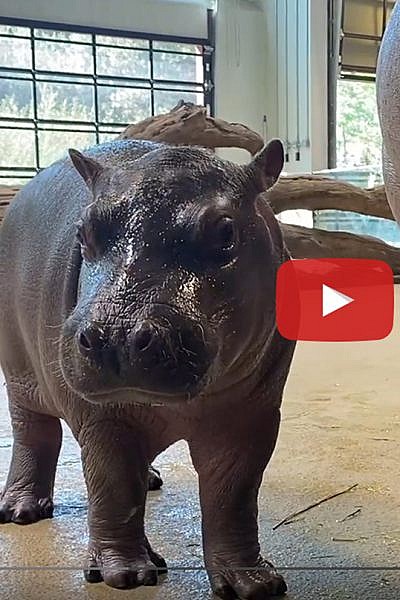
The #CMZoo staff votes are in, and it’s time to reveal the name of our baby hippo! Keepers set up an extra-special breakfast of carrots, oranges and hay for Zambezi in the shape of her calf’s new name. As we show you the video in reverse, his name will be revealed!

Following the theme of the names of his mom, Zambezi, and aunt, Kasai, the calf was named after a river in Africa. The seasonal flooding of this river is vital for food cultivation by the indigenous groups that live along it. Water conservation is an important focus of Water’s Edge: Africa, and our hope is that the calf’s name will help us share these stories with guests and inspire them to take action to save water.

Next time you visit the Zoo, be sure to say hello to….watch the video to find out the name!

Zambezi’s mini-me is learning how to hippo! At eight weeks old, the little calf is still nursing, but that doesn’t stop him from attempting to eat hay, just like mom. The pair have been spending more time on land, both early in the morning and late in the afternoon. Hippo-ing is a lot of work when you’re a little guy, so naps are required in between bouts of mimicking mom. We’re loving his signature sleepy ‘plop!’

As a celebration of all the hard work and dedication our employees put in every day, Zoo management has decided to give the honor of naming the calf to our staff. We’re in the final stages of choosing that name, and we will share it with you, as soon as it’s final!

Happy International Vulture Awareness Day! Today, keepers Brooke and Michelle are spending time with Godric and Hedwig, our Cape griffon vultures, and Nesher, our Eurasian griffon vulture. Cape Griffon vultures are endangered with declining populations, but Eurasian Griffon vultures are of least concern and are increasing in the wild. Vultures are extremely important parts of their ecosystems, and serve as an indicator of the health of the environment below them. Measuring the health of vultures is a great way to measure the overall health of the food chain below them.

Many of the challenges that vultures face in the wild are man-made. Accidental power line collisions are a major issue for these birds. Poachers will also sometimes poison the meat of illegal kills to prevent vultures from flying above the carcasses and revealing their location to rangers. Loss of habitat is also causing a decline in these powerful birds, as it means fewer resources for these birds to live off of.

While these dangers are man-made. not all human intervention is bad for these birds. We are proud that Cheyenne Mountain Zoo’s guests help fund the operations of VulPro through Quarters for Conservation, which is funded by your 75¢ contribution every time you visit the Zoo. VulPro is a South African-based conservation program that works to save Africa’s vultures through rehabilitation efforts, captive breeding programs, research and education.

Since November 2020, VulPro has rescued 59 vultures, most of which were victims of power line collisions and starvation. One of their rising concerns is the impact of wind farms on vulture populations, as they are beginning to see more vultures and raptors injured or killed by collisions with turbines. One especially memorable rescue occurred in May this year, when an African white-backed vulture had its head and beak stuck in a piece of old pvc pipe. When the VulPro team rescued the bird, he was malnourished and dehydrated, and his tongue was damaged where the pipe had cut into it. The vulture stayed at the Vulpro facility until it recovered, and was released back into the wild on June 1.

VulPro’s hope is to inspire people to protect these iconic species. Thank you for celebrating International Vulture Awareness Day with us at Cheyenne Mountain Zoo, where every visit is conservation in action.


Tsavo Trust is a field-based non-profit organization in Africa that uses aerial surveillance and on-the-ground field efforts to protect wildlife in Tsavo National Park, the largest national park in Kenya. Through the Quarters from Conservation program, Cheyenne Mountain Zoo’s members and guests have supported Tsavo Trust since May 2016.

The organization was founded to help protect the last of the ‘big tuskers,’ which are likely the last viable genetic pool of African elephants with tusks weighing more than 100 pounds each. The park is also home to a number of black rhino sanctuaries established by the Kenya Wildlife Service (KWS) and supported by the Zoological Society of London. The black rhino is critically endangered, due primarily to illegal poaching for their horns.

In partnership with the Kratt Family Foundation, CMZoo continues to support Tsavo Trust’s mission by funding ongoing infrastructure development and community outreach projects. Supporting staff salaries and on-site maintenance allows the team on the ground to more efficiently protect the animals at risk. Last year, CMZoo sent support for clean water wells for Tsavo Trust headquarters and a nearby community, which helps bridge relationships with locals who can help Tsavo Trust identify emerging issues that could impact wildlife in the area. This was funded by the Zoo’s daily elephant and rhino feedings, which are available during summer months when weather permits.

This year, CMZoo’s funding has helped support a full-time business administrator, a full-time conservation officer and low-flying reconnaissance pilot and a newly completed workshop, where the team can efficiently maintain its fleet of 12 ground vehicles. Keeping those all-terrain vehicles in working order means the team can effectively reach elephants and rhinos that need them.

“Imagine having your headquarters in the middle of Tsavo National Park,” said Dr. Liza Dadone, CMZoo vice president of mission and programs. “You’re protecting roughly 16,000 miles of land that is vital to the survival of the last of this incredible population of African elephants, but the lack of services can present obstacles that could mean life or death for an elephant. If a vehicle broke down in the past, it could have caused a significant delay in getting to the elephants in the field. Now, Tsavo Trust teams can maintain their vehicles on-site and get where they’re needed – with the elephants and rhinos in the wild.”

From January to June 2021, Tsavo Trust flew more than 28,000 miles above Tsavo National Park, monitoring elephants, rhinos and other wildlife from the skies. The Tsavo Trust airplanes give their team the best vantage point for identifying threats to the animals, which are relayed to Tsavo Trust protection and monitoring teams, on foot and in vehicles, who can take action on the ground.

“I hope our guests can feel the impact they’re making through our partnership with Tsavo Trust,” said Dr. Dadone. “By visiting the Zoo, you’re sending financial support directly to the team who keeps a watchful eye on these magnificent animals and anyone who might want to harm them.”

In that same period, Tsavo Trust has made 28 arrests, including poachers and ivory dealers, and recovered 417 snares and traps.

Every visit to the Zoo is conservation in action. Cheyenne Mountain Zoo and its supporters, guests and members have raised more than $3.4 million since the Zoo’s Quarters for Conservation program launched in 2008.

Back to The Waterhole