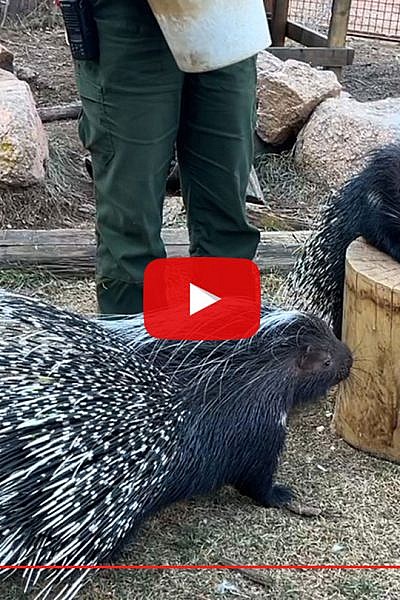
Say hello to Thistle, Waffles’ new companion! Thistle is settling in well and doing great with his training. Thistle and Waffles have a breeding recommendation through the Cape Porcupine Species Survival Plan, which helps manage genetic diversity and healthy populations in human care for their species. Waffles and Thistle have quickly bonded and can often be seen cuddling in their den or exploring their habitat in African Rift Valley together. Stay tuned for more Waffles and Thistle updates!

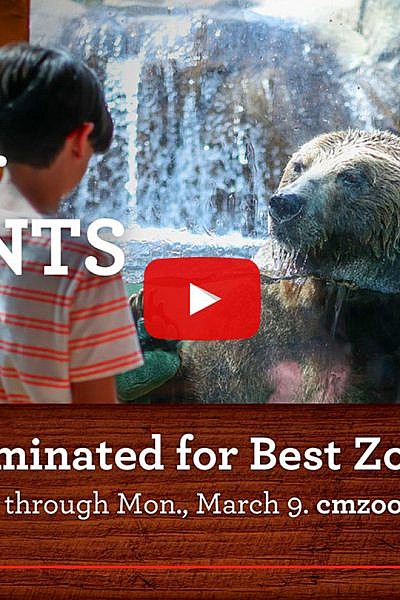
For the tenth consecutive year, Cheyenne Mountain Zoo is nominated for Best Zoo in the U.S. in USA TODAY’s 10Best Readers’ Choice Awards. Supporters can vote daily through Mon., March 9 at cmzoo.org/vote.
A vote for CMZoo is a vote for your favorite animal and for your community, because a high ranking elevates the entire Zoo – and Colorado Springs.
Anyone who has made eye contact with a tiger, petted a wallaby, felt the roar of an African lion, hand-fed a giraffe or walked alongside an African penguin knows how special our hometown Zoo is. This friendly competition amongst zoos nationwide is an excellent way to show your support.
Voting continues now through 10 a.m. MT on Mon., March 9. Supporters are encouraged to vote every day at cmzoo.org/vote.
Part 1: Past
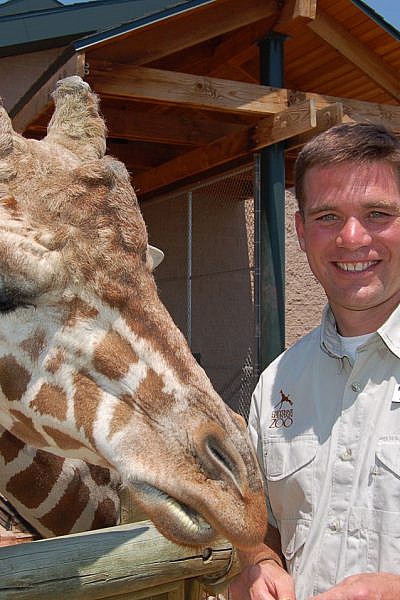
Two years ago, we announced that our 20-year President & CEO, Bob Chastain, is retiring after 30 years of service to Cheyenne Mountain Zoo. On Feb. 10, CMZoo’s board of directors announced Dave Ruhl, current executive vice president at CMZoo, will step into the role of president & CEO on June 12, 2026.
As we embark on our centennial year and Bob’s final four months at the Zoo (he retires in June!), we asked Bob to look back on three decades of the progress and growth that made Cheyenne Mountain Zoo a financially-stable community gem, national destination and leader in animal care and conservation. Over the next six months, Bob will share three letters in our newsletter, focusing on his early memories, what the Zoo is like today and what he’s excited about for the future of CMZoo.
Please enjoy a letter from Bob Chastain about his early experiences at the Zoo.
——
Feb. 14, 2026
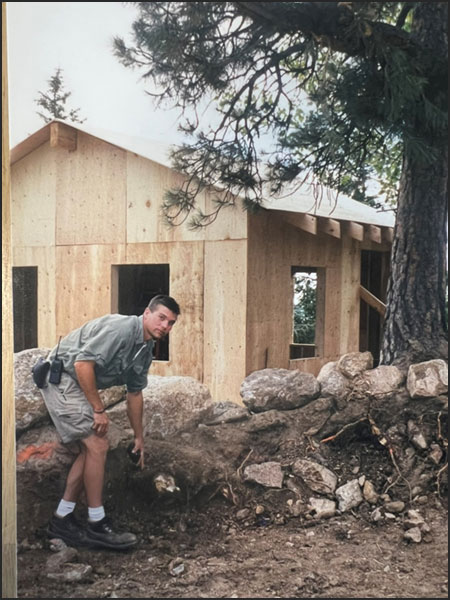
I came to the Zoo in the summer of 1995 as the horticulture curator. The 90s were iconic for many reasons. Many of them were watershed moments that somehow shaped who we are as adults, and continue to shape ideas and culture. To some degree this is true, whether you experienced the 90s first-hand or learned about it through pop culture. For example, my 26-year-old daughter is watching Friends now. The only difference is she does not have to wait a week between episodes!
There were certainly iconic moments that today would be viral news but spread then via traditional media. The OJ Simpson Trial, Dr. Kevorkian was making news, the Nancy Kerrigan and Tonya Harding drama was unfolding, Forest Gump debuted, as did Titanic – which still elicits the iconic poses of youth and adults on the point of anything resembling a ship. The “Dream Team” played in The Olympics, Princess Diana died amongst an unusual and debated set of circumstances, Mike Tyson rose as one of the greatest heavy-weight boxers of all time and began his decline by biting a chunk of ear from his opponent, Evander Holyfield, in the anticipated rematch.
There were tragic events in the 90s., Waco unfolded before our eyes, the images of Rodney King beating caused the country to boil over, the Oklahoma City Bombing happened and the tragedy of the Columbine High School shooting occurred.
Huge world events also unfolded largely in traditional media forms. Nelson Mandela became the first black South African President, The U.S. went to war in the Gulf, Black Hawk Down happened, which lives on as a successful movie to this day, and the horrific images of the famine in Somalia and Sudan spread around the world and spurred a generation of people who cared about human rights and foreign aid.
There were also many things happening that were the beginning of something big, even though we did not realize it at the time.These small clouds on the horizon were going to turn into something big. Business like Amazon launched. There were unnoticed traces of computer AI even then. Garry Kasparov, considered the greatest chess player of all-time, was beaten in his final match of six by a computer in just 19 moves. Showing how fast technology was moving even then because he had beaten “Deep Blue” only the year before.
Finally, there were events that inspired us. In 1999, the U.S. Women’s National Soccer Team won the FIFA Women’s World Cup in front of a sold-out crowd. 30-year-old Brandi Chastain’s (no relation) penalty kick clinched the victory, and a history-making celebration ensued. Brandi tore off her jersey, waved it overhead and fell to her knees before being mobbed by her team. It was one of the most famous moments in sports history.
What does all that have to do with the Zoo? Like the rest of the world in the 90s, the Zoo had iconic moments, tragic events, quiet beginnings and moments that would inspire us for years to come.
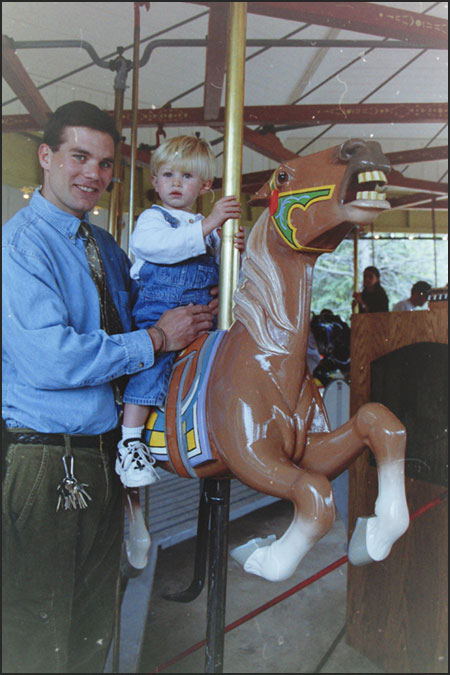
Before I muse a little on what was happening in the Zoo back then, let me acknowledge that I’m speaking of this time through only my lens. This is not to suggest in any way that I mattered much at all during this time, but without interviewing the countless others who were on the team back then, my lens is the only lens I have.
So what was it like to work at the Zoo back then? A couple things come to mind. First, the turnover at the Zoo was crazy high at that time. After only a year or two, I had seniority on the Zoo’s ‘senior staff’ leadership team. Everyone except me and the veterinarian had left – and she had only been here a few months longer than I had.
It’s worth noting here that if you are going to turn a ship around, the leaders and the team need to stay with it. My predecessor was trying to turn the ship amongst high turnover and likely often felt alone. It had almost become trendy to leave. Because of this experience, my encouragement to you is… if you find yourself in a situation where everyone around you is abandoning ship, ask yourself: what would happen if you stayed?
Let me be clear, there were plenty of reasons to leave. I think back then the keepers made around $6.50 an hour. I remember 23 years ago, when I became the vice president of the Zoo, I asked the senior staff team what it would take to get everyone at the Zoo to $10 an hour. They thought I had lost my mind and it would be impossible. It wasn’t. Today, we beat the minimum wage in every regular position at the Zoo, are pursuing the idea of livable wages and do wage studies every two years to make sure we don’t lose ground. We have a strong, tight-knit culture. We’re proud of our Zoo, and we take care of each other. Our staff turnover is low.
Another strong memory is the former road up the Zoo. Many of you will remember when you entered the front of the Zoo, you basically walked straight uphill past a line of cages with rhino, bongo, chamois, tapir and takin. They were simple dirt pens with chainlink fencing. Past that was an old building that held the entire giraffe herd and the two elephants in one building that was smaller than either building today. After that, you continued up a very steep hill to the carousel and old petting zoo. All in all, you spent the first 30 minutes of your visit walking a steep hill from the bottom of the Zoo to the top with no modern exhibits. Even the iconic giraffe area in the 90s was very outdated and undersized. Now, that upper road is off limits to our guests and leads to our horticulture, grounds, conservation, maintenance, vet and a few other department shops and offices. I remember thinking, in 2003, when we finished the new giraffe exhibit, that we finally had something worth seeing at our front entry. That was the beginning of something special. That was the first construction project I managed along with My Big Backyard.
Back in the day we did everything with very little. For example, there was one tractor for the whole Zoo, and on snow days, it was used for animal food deliveries plus snow removal. The only other mechanical snow moving device was a golf cart that we put a snow plow on that you lifted with a lever and your arm strength. Another example is even though we had a vet back then, when one of those european chamois goats escaped and was found running outside of Manitou Springs, because I had the most real-world shooting experience, I was the one who tranquilized it to safely return it to the Zoo. I will never forget watching it drowsily stagger closer and closer to a 100-foot cliff after I darted it in 30 mile-per-hour winds. Luckily it fell asleep a few feet from the cliff. Tragedy averted.
Times were not easy back then. The Zoo was very near to closing. At one time, leadership very seriously considered moving to the eastern side of the city where things were flat and where the population centers were growing. One reason it did not is because Spencer Penrose’s foundation, El Pomar Foundation, kept us going by helping us many years in a row financially.
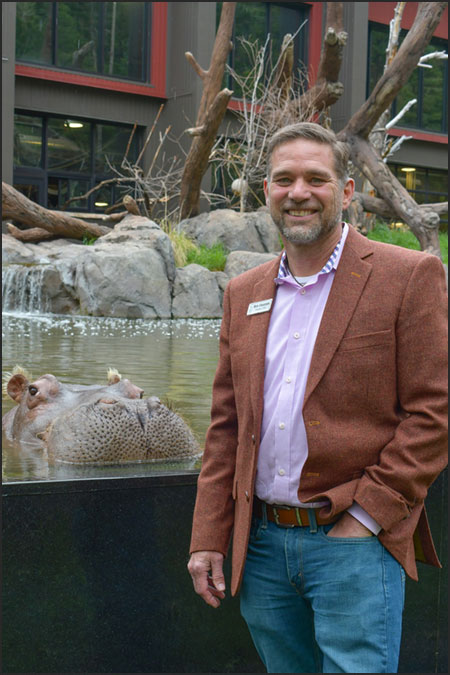
El Pomar paid some of our bills and they supported our new projects. Just like Amazon starting and a computer beating a grand master, life was already changing with their help but it would not be truely seen for many years.
Wolf Woods had just opened and Asian Highlands was the first project that my horticulture team and I planted as the newly hired horticulture curator. I still cannot walk though that exhibit and look at all those big trees without reminiscing about planting them all.
There is one white poplar tree in the tiger exhibit that was only about 4 feet tall in a five-gallon pot when we planted it. Over its early years it was nearly killed by tigers many times. It stayed small and barely survived. One day, I went out and it was nearly 30 feet tall. Tigers never again bothered it. It had survived and began to grow into something quite special.
That is how my journey at the Zoo began and why I am so proud to see what it has become. So many employees have shed tears and sweat here, donors have donated the funds necessary to improve, board members have given their expertise, time and money and our visitors and members have watched it all – supporting us year after year.
Thank you for staying with us and not leaving when everyone else was abandoning ship. You helped us become what we are today – an internationally recognized leader in animal care and conservation, and a special place where our community comes to make memories, connect with each other and feel inspired to save wildlife and wild places.
IN PARTNERSHIP WITH CHILDREN’S HOSPITAL COLORADO
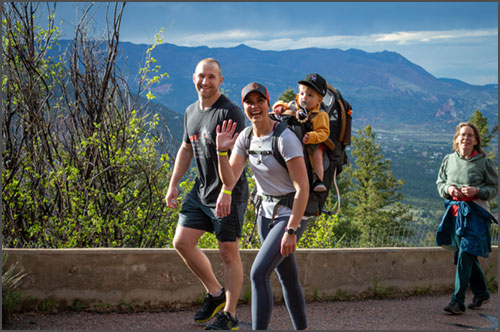
Few things bond a family like an adventure, and our partners at Children’s Hospital Colorado call exercise the best medicine for many things. Exercise helps improve sleep, stress, mood and concentration, and they say it can treat and prevent some medical problems. Cheyenne Mountain Zoo’s Run to the Shrine, on Sat., May 9 and Sun., May 10, could be the perfect way to combine exercise and bonding by preparing for the race and achieving a goal as a family unit!
Registration for Run to the Shrine is open now at cmzoo.org/run.
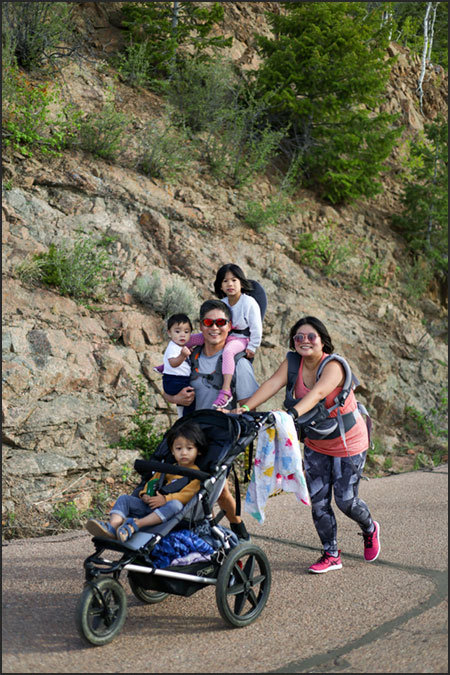
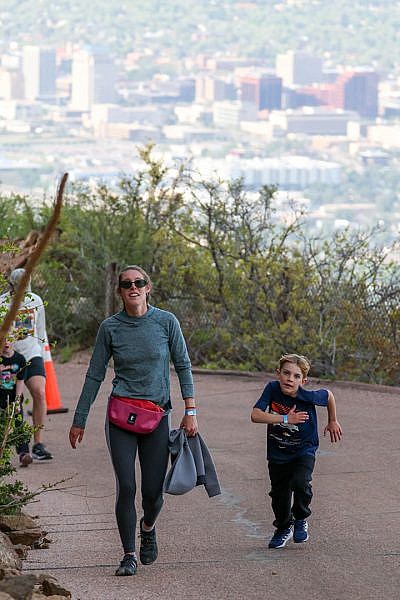
Run to the Shrine is the only event where participants can hand-feed a giraffe and walk or run up the side of a mountain! The 4-mile round trip up-and-back course offers breathtaking views of Colorado Springs, Garden of the Gods, and parts of the Front Range. The unique route winds by Rocky Mountain goats, African lions and African elephants through the Zoo, up to Will Rogers Shrine of the Sun and back into the Zoo.
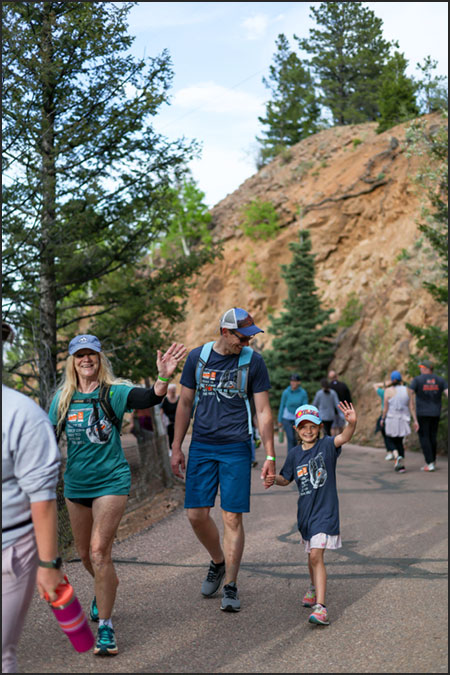
The evergreen-forested course, with a nearly 1,000-foot elevation gain, is good practice for competitive runners gearing up for summer races and a fun challenge for weekend warriors and families. Run to the Shrine is the only time of the year foot traffic is allowed on the picturesque route through and above the Zoo to the Will Rogers Shrine of the Sun, and back down.
Participant and spectator tickets are available. Spectators can explore the Zoo from 5 to 8 p.m. when the event ends, but do not get access to Shrine Road.
Registration includes Zoo admission for the evening, a commemorative performance running T-shirt featuring a giraffe, and access to a post-event celebration at the Zoo’s Lodge at Moose Lake.
Run to the Shrine helps CMZoo – one of the only Association of Zoos and Aquariums-accredited nonprofit zoos that doesn’t receive any tax support – fund Zoo operations, improvements, animal care and conservation. Run to the Shrine’s 2025 partners, Children’s Hospital Colorado, Raising Cane’s Chicken Fingers, Your Colorado Springs Toyota Dealers and Colorado Springs SCHEELS, help make this tradition possible.
Written by Jessi DiCola, Asian Highlands animal keeper
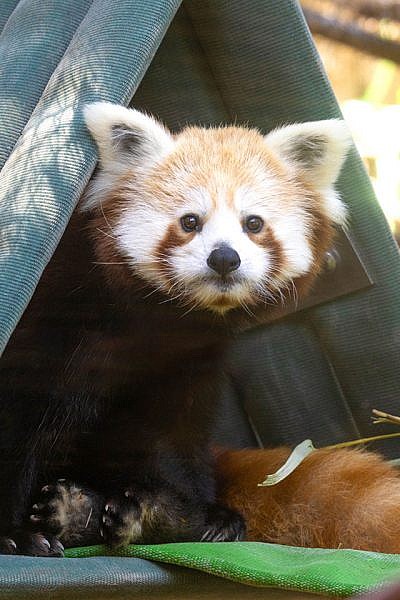
Cora is Cheyenne Mountain Zoo’s first red panda in over 20 years! Cora joined the CMZoo family in July 2024, and as part of her care team, I have loved getting to know more about her and her wild counterparts. Cora’s name is a nod to wildlife corridors. They can be found all over the world, and even here in Colorado. Wildlife corridors are protected bridges or strips of land that help animals travel safely. If their habitat has been interrupted or disconnected by human developments, wildlife corridors help reconnect them for migration, breeding or searching for food or shelter.
Cora is a smart and playful girl. Her favorite treats include apples and grapes, and she participates in training sessions for those yummy rewards! Most of her behaviors are husbandry behaviors, meaning she helps us help her stay healthy through training.
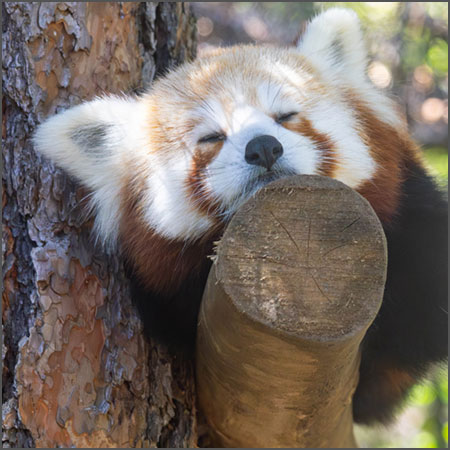
Cora is very smart! She participates in a voluntary injection behavior so she can receive vaccines. She voluntarily loads into a crate so we can take her from one place to another (like the veterinary clinic or another location within her habitat) comfortably. She knows how to touch her nose to a target stick and she’s working on a ‘station’ behavior where we can ask her to stay on her station while we move about her exhibit.
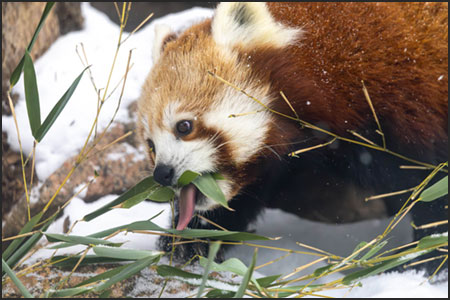
Morning is her favorite time to train; that’s when she’s ready for snacks! After training in the morning, we then set up her habitat with lots of bamboo and chow. She is likely to go for the bamboo right away! Red pandas have a sixth pseudo-thumb to help hold their bamboo and she’s mighty cute holding her bamboo and munching. Then, she will go for whatever enrichment or puzzle feeders we have used to distribute her chow!
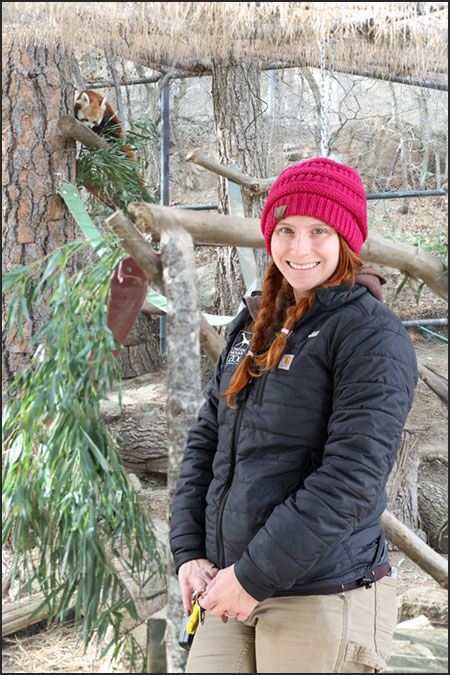
If you make it up to Asian Highlands somewhere between 9:15 and 10:30 a.m., you’ll likely catch Cora being the most active. If you’re lucky, you’ll see her get her zoomies! She runs around, climbs, and does the classic “red panda stances” where they stand up on their hind legs and put their front paws up in the air! Watching her play is pure joy.
Her favorite enrichment toy is a ball! Any kind of ball will do. We get all sorts of balls – volleyballs, holey balls, tennis balls, or rubber balls – and she’ll play with them all! If you are in Asian Highlands late morning and all afternoon, you might see Cora taking a snooze in one of her favorite spots: her tree or one of her triangle beds!
Red pandas’ primary diet is bamboo. But, did you know that they are still considered to be carnivores? That’s right! Generations ago, red pandas ate primarily meat, and their teeth and digestive tract are still considered carnivorous. There have been reports of red pandas in the wild still eating small rodents and even some birds. Cora is dead-set on her bamboo, though, and has shown no interest in other types of food.
We’re often asked if red pandas are related to the giant pandas. They are not! In fact, they were the first species to be called “panda,” meaning “bamboo eater.” When giant pandas were discovered, they were seen feasting on bamboo as well, so the name “panda” went to them, too. So, red pandas were the original panda and their closest relative is actually the raccoon.
We love working with Cora and are all creating a special bond with her. I even dyed my hair red to match her! (Just kidding, but we do look alike now!) We hope you enjoy seeing her adorable face in Asian Highlands as much as we do.
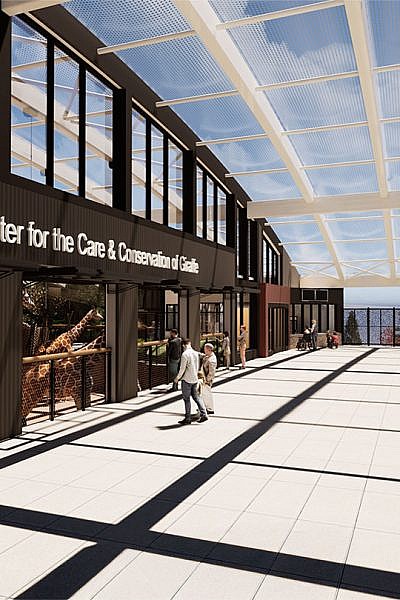
It’s a big year at Cheyenne Mountain Zoo! In 2026, CMZoo is celebrating its centennial year, welcoming a new President & CEO and opening a brand-new Giraffe Center.
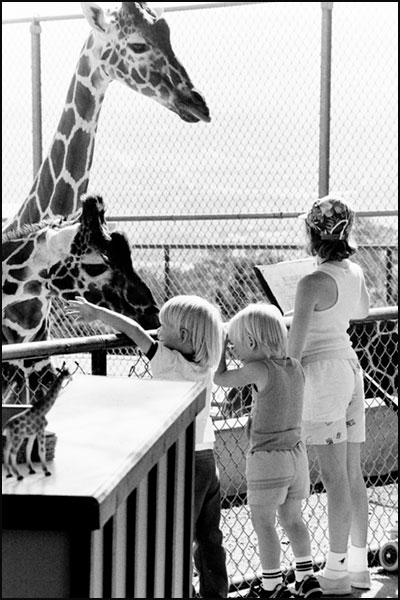
Celebrating the Centennial
Cheyenne Mountain Zoo was established in 1926 by Colorado Springs legend, Spencer Penrose. Having earned considerable wealth from mining enterprises, he expanded his entrepreneurial endeavors in the early 1900s to help develop the Pikes Peak Region. Spencer opened The Broadmoor Hotel in 1918, and over the next several years, he was gifted and purchased exotic animals to impress his visitors.
Spencer’s first wild animals were a black bear and a small herd of black-tailed deer and elk. He kept them at his Turkey Creek Ranch, about 20 miles south of The Broadmoor. Bears, mountain lions, monkeys and more lived in enclosures that lined The Broadmoor golf course, where hotel guests could visit them. This foundational association with the hotel sparked a long-standing misconception that Spencer’s zoo, later Cheyenne Mountain Zoo, was owned by The Broadmoor. But, CMZoo is an independently operated Zoo, and one of the only facilities accredited by the Association of Zoos and Aquariums that receives no tax support.
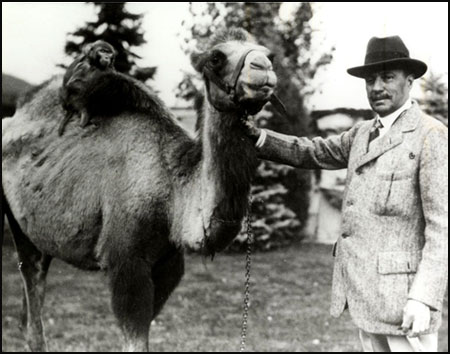
In 1926 and 1927, Spencer’s exotic animals were relocated from The Broadmoor golf course to the Zoo, not because of a notorious monkey bite as some histories claim, but to make way for a major golf tournament at The Broadmoor. So, if you have no other reason to be a fan of golf, you can thank the sport for contributing to the early beginnings of Cheyenne Mountain Zoo!
In 2026, CMZoo is celebrating a mountain of memories, and 100 years of growth in animal care, conservation, education and community. Throughout the year, the Zoo will share its legacy and historical fun facts. Plus, the Zoo is inviting the public to share their CMZoo stories for a chance to be featured on the Zoo’s social channels.
In summer 2026, the Zoo will host a weeklong celebration alongside the grand opening of the International Center for the Care and Conservation of Giraffe. More details to come!
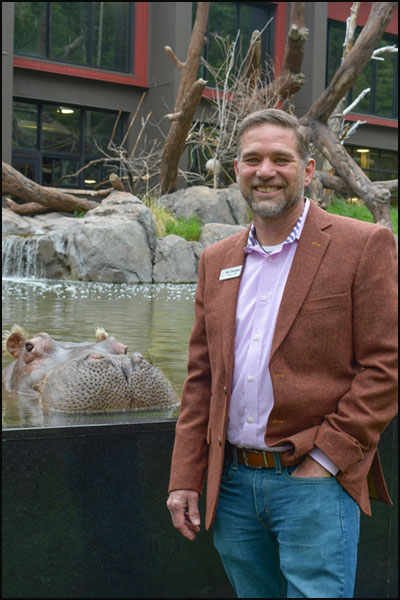
Welcoming a New CEO
In May 2024, CMZoo announced that 20-year President & CEO, Bob Chastain, is retiring after 30 years of service to Cheyenne Mountain Zoo. During his tenure, Bob has represented CMZoo in the modern zoo and conservation professions. He has served as Chair of the Safety Committee for the Association of Zoos and Aquariums (AZA), on the AZA and World Association of Zoos and Aquariums boards and locally on the Colorado Springs Wildfire Mitigation Advisory Committee.
The Zoo’s executive search for a new President & CEO is making great progress, so stay tuned for an exciting announcement in the coming months.
The Zoo plans to honor Bob’s contributions to the Zoo and Colorado Springs as his retirement date grows closer. In Bob’s final six months at the Zoo (he retires in June!), he’ll share a series of letters in The Waterhole. Bob’s letters will focus on the themes of ‘past, present and future.’ He’ll share anecdotes and memorable milestones that helped make Cheyenne Mountain Zoo a local treasure, a national destination and an international leader in animal care and conservation.
Opening the International Center for the Care and Conservation of Giraffe
The historic International Center for the Care and Conservation of Giraffe (the Giraffe Center), along with a new admissions experience, Quarters for Conservation plaza, gift shop and café, are on schedule to open this summer!
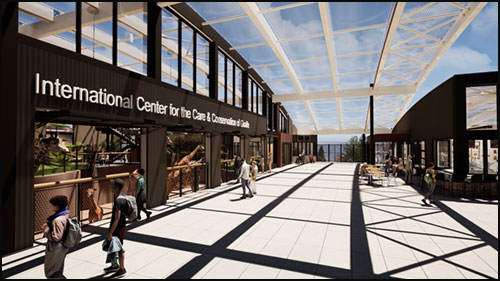
The $40 million dollar project, funded through Zoo revenue and donations, will increase the giraffe herd’s outdoor space by 25 percent and expand their indoor space with a 12,000-square-foot giraffe barn. Keep up with the latest construction updates by watching Bob’s Blueprints, a video series that highlights the progress and incredible elements included in the Giraffe Center.
It’s hard to believe, but the Zoo’s African Rift Valley habitat, home to the Zoo’s iconic 16-member giraffe herd, was built more than 20 years ago. In that time, giraffe professionals have learned a lot about providing world-class care. Home to the International Center for the Care and Conservation of Giraffe, established in 2022, CMZoo is a recognized leader in the professional field of giraffe care. This exhibit will reflect that expertise. The Giraffe Center is a concentrated effort to connect giraffe experts, to expand educational programs, and to improve and enrich the lives of giraffe in human care throughout the world.
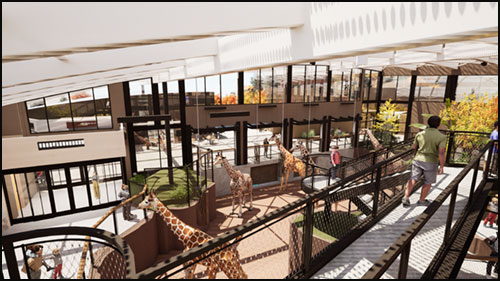
The new giraffe habitat’s expanded yard will have additional spaces for giraffe to discover, including a new feeding tower to encourage giraffe to navigate the hills of CMZoo for the first time. The new giraffe barn is all about choice for giraffe and guests. Giraffe will have opportunities to interact with guests in new and exciting ways, and engage in enriching activities independent of keepers and guests. The goal is to fill each giraffe’s day with positively reinforcing activities, such as exploring new spaces, munching on leaves and twigs or taking advantage of quiet time. It will have 11 feeding zones, in comparison to the three zones available in the former giraffe exhibit – and guests can feed them from each location!
The new giraffe barn has natural substrate floors and an ETFE roof that floods the interior space with natural light. This innovative material is low maintenance and fire- and hail-resistant. It will bring the outdoors inside on cooler days, keeping guests and giraffe comfortable in Colorado Springs’ famous 300 days of sunshine.
For more information, and to be part of something BIG, visit cmzoo.org/giraffeproject.
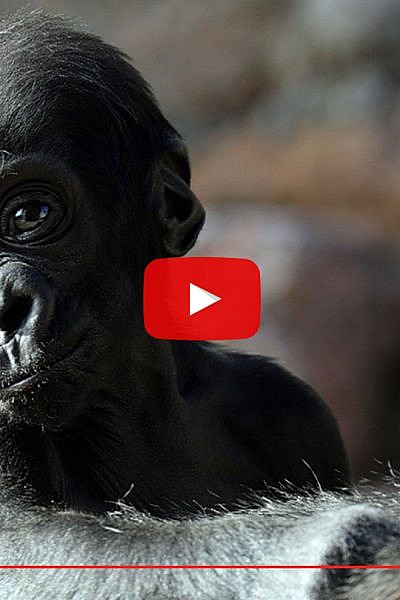
We’re marking six months of Sully sweetness! Since his birth on July 21, 2025, Sully has been growing more curious, confident and lovable every day. In six months, Sully has reached several major milestones, including learning to balance while standing on Asha’s back, crawling independently near Asha, interacting with Goma and Kwisha, trying solid foods, showing interest in guests and building positive relationships with his care team.
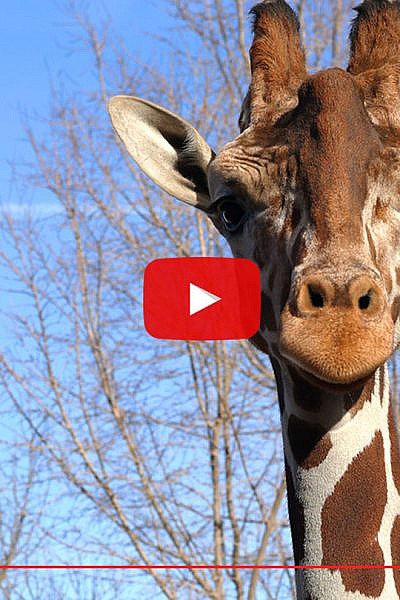
Say hello to Jasiri, a 5-year-old reticulated giraffe who recently arrived at Cheyenne Mountain Zoo from Denver Zoo Conservation Alliance for a temporary stay. Jasiri’s move supports giraffe conservation through the Giraffe Species Survival Plan (SSP), a program managed by the Association of Zoos and Aquariums (AZA).
Jasiri’s arrival went smoothly — he calmly walked off the specialized trailer and into his temporary home, where the neighboring giraffe herd was already eager to say hello. From curious nuzzles and sniffs to a few gentle licks, the herd wasted no time welcoming him.
Swing by African Rift Valley to say hello to Jasiri!
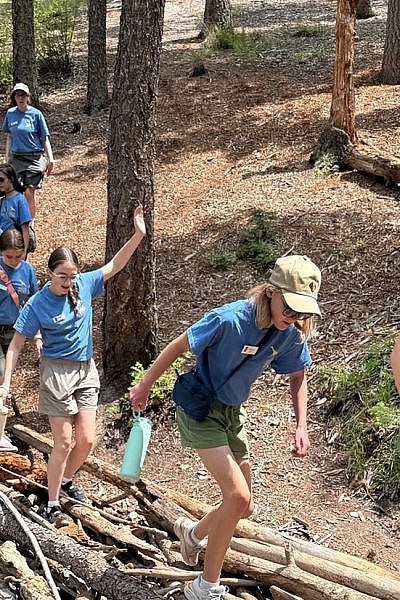
Cheyenne Mountain Zoo’s highly competitive Summer Teen Program will begin accepting applications on Sun., Feb. 1. Applications will close on Tues., Feb. 10 at 11:59 p.m. MT. Designed for sixth through twelfth graders, this immersive, three-month summer program empowers teens to become confident leaders, wildlife advocates and dedicated stewards of the natural world.
The Summer Teen Program runs from Tues., May 26 through Fri., Aug. 7, 2026. Teens will work alongside Zoo staff, engage with guests and animals, and build meaningful connections with peers who share a passion for wildlife. Teens gain hands-on experience in animal care, interpretation, public speaking and leadership, while developing real-world life skills in a supportive, mentorship-driven environment.
Beyond Zoo grounds, the program offers transformative experiences in Colorado’s wild spaces, inspiring teens to connect with nature and take an active role in protecting wildlife and wild places. Through mentorship from staff and fellow teens, participants grow in confidence and life skills, they discover their strengths and learn how to turn passion into action.
There are three opportunities during the Summer Teen Program:
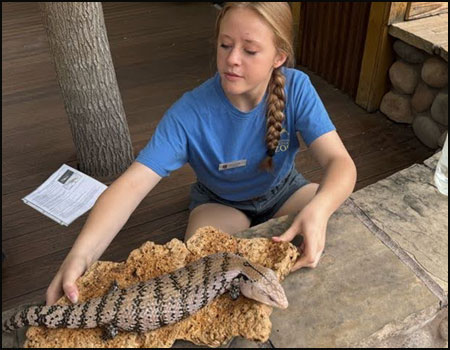
Junior Zoo Keeper
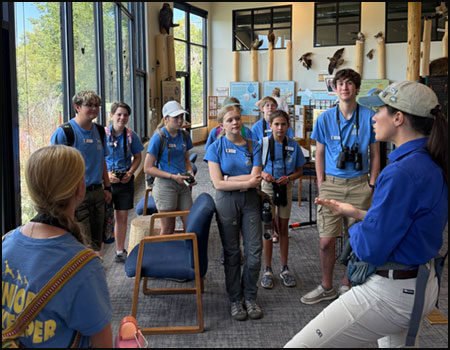
High school students work alongside animal keepers to assist with daily animal care tasks and behind-the-scenes responsibilities throughout the Zoo. This track builds leadership, responsibility and hands-on experience while connecting participants to careers in animal care and conservation.
Zoo Crew
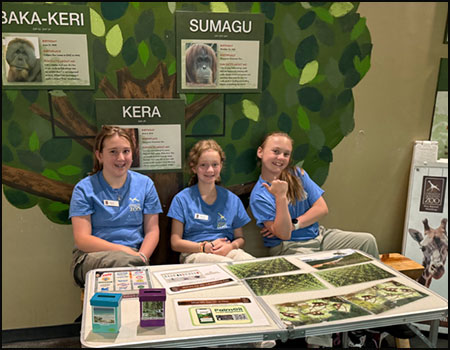
Middle school students develop leadership skills through meaningful work that supports the Zoo’s mission of conservation, education, and animal husbandry. Zoo Crew members gain confidence, teamwork and communication skills while engaging with guests and supporting Zoo programs.
Junior Camp Educator
High school students support Zoo summer camps by working alongside camp staff to help facilitate engaging, educational experiences for younger campers. Participants build leadership, communication and teamwork skills while serving as positive role models in a fast-paced camp environment.
Applications are available for only 10 days and must be submitted by 11:59 p.m. MST on February 10. An application fee of $25 is required, and scholarships are available. Approximately 100 teens will be selected to participate.
Learn more and apply at cmzoo.org/teenprograms. Questions may be directed to [email protected].
Written by Amy Schilz, senior animal behaviorist at the International Center for the Care and Conservation of Giraffe
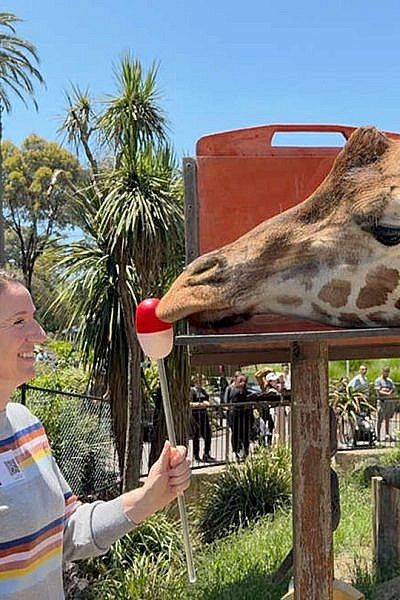
As a senior animal behaviorist for Cheyenne Mountain Zoo’s International Center for the Care and Conservation of Giraffe (the Giraffe Center), I have the incredible opportunity to participate in a wide range of exciting and meaningful initiatives. On any given day, I might help clean a giraffe stall, assist with drawing blood from a giraffe’s jugular vein, mentor a trainer in another state via video call or help coordinate the international transport of a giraffe to support AZA’s Species Survival Plan goals. I love collaborating with others to solve the complex challenges facing giraffe conservation. Some days, I truly have to pinch myself—because this job (quirks and all!) feels almost too good to be true.
One of the things that makes this role especially meaningful is the Giraffe Center’s partnership with Behavior Works, an organization dedicated to improving quality of life for all learners through the science of behavior change. This collaboration allows us to remain at the forefront of giraffe training, using the least intrusive, most positive and most effective strategies to teach essential medical behaviors such as hoof care, ultrasounds, x-rays, blood draws and injections. For the past few years, I’ve been fortunate to serve as a dual training consultant for Behavior Works and CMZoo’s Giraffe Center. Together, we’ve helped caretakers make lasting improvements in giraffe care and training practices.
When Bianca Papadapoulos, animal training coordinator with Zoos Victoria, in Australia, and Behavior Works consultant, reached out to ask if I would present as a keynote speaker at the Australasian Society of Zoo Keeping’s Animal Training Conference, I jumped at the opportunity. I knew it would be the perfect chance not only to highlight the work being done at CMZoo’s Giraffe Center, but also to learn from an incredible community of behavior professionals in Australia.
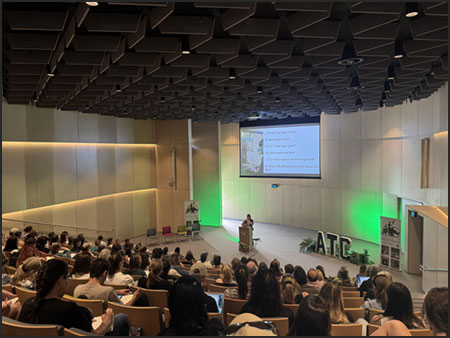
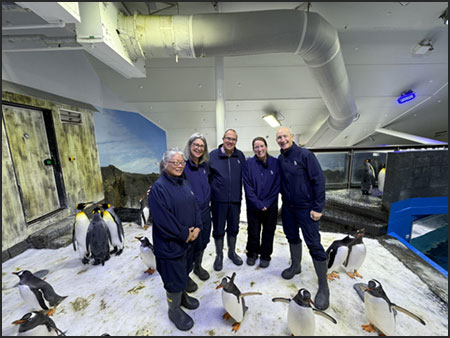
In November, I traveled to Sydney, Australia. I spent two inspiring weeks ‘Down Under’ with an exceptional group of conference hosts, keynote speakers and more than 240 attendees. I presented a 90-minute lecture on The Modern Approach to Animal Training and led four workshops throughout the week focused on Reading Animal Behavior. It was a true honor to present alongside fellow keynote speakers and personal training idols, including Ken Ramirez of the Karen Prior Academy, Tim Sullivan from Brookfield Zoo, and Dr. Susan Friedman from Behavior Works.
After the conference, I flew with the Behavior Works team to Melbourne, where the CMZ giraffe team has long-standing relationships with the zookeepers at Melbourne Zoo. Over the years, many of their giraffe keepers have attended workshops at the Giraffe Center or participated in extended keeper exchanges at our zoo. After more than a decade of collaboration, it’s always exciting to see what they’re working on. During my visit, I had the chance to observe their impressive voluntary head x-ray training program, which allows keepers to monitor giraffe dental health. They even invited me to practice training one of their giraffe who is already well established in the behavior.
While spending time with giraffe is always a highlight, I also had the chance to experience some truly unforgettable wildlife encounters in Australia. I saw a massive colony of flying foxes, watched a wombat forage in the wild, spotted a koala lounging in a eucalyptus tree and observed cockatoos soaring overhead. Seeing animals in the wild always inspires me to stay hard at work making animals’ lives better in human care. Many people never get to experience these animals in the wild, and it’s our honor to help them feel that same inspiration by visiting animals at CMZoo.
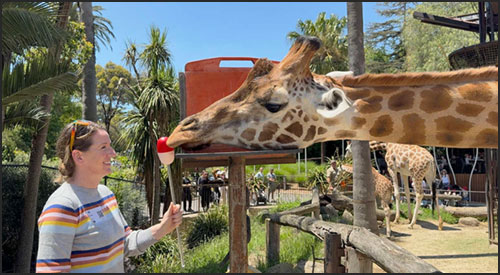
My favorite experience, though, was feeding a quokka at Melbourne Zoo. If you don’t know what a quokka is, I highly recommend looking it up immediately—I promise even a single photo will make your day.
All in all, it was an incredible experience. I’m deeply grateful to Bianca Papadapoulos, Susan Friedman and the team at Behavior Works, the conference organizers and our friends at Melbourne Zoo and Taronga Zoo for the opportunities, collaboration and warm hospitality they shared with me.
In addition, I am incredibly thankful for the constant support of my home team at Cheyenne Mountain Zoo. Every single person shows up and steps up for me, whether it’s covering my responsibilities while I’m away or leadership wholeheartedly supporting my outreach, enrichment and professional growth. I couldn’t do this work without you, and I’m endlessly grateful to call you my team. You are truly my heroes.