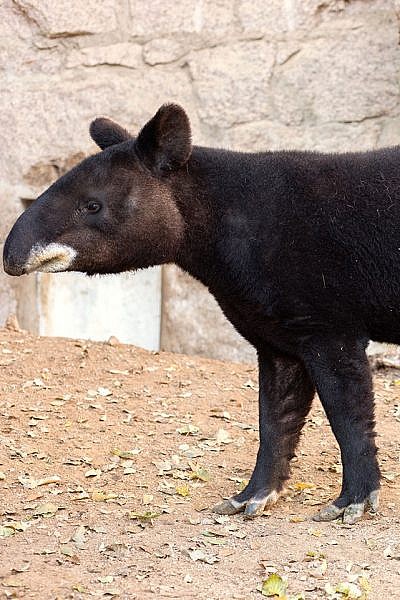
Cofan, our 17-year-old male mountain tapir, is recovering from having a kidney removed in mid-February. In December 2020, his keepers noticed he was starting to act unusually and that his symptoms were progressing quickly. He was uncoordinated, was not shifting to his outdoor yard, and was eating less and losing weight.
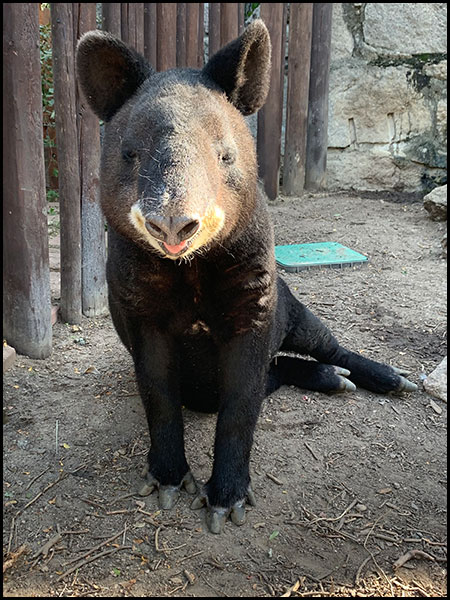
“Cofan is normally eager to participate in training and has a healthy appetite,” said Michelle Salido, lead tapir keeper at Cheyenne Mountain Zoo. “When we noticed he wasn’t himself, we started working to find out why, and ultimately discovered our guy was dealing with kidney stones that had damaged his kidney to a point that he’d be better off long-term without it.”

There are only seven mountain tapir in human care in the United States, two of which live at CMZoo. Because mountain tapir are so rare, keepers rely on their experience with Cofan and Carlotta, our 26-year-old female mountain tapir who lives with Cofan, to diagnose any issues. Tapir’s closest relatives are horses and rhinos, so sometimes knowledge of these other species can help the team care for them.

“On the inside, tapir are basically miniature horses,” said Salido. “Because their anatomy is so similar, we knew we could work with equine specialists to help him.”

Cofan’s relationship with his keepers and previous husbandry training helped the team diagnose and treat his condition. Cofan voluntarily participated in diagnostics, including x-rays, blood work and ultrasounds. With his keepers’ love and endless chin scratches as rewards, Cofan didn’t need to be sedated for any of the tests that helped diagnose his kidney disease.

“Our ultrasounds showed that he had some kind of kidney abnormality that we needed to further investigate,” said Dr. Jon Romano, head veterinarian at CMZoo. “We reached out to Colorado State University’s Veterinary Teaching Hospital and put together a team of specialists that ultimately helped save Cofan’s life. This is the first time this surgery has ever been done for this species, and that was only possible for Cofan because of the collaborative relationship we’ve built with CSU over the years.”

Dr. Matt Johnston, CSU veterinarian and Associate Professor of Avian, Exotic, and Zoological Medicine, was part of an 11-person CSU team of equine specialists, radiologists, anesthesiologists and surgeons that quickly made the trip to help Cofan.

CMZoo and CSU teams identified the kidney stones that were causing the enlargement and damage to Cofan’s left kidney, and went right into surgery.

“We tend to think of tapirs as being similar to horses, and our equine team was able to contribute important expertise to Cofan’s case,” Dr. Johnston. “The pulling together of this type of team happened because of the long-standing working relationship with CSU, which has been mutually beneficial for both CSU and CMZoo.“

As an ambassador for his critically endangered species, Cofan’s charming nature helps people fall in love with tapir, and learn how to help protect his wild counterparts, of which fewer than 2,500 remain in their native habitat. This veterinary case will also help future tapir in human care and possibly in the wild.

“Aside from being so easy to fall in love with, Cofan is continuing to help his species by helping us learn more about how to care for mountain tapir,” said Salido. “What we learn from this case will be shared with other tapir keepers and organizations that monitor wild tapir, with the hope that other tapir can avoid or overcome similar issues.”

Cofan isn’t out of the woods yet. But, his care team is right by his side as they have been all along, and they’re cautiously optimistic. Cofan has been urinating regularly and eating better than he was before surgery – both good signs he’s on the mend.
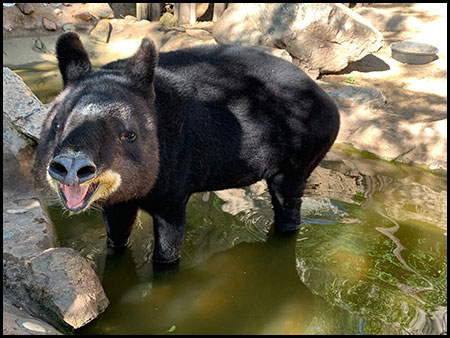
Cofan’s care team is adjusting his diet to help him hopefully avoid developing stones in his remaining kidney, which should be able to sustain him well by itself, as long as it stays healthy. For the time being, he’s receiving subcutaneous fluids voluntarily as needed, so he’s nice and hydrated as he heals. Again, chin scratches and love are the rewards Cofan needs to receive these treatments voluntarily without sedation.

“He’s doing so great, considering he’s been through major surgery and is still recovering from feeling unwell before the surgery,” said Salido. “We’re taking turns sitting with him while he gets treatments, which take about two hours. Not only does he get the fluids and medications he needs, but it means we get to sit with him and give him lots of love and scratches for hours on end, which I think all of us, including Cofan, are really grateful for.”

Mountain tapir, from the Andes Mountains in Colombia, Ecuador and northern Peru, are one of four species of tapir. Due to habitat loss, mountain tapirs are critically endangered. CMZoo staff, thanks to support from Zoo members in our annual Member Conservation Grant Vote, work diligently to save mountain tapir and their habitats south of the equator. In previous years, those grants have funded field research that is led by the Andean Bear Foundation, with support from Smithsonian, LA Zoo, and other partners. As part of these grants, Salido and other CMZoo staff members have traveled to Ecuador to track and attach GPS collars to wild mountain tapirs, and assist with health monitoring and mountain tapir education programs in the region.

The tracking research is critical, given the limited number of tapirs left in the wild and the lack of available data about them. The team’s goal is to present complete data to organizations that can place land protections in the areas where tapirs most frequently roam.

Keepers and CMZoo vet staff are keeping close eyes on Cofan and monitoring his progress as he heals.
Back to The Waterhole


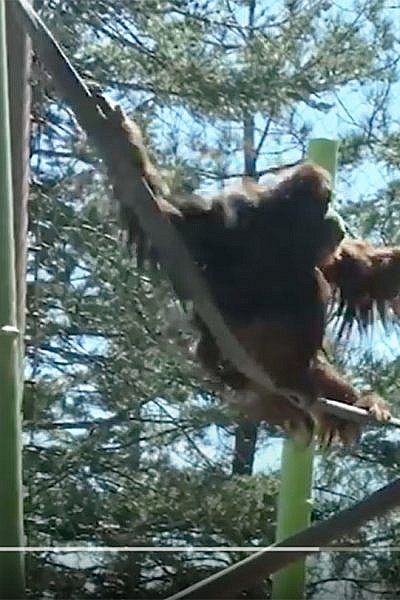
Primate World keepers are working with Sumagu, a 33-year-old female Sumatran orangutan on behaviors that allow her to participate voluntarily in her long-term health care. The incredibly intelligent ape has learned new husbandry behaviors, including EKG and blood draw training.

Come behind the scenes with Sumagu and her keepers to learn how they customize her training for her unique preferences, and how the data they collect helps apes in human care across the country.

Back to The Waterhole


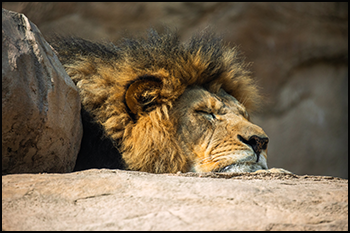
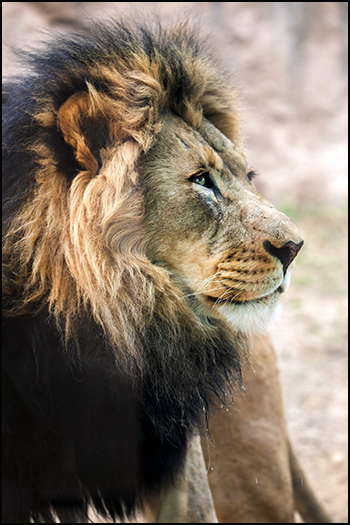
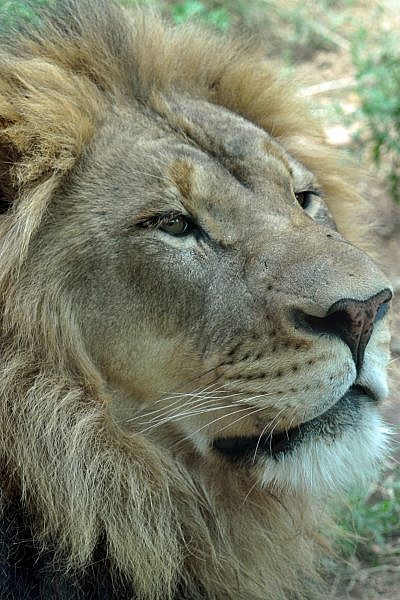
Abuto, our 9-year-old African lion patriarch, is participating in impressive training that supports his ongoing health care, thanks to the creativity and dedication of his animal care team.

We have been keeping you informed as Abuto’s kidney disease and high blood pressure progress, and these two new behaviors – a ‘drink’ cue and subcutaneous fluid administration – help prepare Abuto and his team for if-and-when he starts to decline.

You normally see Abuto hanging out on pride rock, overlooking Colorado Springs with his pride, but today, you’ll join him behind the scenes for two short training sessions that took place between his time outside and in the comfy Relaxation Room in African Rift Valley.

[This video shows up-close subcutaneous fluid administration, so if you don’t like needles, you’ll want to skip over the poke about 1:15 into the video.]

Back to The Waterhole


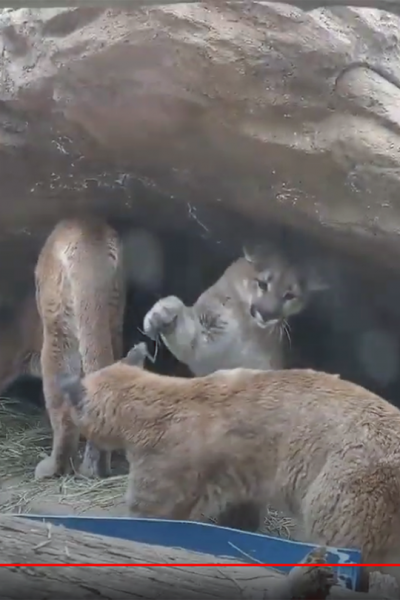
Our mountain lions are – like many of us – adjusting to a new normal. Seven-month-old Koda is now living full-time with 1-year-old mountain lion siblings, Adira and Sitka!

Because Koda was so much smaller than Adira and Sitka, and because he was found alone at such a young age, introducing the three cougars was a delicate process. Koda was excited to be with Adira and Sitka, but because he didn’t have a mother or siblings around to teach him how to be a mountain lion, he didn’t quite know the etiquette.

Learn from Courtney, Rocky Mountain Wild lead keeper, about the adjustments keepers made for the three mountain lions, and how Koda learned from Adira and Sitka throughout the process.

Our partner, Children’s Hospital Colorado, recognizes that we all continue to adjust our lives to find a balance these days. After you learn about how Koda, Adira and Sitka adjusted to their new normal, check out this parenting resource from CHCO, with tips on how your family can continue to adjust to its new normal.

Next time you’re at the Zoo, come by Rocky Mountain Wild to see our three young mountain lions as they grow together as a family unit.

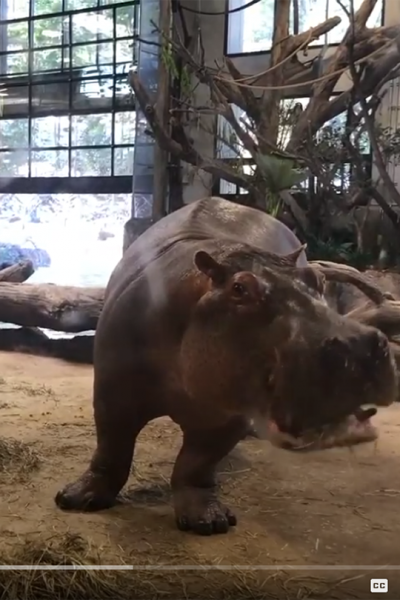
Join Al and Phil, Water’s Edge: Africa keepers, for an update on Biko, Kasai and Zambezi, our three Nile hippos. Biko, our 18-year-old male, joined us in June, and has been developing a strong relationship with Zambezi. Biko is here on a breeding recommendation with Zambezi and Kasai, who are sisters. Learn more from their keepers about how these three are doing, and whether a baby hippo might be in our future!

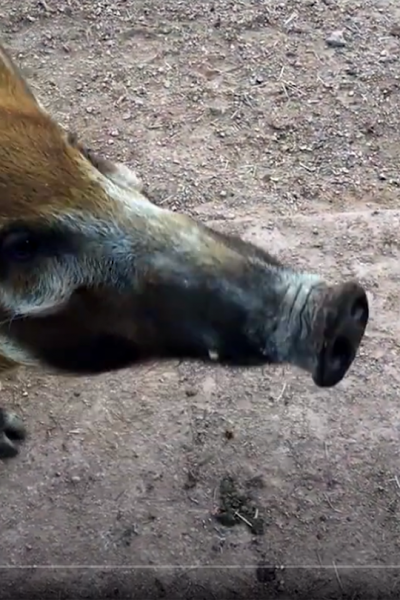
Since Zena, our 6-year-old female Red River hog, joined us in 2019, African Rift Valley keepers have been working to introduce her and Huey, our 13-year-old male. The two hogs are getting along great, and keepers have even seen promising behaviors to support their breeding recommendation. Join Brooke, African Rift Valley keeper, for an update on these two.

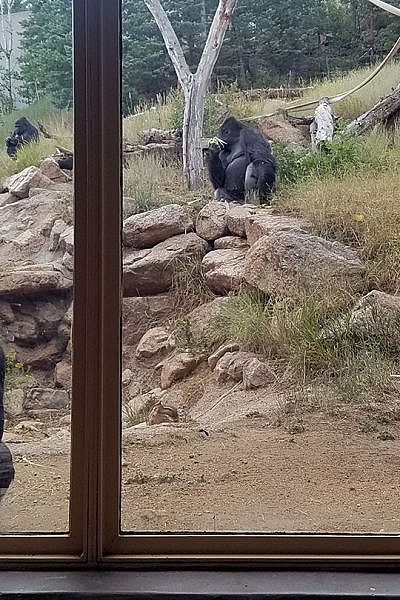
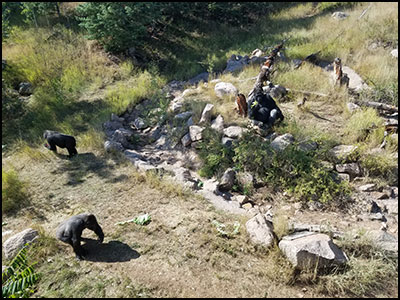
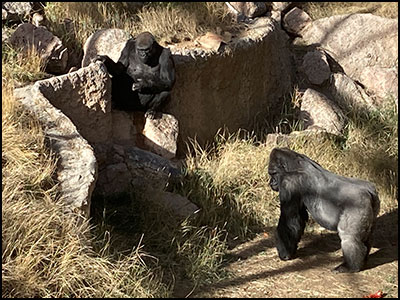
Since Goma, our 29-year-old silverback Western lowland gorilla, came to Cheyenne Mountain Zoo in 2016, Primate World keepers have worked to socialize him with the four female gorillas who live at the Zoo. Each of the ladies has her own personality, which means Goma – who came to CMZoo without much experience living in a cohesive troop – has his work cut out for him.

Roxie, 44, is playful and outgoing. Juju, 40, is direct and likes to push boundaries. Asha, 28, is the peacekeeper and has developed the best relationship with Goma, so far. Kwisha, 27, is confident and can have unpredictable moods. Thanks to the Primate World animal care team’s commitment and expertise with gorillas, the troop is making great progress.

Currently, Goma prefers to spend the night in his own area, but they come together for socialization most mornings. A cohesive gorilla troop will spend most of its time relaxing and foraging. So before socializations, their care team prepares their spaces with ample food and enrichment. Just like with humans, if there’s nothing to do during a potentially tense situation, things can get uncomfortable quickly.

“The last two and a half years, they had access to multiple indoor spaces and the yard during socializations,” said Dina Bredahl, senior lead keeper in Primate World. “But, this summer, we’ve seen them adjusting well to having just the outside space and one indoor space for a short time. That might not seem like a big deal, but seeing that they’re comfortable in close proximity means they’re developing communication skills and trusting relationships.”

Cooler temperatures mean big changes for the gorillas, because they won’t want to spend as much time outside for socializations. Recently, the keepers gave the gorillas the opportunity to try a new socialization setup indoors.

To avoid surprising Goma with the new scenario, keepers communicated with him and the females that this time was different.

“The first time we started the socialization indoors, there was an element of surprise because it was new,” said Amy Tuchman, Primate World keeper. “But, Goma caught on right away. The second day we did it, he was watching us and already knew what was about to happen. When the girls came in, he went to check them out and then went back to eating. It was great to see him really relaxed.

“Now, instead of asking them to go outside to see each other first thing in the morning, intros can happen comfortably indoors,” said Tuchman. “We wait for Goma to settle into the large indoor space, and then we open doors for the girls to join him in there.”

Preparing for days the gorillas won’t want to go outside because of the cold will be vital in setting the gorillas up for continued development as a cohesive troop. The gorillas are consistently showing their keepers they are ready for the next step.

“It used to be more tense with all five of the gorillas inside,” said Tuchman. “They weren’t necessarily aggressive, but they were watching each other and weren’t totally relaxed. Now, on most days, they have found a really good balance. Goma will still display sometimes, but now it seems like they’re communicating more effectively.”

When nearly-500-pound Goma displays, he usually sprints a short distance on all fours, sometimes throws an object or shoves a log, and then poses in a dominant stance with his chest pronounced. Silverbacks display for a multitude of reasons, including establishing dominance, protecting themselves or their troop from perceived threats, disrupting interactions between troop members, or changing a situation that makes them uncomfortable.

“Displaying isn’t always a bad thing, but Goma is still learning how to lead the troop,” said Tuchman. “If he displays to a point that makes the females uncomfortable, they might tell him, ‘That was too intense.’ The girls can be more reactive when communicating those boundaries with Goma. They’ll usually vocalize, band together, and chase Goma into another room. He has the right to tell them what to do and where to go, but he has to do it appropriately. He’s learned so much. I’m really proud of him.”

There are many factors the Primate World team considers when creating the best possible environment for gorilla socializations, including weather, relationships within the troop and the health of the individuals. If a member of the troop is ill, socializations are usually put on hold.

Last year, the troop’s resilience was tested when Roxie had a health scare. While she was treated and recovering, she was separated from the group. That could have been detrimental to the overall well-being of the group, but it wasn’t. Thankfully, Roxie’s health has been stable the last several months.

“Roxie is doing amazing,” said Bredahl. “It’s been years since she’s gone this long without an episode. When she’s been with Goma consistently, it seems like she does better! That could just be a coincidence, but it’s something I’ve noticed. She’s been on a new diet to help her gain weight and it could be coincidental that she’s feeling better, but she recently seems so happy and energetic. She’s running around with the girls and being her playful self. When she’s feeling good and sees us setting up to train with her, she gets excited and hugs herself. She has this awesome energy and kind of shimmies while she’s sitting down. It’s really fun to see.”

Roxie’s energy impacts Goma, too. Keepers have seen her scooting closer and closer to Goma until he tells her she’s too close. But outgoing Roxie keeps trying.

“When she’s getting into his personal space too much, he might stand up and purse his lips, or he’ll just give her a look,” said Bredahl. “She usually doesn’t listen at first, but he’s patient with her. She’s funny.”

Juju recently had a few days when she didn’t seem to be feeling well. She was lethargic and lost her appetite. Juju is normally physically fit and active, so when she doesn’t feel well, her keepers notice right away. After a few days of rest and monitoring, she returned to feeling well and socializations could continue. These situations and others are closely monitored by keeper and veterinary staff. Although they sometimes pause integrating the troop, CMZoo’s gorillas have overcome these challenges with flying colors.

“Over the winter months, we’re going to work hard to support their continued progress, whatever situations may arise,” said Bredahl. “We do a lot of looking back at what has worked, but it’s like our animal behavior manager, Rick, said, ‘These are different gorillas than we had last winter. They have different relationships and new skills, so we need to keep adjusting how we set them up for success.’ What was helpful last winter might not work this winter. We’re committed to helping Goma be successful as a member of this troop, and given what we’ve seen over the summer, we’re optimistic about what we can maintain for now and support even further over next spring and summer.”

Back to The Waterhole


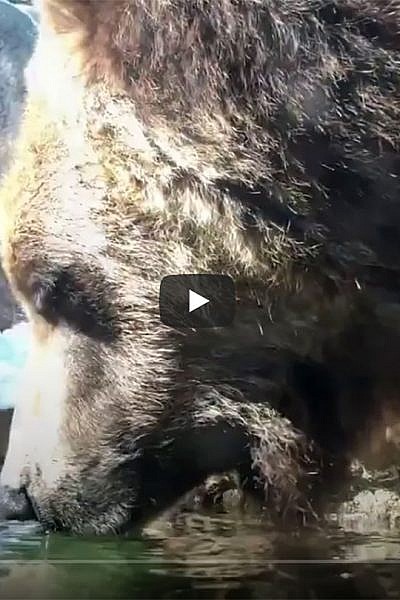
Join Digger and Emmett, CMZoo’s two 15-year-old male grizzly bears, and Rocky Mountain Wild Keepers, Sarah and Kristen, to get up close with the bears and learn about hibernation and torpor. Cooler temperatures mean the boys are preparing for winter, when they go into a slight stage of torpor and generally slow down a bit.

Their keepers say the seasonal change doesn’t impact Digger and Emmett as much as it affects their wild relatives, because our boys have year-round access to food sources.

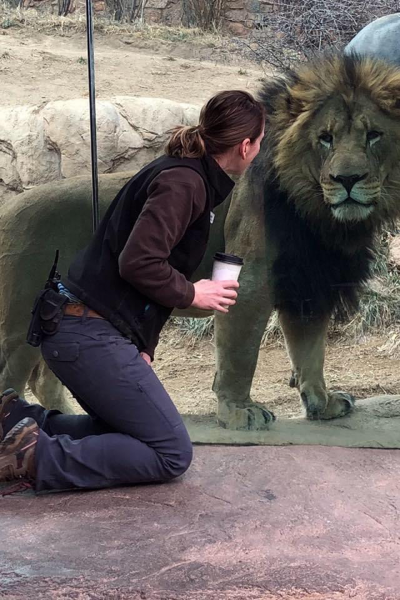
Most people who have been to Cheyenne Mountain Zoo have seen our African lions majestically gazing out over Colorado Springs from atop Pride Rock, or hanging out on the perches and heated floors in their Relaxation Room. Abuto, CMZoo’s 9-year-old African lion pride patriarch, is an amazing ambassador for his species, having formed countless connections with our guests and members.

Abuto came to CMZoo in 2013, around the same time African Rift Valley lead keeper, Amy Schilz, came to the Zoo.

“We’ve been working together since he was a year old,” said Schilz. “Right away we started working on behaviors and training that still help us take great care of him as he deals with ongoing health issues.”

About four years ago, he started showing signs of illness. He is usually really energetic and can be seen roaring, running around and enthusiastically participating in training and enrichment. At around five years old, he started having ‘off days,’ when he seemed lethargic, which led his team to investigate what was going on.

At the time, Abuto participated in a voluntary blood draw that revealed he was in the beginning stages of kidney disease. While investigating further, Abuto’s team also discovered he has high blood pressure.

We’ve been monitoring Abuto’s issues closely and managing them with medications and diet. Abuto’s father had a rare form of kidney disease that can be hereditary. Chronic kidney disease is unfortunately prevalent in big cats. The disease is progressive and can’t be cured, so his team manages Abuto’s symptoms with diet, medications and fluids to keep him comfortable.

His symptoms subsided for a while, but over the last few months, Abuto has started to show the same signs as before that he is having an ‘off day’ here and there, and maybe isn’t feeling well. CMZoo’s veterinary team and Abuto’s care team in African Rift Valley has been performing frequent voluntary blood draws and blood pressure tests with Abuto to see what’s preventing him from feeling his best.

“We are seeing some of his kidney values climbing higher, which is unfortunate,” said Schilz. “We’re doing the best we can for Abuto, but kidney disease is something that affects big cats and domestic cats often. We’re monitoring him closely, because the levels are higher than they have been in the past, and we want to do everything we can to prevent them from increasing further.”

Abuto’s blood tests have shown the progression of his disease over the years, most recently indicating a significant jump in levels. His team is working to adjust his treatments with hopes they can manage his symptoms in this next stage of the disease.

Abuto is the total package, from his gorgeous mane, to his impressive roars and his incredible intelligence. He, like most CMZoo animals, participates in voluntary training that allows his keepers to provide top-notch care for the 500-pound feline.

“He’s so smart,” said Schilz. “You can tell he likes participating in training. He gets really excited and runs over to train. He knows how to show us his mouth and teeth, so we can check on his dental health. He’ll also flop down on his side and show us his paws when we ask, so we can make sure he doesn’t have any cracks in his pads and his nails are a healthy length. He also voluntarily participates in blood draw training and blood pressure checks, so we can keep tabs on those long-term health issues he’s facing.”

How do you draw blood from a 500-pound lion? By asking him.

Abuto is trained to present his tail through a specially designed blood draw panel at the base of a training area by the Relaxation Room. During this training, his keepers open an access door for Abuto and leave it open, so he can choose to leave if he wants to. From the other side of the panel, Schilz, his primary trainer, asks him to enter the space and then cues him to adjust his body so his tail fits through the port. Abuto runs into the space and positions himself quickly, knowing he’s going to be engaging with Schilz and getting lots of rewards: tasty meatballs. Schilz sits on the other side of a protective barrier to Abuto’s left, while African Rift Valley keeper, Kayla Ringuette, and CMZoo veterinary technician, Brenda Cordova, sit behind fencing near his tail at the blood draw panel. They provide verbal cues, like, “touch” and “poke,” to let Abuto know they’re going to touch his tail and then draw blood. Abuto does the same behaviors for blood pressure tests, when he also presents his tail for the team to attach a quick-release blood pressure cuff.

“Abuto is just the absolute best,” said Schilz. “When we first see him in the mornings, he’ll make ‘baby calls’ like coos and little moans to us. He’s so chatty. It’s like he’s telling us all about his night. We’ve been working together for so long that he recognizes my voice. If he hears me laugh, even from the bottom of the hill, he’ll run over to see me. He’s so special to me, the team, our whole staff and so many of our guests. We’re making sure he’s getting the best possible care, and we are hopeful we can address these issues as they progress, just as we have helped him in the past.”

Keepers are tracking quality-of-life markers for Abuto, as they do for any animal with ongoing health conditions. Abuto’s keepers are tracking whether he shows any symptoms or behavioral changes, including lethargy, presenting a droopy jaw, has squinty eyes, or holds his head low – which could indicate he’s not feeling well. They’re also tracking whether he chooses to participate in training or perks up for keepers as he normally would. Along with blood tests, the long-term data will help his team adjust his treatments and make any future decisions necessary.

“Abuto is really special to us and has a huge piece of our hearts, so when he gets sick, we want to do everything we can to make him feel better,” said Schilz. “He’s in great hands with our vet team and our keeper team, and we know all of his fans will continue sending him well wishes for a quick turnaround.”

We will keep you posted on Abuto’s ongoing issues. Guests can visit him in African Rift Valley.

Back to The Waterhole


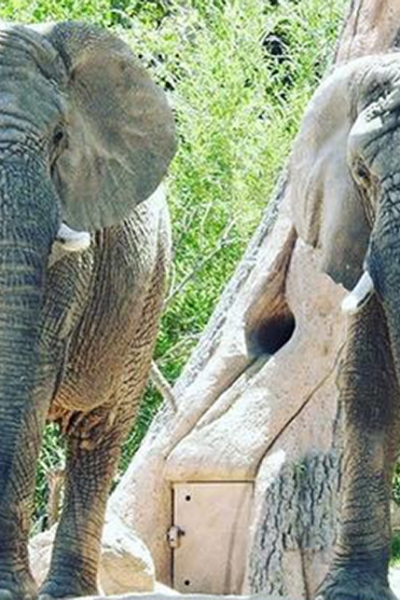
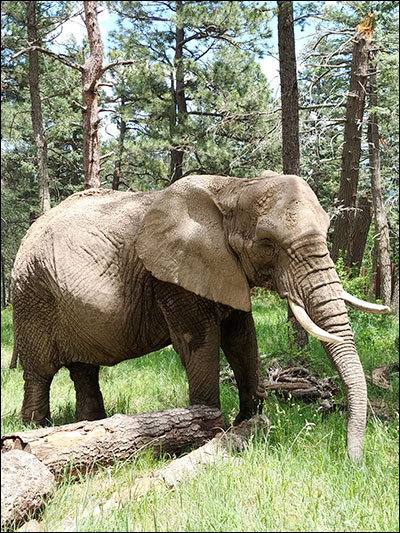
The Wilgruen Elephant Center in Encounter Africa is home to six African elephants named Jambo (37), Malaika (34), Lucky (40), LouLou (38), Kimba (42) and Missy (51). All of these precious pachyderms are considered to be advanced in age, and that’s no coincidence. Our ‘Golden Girls,’ as we affectionately call them, are the beneficiaries of a vision that CMZoo had years ago.

“We saw a need in the greater zoo community to provide a home for aging elephants,” said Dr. Liza Dadone, vice president of mission and programs. “Many zoos provide wonderful homes for young and breeding-age elephants, but weren’t specifically equipped to care for the age-related issues these massive creatures inevitably experience in their later years. We saw that as an opportunity to step up and create an environment and wellness program that could help them live their best lives in their golden years.”

The Wilgruen Elephant Center in Encounter Africa is a state-of-the-art facility designed to help address the complications that come with aging multi-ton animals that need medical assistance. Equipment includes a remote video surveillance system, a crane-and-hoist system that can lift a disabled elephant, and a care program that provides a safe area for weighing, veterinary care and husbandry training. In addition to the sand that staff bring into the barn to provide cushioning substrate, areas of the barn floors are rubberized concrete which helps ease the pressure of their impressive weight on their aging joints.

“Malaika is one of our best known elephants because of the issues she’s been able to overcome thanks to our team’s expertise and the equipment in the barn, like the crane-and-hoist system that has saved her life twice since January 2018,” said Dr. Dadone. “As she continues to navigate these issues, we work with the elephant experts at CMZoo and other organizations to try innovative ways to address them.”

On April 1, 2019, Malaika was, for the second time, found lying on her side and unable to get up during an overnight check. If an elephant can’t get up on its own and is down for too long, it can cause stress to its internal organs and can be fatal.

Some elephants are able to lie down and get back up with no problem, but some, like Malaika, don’t lie down and instead will lean on objects for rest. This is partially due to a life-long issue with bowing and lack of strength in her back right leg, which is worsening as she ages.

Both times she fell, the Zoo’s emergency response team used the barn’s hoist system to help Malaika into a sternal position (on her belly, with legs in a better position to stand). Malaika was then able to stand on her own. Since then, her care team, including her keepers and veterinary staff, monitor her for any additional medical concerns, and use innovative methods to help her rest, gain flexibility and strengthen her core muscles.

Malaika and all of the CMZoo elephants participate in daily voluntary physical therapy, which we call ‘elephant yoga.’ The routines focus on overall flexibility and strengthening while addressing any problem areas the individuals may have. For Malaika, that means working on core strength and flexibility, as well as teaching her to trust and use some of the items we give her to encourage rest.

“All of the girls participate in elephant yoga daily,” said Jason Bredahl, Encounter Africa animal care manager. “They get really excited when it’s their turn to train with their keepers. They do exercises like downward dog – or downward elephant – and do repetitions of lifting and holding their legs, heads and trunks in a stretched position for an extended period of time. Over the years, we’ve seen their flexibility improve, but some of their long-term issues continue to present challenges.”

The team also offers sand piles, large tires and boulders to Malaika and encourages her to lean against them with positive reinforcement training. Elephants are incredibly intelligent and observant, but the sand piles’ purpose isn’t an easy thing to communicate to Malaika. To encourage her to trust the sand pile’s ability to support her, the team incorporates the piles into her existing training. During her physical therapy routine, they ask her for behaviors she knows, but close to or on top of the sand. Asking Malaika to position herself with her belly on a small pile is hopefully helping her recognize the relief it can provide by taking some of her nearly 8,000 pounds of body weight off of her legs and feet.

“We’re working on building her confidence in leaning against them to rest, since she doesn’t lie down,” said Bredahl. “Since we first started working with one sand pile last fall, we have extended them into most of the barn. Part of strengthening her body to recover from or avoid a fall is also making sure she’s resting. We’ve seen some progress with her leaning against the piles, and we’re hopeful that will continue and improve. Because she has fallen twice now, we train her and ourselves to be prepared for another fall, even though we hope that doesn’t happen again.”

Zoo staff performs drills to practice and test protocols for situations like a fall. Using huge bags containing tons of sand, the team holds timed training sessions. The team springs into action as they would during a real event, engaging the hoist-and-crane system in the barn to secure the nylon lifting straps beneath the bag and raise it up, as they would with an elephant who couldn’t get up on her own. These emergency practice events help the team stay familiar with the equipment and the pressure associated with a real crisis.

Even with all of the emergency equipment and training in place, the team believes preventive care is the best way to keep the girls healthy.

“We work to provide an environment that keeps the herd moving, because just like all of us, a body in motion stays in motion,” said Bredahl. “We provide enrichment throughout every day, and we move the girls every one to two hours into a new space, which keeps them walking and provides new opportunities, interesting spaces and enrichment for them to explore.”

As well as their daily yoga, the girls get consistent exercise with a variety of spaces, both inside the barn and outside in their yards. Outdoor features include a quarter-mile walking path, built-in enrichment activities that encourage natural behaviors like stretching high and lifting heavy items such as logs, a pool big enough to swim and relax in, a waterfall and pond, mud bathing in a large mud wallow, varied terrain to keep muscles fit moving up and down hills, a training yard, and a 2-acre off-exhibit vacation yard, where the Zoo’s elephants can take a break from their duties as animal ambassadors and roam the forest – often doing their own versions of landscaping, like knocking down trees and pulling up fresh grass and branches to snack on.

Veterinary care is also a big part of elephant care. The herd participates in voluntary blood draws for diagnostics, laser therapy, tusk and foot care. Lucky has struggled with an issue in her rear right leg that causes her to ‘lock’ her knee when she walks. She is able to bend her knee – and does frequently as a focus of her customized physical therapy – but chooses to keep her leg straight the majority of time she’s exploring on her own. This causes an abnormal gait which leads to more wear on one side of her foot that her care team monitors daily. Malaika is similar to Lucky in that she wears more of her right rear foot pad due to her bowed leg.

“We work with a farrier team to create ‘shoes,’ for many of our animals, including giraffe and Malaika and Lucky,” said Dr. Dadone. “The leather shoes are adhered with a nontoxic glue and help prevent wounds to Lucky’s and Malaika’s foot. When one side of a foot gets more wear and tear, it can cause their naturally thick skin to wear down to more delicate skin, which we need to protect from potential infection and the pain they could experience from irritating that more sensitive skin.”

The shoes, treatments and physical therapy to address these issues help the elephants remain active and comfortable, but the team acknowledges that they may never be able to fully correct these issues.

“All of the elephants are monitored with daily quality-of-life markers,” said Dr. Dadone. “We look for things like appetite, activity, social interactions with the rest of the herd, how many times per day they’re bending a problem joint or not, and any indications that they’re not able to enjoy life as an elephant. The data, over time, helps us make decisions that ensure our elephants are living the fullest lives they possibly can.”

If you’ve ever visited #CMZoo and our herd of six African elephants, you can consider yourself a conservation warrior. Through our Quarters for Conservation program, 75¢ of every admission goes to conservation partners, like Tsavo Trust – a field-based non-profit organization that uses aerial surveillance and on-the-ground field efforts to protect elephants, rhinos and other wildlife in Tsavo National Park, the largest national park in Kenya. Small change makes a big difference. Since 2008, those quarters have added up to more than $3 million for conservation – a milestone the Zoo celebrated at the end of July. Tsavo Trust was founded to help protect the last of the big tuskers, which are likely the last viable genetic pool of African elephants with tusks weighing more than 100 pounds each. The park is also home to a number of black rhino sanctuaries established by the Kenya Wildlife Service (KSW) and supported by the Zoological Society of London.

Back to The Waterhole