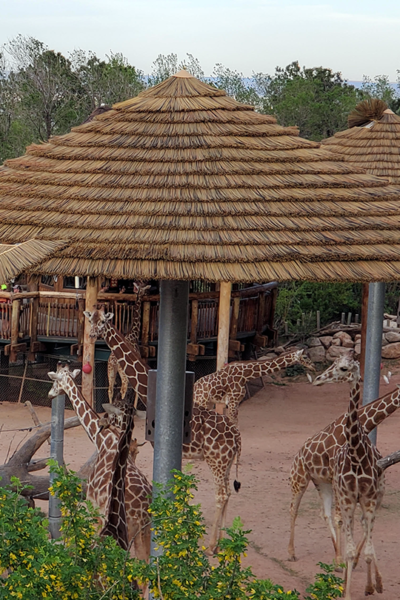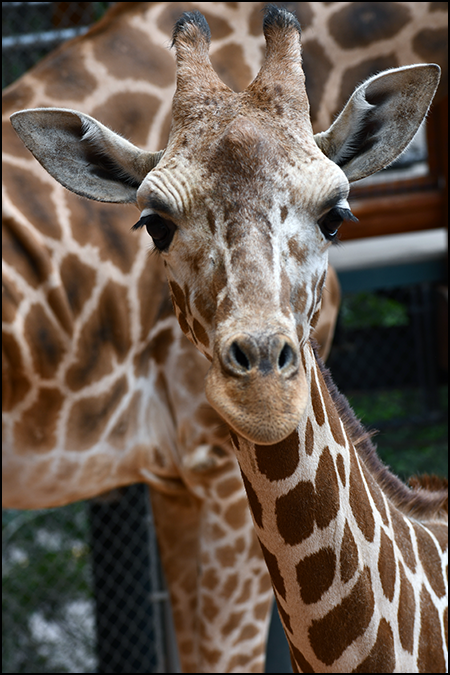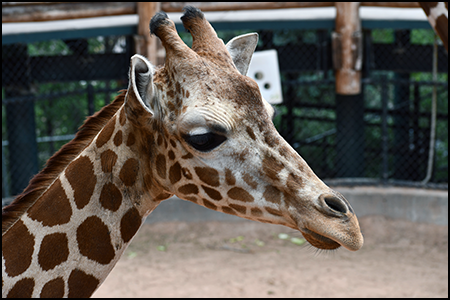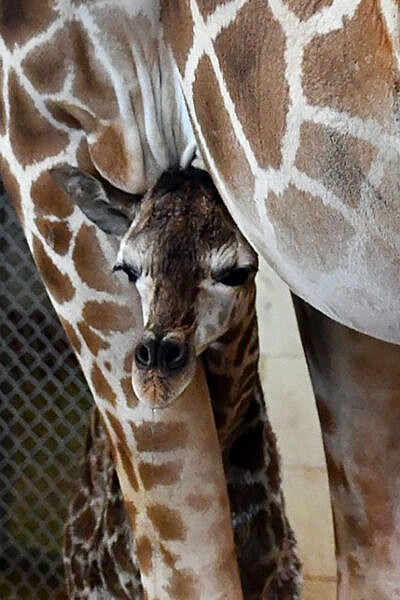
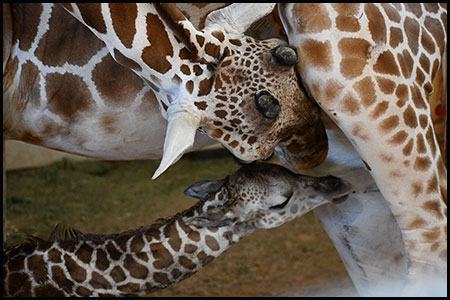
MOM AND BABY ARE DOING WELL; GUESTS CAN SEE THEM TOMORROW Bailey, a 10-year-old reticulated giraffe at Cheyenne Mountain Zoo, welcomed a calf to the herd today at 10:49 a.m. MT. Bailey and the baby are doing well and will be visible from a short distance to guests in the giraffe barn tomorrow, as long as mom and calf continue to appear healthy and calm. The giraffe barn will be a quiet zone for guests and staff, and if mom and baby show any signs of discomfort, the barn will be closed.
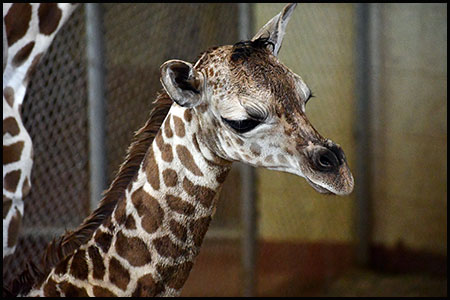
Bailey welcomed her second calf – and second daughter – to the world just one hour and 32 minutes after a group of lucky guests saw Bailey’s water break in the giraffe yard outside. The calf appears to be healthy, having met milestones its care team wants to see, like taking its first steps and nursing within the first two hours after it was born.

The calf made several attempts to stand on its own, which is normal for giraffe calves as they get the hang of their long legs. After a few stumbles, the calf maneuvered itself against a fence where it was struggling to get footing. The giraffe care team asked Bailey to move into the stall next to her baby, which she did willingly. The care team then entered the stall with the calf, picked up the calf, and moved her into the center of the stall where she managed to stay on her feet and was quickly rejoined by mom.

Because her care team needed to intervene for just a moment, they were able to confirm the calf is female. We don’t have an exact height or weight on the baby, but she appears to be a normal weight and height for a calf – close to six feet tall and around 125 pounds. Following Cheyenne Mountain Zoo tradition, the calf will not be named until she is at least 30 days old.

The calf is the seventeenth member of Cheyenne Mountain Zoo’s reticulated giraffe herd. The calf is the seventh to be sired by dad, Khalid (pronounced cull-EED). Bailey was born at Henry Doorly Zoo and Aquarium, in Omaha, Neb., in March 2012 and moved to Cheyenne Mountain Zoo on a breeding recommendation in Sept. 2016. CMZoo’s breeding program began in 1954 and has welcomed more than 200 calves since its inception.
The giraffe building will be closed the rest of today to allow mom and baby some quiet time to bond and nurse. The rest of the CMZoo herd will be available for viewing and feeding in the outside yard from elevated platforms, where guests can get eye-to-eye with and feed lettuce to the herd.

Tens of thousands of worldwide viewers witnessed the calf’s birth on Cheyenne Mountain Zoo’s live feeds on Instagram, Facebook and YouTube. The indoor live stream, at cmzoo.org/giraffecam or youtube.com/@CheyenneMtnZoo, will continue to stream live from the sand stall for about a week, where Bailey and the calf can be seen indoors. Both outdoor giraffe yard camera feeds are also available at cmzoo.org/giraffecam or youtube.com/@CheyenneMtnZoo. The Zoo will continue to provide updates on social media channels for the coming weeks.

Through Cheyenne Mountain Zoo’s Quarters for Conservation program, by which 75 cents of every Zoo admission is allocated to conservation, guests have helped CMZoo send more than $4 million to support important conservation efforts since 2008.

About Cheyenne Mountain Zoo

Cheyenne Mountain Zoological Society was founded in 1926. Today, Cheyenne Mountain Zoo, America’s mountain Zoo, offers comprehensive education programs, exciting conservation efforts and truly fantastic animal experiences. In 2022, Cheyenne Mountain Zoo was voted #3 Best Zoo in North America and CMZoo’s Rocky Mountain Wild was named #2 Best Zoo Exhibit in North America by USA TODAY 10Best Readers’ Choice Awards. It is Cheyenne Mountain Zoo’s goal to help guests fall in love with animals and nature, and take action to protect them. Since 2008, CMZoo’s Quarters for Conservation program has raised $4 million dedicated to frontline conservation efforts around the world. Of the 239 zoos and aquariums accredited by the Association of Zoos and Aquariums (AZA), Cheyenne Mountain Zoo is one of just a few operating without tax support. Cheyenne Mountain Zoo depends on admissions, membership dues, special event attendance and donations for funding.
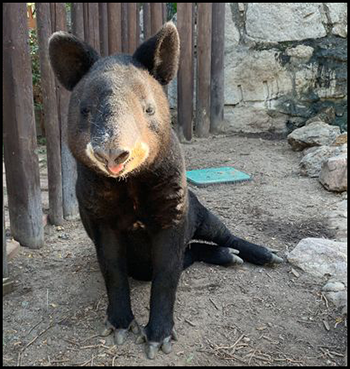
CHEYENNE MOUNTIAN ZOO LOSES MOUNTAIN TAPIR AND MEXICAN WOLF IN SAME DAY, HOLDS ON TO HOPE FOR ENDANGERED SPECIES

Cheyenne Mountain Zoo said goodbye to two rare and endangered animals on Thursday, shining an even brighter light on the gravity of many species’ situations on this planet.

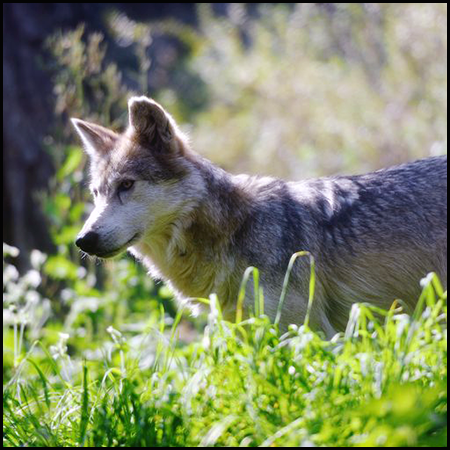
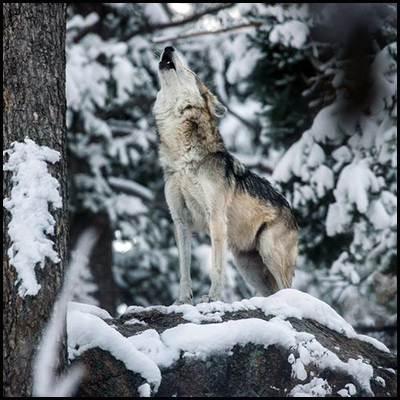
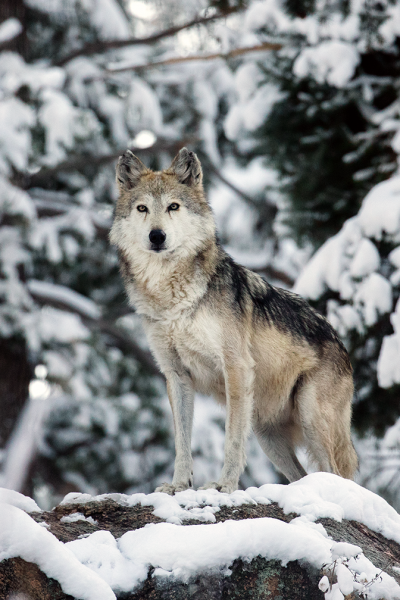
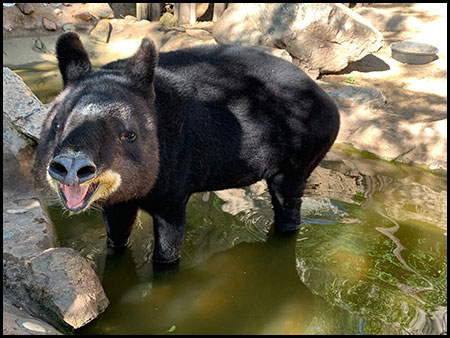
Cofan, a 19-year-old mountain tapir, and Luna, a 14-year-old Mexican wolf matriarch, passed away in unrelated situations, and the Zoo is pausing to honor their conservation contributions, while acknowledging the frightening future many species face. Both individuals were elderly and had experienced age-related conditions in recent years. Cofan was humanely euthanized after veterinary measures failed to revive him from a severe two-day downturn. Luna was found in her den, all signs pointing to a peaceful passing in her sleep.

With Cofan’s passing, there’s a literal empty space at the Zoo and figuratively in tapir fans’ hearts. The chance to ever see a mountain tapir up-close again is bleak, to say the least. Only four mountain tapir remain in human care in the United States, and they all live at Los Angeles Zoo. Unlike Luna, Cofan doesn’t leave a legacy of offspring to keep the species going.

In 2014, Cofan came to CMZoo as a breeding partner to Carlotta, a female mountain tapir who came to Cheyenne Mountain Zoo in 1995, and passed away in 2021. After years of attempts, including artificial insemination and natural breeding, it was determined that Carlotta was beyond her breeding years. The end was in sight at that point, but now having lost both of them, it’s right in front of us.

Because of the very low number of individuals in human care, both Carlotta’s and Cofan’s bodies have been donated to Denver Museum of Nature & Science for scientific study. Their losses provide a rare opportunity to further our knowledge of the species.

Countless people came to adore his wooly bear-like ears and prehensile snout. But is being adored enough? If an endangered animal isn’t contributing to the future of its species through offspring, what’s the point? Why keep trying when you feel like you’ve already tried everything? The point is… if animals are going to have a place in our future, humans have to make that place. Accredited zoos help people help animals.

Largely due to our member vote through our Quarters for Conservation program, CMZoo has contributed more than $135,000 to wild tapir conservation.

Mountain tapir need help, with an estimated 2,500 mountain tapir remaining in the wild habitats of their native Ecuador.

“Cofan was a sweetheart,” said Joanna Husby, animal care manager at CMZoo. “Every year on World Tapir Day, we’d invite the public to come right up to his fence and scratch his chin. People would travel from all over to meet him, and he always chose to stay right where we could give him scratches. He seemed to love his role as an ambassador, and I believe he inspired our members to support wild tapir conservation. Without Cofan and Carlotta, they would never have taken interest in those causes.”

Guests had opportunities to get close to Cofan, and even touch him, but Luna was intentionally kept as wild as possible at the Zoo. Luna’s contributions to conservation were more literal.

She came to CMZoo in October 2016, followed by her mate, Navarro who arrived in November 2017. Their breeding recommendation was an instant match, and in May 2018, the two first-time parents welcomed the first litter of Mexican wolves born at the Zoo in 20 years.

The next spring, they welcomed another pup, later named Uno, and Luna embraced motherhood while inspiring human visitors with her gentle leadership, playful demeanor and up-close curiosity from behind the one-way glass in her habitat at the Zoo. Moreover, she taught her yearling pups how to parent by letting the older siblings closely observe her labor, birth and the upbringing of Uno in 2019.

Luna and Navarro had a lot of female pups. Five of her six total offspring are female, and two have already gone on to eventually form their own packs at different organizations that also participate in the Mexican Wolf Species Survival Plan (SSP) – a multi-organizational effort to breed Mexican wolves with maximum genetic diversity. The SSP works closely with the U.S. Fish & Wildlife Service to contribute to and diversify endangered wild populations through efforts like cross-fostering and wild release of pups and adults born in human care. U.S. Fish & Wildlife Service estimates there are only around 196 Mexican wolves in the wild in the U.S.

Despite their countless differences, Luna and Cofan shared important roles as ambassadors and contributors to their endangered species in the wild. As Zoo staff bid them farewell, we also hang on to hope that the work these animals allow us to do is actually making a difference for wildlife and wild places.

“We believe it is our job to be a place where people can care about and see some of the world’s most endangered species,” said Bob Chastain, president and CEO at CMZoo. “Further, because people come to the Zoo and support us through the conservation donation included with their admission, we get to make a difference for mountain tapir and gray wolves and many other species in the wild. And that’s my personal ‘why’ for why I continue to be dedicated to the work of CMZoo.”

Right now, decision makers in the state of Colorado are wrestling with the reintroduction plan for wolves to be restored to Colorado’s wild places. They’re taking public comments, and Luna’s legacy alone won’t save wild wolves. Humans have to take a stand for wildlife, and one easy step is making your voice heard at https://www.wolfengagementco.org/.

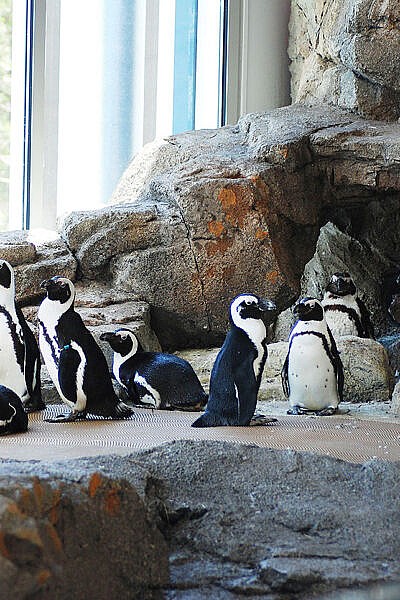
International African Penguin Awareness Day (IAPAD) is Sat., Oct. 8, and we have an exciting day of activities planned on the beaches of Water’s Edge: Africa to help raise awareness for African penguin conservation.

Although African penguin populations continue to struggle in the wild, strides have been made to save this endangered species, and you can help them simply by coming to the Zoo. One of the ways we support African penguins in the wild is by supporting our conservation partner, Southern African Foundation for the Conservation of Coastal Birds (SANCCOB). SANCCOB rescues, rehabilitates, rears chicks, conducts important research, and educates the public. Join us on Sat., Oct. 8, starting at 9 a.m. to celebrate and learn more about SANCCOB and African penguins.

Check out some of the fun activities we have planned!
— Attendees get a free wristband that matches the name band of a penguin in our flock.
— Post a photo from the onsite photo station and win prizes!
— 9:30 a.m. – penguin feeding and keeper talk
— 9 to 10:45 a.m. – sign up for our rubber ducky race.
— 11 a.m. – rubber ducky race, with prizes – including a penguin encounter!
— 3:15 p.m. – penguin feeding and keeper talk – including recognition of winning game participants!

This event and all activities are included in the price of your daytime admission to CMZoo. Please note: advance tickets to the Zoo are required for members and the general public, and some days may sell out. Get tickets at cmzoo.org/visit.

Back to The Waterhole


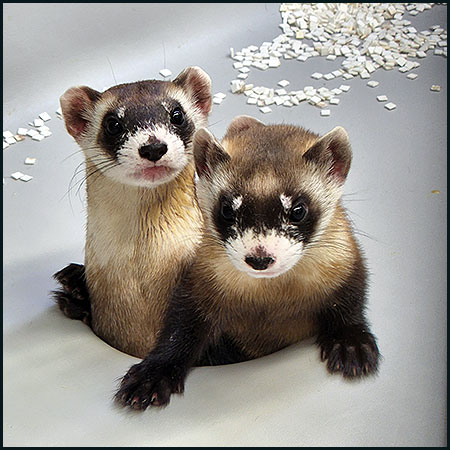
The four black-footed ferret (BFF) kits born in Cheyenne Mountain Zoo’s conservation center this summer are on their way to ‘boot camp,’ a pre-conditioning center where they’ll have the chance to prove they could survive in the wild.

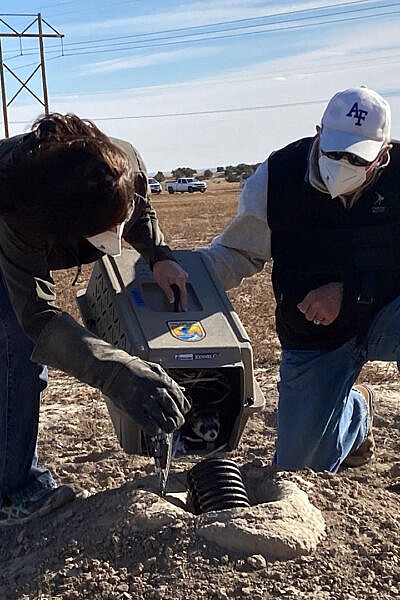
Boot camp puts their survival skills to the test in a contained prairie setting for about 35 days. Biologists monitor the BFFs during boot camp, and if they see any individuals are struggling to hunt, find shelter, or defend themselves, they’ll be returned to human care. Those who prove they could live wild will be released into the prairie beyond the contained boot camp setting, hopefully to breed with other wild ferrets and grow their populations.

It’s a big step for the furry ferrets, who are independent at only four months of age. Their potential wild release represents hope for their species, which was considered extinct when 18 BFFs were accidentally discovered by a sheepdog in Meeteetse, Wyoming in 1981.

From monthly lighting adjustments to reproductive monitoring and only four breeding opportunities (once per year, for four years) to pair a compatible couple to conceive, the intricacies of black-footed ferret breeding success are meticulously managed by the CMZoo conservation team. CMZoo is one of only five zoos in the world participating in breed-and-release programs to support the Black-Footed Ferret Species Survival Plan (SSP), along with the USFWS National Black Footed Ferret Breeding and Conservation Center just outside of Fort Collins, Colo.

Since 1991, CMZoo has bred 589 BFF kits in the behind-the-scenes conservation center, which is designed to keep the ferrets as wild as possible in hopes they’ll one day live on the prairie. Last year, the team welcomed 15 kits to the world, and this year, another four.

“It’s incredibly challenging work and we aren’t always as successful as we want to be, because replicating nature is really hard to do,” said Baughman.

Breeding seasons for males and females are triggered by photoperiod. they won’t breed unless their environments provide the same seasonal changes that would be activated by the changes in natural sunlight that launch that reproductive cycle in the wild.

Male black-footed ferrets start producing more testosterone during the winter months, when there’s less sunlight per day. In the spring, when there’s more sunlight, the females start going into estrous. Males and females have to be in just the right window to breed successfully, and that breeding window only overlaps from March to May each year. On top of that, they’re only typically reproductive from 1 to 4 years old, and they only breed once per year.

Sometimes, even with meticulously managed light cycles, the pairs recommended to breed are out of sync. Under the guidance of the Black-Footed Ferret SSP, conservation teams match potential parent ferrets to maximize genetic diversity, which means pairing recommendations are based solely on the genetics of the potential partners. But, just because they’re a good match genetically doesn’t mean the individuals will breed. Even if the males and females are in sync hormonally to breed, they may not accept their partner.

“This year, we had fewer kits than normal, and that’s a challenge,” said Baughman. “We will look at what we did differently this year, and we will talk to our partners and see if it’s a program-wide shift, or if it was just our facility. Sometimes there’s no clear reason why it was an ‘off’ year.”

Externally, the challenges continue. Bubonic plague is an ongoing battle in the wild. Plague is transmitted by fleas and kills prairie dogs, which black-footed ferrets need to survive. There are also challenges with acquiring and sustaining enough habitat for reintroduction. It’s another reason education is so important. Inspiring people to coexist with prairie dogs and other prairie wildlife is vital to the success of the program.

“We believe that connecting our guests to animals at the Zoo can inspire them to protect their wild counterparts, and that isn’t easy to do for a species that is intentionally kept away from guests because they need to stay wild,” said Baughman. “The BFFs are easy to love because of their adorable looks and funny antics, so they have become the ‘poster children’ of the prairie. They do a great job as ambassadors for all species who occupy the prairie ecosystems of Colorado, Wyoming, and the North American Great Plains.”

Although guests can’t visit the breeding BFFs or their kits in the conservation center, they can visit Rouge, a black-footed ferret who lives in The Loft at CMZoo. The Zoo continues working to connect guests to this species that needs local support to recover in the wild.

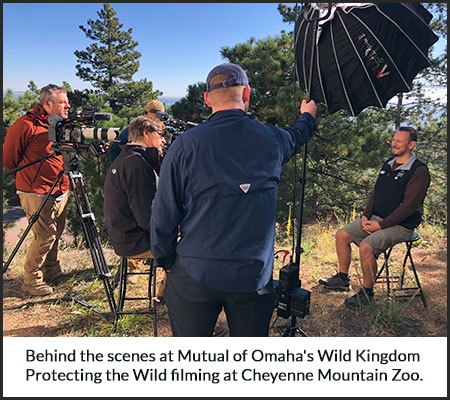
The team recently participated in the filming of a future episode of Mutual of Omaha’s Wild Kingdom Protecting the Wild, which focuses on the BFF’s struggle and the teams that band together in hopes to save them. That episode is slated to air in 2023. CMZoo will provide updates on an air date as plans continue to come together.

The conservation team also celebrated the 41-year anniversary of the rediscovery of BFFs on Sept. 26 with educational booths at the Zoo. Through social media updates, local news, and other outreach, the team continues to keep the ferrets front-of-mind for animal advocates everywhere. Learn more about BFF conservation.

Every visit to CMZoo is conservation in action. Through CMZoo’s Quarters for Conservation (Q4C) program, by which 75¢ of every admission is dedicated to frontline conservation efforts like this, guests can enjoy a day on the mountain with their favorite animals and support important programs dedicated to saving wildlife and wild places. Since 2008, when Q4C started, CMZoo’s guests and members have contributed more than $4 million to conservation projects worldwide.

Back to The Waterhole

The results are in! Last month, we asked for your help to finalize our logo for an exciting new endeavor. Thanks to your votes, we’re happy to share the final result and to tell you more about our program.

Cheyenne Mountain Zoo has established a first-of-its-kind giraffe training, knowledge-sharing and giraffe emergency response program, called the International Center for the Care and Conservation of Giraffe.

“We have a long history of caring for a large herd of prolific, interactive giraffe that participate in daily guest feedings, weekly hoof care and a wide variety of trained voluntary husbandry and medical procedures,” said Amy Schilz, senior animal behaviorist. “With this new program, we can help giraffe all over the world get that same level of care.”

CMZoo’s giraffe herd has seen over 200 giraffe calf births, and the team who cares for them is passionate about learning more, teaching more, and building a network to advance the care of these beautiful creatures. The International Center for the Care and Conservation of Giraffe is a concentrated effort by CMZoo to consolidate resources and expand educational programs to improve and enrich the lives of giraffe in human care throughout the world, while inspiring conservation for their wild counterparts.

The International Center for the Care and Conservation of Giraffe has three main goals:

  1. Improve the quality of veterinary care available for giraffe in human care and leverage that information for field conservation.
  2. Continue to advance behavioral husbandry practices to improve giraffe welfare.
  3. Establish Emergency Response Teams worldwide to respond to giraffe health emergencies and field conservation needs.

“We’ve been leading giraffe care workshops since 2015,” said Schilz. “Now that CMZoo has made this investment in a fully dedicated staff and resources, we’re going to be able to reach so many more people and ultimately improve the lives of more giraffe.”

CMZoo’s giraffe herd has participated in voluntary husbandry training for a decade. In this modern method of cooperative care for animals, trainers reward animals for doing something asked of them – usually something that benefits their ongoing health care. Giraffe at CMZoo voluntarily participate in training for injections, blood draws, x-rays, eye exams, hoof care and more.

“Giraffe are incredibly smart,” said Schilz. “Our whole herd voluntarily participates in their own hoof care. We ask them to come to the training panel where they raise their leg to rest their hoof on a block. Then we can trim, file or x-ray their hoof while we give them lots of rye crackers. It’s incredibly fulfilling as a trainer, and I’m excited to be able to share these methods with even more giraffe lovers through this new Center.”

During voluntary training, the giraffe can choose to approach the trainers, and they have every opportunity to walk away. This method of training means giraffe can receive the care they need without anesthesia, which always carries some level of risk, especially for large animals, like giraffe. They’re receiving rewards for participating, so they’re typically eager to participate in the activity, rather than being told or forced to do something they don’t understand. Training sessions are less stressful for the trainers, too, because the animal is calm and confident.

Bailey, a 10-year-old female giraffe at CMZoo, is one of the giraffe that are trained to participate in voluntary blood draws. This behavior usually helps Bailey’s care team track her overall health. But, because Bailey is so good at this behavior, her team tested the dosing and longevity of a medication that can be used to help wild giraffe combat skin disease.

“Determining appropriate and effective doses of medications helps better manage giraffe health everywhere, and helps prevent drug resistance,” said Dr. Liza Dadone, senior giraffe veterinarian. “Especially when you’re working with wild giraffe, your access for repeating doses is very limited, so you want to be sure you’re using medications that will get the job done.”

To help identify the dose and duration of this treatment, Bailey received a single topical dose at CMZoo. She then had serial blood samples collected over the next few days and periodically over the next couple of weeks to measure the levels of medication in her system. CMZoo shared those findings with the greater zoo community and conservation partners to help better manage these skin infections in giraffe in human care and in the wild.

Bailey’s contribution is just one example of how giraffe in human care can help wild giraffe. Conservation collaborations, like giraffe reintroductions in Uganda, led by the Uganda Wildlife Authority and Giraffe Conservation Foundation with support from CMZoo and the zoo community, are restoring giraffe to historic habitats and ensuring the protection of wild places.

According to recent reports, wild giraffe populations have grown 20 percent since 2015, with around 117,000 individual giraffe documented. But, there’s still work to be done. The International Union for the Conservation of Nature (IUCN) categorizes giraffe as vulnerable to extinction, while two northern subspecies are considered critically endangered, and Masai and reticulated giraffe (the subspecies found at CMZoo) are endangered.

If more giraffe like Bailey can inspire the general public to care about giraffe conservation while simultaneously contributing to scientific findings, wild giraffe populations will have a better chance at surviving.

The International Center for the Care and Conservation of Giraffe offers virtual and in-person consulting on anything from husbandry training to veterinary diagnostics, habitat layout and design, and more. The Center is also establishing a network of Emergency Response Teams throughout the country, so when a giraffe’s life depends on fast action, expert help and resources are closer and those individuals have a better chance at recovery.

For more information, visit cmzoo.org/GiraffeCare for more information.


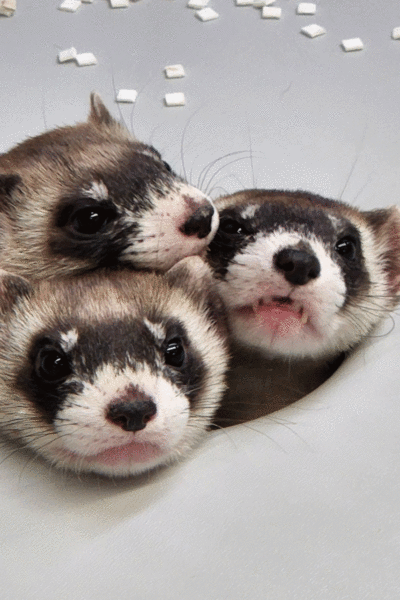
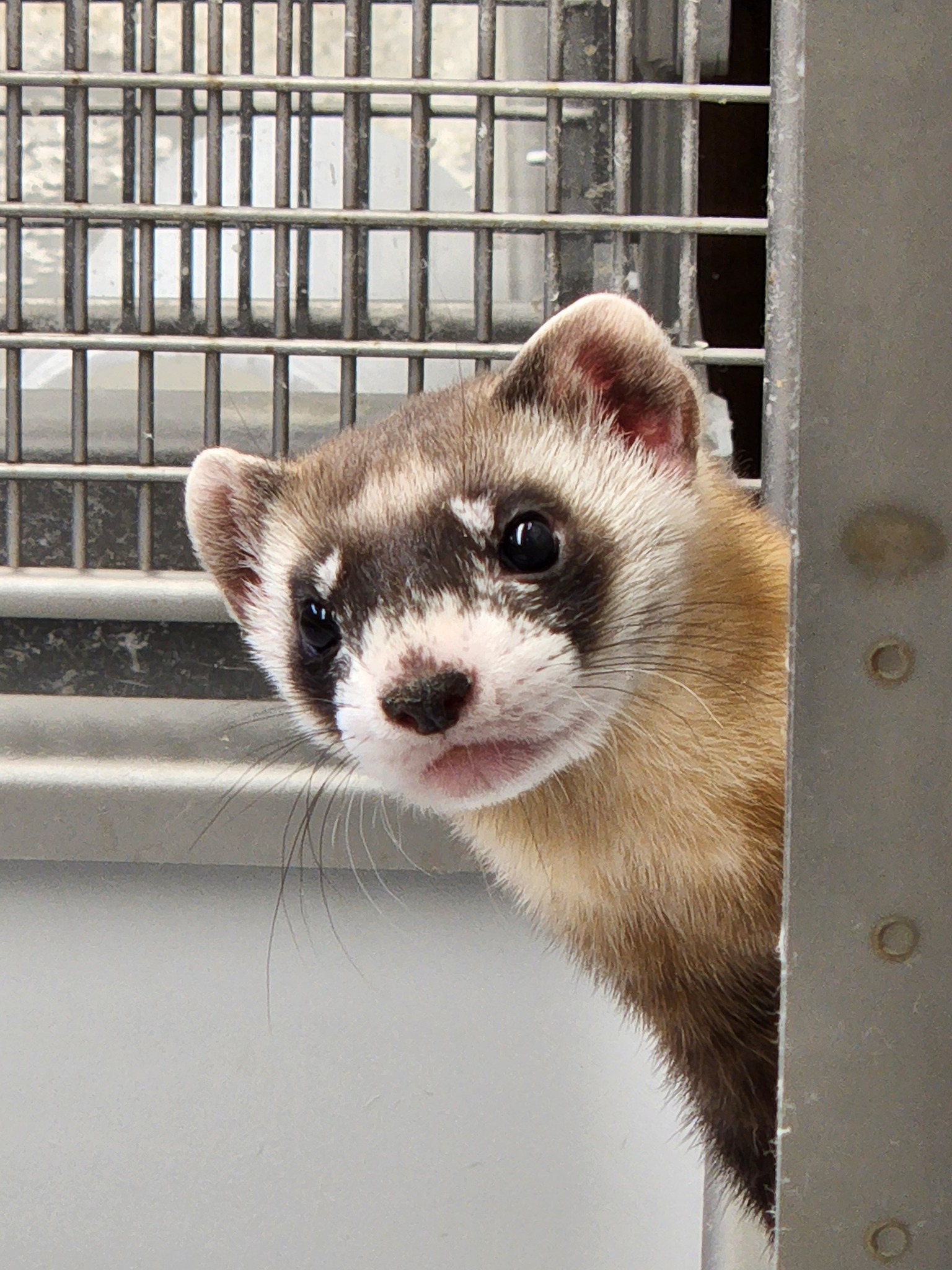
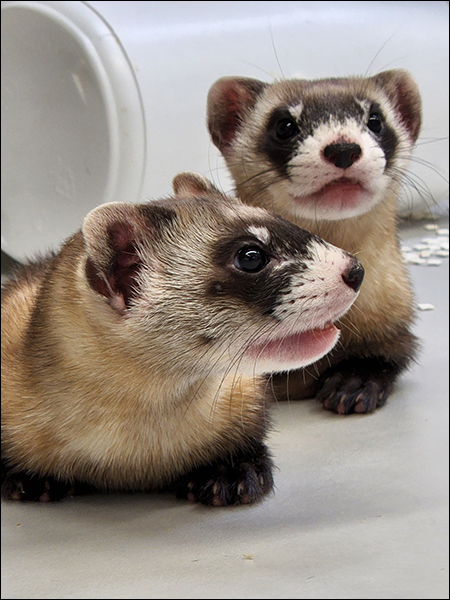
The four black-footed ferret (BFF) kits born in CMZoo’s conservation center are getting curious about the world around them! This weekend, conservation keepers noticed Sriracha’s four 10-week-old kits peeking out of the den during dinner time. Confidence and curiosity are important traits of successful BFFs. Practicing quick movements like pouncing, running, batting, and even getting the zoomies help the kits learn how to hunt and interact in the wild.

BFFs are endangered, and it’s easy to see why they have become ambassadors of the prairie ecosystem. With their black-and-white bandit-esque markings, small stature and curious demeanor, many consider this species adorable. That’s true; but they’re also highly trained hunters with a big job: restoring balance in their ecosystem while helping their own species recover from near extinction. Luckily, the ‘Ghosts of the Prairie’ have some help.

U.S. Fish and Wildlife and other organizations have banded together to breed, prepare, release and monitor black-footed ferrets to increase the population. Numbers fluctuate, but recent reports estimate 350 BFFs are thriving in the wild, thanks to this program.

Since 1991, when CMZoo established its breed-and-release black-footed ferret program, the team has bred 589 BFF kits. Some remain with zoos that support the Species Survival Plan. Others go to a conditioning center for ‘BFF boot camp’ before being released into the wild. The futures of these four kits is yet to be determined, but we’ll keep you posted!

Learn more about black-footed ferret conservation


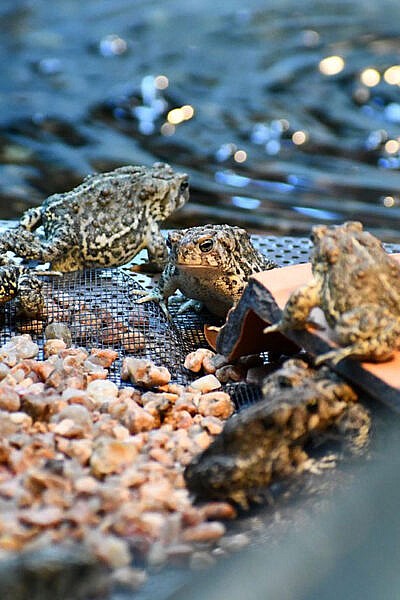
Jim, Pam, Michael, Dwight, Angela, Phyllis, Stanley, Kelly, Oscar and Kevin, our ten Wyoming toadlets, have been fine-tuning their hunting skills up in CMZoo’s conservation center. These critically endangered toads, and many other amphibians, have a special way of distracting and attracting their meals: toe tapping. It brings a whole new meaning to the phrase, “dancing for your dinner.”

We’re taking you on a wild adventure this year as we follow these ten individuals throughout their year in our conservation center and then as they’re released to the wild. The little toads have a big job: helping their critically endangered species recover in the wild waterways of Wyoming.

Why give a hop? Toads are worth saving. They play a vital role at the center of the prairie environment as the best bug control available and as sustenance for migrating birds and native mammals in search of food. If the toads don’t survive, the whole ecosystem suffers. They’re also what’s known as an indicator species, meaning they indicate the overall health of their ecosystem – and it’s in desperate need of attention.

Amphibians worldwide are facing mass extinction due to a pandemic known as the Chytrid fungus. Chytrid fungus causes a skin infection that hinders amphibians’ ability to breathe and absorb water. This often leads to organ failure and death. But, thanks to zoos like CMZoo, these hoppers stand a chance.

Over its 26-year commitment to Wyoming toad recovery, CMZoo’s conservation team has released 44,695 tadpoles and 1,510 toads into the wild. Next summer, these ten toads, and hundreds of their siblings currently growing up in the CMZoo conservation center, will take their first hops into the wild as part of this ongoing conservation effort.

Follow our Facebook playlist A Year in the Life of a Wyoming Toad


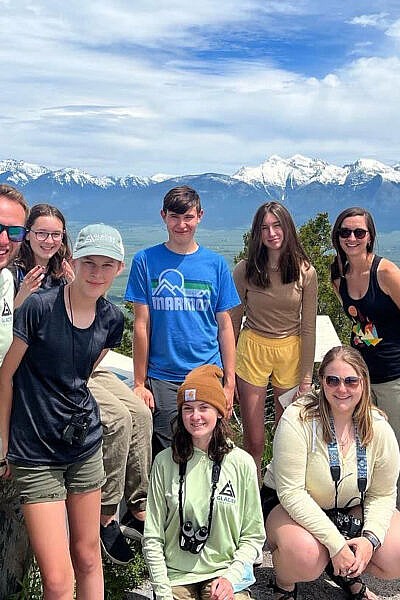
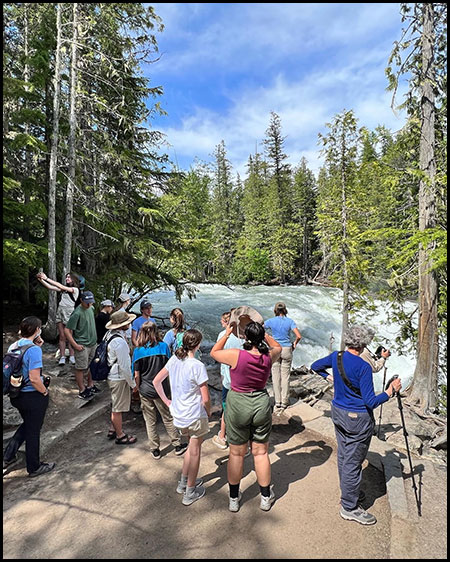
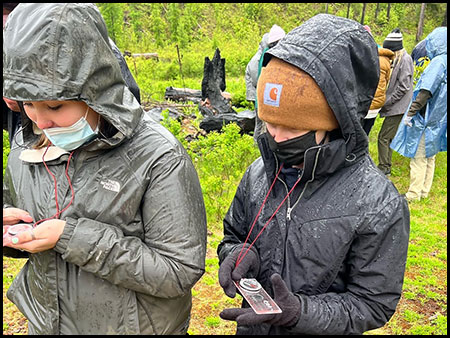
Ten members of CMZoo’s Teen Program recently embarked on a weeklong off-grid adventure to the wilderness of Glacier National Park in Montana. CMZoo’s Teen Program focuses on spending time exploring nature, learning about animals, and understanding other cultures. The program is known for its hands-on educational experiences at the Zoo and in nature, with exploration trips available for Teen Program participants year-round. These trips connect teens to local, national, and international wildlife and wild places. Each destination, adventure, and educational opportunity is intentional, and supports the program’s overall goal to inspire future leaders in conservation and animal care.

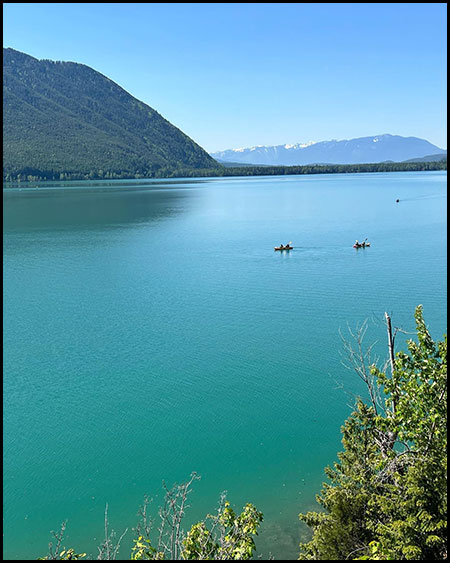
In June, Austin Kennedy, teen program supervisor, and other Zoo staff, led the ten teenagers to learn at the Glacier Institute outside of Columbia Falls, Montana. The Glacier Institute is an outdoor education organization that focuses on getting people outdoors and connecting them to the wild world of Glacier National Park. The Glacier Institute is the official education partner for Glacier National Park and Flathead National Forest.

“While we were there, we spent our days fully unplugged and off-grid,” said Kennedy. “We did a lot of exploring, learning, and laughing.”

Kamrynn Eddy, a three-year Teen Program participant, will soon head off to Washington State University to pursue a bachelor’s degree in zoology. She joined her fellow teens on this trip and called it “soul-changing.”

“Our programming at the Zoo is typically animal and conservation based, and this experience focused on the wild places we need to conserve,” said Eddy. “We got to touch, hear, see and feel these different environments, and it really expanded my knowledge and love for the outdoors. I’ve always loved animals, but this helped me learn to identify trees and rock formations, and even how certain trees grow and how they adapt. We saw incredible wildlife, too, and got to appreciate how conserving wild places means saving wild animals.”

The team participated in workshops on orienteering, geology, ecology, and more. They took day trips to neighboring towns and lakes, and even got to visit the National Bison Range, which is in the center of the 1.25 million-acre Flathead Indian Reservation.

“The National Bison Range is a living example of species restoration over time,” said Kennedy. “In the 1870s, bison were on the brink of extinction. Now, there are an estimated 300+ in this reserve, and other bison populations thriving elsewhere. We learned about the history of the U.S. government’s injustices to The Confederated Salish and Kootenai Tribes, whose land was unjustly used to establish the range. Today, the Confederated Salish and Kootenai Tribes are now the stewards of the bison herd, which descends from animals that Tribal members brought back to the Flathead Indian Reservation from east of the Continental Divide to help establish this new bison population in the early 1900s.”

During the teen’s National Bison Range exploration, they saw a grizzly bear, a black bear, deer, baby bison, an eagle and more! The teens get down-time on these trips, too. They played volleyball in the rain, went on hikes and formed bonds with each other. Eddy said one of her favorite memories from the trip was during a short hike to a waterfall, when she and her fellow explorers sat back and shared what had impacted each of them the most during this trip.

“We all have different experiences and different memories,” said Eddy. “Some of us will go on to pursue animal care and zoology, and others will go on to become doctors, lawyers or writers. But, no matter where we end up, we will all go through life with this foundational passion for animals and wild places.”

For more information on CMZoo’s Teen Program, visit cmzoo.org/teenprograms.

Back to The Waterhole

RETICULATED GIRAFFE TO MOVE TO DENVER ZOO IN SUPPORT OF SPECIES SURVIVAL PLAN

BB, a 21-month-old giraffe at Cheyenne Mountain Zoo, will soon be cruising up I-25 to meet her new playmate, 5-year-old Dobby, and his mom, Kipele, at Denver Zoo! Although BB’s exact moving date will not be shared, guests can see her at CMZoo through the Fourth of July holiday weekend.
Giraffe 'BB' portrait
The move is in support of the Giraffe Species Survival Plan (SSP). SSPs are managed by the Association of Zoos and Aquariums (AZA). They match individual animals throughout AZA-accredited organizations for breeding. The goal is to create the most genetically diverse assurance population of animal ambassadors possible in human care. Zoos accredited by the AZA, including CMZoo and Denver Zoo, regularly participate in animal moves like this for the greater good of the species in our collective care. Although BB won’t immediately participate in the SSP breeding recommendation, this move is a step in that direction. BB’s genetics are valuable to the future diversity of giraffe in human care.

Many people remember BB’s birth at CMZoo in September 2020 to first-time giraffe mom, Bailey. Before the calf received an official name, keepers nicknamed her “BB,” short for “Bailey’s Baby,” and the nickname stuck. Giraffe fans all over the world tuned into her live birth.

Since BB’s personality started to shine, around six months old, keepers have described her as brave and curious. These days, BB is known for pushing through CMZoo’s 16 other, much larger, giraffe to get the best spot for a lettuce snack. Although Denver Zoo plans to give BB quiet time to adjust to her new home, if she shows them she needs it, her care team is confident she’ll adjust to her new life with Dobby and Kipele in no time.

Nearly two years old may seem young to move a giraffe to a new herd, but CMZoo’s and the SSP’s many years of experience have proven that moving smaller giraffe who are no longer dependent on their mothers is ideal. BB has been independent of her mother, Bailey, for a long time.

“We always miss our animals when they move on, but we’re excited to know that BB will be just up the interstate getting excellent care from the team at Denver Zoo,” said Jason Bredahl, African Rift Valley animal care manager. “We know their team well, and have worked with them many times before. They’re committed to the best possible welfare for their animals.”

Giraffe 'BB' portrait
Dobby, who will be one of BB’s new herd mates, was born at Denver Zoo prematurely, weighing just 73 pounds, in February 2017. Dobby struggled in his first few weeks of life, but his care team’s commitment helped him overcome his early obstacles. In addition to around-the-clock care, Dobby received plasma from the Giraffe Plasma Bank, a program co-led by CMZoo and Columbus Zoo. Mashama and Msitu, two well-known giraffe at CMZoo, donate plasma to help struggling newborn calves, which is often what they need. Four years later, Dobby is thriving at Denver Zoo, and we can’t wait for BB to meet him.

BB is outgoing and energetic – but she’s also extremely intelligent. Her keepers at CMZoo have prepared her for this move, by building trusting relationships and following a customized training program that allows BB to make choices and receive positive reinforcement for participating in training. Building on her foundation of training, BB is preparing for her road trip up north.

“We’ve been introducing BB to new training opportunities, like walking through the trailer loading area by herself, stepping onto the loading ramp, and more,” said Bredahl. “We’ll pack the trailer with her favorite snacks, elm branches, and enriching activities for her short trip and when she’s settling into her new home in Denver.”

Visitors can see BB at CMZoo at least through the Fourth of July holiday weekend. Keep an eye on Denver Zoo’s social media channels for updates and information on when guests can see BB with her new herd, and help us wish BB bon voyage on her big adventure!

Back to The Waterhole


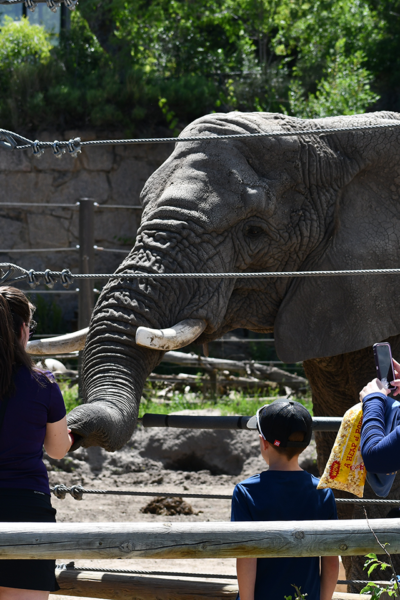
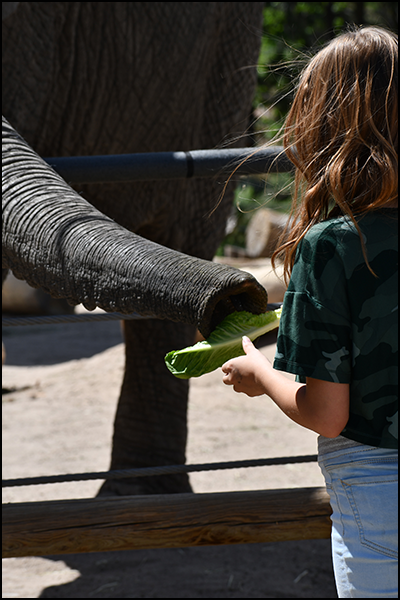
When you give Lucky, one of six CMZoo African elephants, an apple, you’re giving her wild counterparts a better chance at survival. Since 2016, CMZoo’s scheduled paid elephant feeding opportunities have sent $25,000 annually to Tsavo Trust, our frontline conservation partner in Tsavo National Park. Now, guests are raising $75,000 per year for our frontline African elephant and rhino conservation partners, Tsavo Trust, just by participating in elephant feedings.

From May through October, guests can hand-feed one of CMZoo’s African elephants for $10 to $15 per bundle of produce. These special experiences are available, as long as weather allows, from 11 to 11:30 a.m. and from 2:30 to 3 p.m. daily. Animals at CMZoo always get to decide if they want to participate in these up-close guest experiences. The aging elephants at CMZoo consistently show their keepers they enjoy the interactions, which are mentally stimulating and full of yummy snacks like carrots, apples, zucchini and more.

By participating in this add-on experience with our ‘Golden Girls,’ which we affectionately call our elephants because they are in their golden years, guests can make special connections with them. These feeding opportunities help guests make that connection and make a difference for wildlife at the same time.

“Standing at the feet of one of CMZoo’s multi-ton African elephants and watching her incredible trunk reach out to take a piece of produce right from your hand is life changing,” said Nicole Chaney, CMZoo administrative and research assistant. Chaney is heavily involved with CMZoo’s conservation efforts, including our relationship with Tsavo Trust. “But, it’s not just life-changing for our guests. It’s also saving the lives of wild elephants and rhinos in Tsavo National Park. I love that we can foster these individual relationships between our elephants and guests, and that our guests have this opportunity to send support directly to wild elephants.”

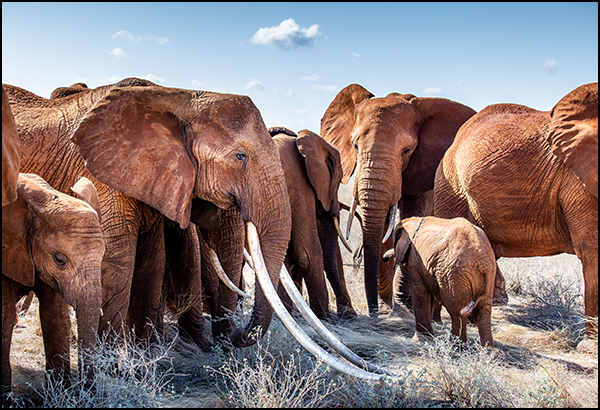
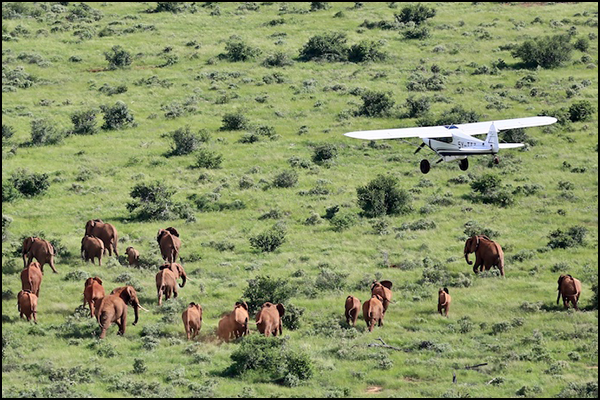
Tsavo Trust works to protect the last of the big tuskers, which are African elephants with tusks weighing more than 100 pounds, and other species, like black rhinos, in Tsavo National Park. Funds raised by CMZoo guests pay for pilot hours of frontline aerial surveillance that protects rhinos and elephants from poachers seeking their ivory and horns.

Along with funding from the Kratt Family Foundation, CMZoo guests’ support has helped build permanent housing that allows staff to live on the land where these critically endangered giants live. It has funded the construction of a vehicle maintenance building, which means their team isn’t delayed by having to take their vehicles outside of the park for repairs. It also funds special projects in local communities, which help residents form a connection with the elephants they share land with. One special project supported by the Kratt Family Foundation and CMZoo was the construction of two clean water boreholes in nearby communities, which have helped their conservation outreach efforts by helping locals learn more about conservation and even become inspired to protect their animal neighbors.

With this additional funding, CMZoo guests are supporting another special project focused on water, which is a precious resource for humans, animals and their entire ecosystem. This funding, and ongoing funding, is assisting with the construction of a sand dam in the park this year, which will help preserve drinking water for wildlife.

A sand dam is essentially a reinforced stone wall built across a seasonal sandy riverbed, usually on top of a stone bedrock. Water behind the sand dam raises the water table and collects on the sand, which acts as a sponge and holds water for long dry periods without evaporation.

Tsavo Trust has already constructed eight sand dams as part of a plan to construct approximately 25 for wildlife in the Tsavo National Parks. The sand dam method is a tried-and-tested method of providing small, but consistent, amounts of water through a seepage system on the downside of the dam wall, where animals can drink it. They’re ideal in arid areas, like Tsavo National Park, and don’t create the ‘desertification effect’ that’s sometimes associated with sinking of boreholes in protected areas where higher numbers of elephants live.

“Sand dams have been used to great effect in dry arid regions for humans and livestock, and now, through this project, there is no reason why wildlife cannot reap the same benefits within wildlife conservation areas,” said Chaney. “Water supply and distribution for wildlife in Tsavo National Parks has always been a huge challenge, particularly during the dry season, due to erratic rain patterns and soils that cannot hold water for extended periods. The sand dam plan could be one answer to this problem, and we’re proud to be able to support the efforts to construct several well-designed and distributed waterholes for animals over the coming years within the Tsavo Conservation Area.”

 
Back to The Waterhole