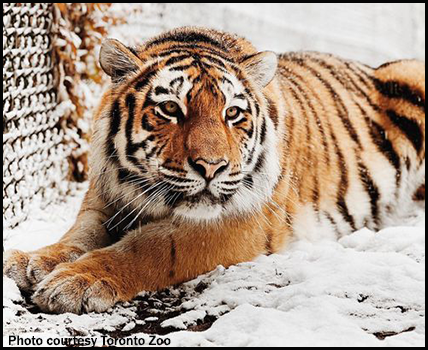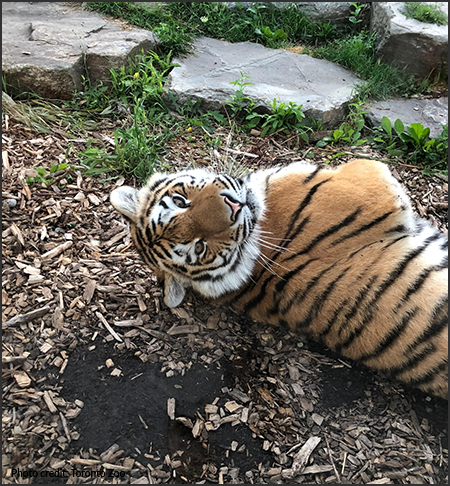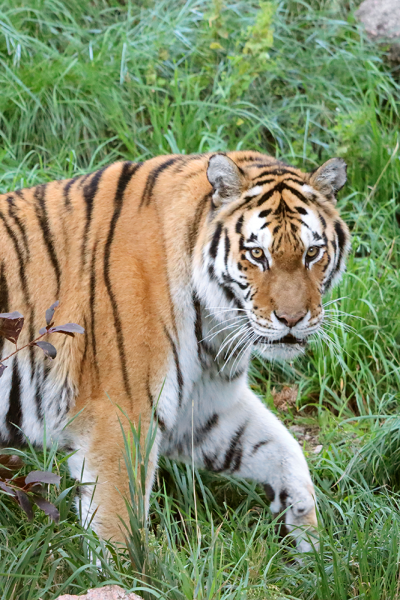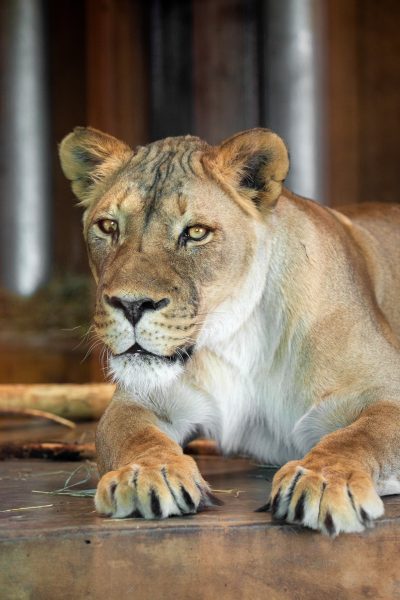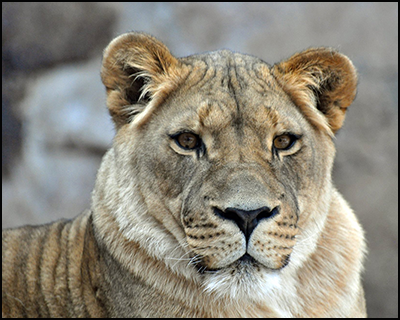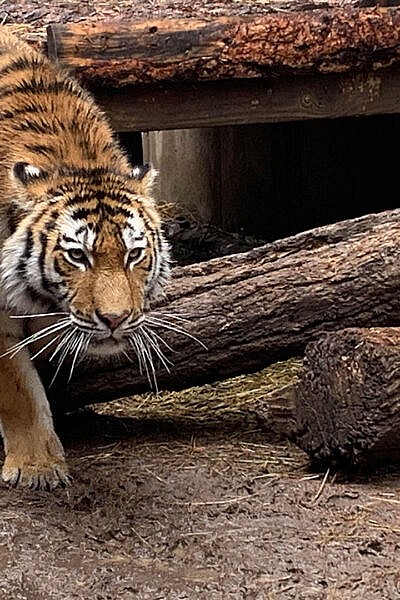
Cheyenne Mountain Zoo is preparing for the arrival of a female Amur tiger, Mila [MEE-luh], in early March and the departure of a male African lion, Boma [BOH-muh], in late March. The two moves support their respective Species Survival Plans, but aren’t necessarily immediate breeding recommendations. Organizations accredited by the Association of Zoos and Aquariums (AZA) often work together, like this, to provide the best homes available as animals mature and develop different needs, like additional space or new social opportunities.

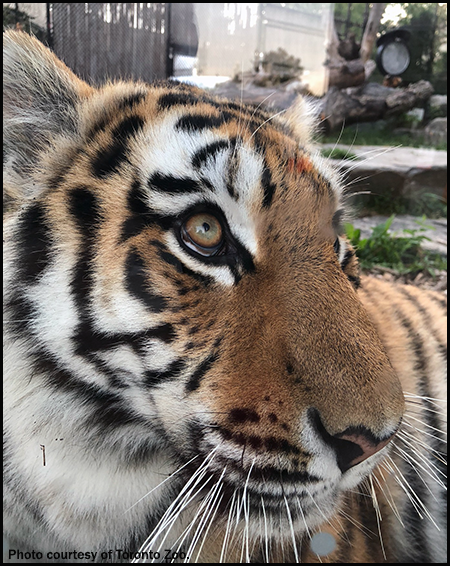
Mila, who will turn two on May 1, will travel to CMZoo from Toronto Zoo, where she was born and has lived with her mother, Mazy, until recently. Tigers are typically solitary in the wild, so Mila is prime to embrace the world as an independent young adult tiger, but she’s still a little young to become a mom herself. CMZoo’s tiger habitat in Asian Highlands has plenty of space to make a home for Mila.

Chewy, CMZoo’s nearly 8-year-old male Amur tiger, and Mila will certainly be aware of each other’s presence in the tiger building, where they’ll have separate dens, or in the yards they will take turns exploring. However, there are no immediate plans to introduce the tigers.

For animal transfers, keeper teams from both zoos typically work together to make animal moves as low stress as possible for all involved. They share information about an animal’s favorite treats, enrichment items, trained behaviors, den setups, behavioral tendencies and more. This helps the animal’s new care team provide the best possible welfare once the animal arrives.

“This is Mila’s first-ever move, so we want to make it as positive an experience as possible for her,” said Rebecca Zwicker, animal care manager in Asian Highlands. “She has been Toronto’s sweetheart, so we’re happy to welcome her to our community where we know she’ll be equally admired and respected with a life of choice, opportunity and care.”

Mila’s team will follow her lead as she learns the new faces, spaces and smells at CMZoo. Once she arrives, they’ll focus on building trusting relationships with her through training, enrichment, positive reinforcement and lots of her favorite activities and meals.

“There’s no need to rush things,” said Zwicker. “We’ll be excited to share her with guests as soon as Mila shows us she’s ready.”

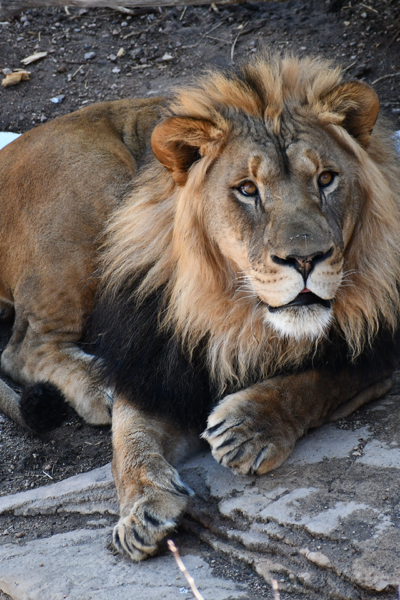
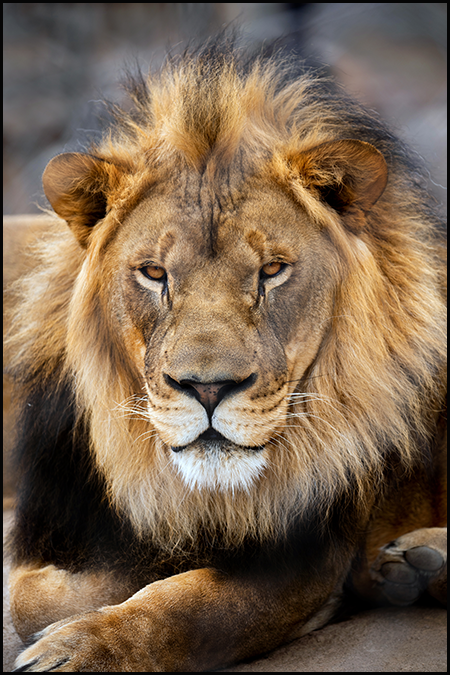
Unlike tigers, African lions are social animals. As they mature, they sometimes outgrow their family units. Seven-year-old Boma, who was born at CMZoo in 2015 and has been living with his brother Aslan for the last several years, is showing signs he’s ready for his own pride.

Boma is moving to another AZA-accredited organization in California, where he will be the only male in the pride. Because Boma’s genetics are well represented in the assurance population of African lions in human care, this move is unlikely to result in a breeding recommendation.

“A huge part of our role as keepers is to provide the best possible environments for our animals,” said Rachael Hahn, African Rift Valley senior lead keeper. “When you see an animal is telling you it’s time for something new, we embrace the fact that there’s a reward for them that far outweighs the risk. Of course, it’s hard to say goodbye when an animal moves on, but we really think this new place and pride are going to be perfect for him.”

To prepare him for his road trip, the African Rift Valley animal care team has been familiarizing Boma with his travel crate and making sure he’s in tip-top shape to make the trip. Boma’s keepers at CMZoo have been in contact with his new care team in California, so they can welcome Boma and be aware of his tendencies, preferences and motivators.

“Boma is probably our most confident lion,” said Hahn. “I can just see him strutting into his new home with his impressive presence and quickly winning the hearts of the team and the respect of his new pride.”

With Boma leaving, African Rift Valley keepers are working to provide Aslan with social opportunities, too. Four African lions will remain at CMZoo: the patriarch, Abuto, the aging matriarch, Lomela, their daughter, Elsa, and their son, Aslan. The long-term plan is for Elsa and Aslan to share space, with interbreeding preventions in place, and for Lomela and Abuto to share space. The introduction plan will be ongoing, so guests may see groups of two or three lions together as the care team works to support the changes in the pride.

Guests who want to wish Boma well on his new adventure should do so before Mon., March 27. CMZoo will provide social media updates on Mila’s arrival, including when guests might be able to see her in Asian Highlands, as she settles in.

Back to The Waterhole

CHEYENNE MOUNTIAN ZOO LOSES MOUNTAIN TAPIR AND MEXICAN WOLF IN SAME DAY, HOLDS ON TO HOPE FOR ENDANGERED SPECIES

Cheyenne Mountain Zoo said goodbye to two rare and endangered animals on Thursday, shining an even brighter light on the gravity of many species’ situations on this planet.

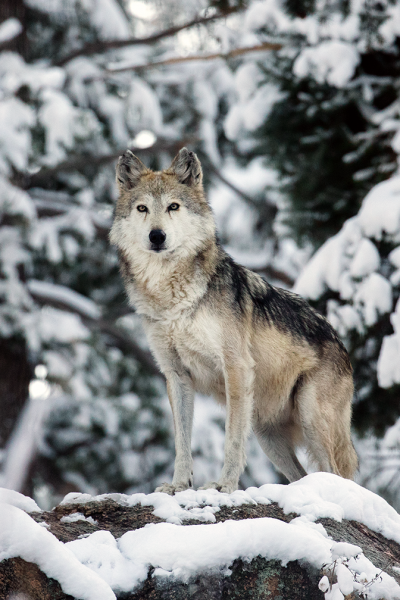
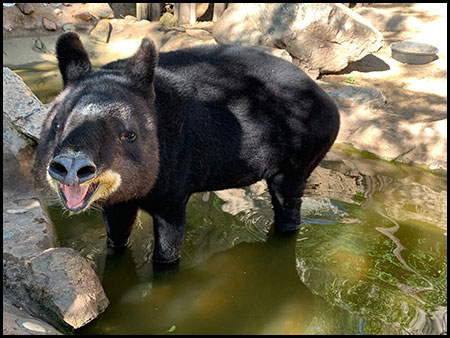
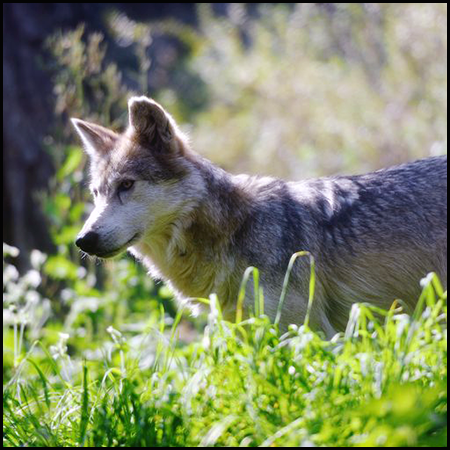
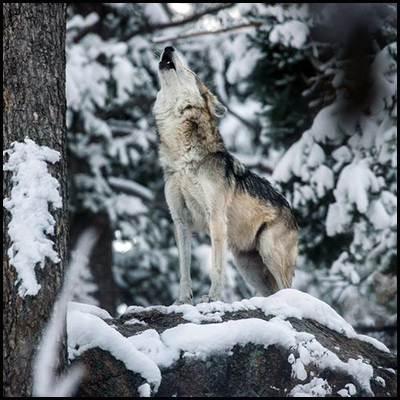
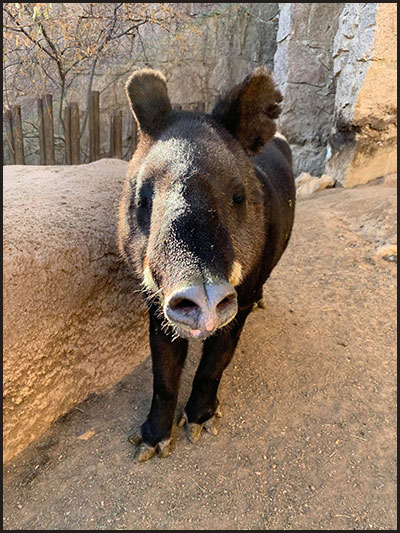
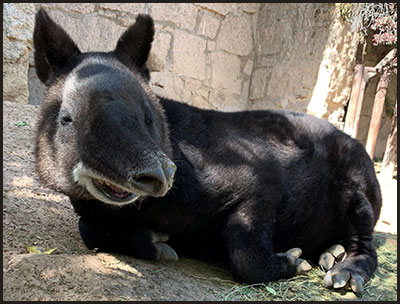
Cofan, a 19-year-old mountain tapir, and Luna, a 14-year-old Mexican wolf matriarch, passed away in unrelated situations, and the Zoo is pausing to honor their conservation contributions, while acknowledging the frightening future many species face. Both individuals were elderly and had experienced age-related conditions in recent years. Cofan was humanely euthanized after veterinary measures failed to revive him from a severe two-day downturn. Luna was found in her den, all signs pointing to a peaceful passing in her sleep.

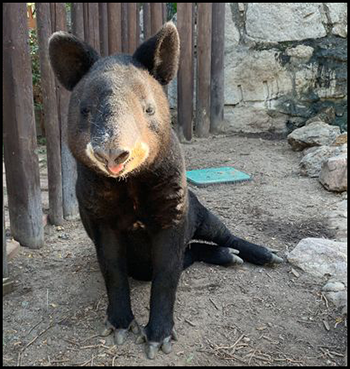
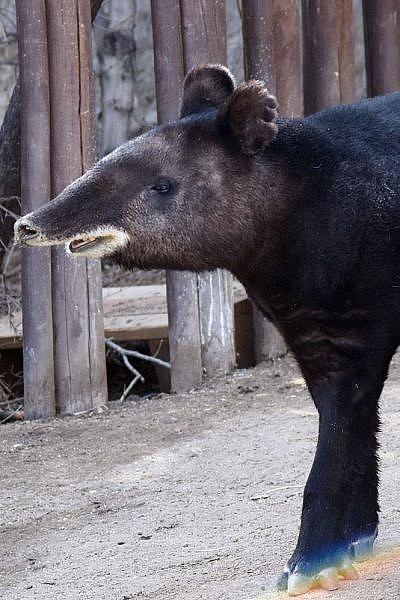
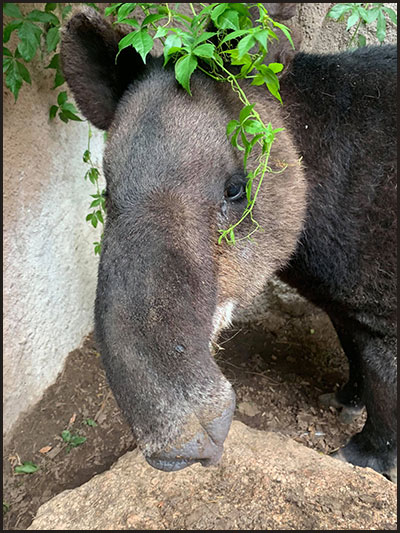
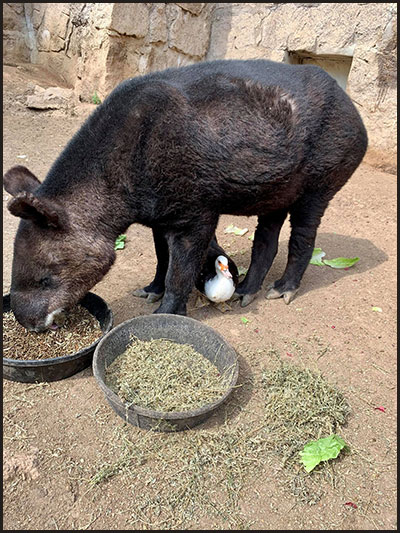
With Cofan’s passing, there’s a literal empty space at the Zoo and figuratively in tapir fans’ hearts. The chance to ever see a mountain tapir up-close again is bleak, to say the least. Only four mountain tapir remain in human care in the United States, and they all live at Los Angeles Zoo. Unlike Luna, Cofan doesn’t leave a legacy of offspring to keep the species going.

In 2014, Cofan came to CMZoo as a breeding partner to Carlotta, a female mountain tapir who came to Cheyenne Mountain Zoo in 1995, and passed away in 2021. After years of attempts, including artificial insemination and natural breeding, it was determined that Carlotta was beyond her breeding years. The end was in sight at that point, but now having lost both of them, it’s right in front of us.

Because of the very low number of individuals in human care, both Carlotta’s and Cofan’s bodies have been donated to Denver Museum of Nature & Science for scientific study. Their losses provide a rare opportunity to further our knowledge of the species.

Countless people came to adore his wooly bear-like ears and prehensile snout. But is being adored enough? If an endangered animal isn’t contributing to the future of its species through offspring, what’s the point? Why keep trying when you feel like you’ve already tried everything? The point is… if animals are going to have a place in our future, humans have to make that place. Accredited zoos help people help animals.

Largely due to our member vote through our Quarters for Conservation program, CMZoo has contributed more than $135,000 to wild tapir conservation.

Mountain tapir need help, with an estimated 2,500 mountain tapir remaining in the wild habitats of their native Ecuador.

“Cofan was a sweetheart,” said Joanna Husby, animal care manager at CMZoo. “Every year on World Tapir Day, we’d invite the public to come right up to his fence and scratch his chin. People would travel from all over to meet him, and he always chose to stay right where we could give him scratches. He seemed to love his role as an ambassador, and I believe he inspired our members to support wild tapir conservation. Without Cofan and Carlotta, they would never have taken interest in those causes.”

Guests had opportunities to get close to Cofan, and even touch him, but Luna was intentionally kept as wild as possible at the Zoo. Luna’s contributions to conservation were more literal.

She came to CMZoo in October 2016, followed by her mate, Navarro who arrived in November 2017. Their breeding recommendation was an instant match, and in May 2018, the two first-time parents welcomed the first litter of Mexican wolves born at the Zoo in 20 years.

The next spring, they welcomed another pup, later named Uno, and Luna embraced motherhood while inspiring human visitors with her gentle leadership, playful demeanor and up-close curiosity from behind the one-way glass in her habitat at the Zoo. Moreover, she taught her yearling pups how to parent by letting the older siblings closely observe her labor, birth and the upbringing of Uno in 2019.

Luna and Navarro had a lot of female pups. Five of her six total offspring are female, and two have already gone on to eventually form their own packs at different organizations that also participate in the Mexican Wolf Species Survival Plan (SSP) – a multi-organizational effort to breed Mexican wolves with maximum genetic diversity. The SSP works closely with the U.S. Fish & Wildlife Service to contribute to and diversify endangered wild populations through efforts like cross-fostering and wild release of pups and adults born in human care. U.S. Fish & Wildlife Service estimates there are only around 196 Mexican wolves in the wild in the U.S.

Despite their countless differences, Luna and Cofan shared important roles as ambassadors and contributors to their endangered species in the wild. As Zoo staff bid them farewell, we also hang on to hope that the work these animals allow us to do is actually making a difference for wildlife and wild places.

“We believe it is our job to be a place where people can care about and see some of the world’s most endangered species,” said Bob Chastain, president and CEO at CMZoo. “Further, because people come to the Zoo and support us through the conservation donation included with their admission, we get to make a difference for mountain tapir and gray wolves and many other species in the wild. And that’s my personal ‘why’ for why I continue to be dedicated to the work of CMZoo.”

Right now, decision makers in the state of Colorado are wrestling with the reintroduction plan for wolves to be restored to Colorado’s wild places. They’re taking public comments, and Luna’s legacy alone won’t save wild wolves. Humans have to take a stand for wildlife, and one easy step is making your voice heard at https://www.wolfengagementco.org/.

RETICULATED GIRAFFE TO MOVE TO DENVER ZOO IN SUPPORT OF SPECIES SURVIVAL PLAN

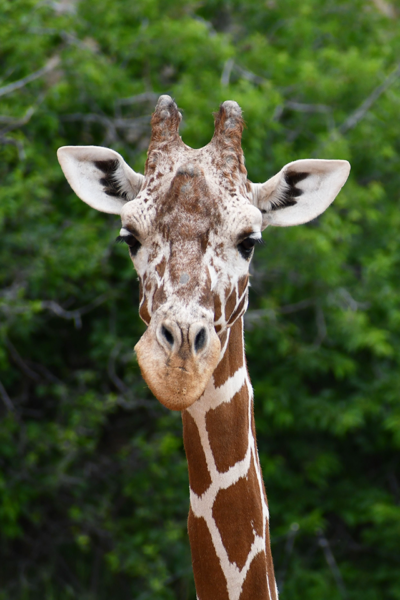
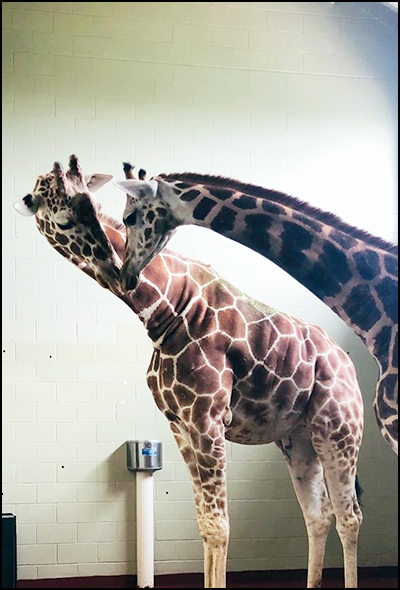
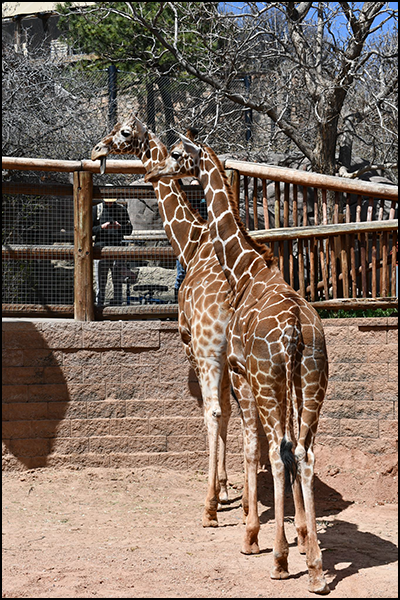
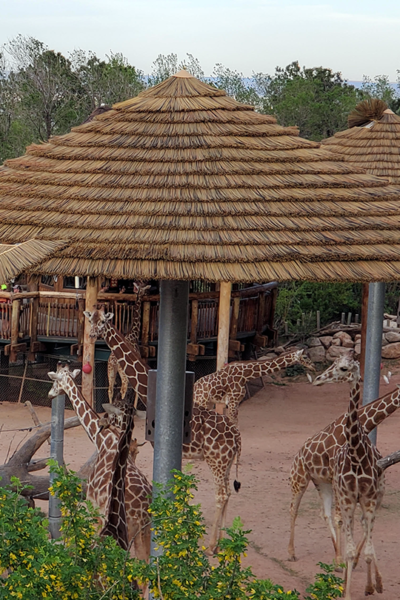
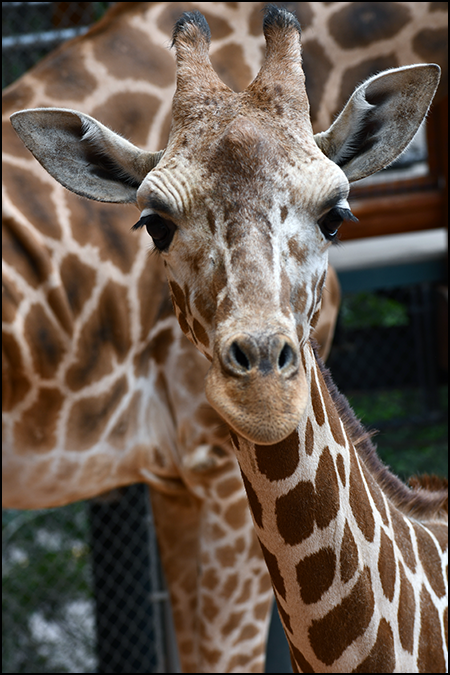
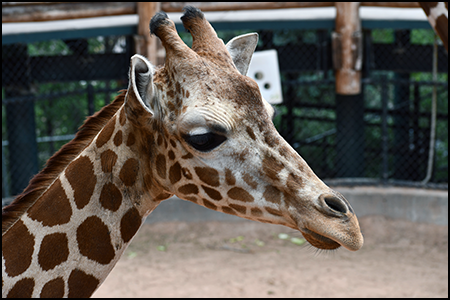
BB, a 21-month-old giraffe at Cheyenne Mountain Zoo, will soon be cruising up I-25 to meet her new playmate, 5-year-old Dobby, and his mom, Kipele, at Denver Zoo! Although BB’s exact moving date will not be shared, guests can see her at CMZoo through the Fourth of July holiday weekend.
Giraffe 'BB' portrait
The move is in support of the Giraffe Species Survival Plan (SSP). SSPs are managed by the Association of Zoos and Aquariums (AZA). They match individual animals throughout AZA-accredited organizations for breeding. The goal is to create the most genetically diverse assurance population of animal ambassadors possible in human care. Zoos accredited by the AZA, including CMZoo and Denver Zoo, regularly participate in animal moves like this for the greater good of the species in our collective care. Although BB won’t immediately participate in the SSP breeding recommendation, this move is a step in that direction. BB’s genetics are valuable to the future diversity of giraffe in human care.

Many people remember BB’s birth at CMZoo in September 2020 to first-time giraffe mom, Bailey. Before the calf received an official name, keepers nicknamed her “BB,” short for “Bailey’s Baby,” and the nickname stuck. Giraffe fans all over the world tuned into her live birth.

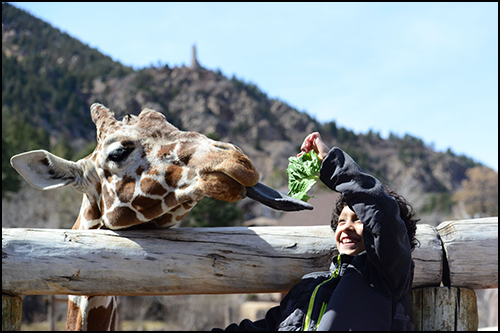
Since BB’s personality started to shine, around six months old, keepers have described her as brave and curious. These days, BB is known for pushing through CMZoo’s 16 other, much larger, giraffe to get the best spot for a lettuce snack. Although Denver Zoo plans to give BB quiet time to adjust to her new home, if she shows them she needs it, her care team is confident she’ll adjust to her new life with Dobby and Kipele in no time.

Nearly two years old may seem young to move a giraffe to a new herd, but CMZoo’s and the SSP’s many years of experience have proven that moving smaller giraffe who are no longer dependent on their mothers is ideal. BB has been independent of her mother, Bailey, for a long time.

“We always miss our animals when they move on, but we’re excited to know that BB will be just up the interstate getting excellent care from the team at Denver Zoo,” said Jason Bredahl, African Rift Valley animal care manager. “We know their team well, and have worked with them many times before. They’re committed to the best possible welfare for their animals.”

Giraffe 'BB' portrait
Dobby, who will be one of BB’s new herd mates, was born at Denver Zoo prematurely, weighing just 73 pounds, in February 2017. Dobby struggled in his first few weeks of life, but his care team’s commitment helped him overcome his early obstacles. In addition to around-the-clock care, Dobby received plasma from the Giraffe Plasma Bank, a program co-led by CMZoo and Columbus Zoo. Mashama and Msitu, two well-known giraffe at CMZoo, donate plasma to help struggling newborn calves, which is often what they need. Four years later, Dobby is thriving at Denver Zoo, and we can’t wait for BB to meet him.

BB is outgoing and energetic – but she’s also extremely intelligent. Her keepers at CMZoo have prepared her for this move, by building trusting relationships and following a customized training program that allows BB to make choices and receive positive reinforcement for participating in training. Building on her foundation of training, BB is preparing for her road trip up north.

“We’ve been introducing BB to new training opportunities, like walking through the trailer loading area by herself, stepping onto the loading ramp, and more,” said Bredahl. “We’ll pack the trailer with her favorite snacks, elm branches, and enriching activities for her short trip and when she’s settling into her new home in Denver.”

Visitors can see BB at CMZoo at least through the Fourth of July holiday weekend. Keep an eye on Denver Zoo’s social media channels for updates and information on when guests can see BB with her new herd, and help us wish BB bon voyage on her big adventure!

Back to The Waterhole
 

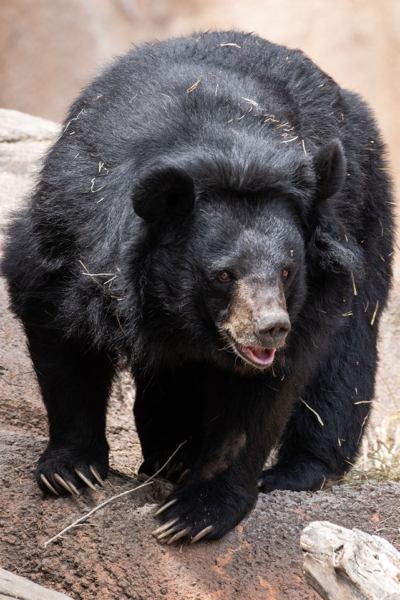
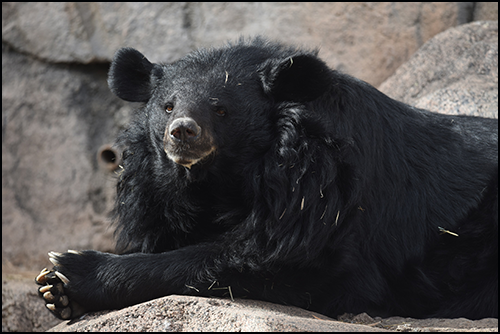
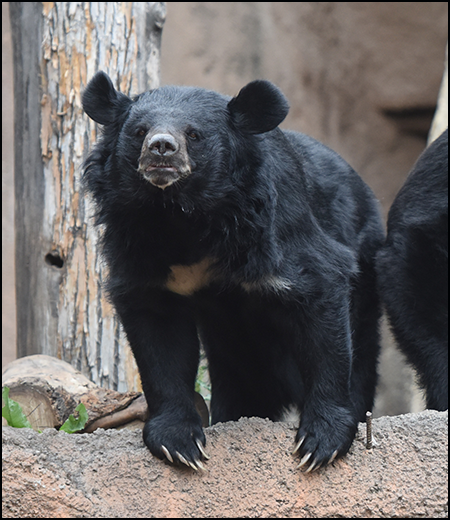
Cheyenne Mountain Zoo said a heartfelt goodbye to one of its longest residents on Friday night. 29-year-old Honey, a female Asiatic black bear, started showing signs of sudden illness and pain on Friday morning. After a thorough exam in the Zoo’s veterinary hospital, the difficult but humane decision was made to euthanize her, after serious age-related conditions were discovered.

Honey came to CMZoo with her sister, Beezler, when the pair were just shy of a year and a half old. In their nearly 28 years here, they have touched the hearts of many keepers and millions of guests. Asiatic black bears are currently housed in only four North American zoos accredited by the Association of Zoos and Aquariums.

“I had walked by their exhibit for years, but until I met and started working with them a couple of years ago, I never realized how cool they were,” said Courtney Rogers, lead animal keeper for the sisters. “Even though they were sisters and lived together all their lives, Honey and Beezler had very different personalities. We often described Honey as a ‘sweet old lady,’ but she could also be super assertive at times.”

At the time of her passing, Honey was the oldest-known Asiatic black bear currently living in human care, tied with her sister. Her age met the median life expectancy of females of her species, which is 29.3 years.

“Caring for Honey and Beezler was what made me realize I really love bears,” said Erika Furnes, another animal keeper for the bears. “They inspired me to champion an Asiatic black bear research and recovery program in Vietnam, which will receive funding thanks to our Zoo members this year. The sisters did their jobs perfectly, which is to make people fall in love with them, and in turn, inspire conservation action for their relatives in the wild.”

In addition to general husbandry training, the bear sisters also participated in some unique training and enrichment to help them with specific ailments due to their advanced age.

“After keepers noticed that Honey had some cloudiness in one eye, veterinary opthamologists recommended eye drops for her twice a day,” said Rogers. “Honey quickly learned to put her face through a modified blood draw port in her den. She was very good about holding still to let us put in the eye drops, and in return, she got a special treat of eating applesauce straight from the pouch.”

Honey was also very patient during other cooperative husbandry behaviors, such as voluntary blood draws where she would place her front paw into a specially designed sleeve.

“Honey was shorter than Beezler, so we had to make a makeshift ‘booster seat’ for her, in order for her to get in position to put her paw through the port,” said Rogers. “She not only learned to use the booster, which was a tire filled with hay, and present her paw, but she also waited patiently when the vein proved more difficult for the vet team to find than usual.”

The relationship between the sisters and their unique personalities were part of what made the pair so special.

“Honey was the more laid-back of the two,” said Furnes. “She was a slow eater, which I could relate to, since I’m the slowest eater in my family. Beezler would often get to treats first, but when Honey really wanted something, she would stand up to Beezler and protect her portion with her paws. Sometimes, they would alternate stealing lettuce from each other – Beezler would swipe some into her pile, but then Honey would swipe it back. And they’d continue, back and forth.”

Other than the occasional squabbles over food, the sisters had a close relationship and typically chose to spend time together. Even though they had the option for separate sleeping dens, keepers usually found them sleeping near each other in the same space in the morning.

“Honey was very tolerant of Beezler,” said Rogers. “We set up a physical therapy room for them to help keep them mobile and active, despite the advancing arthritis they both had. There were toys and treats everywhere – even up high, where they would really have to work to reach them. One time, we saw Beezler use Honey’s back as a ladder to reach some snacks. Honey allowed her to do it, and was rewarded when Beezler knocked the treats down to Honey.”

Keepers are keeping an extra-close eye on Beezler, as she adjusts to Honey being gone. Beezler spent time with Honey on her final day, even cleaning her paws off for her. This morning, Beezler came right over to keepers in the morning, and her behavior seemed normal. She received a lot of special enrichment today, including water in her pool and fresh mud puddles to wallow in. Keepers will continue to give her extra attention in the coming days and weeks, to help make the transition easier for her.

Honey was a wonderful ambassador for her species, and she will be greatly missed.


About Cheyenne Mountain Zoo

Cheyenne Mountain Zoological Society was founded in 1926. Today, Cheyenne Mountain Zoo, America’s mountain Zoo, offers comprehensive education programs, exciting conservation efforts and truly fantastic animal experiences. In 2021, Cheyenne Mountain Zoo was voted #4 Best Zoo in North America and CMZoo’s Rocky Mountain Wild was named #3 Best Zoo Exhibit in North America by USA TODAY 10Best Readers’ Choice Awards. It is Cheyenne Mountain Zoo’s goal to help guests fall in love with animals and nature, and take action to protect them. Of the 241 zoos and aquariums accredited by the Association of Zoos and Aquariums (AZA), Cheyenne Mountain Zoo is one of just a few operating without tax support. Cheyenne Mountain Zoo depends on admissions, membership dues, special event attendance and donations for funding.


When something or someone so unique is part of your everyday life, it could be easy to lose sight of how lucky you are to know them. Yesterday, Cheyenne Mountain Zoo lost an incredibly rare and special individual named Carlotta, a 27-year-old mountain tapir.

“Carlotta’s passing made me stop and think about how lucky we were to know her,” said Bob Chastain, CMZoo president and CEO. “It’s not only because she was a wonderful ambassador for her species in the wild, but because her species is so rarely seen at any zoo in the world.”

Carlotta was one of only seven mountain tapir in the U.S., housed at just two zoos. Cofan, a 17-year-old male mountain tapir who lives at CMZoo, is now one of the remaining six in human care. The other five live at Los Angeles Zoo.

“Losing her made me think of the many unique individuals in our care, and how it’s our honor and responsibility to help people learn about them,” said Chastain. “I try to convey how lucky we are to give our community the chance to meet Amur leopards, an Eastern black rhino or a black-footed ferret. These animals are endangered in the wild and in human care, it’s a rare opportunity for our community to be able to experience them all in one place.”

Cheyenne Mountain Zoo believes that we can save wildlife and wild places by connecting guests and animals, which may inspire them to take action to protect them.

Of 241 organizations accredited by the Association of Zoos and Aquariums (AZA), only 32 have homes for Amur leopards. Only 24 are home to Eastern black rhinos, and only six facilities in the U.S. house black-footed ferrets. Hippos can be seen at only 31. Asiatic black bears are only visible in five, and Pallas’ cats are in just 16. All of these rare animals have homes at Cheyenne Mountain Zoo, where guests can see them and fall in love.

“Most people had never heard of a mountain tapir before coming to Cheyenne Mountain Zoo,” said Michelle Salido, lead tapir keeper. “Once they met Carlotta, they fell in love with her and her species. She was sweet and gentle. She loved to get chin scratches from guests. I love knowing that we helped thousands of people connect with an animal that’s critically endangered in the wild and extremely rare in zoos.”Carlotta-farewellTapir-4.jpg

In the wild, there are fewer than 2,500 adult mountain tapir remaining in their native Andes Mountains in South America. CMZoo members – many of whom have met Carlotta and Cofan at World Tapir Day celebrations at the Zoo – sent Salido and a team of CMZoo conservationists to track wild mountain tapir in Ecuador to learn more about them. Carlotta, through voluntary blood draw training, also contributed to the care of all mountain tapir in human care, by allowing her team to study her. She also helped to test-fit early prototypes of GPS collars, which were later used to learn about free-ranging wild tapir. Her favorite reward for participating in husbandry behaviors was a belly scratch.

“When we would scratch her belly, she would extend her legs and we knew that meant she’d like an armpit scratch, too,” said Salido. “Of course, we were happy to do that.”

At 27 years old, Carlotta was the oldest female mountain tapir ever in human care in the U.S. She was the oldest living mountain tapir in human care by three years at the time of her death. Because mountain tapir are so rare in human care, not much is known about their life expectancies. Carlotta’s cause of death is suspected to be gastrointestinal issues complicated by her advanced age.

The Cheyenne Mountain Zoo family is mourning the loss of Zwena, a 13-year-old female African lion who was born at the Zoo. Monday afternoon, Zwena’s care team made the difficult and humane decision to euthanize her due to progressive neurological issues and her declining health and quality of life.

In July, we told you we were making adjustments for Zwena as she struggled with chronic mobility issues associated with her neurological condition. Between July and the beginning of October, she seemed to be having mostly good days. Despite continued treatment and care, she recently started declining quickly. The median life expectancy for African lions is 16.9 years, but as with humans and other species, life span can be less, due to various medical challenges, like the ones Zwena was facing.

Zwena, known affectionately as “Z” by her longtime keepers, was a staff favorite throughout the Zoo. She was well-loved and respected for her no-nonsense approach to building relationships with people.

“She was always the biggest personality out of the girls,” said Diana Miller, African Rift Valley keeper and Zwena’s primary trainer for nearly 9 years. “She was very loud. When she would see us coming she would either make a happy grumble or snarl at you. She was so sassy and fierce – and she loved to participate in her voluntary training. She was always enthusiastic with training and demonstrating her awesome lion behaviors during keeper talks. She would jump up on the cape buffalo statue with such vigor and a loud groan. She was impressive. She made a real impact with our guests.”

Zwena made an impact on her pride, too. She lived with Abuto, the pride patriarch; Lomela, her sister; and Elsa, her niece. The two younger males are Zwena’s nephews, Aslan and Boma. They lived with the full pride when they were younger, but now live as their own bachelor pride.

“The first time Z got to be with the cubs, Lomela was hesitant for them to go out into the big yard, but fearless Zwena just led them right out,” said Miller. “’Aunty Z’ encouraged all three cubs to chase her into the yard and the cubs went flying after her. She just loved playing with them. Lomela would lay nearby and call the cubs to come back, but they just wanted to go and play with Aunty Z. That was her vivacious personality in a nutshell.”

Zwena was an amazing ambassador for her species, helping guests fall in love with African lions through her energetic personality and intense focus. She will be dearly missed.

“She made me the keeper I am today,” said Miller. “You make connections with all of the animals you care for, but some animals leave a bigger paw print on your heart. Zwena definitely did that for me. I am so lucky to have gotten to know her and work with her. We will all miss her so much, but we’re grateful for the time we had together.”

This weekend, the Cheyenne Mountain Zoo family said a difficult goodbye to Tahoma, our well-loved friend and colleague in the fight to save wildlife.

“We strongly believe all of our animals have a very important job to do,” said Bob Chastain, president and CEO of Cheyenne Mountain Zoo. “They are ambassadors for their wild counterparts. They do the yeoman’s work of inspiring millions of people to understand and care about the challenges wild animals face.”

We humans are the best chance animals have for thriving in the wild. Tahoma helped tell the stories that inspired people to help. He encouraged people to do things like buying a hunting or fishing license, paying state park entrance fees, reducing mining by recycling, saving water and contributing to conservation efforts. Every visit to the Zoo is conservation in action. Tahoma’s CMZoo fans raise money and vote for conservation projects around the world through a portion of their memberships and entrance fees.

“Like many of our animal teammates at the Zoo, even him being here was a bit of a miracle that the people of Colorado Springs might not know,” said Chastain. “While you might get lucky and see moose in the wilds of Colorado, seeing how amazing they are up close in a safe environment is a rare treat.”

Cheyenne Mountain Zoo was one of only eight AZA-accredited institutions in the United States to house moose. Because moose are so rare in human care, there was little studied or known about their care and management until recently. Tahoma partnered with his care team to pioneer moose care practices, like formulating nutritious moose diets, blood tests, hoof care and more.

For people who haven’t worked at a place like Cheyenne Mountain Zoo, it may seem odd to refer to a moose as a colleague. But CMZoo staff firmly believe that all of us – humans and animals alike – have one main job to do, which is to connect guests with animals, and inspire them to care about wildlife. Tahoma did that job better than most of us.

Tahoma came to Cheyenne Mountain Zoo as a 10-month-old calf, and immediately began making connections with guests in the newly opened Rocky Mountain Wild exhibit. Less than two weeks shy of his 13th birthday, due to chronic arthritis pain and other conditions that could no longer be controlled with medication and treatments, Tahoma’s care team made the difficult decision to humanely euthanize him. He passed peacefully on a soft bed of cedar shavings, surrounded by his loving keepers and vet staff. Tahoma spent nearly his entire life inspiring guests and staff at Cheyenne Mountain Zoo, and he will be remembered forever by those whose hearts he touched.

“All of our animals make an impact in their own way, but Tahoma took it above and beyond,” said Rebecca Zwicker, animal care manager in Rocky Mountain Wild, who worked with Tahoma for 10 years. “Before Tahoma, I never would have considered myself a ‘moose person,’ but he had me within the first minute of meeting him. I looked into those big brown eyes and handed him a cracker, and he nuzzled my hand and immediately had my heart. I can’t really put it into words, but there was something magic about Tahoma, and I know I’m not the only person who felt that.”

Zwicker and the rest of the Rocky Mountain Wild care team believe in the Zoo’s philosophy that our animals are our respected colleagues, and that we complete the work of the Zoo together as a team. We believe our animals are the essence of the Zoo. Our role is to help them succeed at their jobs, by providing the best possible habitats, health care, training, and opportunities for them to create meaningful relationships with our guests.

“Tahoma had this special way of connecting with people,” said Basia Dann, Rocky Mountain Wild animal keeper. “It was like he knew when we were busy and he needed to ‘work’ a little harder to reach more people. We would find huge crowds of people admiring him on busy days. He would position himself really close to people and create those opportunities for us to answer questions about moose and teach people about him to foster those important connections. That’s our job, and he was really good at it.”

Tahoma was a quick study. Through positive reinforcement training, Tahoma and his keepers built a relationship that meant everyone could look forward to training sessions. It didn’t take him and his keepers long – sometimes just one day – to perfect voluntary injection training, ear cleaning sessions, x-rays, laser therapy, EKG readings and blood draws. Tahoma was a catalyst for Cheyenne Mountain Zoo’s renowned hoof care program. He was one of the first animals at the Zoo to voluntarily receive care on his hooves.

“I know for a fact what we learned from Tahoma has helped our giraffe,” said Zwicker. “There are other zoos in the U.S. that have started working with their moose because of the work we did with Tahoma. He was inspiring.”

Zwicker recalls sharing Tahoma’s achievements in hoof care to a room of three hundred people at an animal husbandry behaviors conference. That conference and another, during which zookeepers and trainers spent a day at Cheyenne Mountain Zoo and met Tahoma, led to somewhat of a celebrity status for him in the zoo community. Tahoma was photographed for National Geographic photographer Joel Satore’s ‘The Photo Ark’ series and was even featured in a popular outdoor clothing company’s advertising campaign.

“He’s a legend,” said Sarah Dugger, Rocky Mountain Wild animal keeper. “I’ve been tracked down by keepers when I’m visiting other zoos just because I was Tahoma’s keeper. Even if they had never met him, they knew about Tahoma and had been inspired by him in some way. It wasn’t about meeting me; it was exciting for them to meet someone who worked with Tahoma.”

Tahoma made an enormous impact, and will leave a personal mark on so many lives. Thousands of people looked forward to guessing the weight of his antlers in Tahoma’s Annual Antler Weigh-In. He was motivation for a woman who had breast cancer and met her goal of visiting him once she went into remission. His face is tattooed on people’s bodies. He touched people’s hearts and expanded people’s horizons through education and the reminder that it’s always worth it to work to achieve a goal.

Although the Zoo was closed to the public on Tahoma’s last days, he was visited by his colleagues from every department at the Zoo.

“We showered him with love on his last few days,” said Zwicker. “It’s always a difficult decision, but we loved him too much to let the pain last. I’ve been thinking of our guests and how much they’re going to miss him, but want them all to know that he didn’t go out without any fanfare.”

Tahoma’s legacy will continue through the work of his fellow animal ambassadors, keepers, Cheyenne Mountain Zoo staff, the greater zoo and conservation communities, and the people who take action to protect wildlife and wild places because of the deep connections he made.

The Cheyenne Mountain Zoo family is celebrating the long life of the eldest member of the Zoo’s reticulated giraffe herd, Riyadh, today. Since her birth at CMZoo in 1990, she made countless connections with guests, members and fans, who would delight at her small-but-mighty personality and regal nature.

As she grew older, Riyadh began showing normal signs of aging, including dealing with arthritis. Over the last several months, she responded well to medications and seemed to be comfortable. But yesterday, her keepers noticed she wasn’t bearing weight on her hind right leg. With the CMZoo vet team, they made the difficult decision to humanely euthanize Riyadh, as her treatments were no longer providing enough relief for her to continue having a comfortable quality of life.

“Despite the fact that we’ve been mentally preparing for this time to come, it’s still sad to say goodbye,” said Rachael Hahn, animal keeper for giraffe and Riyadh’s primary trainer. “This was the right decision for her, and I’m so glad she was able to spend her last day in the beautiful Colorado sunshine.”

Riyadh was loved for her small stature and confident personality. She was much shorter than the majority of the herd, and was often mistaken for a calf.

“People really fell in love with her because she was easy to tell apart from the rest of the herd,” said Amy Schilz, senior lead keeper for giraffe. “Those who didn’t know her sometimes thought she was a baby, and she would benefit by getting extra lettuce from guests who wanted to feed ‘the little one.'”

“She was also one of our giraffe that was more willing to let guests give her scratches on her neck, which was a special experience that not every giraffe will allow,” said Diana Miller, senior animal keeper for giraffe. “For some reason, she was hesitant to let keepers touch her neck, but she didn’t mind at all when guests would pet her.”

Her shorter legs made her easy to identify in the herd, but didn’t impact her confidence if she was ever nudged by a larger herd mate.

“She was hilarious to watch interact with the other giraffe because of how tenacious she was,” said Hahn. “She could get whatever she wanted, despite her size. Most of our giraffe get out of the way when Mahali, who’s one of our tallest giraffe, comes around. But not Riyadh! She would push him around to get the best browse or whatever she wanted. All of the other giraffe got out of the way for Riyadh.”

The keepers describe Riyadh as having a “regal” way about her – so much that they had nicknamed her “Princess Ri.”

Riyadh helped the newest herd member, 2-year-old Panya, settle in to the herd, spending nights with Panya in a stall separate from the herd while Panya, who has a shy demeanor, adjusted to her new surroundings.

“Panya and Riyadh developed a strong bond,” said Miller. “It seemed like they found a soulmate in each other, since they’re both smaller in stature.”

Riyadh, pictured here in Sept. 2019 sharing the side yard with Viv, was known for her small stature and unique markings

Throughout her life at CMZoo, Riyadh contributed to her species as a well-loved animal ambassador and through her individual reproductive contributions. Riyadh gave birth to eight healthy calves, leaving a legacy of six healthy grandcalves and one healthy great-grandcalf. Two of Riyadh’s daughters, 19-year-old female giraffe, Twiga, and 22-year-old female, Muziki, are still members of the herd at CMZoo.

Riyadh participated in voluntary training that allowed our vets and staff to help giraffe in human care and in the wild. All giraffe in our herd can choose to participate in trainings that allow vet staff to perform research on hoof care and even build a life-saving plasma bank.

“Riyadh was a little difficult to train in the beginning,” said Schilz. “She would outsmart me on every maneuver! Once we figured out a way to give her full control over everything that was happening, we started to make headway. She learned to touch a target stick, which was our cue that we could touch her hooves or do some other contact that we needed. If she gave us ‘permission’ by using the target stick, we were good. But she could still throw out a stern ‘side-eye’ look, if she didn’t approve of something we were doing.”

Once Riyadh and her keepers figured out the key for her training, she became a training superstar. She was often the giraffe that helped teach other giraffe professionals from around the world how to train during CMZoo’s annual Giraffe Care Workshop. Since she was smaller, she was less intimidating for participants to work with, and she was solid in responding to cues, even for those who didn’t have a relationship with her or have as much experience with training giraffe.

“Even as her primary trainer, she taught me so much about training and caring for giraffe,” said Hahn. “She was just so smart! She was super special.”

She also helped to pioneer groundbreaking care for our herd, as she was one of the first to voluntarily accept shoes on her hooves as a treatment for her arthritis. She also voluntarily allowed a veterinary ophthalmologist to take her eye pressure readings using a puff of air (non-contact tonometry) – something many humans have trouble tolerating.

In the past 30 years, there has been an estimated 50 percent decline in wild reticulated giraffe populations. Giraffe Conservation Foundation estimates only 15,780 reticulated giraffe remain in the wild.

Riyadh’s role as an ambassador for her species helped countless CMZoo guests fall in love with giraffe, inspiring them to take action to protect her wild relatives. CMZoo has partnered with the Giraffe Conservation Foundation to support conservation efforts. One recent example is Operation Twiga, a giraffe translocation project in Uganda, Africa. The Zoo’s visitors and members contribute significantly to those efforts through Quarters for Conservation, a program by which 75¢ of every Zoo admission is allocated to conservation. Annually, Quarters for Conservation raises half a million dollars for conservation partners around the world.

Animal Care Teams Address Additional Complications with Female Sibling

COLORADO SPRINGS, Colo. – Cheyenne Mountain Zoo is mourning the unexpected loss of female mountain lion, Sequoia, who passed away Sunday night after post-surgical complications from being spayed.

Because of Sequoia’s sudden, rare and unanticipated reaction to her recovery, veterinary staff suspected one potential cause may have been an allergy to her sutures. With genetic allergies in mind, CMZoo performed an additional examination yesterday on Sequoia’s sister, Adira, who had the same surgery earlier this month. During that examination – which was intended to give us a better look at how Adira is recovering from the surgery – we were pleased with her healing, but we saw, on x-ray, something that looks like wire or rope in Adira’s stomach. Further investigation will be required before we will know whether it may harm Adira.

The object may pass naturally. Adira’s best hope is to avoid another surgery while she’s still recovering from the first one. If the object is dangerous and Adira needs surgery to remove it, the risk of losing her is elevated, no matter what we do.

Sequoia and Adira were spayed on Thursday, Jan. 9, 2020. The surgery requires incisions between the protective muscles on the animal’s abdomen. Although this is a common procedure, any surgery requiring anesthesia is complex and the recovery can run into complications, especially with wild animals that can’t be examined as closely in the days following surgery. Although complications are rare, they are possible, and can be very serious.

The animal care team made the decision to perform spay surgeries on Sequoia and Adira because unspayed big cats are more likely to experience health problems later in life, such as cancer and hormonal imbalance that can cause infection. The mountain lions also needed to be spayed to avoid attracting wild mountain lions to their exhibit during times of estrus, which can be dangerous for animals and our guests. Our third mountain lion sibling, male Sitka, was neutered on the same day that the females were spayed. The neutering procedure is less complex than the procedure for females, and Sitka appears to be recovering well.

“We first noticed swelling around Sequoia’s incision mid-last week, which isn’t unusual,” said Dr. Jon Romano, Cheyenne Mountain Zoo head veterinarian. “We treated her with anti-inflammatory medications and antibiotics and continued daily checks while limiting her physical activity. I personally assessed Sequoia on Saturday night and was satisfied with her progress. Sunday morning, we discovered her surgical site had opened up overnight.”

Sequoia’s team rushed her to the veterinary clinic, where they addressed her complications. She survived the emergency surgery, but remained in critical condition and unfortunately passed a few hours later.

“Sequoia’s passing has shocked us,” said Bob Chastain, Cheyenne Mountain Zoo president and CEO. “Even after 25 years in the profession, this doesn’t get easier. It is a reminder that no medical procedure is simple or without risk. As humans in this day of advanced medicine where miracles are performed every day, this is a sobering reminder.”

Sequoia made an enormous impact in her short life. She brought the CMZoo family and the Colorado Springs community a sense of hope and joy. We welcomed her to the Zoo, as she was taken in after being orphaned with her siblings in the wild. Our hearts melted when the kittens formed a relationship with aging mountain lion, “Grandma” Kaya, in her final months. And now, we mourn her together through this tragic chapter. Keepers will continue monitoring Sitka and Adira through their post-surgery recoveries.

About Cheyenne Mountain Zoo

Cheyenne Mountain Zoological Society was founded in 1926. Today, Cheyenne Mountain Zoo, America’s only mountain zoo, offers comprehensive education programs, exciting conservation efforts and truly fantastic animal experiences. It is Cheyenne Mountain Zoo’s hope that guests fall in love with animals and nature, and take action to protect them. Of the 233 zoos and aquariums accredited by the Association of Zoos and Aquariums (AZA), Cheyenne Mountain Zoo is one of just a few operating without tax support. Cheyenne Mountain Zoo depends on admissions, membership dues, special event attendance and donations for funding.