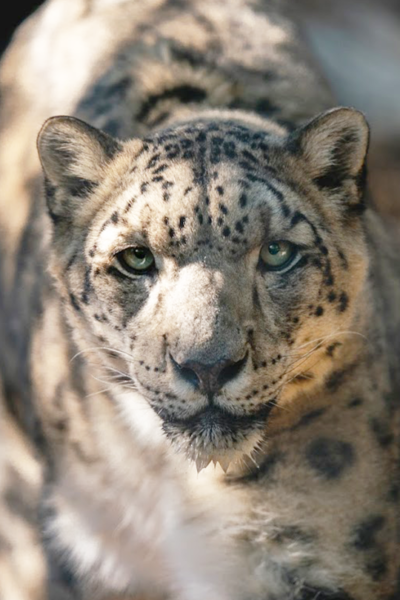
A snow leopard’s tail is an incredibly useful tool. About as long as their bodies, their tails act as a counterbalance, so they can make hairpin turns at lightning speed in the wild. When they’re pursuing prey in their native Himalayan Mountains, their tails act like an automatic rudder on a speed boat, instinctively correcting their course as they maneuver left, right, high and low with unbelievable speed and precision.
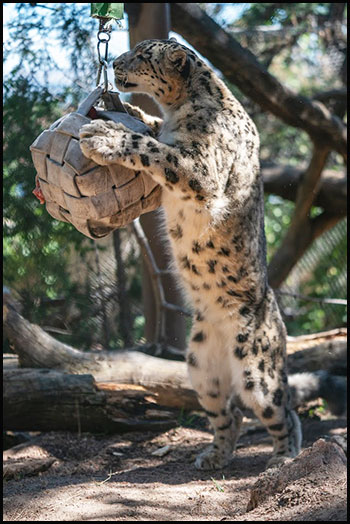
Snow leopard Bhutan with enrichment ball
In between hunting excursions, their tails are super-fluffy heat sources that they wrap around their bodies – notably their noses and paws – to help keep them warm in their harsh native high alpine habitats.

Although Bhutan [boo-TAWN], 15-year-old male snow leopard at Cheyenne Mountain Zoo, isn’t traversing snowy mountains in search of dwindling food sources, or battling blizzards for a good night’s rest, his tail is still vital to his well-being.

“Especially for an older cat, he’s an agile climber and leaper,” said Jessi DiCola, Asian Highlands keeper. “His tail weighs about 10 pounds, so it’s fluffy, but it’s also really muscular. I think his tail has a lot to do with how well he can balance and interact with enrichment.”

It might be hard to tell from the fierce-and-bouncy disposition of 75-pound Bhutan, known as “Boots” by his keepers, but he has reached a distinguished age for a big cat. The median life expectancy of snow leopards in human care, according to the Association of Zoos and Aquariums, is 15.

As if Bhutan’s tail wasn’t already impressive enough, it recently helped his care team discover an age-related issue: kidney disease. Unfortunately, it’s quite common in older big cats (and domestic cats, too).

Because Bhutan was previously trained to participate in annual voluntary blood draws from his tail, his keepers and CMZoo’s veterinary team are hopeful they caught his kidney disease early in its progression.

How do you draw blood from a fully awake snow leopard? By asking him to let you hold his tail, of course.

To safely access his tail and to ensure Bhutan knows he is in control of his choices, Bhutan’s care team asks him to come into a special mesh training tunnel for blood draw sessions. The tunnel remains open, so Bhutan can walk away if he decides he’s finished with that training session.

One keeper sits at the very end of the tunnel, where Bhutan knows to position his rear end near the mesh between him and his keeper. As he’s facing forwards, another keeper sits on the other side of the mesh to his left, so she can communicate to Bhutan and reward Bhutan as the training progresses. The two keepers focus intently on Bhutan’s behavior, which is how he communicates his level of comfort throughout training.

Once Bhutan’s giant fluffy tail is in the right spot in the tunnel, his keeper opens a sliding port at the bottom of the mesh that allows him to safely swing his tail out to his keeper’s hands. (You can see Abuto doing a similar training in this video: https://www.youtube.com/watch?v=ddEcGMCZFDA).

“Boots is a total pro at blood draws,” said DiCola. “We’re watching for subtle signs, like a lip curl or tail flick, that tell us he’s close to getting uncomfortable. If we see that, we’ll pause immediately – before he gets uncomfortable – and wait until he shows us he’s ready again, or we’ll stop and try again later. The more we practice, the more comfortable all of us are.”

Bhutan’s kidney levels are elevated, but they’re not extreme at this point. There’s no cure for this kidney disease, unfortunately, so Bhutan’s team must focus on stopping it from getting worse for as long as they can. What they’ve learned from caring for Lomela and Abuto, African lions, is that managing blood pressure is key to slowing the progression of kidney disease.

“We know kidney disease is common in aging cats, and we have successfully monitored and addressed the same issues in our aging African lions for many years now,” said Dr. Eric Klaphake, head veterinarian at CMZoo. “We have been able to give Abuto and Lomela a good quality of life for longer than we might have thought. We hope that what we’ve learned from caring for them will also benefit Bhutan.”

Kidneys are the body’s filtration system. Blood moves through kidneys to be cleaned, and if blood pressure is high, it damages the kidneys as it moves through. Imagine how a trickle of water feels against your skin versus water coming from a high-pressure hose.

Because Bhutan was already well-versed in blood draw training with his tail, blood pressure training – also using the vein in his tail – was a breeze for the spotted scholar. Keepers followed a lot of the same steps to get him in the right position in the training tunnel, with his tail at the port, but Bhutan had to get used to a new sensation: a tail squeeze.

To do that, keepers placed a piece of cloth on the ground and positions Bhutan’s tail on top of it. Once he shows them he’s comfortable, they wrap the piece of cloth around his tail and pause to monitor his level of comfort. If he’s ready to continue, they pull the material more tightly around his tail to resemble the sensation of the blood pressure cuff.

“He has only been working on the blood pressure cuff training for a couple of weeks and he’s already ready for the real thing,” said DiCola. “We’re excited to start getting the real readings, so we have an even better idea of his overall health and what we can do to support him in his golden years.”

For now, Bhutan isn’t on any medications. His care team will increase the frequency of his blood draws to track how his kidney levels might be changing. If his blood pressure is high, his team will address potential changes to his diet or medications to help address it.

CMZoo will provide updates on Bhutan on the Zoo’s social media channels. Next time you’re in Asian Highlands, stop by and wish “Boots” well!

Back to The Waterhole

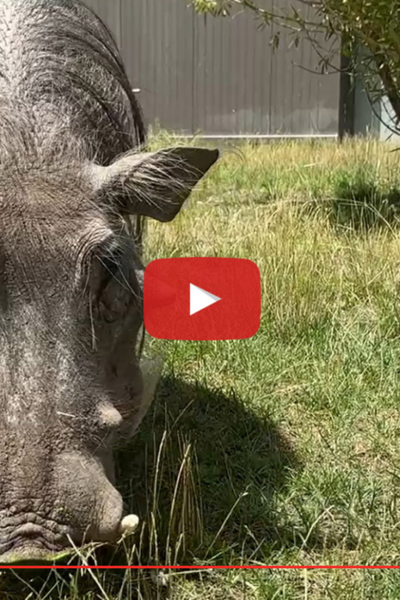
Alex, CMZoo’s 5-year-old common warthog, is one busy piggie. He’s great at training, enjoys wallowing in mud, melts into a nap when scratched, and sometimes goes on walkabouts with his keepers. Alex is even learning how to share space with hippos, Zambezi and Omo!

When Alex is outside, you can usually find him in the yard between Water’s Edge: Africa and Primate World. If you’re lucky, you might catch Alex on an afternoon walkabout in Hippo Plaza or hanging out with Zambezi and Omo in the main hippo yard, best seen from the rope bridge. These moments with Alex are not scheduled, so feel free to ask our staff about Alex during your Zoo visit.

Back to The Waterhole

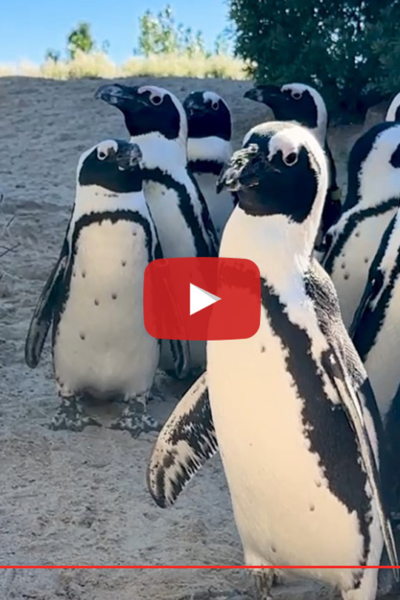
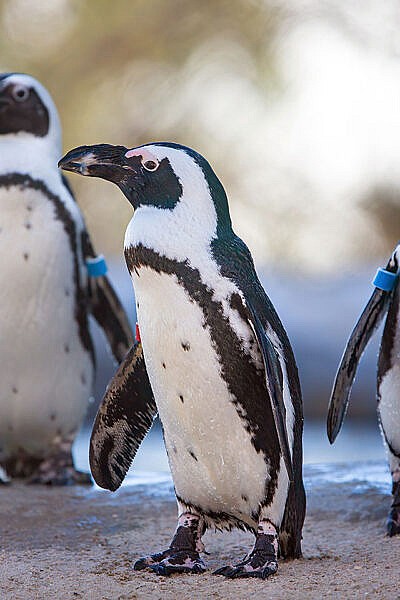
Celebrate our ‘flockstars’ on International African Penguin Awareness Day (IAPAD), on Sat., Oct. 14 from 9:30 a.m. to 3:30 p.m. at the Zoo!

Penguin enthusiasts will gather in Water’s Edge: Africa for crafts, games, and other activities available throughout the day – including keeper demonstrations during penguin feeding times, at 9:30 a.m. and 3:30 p.m. There’s no cost to attend IAPAD events, but advance daytime admission tickets are required and can be purchased at cmzoo.org.

Each visit to CMZoo is conservation in action. Wild African penguin populations face many threats and continue to struggle in the wild. But, penguin protection organizations are making great strides to save this endangered species, including our partnership with the Southern African Foundation for the Conservation of Coastal Birds (SANCCOB).

SANCCOB rescues and rehabilitates adult penguins, conducts important research and educates the public about African penguins and their ecosystem. Thanks to our members’ and guests’ support, CMZoo has been a longtime supporter of SANCCOB, having donated more than $130,000 to African penguin conservation since 2010.

In 2020, we also joined the African Penguins SAFE (Saving Animals From Extinction) conservation effort, which is part of the Association of Zoos and Aquariums (AZA). Under this additional conservation commitment, the Zoo sends $3,000 annually to SANCCOB in support of their Robben Island Ranger. This ranger closely monitors the Robben Island penguin colony in South Africa, helping researchers keep track of the penguin population. The ranger also plays an important role in the direct care of penguins, and other seabirds, by identifying population crises and transporting birds in need of medical attention to the SANCCOB rescue and rehab facility for treatment and eventual re-release.

Learn more about our history of African penguin conservation, thanks to guests’ and members’ support, here: https://www.cmzoo.org/conservation/african-penguin-conservation/.

Back to The Waterhole

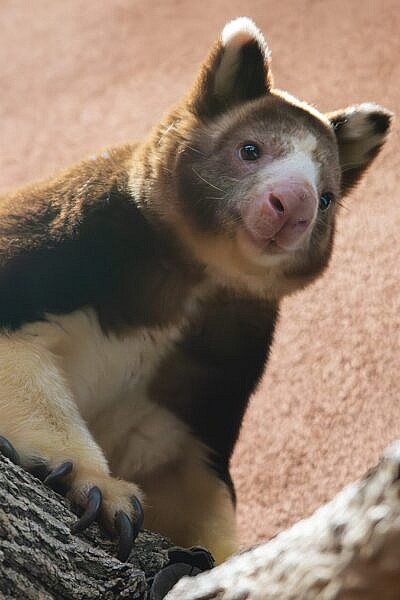
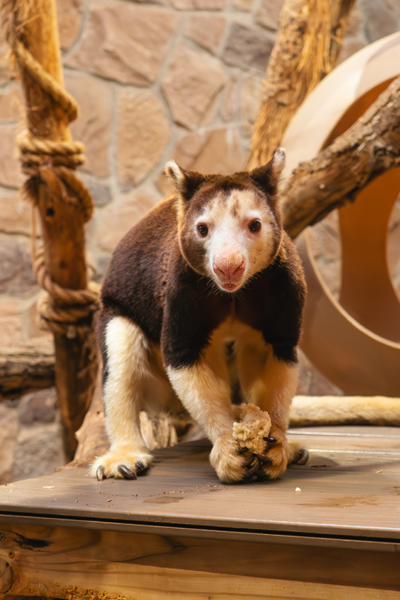
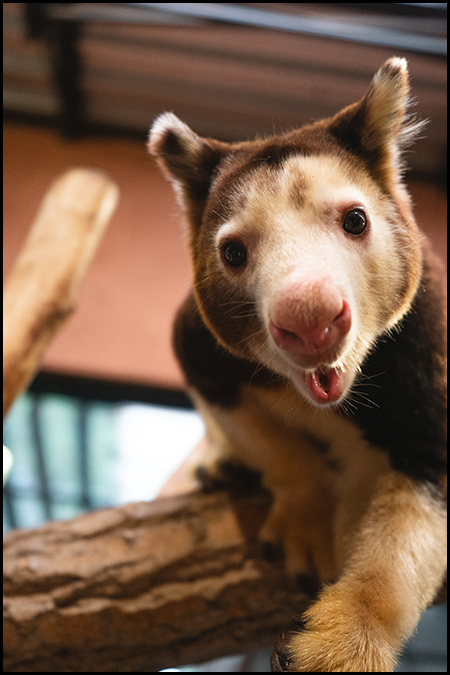
RARE, ENDANGERED AND ELUSIVE TREE KANGAROO SPECIES RETURNS TO CHEYENNE MOUNTIAN ZOO – Late Tuesday night, a fuzzy little face emerged from her comfy travel crate. It’s Som (which rhymes with “roam”), a 3-year-old female Matschie’s tree kangaroo, and brand-new member of the CMZoo family!

Only about 2,500 Matschie’s tree kangaroos remain in the wild in their only known habitat: The Huon Peninsula of northeastern Papua New Guinea. Threatened by logging and mining exploration, the marsupial arboreal species is considered endangered by the International Union for the Conservancy of Nature (IUCN).

Som comes to CMZoo from another organization accredited by the Association of Zoos and Aquariums, and CMZoo guests can see her right away in Australia Walkabout! While she settles in, keepers are getting to know her.

“We’re told she’s very curious and that she loves kale and steamed sweet potato, which we’ll happily provide,” said Amber Callen-Ward, lead animal keeper in Australia Walkabout at CMZoo. “We’re extra excited to welcome her because it’s the first time we’ve cared for a female tree ‘roo at CMZoo. So far, she seems really sweet.”

Last week, CMZoo’s former male tree kangaroo, Tristan, embarked on his exciting adventure to Denver Zoo, where he’ll have the opportunity to contribute to the future of his endangered species. Tristan has been recommended to breed with Denver Zoo’s Matschie’s tree kangaroo, Pearl, by the Matschie’s Tree Kangaroo Species Survival Plan (SSP). Read more about Tristan and Pearl here: https://www.cmzoo.org/news/archive/cheyenne-mountain-zoo-and-denver-zoo-play-matschies-makers-with-matschies-tree-kangaroos-tristan-and-pearl/.

The Matschie’s Tree Kangaroo SSP is led by members throughout the Association of Zoos and Aquariums network. SSPs track genetics of animals in human care and make recommendations for future breeding based on those genetics. The goal is to create the most genetically diverse population of animals in human care possible.

CMZoo supports the SSP by providing homes and care for tree kangaroos that don’t have current breeding recommendations, like Som. While Som receives quality care, she’s also contributing to the conservation of her species by inspiring and educating guests.

About Cheyenne Mountain Zoo

Cheyenne Mountain Zoological Society was founded in 1926. Today, Cheyenne Mountain Zoo, America’s mountain Zoo, offers comprehensive education programs, exciting conservation efforts and truly fantastic animal experiences. In 2023, Cheyenne Mountain Zoo was voted #4 Best Zoo in North America and CMZoo’s Rocky Mountain Wild was named #2 Best Zoo Exhibit in North America by USA TODAY 10Best Readers’ Choice Awards. It is Cheyenne Mountain Zoo’s goal to help guests fall in love with animals and nature, and take action to protect them. Since 2008, CMZoo’s Quarters for Conservation program has raised more than $4.5 million dedicated to frontline conservation efforts around the world. Of the 238 zoos and aquariums accredited by the Association of Zoos and Aquariums (AZA), Cheyenne Mountain Zoo is one of just a few operating without tax support. Cheyenne Mountain Zoo depends on admissions, membership dues, special event attendance and donations for funding.

MALE TREE ‘ROO, TRISTAN, IS MOVING NORTH TO HELP SAVE HIS RARE, ENDANGERED AND ELUSIVE SPECIES – On Wed., Sept. 20, Cheyenne Mountain Zoo’s 8-year-old male Matschie’s tree kangaroo, Tristan, hopped onto I-25 in Colorado Springs and headed north to Denver with one of his new keepers. Tristan’s mission? To help save his endangered species by wooing Pearl, a female Matschie’s tree kangaroo who moved to Denver Zoo earlier this summer. With his pointy ears, bulbous pink nose, muscular tail and super-soft chocolate-and-caramel-colored fur, how could she resist?

Safe in his crate and fully awake for the journey, Tristan embarked on an adventure that his keepers at Cheyenne Mountain Zoo (CMZoo) and Denver Zoo (DZ) hope will result in a perfect pouch bundle of joy for his future partner, Pearl.

CMZoo and DZ – and Tristan and Pearl – are working together to help protect the existence of the endangered arboreal marsupial species. Only about 2,500 Matschie’s tree kangaroos remain in the wild in their only known habitat: the Huon Peninsula of northeastern Papua New Guinea. Threatened by logging and mining exploration, the Matschie’s tree kangaroo is considered endangered by the International Union for the Conservancy of Nature (IUCN).

The neighboring Colorado zoos support the Matschie’s Tree Kangaroo Species Survival Plan (SSP), which is led by members throughout the Association of Zoos and Aquariums network. SSPs track genetics of animals in human care and make recommendations for future breeding based on those genetics. The goal is to create the most genetically diverse population of animals in human care possible. The rest is up to the keepers who work to welcome the animals to healthy and calm environments, then introduce potential partners.

“Tristan has been preparing for this moment for months,” said Amber Callen-Ward, lead keeper in Australia Walkabout at CMZoo. “We have been working with him on voluntarily entering his crate and staying calm and comfortable in his crate while we move him around. We want to make this move as low stress for Tristan and his keeper teams as possible. We have high hopes and total faith in our colleagues at Denver Zoo, and although there’s no guarantee Tristan and Pearl will have babies, we owe it to them and their wild counterparts to try.”

Tristan is making a permanent move to DZ on a breeding recommendation with Pearl, who moved to DZ earlier this summer. Tristan moved to CMZoo in 2017, where he’s been playing an important role of raising awareness and helping guests learn how to protect his wild counterparts.

Tristan will continue playing that important role as an ambassador at DZ’s Australia-themed experience, Down Under, slated to open in 2024. Anchored by an enchanting Wallaby Walkthrough, this immersive exhibit will feature some of Australia’s most unique and charismatic species, including Bennett’s wallaby, red kangaroo, tree kangaroo and cassowary. Water-wise landscaping will echo the animals’ home turf; and woven seamlessly throughout the entire experience will be authentic original multimedia artworks telling the story of First Nations peoples.

“This is the first time Denver Zoo has had tree kangaroos, so it’s very exciting for us to have Pearl and Tristan in our care,” said Marcia Salverson, Assistant Curator of Pavilions at Denver Zoo. “It will be wonderful for our members and guests to be able to see the two types of macropod species when Down Under opens next year—the ground-dwelling wallabies and arboreal tree kangaroos.”

For the first time, Tristan and Pearl will have the opportunity to contribute to the future of their species. They will be introduced for breeding when the time is right. Long term, the two ‘roos will live separately, and rotate between their indoor and outdoor habitats separately. Tree kangaroos are solitary in the wild, so this setup mimics that for them in human care.

While DZ supports the SSP’s recommendation to breed and raise young, CMZoo will continue to support the SSP as a ‘holding institution,’ which means they care for members of the species that don’t have a breeding recommendation at the time. Still, just as Tristan did for many years at CMZoo, future Matschie’s tree kangaroos that call Colorado Springs home will help inspire and educate visitors, who may otherwise have never known about this incredibly rare species. CMZoo plans to welcome a female tree ‘roo soon.

About Cheyenne Mountain Zoo

Cheyenne Mountain Zoological Society was founded in 1926. Today, Cheyenne Mountain Zoo, America’s mountain Zoo, offers comprehensive education programs, exciting conservation efforts and truly fantastic animal experiences. In 2023, Cheyenne Mountain Zoo was voted #4 Best Zoo in North America and CMZoo’s Rocky Mountain Wild was named #2 Best Zoo Exhibit in North America by USA TODAY 10Best Readers’ Choice Awards. It is Cheyenne Mountain Zoo’s goal to help guests fall in love with animals and nature, and take action to protect them. Since 2008, CMZoo’s Quarters for Conservation program has raised more than $4.5 million dedicated to frontline conservation efforts around the world. Of the 238 zoos and aquariums accredited by the Association of Zoos and Aquariums (AZA), Cheyenne Mountain Zoo is one of just a few operating without tax support. Cheyenne Mountain Zoo depends on admissions, membership dues, special event attendance and donations for funding.

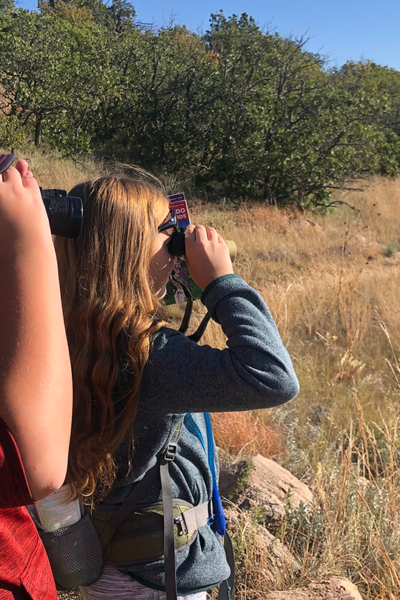
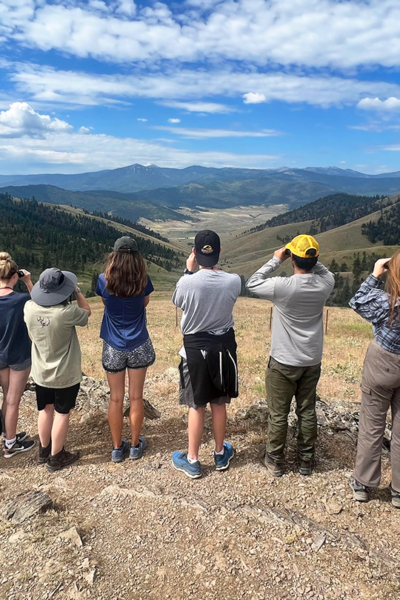
If Aaron Lippy and Kaitlyn Tullberg, two Teen Program participants at CMZoo, are any indication of the next generation of conservationists – rest assured, the planet is in good hands. The two enthusiastic high school students recently returned from a six-day off-the-grid CMZoo Teen Program adventure in Glacier National Park.

Tullberg and Lippy were in a group of 9 teens led by Austin Kennedy, CMZoo Teen Program supervisor, and other Zoo staff. Their wild adventure was full of brand-new experiences like camping, hiking, and making lasting connections with each other and the wildlife and wild places they explored.

CMZoo’s Teen Program focuses on spending time exploring nature, learning about animals, and understanding other cultures. The program is known for its hands-on educational experiences at the Zoo and in nature, with exploration trips available for Teen Program participants year-round. These summer trips take place annually, and they connect teens to local, national, and international wildlife and wild places. Each destination, adventure, and educational opportunity is intentional, and supports the program’s overall goal to inspire future leaders in conservation and animal care.

“We want to get them immersed into a really wild and protected area to see what can happen when people come together to protect the wild world, and national parks are a great example of that,” said Kennedy. “Giving teenagers, especially, these opportunities to get off their phones and into the natural world is important, and it’s really rewarding to watch their inspiration and excitement grow over the week we spend together.”

The group had an action-packed itinerary. They hiked daily and explored special places, like the National Bison Range, where they saw a black bear, a bald eagle, a lot of bison and the iconic Flathead Lake.

“We learned so much on this trip; it’s kind of insane, actually,” said Tullberg. “We learned about the seven signs of leave no trace, like taking only pictures and leaving only footprints. We learned about endangered species and how we can help protect them by taking action to keep the land wild. I think the overarching theme is being stewards of our environment in all of the ways possible – whether we do that by staying on trails and picking up trash or educating and inspiring others, just like this trip educated and inspired us.”

Some of the teens’ favorite memories were picking wild huckleberries, taking a night swim in the lake, and interacting with the ecosystem through workshops that took place in exciting locations – like in the middle of a stream. But, just sitting around the campfire and bonding over shared experiences was a big part of the adventure, too.

“At this stage in my life and with the careers that I want to have, it’s necessary for me to get out of my shell and camp in the woods, basically,” said Lippy. “I thought this trip would be the perfect opportunity and it really was. We connected with the land and with each other, and it helped me feel more confident relating to other people.”

At the end of each day, the group had their meal together and talked about what they’d learned, or how they interpreted the day and the impact it made. They also bonded as teenagers who are growing up in a world with a lot of distractions.

“To just sit around a fire and just ‘be in the world’ brings out the best parts of people, and these kids don’t get a lot of those opportunities,” said Kennedy. “Who you truly are starts to come out when you’re in the wilderness. I was so proud of this group’s focus on taking intentional time to be still and to figure out who you are at the core without distractions and devices. They’ll always have these special experiences with one another.”

They also studied survival skills, wildlife ecology and more at the Glacier Institute outside of Columbia Falls, Montana. The Glacier Institute is an outdoor education organization that focuses on getting people outdoors and connecting them to the wild world of Glacier National Park. The Glacier Institute is the official education partner for Glacier National Park and Flathead National Forest.

If you know a teen who could be interested in connecting with like-minded teens through programs at the Zoo and in the field, check out requirements and opportunities at cmzoo.org/teenprograms.

Back to The Waterhole

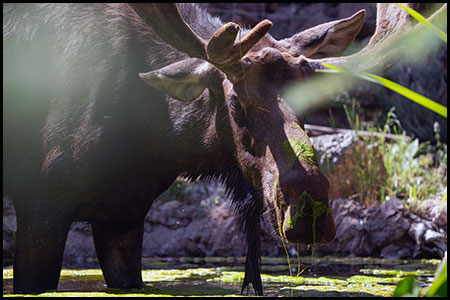
3-year-old Alaska moose, Atka, has been busy growing an impressive set of antlers, exploring his yard and mastering navigation since he recovered from toe surgery earlier this year. Check in with the ‘prince of Rocky Mountain Wild’ and stop by to see his ever-changing antlers next time you’re at the Zoo.

Back to The Waterhole

– IN PARTNERSHIP WITH CHILDREN’S HOSPITAL COLORADO –
Step up to the hoof block with Wednesday, our 10-month-old reticulated giraffe. As students around Colorado head back to school from summer break, our partners at Children’s Hospital Colorado have provided some excellent tips for helping kids settle into the routine.

At CMZoo, keeper teams help animals succeed as students, too! 10 months old may seem young to start studying, but Wednesday’s team wasted no time helping her learn foundational husbandry behaviors that will allow her to voluntarily participate in her own healthcare for the rest of her life.

Way to go, Wednesday!

Back to The Waterhole


Mahali, a 20-year-old male giraffe at CMZoo, is showing signs of reduced mobility and range of motion. While his care team supports him with pain medications and a sand-mix stall to rest comfortably on each night, veterinary and animal care teams have made the decision to move into a mindset of providing hospice care for him. This is a difficult decision for his team.

“He’s still having more good days than bad days, and although we know how quickly that could change, we’re focused on giving him every possible bonus day he can comfortably have,” said Jason Bredahl, animal care manager in African Rift Valley at CMZoo. “That also means we have decided not to provide extreme medical intervention going forward.”

Mahali has benefitted from his medical team going to great lengths for him in the past. For many years, he voluntarily participated in training for hoof care, blood draws and even applying orthopedic shoes to his hooves. In 2017 and 2020, Mahali went under anesthesia to receive simultaneous multiple treatments for his reoccurring foot and leg issues. Those risky, meticulously planned procedures successfully helped him heal and return to a good quality of life.

“Without his most recent treatment, in 2020, we might not have had these last three years with him,” said Bredahl. ” Mahali is doing well, considering his individual challenges, but we know he won’t be here forever and his time may come sooner than later. Right now, we’re committed to making him comfortable, and providing opportunities to be as active as possible and social with his herd.”

Mahali takes oral anti-inflammation and pain medications – in yummy rye cracker-and-honey ‘sandwiches.’ His team tracks quality-of-life data markers that they discuss regularly to ensure Mahali is still able to do things that fulfill him as a giraffe and as an individual. The team tracks Mahali’s specific activities daily and overnight, so they can adjust medications or activity levels for him as needed.

“We want to see Mahali finding areas to stand and rest more comfortably, interacting with the herd, walking, eating, sleeping, lying down and getting up safely,” said Bredahl. “On days we see he’s a little stiffer, we might encourage him to stay in the barn on a nice soft sand-mix stall, and he may agree that it’s a rest day or he may decide to go outside. He still participates and moves to spaces when we ask him, but he’s still making choices in his care.”

Mahali’s care team says he’s still making them laugh with his antics, too. He may have slowed down as he has aged, but they still see a twinkle in his eye and respect his position in the herd.

“When he was younger, he was a very physical giraffe,” said Brehahl. “He was tactile in those days, and he would push other giraffe out of the way to position himself front-and-center with his care team. He’d pull on our shirts with his lips to get our attention, and to interact with us and get snacks. These days, he seems more content in his own space.”

Mahali’s keepers say he has become more discerning in his golden years, and he only accepts certain food items as training rewards. If they offer lettuce as an incentive, he spits it out with a seemingly intentional aim for the keeper who offered it to him. Then he huffs at them until they reset for a behavior that will earn him his favorite: rye crackers. They have to save the crackers for the big training asks, like curling his hoof on the hoof block so they can visually check his feet, but Mahali doesn’t miss an opportunity to remind them he’d rather not waste his time on lettuce.

“You’ve got to admire the guy – he knows his worth,” said Bredahl. “He’s a big giraffe and a big presence in the herd, and we’re grateful for every day we will have with him.”

Mahali is one of five giraffe in CMZoo’s herd over the age of 20 – four years and more over the median life expectancy. Nearly one-third of the herd is considered aging. Females Muziki (25), Amani (24), Twiga (23) and Lakeisha (23) are the eldest members of the herd, and all receive various levels of care for age-related issues, depending on their individual needs.

The median life expectancy for a giraffe, according to the Association of Zoos and Aquariums, is 16 years. Until recent data, which combines the median life expectancy for males and females, the AZA median life expectancy for a male giraffe was 14.7 years.

Back to The Waterhole

Cheyenne Mountain Zoo (CMZoo) and Toronto Zoo are still emotionally processing the tragic loss of 2-year-old female Amur tiger, Mila. Mila [mee-lah] passed away on Fri., Aug. 25, at Cheyenne Mountain Zoo.

Mila moved to CMZoo in March 2023, after showing signs she was ready for her own space, away from her mother at Toronto Zoo. She came to CMZoo on a future breeding recommendation. Because Amur tigers are solitary animals, she never met CMZoo’s male tiger, Chewy.

“She was making such great progress with us,” said Rebecca Zwicker, animal care manager in Asian Highlands at CMZoo. “She was a feisty and intelligent tiger, and the team had been patiently and consistently training with her to help her settle in and feel comfortable in indoor and outdoor spaces behind the scenes. She was getting so close to being out where guests could see her. We were excited to introduce her to our community and for people to fall in love with her here, just as they had in Toronto.”

One thing delaying Mila’s introduction to the CMZoo community was the need to address a recently discovered and severe dental issue. This was not just a cavity; and it could not be left untreated, as it was advancing to her sinuses. Left untreated, infections like this can be fatal for animals.

The team had been working with Mila on several important husbandry behaviors that would allow her to live a life with lots of choice, autonomy and care at the Zoo. She was focused on shifting to different areas comfortably and returning to keepers when called. Once they realized she needed surgery to treat her dental issue, they prioritized re-establishing voluntary injection training that the Toronto Zoo Wildlife Care staff had previously established.

Thanks to this training, on Friday, she voluntarily received the injection of initial anesthesia, then she jumped up on a bench where she began to lay down and peacefully let the anesthetic drugs take effect. Less than a minute after lying down, she slipped off of the waist-high bench, causing a fatal spinal injury. Given the short timeframe from her lying down to her slipping off, it was impossible from a human safety standpoint to stop her tragic fall.

“She could have slid off from that height a hundred times and landed in a variety of other positions and been unaffected,” said Dr. Eric Klaphake, CMZoo head veterinarian. “The team quickly entered her den when it was safe and diligently tried for 40 minutes to give her life-saving care.”

“These are impossible life-and-death decisions being made in real time by a team that has dedicated their life to the care of animals. Do you anesthetize her despite the risks and give her the dental care she needs? Once you see her slipping, you wonder if you can safely get in there to stop a 270-pound tiger from falling completely. How fast can you safely go in and provide rescue attempts?,” said Bob Chastain, CMZoo president and CEO. “You can plan and plan and things still go wrong. Our team delivered exactly the right amount of drugs to a very calm tiger who had trained for this moment. We have successfully anesthetized countless tigers in this same den, and have never experienced an accident like this. We never take decisions to anesthetize an animal for a procedure lightly, and this is a tragic example of why.”

While CMZoo and Toronto Zoo teams work through the loss, CMZoo is focused on preventing this freak accident from happening in the future. Mila is the second female Amur tiger to pass away at CMZoo in recent years. In 2021, Savelii passed away due to complications during recovery from this important artificial insemination procedure. Their deaths are unrelated, but the fragile state of their species is glaring. It was after this death that CMZoo made a long-term financial decision to support tigers in their natural habitat as well as in the Zoo.

“It is sobering to know that no matter how tragic these events are, that we are losing tigers in the wild every day as these animals, and many like them, struggle to survive in a world where there are so many people and so few wild places,” said Chastain. “And that despite the best professional care that we give these animals, accidents can happen and will happen as long as there is a critical need for conservationists to help highly endangered species survive in human care and in the wild.”

“Watching Mila transform from a playful and curious young cub to an independent and often feisty young adult was an incredible experience for me, the Zoo team and the Toronto community,” says Dolf DeJong, CEO, Toronto Zoo. “She will be deeply missed by all, and while we feel certain the connections she made with guests will stay with them for a lifetime and were an inspiration to get involved in the fight to save this endangered species in the wild, we are deeply saddened by her loss”.

Amur tigers are critically endangered in the wild with only around 500 individual tigers roaming their native habitats. The numbers in human care, at zoos and aquariums accredited by the Association of Zoos and Aquariums (AZA) in the U.S. and Canada, hover near just 100 individuals.

“We feel a huge responsibility for all of the animals in our care, and we especially feel for Mila, her current and past caretakers and the people in Toronto who loved her from her birth as the only survivor in her litter,” said Chastain. “Not only was she an internationally beloved individual who defied the odds as a cub and survived to adulthood, but she was here on a mission to save her own species.”