Our not-so-tiny penguin chick has a name! Meet Sparrow. Keepers chose the name to go along with Captain and Pearl’s names. Captain, Pearl and Sparrow are all names related to the Pirates of the Caribbean films, where the swashbuckling Captain Jack Sparrow commands the pirate ship, the Black Pearl. Since hatching on April 8, 2025, Sparrow has been growing fast — exploring the surroundings, developing juvenile plumage and learning to preen feathers.

Sparrow recently hit a big milestone: swimming! The chick is quickly growing in juvenile plumage, which is the first set of waterproof feathers that replaces the soft down chicks have before they fledge.

From belly-flop dives into the water and carrying items to the nest, to eating regurgitated fish from Captain and Pearl and napping on a tiny rock nearby the nest, Sparrow is stealing hearts in Water’s Edge: Africa.

Back to The Waterhole

Help us wish Ouray a happy 32nd birthday! The Fourth of July isn’t just America’s birthday—it’s also Ouray the bald eagle’s designated hatchday!

Ouray is a bald eagle, but she’s also a ‘golden eagle’ because she’s well into her golden years. The median life expectancy of a bald eagle in human care is 16 years, according to the Association of Zoos and Aquariums! We don’t know Ouray’s exact age or hatchday because she came to us after being injured in the wild. Bald eagles are federally protected and illegal to own for falconry purposes in the United States. However, some organizations, like CMZoo, have special permits to care for bald eagles that cannot be released back into the wild, like Ouray. Ouray came to CMZoo in March 2006, from our friends at Denver Zoo Conservation Alliance, who took her in after a wing injury left her unable to fly in 2002.

For 18 years, her signature calls have been like a soundtrack for CMZoo guests and staff. You can visit Ouray in Rocky Mountain Wild. Stay a while to see if she’ll grace you with a call during your next trip to CMZoo!

Back to The Waterhole

CMZOO’s MOST POPULAR 21 AND UP EVENT IS THURSDAY, JUNE 26 – Where else can you listen to live music, feed a giraffe, and enjoy an adult beverage on a mountainside? (Nowhere!)

Make plans for an unforgettable evening on Thurs., June 26, from 6 to 9:30 p.m. at Cheyenne Mountain Zoo. Moonlight on the Mountain is the Zoo’s most popular after-hours event exclusively for adults 21-and-up. VIP tickets are sold out and general admission is going fast!

Attendees can enjoy the talents of 10 local musicians, and generously donated food and drink samples from around 40 breweries, restaurants and more from the Front Range region. A full list of vendors and musicians is below.

Moonlight on the Mountain general admission tickets are $79.75 per person. Tickets increase to $89.75 on June 26. Advance tickets are required and available at cmzoo.org/moonlight. This event is likely to sell out.

General admission tickets include:
– Complimentary souvenir sampling cup and spork, which help us make this a waste-wise event.
– All-inclusive beverage sampling from regional breweries, wineries, distilleries, and non-alcoholic beverage purveyors, while supplies last.
– All-inclusive food sampling from regional restaurants, while supplies last.
– Live musical entertainment throughout the Zoo.
– Evening animal viewing, including giraffe feeding for $3 per lettuce bundle! Most animal areas will be open from 6 to 9 p.m. Primate World will be closed. The penguin building and grizzly bear viewing area will close at dusk.
– Access to scheduled animal demonstrations and keeper talks:
  • 6:30 p.m. Hippo Demo – Water’s Edge: Africa, Hippo Plaza
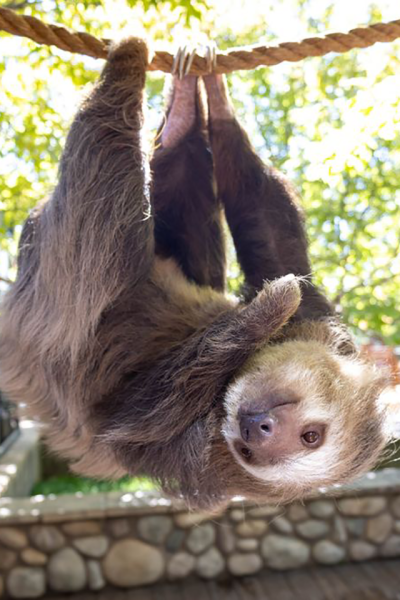
  • 7 p.m. Sloth Family Demo – Scutes Family Gallery
  • 8 p.m. Elephant Keeper Chat – Encounter Africa, Elephant Barn

Moonlight on the Mountain is made possible thanks to your Colorado Springs Toyota dealers and Blue Federal Credit Union!

BEVERAGES
Sample beer, wine, liquor and coffee from these regional companies!
– 3 Hundred Days Distilling
– Atomic Cowboy
– Blackhat Distillery
– Bristol Brewing
– BrewCHA
– Cheers Liquor Mart
– Dos Dos
– Drip Queen Coffee
– Kangaroo Coffee
– Lebowski’s Taproom
– Locoworks LLC
– Lost Friend Brewing
– Manitou Brewing Company
– Manitou Winery
– Occult Herbs & Tonics
– Phantom Canyon Brewery
– Raising Cane’s Chicken Fingers
– Red Leg Brewing Company
– Rock Bottom Brewing
– Rock N Roll Sushi
– The Paleta Bar
– VAQIT
– Voodoo Brewing Company
(Cash bar and complimentary fountain soda at Rocky Mountain Wild Barbeque Co.)

FOOD
Savor food from some of your local favorites!
– Colonel Mustard’s Sandwich Emporium
– Dickey’s BBQ Pit
– Dos Dos
– Edelweiss German Restaurant
– Heng Heng ThaiCo
– Hyatt Place at Garden of the Gods
– Light of Mine Bakery
– My Neighbor Felix
– Nothing Bundt Cake
– Occult Herbs & Tonics
– Phantom Canyon Brewery
– Rock N Roll Sushi
– Texas Roadhouse
– The Paleta Bar
– ViewHouse
– Voodoo Brewing Company
– The Homestead Collective

MUSIC
– All Through the Night
– Alyssa Mongiovi
– Cool Katz
– George Whitesell
– John Spengler & Frenemies
– Joshua Janitell
– Peter Wooten Band
– Rafiel & the Roomshakers
– Restless Hearts
– Ryan Flores

About Cheyenne Mountain Zoo

Cheyenne Mountain Zoological Society was founded in 1926. Today, Cheyenne Mountain Zoo, America’s mountain Zoo, offers comprehensive education programs, exciting conservation efforts and truly fantastic animal experiences. In 2025, Cheyenne Mountain Zoo was voted #2 Best Zoo in North America and CMZoo’s Rocky Mountain Wild was named #2 Best Zoo Exhibit in North America by USA TODAY’s 10Best Readers’ Choice Awards. It is Cheyenne Mountain Zoo’s goal to help guests fall in love with animals and nature, and take action to protect them. Since 2008, CMZoo’s Quarters for Conservation program has raised nearly $6 million dedicated to frontline conservation efforts around the world. Of the 237 zoos and aquariums accredited by the Association of Zoos and Aquariums (AZA), Cheyenne Mountain Zoo is one of just a few operating without tax support. Cheyenne Mountain Zoo depends on admissions, membership dues, special event attendance and donations for funding.

In May, Cheyenne Mountain Zoo’s 12-year-old okapi, Bahati [buh-HAH-tee], got a new home – and a new roommate – in CMZoo’s tapir yard.

Bahati, okapi portrait

Seeing Bahati in a new and prominent location in the Zoo, visitors have better-than-ever visibility of the rare and mystical creature, who often prompts the question – “Did they breed a zebra and a horse?”

With his black-and-white striped legs and velvety dark brown coat, it’s easy to see why people might ask that. But, Bahati is an okapi, a species all its own, known to be native to only one place in the world: rainforests in the Democratic Republic of the Congo, in Africa.

“I wonder if our guests know how rare it is to see an okapi,” Rick Hester, CMZoo’s director of animal care and wellbeing, says. “I have met wild okapi researchers and conservationists who have dedicated their lives to this animal, and have never seen one in person. We’re lucky Bahati lives here.”

Because he was born and raised in human care, Bahati’s behaviors are quite different from his wild counterparts. He’s eager to approach his keepers and guests, and he’s always been inquisitive about his former neighbors, the giraffe herd and vultures.

Bahati has a reputation for being curious about giraffe calves, and he would often stretch his neck over his rock barrier to sniff a new calf, so he has a history of being calm and confident around other animals.

“We can’t say ‘all’ okapis would do well sharing space with another animal, but we think Bahati, as an individual, will do well with Mochi, our mild-mannered mountain tapir,” Rick says
.
For his first day in the tapir yard, Bahati got the entire space. His care team wanted him to explore, make his mark and have maximum space to settle in. He did incredibly well, and his team set him up for success by planting a new willow tree and hanging lots of tree branches throughout the yard, which kept him engaged throughout the day.

By the end of the day, Bahati had explored nearly everything to his heart’s content. But, one new sound and smell particularly caught his curiosity. Bahati wanted to see Mochi.

Mochi, Mountain tapir portrait

Mochi, CMZoo’s mountain tapir, is one of only three mountain tapirs in the U.S. The other two live at LA Zoo, where Mochi lived before moving back to CMZoo in 2023. They’re native to mountainous regions in Ecuador, Peru and Columbia. Mochi also prompts a question from unfamiliar onlookers. “Is that a cross between a bear and an anteater?”

Mountain tapirs have wooly black coats, hooved toes, the body shape of a large boar and long and extremely dexterous snouts. Mochi, who was also raised in human care, is extremely outgoing. He is one of the few animals of his size (around 370 pounds) at the Zoo that are safe to share space with. When staff share space with Mochi, he usually approaches them for scratches, which they happily deliver. Scratch Mochi just right and he gets so relaxed that he usually topples over onto his side, providing the best belly-rub angles.

Okapis and mountain tapirs are not typically found in groups in the wild, and these two individuals have had their own spaces for many years. There are separate doors leading to separate dens behind the tapir yard. On Bahati’s first day in the tapir yard, Mochi was in his den and Bahati had access to the full yard and his den – separated by a den between the two boys.

At the end of the first day, Bahati’s care team says Bahati stood in the den with his ears straight forward, making little ‘chuffs’ towards Mochi. His care team hadn’t heard Bahati vocalize before, and based on the rest of his behavior, he seemed comfortable and eager to see what he was hearing and smelling. Mochi was making vocalizations, which sounded like little chirps, in Bahati’s direction, and standing at the end of his den closest to Bahati, too.

“Seeing how comfortable and curious they were with each other’s presence, we decided to accelerate their timeline, and let Mochi into the den next to Bahati,” Rick says. “Mochi reached his long snout farther than I’ve ever seen, and the two touched noses through the metal fence in between them. They seemed calm, and overall curious.”

Their nose-touch greetings continued through the night, and the two slept as next-door neighbors – all signs of comfortable behavior. The next day, the team constructed a temporary fence to split the yard, so both animals could go outside and inside as they chose. Mochi, who is about four feet shorter than Bahati, has been seen climbing up onto a rock near the fence to get closer to Bahati’s eye level. The two continue to smell each other and touch noses through the fence.

Mochi, mountain tapir and Bahati, okapi - introduction

Mochi, ever cool as a cucumber, settled back into his routine rather quickly, checking in with Bahati periodically. Bahati can’t get enough of Mochi, and follows his every move. If Mochi wants to go outside, Bahati goes outside. When Mochi goes into the den, Bahati usually follows into his side of the den.

Mochi might have a good memory, and he may remember having okapis as neighbors when he lived at CMZoo previously, from 2000 to 2014. Or, he may be ultimately confident and curious in his golden years. Mochi is 26 years old, which is considered quite old for a mountain tapir. Cofan and Carlotta, CMZoo’s two previous mountain tapirs, lived to be 19 and 26, respectively.

Bahati’s care team and Zoo leadership considered every option for Bahati’s best welfare – including finding him a home at another accredited organization. Ultimately, they decided the tapir yard at CMZoo – with plenty of shade and vegetation for the rainforest-native species – was Bahati’s best option.

“We are getting better and better at using both the natural history of the species and the behavior of the individual in front of us to inform our care,” Rick says. “Our goal is to provide animals with environments that are rich with the things that matter most to them.”

Bahati’s and Mochi’s care team will continue to monitor their behaviors closely, and make adjustments to their environment based on their needs. There’s no rush, and the future goal is to introduce the two animals without a barrier between them, so they both have full access to the yard.

Back to The Waterhole

Cheyenne Mountain Zoo and its members and guests are celebrating a huge milestone: $1 million raised for orangutan conservation. Over the years, funds allocated from Zoo membership revenue and daytime admissions have supported a variety of efforts that benefit critically endangered wild orangutans in Southeast Asia.

Male orangutan Baka portrait

Wild orangutans’ biggest threat is habitat destruction. Efforts funded by CMZoo’s supporters focus on preventing deforestation through global consumer empowerment, connecting and restoring wild orangutan habitats, and rescuing and rehabilitating displaced wild orangutans.

In 2021, CMZoo members voted in the annual Members-Only Conservation Vote to send $20,000 to support Hutan’s work to restore a wildlife corridor. In support of two established organizations working to save species in Southeast Asia, the funds helped the Hutan organization provide tools and funds to local women reforesting the Genting Wildlife Corridor, in Borneo. It also helped the Borneo Orangutan Survival Foundation (BOSF) repair orangutan rehabilitation islands damaged by a devastating flood.

The Hutan corridor is an important animal ‘wildway’ that will connect rainforest with a wildlife sanctuary potentially used by hundreds of species in the area, like orangutans and Asian forest elephants. The BOSF grant provides emergency funds to reopen islands used for orangutan housing and forest school prior to release.

In addition to funds raised through a portion of every Zoo membership, every visitor to the Zoo is making a direct contribution to conservation, through CMZoo’s Quarters for Conservation program (Q4C). Each Zoo guest receives three ‘quarter’ tokens representing the 75-cent Q4C allocation from their admission fee. They can then show support for the legacy projects they love by placing their tokens in the corresponding slots in the Q4C kiosks in the Zoo’s admissions area. Orangutans are one of CMZoo’s legacy beneficiary species, receiving support since Q4C was established in 2008.

Sustainable Palm Oil signs in Primate World at Cheyenne Mountain Zoo

CMZoo has been a leader in sustainable palm oil advocacy for more than 15 years, encouraging numerous zoos and companies to join the Roundtable on Sustainable Palm Oil (RSPO) with increasing success. In 2014, CMZoo created a free mobile app to educate consumers in the U.S. and Canada. By 2022, more than 160,000 verified users were making better shopping choices with CMZoo’s palm oil shopping app. In 2023, that app design, database and user experience served as the foundation to launch a free global app, called PalmOil Scan, under the direction of the World Association of Zoos and Aquariums (WAZA), and in partnership with several zoos around the world.

Now, PalmOil Scan is available in the U.S., Canada, Australia, New Zealand, The United Kingdom and Singapore. The app has the potential to reach millions more people around the world.

Companies that continue to use unsustainable palm oil in their products need to see that consumers have the tools and knowledge to find out whether they value the habitats that so many endangered species depend on. Sustainable palm oil production is possible, and CMZoo’s work on sustainable palm oil advocacy, including the support on PalmOil Scan, gives consumers the power to hold companies to a higher standard.

Download PalmOil Scan for free in the Apple Store or on Google Play. To learn more about orangutan conservation and palm oil, visit cmzoo.org/palmoil.

Back to The Waterhole

We have exciting baby news!

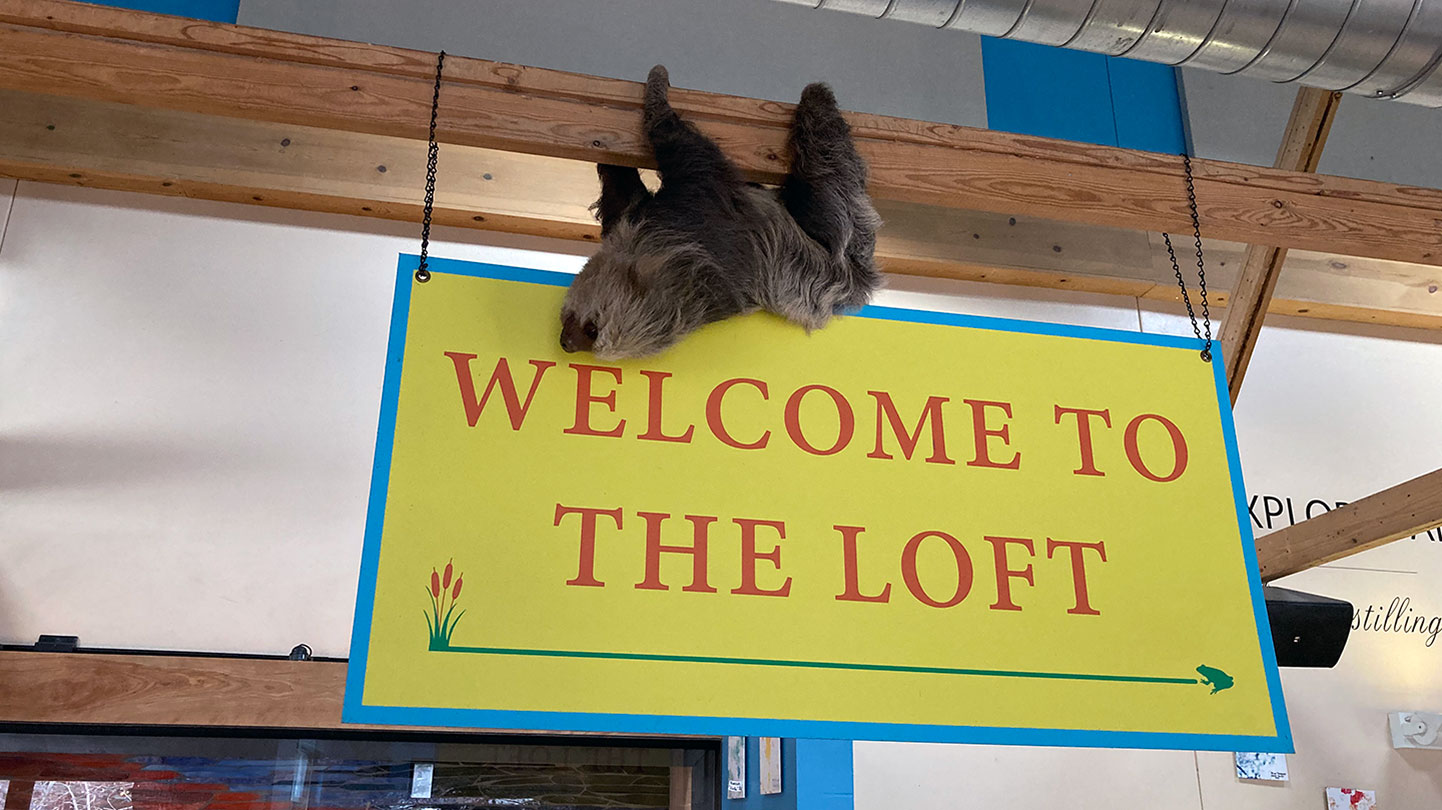
Two of our skunks recently had kits! Isabel and Padfoot are each raising a litter of seven baby skunks. That’s fourteen tiny bundles of cuteness keeping their paws full. The two litters arrived exactly two weeks apart. The babies are often busy nursing, sleeping and curiously nuzzling one another. Isabel, Padfoot, and all the little ones appear to be doing well. It won’t be long before these kits are full of energy and exploring their home in The Loft. Until then, the best time to see them is during our skunk training demonstrations in The Loft. The demonstrations take place on Monday, Wednesday, Thursday, Saturday and Sunday at 2:30 p.m.

These skunks will head to other AZA zoos when they’re mature and independent in the coming months. At their new homes, they’ll represent their wild counterparts and help even more people learn to love and appreciate skunks.

Back to The Waterhole

Our penguin chick isn’t so tiny anymore! Hatched on April 8, this little one is already nearing the two-month mark, and growing fast! It still lives in the nest box with Captain and Pearl, and it already weighs about 5 pounds, nearly the size of an adult African penguin. Keepers check on the chick daily and do regular weigh-ins to track its progress. The chick is very alert and loves to chirp loudly to make sure Captain, Pearl and everyone else in the penguin building knows when it’s time for a snack. Stay tuned for more penguin chick updates on social media!

Back to The Waterhole

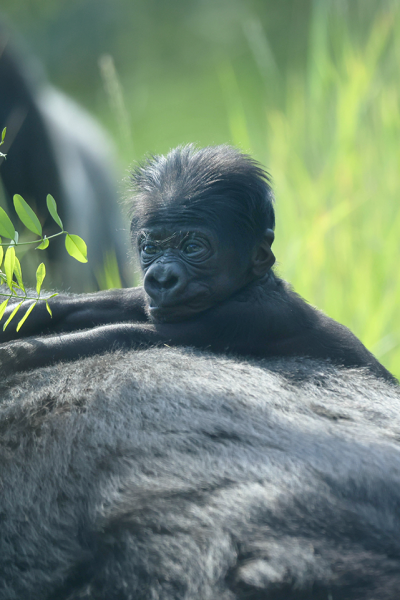
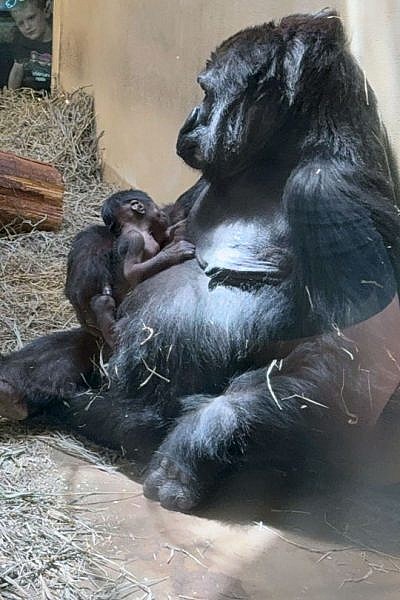
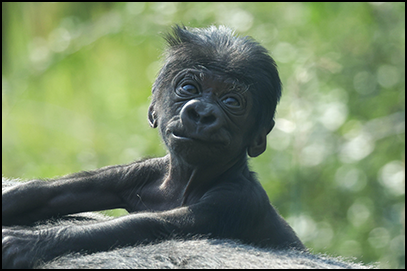
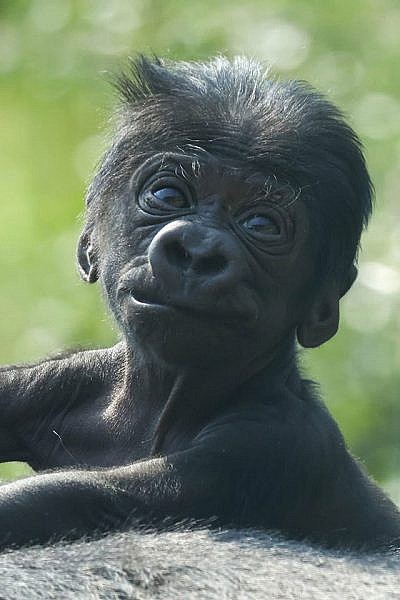
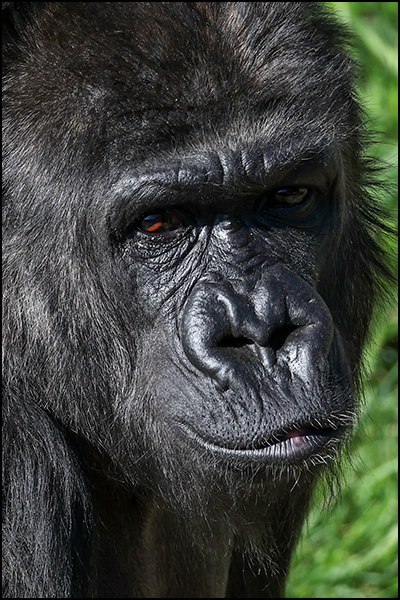
Mother’s Day is extra special in Primate World, at Cheyenne Mountain Zoo, this year. Asha, a 32-year-old critically endangered Western lowland gorilla, is pregnant. She is due between mid-May and the end of July.

Western Lowland gorilla Asha,

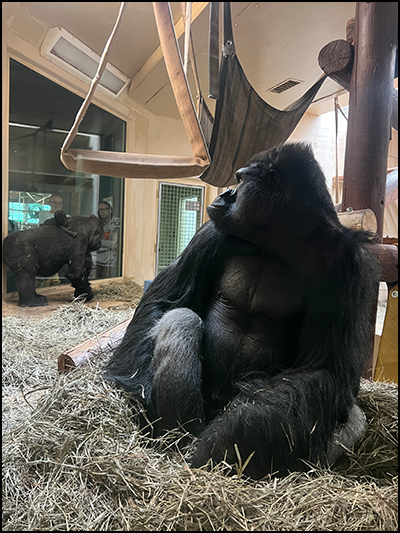
“It has been nearly 13 years since a gorilla was born here, so many visitors will get to experience this for the first time, along with our silverback, Goma, who will become a first-time dad with this little one,” Jon Wild, lead animal keeper in Primate World, says. “It’s not Asha’s first time, and she has been a great mom in the past.”

Asha is mom to two gorillas who have moved on to other troops now: 12-year-old male, Dembe, who lives at North Carolina Zoo, and 18-year-old female, Tumani, who lives at Audubon Zoo, in New Orleans.

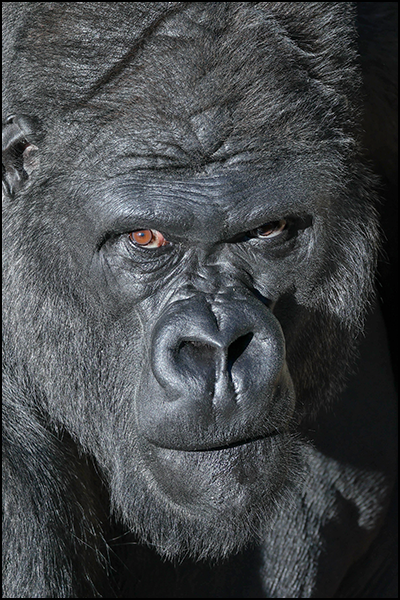
Asha was born at CMZoo on Oct. 5, 1992. Thirty-four-year-old Goma moved to CMZoo, in 2016, on a breeding recommendation from the Western Lowland Gorilla Species Survival Plan, supported by Association of Zoos and Aquariums-accredited organizations, including CMZoo.

Before he came to CMZoo, Goma lived with a bachelor troop, so he had to learn how to lead a troop of females. As an experienced mom, Asha helped Goma learn how to breed.

“Since Goma moved here, nine years ago, the gorilla care team has been working to integrate him into the troop, and the troop has been helping him learn to lead as a silverback, with this pregnancy as a goal,” Wild says. “It’s incredibly exciting to see the gorillas achieve a healthy cohesive troop dynamic, and knowing there’s a baby on the way makes it even more meaningful to see this family grow.”

Asha’s previous experiences have helped Goma learn, and they have helped her care team provide prenatal check-ups throughout her pregnancy. Asha participates in cooperative care, like ultrasounds that have revealed a healthily growing baby. The Zoo first confirmed her pregnancy in December 2024 with a positive urine pregnancy test.

“Asha is super smart, and she approaches a training panel and presents her stomach so we can touch it with the ultrasound wand,” Wild says. “She’ll stand and get training rewards for participating, and her methods of presenting her stomach to us are adorable.”

Western Lowland gorilla Asha

During ultrasounds, Asha stands next to the mesh training panel and leans her stomach sideways against the mesh, with her arms outstretched above her. Keepers, from the other side of the protective barrier, slip an ultrasound wand through the mesh and press it against her abdomen. Animal keepers say the ultrasound gel is often off-putting for animals – even if they warm it up. Animals typically don’t like the texture, but Asha doesn’t mind. She participates in the ultrasound sessions for around 30 minutes, and is free to leave the sessions any time she pleases. She offers her belly to keepers in a more ‘theatrical’ way, too.

“She has an especially graceful stomach presentation, where she lifts one leg straight up against the mesh, like a ballerina, so we can position the wand on the underside of her round tummy,” Wild says. “Guests get a real kick out of seeing that, and it gives us great wand placement options to see the baby moving around.”

Gorilla gestation typically lasts eight-and-a-half months. As long as Asha and her baby continue to do well, guests can visit her in Primate World. When she gives birth, the Zoo will share updates.

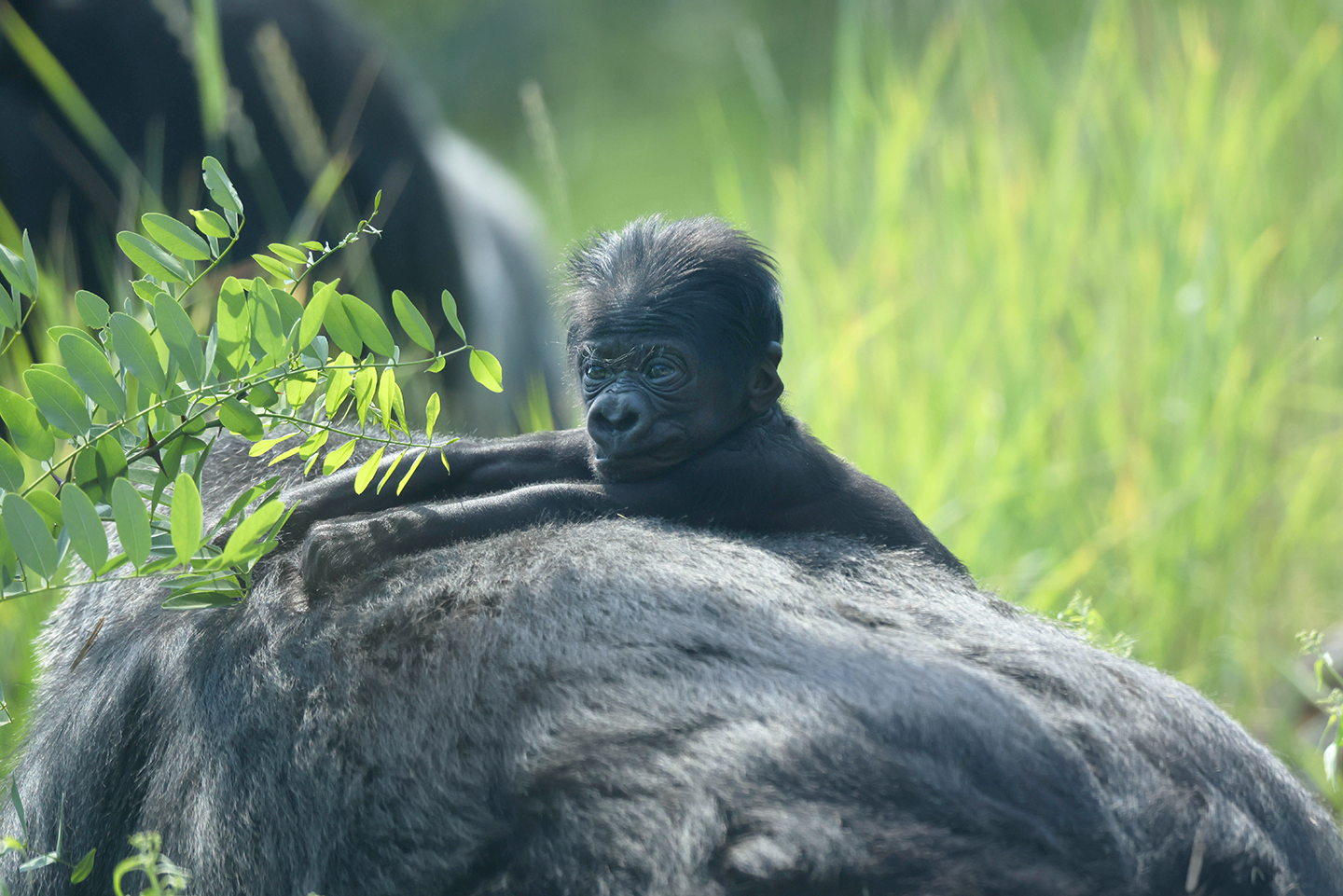
Gorilla babies are typically on their mothers for the first year, taking time to crawl, explore and play periodically. In the first 15 days, the gorilla care team will be looking for the baby to hit milestones that indicate good development, including grasping onto its mother, nursing, holding its head up independently, making eye contact and following movement with its eyes.

In its first month, they’ll look for the baby to smile, laugh quietly, roll over from its stomach to its back, initiate soft play and start teething.

Western Lowland gorilla Asha, side portrait pregnant May 2025

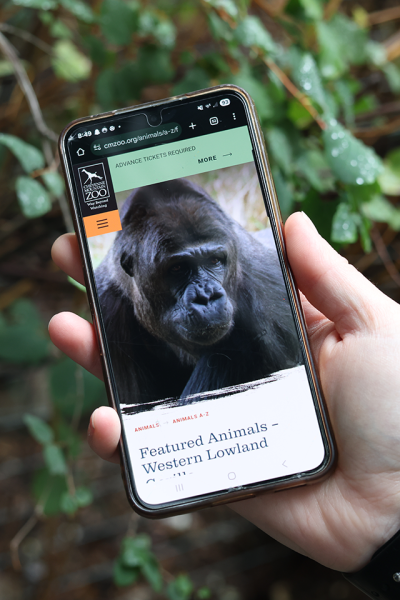
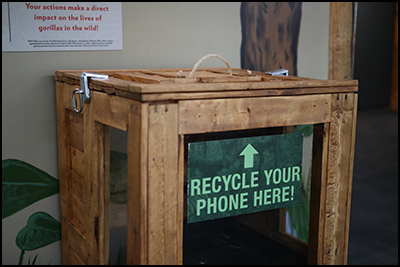
Western lowland gorillas are critically endangered in the wild, and their numbers continue to decrease in the wild. Gorilla fans can help preserve wild gorilla habitats by recycling small electronic devices and cell phones at CMZoo.

In addition to disease and poaching, gorillas face habitat loss due to logging for agricultural use, human settlements and mining. Many of the West African lowland forests and swamps that these animals call home are also natural deposits of coltan, a mineral used in cell phones and other electronics. Due to the ever-increasing demand for cell phones across the world, the destruction of these gorillas’ habitats for mining purposes has unfortunately increased.

Coltan is recyclable, and by donating old cell phones, we can help supply valuable coltan for future phone production. Guests can bring electronics to CMZoo admissions or Primate World, where there’s a recycling collection bin near the gorillas’ indoor dens. CMZoo will send them to Eco-Cell, an organization that recycles the phones, as well as tablets, smart watches, Bluetooth devices, GPS devices, e-readers, digital cameras, handheld gaming systems and their accessories.

About Cheyenne Mountain Zoo

Cheyenne Mountain Zoological Society was founded in 1926. Today, Cheyenne Mountain Zoo, America’s mountain Zoo, offers comprehensive education programs, exciting conservation efforts and truly fantastic animal experiences. In 2025, Cheyenne Mountain Zoo was voted #2 Best Zoo in North America and CMZoo’s Rocky Mountain Wild was named #2 Best Zoo Exhibit in North America by USA TODAY 10Best Readers’ Choice Awards. It is Cheyenne Mountain Zoo’s goal to help guests fall in love with animals and nature, and take action to protect them. Since 2008, CMZoo’s Quarters for Conservation program has raised more than $5 million dedicated to frontline conservation efforts around the world. Of the 237 zoos and aquariums accredited by the Association of Zoos and Aquariums (AZA), Cheyenne Mountain Zoo is one of just a few operating without tax support. Cheyenne Mountain Zoo depends on admissions, membership dues, special event attendance and donations for funding.

Three sets of fuzzy ears and wide, curious eyes recently joined the CMZoo family! These tiny ring-tailed lemur babies are already turning heads with their inquisitive expressions and snuggles on Allagash.

While they’re still nursing, they’re also beginning to explore some solid foods. The pups cling tightly to Allagash but are starting to show signs of independence. Allagash’s adult daughter, Anja, seems especially curious about the little ones and has even started helping with grooming duties.

According to the Lemur Conservation Foundation, lemurs are among the most threatened groups of mammals. The International Union for the Conservation of Nature (IUCN) estimates that more than 95 percent of lemurs face extinction in the next 20 years. Ring-tailed lemurs are endangered, according to the IUCN. Hercules has had breeding recommendations with Allagash and Rogue as part of the ring-tailed lemur Species Survival Plan, managed cooperatively by members of Association of Zoos and Aquariums-accredited facilities, like CMZoo.

Guests can see the babies right away, on Lemur Island in the hippo area, in Water’s Edge Africa!

Back to The Waterhole

Last month, Cheyenne Mountain Zoo members cast their votes to help the Zoo decide how to spend $75,000 of member conservation funds among staff-championed conservation projects vying for members’ support. The three projects with the most votes received the full funding they requested.

Every membership and every visit to the Zoo is conservation in action. From 2015 to 2025, the program has provided $825,000 of membership revenue to support field conservation worldwide.

“Our members make a big impact for wildlife and wild places,” Ashley Cioppa, CMZoo membership manager, says. “Our members’ annual investment in their Zoo memberships directly supports animals here in Colorado and all around the world. Plus, they give our staff the opportunity to reach more niche organizations and projects that support their conservation passions. Thank you, members!”

Each year, CMZoo membership revenue contributes a total of $100,000 to conservation in two ways:

  • $25,000 to the Quarters for Conservation program, which in total contributes a million dollars on average every 18 months to CMZoo’s legacy conservation partners.
  • $75,000 to projects voted for by CMZoo members through this annual vote.

This year’s Members-Only Conservation Vote top-ranked projects to fully fund are:

1) FOSTER, RAISE, AND RELEASE AFRICAN PENGUINS – $38,271
Member funding will provide an incubator, veterinary care and rehabilitation support for wild African penguin chicks and adults. African penguins, found mainly in South Africa and Namibia, face significant threats from overfishing, oil spills and disease outbreaks. As a result, penguin parents are abandoning their chicks due to lack of food and other weather-related factors. The Southern African Foundation for the Conservation of Coastal Birds (SANCCOB )will use these funds to rescue abandoned penguin eggs, chicks and adults needing intervention and rehabilitation at their South Africa facility. The goal is to release as many rescued penguins as possible back into the wild to bolster the rapidly declining African penguin population.


2) SUPPORT LEADERSHIP TRAINING FOR KENYAN WOMEN CONSERVATIONISTS AND RESTORE HABITAT FOR AFRICAN LIONS – $17,000
Support will empower Samburu (a region in Northern Kenya) women to improve their community’s livelihoods and help protect lions. Ewaso Lions implements several programs to help protect lions. One of these programs is The Mama Simbas (which means “Mothers of Lions”). The group consists of Samburu women trained to help alleviate human- wildlife conflicts, which typically occur between farmers and predators that may threaten local livestock. Ewaso Lions will use these funds to provide leadership training to the women of The Mama Simbas program. This training will give the women new tools to help shift attitudes towards predators, allowing Kenyan communities to coexist more easily and efficiently with wild carnivores. Funds will also support the restoration of grassland habitat.


3) PROTECT EGYPTIAN TORTOISES THROUGH COMMUNITY CONSERVATION IN EGYPT- $19,729
Member support will fund local community guards and provide tracking tags to protect Egyptian tortoises. Wild turtles and tortoises are facing a worldwide extinction crisis. The Egyptian tortoise faces severe threats from habitat destruction due to farming and poaching for the pet trade. The Turtle Survival Alliance will use funds to deploy tracking tags to gather data and gain an understanding of how tortoises interact with each other and their environment, as well as population dynamics. Community guards will help address immediate threats to the species by physically protecting the most vital tortoise populations and their habitat.