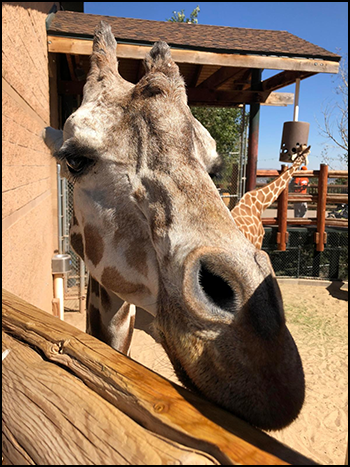
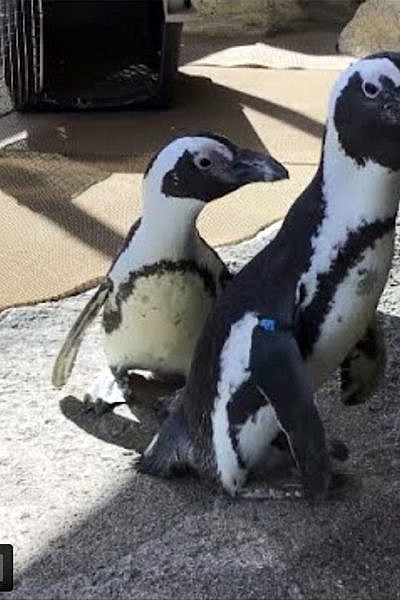
(Colorado Springs, Colo.) – Cheyenne Mountain Zoo is excited to announce its phased reopening to the public, beginning with members on Saturday, June 6. On Friday evening, the Zoo received final approval from Gov. Jared Polis and Colorado Department of Public Health & Environment (CDPHE) to reopen, following a nearly three-month closure due to the COVID-19 pandemic.

The Zoo’s opening is a result of a successful variance request to Gov. Polis’ office and CDPHE, through the variance process they made available to affected organizations, businesses and industries. The Zoo received amazing support from the El Paso County Board of Commissioners, the Colorado Springs Mayor’s Office, El Paso County Public Health, and the three local hospitals to shepherd the variance through the complex process and ultimately facilitate approval at the state level.

“We’ve been encouraged by the amount of support our local government has given us as we have navigated these uncharted waters,” said Bob Chastain, Cheyenne Mountain Zoo president and CEO. “I have worked hand in hand the last few weeks with El Paso County Public Health, the mayor, the city manager, the heads of our three great hospitals and the El Paso County Commissioners. There are real people behind those titles, and they care about the people of Colorado Springs and Colorado.”

“We are thankful for our partnership with the Zoo, and for their innovative leadership in working to create a plan to safely reopen,” said Susan Wheelan, El Paso County Public Health Director. “The Zoo brings people so much joy, and we are thrilled our community will be able to enjoy this local attraction again.”

Everyone involved at the local level has worked tirelessly with us to finalize our variance request and submit it for consideration. I want the Colorado Springs community to know that your local government officials worked very hard on your behalf to help return the Zoo to you.”

The Zoo will follow a phased reopening. All members and guests from June 6 through June 19 will be required to reserve or purchase an advance ticket. Tickets will be available in hourly increments and will be limited to allow for maximum physical distancing. Full reopening details and tickets are available at https://www.cmzoo.org/open.

  • Zoo member tickets only – Saturday, June 6 through Wednesday, June 10 (five days) – Members must log in and reserve their free tickets in advance online.
  • Zoo members and general public tickets available – Thursday, June 11 through Friday, June 19 (nine days) – Everyone (Zoo members and non-members) must reserve or purchase their tickets in advance online.
  • Our variance is currently approved for the next two weeks, so watch our website and social media for details beyond June 19.

The Zoo has put precautionary measures in place for the reopening. Not only will they have a limited number of advance tickets available each hour, but they have also implemented measures like closure of spaces and activities that would hinder physical distancing and frequent sanitization of high-touch areas. Guests are strongly encouraged to wear masks, and masks are required for staff within 6 feet of others and in all guest areas.

About Cheyenne Mountain Zoo

Cheyenne Mountain Zoological Society was founded in 1926. Today, Cheyenne Mountain Zoo, America’s mountain Zoo, offers comprehensive education programs, exciting conservation efforts and truly fantastic animal experiences. In 2019, Cheyenne Mountain Zoo was voted #6 Best Zoo in North America and CMZoo’s Rocky Mountain Wild was named #5 Best Zoo Exhibit in North America by USA TODAY 10Best Readers’ Choice Awards. It is Cheyenne Mountain Zoo’s goal to help guests fall in love with animals and nature, and take action to protect them. Of the 233 zoos and aquariums accredited by the Association of Zoos and Aquariums (AZA), Cheyenne Mountain Zoo is one of just a few operating without tax support. Cheyenne Mountain Zoo depends on admissions, membership dues, special event attendance and donations for funding.
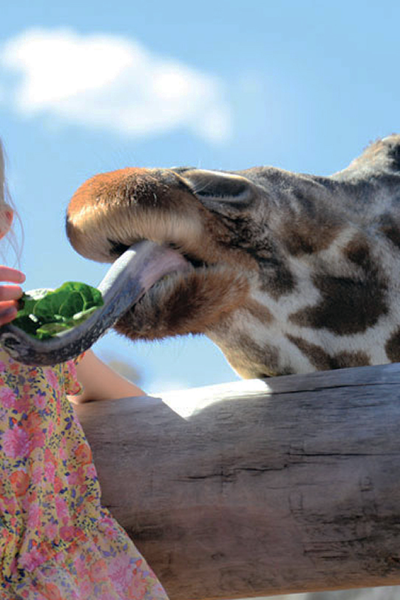
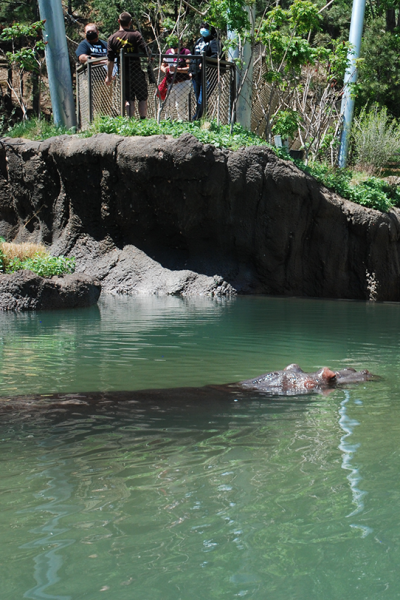
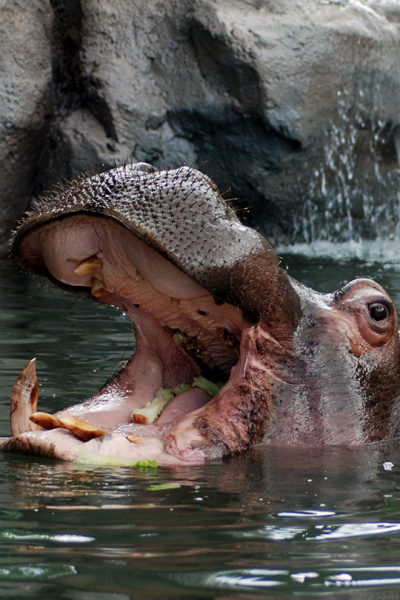
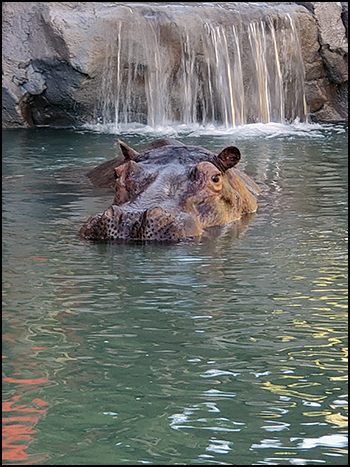
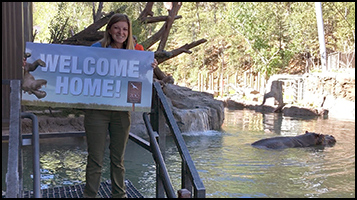
Saturday, May 23, 2020 (COLORADO SPRINGS, Colo.) – With Water’s Edge: Africa Construction Issues Resolved, Nile Hippos Return to CMZoo! The sounds of hippo ‘laughs’ are once again echoing from the side of Cheyenne Mountain. Zambezi (zam-BEE-zee) and Kasai (kuh-SIGH), CMZoo’s Nile hippo sisters, are back home at Cheyenne Mountain Zoo!

The two female hippos have been ‘vacationing’ at Dickerson Park Zoo, an Association of Zoos and Aquariums-accredited zoo in Springfield, Missouri, since October 2016, when construction began on Water’s Edge: Africa. Zambezi, 27, originally came to Cheyenne Mountain Zoo in 1993. Kasai, 20, originally came to CMZoo in 2001. Given their long-time residence and personable demeanors, the girls are well-loved by staff, the community and CMZoo fans all around the world.

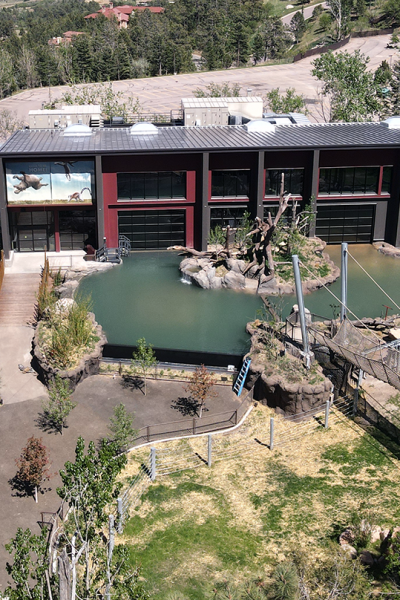
“The question of the year has definitely been, ‘When are the hippos coming back?’ We’re just so happy the girls are finally home,” said Patty Wallace, senior lead keeper at Water’s Edge: Africa, the new home for hippos, penguins, warthogs, lemurs and more, at CMZoo. “There were a lot of happy human tears and a lot of wiggling hippo ears on Friday morning, as we watched them explore their new home. It’s so fulfilling to see them enjoying this beautiful space and settling back in. We missed them!”

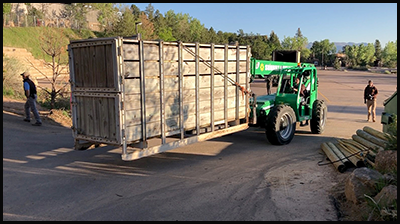
The hippos’ 750-mile journey home wasn’t your average road trip. Preparing to transport the girls, who each weigh over 3,000 pounds, required months of preparation, skilled staff and transport professionals, and specialized machinery and equipment. Three CMZoo staff members drove to Dickerson Park Zoo to help the hippos transition and bring them home. The team consisted of Wallace; Jeremy Dillon, Water’s Edge: Africa Animal Care Manager; and Dr. Liza Dadone, a veterinarian and the Zoo’s Vice President of Mission and Programs.

“This isn’t their first road trip, but it’s been three and a half years since their last transport, so we don’t make any assumptions about how smoothly things will go,” said Dillon. “Transporting nearly four tons of hippopotamus is risky, no matter how many times you’ve done it. Since they arrived at Dickerson Park Zoo, back in 2016, they’ve been preparing for this trip home – and so have we.”

Making sure Zambezi and Kasai are comfortable and confident during their transport is vital to keeping them from getting too stressed or injuring themselves. The hippos are trained to be comfortable in their crates during a transport, which means they are awake for the entire transfer.

The steel-framed wooden crates were positioned as ‘hallways’ at Dickerson Park Zoo, so the hippos would pass through them daily when they went out into their yard. That meant they became familiar with the space and gained confidence being inside the crates. Through positive reinforcement, the girls became comfortable standing in the crate with only one end open, and eventually standing in their crates with both doors closed.

Thursday afternoon, the girls entered their separate crates, which were crane lifted out of their exhibit space and then lifted by forklift into a climate-controlled 72-foot semi-truck. After 12 hours of highway driving, with stops to check on the girls every two hours, the team arrived at Cheyenne Mountain Zoo around 5 a.m. Friday, May 22. From the Zoo’s public parking lot, the hippos were lifted one at a time, in their crates, by forklift and carried up to their new home.

“The transport really couldn’t have gone any better,” said Dillon. “Watching them come out of their crates, healthy and curious to explore their new home was awesome. I just wish we could share this experience with the public right away.”

Under current restrictions, the Zoo is temporarily closed to the public until further notice. But, when the Zoo is allowed to reopen, guests will be able to see the girls from one-of-a-kind perspectives, like the Water’s Edge: Africa giant rope bridge that hangs 8 feet above the outdoor hippo yard.

“I can’t wait for people to come and see Water’s Edge,” said Grace Vining, animal keeper. “It’s like an educational nature playground for animal lovers.”

Nature play was central to the design of Water’s Edge: Africa, so it features a nature trail with obstacles, like vertical logs to climb on and small boulders to hop, that leads to a huge rope bridge and ends at a platform overlooking the outdoor hippo pools and lemur island.

Cheyenne Mountain Zoo is known for providing interactive experiences with animals, and guests can expect that same level of engagement with animals at Water’s Edge: Africa. As many barriers between guests and animals have been removed as possible. A knife-edge hippo pool brings guests eye-to-eye with the hippos, as they bounce on a sand bar in their outdoor pool. Hippo lovers might even feel a splash or two, as the hippos make waves that flow over the exhibit’s many waterfalls. Guests are likely to leave the exhibit with wet feet, too, thanks to an ‘ocean surge’ from the outdoor penguin pool that splashes onto guest viewing areas. That surge isn’t the only thing guests will want to look down for – the outdoor penguin area is designed so penguins have the opportunity to walk right up to guests if they want to.

Eleven African penguins arrived at Water’s Edge: Africa at the end of April. Nine more will be joining the flock as soon as possible. In addition to African penguins and Nile hippos, ring-tailed lemurs and common warthogs will make homes at the brand-new exhibit, as well as a few other species.

Only 30 organizations accredited by the Association of Zoos and Aquariums in North America house hippos. The International Union for Conservation of Nature (IUCN) Red List categorizes Nile hippopotamuses as a species vulnerable to extinction in the wild, estimating 125,000 to 150,000 remain in their native habitats. The primary threats are habitat loss and illegal and unregulated hunting. Hippos are hunted for ivory, which is found in hippopotamuses’ canine teeth, and for food.

About Cheyenne Mountain Zoo

Cheyenne Mountain Zoological Society was founded in 1926. Today, Cheyenne Mountain Zoo, America’s mountain Zoo, offers comprehensive education programs, exciting conservation efforts and truly fantastic animal experiences. In 2019, Cheyenne Mountain Zoo was voted #6 Best Zoo in North America and CMZoo’s Rocky Mountain Wild was named #5 Best Zoo Exhibit in North America by USA TODAY 10Best Readers’ Choice Awards. It is Cheyenne Mountain Zoo’s goal to help guests fall in love with animals and nature, and take action to protect them. Of the 233 zoos and aquariums accredited by the Association of Zoos and Aquariums (AZA), Cheyenne Mountain Zoo is one of just a few operating without tax support. Cheyenne Mountain Zoo depends on admissions, membership dues, special event attendance and donations for funding.
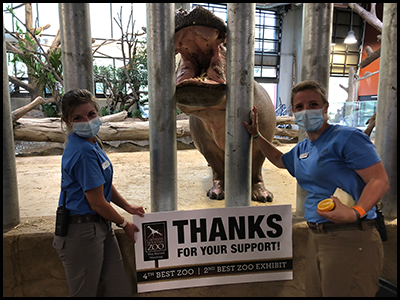
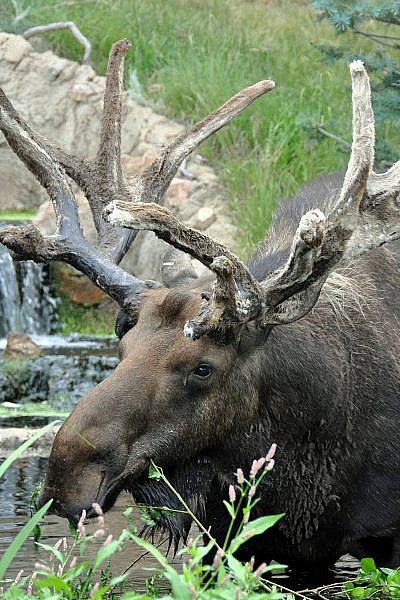
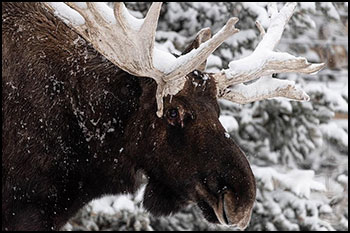
This weekend, the Cheyenne Mountain Zoo family said a difficult goodbye to Tahoma, our well-loved friend and colleague in the fight to save wildlife.

“We strongly believe all of our animals have a very important job to do,” said Bob Chastain, president and CEO of Cheyenne Mountain Zoo. “They are ambassadors for their wild counterparts. They do the yeoman’s work of inspiring millions of people to understand and care about the challenges wild animals face.”

We humans are the best chance animals have for thriving in the wild. Tahoma helped tell the stories that inspired people to help. He encouraged people to do things like buying a hunting or fishing license, paying state park entrance fees, reducing mining by recycling, saving water and contributing to conservation efforts. Every visit to the Zoo is conservation in action. Tahoma’s CMZoo fans raise money and vote for conservation projects around the world through a portion of their memberships and entrance fees.

“Like many of our animal teammates at the Zoo, even him being here was a bit of a miracle that the people of Colorado Springs might not know,” said Chastain. “While you might get lucky and see moose in the wilds of Colorado, seeing how amazing they are up close in a safe environment is a rare treat.”

Cheyenne Mountain Zoo was one of only eight AZA-accredited institutions in the United States to house moose. Because moose are so rare in human care, there was little studied or known about their care and management until recently. Tahoma partnered with his care team to pioneer moose care practices, like formulating nutritious moose diets, blood tests, hoof care and more.

For people who haven’t worked at a place like Cheyenne Mountain Zoo, it may seem odd to refer to a moose as a colleague. But CMZoo staff firmly believe that all of us – humans and animals alike – have one main job to do, which is to connect guests with animals, and inspire them to care about wildlife. Tahoma did that job better than most of us.

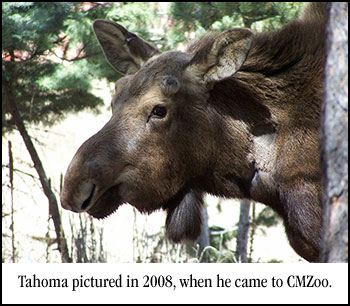
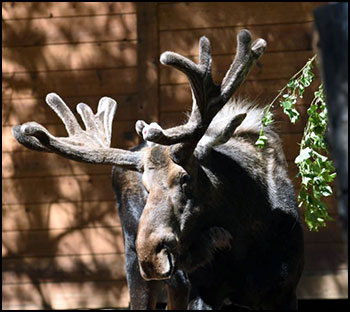
Tahoma came to Cheyenne Mountain Zoo as a 10-month-old calf, and immediately began making connections with guests in the newly opened Rocky Mountain Wild exhibit. Less than two weeks shy of his 13th birthday, due to chronic arthritis pain and other conditions that could no longer be controlled with medication and treatments, Tahoma’s care team made the difficult decision to humanely euthanize him. He passed peacefully on a soft bed of cedar shavings, surrounded by his loving keepers and vet staff. Tahoma spent nearly his entire life inspiring guests and staff at Cheyenne Mountain Zoo, and he will be remembered forever by those whose hearts he touched.

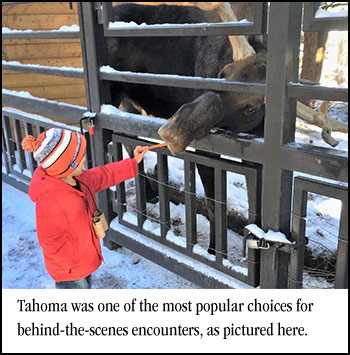
“All of our animals make an impact in their own way, but Tahoma took it above and beyond,” said Rebecca Zwicker, animal care manager in Rocky Mountain Wild, who worked with Tahoma for 10 years. “Before Tahoma, I never would have considered myself a ‘moose person,’ but he had me within the first minute of meeting him. I looked into those big brown eyes and handed him a cracker, and he nuzzled my hand and immediately had my heart. I can’t really put it into words, but there was something magic about Tahoma, and I know I’m not the only person who felt that.”

Zwicker and the rest of the Rocky Mountain Wild care team believe in the Zoo’s philosophy that our animals are our respected colleagues, and that we complete the work of the Zoo together as a team. We believe our animals are the essence of the Zoo. Our role is to help them succeed at their jobs, by providing the best possible habitats, health care, training, and opportunities for them to create meaningful relationships with our guests.

“Tahoma had this special way of connecting with people,” said Basia Dann, Rocky Mountain Wild animal keeper. “It was like he knew when we were busy and he needed to ‘work’ a little harder to reach more people. We would find huge crowds of people admiring him on busy days. He would position himself really close to people and create those opportunities for us to answer questions about moose and teach people about him to foster those important connections. That’s our job, and he was really good at it.”

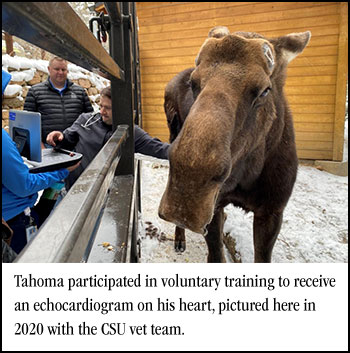
Tahoma was a quick study. Through positive reinforcement training, Tahoma and his keepers built a relationship that meant everyone could look forward to training sessions. It didn’t take him and his keepers long – sometimes just one day – to perfect voluntary injection training, ear cleaning sessions, x-rays, laser therapy, EKG readings and blood draws. Tahoma was a catalyst for Cheyenne Mountain Zoo’s renowned hoof care program. He was one of the first animals at the Zoo to voluntarily receive care on his hooves.

“I know for a fact what we learned from Tahoma has helped our giraffe,” said Zwicker. “There are other zoos in the U.S. that have started working with their moose because of the work we did with Tahoma. He was inspiring.”

Zwicker recalls sharing Tahoma’s achievements in hoof care to a room of three hundred people at an animal husbandry behaviors conference. That conference and another, during which zookeepers and trainers spent a day at Cheyenne Mountain Zoo and met Tahoma, led to somewhat of a celebrity status for him in the zoo community. Tahoma was photographed for National Geographic photographer Joel Satore’s ‘The Photo Ark’ series and was even featured in a popular outdoor clothing company’s advertising campaign.

“He’s a legend,” said Sarah Dugger, Rocky Mountain Wild animal keeper. “I’ve been tracked down by keepers when I’m visiting other zoos just because I was Tahoma’s keeper. Even if they had never met him, they knew about Tahoma and had been inspired by him in some way. It wasn’t about meeting me; it was exciting for them to meet someone who worked with Tahoma.”

Tahoma made an enormous impact, and will leave a personal mark on so many lives. Thousands of people looked forward to guessing the weight of his antlers in Tahoma’s Annual Antler Weigh-In. He was motivation for a woman who had breast cancer and met her goal of visiting him once she went into remission. His face is tattooed on people’s bodies. He touched people’s hearts and expanded people’s horizons through education and the reminder that it’s always worth it to work to achieve a goal.

Although the Zoo was closed to the public on Tahoma’s last days, he was visited by his colleagues from every department at the Zoo.

“We showered him with love on his last few days,” said Zwicker. “It’s always a difficult decision, but we loved him too much to let the pain last. I’ve been thinking of our guests and how much they’re going to miss him, but want them all to know that he didn’t go out without any fanfare.”

Tahoma’s legacy will continue through the work of his fellow animal ambassadors, keepers, Cheyenne Mountain Zoo staff, the greater zoo and conservation communities, and the people who take action to protect wildlife and wild places because of the deep connections he made.

The Cheyenne Mountain Zoo family is celebrating the long life of the eldest member of the Zoo’s reticulated giraffe herd, Riyadh, today. Since her birth at CMZoo in 1990, she made countless connections with guests, members and fans, who would delight at her small-but-mighty personality and regal nature.

As she grew older, Riyadh began showing normal signs of aging, including dealing with arthritis. Over the last several months, she responded well to medications and seemed to be comfortable. But yesterday, her keepers noticed she wasn’t bearing weight on her hind right leg. With the CMZoo vet team, they made the difficult decision to humanely euthanize Riyadh, as her treatments were no longer providing enough relief for her to continue having a comfortable quality of life.

“Despite the fact that we’ve been mentally preparing for this time to come, it’s still sad to say goodbye,” said Rachael Hahn, animal keeper for giraffe and Riyadh’s primary trainer. “This was the right decision for her, and I’m so glad she was able to spend her last day in the beautiful Colorado sunshine.”

Riyadh was loved for her small stature and confident personality. She was much shorter than the majority of the herd, and was often mistaken for a calf.

“People really fell in love with her because she was easy to tell apart from the rest of the herd,” said Amy Schilz, senior lead keeper for giraffe. “Those who didn’t know her sometimes thought she was a baby, and she would benefit by getting extra lettuce from guests who wanted to feed ‘the little one.'”

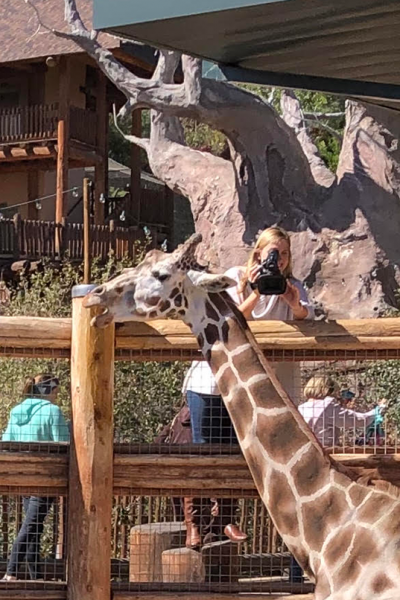
“She was also one of our giraffe that was more willing to let guests give her scratches on her neck, which was a special experience that not every giraffe will allow,” said Diana Miller, senior animal keeper for giraffe. “For some reason, she was hesitant to let keepers touch her neck, but she didn’t mind at all when guests would pet her.”

Her shorter legs made her easy to identify in the herd, but didn’t impact her confidence if she was ever nudged by a larger herd mate.

“She was hilarious to watch interact with the other giraffe because of how tenacious she was,” said Hahn. “She could get whatever she wanted, despite her size. Most of our giraffe get out of the way when Mahali, who’s one of our tallest giraffe, comes around. But not Riyadh! She would push him around to get the best browse or whatever she wanted. All of the other giraffe got out of the way for Riyadh.”

The keepers describe Riyadh as having a “regal” way about her – so much that they had nicknamed her “Princess Ri.”

Riyadh helped the newest herd member, 2-year-old Panya, settle in to the herd, spending nights with Panya in a stall separate from the herd while Panya, who has a shy demeanor, adjusted to her new surroundings.

“Panya and Riyadh developed a strong bond,” said Miller. “It seemed like they found a soulmate in each other, since they’re both smaller in stature.”

Riyadh, pictured here in Sept. 2019 sharing the side yard with Viv, was known for her small stature and unique markings

Throughout her life at CMZoo, Riyadh contributed to her species as a well-loved animal ambassador and through her individual reproductive contributions. Riyadh gave birth to eight healthy calves, leaving a legacy of six healthy grandcalves and one healthy great-grandcalf. Two of Riyadh’s daughters, 19-year-old female giraffe, Twiga, and 22-year-old female, Muziki, are still members of the herd at CMZoo.

Riyadh participated in voluntary training that allowed our vets and staff to help giraffe in human care and in the wild. All giraffe in our herd can choose to participate in trainings that allow vet staff to perform research on hoof care and even build a life-saving plasma bank.

“Riyadh was a little difficult to train in the beginning,” said Schilz. “She would outsmart me on every maneuver! Once we figured out a way to give her full control over everything that was happening, we started to make headway. She learned to touch a target stick, which was our cue that we could touch her hooves or do some other contact that we needed. If she gave us ‘permission’ by using the target stick, we were good. But she could still throw out a stern ‘side-eye’ look, if she didn’t approve of something we were doing.”

Once Riyadh and her keepers figured out the key for her training, she became a training superstar. She was often the giraffe that helped teach other giraffe professionals from around the world how to train during CMZoo’s annual Giraffe Care Workshop. Since she was smaller, she was less intimidating for participants to work with, and she was solid in responding to cues, even for those who didn’t have a relationship with her or have as much experience with training giraffe.

“Even as her primary trainer, she taught me so much about training and caring for giraffe,” said Hahn. “She was just so smart! She was super special.”

She also helped to pioneer groundbreaking care for our herd, as she was one of the first to voluntarily accept shoes on her hooves as a treatment for her arthritis. She also voluntarily allowed a veterinary ophthalmologist to take her eye pressure readings using a puff of air (non-contact tonometry) – something many humans have trouble tolerating.

In the past 30 years, there has been an estimated 50 percent decline in wild reticulated giraffe populations. Giraffe Conservation Foundation estimates only 15,780 reticulated giraffe remain in the wild.

Riyadh’s role as an ambassador for her species helped countless CMZoo guests fall in love with giraffe, inspiring them to take action to protect her wild relatives. CMZoo has partnered with the Giraffe Conservation Foundation to support conservation efforts. One recent example is Operation Twiga, a giraffe translocation project in Uganda, Africa. The Zoo’s visitors and members contribute significantly to those efforts through Quarters for Conservation, a program by which 75¢ of every Zoo admission is allocated to conservation. Annually, Quarters for Conservation raises half a million dollars for conservation partners around the world.

We have BIG NEWS on #WorldPenguinDay! Our first five African penguins have arrived! Since our temporary closure, we’ve continued work on Water’s Edge: Africa, our new home for hippos, penguins, warthogs, lemurs and more. We’re happy to report the new exhibit’s first residents are settling in.

In this video, meet CMZoo African penguins Pomona, Safara, Alex, Rudo and Rufaro! You’ll also see a behind-the-scenes sneak peek at their medical checks, their first dip in the indoor pool and their first time taking in the beautiful views from the mountainside. You’re also getting the first public glimpse at the penguin pools in all their leakless glory!

The issues with the hippo pools haven’t been resolved yet, but we’re continuing work on them and will keep you posted on any hippo-sized news. We can’t wait to have you all back to meet the penguins in person!

UPDATE: Cheyenne Mountain Zoo’s reopening date has been changed from April 1, 2020 to April 17, 2020. This is an update to the Zoo’s official statement from March 16, 2020, which you can find below.

(Colorado Springs, Colo.) – At Cheyenne Mountain Zoo, we believe we have multiple responsibilities to our community, in addition to our responsibilities to the natural world. Our unique atmosphere allows friends and family to spend quality time together, while providing our guests an opportunity to spend time in the outdoors, which has been shown to improve both physical and mental well-being. All of these were reasons that Cheyenne Mountain Zoo remained open to the public through today.

While we had support from city and county government officials to remain open with our already strong precautionary measures, the time has come to support our country’s decision makers and unite behind a common goal. Cheyenne Mountain Zoo is announcing a temporary closure of its public operations in response to today’s request by President Donald Trump to join together to suppress the COVID-19 virus. The closure will be effective tomorrow (Tuesday, March 17, 2020), and we are already beginning to plan our reopening on April 1, 2020, assuming that the current 15-day guidance has not been extended. As soon as possible, we want to provide a beacon of hope for our community in this unusual time.

During the closure, the Zoo’s staff will keep busy, not only providing our excellent standard of care for our animals, but also with other important work around the Zoo. The closure will provide Zoo staff with the opportunity to continue to prepare for Association of Zoos and Aquariums accreditation inspections scheduled for this summer, which is something that happens once every five years. Staff will also focus on detailed preparations for the opening of the Zoo’s new hippo and African penguin exhibit, Water’s Edge: Africa, which we hope will open sometime in May. We are thankful to be able to keep all of our Zoo family employed through the 15-day closure.

All public EdVenture programs originally scheduled through March 31, 2020 are canceled or will be rescheduled, including Spring Break Camp, Stroller Safaris, WildNights, ZOOMobile outreach programs, birthday parties and any other public programs. Please email [email protected] or call (719) 424-7827 for information about refunds or other questions.

While the Zoo is closed, the public is encouraged to stay virtually connected to our animals through our social media channels and website. On nice days, fans of our giraffe herd will continue to be able to watch the herd shift into their outdoor yard via the Zoo’s YouTube channel or at cmzoo.org/giraffecam. Zoo staff also will also continue to provide updates on our animals through our social media feeds: Facebook, Instagram, Twitter and YouTube.

Any further updates on the status of the Zoo’s closure will be updated via the green “alert” message on our home page at cmzoo.org.

About Cheyenne Mountain Zoo

Cheyenne Mountain Zoological Society was founded in 1926. Today, Cheyenne Mountain Zoo, America’s mountain Zoo, offers comprehensive education programs, exciting conservation efforts and truly fantastic animal experiences. In 2019, Cheyenne Mountain Zoo was voted #6 Best Zoo in North America and CMZoo’s Rocky Mountain Wild was named #5 Best Zoo Exhibit in North America by USA TODAY 10Best Readers’ Choice Awards. It is Cheyenne Mountain Zoo’s goal to help guests fall in love with animals and nature, and take action to protect them. Of the 233 zoos and aquariums accredited by the Association of Zoos and Aquariums (AZA), Cheyenne Mountain Zoo is one of just a few operating without tax support. Cheyenne Mountain Zoo depends on admissions, membership dues, special event attendance and donations for funding.
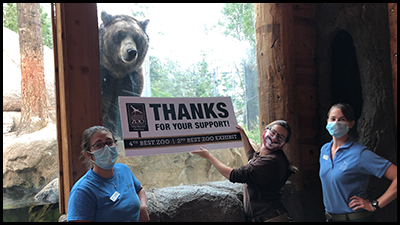
Here at Cheyenne Mountain Zoo, we believe we have multiple responsibilities to our community, in addition to our responsibilities to the natural world. Our unique atmosphere allows friends and family to spend quality time together, while providing our guests an opportunity to spend time in the outdoors, which has been shown to improve both physical and mental well-being.

On Friday, March 13, 2020, Governor Jared Polis issued guidance to cancel events and gatherings of more than 250 people. He clarified with Colorado cultural attractions, however, that outdoor venues can operate with larger numbers of guests as long as they don’t have more than 250 people in a single gathering space or building.

In an effort to fulfill the community’s need for activities during a stressful time and the need to be able to get outdoors for mental well-being, we are implementing the following changes to our daily operations, out of an abundance of caution, through at least March 30, 2020. As the situation with COVID-19 and community spread is constantly evolving, we will remain nimble to make other changes, as the situation warrants.

We are currently open for daytime admission during our normal hours of 9 a.m. to 5 p.m., with the last admission at 4 p.m., with the following precautions in place:

  1. We are partnering with El Paso County Public Health and following guidelines set forth by Centers for Disease Control and Prevention and Governor Polis’ Office of Community Engagement.
  2. Zoo staff will be maintaining increased disinfection protocols for high-touch areas throughout the Zoo.
  3. We are encouraging guests to follow Governor Polis’ recommendations for social distancing, including allowing six feet between parties while enjoying the Zoo. Our open-air environment gives Zoo guests ample ability to enjoy the Zoo while keeping comfortable distances from other parties.
  4. Also in accordance with the Governor’s recommendations, we will limit the number of guests in any Zoo building at any time to 250.
  5. To ensure that we self-regulate our daily guest count, Cheyenne Mountain Zoo will not use off-site parking during this time. This will prevent the need for shuttling guests on buses from an off-site location, and it will automatically limit our daily attendance. This may mean that you will be turned away if we are at capacity for our on-site parking lot. Please follow our parking signs for updates on our parking availability. Please also stay patient and flexible – we can often accommodate additional guests by mid-afternoon as earlier guests depart and free up space in our parking lot.
  6. In addition to the numerous public restroom facilities with permanent hand-washing sinks found throughout the Zoo, we will be adding temporary hand-washing stations throughout the Zoo as they become available.
  7. Our food concession areas are implementing additional rigorous protocols to increase their already frequent cleaning routine, creating new practices that will distance guests from areas where food is being prepared and other additional protocols to increase food safety.
  8. The Zoo’s historic carousel will not operate during this time.

As you know, the situation with COVID-19 in our community and around the world is fluid and ever-evolving. Visit our website home page at cmzoo.org and click the “alert” link at the top of the page for the most up-to-date information on any changes to our operations that we may need to make.

We are working hard to be a resource for the community during this truly difficult time, and we believe these precautions will help us do that. But, we can’t do it alone. We need your help to reduce risk. Please actively follow the social distancing guidelines outlined above while you’re enjoying the Zoo, and stay vigilant with the precautions you and your family can take, like washing your hands frequently with soap and water for at least 20 seconds at a time. Cover your cough. Limit touching your face. Above all else, make responsible decisions for the community and visit us another time if you’re feeling ill, or have been outside of the country or in contact with someone carrying the virus in the last 14 days. We and our animals will enjoy seeing you when you’re feeling better.

Cheyenne Mountain Zoo received an early Valentine’s gift as a second black howler monkey in just under a year was born yesterday.

Four-year-old howler monkey Charlie gave birth to her second baby on Thursday, Feb. 13 at 7:14 a.m. An early-morning staff member was doing a routine check on Charlie and saw the beginning of the birthing process. Keepers say mom and baby are bonding quickly, and early indicators, like the baby’s curled tail, are showing that the baby is healthy and strong. The gender likely won’t be confirmed for several months.

Charlie gave birth to her first baby, Louie, in March 2019. Charlie showed strong maternal instincts immediately after Louie’s birth, and keepers say she has been exhibiting those same behaviors with this new baby, such as grooming and maintaining chest-to-chest contact. Like most primates, the baby will spend its first several weeks of life clinging to mom, and then the young monkey will begin to explore its surroundings on its own.

Even though big brother Louie seems curious about the new addition, touching the baby’s tail while it was wrapped around Charlie’s back, he has been giving mom and baby the space they need to bond.

After Louie’s birth, first-time father Howie seemed unsure of the baby and kept to himself for the first few days.

“Howie’s reacting very differently to this baby,” said Cheyenne Mountain Zoo Monkey Pavilion keeper Debbie Fenton. “He is incredibly calm and sure of himself this second time around. The entire family was able to stay together all day yesterday and remained in the same space last night, too.”

The happy family of four will continue to stay together in Monkey Pavilion, and Charlie has access to a back den area, as well. Since Charlie prefers to be in the main black howler exhibit, guests may have the opportunity to catch a glimpse of the newborn and its family members.

Charlie and Howie were recommended to breed based on their genetics as part of the Black Howler Monkey Species Survival Plan, managed by the Association of Zoos & Aquariums. This baby’s birth is contributing to a program that is working to help guarantee 100 years of genetic diversity for the species in accredited organizations.

Keepers will keep a close eye on Charlie and her baby, and will be happy to share their joy with Zoo members and guests who come to visit.

“We are so excited that Louie will have a sibling to grow up and play with,” said Cheyenne Mountain Zoo Monkey Pavilion keeper Erika Furnes. “He enjoys playfully wrestling with his parents, and we can’t wait to see the two young howler monkeys play together once his younger sibling is old enough.”

About Cheyenne Mountain Zoo

Cheyenne Mountain Zoological Society was founded in 1926. Today, Cheyenne Mountain Zoo, America’s only mountain zoo, offers comprehensive education programs, exciting conservation efforts and truly fantastic animal experiences. It is Cheyenne Mountain Zoo’s hope that guests fall in love with animals and nature, and take action to protect them. Of the 233 zoos and aquariums accredited by the Association of Zoos and Aquariums (AZA), Cheyenne Mountain Zoo is one of just ten operating without tax support. Cheyenne Mountain Zoo depends on admissions, membership dues, special event attendance and donations for funding.
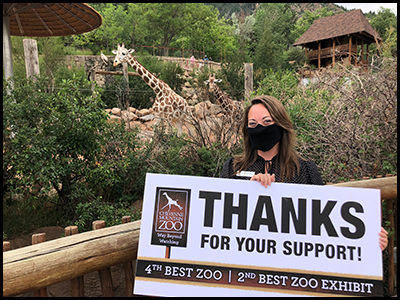
Running a zoo requires a substantial amount of water. There are guest facilities, water features in animal habitats, cleaning and sanitation, horticulture, food and beverage services, maintenance and, of course, human and animal water consumption to consider.

Leaning on his background in horticulture, environmental education and ecology, and his involvement in global conservation projects, Cheyenne Mountain Zoo President and CEO, Bob Chastain, decided to make Cheyenne Mountain Zoo the first ‘water neutral’ zoo in the world. So, he worked with the experts at Trout Unlimited (TU) to offset the Zoo’s water usage through a unique new program.

“We use about 16 million gallons of water a year,” said Chastain. “In the last several years through our own internal programs, we’ve reduced our water usage by about half, but we still use a lot of water. We live in a drought state, so I wanted to find a way to give that water back, so to speak, to the rivers in Colorado. With Trout Unlimited’s help, we can do that.”

A nonprofit organization dedicated to the protection and restoration of habitat for trout and salmon, Trout Unlimited (TU) operates a program in the Rio Grande basin of southern Colorado. Under the program, TU arranges for releases of water from storage reservoirs to augment river flows for the benefit of trout populations and the riverine environment. For water year 2020, which runs from Oct. 1, 2019 to Sept. 30, 2020, Trout Unlimited will release 51 acre-feet of water from storage to the Rio Grande River or its tributaries on the Zoo’s behalf. The Zoo donated $15,000 of conservation funds to Trout Unlimited to support these releases.

Chastain is an outdoorsman. He likes to spend time rafting, fishing, hunting and hiking in the wild places along the Arkansas and Rio Grande Rivers. Over the last few summers, he has noticed a distinct decline in river water levels between early and late summer.

“I was rafting the Arkansas River late last summer and the difference in just a month and a half, since I had last rafted it, was dramatic,” said Chastain. “That got me thinking that if there was some way to contribute to water levels when they’re low during the winter months, we could make an impact.”

Roughly ninety percent of Colorado’s water supply is used by farmers and ranchers, according to Trout Unlimited, and this agricultural water use drives rural economies. Rivers also support many important functions in our state: feeding diverse ecosystems of plants and animals; generating tourism and making an economic impact on local business through its fishing, hunting, camping and whitewater sports; and transporting water from reservoirs to those who need it.

“Water rights use and administration in Colorado is extremely complex and each basin operates differently. TU’s approach is to use local staff who engage with water users and facilitate opportunities to do more with a critical and limited resource,” said Kevin Terry, Trout Unlimited’s Rio Grande Basin Project manager. “For instance, TU can inform water users on the needs of the environment and fishery, identifying partnership opportunities that farmers and ranchers can take advantage of if it works for their operations. The whole effort is like a giant dynamic puzzle, and TU brings expertise relating to specific pieces, which helps the water community of the Rio Grande be strategic and holistic in efforts to maximize the benefits of our precious water.”

Cheyenne Mountain Zoo is supporting Trout Unlimited’s program to partner with water users and incentivize them to re-time portions of their water for delivery during the winter months when possible. Restoring stream flows below working reservoirs during the winter months, while simultaneously satisfying water-user needs, creates a better balance of water delivery for the environment, and the people who rely on it.

“We are grateful for our partnership with the Cheyenne Mountain Zoo,” said Terry. “With forward-thinking partners like the Zoo, TU is greatly improving habitat conditions for trout in the Rio Grande basin.”

About Cheyenne Mountain Zoo

Cheyenne Mountain Zoological Society was founded in 1926. Today, Cheyenne Mountain Zoo, America’s mountain Zoo, offers comprehensive education programs, exciting conservation efforts and truly fantastic animal experiences. In 2019, Cheyenne Mountain Zoo was voted #6 Best Zoo in North America and CMZoo’s Rocky Mountain Wild was named #5 Best Zoo Exhibit in North America by USA TODAY 10Best Readers’ Choice Awards. It is Cheyenne Mountain Zoo’s goal to help guests fall in love with animals and nature, and take action to protect them. Of the 233 zoos and aquariums accredited by the Association of Zoos and Aquariums (AZA), Cheyenne Mountain Zoo is one of just a few operating without tax support. Cheyenne Mountain Zoo depends on admissions, membership dues, special event attendance and donations for funding.
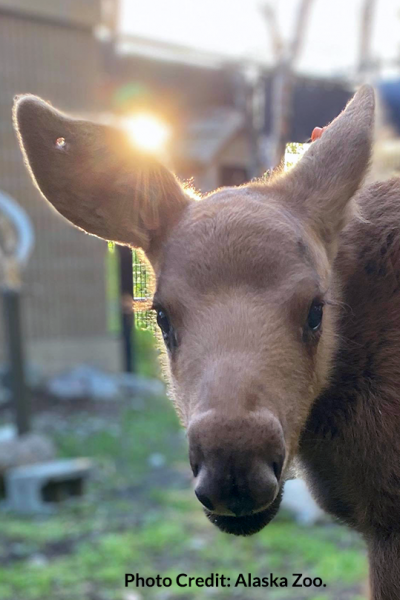
About Trout Unlimited

Trout Unlimited is a national non-profit organization that works to protect, reconnect and restore habitat for coldwater fisheries.

Simply by visiting the Zoo, Cheyenne Mountain Zoo members and guests contribute to important global conservation work.

“Watching the devastating bushfires in Australia from our living rooms in Colorado can leave you feeling helpless and wondering what you can do to make a difference,” said Bob Chastain, CMZoo president and CEO. “It’s important to note that from every membership and every ticket to the Zoo, we set aside funds to support frontline conservation fieldwork around the world, and specifically now, in Australia. We want people to know that coming to the Zoo is conservation in action.”

Since starting in November 2019, the bushfires in Australia have devastated more than 27 million acres, claiming more than 30 human lives and more than a billion animal lives.

This week, CMZoo members voted to send $20,000 to Zoos Victoria’s Bushfire Emergency Wildlife Fund, in Australia. The funds support long-term care for bushfire-impacted animals, including supplementary feeding and habitat restoration, in conjunction with the Australia Department of Environment, Land, Water and Planning, Parks Victoria, and associated recovery teams. Donations from Zoo employees, board members, docents and an internal Zoo match program raised $6,900 in support of Zoos Victoria, making the collective donation $26,900.

“We have been closely watching the devastation in Australia and working to find the best ways to support the recovery,” said Dr. Liza Dadone, CMZoo vice president of mission and programs. “Last week, we asked our members if we could send a portion of their annual Member Conservation Grant funds to Zoos Victoria. Our members’ collective supportive response was immediate.”

Each year, CMZoo members vote for conservation projects to receive a share of $75,000 allocated from membership revenue. The $20,000 donation comes from that membership revenue. In March, members will vote to guide CMZoo’s decisions about which other projects to support, as they do every year. Since 2015, including this contribution, Cheyenne Mountain Zoo Member Conservation Grants have provided $395,000 of membership revenue to support field conservation worldwide.

“Because our members regularly visit Australia Walkabout at the Zoo, they have formed meaningful connections with the animals they’ve seen in these heartbreaking news stories out of Australia,” said Emma Repp-Maxwell, CMZoo membership and annual gifts manager. “As a leader in conservation, we’re committed to helping people make those connections, and taking it a step further by providing opportunities for our members to contribute to the amazing work being done to save and protect the animals left.”

About Cheyenne Mountain Zoo

Cheyenne Mountain Zoological Society was founded in 1926. Today, Cheyenne Mountain Zoo, America’s mountain Zoo, offers comprehensive education programs, exciting conservation efforts and truly fantastic animal experiences. In 2019, Cheyenne Mountain Zoo was voted #6 Best Zoo in North America and CMZoo’s Rocky Mountain Wild was named #5 Best Zoo Exhibit in North America by USA TODAY 10Best Readers’ Choice Awards. It is Cheyenne Mountain Zoo’s goal to help guests fall in love with animals and nature, and take action to protect them. Of the 233 zoos and aquariums accredited by the Association of Zoos and Aquariums (AZA), Cheyenne Mountain Zoo is one of just a few operating without tax support. Cheyenne Mountain Zoo depends on admissions, membership dues, special event attendance and donations for funding.