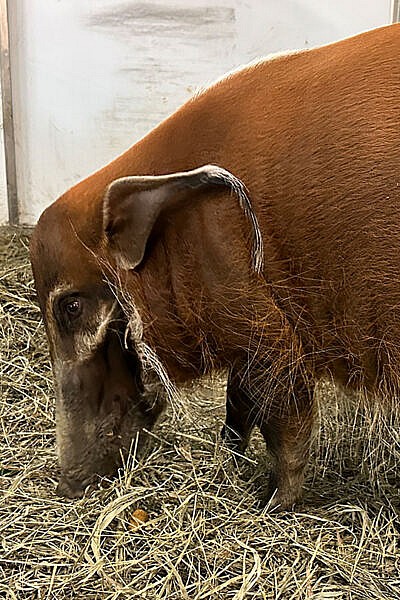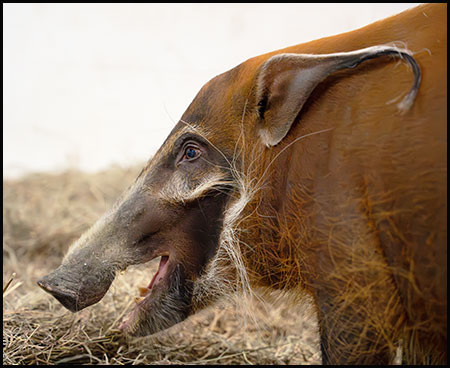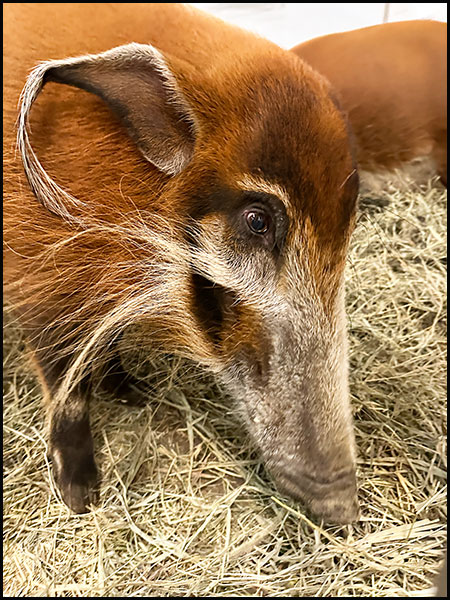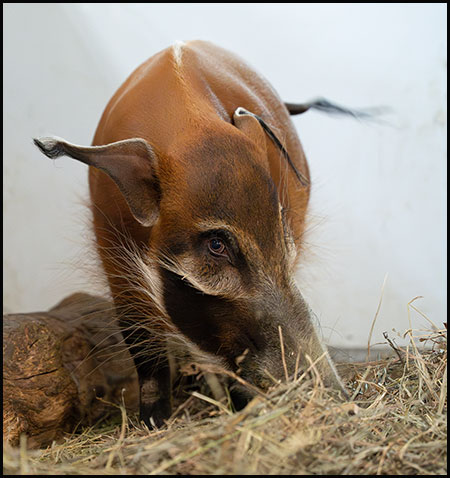
Two redheaded charmers from Texas arrived in African Rift Valley earlier this month, complete with gorgeous ear tassels and pointy hooves. While they complete their routine quarantine period behind the scenes, Red River hog sisters, Rey and Finn, are cooing their way into the hearts of their keepers. Hopefully, the Zoo’s male Red River hog, Augustus, will be just as excited to welcome them to the family.

After their quarantine, they’ll start exploring more spaces and getting to know 17-month-old Augustus, known as “Gus” around here. In the meantime, keepers are getting to know the girls.

“They’re gorgeous animals, and these two are extremely vocal,” said Lauren Phillippi, lead animal keeper in African Rift Valley. “They have been making quiet, content ‘cooing’ sounds to each other and to us when we approach them. They like to do things together, like forage, solve puzzle feeders, roll around in the hay and snuggle while they sleep.”

The 7-year-old sisters were born in the same litter at another zoo accredited by the Association of Zoos and Aquariums. Rey is the leader of the two, and she is a bit bigger than Finn. Rey has darker orange-brown coloration compared to Finn’s much lighter white-and-brown face. Finn is a little more cautious. Being bold and outgoing, Rey is quick to approach keepers, wasting no time to communicate that she is a big fan of belly rubs.

“We quickly noticed how tactile these two are,” said Phillippi. “They enjoy enrichment that requires a lot of motor skills, and they like to get scratches from keepers. Especially Rey.”

Keepers use wooden back scratchers and their hands to give Rey the tactile interaction she likes. Just a few seconds into a scratch session, 165-pound Rey gives an enthusiastic lean and a floor-shaking plop onto her side. She knows how to give keepers every opportunity to scratch her sides, belly and back. Her care team is happy to oblige.

“We’re using this time to develop relationships with them,” said Phillippi. “We want to build that rapport and make sure they know that they’re going to live with choice and control here.”

Finn and Rey are already willingly approaching keepers and staff from behind a protective barrier. They’re also taking training treats well and moving to different spaces when asked. Next, keepers will work on target training and then more complex voluntary behaviors that allow them to care for the girls.

The big question: when will the sisters meet Gus? Finn and Rey are used to sharing space with other hogs, as is Gus. Once the sisters have completed quarantine, the team will introduce the group with a protective barrier between Gus and the girls. Then, based on the hogs’ behaviors toward each other, they’ll move towards sharing space without barriers between them.


The goal is for all three hogs to live together full-time. Red River hogs are social animals, often living in groups, and Finn and Rey came to CMZoo on a breeding recommendation with Gus. At 17 months old, Gus is approaching the age when Red River hogs typically reach reproductive maturity. Red River hogs’ usual breeding season ends in April, so depending on their interactions and Gus’ maturity, hoglets could be here as soon as this summer. More likely, their first chance at reproducing will be next year.

If the hogs eventually welcome babies, all three would be first-time parents, making their genetics valuable to the Red River Hog Species Survival Plan and the population in human care.

When Finn and Rey are ready to explore spaces where guests can see them, the Zoo will provide updates.

Back to The Waterhole

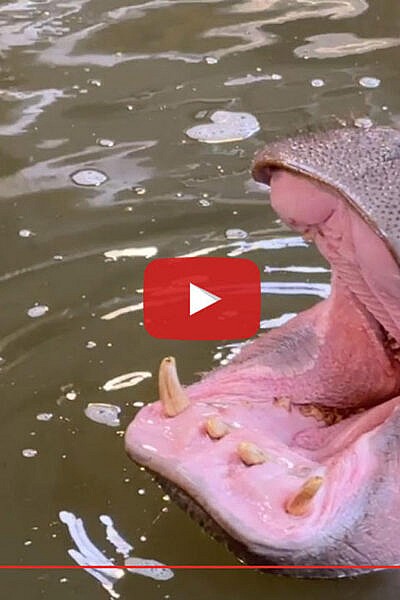
Rambunctious ‘Baby’ Omo has discovered little joys like the feeling of the hose on his gums and the excitement of exploring on his own while still living under the protective eye of his mom, Zambezi. At two and a half years old, Omo is learning and refining foundational training behaviors while also regularly getting the zoomies.

Omo and Zambezi still live together full time but are working on training in different spaces with the doors open between them. With a 1,300 pound ‘hippo tween’ always at the ready to play, Zambezi continues to nurture and teach her wiggly son while recently discovering the little joys of solo time. This time allows Zambezi and Omo some one-on-one time with their care teams and the opportunity to learn, grow, and rest in different ways.

Back to The Waterhole

A sleek, high-energy, 2-year-old domestic ferret named Blizzard recently joined ferrets, Cyclone and Alfred, in The Loft. She quickly made friends with the other ferrets, especially Cyclone, and is already comfortable with her new keepers and training. Visit Blizzard in her new home during your next visit to CMZoo!

Back to The Waterhole

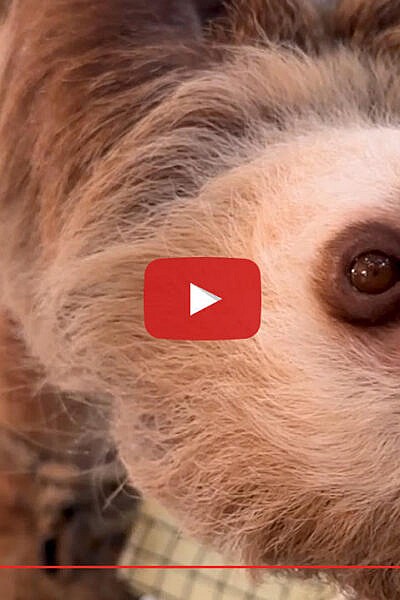
Hoffmann’s two-toed sloth, Aysan, has spent the last few months adjusting to her new life, and her new roommate, in Scutes Family Gallery. Aysan came to CMZoo to join 31-year-old male sloth, Bosco, on a breeding recommendation. As an older sloth, Bosco is very familiar with keepers and guests, and he has helped Aysan come out of her shell.

Aysan is interested in training, especially when her favorite snacks are involved, and is currently working on voluntary injection training. Because keepers have built a trusting relationship with Aysan, she allows them to touch her back and stomach and has already voluntarily participated in x-rays. This training is especially important should Aysan become pregnant in the future.

Back to The Waterhole

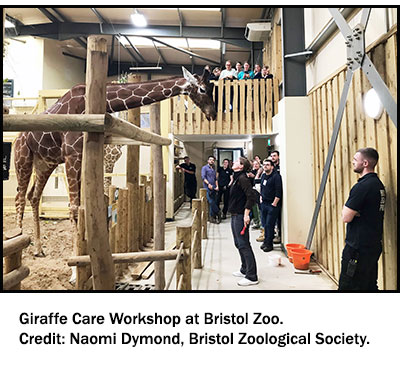
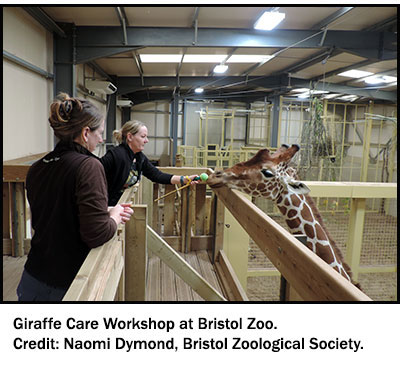
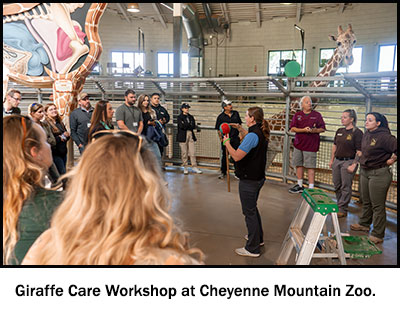
In early November, the International Center for the Care and Conservation of Giraffe (The Giraffe Center) traveled to Bristol Zoo, in the United Kingdom, to host their first giraffe care workshop abroad. Cheyenne Mountain Zoo established The Giraffe Center in 2022 to serve as a resource for giraffe caregivers worldwide.

“We have hosted giraffe care workshops all over the U.S. and virtually with teams in other countries, but Bristol Zoo’s workshop was our first international in-person outreach,” said Amy Schilz, senior animal behaviorist at The Giraffe Center. “It’s really helpful for us to work hands-on with teams and their giraffe herds in their facilities. Our training and care teachings share a common foundation, but we can understand their challenges and obstacles better when we experience them, which means we’re better able to customize their training.”

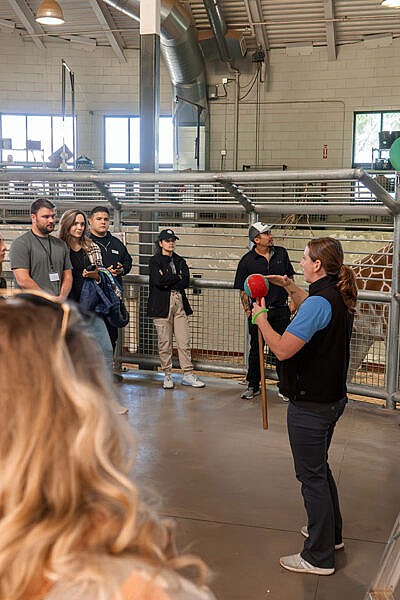
Through their combined decades in the giraffe care field, The Giraffe Center team had previous working relationships with a Bristol Zoo giraffe keeper, who managed logistics for the workshop in England so The Giraffe Center team could focus on the 4-day workshop curriculum. Attendees included Bristol Zoo’s giraffe care team and British and Irish Association of Zoos and Aquariums’ Giraffe Focus Group members. The workshop included lecture-style presentations, group discussions, role-playing and actual practice focused on giraffe nutrition, natural behaviors, hoof anatomy and care, and positive reinforcement training.

“Just like when we’re training animals, we use small approximations to move through training steps with our workshop attendees,” said Diana Miller, giraffe specialist at The Giraffe Center. “Before we start training with the giraffe, we practice hands-on with humans, so we’re presenting the best polished training to the giraffe. Instead of realizing questions you need to ask while you’re working with a giraffe, you can recognize what you don’t know while you’re practicing with a human.”

Practicing hoof care on humans isn’t as far-fetched as it sounds. Attendees move through the motions they will present to giraffe, with Schilz and Miller guiding them. They role play where they’ll stand, where the giraffe needs to stand, how they’ll hold their target stick and hoof trimming tools, how they’ll deliver verbal and physical cues, how they’ll access reinforcers – like crackers or carrots – and how quickly to reinforce the right behaviors. They also practice trimming hooves on cadaver hooves from reputable sources.

“The fact that Bristol Zoo invested in this workshop shows how dedicated their team is,” said Schilz. “When we started working with their giraffe, it was even more obvious how strong their relationships are with their keepers. The Bristol Zoo giraffe were comfortable, social and engaged, and that gives us a great foundation to build upon with new or different techniques.”

In positive reinforcement training, one of the first questions The Giraffe Center team asks themselves is, ‘what does the animal need to know in order to know something else?’ Because giraffe are often food motivated, the first thing they need to know is how to eat politely.

“Teaching a giraffe to eat and stay still while they’re eating is a prerequisite for blood draws, ultrasounds, hoof care and more voluntary behaviors,” said Miller. “It’s a lot harder than you think to teach that. You’re learning to communicate as a giraffe-caregiver team, and you’re finding a balance between maintaining their excitement for the reward food item and teaching them they can trust that we will deliver it when they stand still.”

The teams worked together to make progress on hoof care, stand-still behavior, target training and more. They also shared insight on giraffe nutrition and natural foraging behaviors, and other topics central to good giraffe welfare in human care.

The Giraffe Center team’s experience with their first overseas workshop further ignited their passion for giraffe care and for supporting the people who can truly make a difference in setting the standard for excellent giraffe care.

“In 2015, when we were starting training programs, we were focused on showing people what’s possible,” said Schilz. “Now, we’re really honing our teaching skills. We’re constantly pursuing education, connecting with other experts in our field and sharing what we’re learning, so we can be the best central resource for other giraffe organizations.”

Cheyenne Mountain Zoo made an investment in The Giraffe Center that gives all giraffe caregivers access to a dedicated team focused entirely on giraffe care and conservation.

“The more we host these workshops, the more we learn and share,” said Miller. “It’s all about creative collaboration. We take the same science and apply it differently depending on the animals, humans and environment they are in. That’s our goal for the Giraffe Center – to be a custom-built resource for other giraffe care teams.”

The Giraffe Center is booking workshops for giraffe care teams and giraffe enthusiasts globally. For more information, visit cmzoo.org/giraffecare.

Back to The Waterhole


During the winter months, many Coloradans stay active by enjoying the state’s 300 days of sunshine or embracing the alpine lifestyle and hitting the slopes. For some nature enthusiasts, it can be hard to know where to start in the winter world of outdoor adventure. Cheyenne Mountain Zoo’s EdVenture team has just the program: Outdoor School!

Outdoor School is a year-round program that includes special winter-themed courses. Our partners at Children’s Hospital Colorado say helping kids stay active, despite colder temperatures and shorter days, has countless mental and physical health benefits.

“As outdoor and environmental educators, we see first-hand the health benefits of spending time outside in nature,” said Russell Friedman, education specialist at CMZoo. “Learners of all ages can enjoy safe, natural settings at the Zoo and at spaces around our community as a way to boost their mental and physical health.”

Studies have shown that spending just 15 minutes outside each day can immensely improve a person’s mental state of mind and overall happiness. Outdoor School’s variety of programs can be both soothing and exciting.

“Whether we are hiking on our Zoo’s behind-the-scenes nature trail, learning about animals by spending time with them or meditating outside, we are providing ways for all our participants to practice healthy habits for mind and body,” Friedman said.

Each course is $24.75 and includes daytime admission to the Zoo that day. In January and February, Outdoor School programming includes nature-driven courses focusing on animals’ winter weather adaptations, animal tracking 101, mindfulness practices in nature and animal habitats for winter. Students learn through hands-on activities and unique nature-based experiences.

No matter the season, there are always fun opportunities to enjoy the outdoors, and the EdVenture team at CMZoo is committed to helping people discover those outlets. Cooler temperatures add to the experience, too.

“With each program, we emphasize the first principle of Leave No Trace, which is ‘Plan Ahead and Prepare’,” Friedman said. “We provide a checklist prior to each workshop so everyone is prepared for time outside, especially during the winter season. We also constantly move throughout the Zoo, so our bodies are staying active and warm. When necessary, we will take learning breaks in many of the Zoo’s heated indoor animal habitats to help connect participants to wild places and our wildlife.”

New Outdoor School programs are added to the schedule throughout the year, so consider letting CMZoo’s EdVenture team help your family members take safe steps into nature in a variety of ways. See current programming and register at cmzoo.org/outdoorschool.

Back to The Waterhole

It was a big year to celebrate for black-footed ferret (BFF) conservation enthusiasts. Including Cheyenne Mountain Zoo’s kits, 417 BFF kits were born into the program. That’s the most kits born in a single year program-wide in a decade!

Led by the Association of Zoos and Aquariums Black-Footed Ferret SAFE (Saving Animals From Extinction) and U.S. Fish & Wildlife Service, breed-and-release programs at Cheyenne Mountain Zoo, Smithsonian National Zoo and Conservation Biology Institute, Phoenix Zoo, Toronto Zoo, Louisville Zoo and National Black-Footed Ferret Conservation Center work together to save the species. CMZoo contributed 21 kits this year and released 12 kits and 2 beyond-breeding-age adults into wild conservation habitats in Colorado.

Once the kits are old enough to live independently – around 3 months old – they are transported from the conservation center at CMZoo to BFF ‘boot camp,’ in Fort Collins, where they spend time in a pre-release pen that simulates the opportunities and challenges they’ll encounter in the wild. When they prove they can hunt, find shelter and survive in the pre-release pen, they are cleared for wild release. Ferrets that don’t graduate from boot camp are brought back to support breeding efforts or serve as ambassadors for their species, if they’re too old to reproduce.

In November, CMZoo staff and board members traveled to protected prairie lands in Pueblo, Colo., to see the ferrets run free into their new home.

“We invite staff from all departments to participate in releases, and we especially aim to bring staff from The Loft and EdVenture department, who can share their inspiration when guests asks about Rouge – a BFF that lives in The Loft,” said Jeff Baughman, field conservation coordinator at CMZoo. Baughman manages the BFF breeding program at CMZoo and has attended annual releases for nearly 20 years. ”The experience is rewarding, and it inspires us to inspire others to care for wildlife and wild places, and continue our work contributing to conservation efforts.”

Native to prairies stretching from Mexico to Canada, BFFs were thought to be extinct in the 1980s. During Western frontier explorations in the early 1900s, cargo ships from Europe and Asia inadvertently brought sylvatic plague to North America. The spread of the plague bacteria by fleas among prairie dogs (and other animals), combined with poisoning and eradication programs led by newly settled farmers and ranchers who saw prairie dogs as pests, drastically reduced the prairie dog population. Because prairie dogs are their main food source, BFF populations declined dramatically along with them.

On Sept. 26, 1981, a ranch dog named Shep caught a BFF. Shep’s catch led to the discovery of a small population of the elusive animals in Meeteetse, Wyoming. Since then, zoos, U.S. Fish and Wildlife, National Black-footed Ferret Conservation Center and other organizations have banded together to breed, prepare, release and monitor BFFs to increase the population.

Because they or their offspring could be released to the wild, every effort is made to keep the BFFs born and raised at CMZoo as wild as possible. So, they are not visible to CMZoo guests. Guests can visit Rouge, a former breeding male that now lives in The Loft.

Prior to the CMZoo releases last month in Pueblo, the sites were managed for sylvatic plague through oral bait vaccines for prairie dogs living on these sites and dusting to eliminate plague-carrying fleas. Sylvatic plague transferred by fleas is now prairie dogs’ primary threat – and BFFs need prairie dogs as their primary food and shelter source. BFFs and other prairie species live in abandoned prairie dog tunnels.

“Being in the field with people who advocate for BFFs but haven’t released them before takes me back to my most inspiring black-footed ferret release at a ranch in New Mexico in 2008,” said Baughman. “On our way to the ferret release area we drove through a huge herd of powerful bison. It helped me imagine a time when bison, swift foxes, burrowing owls, prairie dogs and black-footed ferrets were abundant together in the prairie.”

“We released them before dusk and after sunset we went back to spotlight and monitor the first ferret we had released,” said Baughman. “To our surprise, it was above ground with two swift foxes. They looked almost the same size from a distance and their interaction seemed more curious and playful than threatening. It was as if they were old friends reunited after a long time apart. It looked like they were dancing on the prairie, under the moonlight, as they have done for thousands of years. The bison, the swift foxes and the prairie were truly magical. That was a day that I will remember forever.”

Bison have a similar story to the black-footed ferret. They were nearly eradicated to extinction and are now recovering with the help of people dedicated to them. Baughman sees them as proof that animals can possibly recover, and if people work together, they could potentially bring back some of the prairie ecosystem to its original splendor.

“Zoos have been so instrumental in those recoveries,” said Baughman. “The work we’ve been doing at CMZoo for 42 years, helping black-footed ferrets recover, helps the entire ecosystem because prairie species need each other.”

At the core of the prairie’s survival is the prairie dog. Prairie experts estimate that 170 prairie species depend on the prairie dog – and bison make life richer for the prairie dogs, which in turn support the BFFs. Bison graze differently than livestock. They cut the grass instead of uprooting it, which benefits natural vegetation, healthy drainage and nutrient-rich soil for the mostly herbivorous prairie dogs. The bison’s literal heavy presence also loosens soil, which prairie dogs dig to create tunnels that house their colonies and later become homes for BFFs and other species, like box turtles and burrowing owls.

“It is a complicated balance that we want to support without getting too involved in,” said Baughman. “Ultimately, we want a future that doesn’t need our breed-and-release program because it’s sustaining itself in the wild.”

Until then, Baughman and his inspired team will continue the work with the support of CMZoo guests and members. Back at the conservation center up above CMZoo, the meticulous yearly cycle of preparing for another breeding year has already begun. They recently welcomed new breeding females and males and are moving them through the simulated light cycle that triggers their natural instinct to breed in the spring. After such a successful breeding year, program partners are optimistic about 2024.

Every CMZoo guest helps support this important program because 75 cents from every admission goes to Quarters for Conservation, which helps fund BFF conservation and other important efforts around the world. Since 2008, Q4C has raised nearly $5 million for these programs. To learn more about the black-footed ferret breeding program and CMZoo’s Quarters for Conservation program, visit cmzoo.org/conservation.

Back to The Waterhole

It’s that magical time of year when many people search for the perfect holiday gifts for friends and family. Whether you’re looking for a once-in-a-lifetime experience or a truly unique stocking stuffer, these options are sure put a smile on every face on your list.

Plus, when you purchase something from Cheyenne Mountain Zoo, you know your funds are helping us continue our important work. As a nonprofit that doesn’t receive any tax support, we rely on admission, memberships, events and special programs like these to continue our work.

Animal Art Holiday Ornaments

The Loft animals and their keepers have been painting the perfect stocking stuffers or gifts for your holiday party gift exchange. These 3” x 3” canvases with twine hangers are one-of-a-kind, because they were painted by an animal ambassador! Skunks, birds, reptiles, a ferret and even an opossum added their artistic touches to the ornaments by participating in voluntary training with their keepers. Some animals walk through paint and onto the canvasses, leaving their adorable footprints in a variety of flashy colors. Others slither through the paint and some even hold the paintbrushes themselves! These ornaments are only available for purchase in person – while supplies last – in The Loft, now through the end of Electric Safari.

VIP Tours

If you really want to spoil someone, give them the adventure of a lifetime: a CMZoo VIP Tour! During this private tour, your group of up to five people will experience three behind-the-scenes animal encounters of your choosing, plus a meet-and-greet with one of our ambassador animals in The Loft and a super-sized giraffe feeding. You can help train a sloth, get up-close with the grizzly bears, say hello to the hippos or choose from our many other animal encounter options. Along the way, one of our experienced guides will tell you all about the Zoo, our animals and our conservation impacts around the world. When your tour ends, enjoy the rest of the day at the Zoo, because admission is included. Visit cmzoo.org/viptour to see our animal encounter options, to get all the details and to sign up.

CMZoo Annual Membership

How about a gift that keeps on giving all year long? Memberships can be purchased as gifts! CMZoo members can take advantage of free daytime admission (with advance ticket reservations), discounts on programs and merchandise, free members-only summer nights, free Electric Safari visits in the winter and more. Visit cmzoo.org/membership or email [email protected] for more information.


Tickets to Electric Moonlight and Electric Safari

Give the gift of memories made by purchasing tickets to a holiday special event at the Zoo, and be early to the gift-giving season! In December, we have options for an adults-only date night (there will be a lot more than milk and cookies on the menu) or a festive evening on the mountain with the entire family.

Electric Moonlight returns to Cheyenne Mountain Zoo on Thurs., Dec. 7 from 5:30 to 8:30 p.m. This event is just for our 21-and-up guests, complete with holiday lights, live music and food and drink samples from local vendors, restaurants, distilleries and breweries (while supplies last). Plus, an elf told us that jolly old Saint Nicholas will be there to hear holiday wishes from the grown-ups! Tickets are limited and this event may sell out in advance. Tickets are available at cmzoo.org/em.

Starting Dec. 1, the Zoo opens its gates in the evenings for Electric Safari, where all ages can explore the Zoo and enjoy the wonder of 50 acres of twinkling lights, illuminated enormous inflatable animals, a nightly drone light show and more than 90 handmade light sculptures on display throughout the Zoo. Until Dec. 23, Santa Claus will be at Electric Safari to meet guests and listen to holiday wishes. This event is a magical way to get into the holiday spirit on the side of Cheyenne Mountain, where the views of the city lights below the Zoo can’t be beat. Electric Safari runs Dec. 1-3, 8-23, and Dec. 25-Jan. 1, 2024 from 5 to 8:30 p.m. CMZoo members have access to early-entry tickets from 4 to 5 p.m. Electric Safari is free for members, but everyone needs to reserve an advance timed ticket at cmzoo.org/electric. (Drone show not available on Sat., Dec. 2. Drone show and inflatables are weather dependent.)

Small group events and programs also make great gifts! See all of our options at cmzoo.org/events.

Animal Grams

Do you know someone who would love to open their front door to a skunk, tortoise, ferret, frog or otherwise? Surprise them with a CMZoo Animal Gram! Our EdVenture team will come to your home or workplace with a very special guest: an animal ambassador from The Loft or My Big Backyard. Each Animal Gram includes a 5- to 10-minute visit from an animal and staff, an animal art piece and photo opportunity. Get all of the information at cmzoo.org/animalgrams.


Adopt an Animal

Gift an adoption of a hippo, giraffe, moose or another animal of your choosing that we’ll mail to you or a loved one. Our adoption packages start at just $35, but if you’re looking to give an extra special stocking-stuffer check out our Wild Adopt packages ($55-65) to bring home an adorable, cuddly plush of your very own! All of our adoption packages include a certificate of adoption, an animal fact sheet and a photo of the animal at CMZoo. Each adoption directly supports the care of all our animals. Order by 3 p.m. MST on Fri., Dec. 15 to ensure delivery before Sat., Dec. 23, 2023. You can find our array of adoption packages at www.cmzoo.org/adopt.


Carve Your Memories in Stone

What’s even better than coming to CMZoo to see your favorite animals? Coming to see your very own tile – and your favorite animals! We recently launched our new blue tiles in Water’s Edge: Africa! Join our new community wall of names and carve your memories into stone. Our tiles offer a unique way to honor, celebrate, and make lasting memories for your loved ones. Each tile purchase also directly supports CMZoo and the care of our animals. For $250, you can personalize a 6-inch by 6-inch porcelain stone tile. Every tile allows your message to be two lines, each line with 12 characters available, totaling 24 letters and spaces (special characters are each an additional $15 fee). You can choose from the following animals to engrave on your tile: hippo, penguin, pelican, lemur, warthog or crane! Create your unique message and purchase your tile at www.cmzoo.org/tiles.

Back to The Waterhole

This fall’s warmer temperatures have been welcomed by a lot of Coloradans, but there are four chirpy rascals in Rocky Mountain Wild that would choose a snow day over any other kind of day. For North American river otters, Pivane (pah-VAWN-ay), Enapay (eh-NAW-pay), Darwin and Newton, it’s past due time to bring on more white fluffy stuff.

“They’re always curious and energetic, but they’re extra enthusiastic in the snow,” said Kristen Cox, senior animal keeper in Rocky Mountain Wild. “They’re some of my favorite animals to watch in the winter months – especially after a fresh snow. It seems like they have ‘zoomies’ for the entire day.”

A group of otters on land is called a romp. A group of otters in the water is called a raft. There’s no official term for a group of otters in the snow, but it would probably be some synonym for joy. At least, that’s what people feel when watching them in the snow. It’s impossible not to smile, watching them slipping, sliding, wrestling, chattering and scampering up hills and down otter-made toboggan runs that span their habitat.

“When we get at least a couple of inches of snow, the otters usually make a snow slide,” said Cox. “They run to the top of the hill and jump onto their bellies with their front legs tucked back and just bomb down the hill. They’ll take the same path, so it gets pretty slick after a while, and I think they really like how fast they can get going.”

In between sledding sessions, they can be found swimming, sleeping, snacking, training for important voluntary husbandry behaviors and engaging in novel enrichment. Their climate-controlled pool is open year-round and their extremely thick fur coats over healthy layers of fat keep them warm. They’re comfortable in the water even on the chilliest of winter days. North American river otters are believed to have more individual hairs per square inch of their bodies than most humans have on their whole heads. Their outer coat is coarse and their inner coat is soft and fluffy, creating a barrier so thick that water hardly touches their skin.

All of that otter gusto requires rest and fuel, so naps and snacks are another big part of their days. The four otters typically prefer to pile up together for mid-day rests, usually inside one of their hollow logs or in a hay bed in their yard. Enapay sometimes prefers his own space, so if an otter is sleeping solo, that’s probably him.

The otters are meat-eaters, primarily, with fish being their preferred dish. Smelt, trout and capelin top the list. They also get ground meat, shrimp, small rodents and crab. Hard-boiled eggs are a coveted treat that’s scarfed down, shell and all, with no regard for table manners.

Since 2-year-old brothers, Darwin and Newton, moved to CMZoo in May 2022, their care team has been focused on creating an environment that they and 13-year-old brothers, Enapay and Pivane, could all feel confident sharing. Now that they’ve achieved a cohesive bachelor group and the brother pairs are together full-time, animal keepers are prioritizing refreshing or starting voluntary husbandry behavior training. The otters are extremely eager to train, which is communicated through a series of chattering squeaks, chuffy huffs and intense stares of focus.

Enapay and Pivane, who Cox has been training with since they arrived at CMZoo in April 2011, are the best students in the romp. In addition to presenting their paws, receiving voluntary injections, stationing in various locations, coming when called and opening their mouths for dental checks, they are also trained for voluntary blood draws. During blood draws, keepers ask them to take turns placing themselves in the training tube – a half-pipe fastened to a fence – and to present a webbed paw through the fence. They get lots of fish throughout the sessions, while the CMZoo veterinary team delicately draws blood from a vein in their arm.

“When they see us approaching, they dart to the training panel and jump all over each other, trying to get in the prime location in the training tube,” said Cox. “It’s usually Enapay who plants himself in the training tube first. Sometimes he falls asleep in there. He knows good things happen when he goes into the tube, and I think he wants to be there – awake or asleep – just in case we’re going to train.”

The team doesn’t need to draw blood regularly, but it’s an important behavior for the aging otters to have in their wheelhouse. The median life expectancy for North American river otters in human care, according to the Association of Zoos and Aquariums, is 12 years.

When the time comes and the boys start slowing down, their care team will be able to run blood tests that can help them diagnose and address any issues. Learning this behavior before they need it means the otters could participate in their health care in a lower stress scenario, without anesthesia.

“They still act like they’re five years old,” said Cox. “They don’t need any medications at this point, but we’re prepared if the day comes when they need our help. For now, we’re grateful they seem to be in good health, and we work hard to ensure every day is jam-packed with fun for them.”

Following in their honorary big brothers’ paw prints, Darwin and Newton are learning important voluntary behaviors, too. Newton recently mastered voluntary injection training. Darwin, the most vocal and confident of the four, is working on it, too. Next up will be presenting their paws for blood draws and checks, stationing – when keepers ask them to move to a specific location and stay there – and opening their mouths for dental checks.

Even their keepers who work with them daily admit it is difficult to tell the four apart, but there are some subtle differences that otter fans can note, and try their best to identify. Pivane and Enapay are lighter brown when they’re dry. Enapay has two darker fur dots above his nose. Pivane has a whiter snout and he’s bigger than Enapay. In the spring, they shed their winter coats and they all look lighter in color, compared to their darker brown winter coats. Darwin has a thinner snout. Those tips might help, if the otters slow down long enough for guests to notice the differences.

“Otters are just the best,” said Cox. “I think we can all learn from them. Every day is the best day of their lives. They’re carefree. They communicate well. They’re honest with each other and they don’t hold grudges. If you like to be happy, otters give you a lot of reasons to be happy.”

Next time Mother Nature graces Colorado with snow, channel your playful inner otter and enjoy a day at the Zoo. CMZoo is open every day of the year and Value Days reduced admission begins December 1. Grab an e-ticket (advance tickets are required) at cmzoo.org and a hot cocoa from Grizzly Grill, and spend a moment letting Enapay, Pivane, Darwin and Newton put a smile on your face in Rocky Mountain Wild.

Back to The Waterhole

Juju, a 43-year-old female Western lowland gorilla, is adjusting to a new care plan after a health scare at the end of October 2023. She has experienced phases of discomfort that her team supported her through in the past. But, this time, she seemed to have less specifically-located pains and more general discomfort.

After a few days of what appeared to be headaches, lethargy, reduced appetite and behavioral changes, like choosing to spend time alone in her den rather than with the group, Juju’s care team decided they could best help her with an immobilization.

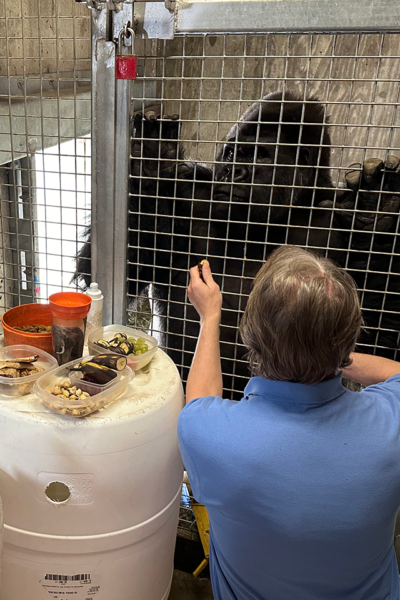
“Gorillas are incredibly intelligent,” said Joanna Husby, animal care manager in Primate World. “Juju knows that when we have immobilized her to address health concerns in the past, we have first asked her to go into her den and take a voluntary injection to begin anesthesia. This time, without us asking, she chose to go into her den and started presenting her voluntary injection behavior, putting her shoulder up against the mesh toward us. I think she understands that the injection would be the first step towards us helping her feel better, so it’s like she was communicating that she wanted our help.”

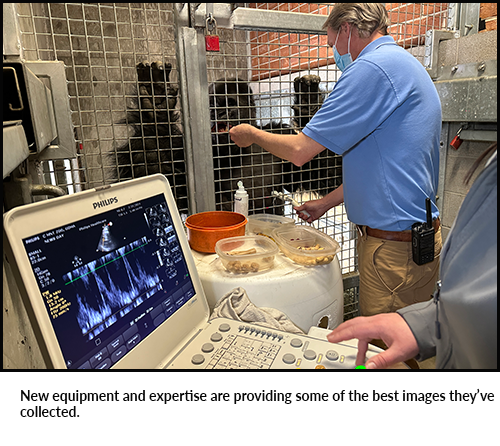
During the immobilization, Juju received IV fluids while the team did an ultrasound, took x-rays, drew blood and collected urine for diagnostics. Sadly, those results revealed that Juju is in late stage kidney disease. It appears to have progressed rapidly, as it was not evident in her previous tests only two years earlier. The disease is unfortunately not reversible, so the team is now focused on preventing it from getting worse while keeping her comfortable.

To achieve that, her team needs to manage her blood pressure and reduce or eliminate medications that can cause kidney damage. The medications that need to be adjusted are also the medications that have kept her physical pain at bay. So, in addition to finding a blood pressure medication that she can tolerate, the team needs to find new ways to manage any discomfort.

Juju’s team has changed her pain medications or their dosages started an oral blood pressure medication, and she seems to be improving. Over time, the team hopes that she will be willing to train for voluntary blood pressure checks and voluntary blood draws, so they can monitor her kidney blood values without the need to immobilize to get that information.

“We’re seeing subtle improvements in Juju,” said Husby. “She’s spending time with the troop, eating and drinking normally and appears to be more stable when moving around. We recognize we can’t put a gorilla on dialysis, which is what a human with this stage of kidney disease would likely be encouraged to do, so our treatment options are somewhat limited, but they seem to be helping.”

The median life expectancy of a female Western lowland gorilla in human care is 39 years, according to the Association of Zoos and Aquariums. With that in mind, Juju’s care team is working to give her as many good days as possible, while balancing the risks and benefits of future immobilizations. Putting an animal under anesthesia is always risky, but if the team sees Juju decline in a way they believe they can help under anesthesia, another immobilization is not out of the question.

Juju’s team tracks quality-of-life markers that help them identify if and when they need to escalate her care, including her appetite, activity level, social interactions with other gorillas, mobility and interest in training and enrichment.

“She’s interacting well with the troop and participating in voluntary behaviors, like EKG readings that help us monitor her heart, which can also be impacted by high blood pressure,” said Husby. “We’re cautiously optimistic about the progress she has made over the past couple of weeks, and she has an excellent team of humans and gorillas surrounding her with care and camaraderie.”

Roxie – a 47-year-old female gorilla who Juju has the closest relationship with – has been staying close by, and was especially attentive before Juju’s immobilization.

“We’re going to make the best decisions for her and the social dynamic of the troop as a whole,” said Husby. “We know them all so well that we can make changes quickly to address Juju’s health and the troop’s well-being. She could decline rapidly or we could be lucky and have her with us for many more years. We’re holding onto hope for the latter.”

Back to The Waterhole