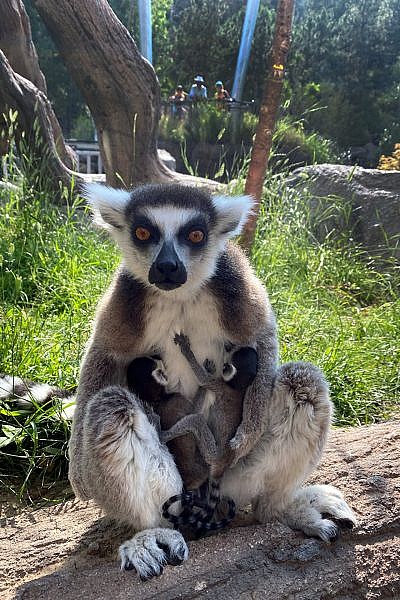
RING-TAILED LEMUR MOM, ALLAGASH, WELCOMES TWINS TO WATER’S EDGE: AFRICA – Keepers at Water’s Edge: Africa were seeing double Sunday morning as they welcomed twins to the ring-tailed lemur family. Around 6 a.m. on Sunday, July 11, animal staff spotted first-time mom, 8-year-old Allagash (AL-uh-gash), holding an infant lemur and then confirmed a second stripy bundle of joy had arrived. The twins are the second and third ring-tailed lemurs born this year at Cheyenne Mountain Zoo. Allagash’s sister, Rogue, welcomed her first baby on April 26, 2021.
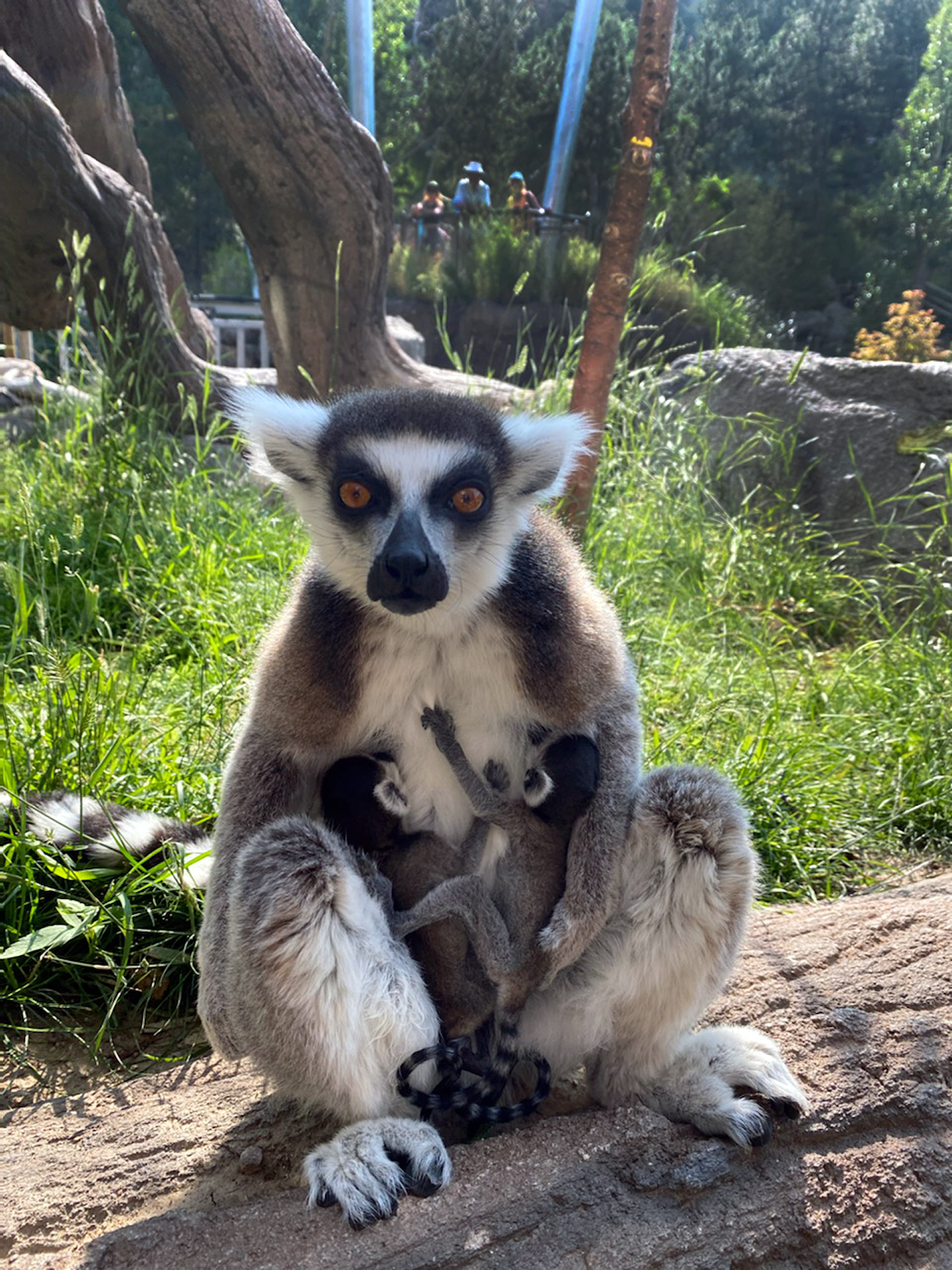
“Allagash is probably our feistiest lemur, so we’re excited to see how her bold personality translates to motherhood,” said Philip Waugh, lead keeper in Water’s Edge. “We’ve heard her cooing gently to her babies while they nurse, which is something we didn’t see with Rogue. She has her hands full with these twins, but she seems to be embracing her natural instincts to groom, feed, snuggle and protect them.”

The tiny newborns can be difficult to spot, since they’re typically cuddled up to mom’s chest for the first couple of weeks. Rogue’s baby has been curious about the new residents, leaping over to its aunt Allagash to get a quick look at the newborns before excitedly pouncing away. Six ring-tailed lemurs now share their waterfront home in the new exhibit, which opened in June 2020: Hercules, 4-year-old dad; Allagash, 8-year-old mom; Rogue, 8-year-old sister/aunt; Rogue’s 11-week-old baby and the newborn twins.

Staff have seen the babies nursing and consistently clinging to mom, which indicate the babies are healthy and bonding well with Allagash. The sexes of the twins have not been identified, but CMZoo will share updates on its social media channels as the team learns more about them. As long as all continues to go well for the lemurs, guests can see them right away.

“They’re so cute with their bandit-like eye markings and big fluffy ears,” said Waugh. “We have a trusting relationship with Allagash, so she’s been happy to let us get close enough to visually check on her and the little ones. She’s doing a great job. We’re going to follow Allagash’s lead as long as things are going well, and we’re here to support her if she needs us.”

CMZoo veterinary and animal staff are closely monitoring mom and her new babies, but won’t get the babies in hand unless they see it’s medically necessary.

According to the Lemur Conservation Foundation, lemurs are among the most threatened groups of mammals. The International Union for the Conservation of Nature (IUCN) estimates that over 95 percent of lemurs face extinction in the next 20 years. Ring-tailed lemurs are endangered, according to the IUCN. Hercules has breeding recommendations with Allagash and Rogue, as part of the ring-tailed lemur Species Survival Plan, managed cooperatively by members of Association of Zoos and Aquariums-accredited facilities, like CMZoo.

CMZoo was aware of Allagash’s pregnancy and had been monitoring her and the twins regularly. Lemur gestation periods last about 135 days. Breeding females typically have one baby per year, but twins can be common when food is abundant. Newborn lemurs cling closely to the mother’s abdomen for about two weeks, then will start to ride on her back. After about month, the young lemurs start exploring more independently until they’re fully weaned at about five or six months. More about ring-tailed lemurs at Cheyenne Mountain Zoo.

About Cheyenne Mountain Zoo

Cheyenne Mountain Zoological Society was founded in 1926. Today, Cheyenne Mountain Zoo, America’s mountain Zoo, offers comprehensive education programs, exciting conservation efforts and truly fantastic animal experiences. In 2021, Cheyenne Mountain Zoo was voted #4 Best Zoo in North America and CMZoo’s Rocky Mountain Wild was named #3 Best Zoo Exhibit in North America by USA TODAY 10Best Readers’ Choice Awards. It is Cheyenne Mountain Zoo’s goal to help guests fall in love with animals and nature, and take action to protect them. Of the 233 zoos and aquariums accredited by the Association of Zoos and Aquariums (AZA), Cheyenne Mountain Zoo is one of very few operating without tax support. Cheyenne Mountain Zoo depends on admissions, membership dues, special event attendance and donations for funding.
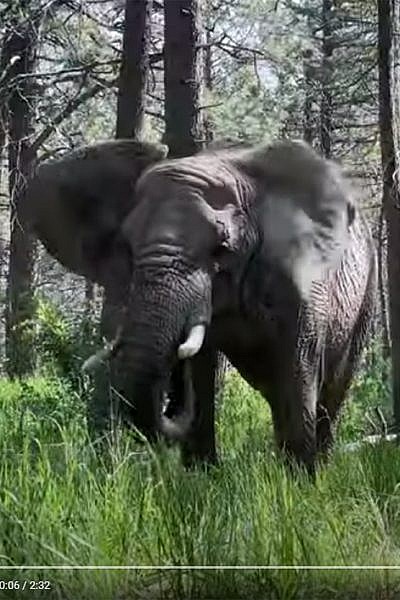
Join us for an extra-special trip to our mountainside elephant vacation yard! Lucky and Kimba are spending some away from guests to graze and relax in the two-acre meadow, which is specially tended for our aging African elephants. Make sure to listen for the songs and calls of the wild birds who live around the vacation yard as well!

The Wilgruen Elephant Center at CMZoo was designed to care for aging elephants, and is currently home to our herd of six geriatric African elephants, lovingly dubbed our, ‘Golden Girls.’ Just like humans, care for each elephant is specific to the individual, and keepers work to provide the best possible care for these aging beauties, relying on equipment and spaces designed to help them stretch and exercise their bodies and minds. Part of this special care includes space for the elephants to relax.

Through our Quarters for Conservation program, Cheyenne Mountain Zoo is proud to partner with the Tsavo Trust to protect elephants and rhinos in the largest national park in Kenya. Using both aerial surveys and ground patrols, Tsavo Trust helps prevent poaching in an effort to keep these iconic and endangered animals around for future generations. Learn more about Cheyenne Mountain Zoo’s African elephant conservation efforts.

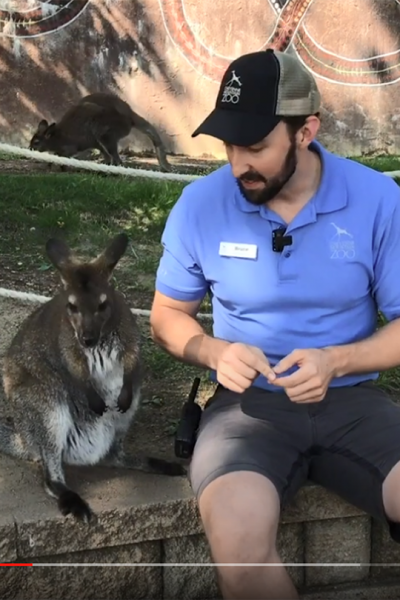
Earlier this month, we announced that Gidgee, our 2-year-old red-necked wallaby, has a joey in her pouch! Join us as we get another pouch peek at this little one, who is still hairless and is starting to try to open his eyes. Bruce, Australia Walkabout keeper, will tell you more about the joey, its family, and its upcoming milestones.

Back to The Waterhole


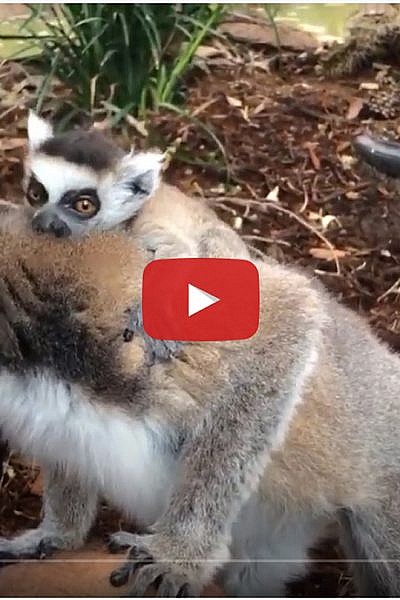
Get up-close with the Zoo’s newest addition, a one-month-old ring-tailed lemur, born Monday, April 26, to first-time mom, Rogue.

The first baby born in our new exhibit, Water’s Edge: Africa, is surpassing milestones and stealing our hearts with ease. Join Philip, lead keeper in Water’s Edge, on lemur island to learn how Rogue is embracing motherhood, how the little one is showing signs of strength, and how Hercules and Allagash – the baby’s father and aunt – are warming up to their tiny new relative.

Because baby and mom are bonding so well, we haven’t thoroughly checked the baby, so we haven’t confirmed its sex. We don’t have naming plans to share, yet, but we’ll keep you posted.

You can visit the baby, Rogue, Allagash and Hercules in Water’s Edge: Africa. Baby is still clinging to Rogue most of the time, so it can be hard to see in-person. Philip says one of the best times to spot the baby is when the lemurs are sunning on the trees outside each morning. The baby is often snuggled on Rogue’s chest while she stretches out in the warm sunshine.

Back to The Waterhole


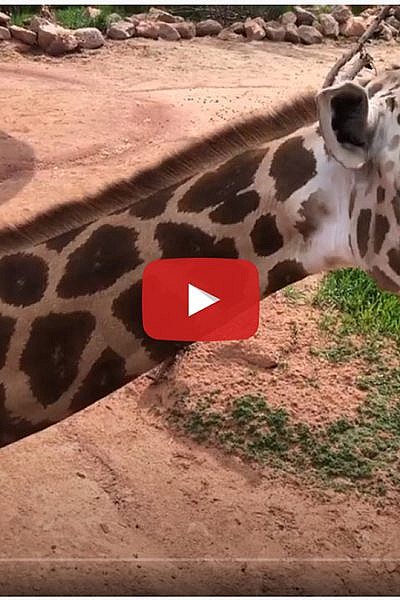
Learn all about Ohe, Viv, BB and Panya, our four giraffe under four years old!

Their primary trainers detail their personalities, roles in the herd, training progress, and relationships as the herd’s youngsters. You’ll also get to see behind-the-scenes training footage of each giraffe and its trainer, as well as a mini-zoomie session in the main yard.

Back to The Waterhole


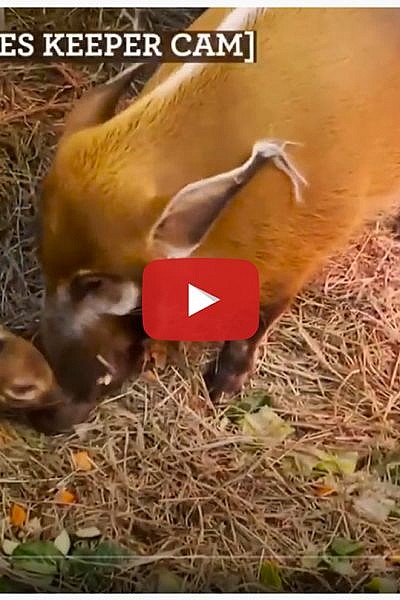
Come behind the scenes to see how our one-month-old Red River hoglet is doing! It (we haven’t identified the baby’s sex yet) is growing and bonding well with first-time mom, Zena. African Rift Valley Keeper, Brooke, is here to give you an update on this very energetic little hog, and to answer the big questions:

  • Is it a boy or a girl?
    — We don’t know yet. The baby is doing so well, we haven’t had a need to interrupt its bonding time with mom.
  • What’s it’s name?
    — We don’t have concrete naming plans yet, but we’ll keep you posted.
  • When can we see it?
    — We’re working on introducing the baby, Zena and Huey. We’ll definitely let you know as soon as you can visit this cutie at #CMZoo.

Learn more about how this young one is warming up to its keepers, zooming around and testing new foods. Guests can see dad, Huey, in the Red River hog yard near the giraffe barn, which he shares on rotation with Ari, our 19-year-old female Red River hog.

Back to The Waterhole


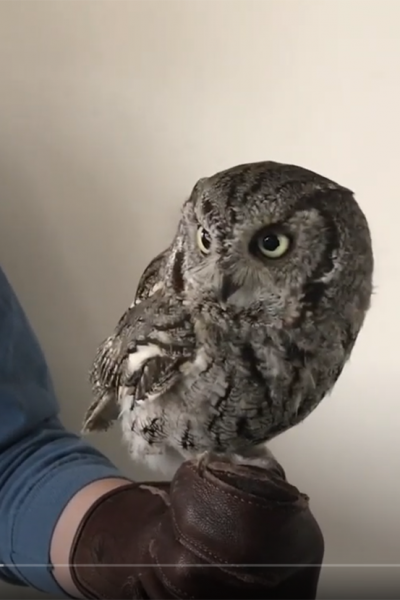
CMZoo’s EdVenture department recently welcomed Hootenanny, a 6-year-old female screech owl, to the team. Get to know “Hoot” and learn about her species, which is found in Colorado’s wild places. She may be small, but she is a skilled hunter and a fast study. Learn about her incredible adaptations and watch her flight training with her primary trainer, Lauren.

Hootenanny participates in our outreach programs, like animal meet-and-greets and ZOOMobile. Learn more about our custom animal experiences/.

Back to The Waterhole


Spring is here! As many Coloradoans start exploring our beautiful wild places, it’s important to help our curious native black bears stay safe, by helping them avoid human-wildlife conflicts.

Although grizzly bears aren’t found in the wild in Colorado, our CMZoo grizzlies are here to help you learn how to keep our native black bears safe. Rocky Mountain Wild keeper, Kelsey, provides campsite safety tips while Emmett and Digger explore a campsite full of examples of how NOT to camp – and prove why Kelsey’s advice is important to follow.

Help do your part to keep curious wild bears safe by practicing these campsite safety tips:

  1. Keep campsite food smells to a minimum.
  2. Use bear-safe food storage and toiletries containers.
  3. Don’t store food or toiletries in your tent with you.
  4. Keep a clean campsite. When you leave your campsite to explore, make sure you’re not tempting a curious bear with food, trash or other interesting smells.

Back to The Waterhole


It’s World Penguin Day, so let’s hang out with CMZoo’s African penguins in Water’s Edge: Africa! Join our keepers at the edge of the guest sidewalk, where our 16 African penguins can come right up to their penguin-sized fence to say hello to our guests any time they want on warm-weather days.

Did you know that by supporting CMZoo, you’re supporting frontline penguin conservation efforts in South Africa? Because of your support, our conservation partner, SANCCOB rescued, rehabilitated and released 124 chicks to the wild in 2020, and the work continues. SANCCOB penguin rangers live on-site with wild penguin populations, which allows them to quickly save abandoned chicks and help injured adults recover, then rejoin their wild flocks.

In this video, we say hello to Rico and Rufaro, and learn about their process going through a catastrophic molt. Penguins experience a catastrophic molt – when they lose all of their feathers at once, then regrow them – about once a year. You can also learn about the personalities of some of the individuals in our flock, like outgoing Napoleon and Captain, as our keepers sit down with them for breakfast.

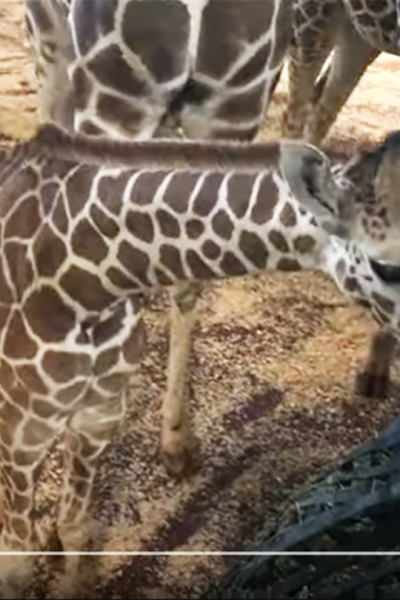
Join us as we check in with BB, our six-month-old reticulated giraffe calf. BB is sassy, smart and outgoing, which means she’s a natural when it comes to training. Check in with Lead Animal Keeper, Amy, as she tells us what BB’s been up to, and how she’s making a name for herself in our herd of 17 long-necked friends.

Back to The Waterhole