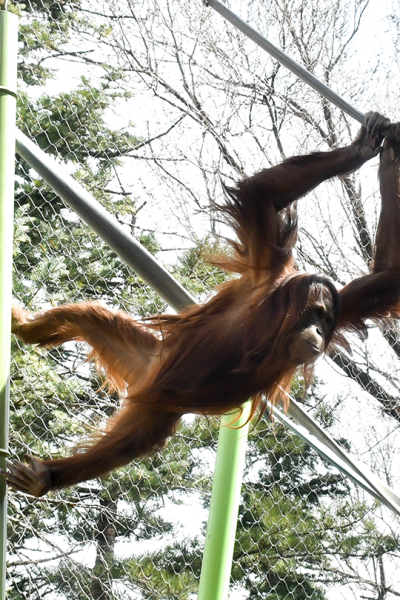
Visitors to Primate World, at Cheyenne Mountain Zoo, may soon notice two crates in the orangutan yard. These crates are part of the Zoo’s careful preparations to help two iconic Sumatran orangutans, 6-year-old Kera and her mother, 37-year-old Sumagu, get ready for their next chapter.
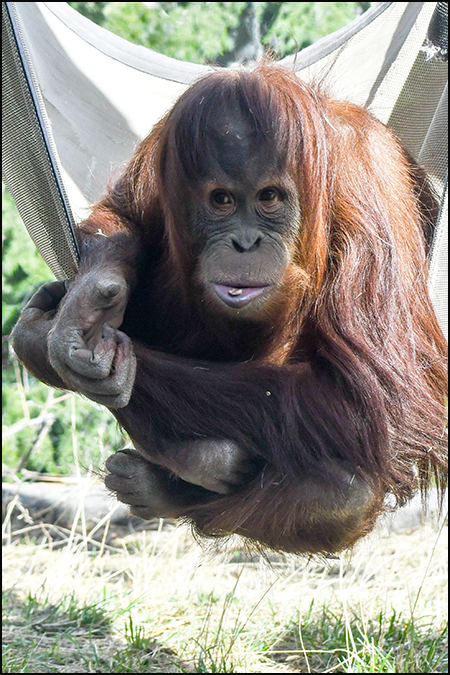
Sumagu portrait, orangutan.

The mother-daughter duo is scheduled to move to another AZA-accredited zoo, likely later this summer, as part of a breeding recommendation through the Association of Zoos and Aquariums’ Species Survival Plan (SSP) for Sumatran orangutans.

Sumagu has a breeding recommendation with a male at another zoo, and keepers are working diligently to ensure the move is as smooth and low-stress as possible.

“Crate training is one of the more advanced behaviors we work on with our orangutans,” Ashton Asbury, Primate World animal keeper, says. “We’re teaching Kera and Sumagu to voluntarily enter the crates and to be comfortable spending time in them.”

Using positive reinforcement training, keepers are helping both orangutans associate the crates with rewards and calm experiences. In addition to watching for subtle behaviors, the team teaches the orangutans to signal when they’re ready to end a training session. This method allows Kera and Sumagu to feel empowered throughout the training process.

“Our goal is for them to enthusiastically enter the crates and allow the doors to close behind them,” Ashton says. “That way, when it’s time for the big move, it’s a familiar and positive experience.”

Thanks to this voluntary approach, neither orangutan will require sedation during their trip. Experienced animal transport professionals will make stops along the way to check on the great ape travelers, offering food and water, and making visual health checks. The teams also collaborate with AZA-accredited zoos along the way, in case the orangutans need care mid-trip.

Sumagu, who was born at CMZoo, will be stepping into a new world as she heads to her new home.

“We’re excited for Sumagu to have this new life experience,” Ashton says. “She’s such a wise and savvy orangutan. She’s very confident, and we’re encouraging her choice and control as she trains. She’s a great communicator. If she needs us to make adjustments, she’ll let us know.”

Sumagu’s daughter, Kera, is also preparing for this next stage in life. At her age, orangutans naturally begin to seek more independence, and Sumagu encourages that independence in Kera. To support this, Kera and Sumagu will travel in separate crates, and then settle into their new home together.

“It’s important for young female orangutans, like Kera, to observe their mothers raising another baby,” Ashton says. “She doesn’t have a breeding recommendation, but she could later. Young female great apes who get to be older siblings become more successful mothers later. Great apes’ offspring typically stay with their moms longer than any animal species, and learning how to be a mom from their own mom is the best-case scenario.”

Keepers at CMZoo will be working closely with the orangutans’ future animal care team, sharing training histories and behavioral nuances, which is essential for complex and intelligent animals like orangutans.
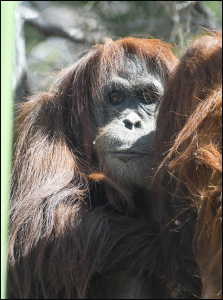
Sumagu portrait

“Kera is such a fun kid,” Ashton says. “She’s serious about orangutan things, like nest-building, but she’s also super engaging and outgoing with people. We will definitely miss both of them, but we’re proud to support this breeding recommendation that supports the population in human care, and continues to inspire conservation for wild orangutans.”

Fans of Kera and Sumagu, and all orangutans, can save the rainforests from the comfort of their smartphones with a free global mobile app called PalmOil Scan, available for free on the App Store and Google Play. It is available in the United States, Canada, the United Kingdom, Australia and New Zealand, with further expansion planned in the future. Orangutan enthusiasts can learn more about palm oil, and download the free app before their next shopping trip, at cmzoo.org/palmoil.

Palm oil is an edible oil that can be found in about half of consumer products. Unsustainable palm oil production results in deforestation in Indonesia and Malaysia, the only places where critically endangered orangutans live in the wild. Although the majority of palm oil production is in Southeast Asia, it has also expanded to other tropical areas, which means more animal species could lose the habitats they need to survive.

When produced sustainably, palm oil is 4 to 10 times more productive than any other edible oil. Using PalmOil Scan, conscientious consumers can scan the barcodes on tens of thousands of products in the app’s extensive database (which is being updated and expanded continually) to see if they are produced by a company that has committed to sourcing sustainable palm oil.

“Orangutans are incredibly intelligent and complex animals,” Ashton says. “Our animal care team knows these great apes really well, and we’re planning for the best opportunities for all of the orangutans in our care as these changes take place.”

Primate World is currently home to six orangutans: three Sumatran orangutans, including Kera and Sumagu, and three Bornean orangutans. When Kera and Sumagu move, male Sumatran orangutan, Baka, will continue his current lifestyle, with access to interactions through a safety barrier with Ember and Hadiah, mom-and-daughter Bornean orangutans. Tujoh, a male Bornean orangutan, will continue to have the same access.
Back to The Waterhole

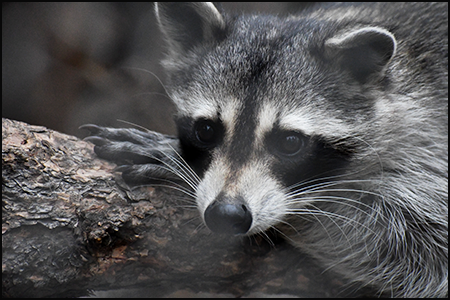
Raccoon portrait

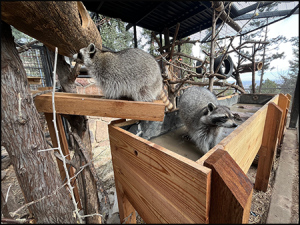
Baldwin, Benton and Baker, the raccoon brothers who call Rocky Mountain Wild home, recently took up a new hobby, thanks to their keepers’ creativity and Cheyenne Mountain Zoo’s commitment to environmental enrichment. Their habitat now features an exciting new addition: an elevated stream where they can fish, forage and explore on their own schedules.

“Raccoons love to solve problems, splash in water and, of course, eat,” Kelsey Walker, Rocky Mountain Wild animal keeper, says. “This stream is a dream come true for them, and our guests seem to love watching their adorable methods.”

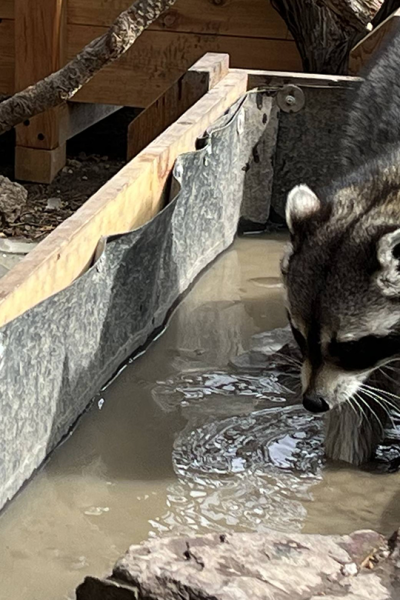
Inspired by the old-fashioned gold panning stations of the American West, the new wooden enrichment feature consists of three connected elevated ‘streambeds,’ each about eight feet long and two feet wide. The beds are full of about five inches of dirt, sand, rocks and shells, and flooded with water. Keepers bury shrimp, mussels and crab legs in the substrate, encouraging the raccoons to rely on their natural foraging skills.

The enrichment was introduced in February, and from the very beginning, the raccoons took to it immediately.

“These raccoons were born in human care, but they instinctively knew how to fish right away,” Kelsey says. “They perch on the rocks or wade into the streams, patting the surface with their paws until they detect food. They dig it out, roll it in their paws to find the weakest spot to crack into it, and then settle somewhere dry to eat.”

Raccoons are incredibly tactile animals. Seventy-five percent of the part of their brain that manages the sense of touch is dedicated to their forepaws. Their paws often tell them more about their environment than their noses or eyes. That makes ‘blind fishing’ in muddy streams a cinch. They can solve the ‘mud problem’ and locate prey underwater – or under rocks – just by feeling around the surface.

Raccoon fisihing in exhibit area

The brothers typically spend 15 to 30 minutes fishing before moving on to other activities, but they return to the streams multiple times each day and night. It’s safe to say that fishing is their new favorite hobby. In addition to fishing, they have a variety of enrichment opportunities throughout their space, including a dry foraging bin filled with hay, shavings, peas and corn, and fruit hanging from trees to encourage climbing. Keepers also scatter treats in mulch and hay across the habitat floor.

“Our three raccoons are really living the good life,” Kelsey says. “It’s like they have retired on waterfront property. They sleep in every day, then they go fishing, hang out with their brothers, take a nap and fish some more. That’s their routine.”

The Zoo’s enrichment philosophy focuses on creating engaging and stimulating environments that encourage animals to do wild-type behaviors at their own pace, without depending on keepers’ schedules. Keepers still train with animals, because husbandry behaviors are important for their care. The new streambeds are a great example of environmental enrichment.

“This has been a really successful way to provide enriching and interesting activity for them for an entire day,” Kelsey says. “They don’t need us, beyond stocking the stream each morning. It’s incredibly rewarding to set up an environment and to know they’re having a great day, getting good physical and mental exercise, and using their natural instincts.”

Guests visiting Rocky Mountain Wild will also benefit from the new feature. Since the stream beds are elevated, visitors get an even better view of the raccoons’ fishing techniques and playful behavior.

“When they’re in the troughs, they’re right up by the mesh, so it gives guests a great angle of what they’re doing,” Walker added. “If they happen to be sleeping when you stop by, be sure to come back later. They’ll probably be up to something fun, whether it’s fishing, climbing or foraging.”

Back to The Waterhole

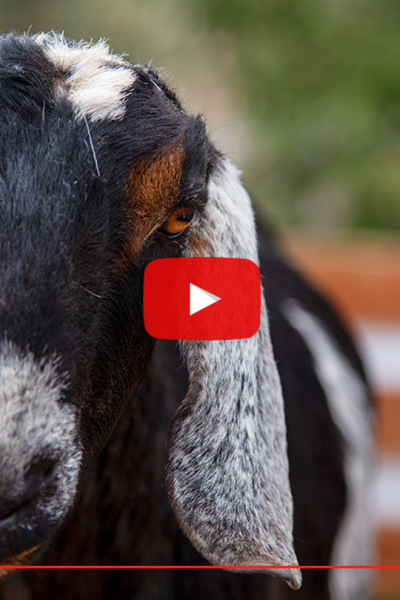
At 9 years old, our golden dairy girls – Cotija, Asiago, Queso, Mozzarella, Colby, Muenster, Ricotta and Brie – are enjoying their golden years to the fullest! These goats spend their days sunbathing, training, climbing, playing, going on walkabouts and meeting guests. Visitors can feed the goats for $1 per feeding, depending on weather, or interact with them through goat encounters, where they can pet and brush the goats.

If you’ve tasted goat cheese, it was probably made from milk from a goat like one of ours! Nubian and Nubian-Saanen goats are among the most common dairy goat breeds found on farms worldwide. Our goats originally came from a local cheese farm, inspiring their cheesy names.

Stop by and share some moments with these gouda girls!

Back to The Waterhole

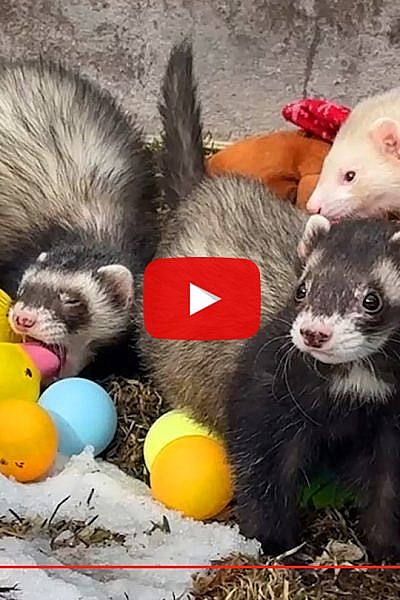
A group of ferrets is called a business! Our business is made up of Alfred, Tsunami, Cyclone, Avalanche and Blizzard! These playful, social animals thrive in small groups. A mix of ages helps the group maintain strong bonds as it evolves. Alfred, at 6, and Tsunami, almost 5, are the oldest, while Cyclone, Blizzard, and Avalanche are 3-year-old females. Though there’s no real hierarchy, Cyclone and Avalanche often lead playtime. Unlike their solitary black-footed ferret cousins, domestic ferrets have been bred for social traits, making them more interactive with humans and each other. Stop by The Loft at CMZoo to see them playing, snuggling and training together!

Back to The Waterhole

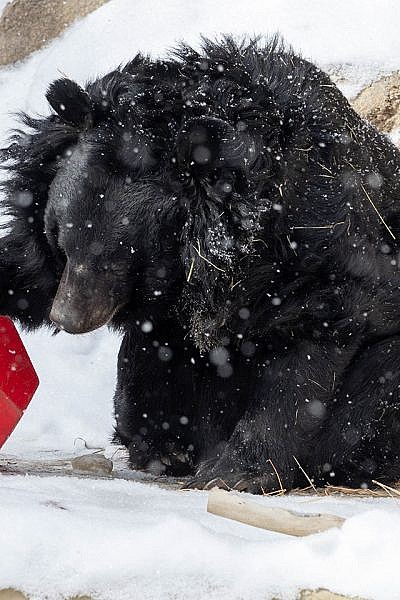
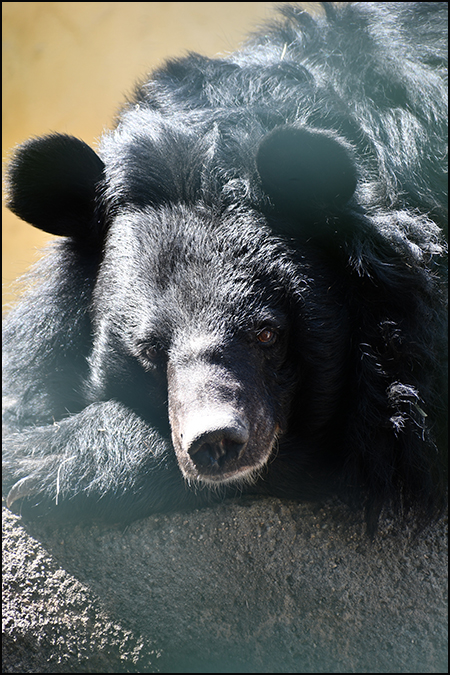
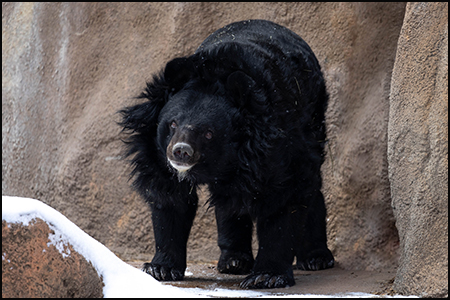
At Cheyenne Mountain Zoo, one extra-fluffy black bear quietly captures the hearts of guests and staff from her peaceful home above the play hills near Grizzly Grill. Beezler, an Asiatic black bear with sassy tendencies and a heart-meltingly gentle demeanor, has touched countless hearts as an ambassador for her species.

Asiatic black bear Beezler, portrait

At 32 years old, she is the oldest living Asiatic black bear in human care in the U.S. The median life expectancy for Asiatic black bears in human care, according to the Association of Zoos and Aquariums, is 29 years. At an age that would put her in her 90s in human years, Beezler is a testament to the compassionate care she receives, an enriching environment, and undoubtedly, her own determined spirit. Described as “sassy” by her keepers, Beezler knows what she wants and isn’t afraid to communicate it, especially when it comes to snacks.

“She is very sweet,” says Erika Furnes, Asian Highlands keeper. “But if we’re moving too slowly with her treats, she lets us know by being surprisingly quick to grab them off the tongs. Even when she’s telling us to hurry up, she’s still gentle. She takes food delicately with just her lips. It’s really cute.”

Her diet consists of peanuts, apples, lettuce, carrots, yams, bananas and an omnivore chow. Occasionally, she enjoys meat or fish, but her true high-value rewards are whipped cream and yogurt. One of her favorite snacks is courtesy of the Zoo’s horticulture team. When crabapple season rolls around, Beezler knows just what to do.

“Above her outdoor space, there’s a crabapple tree that drops fruit every fall,” Erika says. “She knows it. She’ll look up towards the tree, waiting for it to deliver a snack, and then trots over to the apples as they bounce and roll around. It’s so fun to watch her enjoying that natural enrichment, and it’s good for her to stretch and move, since she’s an older bear.”

Beezler is an example of aging with grace in her golden years. She’s fully encouraged to move at her own pace. She has 24/7 access to her climate-controlled dens, where she naps often. However, it’s worth the walk up the short hill to her home, because although she has slowed down and spends a lot of time resting, guests might still see Beezler embracing her inner cub.

“She can be moving at her normal slow pace, but then she sees us setting up something fun, and she’s ready to go,” says Erika. “She really likes it when the weather warms up and we set up her pool. Sometimes she acts almost like a cub again, splashing and floating around. Other times, we set something up that we think she’s going to love, and she ignores it. It’s her world, and she can do whatever she wants!”

When she’s not relaxing her in tub, Beezler enjoys making her hay beds extra cozy, shredding cardboard boxes and occasionally showcasing her signature bursts of youthful energy. Keepers recently gave Beezler a log that Waffles, CMZoo’s African cape porcupine, had been interacting with, so it smelled really good.

“Beezler tore it up,” Erika says. “We hadn’t seen her do that in years! We’re definitely going to keep bringing those logs for her.”

As Beezler has aged, her care has evolved to prioritize her mobility and comfort. She has arthritis, particularly in her back left hip, so the Zoo’s veterinary team has developed a comprehensive pain management plan. She receives supplements and oral medications for pain and inflammation. She participates in laser therapy on her left hip, earning whipped cream as a reward for her cooperation. Beezler is also learning to receive acupuncture therapy by choice.

“We started training her for acupuncture treatments with a blunted needle, then transitioned to a sharper one,” Erika says. “She doesn’t seem to notice at all, and enjoys the whipped cream and yogurt rewards. The acupuncture needles are incredibly fine, just like in human acupuncture, and we hold onto them safely in case she decides to walk away, which she’s always free to do.”

Asiatic black bear Beezler, portrait

Positive reinforcement training, like this, allows Beezler to be an active participant in her own care, reinforcing the Zoo’s commitment to training that prioritizes the animals’ comfort, confidence and choices in their homes.

Her training extends to other medical procedures as well. She voluntarily participates in blood draws, which allow her team to monitor different levels that could indicate she needs intervention, by placing her front leg into a specially designed metal sleeve.

In addition to her impressive training repertoire, Beezler’s environment is intentionally set up to enrich her and to encourage mobility. Keepers position activities and puzzle feeders in ways that encourage Beezler to move up and down her habitat’s steps, and to climb, stretch and dig.

“She likes to dig in the dirt and the snow,” Erika says. “Digging is a really good movement for her to continue because it involves so many muscles and keeps her dexterity strong. It’s also mentally stimulating and rewarding for her to dig to discover a treat we’ve hidden for her. That sense of confidence and accomplishment is important.”

Asiatic black bears are not commonly found in zoos, making Beezler a rare and special resident. Despite her small stature, standing only about two-and-a-half feet tall at the shoulder, Beezler maintains a giant presence at the Zoo and around the world through the Zoo’s social media channels. Whether she’s digging in the dirt, stretching for a treat, or playfully ignoring her keepers when she doesn’t feel like listening, Beezler continues to be an icon of resilience, intelligence and charm.

“It’s a privilege to work with her and to give people the chance to see and appreciate Asiatic black bears up close,” Erika says.

Back to The Waterhole

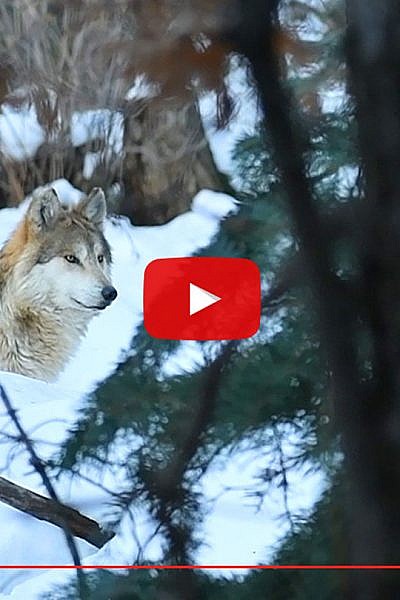
It’s the howl-iday season at CMZoo, and our pack is thriving! CMZoo is home to five Mexican wolves: Navarro and his offspring — Hope, Shadow, Phoenix, and Uno. Sisters Hope and Shadow have stepped up as confident leaders, often being the first to investigate food, while Uno, Phoenix, and Navarro take a more laid-back approach.

To help keep the pack wild, keepers place food near the front of their yard and then leave, maintaining the wolves’ natural wariness of humans. This is especially important since our wolves or their future offspring could potentially be released into the wild to help bolster the endangered Mexican wolf population. Thanks to conservation efforts, wild Mexican wolf numbers are increasing, with an estimated 257 currently living in the wild in the U.S., according to the U.S. Fish & Wildlife Service.

Back to The Waterhole

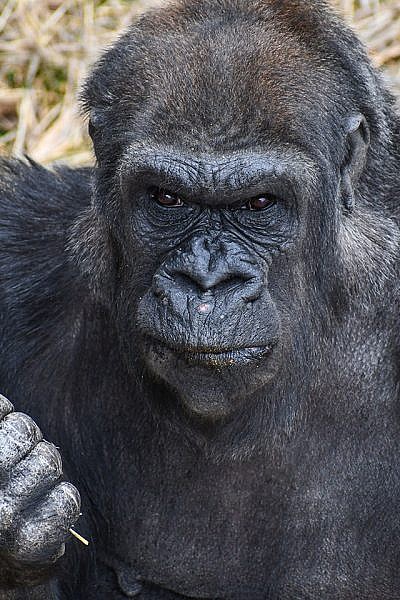
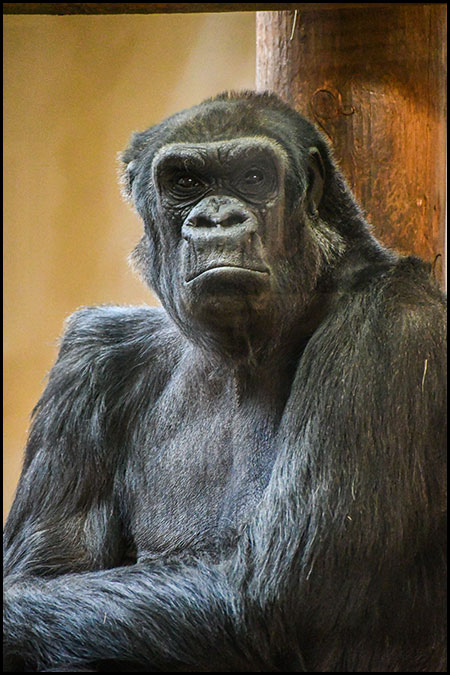
Since mid-November, CMZoo’s typically social and outgoing 48-year-old Western lowland gorilla, Roxie, has had several ‘off’ days. She’s spending more time in bed and looking lethargic.

“Roxie has been a big part of the CMZoo family since she was born here in 1976,” Joanna Husby, Primate World animal care manager says. “She’s lived at the Zoo longer than any other animal here, and we’ve been through health scares with her before, but this time it looks a bit different.”

Roxie is eating, drinking, and participating in training, but she is not walking or climbing as well as usual. She’s spending a lot of time in her den, resting, which means she’s choosing rest over socializations that are vital to gorillas’ wellbeing. Roxie chose to go outside and enjoy the sunshine this past weekend, but the longer she isn’t improving, the more concerned the team is growing.

Keepers and veterinarians have not identified anything that could be causing her discomfort from what they can see during up-close training sessions with Roxie. While her team works to diagnose and help her, Roxie is voluntarily taking oral antibiotics and increased pain and anti-inflammatory medications. Oral medications have helped her overcome bouts of illness quickly in the past, but she’s not bouncing back as fast this time.

If oral medications do not help Roxie soon, the next option could be to immobilize her for additional diagnostics. Her last immobilization and treatment extended her life for the past five years, but it was risky.

In 2019, Roxie became lethargic and refused to eat or drink entirely. While she was under anesthesia for an exam, Roxie went into cardiac arrest. Her team brought her back to life with CPR and emergency drugs. The examination, although hard on Roxie and the team, revealed several issues that the team was able to treat. Since recovering five years ago, Roxie has had one of the longest stretches of consistently good health – up until this recent series of off days.

“In 2019, in the middle of Roxie’s health scare, her care team talked about where we would draw the line, treatment-wise, for Roxie,” Joanna says. “We work to find the balance for her and all of our animals. How much are these treatments asking of Roxie, and how long is Roxie going to benefit from them, given her advanced age? We still agree that her quality of life is more important than attempting to extend her life by taking extreme measures. She’s old, and we want her to live with dignity and comfort in this final chapter.”

The team has agreed to say no to extensive treatments that they might pursue for a much younger gorilla. Roxie is 9 years past the median life expectancy for female Western lowland gorillas in human care, according to the Association of Zoos and Aquariums.

“We’re really hopeful she just needs a few more days on medication or medication adjustments, but if not, an immobilization could be the best thing for her,” Joanna says. “A thorough examination of Roxie under anesthesia could help us pinpoint something that’s easy to treat, or we could find something that we could manage comfortably for her long-term, or we could discover something that would require extensive treatment. Every decision we make will be with her best interest at heart.”

As Roxie and her care team work together to support what’s best for Roxie, CMZoo will provide updates.

Back to The Waterhole

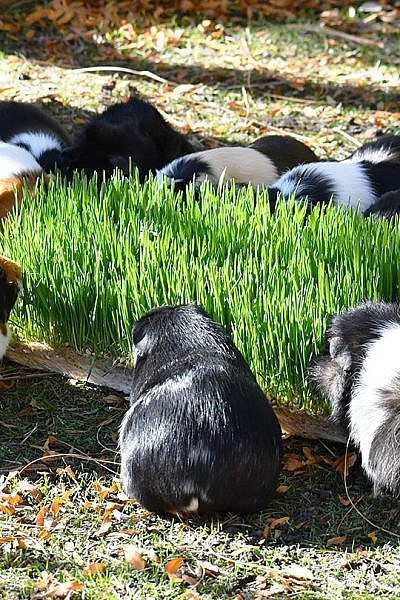
From the tallest giraffe to the smallest axolotl, Cheyenne Mountain Zoo is home to a diverse variety of animals with a common thread: the Zoo’s dedication to their care. Arguably, one of the most charming species at the Zoo is the guinea pig. In Water’s Edge: Africa, a vibrant muddle (a group of guinea pigs) thrives in the cavy equivalent of a ‘Barbie Dream House.’

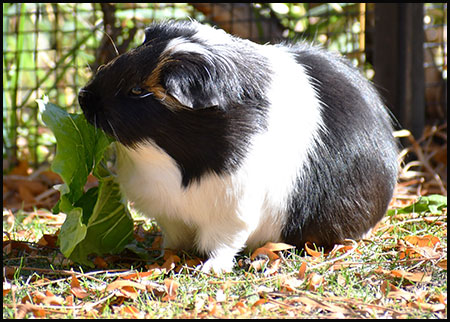
Guinea pig eating lettuce outside

“Like all animals, guinea pigs need an enriching environment to flourish,” Grace Sullivan, lead keeper in Water’s Edge: Africa says. “In addition to monitoring our animals‘ needs, our job is observe how animals interact with their environments and maintain them to support our animals’ needs.”

The muddle’s care team provides activities that support their independence, choice and control with opportunities to explore, socialize, and exercise in ways they find rewarding. Guinea pigs are extremely social animals. They’re curious and energetic. With 17 guinea pigs ranging from young to geriatric at CMZoo, Sullivan and her team work to address the individual needs of each.

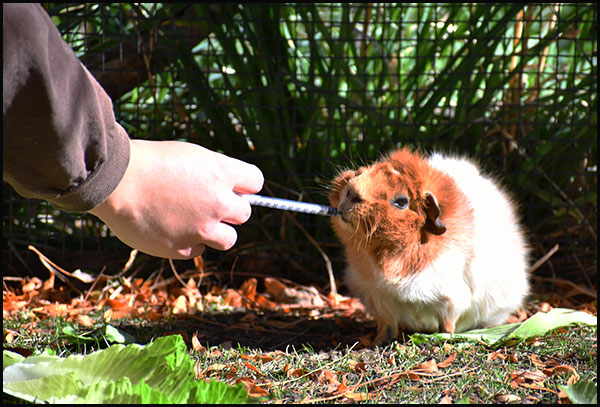
Yzma [YEEZ-muh] is among the standout residents of this muddle. The 6-year-old cinnamon-colored guinea pig, with charming full-body cowlicks, is one of the original members of the CMZoo guinea pig herd, having arrived at the Zoo in 2020. As the eldest, she has learned to participate in her own health care, taking oral medication to ease age-related issues like arthritis.

Yzma, an aging guinea pig, approaches a keeper to voluntarily receive her oral daily anti-inflammation medication
Yzma, an aging guinea pig, approaches a keeper to voluntarily receive her oral daily anti-inflammation medication.

Guinea pigs have a short lifespan, usually around five years. With habitat adjustments, medications and voluntary husbandry checks, like scale training, the team works to maximize their quality of life during that time. Recognizing the changing needs of older guinea pigs, the Water’s Edge: Africa team introduced the ‘Silver Whiskers Program.’

“When we first notice a health decline in a guinea pig that’s getting older, we start them on the Silver Whiskers Program with a thorough medical exam,” Grace says. “That data sets a baseline for them, and we can rely on it to support them as they age gracefully.”

Checking teeth, joints and blood values allows the team to monitor and address health changes with solid data to guide welfare decisions. The team also tracks quality-of-life measures, like weight, mobility, social activities and interactions with their environments.

Guinea pigs in their golden years get exclusive access to the ’Silver Whiskers Dining Room,’ where they need not compete with much younger, faster eaters, like 2-year-old Brenda.

Guinea pig outside

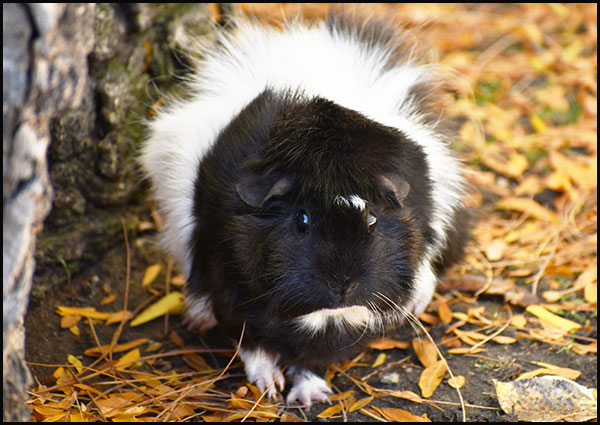
Long-haired, black-and-white Brenda is known for her speed and dominance in the herd. She’s usually first to investigate new enrichment or nudge another guinea pig out of the way to get what she wants. Tiny and feisty, Brenda taught keepers that some guinea pigs don’t want to interact with humans, and she’ll give a healthy guinea pig ‘head toss’ at anyone who needs reminding.

Another key character in the herd is short-haired, brown-and-black, brown-and-black, short-haired Grandpa. The one-year-old guinea pig is known for his ability to start a ‘popcorning’ party in the herd. Popcorning is a display of excitement among guinea pigs, and it looks just like it sounds: a sudden, vertical leap – usually displayed a few times in a row. A popcorning muddle is a remarkable sight.

First-time visitors exploring Water’s Edge: Africa for hippos and penguins might be surprised to find themselves captivated by the antics guinea pigs. CMZoo frequenters know the cavies are worth their own visit to the Zoo.

“It is really fun to get to know our members and guests through our interactions about the guinea pigs,” Grace says. “When guests see us engaging with the guinea pigs, they realize that they’re given the same freedoms and care as larger animals like hippos or lemurs, and they share updates they’re making to their own guinea pigs’ habitats. That makes me happy to know our muddle is inspiring welfare improvements for pets, too.”

The guinea pigs will continue to explore their yards during the winter months, when it’s sunny and free of snow. If they’re staying cozy in their climate-controlled hut, guests can see them through their clear front door.

Back to The Waterhole

Shorter days and holidays are approaching. For many humans, that means unusual eating traditions, a shift in activity and an effort to maintain healthy habits. Cheyenne Mountain Zoo partners, Children’s Hospital Colorado, share advice for helping your family stay healthy during the holidays.

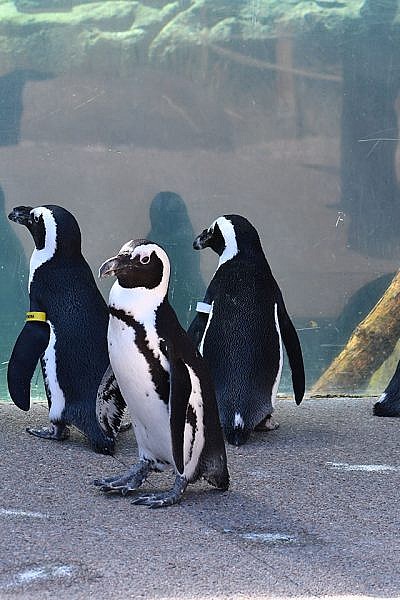
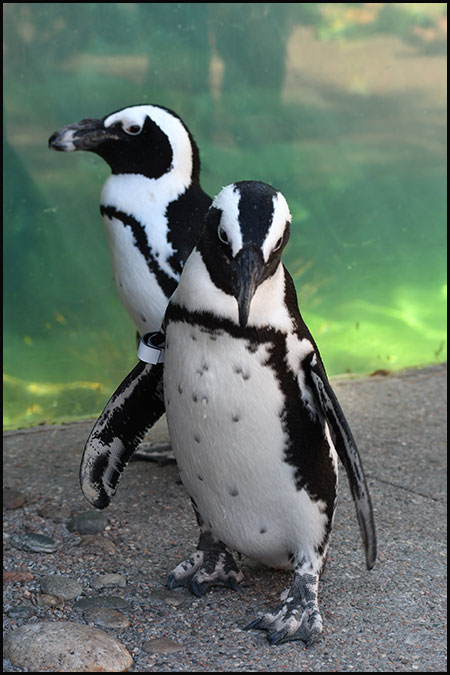
African penguins Rico and Rosy outside

At CMZoo, shorter days and cooler temperatures trigger changes to some animal care programs that support animals’ instinctual seasonal adjustments. Some animals, like giraffe, hippos and great apes, don’t experience many seasonally triggered changes. Keeper teams who care for animals native to more seasonally diverse regions make adjustments.

In the fall and winter months, African penguins focus mostly on nesting and eating. Sunlight impacts their nesting, molting and breeding cycles. As days get shorter, they instinctively choose a mate and begin settling in for snuggle season. The longer nights also trigger their annual molt – when they lose all of their feathers at once and grow a brand-new waterproof set.

“Molting is a big event for the flock,” Sabrina Eccher, animal keeper in Water’s Edge: Africa, says. “Hormonal changes due to less sunlight in the winter typically trigger molting in early spring or summer, and they eat a lot less while they’re molting. To prepare for molt, they bulk up by eating more in the weeks before.”

Supporting the penguins’ instinct to eat more is another example of Cheyenne Mountain Zoo’s commitment to environmental enrichment. The goal is to prepare their habitats with resources that will keep them busy, stimulated and comfortable. Keepers offer more fish at hand-feedings and take it a step further by providing the penguins with opportunities to hunt live fish in their outdoor pool on their own time.

Penguins may increase activity with nest-building and hunting, but grizzlies tend to slow down. Recent scientific studies reveal that grizzlies in the wild don’t hibernate, contrary to popular belief. Smaller creatures, like toads, squirrels and marmots, hibernate to sleep through the months of cold temperatures and limited food resources. During hibernation, animals don’t typically wake up for months. Bigger native animals, like bears, raccoons and skunks, can gain enough weight to carry them through the cooler season without hibernation. However, the seasonal switch impacts them in other ways.

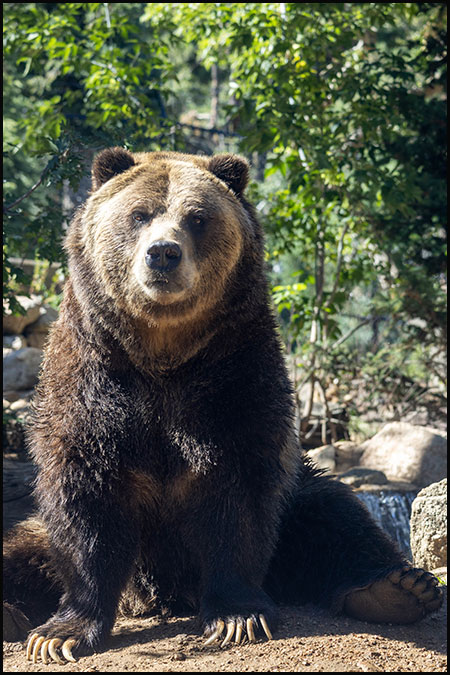
Grizzly bear outside at Cheyenne Mountain Zoo

“Bears and other larger animals go into torpor in the winter, which is a hormonal physiological and behavioral change triggered by the changing seasons,” Jenna Schmidt, animal keeper in Rocky Mountain Wild, says. “In torpor, body systems slow down and animals may sleep more, but they still wake up. In the summer and fall, our grizzlies want to eat, eat, eat. When it starts to cool down, they’re less interested in eating and have less energy, but they’re still pretty active at the Zoo.”

CMZoo’s iconic 19-year-old grizzly bears, Digger and Emmett, will turn 20 in January. Having cared for the bears since they were around two years old, keepers have their winter routine down to an art – and each bear reacts differently.

“Digger typically starts sleeping in longer and doing activities with less enthusiasm before Emmett does,” says Jenna. “Digger usually gains more weight than Emmett, and he grows his winter coat before Emmett.”

In fall and winter, grizzlies start dismissing less desirable food items that they would eat in the summer. In the winter, protein and sweet fruits and veggies are more enticing to them. They have been known to decline training sessions when offered a lower calorie item in the winter. It has to be worth their energy because they naturally have less energy in the winter.

Sunflower seeds? Yes.
Celery? No, thank you.

Keepers know which food items will encourage them to participate in husbandry care, so the team can still perform health checks on the aging bears. The bears instinctually prioritize preserving energy. They’ll sleep in later and spend more time making and sleeping in several bear-made beds throughout their two yards and overnight space.

“We give them lots of hay this time of year, and they use it make comfy beds,” Jenna says. “Digger likes to dig and make the beds, and Emmett prefers to ‘work smarter, not harder’ and snag a Digger-made bed for himself.”

Unlike bears, mountain lions eat less in warmer seasons, and more when it cools down.

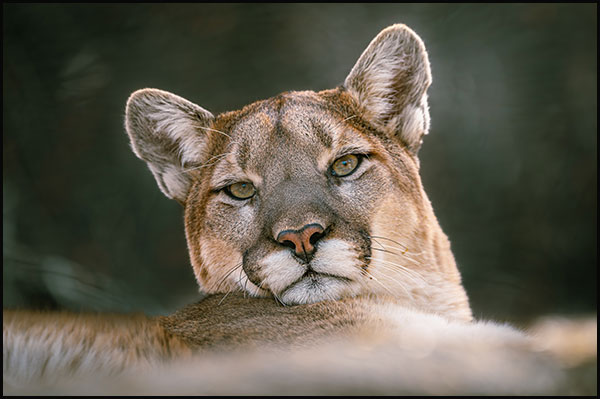
Mountain lion Adira portrait

“In the winter, Adira, Koda and Sitka, our mountain lions, are expending more energy to stay warm, so they’re eating more,” Kelsey Walker, senior animal keeper in Rocky Mountain Wild says. “They’re typically more energetic in the cooler months, which we interpret is driven by their instinct to hunt and eat.”

Maintaining a healthy weight is critical to an animal’s overall health. So, keepers and veterinarians at the Zoo work hard to find the balance between satiating an animal’s increased appetite while preventing unhealthy weight gain for the animal.

“The mountain lions are typically slimmer in the warmer months, and we see them choosing to eat less than we provide when it starts to warm up,” Kelsey says. “When it gets cooler, we incrementally increase their diets, so they don’t feel they need to compete with each other for resources, and they feel satisfied and warm.”

Mountain lions aren’t fazed by subzero temperatures or snow. In the mountain lions’ three yards and indoor den, they have lots of opportunities to stay warm. Guests can see them sunbathing on their rocks, creating a kitty cuddle puddle in their canyon or lounging on their heated boulder that overlooks part of the moose yard. Pro tip: when it snows, notice which rocks are clear of snow and ice. The heated rocks melt snow faster than the other rocks do.

CMZoo is open every day of the year, and visiting during the winter months is a different adventure compared to summer Zoo days. Plan your winter adventure at the Zoo, and see if you can notice how penguins, grizzlies and mountain lions look and behave differently.

Back to The Waterhole

Four-year-old Atka has grown impressive antlers this year, marking the end of the antler-growing season. Each year, male moose grow a new set of antlers. His antlers, once covered in velvet to help them grow, have now shed the fuzzy layer, revealing the iconic white antlers we associate with moose.

Once his impressive antlers have hardened, he will likely start using them. In autumn, male moose spar for territory and mates. Moose are typically solitary in the wild, and we replicate that for Atka at CMZoo while also providing him with plenty of opportunities to spar with trees and enrichment if he chooses. In the winter or spring, Atka will shed his antlers completely and begin the growth process again.

Stop by Rocky Mountain Wild to see Atka’s 2024 antlers before he sheds them this winter!

Back to The Waterhole