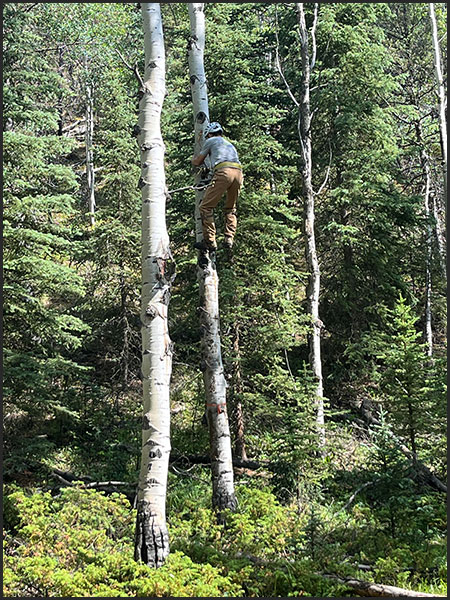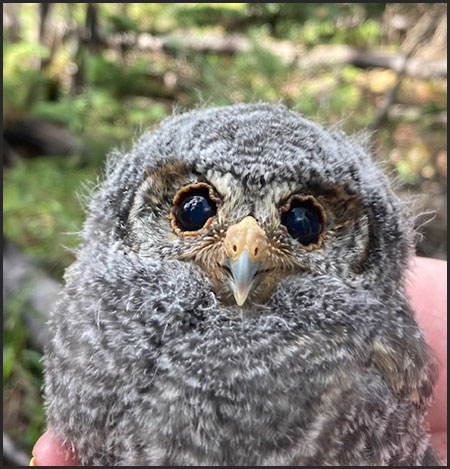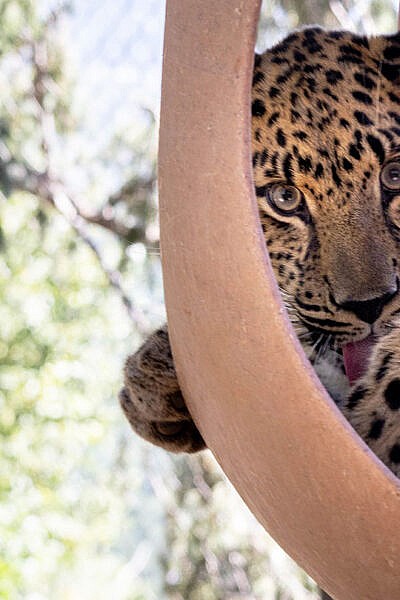
At 6 weeks old, the Rocky Mountain goat kids are hitting milestones, including eating solid foods, sparring with each other, exploring all the yards, and meeting their dad, Albert, and older sister, Blanca. They are finding their footing like little pros and learning how to be Rocky Mountain goats from their mom, Lena. Visit the twins across from the Sky Ride during your next trip to CMZoo!

Back to The Waterhole

Excitement is in the air as two lively mustachioed characters, bearded emperor tamarins named Dot and Chico, settle into their summer home. Dot, the savvy 10-year-old leading lady, and her sidekick, Chico, a spirited 2-year-old male, recently moved into a monkey aviary in the tapir yard.

Emperor Tamarin Dot up-close
Emperor tamarin, Dot.

In addition to a new summer home, they’re getting new neighbors. The plan is for 25-year-old mountain tapir, Mochi, to share his existing yard with the tamarins and 11-year-old okapi, Bahati.

Dot moved to CMZoo in November 2023 and spent a short time sharing space with Rio, a golden lion tamarin who previously lived in Primate World. Rio recently moved to another zoo accredited by the Association of Zoos and Aquariums to join a companion. After their keepers saw the two tiny monkeys didn’t appreciate each other’s company, Dot moved to an off-exhibit space in Scutes Family Gallery, where Chico joined her in May 2024. Dot and Chico are getting along well.

“Chico and Dot are so much fun to watch, and you can tell they like being together,” Madi Ort, Primate World animal keeper says. “Dot is the epitome of confidence and curiosity. In a word, she’s fast. She does everything with quickness. She’s a master problem-solver who loves a good challenge. She’s known for her expert bug-hunting skills and can tackle any puzzle feeder with finesse, snatching up those crickets, grapes and tamarin diet faster than you can blink!”

In ‘Emperor Tamarin World,’ females are in charge, so it’s not surprising that Dot takes the lead on all occasions. She’s first to check out new enrichment, first to get the snacks and first to approach keepers to train. Keepers share space with the little primates, who resemble a black, gray, white and red-furred tornado, whirling around the perching as keepers clean, set up activities, restock feeders and check on their physical health. The two cuties can be difficult to tell apart, but Chico has black spots on his chin and larger ears. Both have emperor tamarins’ distinctive white moustaches, which are actually long whiskers that curve down well beyond their chins. The best way to tell who’s who is by behavior. If one is taking the lead, it’s likely Dot.

Emperor tamarin, Chico.

“Chico is much more laid-back, but he still brings that ‘emperor tamarin energy,’” Madi says. “He usually comes close to keepers to offer different husbandry training behaviors, while Dot jets for whatever fun we have set up for them. He’s eager to please and just all-around adorable. He’ll melt your heart.”

Madi says the pair are quite vocal, making a range of calls from loud ‘alert calls’ that resemble a fire alarm, to high-pitched chirps that she calls their ‘happy noises.’ These two aren’t all talk and no action; they’re thrill-seekers, too! They’re constantly leaping from branch to branch with the agility of seasoned acrobats. When they’re not showing off their moves, they’re chatting away with their chirps, likely sharing insider tips on where to find the tastiest snacks.

Their confidence, curiosity and connection have set them up for success to navigate new spaces, inside and outside of the aviary, as they please. After they settle in and show they’re comfortable in the aviary, their care team will open the doors during the day, and they’ll go where they want throughout a carefully planned system of trees in the tapir yard.

Their move to the mountain tapir yard isn’t just about a change of scenery, it’s a chance for them to explore more of their wild side. Madi encourages guests to look up into the trees and to listen for their chirps to watch their adorable antics. Bearded emperor tamarins, like Dot and Chico, are native to the rainforests of South America, where they contribute to the biodiversity of their delicate ecosystem.

By seeing them in a habitat that mimics their native environment, visitors’ appreciation for the species can grow while they learn about the importance of preserving rainforests. Guests can help conserve rainforests by using the PalmOil Scan app (cmzoo.org/palmoil) when grocery shopping and supporting companies that have committed to sourcing sustainable palm oil in their products. They can also choose Forest Stewardship Council-approved paper and wood products, reduce their carbon footprints by carpooling or choosing airline travel with fewer connections, and continue to visit zoos that support frontline conservation, like Cheyenne Mountain Zoo.

“We’re so excited for everyone to see them in this space and to meet Chico for the first time,” Madi says. “They’re really smart, and they’re crate trained, so we’ll train them to return to the aviary in the evenings for their safety overnight. We have had this setup with Geoffroy’s marmosets before, and it went really well. They would return to their aviary voluntarily each afternoon.”

Mountain tapir, Mochi, sitting outside.
Mountain tapir, Mochi.

As if that wasn’t enough to look forward to, the two have a breeding recommendation from the Emperor Tamarin Species Survival Plan, which aims to increase the genetic diversity of emperor tamarins in human care. Dot and Chico have been observed breeding already, and while baby tamarins would be exciting, they are not guaranteed.

Dot has been paired with male tamarins in the past and has not produced offspring. That makes Dot’s genetics incredibly important to the diversity of the population, so keepers are realistic but hopeful that her and Chico’s budding relationship might lead to offspring down the line.

Mochi, the Zoo’s beloved mountain tapir, isn’t paying much attention to Dot and Chico since they moved into the yard on June 24. Next, Mochi, Dot and Chico will welcome a much larger special guest: Bahati, the Zoo’s okapi, who lived near the giraffe for many years. There’s no set date for Bahati’s move yet. Muscovy ducks, Athena and Franny, will keep their home in the tapir yard, too.

Okapi, Bahati.
Okapi, Bahati.

In the Zoo profession, this dynamic is called a ‘mixed species habitat,’ which can provide an incredibly enriching environment for animals. It’s not a case of putting animals together without a plan, though. Animal Care Manager, Joanna Husby, and a team of animal behavior experts who know Mochi and Bahati as individuals, have been meticulously mapping their introductions.

“We’re dealing with two incredibly laid-back individuals in Bahati and Mochi, so we have high hopes,” Joanna says. “We’ll set up barriers between Mochi and Bahati at first, and there’s room in the yard for them to both have their own space. The plan is for them to share space eventually, but we’ll follow their lead. There’s no rush and we know them well enough to tell when they’re comfortable or if they need more time or adjustments to the space.”

Bahati’s move is prompted by the expansion of African Rift Valley, already underway. Throughout construction, CMZoo’s planning team is committed to giving guests access to all of the animals they love. As the team makes progress on projects, they’ll update pathways for guests. Guests and members can watch for signs on how to navigate through African Rift Valley. CMZoo fans can learn more about the giraffe herd’s future home and consider supporting it at cmzoo.org/giraffeproject.

Back to The Waterhole

Cheyenne Mountain Zoo’s 21-year-old Eastern black rhino, Jumbe, and his team are working together to address a new health concern for the 2,700-pound sweetheart. A recent routine blood test revealed iron saturation in his blood had risen to concerning levels.

Up-close black rhino Jumbe

Jumbe seems to be feeling well, and he isn’t showing any clinical signs of discomfort. Along with monitoring his iron metabolism status, the team is also monitoring his liver and kidney levels, among other things. All of those levels are within normal ranges.

Jumbe has surpassed the median life expectancy for his species in human care, according to the Association of Zoos and Aquariums, by two years. His team remains cautiously optimistic about his future and is exploring every avenue to help Jumbe. This condition, called iron overload disorder, can damage organs and potentially lead to fatal consequences over time.

Because black rhinos are predisposed to developing this condition, his diet was initially formulated to minimize, as much as possible, over-absorption of iron. Since the diagnosis, the care team has implemented further changes in Jumbe’s diet. The goal is to see if they can minimize iron absorption even further, based on new findings and recommendations from the Black Rhino Nutrition Advisory Group. This month, his bloodwork shows a 10 percent improvement. Despite this recent result, which is moving in the right direction, his iron levels are still high.

Iron overload disease affects around one-third of black rhinos in human care, and while there’s a lot of research underway, there are unfortunately no guaranteed remedies. The team continues to closely monitor Jumbe, conducting regular voluntary blood collection to track his progress.

“By training for these voluntary husbandry behaviors proactively and when an animal is healthy, we can better care for them when conditions like this arise,” Dr. Eric Klaphake, CMZoo head veterinarian, says. “These blood draws not only revealed an issue we needed to address, but they could also be a part of the treatment.”

Some zoos have been able to address iron overload disorder in rhinos by increasing blood draws as a treatment. By removing iron-saturated blood, new replacement red blood cells can create additional places for iron in the blood to bind to, and thereby decrease the amount of iron that would otherwise enter into tissues where it can cause damage.

“This could be an option for Jumbe, but we want to see if we can correct it without asking him to participate in more frequent and longer blood draw sessions first,” Dr. Eric says. “Of course, it would be done in volumes that are realistic for Jumbe’s well-being. This is only an option if it doesn’t reduce his quality of life, and he continues to show us he’s happy to participate in the longer blood draw sessions.”

Black rhino Jumbe outside

Jumbe participates in voluntary blood draw sessions regularly with his care team, including Ilana Cobban, Encounter Africa animal care manager, CMZoo’s veterinary team and other animal keepers on his team. Jumbe and Ilana have worked together for 12 years.

“What’s wonderful about Jumbe?” Ilana says. “Everything. He has a calm and gentle demeanor that you wouldn’t typically assign to a rhino. He’s happy to stand nearby and get scratches while I talk to him, or roll around in a good mud wallow, or trot over to a fence to greet the elephants next door. He’s also a great student. He is fantastic at training, so I’m really hopeful that’s going to serve him well as we face this together.”

Dr. Eric and his team have also consulted extensively with rhino experts and researched the latest findings in animal nutrition and veterinary medicine, although finding an effective solution specific to rhinos remains challenging.

“We’re consulting with other experts, including the veterinary and nutrition advisors for the Eastern black rhino Species Survival Plan,” Dr. Eric says. “We have the best of the best on Jumbe’s case, including his care team who have built trusting relationships with Jumbe that will allow us to try new things to help him.”

Dr. Eric and his colleagues have explored various treatment options, including considering treatments for this disease in human and avian medicine, which unfortunately have not been effective in treating rhinos with this disorder.

Guests can make a direct, up-close connection with Jumbe at daily rhino feeding sessions. His distinctive pointy, prehensile top lip, a distinctive feature of Eastern black rhinos, allows him to delicately accept food offerings from visitors. At noon every day from March through October (weather – and Jumbe – permitting), guests can line up in Encounter Africa for a paid opportunity to hand-feed Jumbe. By extending his top lip to wrap it around the produce being offered, he gently accepts it – and usually leaves guests with a slobbery goodbye and a lifelong memory.

Jumbe’s snack times also help guests make a direct connection with rhino conservation. The $10 cost to participate supports CMZoo’s black rhino and African elephant conservation partner, Tsavo Trust.

As Jumbe’s health journey evolves, CMZoo will share updates.

Back to The Waterhole

Across the path from Cheyenne Mountain Zoo’s enormous African elephants, a fast-growing family of pint-sized predators is stealing the hearts of visitors and staff. Led by proud parents, Hullabaloo and Sage, the slender-tailed meerkat mob is a popular stop for summer visitors. Amy Tuchman, senior animal keeper in African Rift Valley, says the most recently born pups are in ‘peak cuteness’ right now, and they’re growing quickly.

Meerkat Sage with babies spring 2024

The latest additions to the mob arrived on May 19, making them the second meerkat litter of the year and nearly doubling the size of their family. The three fluffy bundles of energy have since become the center of attention for staff, visitors and their doting furry family members. Older siblings, Kerfuffle and Saffron, aren’t even four months old and they’re already taking on the role of babysitter with enthusiasm.

“While Hullabaloo and Sage tend to other duties, like climbing up high for sentry duty or digging a new tunnel system, Saffron and Kerfuffle seem to really enjoy babysitting,” says Amy. “The whole mob helps look after the babies. It’s everyone’s favorite job, and you’ll even see the older pups scuffling over who gets to cuddle the little ones next.”

Sage, who became a first-time dad in March when Kerfuffle and Saffron were born, embraced the role immediately alongside first-time mom, Hullabaloo. Meerkats are known for their matriarchal, linear social structure and tight bonds, and communal approach to raising young.

The shared responsibility extends beyond babysitting; it includes grooming, teaching hunting skills, and standing guard atop their habitat’s termite mounds – the perfect vantage point for alert sentries.

“I haven’t seen any of the pups climb up high on the mounds yet,” Amy says. “But, when Sage and Hullabaloo climb up there, you will usually see all five of their kids on ground level, imitating their stance. They learn by mirroring behaviors.”

Meerkat Sage with babies spring 2024

Having gotten the hang of climbing, digging, taking cover in tunnels, wrestling and chasing, the babies’ next lesson is hunting. For the first weeks of life, their eyes were closed and they depended on mom for everything: protection, relocation and nursing. At around 3 weeks old, their siblings and parents started bringing them meatballs and dead insects to eat. As they got older, the food delivery service evolved.

“The older meerkats brought them bugs that over time were less ‘easy’ for the pups,” Amy says. “So at first, they’d receive dead bugs, then slightly alive, then more so, then wriggling and so on, until they stopped delivering the bugs to them at all.”

When their siblings and parents recently saw the little ones were ready to hunt, they stopped bringing food to the little ones at all. Now, they invite the young pups to the hunt. Hunting is a meerkat’s favorite activity, because they get to chase quick-moving insects, enjoy the satisfaction of catching them, and share a tasty treat with their family.

For meerkats, nearly everything is fast, including their meals, their growth and their reproduction. They are predator-prey, meaning they sit in the middle of the food chain. As prey, their species evolved to reproduce quickly to maintain populations. They can have multiple litters in a year, with 1 to 5 pups in each litter. Meerkat pregnancies typically last 11 weeks.

The meerkat pups’ sexes are not confirmed yet, and they look remarkably similar.

“There’s one with a darker coat that we can tell apart from the others,” Amy says, “We call that one the ‘lone ranger’ because it seems to seek spaces away from its siblings. People have really fallen in love with these little ones and it’s easy to see why! They’re so fun to watch.”

Guests can see Hullabaloo and Sage’s growing family in Encounter Africa, in the meerkat habitat closest to the ground hornbills.

Back to The Waterhole

THE CAROUSEL, ORIGINALLY BUILT IN 1926, HAS BEEN A FIXTURE AT CMZOO SINCE 1937 –

Event Information

WHO: CMZoo members, guests, staff and carousel enthusiasts (plus some special animal guests!)

WHAT: An official reopening of the Zoo’s historic carousel
Brief comments from CMZoo President & CEO, Bob Chastain
Free carousel rides 11 a.m. to 5 p.m. (advance Zoo admission required)

WHEN: 10:30 a.m. (media please arrive by 10:15 a.m.)
Thurs., June 13

WHY: To celebrate the return of the carousel and the milestone in the Zoo’s progress towards major Zoo improvements

Cheyenne Mountain Zoo will celebrate the reopening of its historic 1926 Allan Herschel carousel at 10:30 a.m. on Thurs., June 13. The beloved carousel has been a fixture at CMZoo since 1937.

Fans have been eagerly awaiting the carousel’s return since it was safely stored away in July 2023. The carousel moved to make way for a new road just west of the current main road through the Zoo. Once the historic road is gone, the Zoo can expand its giraffe habitat and make way for the International Center for the Care and Conservation of Giraffe building.

The Zoo’s carousel is a portable county-fair-style unit designed to be taken apart and moved. Despite weighing seven tons, the carousel can be broken down in eight hours using basic hand tools.

“It’s not like carousels you see at traveling fairs these days, which just fold up and go,” says Dave Ruhl, executive vice president at CMZoo. “It is designed to be taken apart, piece by piece, by hand. We are dedicated to maintaining this carousel, because it has been with our community for so long, so we’re very careful when we do it.”

This portable design allowed the carousel to travel between county fairs in the 1920s and different locations at CMZoo, since it arrived on the mountain in 1937. Many longtime members and guests will remember hiking up to the top of the Zoo to ride the carousel in its original location before it moved to its second spot, near Rocky Mountain goats. Now settled in its third CMZoo location, it is ready to spin riders around again.

Dave and the design team wanted to maintain the aesthetic, so guests will see familiar metal roof shingles and the same historic railings on the building. The new location provides natural shade and a dedicated space for guests to line up, away from the road. New sidewalks surrounded by a new native plant display will give families more ‘staging’ areas, where they can take a moment to gather themselves between activities at the Zoo. While the new location came together, the carousel got some TLC.

“We work with a carousel horse expert in Larkspur who repaired cracks and touched up paint on the horses and carriages,” Dave says. “Most of the horses have been restored, and they look great. We also got the carousel organ refurbished, so it works again for the first time in around five years. We can’t wait for everyone to see it!” Learn more.

About Cheyenne Mountain Zoo

Cheyenne Mountain Zoological Society was founded in 1926. Today, Cheyenne Mountain Zoo, America’s mountain Zoo, offers comprehensive education programs, exciting conservation efforts and truly fantastic animal experiences. In 2024, Cheyenne Mountain Zoo was voted #5 Best Zoo in North America and CMZoo’s Rocky Mountain Wild was named #2 Best Zoo Exhibit in North America by USA TODAY’s 10Best Readers’ Choice Awards. It is Cheyenne Mountain Zoo’s goal to help guests fall in love with animals and nature, and take action to protect them. Since 2008, CMZoo’s Quarters for Conservation program has raised more than $5 million dedicated to frontline conservation efforts around the world. Of the 237 zoos and aquariums accredited by the Association of Zoos and Aquariums (AZA), Cheyenne Mountain Zoo is one of just a few operating without tax support. Cheyenne Mountain Zoo depends on admissions, membership dues, special event attendance and donations for funding.

CMZOO’S MOST POPULAR 21-AND-UP EVENT IS THURSDAY, JUNE 27 – Where else can you listen to live music, feed a giraffe, and enjoy an adult beverage on a mountainside? (Nowhere!) Make plans for an unforgettable evening on Thurs., June 27, 6 to 10 p.m. at Cheyenne Mountain Zoo. Moonlight on the Mountain is the Zoo’s most popular after-hours event exclusively for adults 21-and-up. VIP tickets are sold out and general admission is going fast!

Attendees can enjoy the talents of local musicians, and generously donated food and drink samples from vendors across the Front Range (while supplies last). Cheyenne Mountain Zoo is one of the few zoos accredited by the Association of Zoos and Aquariums that doesn’t receive any tax support, so events like this support continued excellent animal care, Zoo operations and improvements.

Moonlight on the Mountain general admission tickets are $79.75 per person. Advance tickets are required and available at cmzoo.org/moonlight.

General admission tickets include:

– Complimentary souvenir sampling cup and spork, which help us make this a waste-wise event.
– All-inclusive beverage sampling from regional breweries, wineries, distilleries, and non-alcoholic beverage purveyors, while supplies last.
– All-inclusive food sampling from regional restaurants, while supplies last.
– Live musical entertainment throughout the Zoo.

Other details:

– This evening event is just for adults 21-and-up. IDs must be presented on event night. No one under age 21 will be permitted, including children or infants.
– Advance tickets are required. No walk-up tickets will be available. This event is popular, and is likely to sell out.
– Dress for a night of dancing and walking up and down the hills of the Zoo!
– Designate a driver, or better yet, don’t drive at all! Take a taxi or use a ride-sharing service like, Lyft or Uber.
– Sky Ride tickets $5 per person at the Sky Ride cashier booth (Last ride up at 7:30 p.m.)

Sample beer, wine, liquor, coffee and more from these regional companies!

– 3Hundred Days Distilling
– Antelope Ridge Mead Inc.
– Atomic Cowboy
– Bristol Brewing Co
– Cheers Liquor Mart
– Deuces Wild Brewery
– Drip Queen Coffee
– Fossil Craft Beer
– Goat Patch Brewing Company
– Lebowski Taproom
– Kangaroo Coffee
– Lost Friend Brewing Company
– Manitou Brewing Company
– Manitou Winery
– Monster Brewing
– Raising Cane’s
– Rock Bottom Brewery
– Tractor Beverage Co
– Valor Bartending
– Complimentary fountain soda and cash bar at Grizzly Grill

Savor food from some of your local favorites!

– Chuy’s
– The Block Bar and Grill
– Dickey’s Barbecue Pit
– Edelweiss German Restaurant
– Four by Brother Luck
– Jack Quinn’s Irish Pub
– Jax Fish House and Oyster Bar
– La Casita Mexican Grill
– My Neighbor Felix
– Nothing Bundt Cakes
– P.F. Chang’s
– Viewhouse Eatery Bar & Rooftop
– The Paleta Bar
More to come!

Dance the night away to local musicians located throughout the Zoo until 10 p.m.!

– George Whitesell
– Guys On Boxes
– Joshua Janitell
– Katie Hale & the P-47s
– Peter Wooten
– Rafiel and the Roomshakers
– Reckless and Blue
– Ryan Flores
– Jason Lee Band

Moonlight on the Mountain is made possible thanks to your Colorado Springs Toyota dealers! Advance tickets are required. Reserve your tickets now at cmzoo.org/moonlight.


About Cheyenne Mountain Zoo

Cheyenne Mountain Zoological Society was founded in 1926. Today, Cheyenne Mountain Zoo, America’s mountain Zoo, offers comprehensive education programs, exciting conservation efforts and truly fantastic animal experiences. In 2024, Cheyenne Mountain Zoo was voted #5 Best Zoo in North America and CMZoo’s Rocky Mountain Wild was named #2 Best Zoo Exhibit in North America by USA TODAY’s 10Best Readers’ Choice Awards. It is Cheyenne Mountain Zoo’s goal to help guests fall in love with animals and nature, and take action to protect them. Since 2008, CMZoo’s Quarters for Conservation program has raised more than $5 million dedicated to frontline conservation efforts around the world. Of the 237 zoos and aquariums accredited by the Association of Zoos and Aquariums (AZA), Cheyenne Mountain Zoo is one of just a few operating without tax support. Cheyenne Mountain Zoo depends on admissions, membership dues, special event attendance and donations for funding.

The Zoo profession is a quickly evolving blend of science, veterinary medicine, compassion, relationships, intuition and innovation. With the well-being of its animals at the forefront, CMZoo is investing in another full-time dedicated position to increase enrichment opportunities for its scaly, furry, giant and tiny animal colleagues. As CMZoo’s Curator of Environmental Enhancements, Jason Bredahl incorporates an environments-first approach to enrich animals’ lives. Jason’s new position works in collaboration with Rick Hester, another full-time CMZoo staff member dedicated to animal well-being as the Curator of Behavioral Husbandry.

America beavers portrait

“We know that positive reinforcement training with keepers, novel enrichment activities and interactions with guests are engaging for our animals,” Jason says. “We want to fill the rest of their days with enrichment that doesn’t depend on people providing it. We want their environments to support them with opportunities that they find positively reinforcing for as long as possible.”

Before accepting this position, Jason worked as an animal keeper and animal care manager of giraffe, African lions, elephants, rhino, okapi and more at CMZoo for 24 years. Stepping into this dedicated role, he can share his vast behavioral knowledge and experience with all of the Zoo’s animal care teams. Plus, he’ll have the time, equipment and resources to lead enrichment programs for animals all over the Zoo. The goal is to provide activities the animals find reinforcing – meaning they achieve mental and physical stimulation, satisfaction and comfort – through their own innate natural behaviors.

For a grizzly bear, digging is tops. The grizzlies’ new habitat (currently under construction) will have a variety of digging locations and varied substrates where the bears can get dirty, take a comfy nap or uncover treats to their hearts’ delights. Rocky Mountain goats want to climb and survey from on high. CMZoo recently added 30 boulders to the top of their rocky cliffs, which already towered over the Zoo. Penguins want to hunt. A new trout enrichment program allows them to zoom underwater and get the behavioral and nutritional satisfaction of snagging the catch of the day. Beavers want to build dams, but their care team discovered that providing branches wasn’t inspiring them. So, now the team provides specific branches that are good for building and installed a speaker system that plays running water on a loop in the beavers’ habitat. Dams now abound in the CMZoo beaver pond.

Alaska moose Atka in velvet, in his pond at Rocky Mountain wild, Cheyenne Mountain Zoo

“Herbivores’ favorite job is eating,” Jason says. “We see them seeking food over almost anything else, regardless of how much we provide. It’s a challenge to provide the quantities and right kinds of food so they can eat for the majority of the day without gaining an unhealthy amount of weight. That means we need more tree branches, just like they would eat in the wild. That’s where our browse program is really stepping up and where our community can make an impact.”

CMZoo’s browse program isn’t new, but it’s evolving. ‘Browse’ is another word for tree branches, leaves, twigs and trunks. With Jason overseeing the program, Sarah Touchton, browse coordinator, is filling her days by filling the Zoo’s pick-up truck with tree branches and solidifying relationships with local landscaping companies.

“I want to encourage our community members to ask their tree trimmers where they’re going to recycle branches, and to suggest they reach out to us,” Sarah says. “We’re trying to add a step to the tree recycling process. It will still become mulch eventually at a local tree recycling organization, but before it goes there, it could come here first and our animals could really benefit from the bark and leaves.”

The Zoo can’t accept branches that have been sprayed with pesticides or herbicides or are diseased or dead. The branches must have been cut within a day or two of the donation. Zoo animals can have elm, willow, ash and cottonwood branches and trunks. Maple and pine species are toxic to ruminants – herbivorous animals with multi-chambered stomachs.

“Donations should be at least a truckload of tree branches and trunks to make the most of our pick-ups,” Sarah says. “Once it gets to the Zoo, we distribute branches to giraffe, elephants, wallabies, our rhino, moose, and more, and they gobble it up. Other animals that don’t eat the branches might like to play with them. It’s really fun to be able to show our browse donors where their branches ended up, especially when it’s something as cute as a video of Emmett, our grizzly bear, swimming and swinging branches over his head.”

The next time a tree needs a trim, the property owner can encourage their tree trimming service provider to see if the Zoo can use the browse. Landscaping companies can also reach out to the team to set up regular drop-offs at [email protected]. Drop-off and pick-up opportunities may be limited and the team will prioritize large-volume donations.

Back to The Waterhole

Saddle up, carousel fans! Cheyenne Mountain Zoo’s historic 1926 Allan Herschel carousel will soon open in its new home between Grizzly Grill and Lodge at Moose Lake.

Historic CMZoo carousel moves locations

The Zoo’s carousel is a portable county-fair-style unit designed to be taken apart and moved. Despite weighing seven tons, the carousel can be broken down in eight hours using basic hand tools.

“It’s not like carousels you see at traveling fairs these days, which just fold up and go,” says Dave Ruhl, executive vice president at CMZoo. “It is designed to be taken apart, piece by piece, by hand. We are dedicated to maintaining this carousel, because it has been with our community for so long, so we’re very careful when we do it.”

Historic carousel at CMZoo outer building

This portable design allowed the carousel to travel between county fairs in the 1920s and different locations at CMZoo, since it arrived on the mountain in 1937. Many longtime members and guests will remember hiking up to the top of the Zoo to ride the carousel in its original location before it moved to its second spot, near Rocky Mountain goats.

Now settled in its third CMZoo location, it should be ready to spin riders around in the next few weeks. At the end of May, the carousel passed code and safety inspections, and it should be ready to ride in early June. (CMZoo will provide updates on the carousel’s official reopening by email and on its social media channels!)

Historic carousel at CMZoo horses upclose

Fans have been eagerly awaiting the carousel’s return since it was safely stored away in July 2023. The carousel moved to make way for a new road just west of the current main road into the Zoo. Once the historic road is gone, the Zoo can expand its giraffe habitat and make way for the International Center for the Care and Conservation of Giraffe building, and a new South America exhibit.

The team reassembled the carousel itself in three days, but designing and constructing a new building is no quick job. Building construction started in January 2024. Since then, the team has been pouring concrete, connecting electricity, securing permits, laying new sidewalks and more.

Historic Zoo carousel relocation

Dave and the design team wanted to maintain the aesthetic, so guests will see familiar metal roof shingles and the same historic railings on the building. The new location provides natural shade and a dedicated space for guests to line up, away from the road. New sidewalks surrounded by a new native plant display will give families more ‘staging’ areas, where they can take a moment to gather themselves between activities at the Zoo. While the new location came together, the carousel got some TLC.

“We work with a carousel horse expert in Larkspur who repaired cracks and touched up paint on the horses and carriages,” Dave says. “Most of the horses have been restored, and they look great. We also got the carousel organ refurbished, so it works again for the first time in around five years. We can’t wait for everyone to see it!”

Enter to Win!

To celebrate the carousel’s return, CMZoo is giving away frequent rider cards to 200 lucky active CMZoo members!
– Members just need to enter to win a card below, by 11:59 p.m. on Thurs., June 6, 2024.
– CMZoo’s membership team will notify winners by email on Thurs., June 13, 2024.
– Please be sure to enter with the information listed on your membership account, so that we can verify your membership status!
– Members must have an active Zoo membership to win.
– One entry per membership.

Kids, kits, joeys and pups! This season, we’ve welcomed seven baby skunks, two Rocky Mountain goats, two wallaby joeys, and five meerkat pups. These adorable littles are already awesome ambassadors for their species and quickly becoming guest favorites, each bringing their own unique energy and playfulness to CMZoo.

The seven skunks will head to other AZA zoos when they’re mature and independent in the coming months. At their new homes, they’ll represent their wild counterparts and help even more people learn to love and appreciate skunks. There are no current plans for meerkats, joeys or Rocky Mountain goat kids to leave CMZoo.

Be sure to visit the cuteness overload firsthand during your next visit!

Back to The Waterhole

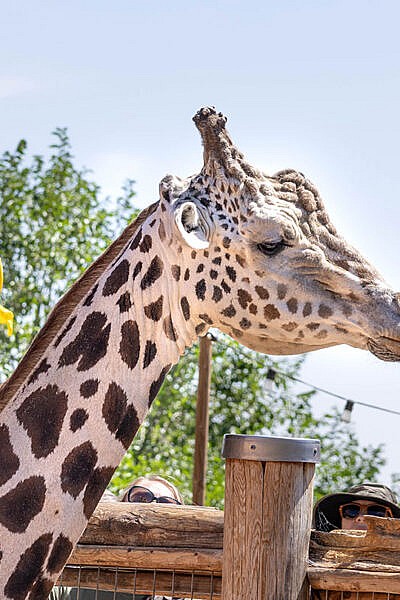
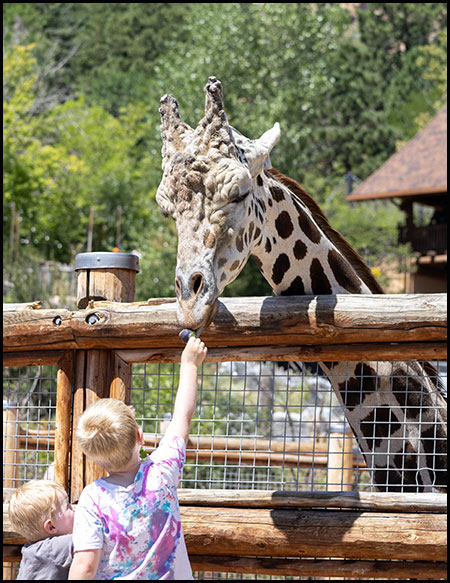
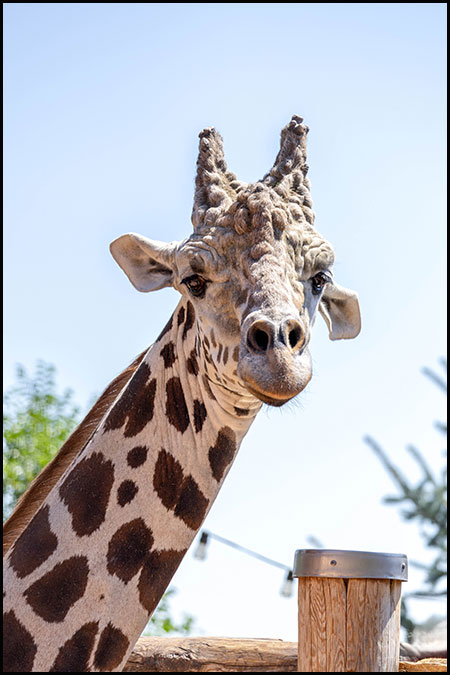
Celebrate World Giraffe Day with us, June 21, 2024!
On the longest day of the year, Cheyenne Mountain Zoo will celebrate the longest-necked animal: the giraffe! On Fri., June 21, giraffe keepers and staff from the International Center for the Care and Conservation of Giraffe (The Giraffe Center) are throwing a daylong event to commemorate World Giraffe Day.

“This is our way of thanking our community for their dedication to our herd, our Zoo and our conservation partners all year long,” says Diana Miller, giraffe specialist at The Giraffe Center. “We have a ton of inspiring activities planned!”

There will be many giraffe-themed activities along the giraffe plaza and the giraffe boardwalk, where guests can learn about CMZoo’s giraffe herd and take direct steps to save wild giraffe. From 9 a.m. to 2 p.m., several giraffe-themed activities are free for anyone with a ticket to the Zoo. Guests who want to participate in the giraffe fan parade should be sure to get a ticket for 10 a.m. or earlier. A full schedule of events is available at https://www.cmzoo.org/world-giraffe-day/.

Watch for signs on how to navigate through African Rift Valley as we embark on our exciting giraffe habitat improvements, scheduled to start in mid-June. Learn more about the giraffe herd’s future home and consider supporting it here: cmzoo.org/giraffeproject

By visiting the Zoo, guests and members can help save giraffe on World Giraffe Day and every day. Through CMZoo’s Quarters for Conservation (Q4C) program, every admission to the Zoo raises 75¢ for conservation. Since 2008, guests and members have raised more than $5 million for frontline conservation partners and projects around the world.

Wild giraffe - Photo credit: Musiime Muramura, Uganda Wildlife Authority
Photo credit: Musiime Muramura, Uganda Wildlife Authority

Giraffe are one of CMZoo’s legacy Q4C projects, so an easy way to support giraffe conservation is to simply visit the Zoo. Specifically, CMZoo visitors are supporting Giraffe Conservation Foundation (GCF) and their important work studying and protecting wild giraffe, growing populations, advocating government protections and policies for giraffe, and educating and empowering communities who live near wild giraffe.

“In the past year, members’ and guests’ Q4C funds supported additional anti-poaching efforts by funding a new GCF veterinary vehicle to respond to snaring and poaching,” says Diana. “We still have a long way to go, but it’s working, too. With this support, the latest surveys show that the population of wild giraffe is increasing steadily.”

With Q4C support, GCF continues to monitor giraffe populations in Uganda, in partnership with the Uganda Wildlife Authority. Recent surveys indicate that all four populations of giraffe in Uganda are increasing in number, with seven new calves reported in Lake Mburo National Park, seven calves in Pian Upe Wildlife Reserve, thirteen calves in Kidepo Valley National Park, and four hundred calves in Murchison Falls National Park.

“I keep having to tell people that’s not a typo,” Diana says. “There really are four hundred calves documented in the population in Murchison Falls National Park. That population is an excellent example of what can happen when all of the delicate conservation puzzle pieces fit together well.”

In addition to fieldwork and local communities’ buy-in to coexisting with giraffe, an important piece of the conservation puzzle is public support and funding. Zoos play a vital role by inspiring people all over the world to care for wildlife and wild places – and with programs like Q4C, zoos can connect funding from inspired people to frontline organizations who can make the impact.

International Center for Care and Conservation of Giraffe workshop in Giraffe Barn at Cheyenne Mountain Zoo

“Nobody helps guests fall in love with giraffe as well as our herd can,” Diana says. “From confident Tumbili to curious Wednesday, sassy Azmera and wise Mahali, the giraffe at CMZoo have inspired countless people to care for their wild counterparts. They have the most important jobs here at the Zoo, and our job is to take good care of them.”

CMZoo’s herd receives top-of-the-line care with hoof care and husbandry training programs that continue to lead the profession. After more than a decade sharing methods with other giraffe care teams, CMZoo established The Giraffe Center to serve as a resource for all giraffe care professionals. The Giraffe Center offers in-person and online husbandry and hoof care trainings, as well as customized consultations for giraffe care teams all over the world.

“We love traveling to other facilities to see how they do things, brainstorm problem solving with them, share what works for us and discuss what we’ve learned from other organizations,” says Amy Schilz, senior animal behaviorist at The Giraffe Center. “But, there’s nothing like being with your home herd. Our giraffe are such rockstars at training, so our annual workshops here at CMZoo are a lot of fun.”

At the end of May, The Giraffe Center hosted another giraffe behavior workshop at CMZoo with Behavior Works. The behavior workshop is a continuation from the introductory giraffe care workshop. At the behavior workshop, Amy and The Giraffe Center team help giraffe care professionals build upon the fundamental teachings they learn from the intro giraffe care workshop by getting hands-on with members of the CMZoo herd.

Giraffe mingling at Cheyenne Mountain Zoo

“CMZoo’s investment in The Giraffe Center has been fulfilling because we know we’re making giraffes’ lives better,” Amy says. “Seeing our workshop attendees work with our giraffe to learn how it should look to trim a hoof, and then hearing about their giraffe’s improved mobility at home after they’ve applied what they learn is so rewarding.”

The network and collaboration between giraffe organizations goes both ways. Amy and Diana have been instrumental in the design of the new barn that will soon stand tall in African Rift Valley at CMZoo. The team has traveled internationally to share best practices of giraffe care and to observe how others’ facilities and environments can best support a herd.

“We’re focused on environmental enrichment for all of our animals at the Zoo,” says Amy. “With a brand-new giraffe barn coming to CMZoo soon, we’re going to be able to fine-tune building and yard features that we’ve seen work elsewhere as we build this environment from the ground up. It’s happening soon, and we’re really excited to help it come together.”

The 10,000-square-foot giraffe barn’s design is in final considerations. Guests and members should expect to see changes to African Rift Valley start soon, and continue for the next few years as The Giraffe Center takes shape.

Back to The Waterhole