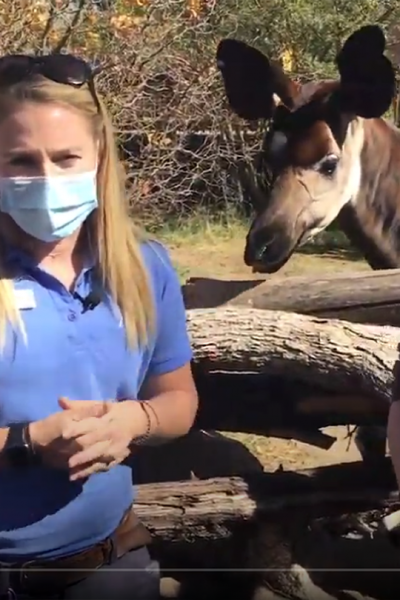
Today is #WorldOkapiDay! We’re in African Rift Valley with #CMZoo keepers, Diana and Rachael, to raise awareness for these unique rainforest inhabitants, affectionately known as the unicorns of the forest. Our 7-year-old male okapi, Bahati, joins us for some hoof care training as his keepers tell us all about him, his wild relatives, and their important role in their delicate rainforest habitat.

During our annual member conservation vote, CMZoo members help us decide how to share $75,000 of membership revenue with important wildlife conservation efforts around the world. In 2020, our members sent $11,000 to fund an agroforestry project to protect okapi habitat. In a continued partnership with the Okapi Conservation Project, this grant provides farmers with tools, seeds, natural fertilizers, and education in sustainable agriculture practices. In addition, funds support reforestation in the region.

Every visit to #CMZoo helps protect okapi in the wild, because 75¢ of every admission goes to conservation. Thanks to our visitors, we’ve raised $3 million to support conservation since our Quarters for Conservation program started in 2008. #SavingSpecies

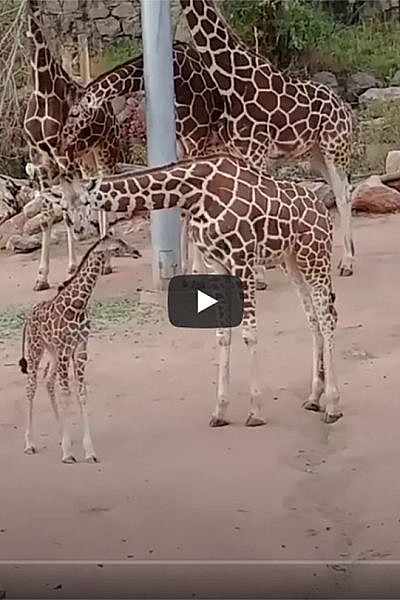
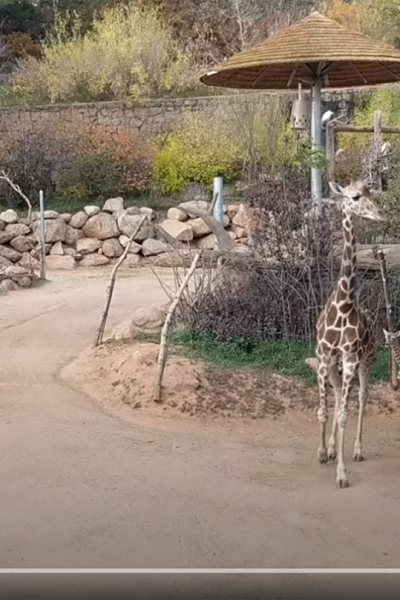
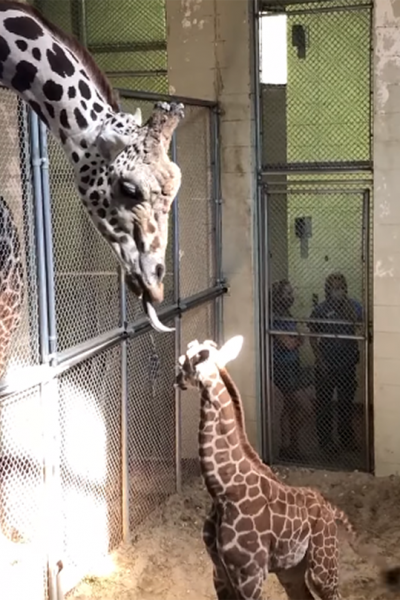
Our little giraffe calf explored with the big yard for the first time this morning with several members of the herd! She enjoyed the sunshine, stretched those legs with some major zoomies, investigated some of the guineafowl and was met with enthusiasm from staff, guests and giraffe alike. So far, she has met Ohe, Mashama, Msichana, Panya, Laikipia, Twiga, Msitu and Muziki. Today, she was outside with her mom, Bailey, and Ohe, Mashama, Msichana, Laikipia, Twiga, Msitu and Muziki.

She’ll continue exploring the big yard as weather allows and will meet more members of the herd as she grows up. These excursions won’t be scheduled, but guests should be able to see her on a regular basis outside with the herd and inside the barn. Speaking of the barn, it’s nearly time to turn off the temporary birth cam. On the calf’s 3-week birthday on Monday, Oct. 19, 2020, we will turn it off permanently at 4:45 p.m. Enjoy the birth cam until then. After that, you should be able to see her more and more on our year-round outdoor cams, available daily from 8:30 a.m. to 4:45 p.m. MT.

We’ll keep you posted as this adorable little girl continues to grow up! Watch her entire video playlist here

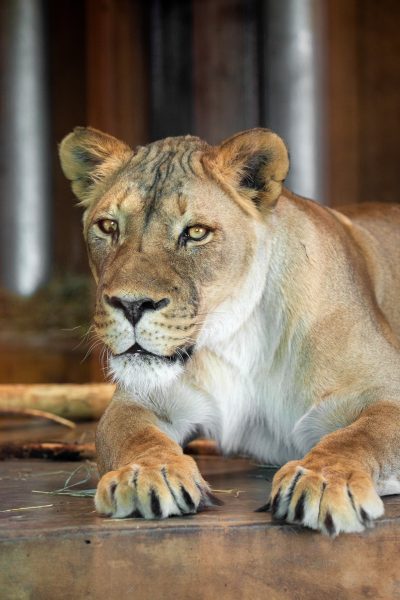
The Cheyenne Mountain Zoo family is mourning the loss of Zwena, a 13-year-old female African lion who was born at the Zoo. Monday afternoon, Zwena’s care team made the difficult and humane decision to euthanize her due to progressive neurological issues and her declining health and quality of life.

In July, we told you we were making adjustments for Zwena as she struggled with chronic mobility issues associated with her neurological condition. Between July and the beginning of October, she seemed to be having mostly good days. Despite continued treatment and care, she recently started declining quickly. The median life expectancy for African lions is 16.9 years, but as with humans and other species, life span can be less, due to various medical challenges, like the ones Zwena was facing.

Zwena, known affectionately as “Z” by her longtime keepers, was a staff favorite throughout the Zoo. She was well-loved and respected for her no-nonsense approach to building relationships with people.

“She was always the biggest personality out of the girls,” said Diana Miller, African Rift Valley keeper and Zwena’s primary trainer for nearly 9 years. “She was very loud. When she would see us coming she would either make a happy grumble or snarl at you. She was so sassy and fierce – and she loved to participate in her voluntary training. She was always enthusiastic with training and demonstrating her awesome lion behaviors during keeper talks. She would jump up on the cape buffalo statue with such vigor and a loud groan. She was impressive. She made a real impact with our guests.”

Zwena made an impact on her pride, too. She lived with Abuto, the pride patriarch; Lomela, her sister; and Elsa, her niece. The two younger males are Zwena’s nephews, Aslan and Boma. They lived with the full pride when they were younger, but now live as their own bachelor pride.

“The first time Z got to be with the cubs, Lomela was hesitant for them to go out into the big yard, but fearless Zwena just led them right out,” said Miller. “’Aunty Z’ encouraged all three cubs to chase her into the yard and the cubs went flying after her. She just loved playing with them. Lomela would lay nearby and call the cubs to come back, but they just wanted to go and play with Aunty Z. That was her vivacious personality in a nutshell.”

Zwena was an amazing ambassador for her species, helping guests fall in love with African lions through her energetic personality and intense focus. She will be dearly missed.

“She made me the keeper I am today,” said Miller. “You make connections with all of the animals you care for, but some animals leave a bigger paw print on your heart. Zwena definitely did that for me. I am so lucky to have gotten to know her and work with her. We will all miss her so much, but we’re grateful for the time we had together.”

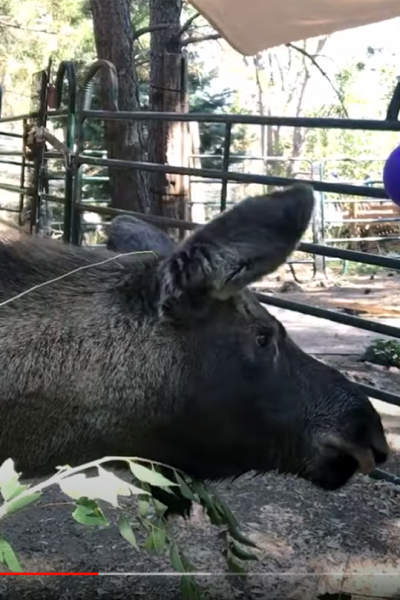
It’s snack time with 4-month-old Alaska moose calf, Atka, who joined us in July. He’s grown to nearly 250 pounds and stands just under five feet tall! Our big guy is gaining about 14 pounds per week, but is still a safe size for his keepers to go into his exhibit with him. He’s eating more solid foods, like grain and browse, and has nearly completely weaned off of bottles. He has mastered the art of making ‘noodles’ out of his favorite elm browse, as you can see in the video!

Atka fans will notice his coat is changing colors and texture. His winter coat is coming in thick and has turned from its formerly reddish hue to a dark chocolate brown. He’s also sporting incredibly fuzzy ears, ready for cooler temps coming our way in the next few weeks. We get a lot of questions about when he’ll grow his first set of antlers. We should start seeing growth in the spring!

To learn more about Atka, check out his YouTube playlist

#CMZoo Vice President of Mission and Programs, Dr. Liza, is here with giraffe keepers, Rachael and Kayla, with an update on baby’s progress. She’s nursing well, sleeping well, getting up and down, and hitting the giraffe calf milestones her care team wants to see. The ligaments we suspect were contracted in her two front legs appear to have loosened substantially. Baby’s legs look strong and much straighter than when she was born. We’ll keep monitoring her, but for now, things seem to be right on track!

Guests can visit baby and Bailey in the giraffe barn, which is now open at a limited capacity, as long as things continue to go well. The calf has been exploring the side yard with mom at unscheduled times during the day, so guests have a chance to see them outside, too.

Her keepers will tell you about how they’re seeing baby’s “brave and goofy” personality develop, and you’ll get to see “Big Daddy” Khalid check in with Bailey and the baby from the stall next to theirs.

We’ll continue to keep you updated on this little calf’s progress.

You can also learn more about our calf through the following resources:
– View mom and baby on our 24/7 temporary birth cam at cmzoo.org/giraffecam or on our YouTube channel.
– Watch the three live-streamed videos of the calf’s birth on Monday, Sept. 28 on this playlist: https://www.facebook.com/watch/55670076018/276758846645183/
– Keep up with all video updates on the calf on this playlist: https://www.facebook.com/watch/55670076018/630410841177208/
– Read her birth announcement here.

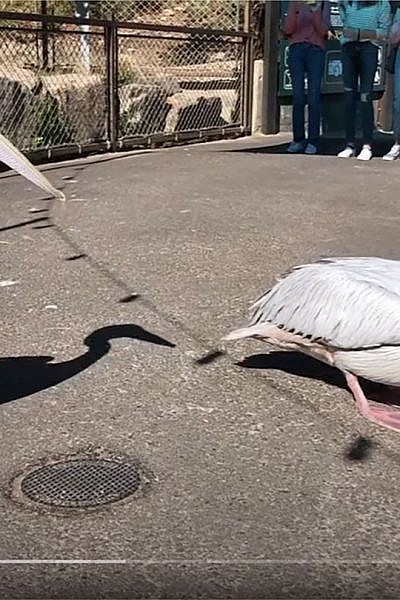
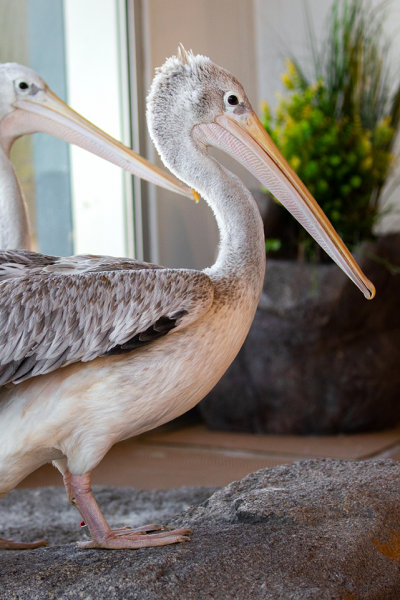
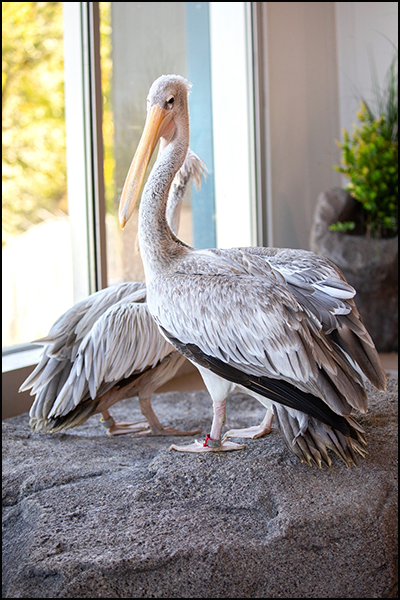
Three pink-backed pelicans joined the African penguins at Water’s Edge: Africa today! Pandora, Plato and Penelope have moved into the penguin building, where they will stay for a few days to settle in before beginning to explore the outdoor penguin areas, too.

Pink-backed pelicans have a wingspan of 7 to 9 feet, but they’re one of the smaller species of pelicans. They’re native to lakes, rivers and ponds throughout southern Africa. They are named for the pale pinkish hue on their backs that can be seen when they stretch out their wings.

The three pelicans lived with African penguins at their previous AZA-accredited zoo in Maryland, so they’re used to sharing space with them. Keepers say the penguins have been giving the pelicans space this afternoon and have responded well to their presence.

Pandora, a 4-year-old female, will live at CMZoo temporarily while her new exhibit and breeding partner prepare for her arrival at another AZA-accredited zoo. 4-year-old male, Plato, and 4-year-old female, Penelope, will live here for the foreseeable future as companions to each other and our penguin flock.

Their keepers say the three large birds are really curious and have been exploring the exhibit. Just like our flock of 17 African penguins, once the pelicans feel comfortable, they will have the opportunity to share sidewalks with guests on Boulder Beach, at Water’s Edge.

Next time you’re at the Zoo, swing by and say hello to our new pelican ambassadors.

Bailey, an 8-year-old reticulated giraffe at Cheyenne Mountain Zoo, welcomed her very first calf to the herd at 11:37 a.m. today. Bailey and the female giraffe calf are doing well. Following Cheyenne Mountain Zoo tradition, the calf will be named after she is 30 days old.

“You couldn’t ask anything more of a first-time mom,” said Jason Bredahl, giraffe animal care manager at CMZoo. “Bailey is nonstop grooming her baby, paying attention and making sure the baby is in a good position to nurse. Mom is doing a great job.”

The little calf is doing well, too. She’s already winning the hearts of CMZoo staff and online fans.

“This is probably the smallest giraffe calf I’ve ever seen,” said Bredahl. “Bailey is small for a giraffe, too, so that’s not surprising. She’s super adorable. She’s strong and is nursing well, so we’re really excited to share her with everyone as soon as we can.”

At first, the calf had a hard time standing because she had positioned herself in a corner of the stall and she kept bumping into the walls before she could get her footing. After waiting to see if she could get up on her own, keepers and vet staff asked Bailey to move into another area so they could give the calf a hand. The team picked her up and moved her into the middle of the stall around 1:27 p.m. She took her first steps on her own after a quick medical assessment, then a nudge from mom, at 1:38 p.m. As long as keepers observe that baby and mom are doing well, they will continue to let Bailey take the lead on providing her care.

The weight and height of the calf are not known yet, although keepers and vet staff say she is one of the smallest giraffe calves they’ve ever seen. Newborn giraffe calves are typically five to six feet tall and weigh 150 to 200 pounds. Exact measurements haven’t been taken, but this calf appears to weigh about 100 pounds and is around five-and-a-half feet tall.

The calf is the seventeenth member of Cheyenne Mountain Zoo’s reticulated giraffe herd. The calf is the first offspring for mom, Bailey, and the sixth to be sired by dad, Khalid (pronounced cull-EED). Bailey moved to Cheyenne Mountain Zoo on a breeding recommendation in Sept. 2016. CMZoo’s breeding program began in 1954 and has welcomed more than 200 calves since its inception.

Thousands of worldwide viewers witnessed the calf’s birth on Cheyenne Mountain Zoo’s live camera feed, which will continue to stream live from the sand stall, where Bailey and the calf will continue to bond for the coming weeks. The live stream of the birth stall, and both outdoor giraffe yard camera feeds, are available at cmzoo.org/giraffecam. The Zoo will continue to provide updates on their social media channels.

The barn will remain closed to guests for at least another day, to give the new calf time to bond with mom. Other members of the CMZoo herd will be available for viewing and feeding in the outside yard from elevated platforms, where guests can get eye-to-eye with and feed lettuce to the herd, weather permitting.

Cheyenne Mountain Zoo is not only a leader in the training and health of giraffe in human care, but they are also making a huge difference in conservation of giraffe in the wild. Reticulated giraffe, the subspecies to which CMZoo’s herd belongs, are endangered. There are just over 11,000 mature reticulated giraffe individuals in the wild, and that population is decreasing. According to International Union for Conservation of Nature’s (IUCN) Red List of Threatened Species, the reticulated giraffe population has declined by 56% in the last thirty years.

In October and November 2019, CMZoo helped establish a new population of a critically endangered giraffe in Uganda. The Operation Twiga IV team successfully reintroduced 15 Nubian giraffe to Pian Upe Wildlife Reserve, where they haven’t existed in nearly 25 years. CMZoo VP of Mission and Programs, Dr. Liza Dadone, assisted with research and anesthesia, and provided care for the giraffe during the translocation. Our contribution to this effort is possible thanks to ongoing support from CMZoo members, guests and donors. Operation Twiga IV is led by Uganda Wildlife Authority with support from Giraffe Conservation Foundation, Colorado State University Veterinary Teaching Hospital, Cheyenne Mountain Zoo and other partners from around the world. See a video about the Zoo’s latest field conservation effort, Operation Twiga IV, here.

Through Cheyenne Mountain Zoo’s Quarters for Conservation program, by which 75 cents of every Zoo admission is allocated to conservation, guests have helped CMZoo send more than $3 million to support important conservation efforts since 2008.

International African Penguin Awareness Day is October 10, and the African penguin keepers at Water’s Edge: Africa have a special social media celebration in the works. On our Facebook and YouTube channels, Cheyenne Mountain Zoo will share a video about our flock of 16 African penguins, who serve as animal ambassadors for their wild counterparts.

“Our flock does an incredible job helping our guests form lasting connections with them and their species,” said Mandy Hester, keeper in Water’s Edge. “The exhibit really sets them up by removing as many physical barriers as possible.”

The flock is getting even more confident sharing space with our guests. Penguin beach, at Water’s Edge, is designed so penguins can walk right up to guests. Hester says the best way for guests to get that experience is to be in the right place at the right time, and to remember that penguins investigate things with their beaks – since they don’t have hands to feel things with.

“We’re encouraging guests to let the penguins approach them instead of approaching the penguins, and to avoid kneeling down – as tempting as that is to get face-to-face,” said Hester. “The penguins like shiny things and anything they can feel with their beaks, so keepers on the beach will sometimes give toys to guests that they can offer to the penguins. It’s been really fun watching these little guys make our guests fall in love with them.”

When guests enter penguin beach while the penguins are outside, a keeper is present to help guests learn how to best interact with them. Making sure penguins have space and have the opportunity to approach guests, we’ve seen that they most often will.

“When they waddle down on the path together, they’re so funny and curious,” said Hester. “If there’s a moth or something flying around, they’ll get really interested in that and follow it around for a while and then they lose interest and move on to something else.”

Keepers provide all kinds of enrichment to keep them stimulated, like wind chimes that shimmer. One guest that bought a bubble maker in our gift shop was playing with it on the path and the penguins loved it, so keepers bought some bubbles for them. That’s another favorite form of enrichment for the flock.

The penguins also like to investigate what treasures guests might have. They like to dig around in the underneath cargo areas of strollers if guests are comfortable with that and there’s nothing dangerous for them.

“Things that babies like, penguins like,” said Hester. “A stroller or diaper bag is a treasure trove. The guests who have interacted with them on penguin beach have formed those meaningful relationships with our penguins that we work so hard to foster. We’ve also seen them standing in line to the limited-capacity indoor penguin building with guests, which is just adorable.”

As well as bonding with guests and their keepers, they’re bonding with each other.

“We have a couple of breeding recommendations in our flock,” said Hester. “One is a pair that most recently joined the flock, but have successfully had chicks before. Ichaboe [ick’-a-boh], a 15-year-old male is one of my favorites. He’s huge. He was the largest chick on record when he was born at his previous facility. When penguins first arrive at CMZoo, they have to earn the respect of the flock. The flock members would try to push him into the pool, but he is so big and solid, he’d just stand there and they couldn’t move him. His mate is Spheniscus [sphah-nesk-us], a 14-year-old female. They’re both really confident. They are already bonded, so we have high hopes for them bringing another chick to the world.”

African penguins are endangered, so zoos accredited by the Association of Zoos and Aquariums work to maintain the species’ viability through a Species Survival Plan, which matches penguins to breed based on genetics. That doesn’t always mean the individuals – whether they’re recommended to breed or not – are always interested in their selected mates.

“Captain is recommended with Percy, Pearl or Roxy, but he’s bonded with Darby,” said Hester. “Biggs and Roxy were bonded and lived together before moving here, but they are not recommended for breeding. While Roxy was back in Toledo, finishing her yearly molt, Biggs came to CMZoo and bonded with Percy, but they are not recommended either. When Roxy arrived, Biggs and she bonded again, but Biggs was already bonding with Percy, so we saw Biggs spending time in both Percy and Roxy’s nest boxes. Then Biggs picked Percy, and Roxy bonded with Rico. Rico used to be bonded with Napoleon, but they lost interest in each other and now Napoleon likes Pearl, but Pearl doesn’t seem to feel the same way. Rufaro, who came with his parents, Safara and Alex, and his brother, Rudo, has bonded with Pamona, who came by herself. We track all of this, but don’t expect everyone to keep up. It’s like a reality TV show.”

There are no scheduled times that the penguins explore the areas they can share with guests, so it’s a special experience that occurs several times a day. Next time you’re at CMZoo, swing by and say hello to our penguin flock at Water’s Edge: Africa.

Back to The Waterhole


Most people who have been to Cheyenne Mountain Zoo have seen our African lions majestically gazing out over Colorado Springs from atop Pride Rock, or hanging out on the perches and heated floors in their Relaxation Room. Abuto, CMZoo’s 9-year-old African lion pride patriarch, is an amazing ambassador for his species, having formed countless connections with our guests and members.

Abuto came to CMZoo in 2013, around the same time African Rift Valley lead keeper, Amy Schilz, came to the Zoo.

“We’ve been working together since he was a year old,” said Schilz. “Right away we started working on behaviors and training that still help us take great care of him as he deals with ongoing health issues.”

About four years ago, he started showing signs of illness. He is usually really energetic and can be seen roaring, running around and enthusiastically participating in training and enrichment. At around five years old, he started having ‘off days,’ when he seemed lethargic, which led his team to investigate what was going on.

At the time, Abuto participated in a voluntary blood draw that revealed he was in the beginning stages of kidney disease. While investigating further, Abuto’s team also discovered he has high blood pressure.

We’ve been monitoring Abuto’s issues closely and managing them with medications and diet. Abuto’s father had a rare form of kidney disease that can be hereditary. Chronic kidney disease is unfortunately prevalent in big cats. The disease is progressive and can’t be cured, so his team manages Abuto’s symptoms with diet, medications and fluids to keep him comfortable.

His symptoms subsided for a while, but over the last few months, Abuto has started to show the same signs as before that he is having an ‘off day’ here and there, and maybe isn’t feeling well. CMZoo’s veterinary team and Abuto’s care team in African Rift Valley has been performing frequent voluntary blood draws and blood pressure tests with Abuto to see what’s preventing him from feeling his best.

“We are seeing some of his kidney values climbing higher, which is unfortunate,” said Schilz. “We’re doing the best we can for Abuto, but kidney disease is something that affects big cats and domestic cats often. We’re monitoring him closely, because the levels are higher than they have been in the past, and we want to do everything we can to prevent them from increasing further.”

Abuto’s blood tests have shown the progression of his disease over the years, most recently indicating a significant jump in levels. His team is working to adjust his treatments with hopes they can manage his symptoms in this next stage of the disease.

Abuto is the total package, from his gorgeous mane, to his impressive roars and his incredible intelligence. He, like most CMZoo animals, participates in voluntary training that allows his keepers to provide top-notch care for the 500-pound feline.

“He’s so smart,” said Schilz. “You can tell he likes participating in training. He gets really excited and runs over to train. He knows how to show us his mouth and teeth, so we can check on his dental health. He’ll also flop down on his side and show us his paws when we ask, so we can make sure he doesn’t have any cracks in his pads and his nails are a healthy length. He also voluntarily participates in blood draw training and blood pressure checks, so we can keep tabs on those long-term health issues he’s facing.”

How do you draw blood from a 500-pound lion? By asking him.

Abuto is trained to present his tail through a specially designed blood draw panel at the base of a training area by the Relaxation Room. During this training, his keepers open an access door for Abuto and leave it open, so he can choose to leave if he wants to. From the other side of the panel, Schilz, his primary trainer, asks him to enter the space and then cues him to adjust his body so his tail fits through the port. Abuto runs into the space and positions himself quickly, knowing he’s going to be engaging with Schilz and getting lots of rewards: tasty meatballs. Schilz sits on the other side of a protective barrier to Abuto’s left, while African Rift Valley keeper, Kayla Ringuette, and CMZoo veterinary technician, Brenda Cordova, sit behind fencing near his tail at the blood draw panel. They provide verbal cues, like, “touch” and “poke,” to let Abuto know they’re going to touch his tail and then draw blood. Abuto does the same behaviors for blood pressure tests, when he also presents his tail for the team to attach a quick-release blood pressure cuff.

“Abuto is just the absolute best,” said Schilz. “When we first see him in the mornings, he’ll make ‘baby calls’ like coos and little moans to us. He’s so chatty. It’s like he’s telling us all about his night. We’ve been working together for so long that he recognizes my voice. If he hears me laugh, even from the bottom of the hill, he’ll run over to see me. He’s so special to me, the team, our whole staff and so many of our guests. We’re making sure he’s getting the best possible care, and we are hopeful we can address these issues as they progress, just as we have helped him in the past.”

Keepers are tracking quality-of-life markers for Abuto, as they do for any animal with ongoing health conditions. Abuto’s keepers are tracking whether he shows any symptoms or behavioral changes, including lethargy, presenting a droopy jaw, has squinty eyes, or holds his head low – which could indicate he’s not feeling well. They’re also tracking whether he chooses to participate in training or perks up for keepers as he normally would. Along with blood tests, the long-term data will help his team adjust his treatments and make any future decisions necessary.

“Abuto is really special to us and has a huge piece of our hearts, so when he gets sick, we want to do everything we can to make him feel better,” said Schilz. “He’s in great hands with our vet team and our keeper team, and we know all of his fans will continue sending him well wishes for a quick turnaround.”

We will keep you posted on Abuto’s ongoing issues. Guests can visit him in African Rift Valley.

Back to The Waterhole


Last year, Cheyenne Mountain Zoo joined the Rocky Mountain Wolf Action Fund (RMWAF) and other partners to collect signatures for a petition that successfully landed a proposition on this year’s general election ballot. Proposition #114 asks Colorado voters to decide if gray wolves, once native to the state, should be carefully reintroduced to the Western Slope. The plan, if approved, would be led by Colorado Parks and Wildlife with the support of other wolf and ecology experts.

“There are a lot of issues competing for voters’ attention this November,” said Dr. Liza Dadone, vice president of mission and programs at CMZoo, who led the Zoo’s efforts to support RMWAF’s campaign to bring this issue to voters in 2020. “We have seen significant support from the public throughout this project, but voters should know this isn’t a done deal. We still need people to look out for Prop #114 on the ballot and give the experts involved a chance to restore this amazing species that is vital to our local ecosystem.”

Other than noting that Prop #114 is an issue worth voting on, there are important dates to keep in mind for this year’s election. Ballots will be mailed to Colorado voters October 9 and must be returned by November 3, 2020 – when polls open for in-person voting.

While Prop #114 is a complex and controversial question, for CMZoo it’s a simple question: do we want to live in a state with wolves in the ecosystem or not? For us, the answer is yes, no matter how hard we need to work to collaborate with all involved parties to address the valid concerns on every side of the question.

“This vote is the best chance we have had at restoring wolves to the wilds of Colorado in a very long time,” said Dr. Dadone. “For the Zoo and the 15,298 registered voters whose signatures we collected last fall, we feel obligated to see this through. The initiative outlines the reintroduction of gray wolves to include ongoing collaboration from all stakeholders, and a solid plan from Colorado Parks and Wildlife incorporating research-based findings.”

CMZoo is home to a pack of seven Mexican wolves and has a long history of working to restore and relocate species in the wild, including black-footed ferrets, Wyoming toads, Mexican wolves, giraffe in Uganda, amphibians in Panama, and more. As an organization that contributes to the survival of species around the world, we see this is an exciting opportunity for Colorado residents to help restore a species that once roamed free, right here at home.

CMZoo’s role in this issue is as trusted wolf experts and animal advocates. One way we want to help is by addressing common misconceptions about wolves, based on our extensive experiences with them.

While many are excited about the chance to see wolves in the wild, popular culture has positioned wolves as dangerous and aggressive villains that could lead others to feel unsafe around them. Unlike mountain lions and other predators found in wild and populated areas throughout Colorado, a wolf’s natural reaction to human presence is to retreat.

“When Rocky Mountain Wild keepers go into the expansive enclosure with CMZoo’s pack of Mexican wolves to clean and replenish food, water and enrichment items, the wolves typically get as far away from them as possible,” said Rebecca Zwicker, Rocky Mountain Wild animal care manager. “We see it all the time. Their natural instinct is to be wary of humans. Even with our wolves in human care, we like to see that instinctual behavior intact, because the hope for our wolves is that they or their offspring are one day restored to the wild to support their dwindling wild population.”

The Rocky Mountain Wolf Project reports that since 1900, there have been only two possible cases of a wolf-related human fatality in North America, and no cases in the lower 48 states.

This is a complex issue, and we recognize this restoration could create hardships for some people who live in the region where they would be reintroduced, especially for farmers and ranchers in the regions proposed for reintroduction. As caretakers of animals, CMZoo understands that farmers and ranchers care for their animals and have invested generations of energy into them. We also know that both compensation for their livestock and mitigation strategies are essential if wolves are restored to Colorado. The health of public and private lands is critical for a healthy statewide ecosystem and its wildlife. We support a bill that helps us live in balance, uses management systems that support both of those standpoints, and puts experts in charge of the reintroduction who will hear all concerns and adequately address them as they meticulously implement the plan.

There is evidence of wolves’ positive impact on restoring balance in struggling ecosystems, too. Some may be familiar with the reintroduction of wolves to Yellowstone National Park, in 1995. The National Park’s elk population had grown to levels not healthy for the ecosystem, due to the absence of predators, like the wolf. The elk drastically reduced the number of trees and shrubs that prevent erosion and serve the rest of the ecosystem.

Birds lost their habitats, as a result of the fauna’s inability to grow to maturity. The water temperature in streams rose, due to a lack of shade from trees and shrubs, which made them uninhabitable for fish and other aquatic species. Without competition from wolves, coyote populations increased, which reduced the number of small mammals in the area that served as a food source for many smaller predators, like foxes.

Since reintroducing the wolf, Yellowstone National Park’s elk population has decreased and become healthier. The wolves single out the weak, old, sick and young elk, leaving the strongest elk to reproduce and carry on healthy genetic lines. The Rocky Mountain Wolf Project also says the wolves’ presence near waterways reduced the negative impact elk had on streams, trees and shrubs and the animals that live there, simply by redirecting the elk. Coyote numbers have decreased, creating a better balance and more available food sources for dwindling numbers of foxes,
badgers, weasels and raptors, which share their prey.

Until the 1940s, when wolves were eradicated from Colorado’s wild places, wolves thrived in the Rocky Mountain State. The last wolf was shot in 1945, as a result of an extermination campaign that didn’t consider the wolves’ important role in our delicate mountain ecosystem. Today, wolves roam the Rocky Mountains from Mexico to Canada and Alaska, but not in Colorado.

“Our state is one of the last gaps in connecting these wolf packs, which is detrimental to the long-term health of the species,” said Zwicker. “Colorado’s wild places can provide additional habitat for wolves and contribute to the safe and natural ‘wildway’ (like a highway) between subspecies of gray wolf.”

A wolf pack recently confirmed in Colorado may lead some people to believe that the species doesn’t need our support to thrive again naturally.

“Although one small pack of wolves has been located in northern Colorado, there’s no way those few remaining individuals could create a healthy, genetically diverse, sustainable population of wolves in Colorado,” said Zwicker. “Thinking about the greater goal of providing positive ecological benefits of a healthy and established ecosystem, these few wolves couldn’t have an adequate impact.”

As an apex predator, their presence at the top of the food chain in Colorado is vital, as it is in Yellowstone National Park. Western Colorado, where the Rocky Mountain Wolf Project seeks to reintroduce wolves, has more than 15 million acres of public land with an abundance of wild prey for hunters and wolves.

Returning wolves to our state in adequate numbers will surely impact Colorado’s big game species, such as elk, and there are concerns that this will negatively impact our hunting economy.

“When wolves have been removed from the ecosystem, populations of elk and deer can reach unhealthy numbers which can lead to disease spread, starvation and a devastating impact on plant life and waterways,” said Dr. Dadone. “To some, wolves will make hunts more challenging. For others, their presence will create memories that make the hunt live forever in their minds. When you think of how amazing it would be to see a wild wolf pack, we lean towards the latter.”

As with all election propositions, it’s important to think critically about how the return of wolves to Colorado could impact our state in positive ways and the potential obstacles we’ll need to creatively overcome as a statewide community.

Back to The Waterhole