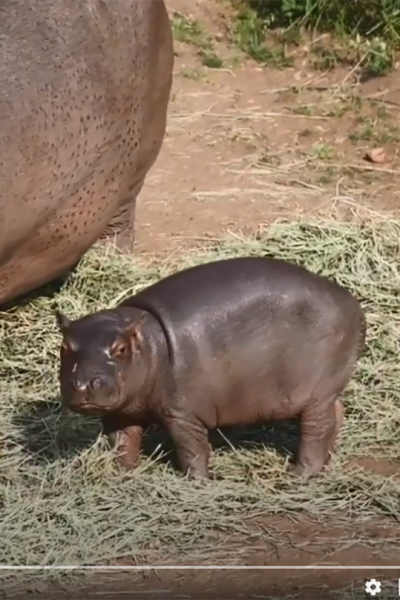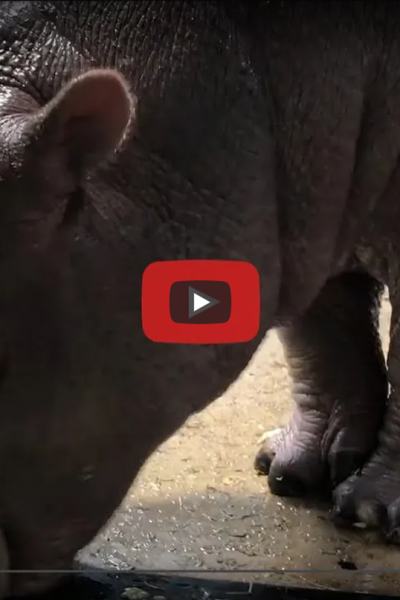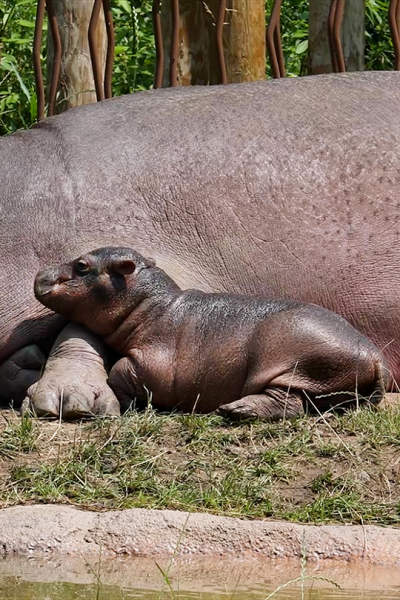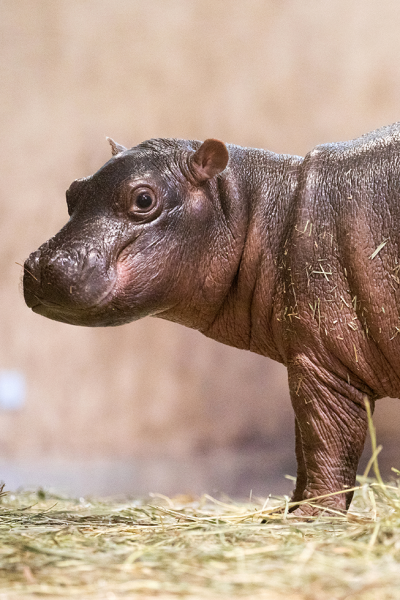
Join us for a 5-week check-in with our beloved baby boy hippo. He and his mom, Zambezi, continue to bond well, and have even been exploring the main hippo yard together. Little baby hippo is weighing in at more than 160 pounds now! He’s gaining about a pound a day.

He’s also starting to grow his tusks and is beginning to interact with his keeper team. Water’s Edge: Africa lead keeper, Phil, fills us in on the latest from the hippo building, where baby and Zambezi have been joining him for afternoon meals daily.

The team is working on choosing a name for the baby hippo, and we’ll share that as soon as we can.

Back to The Waterhole


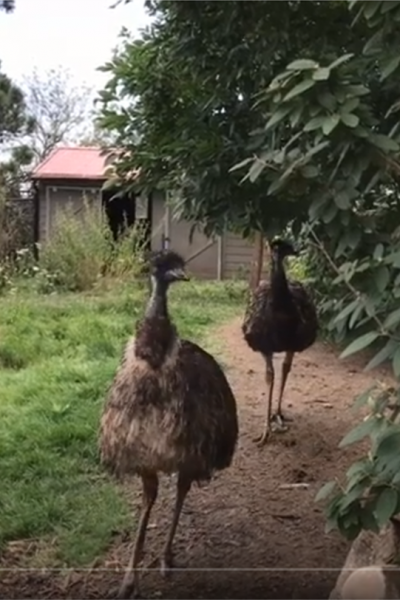
Do you know our two emus, Dora and Damian? These two ‘really big birds’ live in Australia Walkabout, near the wallaby yard. Join Australia Walkabout Keeper, Bruce, to learn about the unique personalities, backgrounds and features of these flightless feathered friends, then watch the two enjoy a summertime cooldown in a nice mud wallow.

Back to The Waterhole


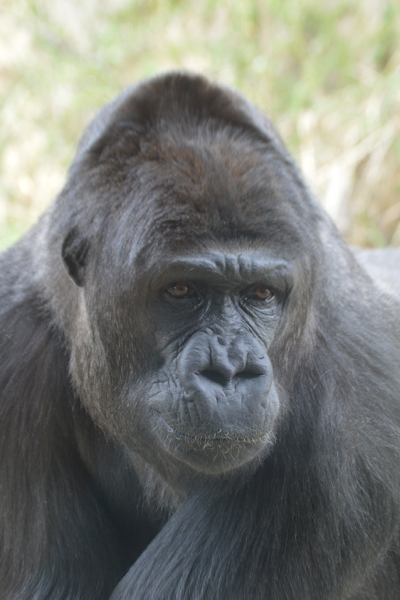
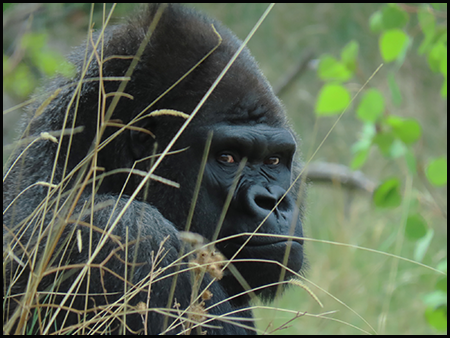
Last month, Juju, 40-year-old CMZoo female Western lowland gorilla, started showing her keepers she wasn’t feeling well. Juju, who is known for being confident and independent, was spending more time away from the group, being less energetic, and sitting uncomfortably. Juju is in her golden years, having surpassed the median life expectancy of 39 years for female Western lowland gorillas, and had experienced short periods of similar discomfort, but this episode was lasting longer and her symptoms were more severe.

On August 4, 2021, after her team had exhausted all voluntary diagnostic and treatment options, Juju received a thorough examination under anesthesia in CMZoo’s vet clinic. Anesthesia is risky for any animal, but especially for an older animal. X-rays showed she doesn’t have major issues, like fractures or breaks, causing her pain, and that it’s more chronic, age-related issues to manage. She did well under anesthesia and has recovered and responded well to the treatments, including steroid injections in her left knee and left hip, and ongoing oral medications to help with pain and inflammation. Thankfully, Juju’s keepers and veterinary team have seen her continue to improve physically since the treatment.

Unless Juju’s care team sees that she’s declining, they’ll continue to manager her discomfort with oral medications, and won’t attempt any further diagnostics. They track her quality-of-life markers for her ‘new normal,’ which help the team set realistic expectations and more specific behavior trends that help them identify if she might need assistance again.

Some might think Juju’s care plan is purely focused on her physical conditions, but there’s another factor to consider when an animal has to leave and rejoin its group: the well-being of the troop. Because gorillas are such social beings, and because CMZoo’s Western lowland gorilla troop of five has been somewhat slow to form a cohesive group, the next step was to reunite them while preserving the relationships they’ve worked so hard to establish.

Silverback gorillas joining an established group, like 30-year-old Goma, have to earn the respect of the females in their troops, and a large-and-in-charge female like Juju doesn’t always make it easy for him. Under normal circumstances, it wouldn’t be unusual for Juju to ‘challenge’ Goma, testing her limits by sitting closer than he would prefer, for example. When Juju does this, Goma’s job is to prove he’s a leader to earn her and the other females’ respect. He might ‘display,’ by standing up tall and making noise with nearby objects. Normally Juju would show him respect by moving away. While she wasn’t as mobile as usual, Goma – knowing Juju’s tendencies – could have seen her inability to move away quickly as a continued challenge, which could have caused tension between them. To avoid creating this environment, which would be stressful for the whole troop, keepers gave Goma his own space. Other than during her time at the vet clinic, Juju was with the females consistently.
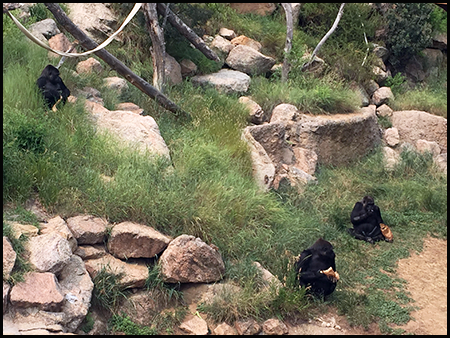
“Once our vet team decided Juju was steady enough, she rejoined the girls,” said Eleanor Knox, senior keeper in Primate World. “When we opened the door between them, she was still pretty stiff from the procedure. Roxie and Asha were doing happy gorilla grumbles and touching her. Roxie, her best friend, patted her. Asha sort of encouraged her out of the den to a comfy hay bed, where she relaxed for the next couple of hours with Roxie close by.”

By the next morning, Juju had made her way outside, followed by Roxie. The team gave Juju about a week after the immobilization before reuniting her and the females with Goma. After a week, they could see the ladies were calm and settled, and Juju was confident and mobile enough to share space with him.

“The goal is to have a cohesive group, so separating Goma was the best thing for them at the time, but we knew we would need them to reunite when Juju was better,” said Knox. “It didn’t take long to see we could reunite everyone safely.”

When gorillas are excited or happy, they let out ‘gorilla grumbles,’ and the day they were reunited was grumbly indeed. They’ve been back together for their normal daily interactions for about two weeks.

“Just seeing that they could go through this potentially stressful scenario so calmly, and actually seeing excitement during the reunion is a huge nod to their resilience and bonds as a group,” said Knox. “Goma has been paying a lot of attention, which we can interpret as him caring about the overall good of the group.”

Primate World keepers will continue to monitor Juju and adjust treatments as needed. For now, the troop has settled back in together so well, that they’ll continue spending time together as a troop, growing their bonds.

Back to The Waterhole


It’s officially back-to-school season. While our partner, Children’s Hospital Colorado, helps parents prepare for the academic year ahead, Water’s Edge: Africa keepers are helping 4-month-old ring-tailed lemur, Maky [MAH-kee], take his first steps toward training!
Many animals at the Zoo participate in voluntary training, which allows them to choose to participate in their own health care and other husbandry behaviors for their well-being. One of the first steps in training is building a trusting relationship between the animal and its keeper team.

“Developing a relationship with a young animal is one thing, but the real test is our relationships with their mothers when we need to work with them,” said Phil Waugh, lead keeper in Water’s Edge: Africa. “The fact that our ring-tailed lemur moms are comfortable with us being close to and even touching their babies is a huge signal that they trust us – not only with their safety, but with their babies’ safety.”

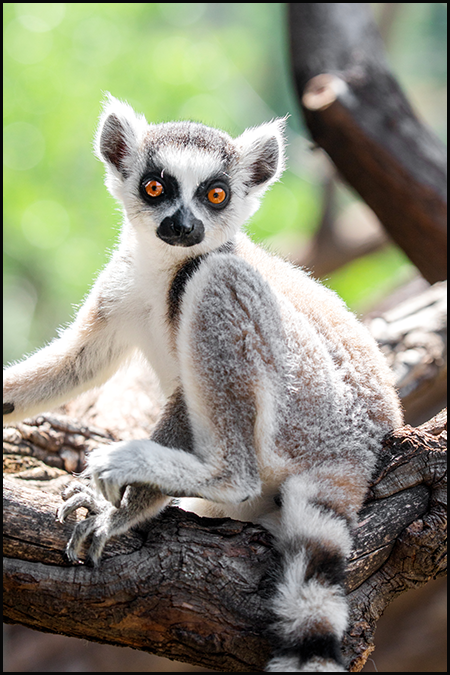
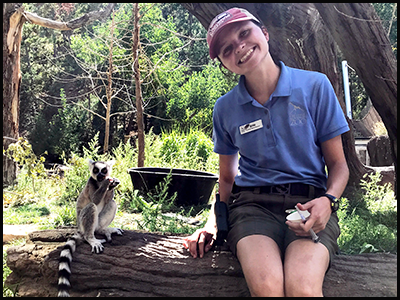
Maky’s mom, Rogue, calmly sits by, snacking on raspberries, as the Water’s Edge team comes onto Lemur Island to see if Maky wants to train. The young lemur is clearly excited by all of the activity – and snacks. He may be young, but he has mastered the art of speed leaping. He jumps quickly from one branch to another to make it over to the keepers, even beating his dad, Hercules, for top positioning closest to his trainer, Erin.

“Maky is incredibly confident with his team, and he’s full of energy,” said Waugh. “He’s young, so his training will start with learning to focus on one keeper and one task at a time. He’s quite a rambunctious little student, so it’s endearing to see him really harnessing that focus to participate with his keeper team.”

Little Maky is also learning to accept voluntary injections. The team will start by simply bringing a syringe without a needle near him, so he can see what it looks like. Then, they’ll touch him with the syringe, then add a blunted needle until he’s totally comfortable with it. Injection training is often a top priority for new or young animals, since it helps them receive vaccinations they need with as little stress as possible.

CMZoo’s three adult lemurs, Allagash, Hercules and Rogue, are injection trained, too. They have also learned more complicated behaviors, like voluntarily loading into a transport crate for low-stress moves from Lemur Island to the vet clinic, for example. They continue to learn, too! They’re working on presenting different parts of their bodies for keepers to touch and check for possible wounds or other issues.

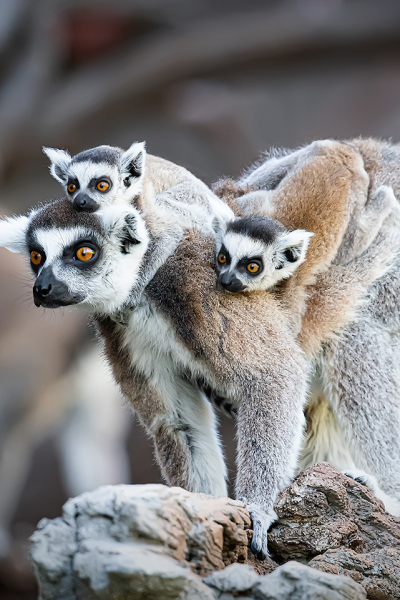
“Allagash, who gave birth to twins in July, has also shown us she’s comfortable with us getting close to her babies,” said Waugh. “When we ask her to stretch up or show us her belly, she’s happy to do it. It helps us do visual checks on her and the twins, while they’re still clinging to her back and chest most of the time.”

Maky spends very little time on his mom’s back anymore, but still seems to like sitting next to her for the lemurs’ daily morning sunbathing sessions. We hope you all do well as you head back to school, and that you get lots of rewards for your training, just like Maky!

Back to The Waterhole


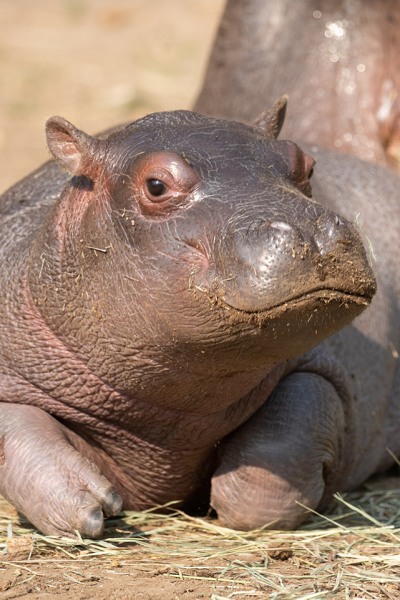
Napping can be tough when you have a newborn! Zambezi is clearly a great mom, always keeping a watchful eye on her little one in between quick winks. Her 3-and-a-half week old calf is great at power napping right alongside her, when not exploring his new, great big world. Once Zambezi decides that naptime is over, the pair enter the water and swim off to their preferred nursing spot. A mother’s work is never done.

THREE-WEEK OLD BABY HIPPO’S DAD CELEBRATES WITH A BLUE WATERMELON SMASH – Cheyenne Mountain Zoo today announced their newest bundle of joy – a three-week-old Nile hippo – is a boy! To celebrate, 18-year-old first-time Nile hippo dad, Biko, smashed a watermelon with the insides dyed blue, with animal-safe food coloring. Enjoy this video, for an up-close view of the smashing good time!

Baby hippo facts:

– Born July 20
– Mom: Zambezi (zam-BEE-zee)
– Dad: Biko (BEE-koh)
– First hippo born at Cheyenne Mountain Zoo in 32 years
– Baby weighs 115 pounds
– Guests can visit mom and baby in Water’s Edge: Africa, the Zoo’s newest exhibit
– Advance tickets to the Zoo are required and available at cmzoo.org/visit

About Water’s Edge: Africa

Water’s Edge: Africa opened in June 2020, with brand-new homes for hippos, African penguins, ring-tailed lemurs, warthogs, pink-backed pelicans and more. Hippo breeding was a key focus of the exhibit’s design, which includes a hippo river loop that can be separated to create mom-and-baby nurseries. Guests can get face-to-face with hippos at their knife-edge pool, or get a bird’s-eye view of them in their yards from a giant rope suspension bridge. The exhibit also has an off-exhibit pool, which can be used if Zambezi’s care team sees she’d like more privacy with her calf.

About Nile Hippos

Only 30 organizations accredited by the Association of Zoos and Aquariums in North America, including Cheyenne Mountain Zoo, house hippos. The International Union for Conservation of Nature (IUCN) Red List categorizes Nile hippopotamuses as a species vulnerable to extinction in the wild, estimating 125,000 to 150,000 remain in their native habitats. The primary threats are habitat loss and illegal and unregulated hunting. Hippos are hunted for their meat and for their ivory canine teeth.

As first-time parents, Biko’s and Zambezi’s offspring represents an important contribution to the population of hippos in human care. The Nile Hippopotamus Species Survival Plan manages the population’s breeding recommendations to achieve the highest possible genetic diversity in the pool. More about Nile hippos at CMZoo.

About Cheyenne Mountain Zoo

Cheyenne Mountain Zoological Society was founded in 1926. Today, Cheyenne Mountain Zoo, America’s mountain Zoo, offers comprehensive education programs, exciting conservation efforts and truly fantastic animal experiences. In 2021, Cheyenne Mountain Zoo was voted #4 Best Zoo in North America and CMZoo’s Rocky Mountain Wild was named #3 Best Zoo Exhibit in North America by USA TODAY 10Best Readers’ Choice Awards. It is Cheyenne Mountain Zoo’s goal to help guests fall in love with animals and nature, and take action to protect them. Of the 233 zoos and aquariums accredited by the Association of Zoos and Aquariums (AZA), Cheyenne Mountain Zoo is one of very few operating without tax support. Cheyenne Mountain Zoo depends on admissions, membership dues, special event attendance and donations for funding.

Ladies and gentlemen, the time has arrived for the baby hippo sex reveal! Water’s Edge: Africa Lead Keeper, Philip, is joined by the calf’s father, Biko, to mark the special occasion. The commissary team at #CMZoo prepared a special treat for the 18-year-old hippo dad; a watermelon with the insides dyed with animal-safe food coloring to indicate the sex of the baby. What color will it be? Watch this for the ‘smashing’ reveal!

As you know, Cheyenne Mountain Zoo and our community raised funds in our time of heartbreak after losing our female Amur tiger, Savelii, in March 2020. I wanted to update you on the steps we have taken to put those funds to use and about the importance and conservation impact of this funding.

Please enjoy this recorded presentation on Amur tiger conservation, lead by the coordinator of the Wildlife Conservation Society (WCS) Tiger Program in Russia. This one-hour presentation originally aired live on Wednesday, Aug. 11, 2021. It includes updates on the steps we have taken to put our Savelii Memorial Fund to use and information about the importance and impact this funding will make under the direction of WCS.

As caretakers of endangered and threatened species, we walk a fine line to balance doing what’s right for the individual animals in our care, but also making hard decisions for the future of the species, both in the wild and in human care. When our Amur tiger Savelii passed away earlier this year from anesthetic complications after an artificial insemination procedure, the loss hit our Zoo family and community hard. However, while losing Savelii was difficult, the reality is that there are treacherously few wild Amur tigers remaining – around 500. Unfortunately, the passing of our one tiger might get more attention and discussion than the fact that a future for wild Amur tigers remains uncertain.

In Savelii’s memory, we wanted to make a lasting impact for Amur tiger conservation. With the help of our local and global community, plus funds from Cheyenne Mountain Zoo, we were able to raise a total of $88,170 for Amur tiger conservation.

Over the past five months, we have spoken with multiple Amur tiger conservation programs to determine the best way to move Amur tiger conservation forward in a significant way. We have decided to donate the majority of our Savelli Memorial Fund to an exciting and important project taking place in the Russian Far East, where the largest populations of wild Amur tigers reside.

As temperature patterns change, the ranges of prey species can change. Amur tigers are now migrating further north in the forests of the Russian Far East. In support of Wildlife Conservation Society (WCS), the Savelli Memorial Fund will go to support conservation efforts that protect Amur tigers in these locations, and the projected locations that the tigers are migrating into. Specifically, the work here seeks to provide secure landscapes for tigers to breed and rear young, to monitor populations of tigers and their prey, and to support law enforcement and anti-poaching efforts using trained rangers with new technology.

With our shared donation of $88,170, which was raised thanks to donations from the smallest gift of 35 cents to larger gifts of $2,000, we will all be making a difference for Amur tigers in their natural habitat. While we still feel the tragic loss of Savelli, we are able to also feel hopeful that her legacy will live on to help her endangered kin in the wild.

Warmly,

Bob Chastain
President & CEO
Cheyenne Mountain Zoo


About Cheyenne Mountain Zoo

Cheyenne Mountain Zoological Society was founded in 1926. Today, Cheyenne Mountain Zoo, America’s mountain Zoo, offers comprehensive education programs, exciting conservation efforts and truly fantastic animal experiences. In 2021, Cheyenne Mountain Zoo was voted #4 Best Zoo in North America and CMZoo’s Rocky Mountain Wild was named #3 Best Zoo Exhibit in North America by USA TODAY 10Best Readers’ Choice Awards. It is Cheyenne Mountain Zoo’s goal to help guests fall in love with animals and nature, and take action to protect them. Of the 241 zoos and aquariums accredited by the Association of Zoos and Aquariums (AZA), Cheyenne Mountain Zoo is one of very few operating without tax support. Cheyenne Mountain Zoo depends on admissions, membership dues, special event attendance and donations for funding.

Itty bitty little hippo is ready for a nap! After a long day of swimming with mom and exploring its brand-new world, our 2-and-a-half week old hippo looks ready for a nap as mom, Zambezi, eats her dinner. Although the baby is still only nursing, it seems to be learning lots from mom, including trying to eat hay!

Zambezi and her two-week-old calf are popping up to say hello for #TooCuteTuesday! #KeeperCam

The hippo building in Water’s Edge: Africa is open to the public as a ‘quiet zone.’ While Zambezi and her baby bond, the two can sometimes be difficult to spot, but if you’re patient, you are likely to catch a glimpse. Viewing depends on where Zambezi decides to spend time with the baby, or if we need to move them to a private area to clean the exhibit. The baby’s sex has not been identified and there are no naming plans at this point, but we will share that information as soon as we know more!