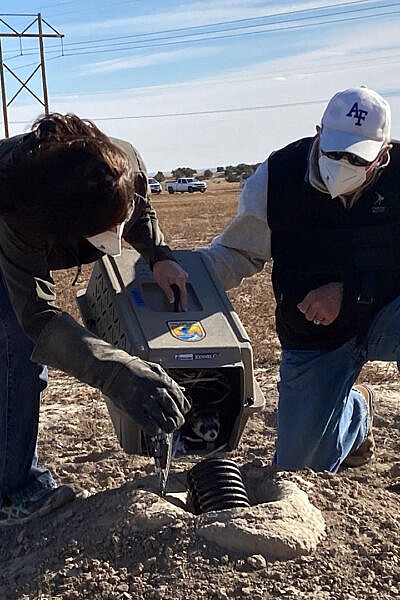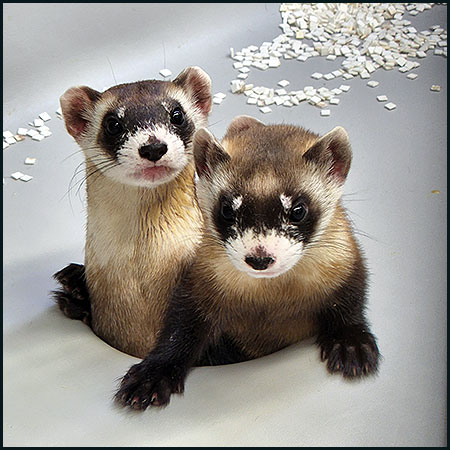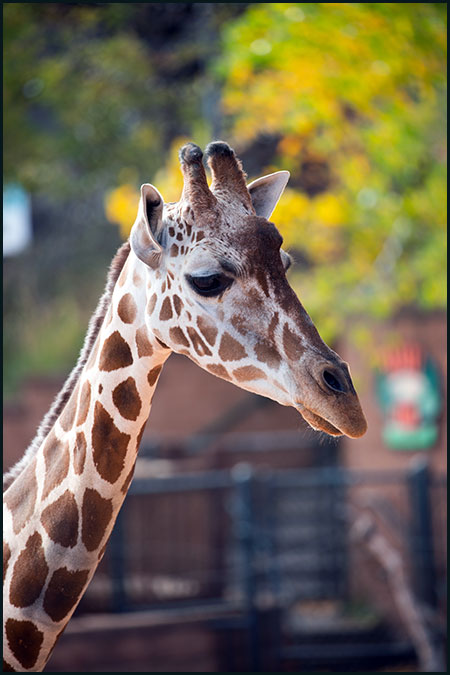
The four black-footed ferret (BFF) kits born in Cheyenne Mountain Zoo’s conservation center this summer are on their way to ‘boot camp,’ a pre-conditioning center where they’ll have the chance to prove they could survive in the wild.

Boot camp puts their survival skills to the test in a contained prairie setting for about 35 days. Biologists monitor the BFFs during boot camp, and if they see any individuals are struggling to hunt, find shelter, or defend themselves, they’ll be returned to human care. Those who prove they could live wild will be released into the prairie beyond the contained boot camp setting, hopefully to breed with other wild ferrets and grow their populations.

It’s a big step for the furry ferrets, who are independent at only four months of age. Their potential wild release represents hope for their species, which was considered extinct when 18 BFFs were accidentally discovered by a sheepdog in Meeteetse, Wyoming in 1981.

From monthly lighting adjustments to reproductive monitoring and only four breeding opportunities (once per year, for four years) to pair a compatible couple to conceive, the intricacies of black-footed ferret breeding success are meticulously managed by the CMZoo conservation team. CMZoo is one of only five zoos in the world participating in breed-and-release programs to support the Black-Footed Ferret Species Survival Plan (SSP), along with the USFWS National Black Footed Ferret Breeding and Conservation Center just outside of Fort Collins, Colo.

Since 1991, CMZoo has bred 589 BFF kits in the behind-the-scenes conservation center, which is designed to keep the ferrets as wild as possible in hopes they’ll one day live on the prairie. Last year, the team welcomed 15 kits to the world, and this year, another four.

“It’s incredibly challenging work and we aren’t always as successful as we want to be, because replicating nature is really hard to do,” said Baughman.

Breeding seasons for males and females are triggered by photoperiod. they won’t breed unless their environments provide the same seasonal changes that would be activated by the changes in natural sunlight that launch that reproductive cycle in the wild.

Male black-footed ferrets start producing more testosterone during the winter months, when there’s less sunlight per day. In the spring, when there’s more sunlight, the females start going into estrous. Males and females have to be in just the right window to breed successfully, and that breeding window only overlaps from March to May each year. On top of that, they’re only typically reproductive from 1 to 4 years old, and they only breed once per year.

Sometimes, even with meticulously managed light cycles, the pairs recommended to breed are out of sync. Under the guidance of the Black-Footed Ferret SSP, conservation teams match potential parent ferrets to maximize genetic diversity, which means pairing recommendations are based solely on the genetics of the potential partners. But, just because they’re a good match genetically doesn’t mean the individuals will breed. Even if the males and females are in sync hormonally to breed, they may not accept their partner.

“This year, we had fewer kits than normal, and that’s a challenge,” said Baughman. “We will look at what we did differently this year, and we will talk to our partners and see if it’s a program-wide shift, or if it was just our facility. Sometimes there’s no clear reason why it was an ‘off’ year.”

Externally, the challenges continue. Bubonic plague is an ongoing battle in the wild. Plague is transmitted by fleas and kills prairie dogs, which black-footed ferrets need to survive. There are also challenges with acquiring and sustaining enough habitat for reintroduction. It’s another reason education is so important. Inspiring people to coexist with prairie dogs and other prairie wildlife is vital to the success of the program.

“We believe that connecting our guests to animals at the Zoo can inspire them to protect their wild counterparts, and that isn’t easy to do for a species that is intentionally kept away from guests because they need to stay wild,” said Baughman. “The BFFs are easy to love because of their adorable looks and funny antics, so they have become the ‘poster children’ of the prairie. They do a great job as ambassadors for all species who occupy the prairie ecosystems of Colorado, Wyoming, and the North American Great Plains.”

Although guests can’t visit the breeding BFFs or their kits in the conservation center, they can visit Rouge, a black-footed ferret who lives in The Loft at CMZoo. The Zoo continues working to connect guests to this species that needs local support to recover in the wild.

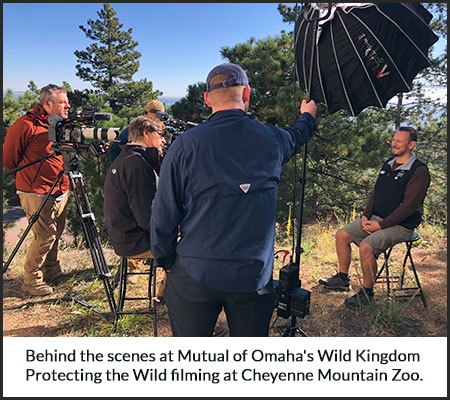
The team recently participated in the filming of a future episode of Mutual of Omaha’s Wild Kingdom Protecting the Wild, which focuses on the BFF’s struggle and the teams that band together in hopes to save them. That episode is slated to air in 2023. CMZoo will provide updates on an air date as plans continue to come together.

The conservation team also celebrated the 41-year anniversary of the rediscovery of BFFs on Sept. 26 with educational booths at the Zoo. Through social media updates, local news, and other outreach, the team continues to keep the ferrets front-of-mind for animal advocates everywhere. Learn more about BFF conservation.

Every visit to CMZoo is conservation in action. Through CMZoo’s Quarters for Conservation (Q4C) program, by which 75¢ of every admission is dedicated to frontline conservation efforts like this, guests can enjoy a day on the mountain with their favorite animals and support important programs dedicated to saving wildlife and wild places. Since 2008, when Q4C started, CMZoo’s guests and members have contributed more than $4 million to conservation projects worldwide.

Back to The Waterhole


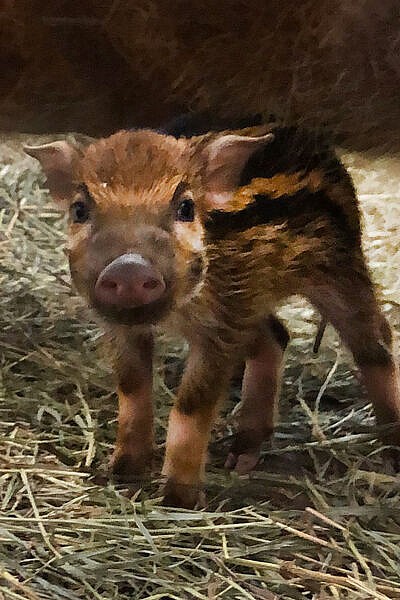
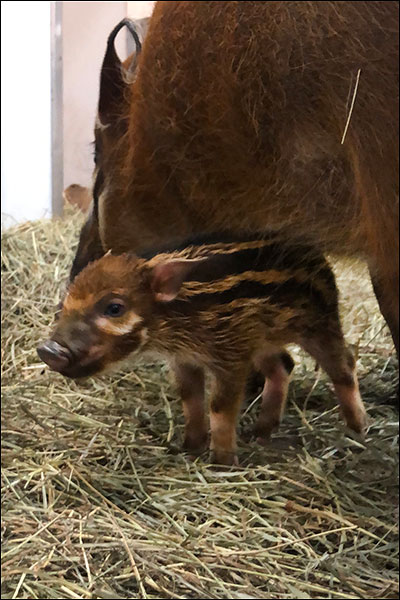
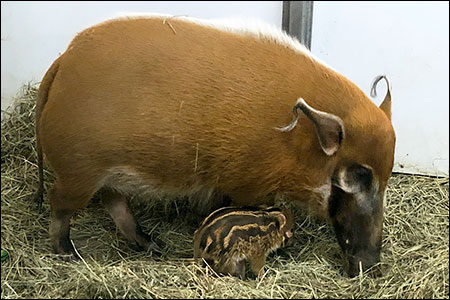
Tiny pink hooves, a dazzling orange coat with brown stripes and spots and a big personality. We must be talking about our newest addition: a 2-week-old Red River hoglet that is zooming its way into our hearts.

“This little baby has been growing in leaps and bounds over the last two weeks, and its energy level is doing the same,” said Lauren Phillippi, lead keeper in African Rift Valley. “We’ve seen lots of zoomies and playful antics, like running around mom’s feet, getting bursts of energy and making good use of those little legs.”

The little one has been seen jumping over logs, burrowing into soft piles of hay and excitedly bouncing between the rooms in its indoor space. When baby isn’t on the move, it is nursing well and snuggling with mom, 8-year-old Zena. It has also been picking up pieces of Zena’s produce, like lettuce and broccoli, with its mouth and tossing them aside. The baby will continue to nurse for at least the next few months.

Since the hoglet and Zena are doing well, staff haven’t needed to examine the baby up-close, which means its sex has not been confirmed. There are no immediate plans to name the baby, but fans can keep an eye on CMZoo’s social media channels for updates.

“We’re giving them lots of time to bond, which is really important for mom and baby,” said Phillippi.

When a new baby joins the CMZoo family, keepers rely on the trusting relationships they have developed with the mothers. Animal care teams can observe the baby and encourage it to move with Zena into different spaces – so they can clean spaces and feed Zena, for example – because Zena feels comfortable with the team. Encouraging a baby into a different space is usually dependent on whether the mom wants to move because young animals, like this hoglet, usually instinctively follow their mothers.

Zena is calm around the baby and approaches keepers from behind a barrier with baby in tow. The hoglet has been seen several times curiously exploring its indoor den a few feet away from Zena, then hurriedly rejoining her side. Next, the team will observe Zena’s level of comfort with taking the baby outside, where guests could see it. There’s no exact timeline in place, so for now, the baby and Zena will remain in their behind-the-scenes indoor den.

The little hoglet is eating well and growing quickly. Red River hoglets are often described as having a watermelon pattern when they’re born. Just like adult Red River hogs, hoglets have the signature bright orange coats, but the babies also have brown and white stripes that run the length of their bodies, along with little brown and white spots all over. Those stripes and spots usually fade in about six months, but act as important camouflage in the meantime.

This is Zena’s second hoglet, after Pinto, who was born at CMZoo in April 2021. Zena came to CMZoo on a breeding recommendation with Huey, CMZoo’s 15-year-old male Red River hog. Huey has been a great father to Pinto, and four others. Red River hog fathers are active in raising their young. For now, Zena and baby will get time to bond alone, while Huey and Pinto spend time together in their indoor and outdoor spaces.

Guests can visit Huey and Pinto in African Rift Valley now. Follow CMZoo’s social media channels for updates on when Zena and the hoglet will make their public debut.

Back to The Waterhole

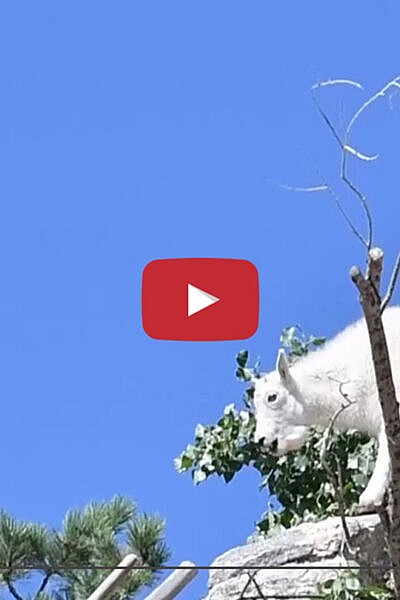
Blanca, our 3-month-old Rocky Mountain goat, is growing up fast! She recently weighed in at 53 pounds. Her mom, Lena, weighs 126 pounds, and her dad, Albert, weighs 358 pounds, so we’re curious who Blanca will take after as she continues to grow. Speaking of growing, check out her little horns!

Blanca is growing in confidence, too. She approaches Yazhi and Twinkie, our two older female Rocky Mountain goats in the herd, and even eats food right out of her keepers’ hands. Blanca is still nursing sporadically in addition to eating solid foods. Rocky Mountain goats typically stop nursing around four months, so we expect she’ll transition to eating completely solid foods in the near future.

Have you seen Blanca in person yet? Visit her and the rest of the Rocky Mountain goats across from the Sky Ride on the rocky cliffs, next time you’re at CMZoo!

Back to The Waterhole


Whether you visit CMZoo every week or you’re preparing for your first-ever visit, take advantage of these insider tips to make it the best day ever.

Likely Animal Sightings
Omo, our one-year-old Nile hippo, has dinner with his mom, Zambezi, around 4 p.m. inside the hippo building. The afternoon is a great time to see Omo up on land.

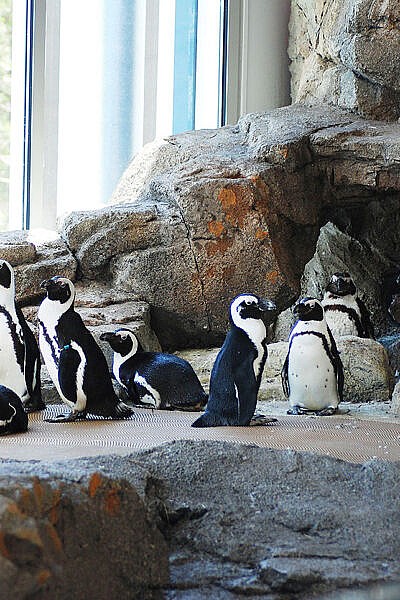
Did you know you are almost guaranteed to see our African penguins on the beach right after the Zoo opens? They have their fish breakfast on the beach (as long as it’s warm enough) daily around 9:30 a.m.

Our African elephants love a good afternoon swim in the rain. During the summer and early fall, afternoon showers aren’t uncommon at our mountain Zoo, and the elephants usually head straight for their pool. This is often when you’ll hear them trumpet, too!

Our Mexican wolf pack can be elusive, and are sometimes hard to spot in their expansive habitat. Around 11 a.m., they usually have a mid-day meal that their keepers place at the front of their yard, where guests have a great opportunity to see these critically endangered animals up close.

Atka, our Alaska moose, is often found hanging out by his pond in the early afternoon. He seems to enjoy a mid-day snack of vegetation, which is growing plentifully around his pond this time of year.

Guaranteed Animal Sightings
Did you know there’s a daily schedule of keeper talks, animal feeding opportunities, and animal demonstrations? From grizzly bears to great apes, guests can plan to attend inspiring and educational presentations that vary daily. Check the schedule at cmzoo.org. If you’re planning your trip for a different day in the future, click on “Plan Your Visit for Another Day” to see that day’s schedule.

Other Pro Tips
Our admission prices decrease for entry times from noon to 1:30 p.m. and decrease even more for entry times at 2 p.m. or later. Did you know our ticket prices vary depending on the time of day, day of week and season of the year you choose to visit? Peruse our pricing calendar at cmzoo.org/prices. Don’t forget – advance e-tickets are required for members and the general public, and you can get them at cmzoo.org/visit.

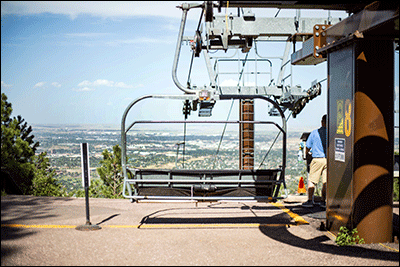
Afternoon showers sometimes mean we need to close the Sky Ride early. If you really want to ride our Mountaineer Sky Ride, and get some of the best views in the entire city, make it one of the first things you do at the Zoo, as early in the day as the rest of your schedule allows.

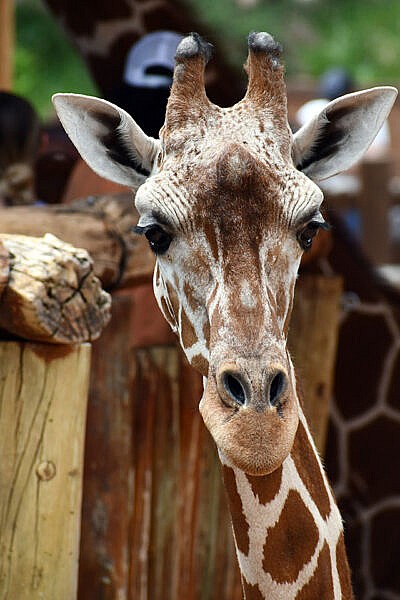
Don’t waste a snow day. As long as you can safely travel to the Zoo, we highly recommend spending your snow day exploring in a winter wonderland. Up on the side of Cheyenne Mountain, we typically get a few more inches of snow than the rest of the city, and it makes our setting even more magical. Bundle up, get a hot tea or cocoa from The Cozy Goat Espresso Bar at CMZoo, and head to Rocky Mountain Wild and Asian Highlands to see how animals native to the colder climates respond to the snow. Then, warm up in The Loft and Scutes Family Gallery before stopping by to see the elephants and giraffe in their cozy barn. Don’t forget – guests can feed our world-famous giraffe herd every day of the year, whether they’re outside or inside, for $3 per lettuce bundle, or $5 for two.

Speaking of lettuce, are you aware of our ‘Frequent Feeder’ cards? For $20, you can purchase a punch card that is good for 10 bundles of lettuce. Those cards can be purchased at Admissions when you check in, or at the lettuce hut in African Rift Valley. Once you have redeemed all of your feeding punches, the card is then valid for 20 percent off a purchase at the Grizzly Grill or the Thundergod Gift Shop.

We also offer ‘Frequent Rider’ cards for our guests who can’t get enough of our historic carousel! As one of the few remaining structures of the “original” Zoo, this country-fair style carousel features 20 jumping horses in two rows, with two stationary chariots, and has been giving Zoo guests of all ages a twirl since 1937! For $15, guests can enjoy 10 rides. Learn more about the carousel and see seasonal hours of operation here. Purchase punch cards at the carousel or admissions.

We hope these tips help you plan your perfect day at CMZoo! Advance tickets, daily schedules and more information are always available at cmzoo.org.

Back to The Waterhole

School is in session for Plato, one of our pink-backed pelicans! Plato participates in training sessions that allow his keepers to care for him. Consistent training for Plato’s wings and feet is especially important as it helps his keepers check in on his health and well-being. Plato is very interested in watching his keepers and is very patient. With Plato’s sweet, confident, and goofy personality, he is a good student and fun to train.

As students return to school this year, our partners at Children’s Hospital Colorado, have prepared a back-to-school checklist that can help limit stress and prepare families for the year ahead. Check it out here: https://www.childrenscolorado.org/conditions-and-advice/parenting/parenting-articles/back-to-school/.

Back to The Waterhole

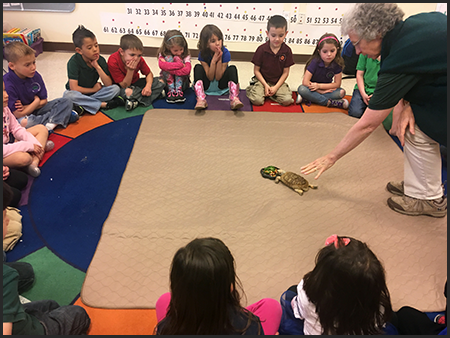
Experiential learning is the practice of teaching by involving all of the senses. It’s a method embraced by Cheyenne Mountain Zoo’s EdVenture team and it provides a more well-rounded and engaging learning experience for children. CMZoo offers a unique experiential curriculum specifically for our growing community of homeschoolers, ages seven through 17, with its Hands-On Homeschool program.

Each three-hour Hands-On Homeschool program provides enriching experiences for students to investigate a science-centered theme or topic. Participants also meet an animal ambassador up-close and work with their peer groups to dig deeper into each study focus.

Each Hands-on Homeschool program builds in time for peer groups to problem solve as a team. The goal is to help students build trust and understanding with one another to help encourage learning-based dialogue. The program has been growing since it started in 2020, with many returning students and families forming a sense of community.

Hands-On Homeschool students get a closer look at the animals at the Zoo with interesting animal adaptations. One example is our thorny devil insects, found in Australia Walkabout, which proved to be the crowd favorite. Each program participant had the opportunity to touch and investigate the insect up-close. “Why are the thorny devil insect’s legs so far apart?,”one student asked. “Are their bodies squishier when they are younger and harden as they get older?,” another questioned. These sorts of interactions with EdVenture staff and fellow participants are common in these small-group classes. Up-close encounters engage students’ natural curiosities and help set a memorable foundation for knowledge.

This year, for the first time, Hands-On Homeschool programs will welcome high school participants for a series named, ‘Exploration of Ethology.’ Ethology is the study and observation of animal behavior. In the series, students will use ethograms to answer questions about the husbandry and care of animals at a Zoo, such as; What behaviors are typical for an animal species? How do you keep an animal enriched and interacting with its environment? Finding answers to these questions encourages our learners to use their critical thinking skills to embark on a journey to discover the details that add up to exemplary animal care.

Excitement is building as staff prepare to welcome our homeschooling community back to the Zoo for a new school year of experiential learning. This year’s series of Hands-On Homeschool programs will begin in September for each age group. Register in advance and see the full schedule at cmzoo.org/homeschool.

Back to The Waterhole

Jim, Pam, Michael, Dwight, Angela, Phyllis, Stanley, Kelly, Oscar and Kevin, our ten Wyoming toadlets, have been fine-tuning their hunting skills up in CMZoo’s conservation center. These critically endangered toads, and many other amphibians, have a special way of distracting and attracting their meals: toe tapping. It brings a whole new meaning to the phrase, “dancing for your dinner.”

We’re taking you on a wild adventure this year as we follow these ten individuals throughout their year in our conservation center and then as they’re released to the wild. The little toads have a big job: helping their critically endangered species recover in the wild waterways of Wyoming.

Why give a hop? Toads are worth saving. They play a vital role at the center of the prairie environment as the best bug control available and as sustenance for migrating birds and native mammals in search of food. If the toads don’t survive, the whole ecosystem suffers. They’re also what’s known as an indicator species, meaning they indicate the overall health of their ecosystem – and it’s in desperate need of attention.

Amphibians worldwide are facing mass extinction due to a pandemic known as the Chytrid fungus. Chytrid fungus causes a skin infection that hinders amphibians’ ability to breathe and absorb water. This often leads to organ failure and death. But, thanks to zoos like CMZoo, these hoppers stand a chance.

Over its 26-year commitment to Wyoming toad recovery, CMZoo’s conservation team has released 44,695 tadpoles and 1,510 toads into the wild. Next summer, these ten toads, and hundreds of their siblings currently growing up in the CMZoo conservation center, will take their first hops into the wild as part of this ongoing conservation effort.

Follow our Facebook playlist A Year in the Life of a Wyoming Toad


Ten members of CMZoo’s Teen Program recently embarked on a weeklong off-grid adventure to the wilderness of Glacier National Park in Montana. CMZoo’s Teen Program focuses on spending time exploring nature, learning about animals, and understanding other cultures. The program is known for its hands-on educational experiences at the Zoo and in nature, with exploration trips available for Teen Program participants year-round. These trips connect teens to local, national, and international wildlife and wild places. Each destination, adventure, and educational opportunity is intentional, and supports the program’s overall goal to inspire future leaders in conservation and animal care.

In June, Austin Kennedy, teen program supervisor, and other Zoo staff, led the ten teenagers to learn at the Glacier Institute outside of Columbia Falls, Montana. The Glacier Institute is an outdoor education organization that focuses on getting people outdoors and connecting them to the wild world of Glacier National Park. The Glacier Institute is the official education partner for Glacier National Park and Flathead National Forest.

“While we were there, we spent our days fully unplugged and off-grid,” said Kennedy. “We did a lot of exploring, learning, and laughing.”

Kamrynn Eddy, a three-year Teen Program participant, will soon head off to Washington State University to pursue a bachelor’s degree in zoology. She joined her fellow teens on this trip and called it “soul-changing.”

“Our programming at the Zoo is typically animal and conservation based, and this experience focused on the wild places we need to conserve,” said Eddy. “We got to touch, hear, see and feel these different environments, and it really expanded my knowledge and love for the outdoors. I’ve always loved animals, but this helped me learn to identify trees and rock formations, and even how certain trees grow and how they adapt. We saw incredible wildlife, too, and got to appreciate how conserving wild places means saving wild animals.”

The team participated in workshops on orienteering, geology, ecology, and more. They took day trips to neighboring towns and lakes, and even got to visit the National Bison Range, which is in the center of the 1.25 million-acre Flathead Indian Reservation.

“The National Bison Range is a living example of species restoration over time,” said Kennedy. “In the 1870s, bison were on the brink of extinction. Now, there are an estimated 300+ in this reserve, and other bison populations thriving elsewhere. We learned about the history of the U.S. government’s injustices to The Confederated Salish and Kootenai Tribes, whose land was unjustly used to establish the range. Today, the Confederated Salish and Kootenai Tribes are now the stewards of the bison herd, which descends from animals that Tribal members brought back to the Flathead Indian Reservation from east of the Continental Divide to help establish this new bison population in the early 1900s.”

During the teen’s National Bison Range exploration, they saw a grizzly bear, a black bear, deer, baby bison, an eagle and more! The teens get down-time on these trips, too. They played volleyball in the rain, went on hikes and formed bonds with each other. Eddy said one of her favorite memories from the trip was during a short hike to a waterfall, when she and her fellow explorers sat back and shared what had impacted each of them the most during this trip.

“We all have different experiences and different memories,” said Eddy. “Some of us will go on to pursue animal care and zoology, and others will go on to become doctors, lawyers or writers. But, no matter where we end up, we will all go through life with this foundational passion for animals and wild places.”

For more information on CMZoo’s Teen Program, visit cmzoo.org/teenprograms.

Back to The Waterhole
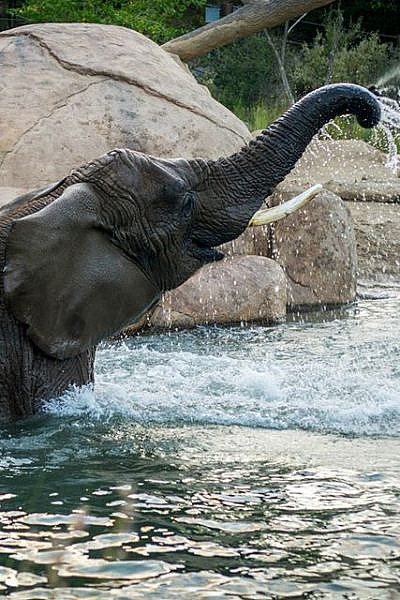
Our ring-tailed lemur twins, Elo and Anja, celebrated their first birthday on July 11, and their older half-brother, Maky, turned one on April 26. Step onto Lemur Island with us to see how the young prosimians’ personalities have developed in the lemur conspiracy (what a group of lemurs is called) and get up-close for a voluntary injection training session with their care team.

Back to The Waterhole
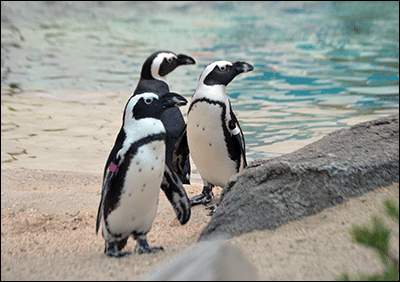
 

Colorado’s wildlife and wild places draw millions of visitors to our state every year. We often talk about how to visit Colorado responsibly and how to stay bear aware while exploring the great outdoors. Wild native black bears roam throughout our state, including in many residential and urban settings, so Colorado residents shoulder a lot of the responsibility for keeping bears out of trouble.

“Our native black bears are super smart, and they are really focused on getting as many calories as possible,” said Courtney Rogers, senior lead keeper in Rocky Mountain Wild. “If they can get food easily, they will – and they won’t understand the long-term consequences. Humans are smart, too, and there are simple things we can do to help bears choose safer, healthier foods.

Every year, Colorado black bears are displaced or euthanized when their foraging leads them to situations that are dangerous for bears and humans. If Colorado Springs residents make an effort to help our local wildlife, we can reduce the number of bear deaths caused by humans.”

Bears’ sense of smell is thought to be the most exceptional in the animal kingdom. A bear’s olfactory bulb – the section of the brain that processes smells – is at least five times bigger than a human’s. A bear’s big nose sets the species apart because all of that room means they have more space for olfactory receptors. Bears have millions of olfactory receptors, more than any other land animal. A bear’s nasal cavity, structured like a honeycomb, is lined with hundreds of muscles to help angle their nostrils in the perfect direction for tracking. They also have a Jacobson’s organ on the roof of their mouth that aids in odor detection.

All of those adaptations combine to give bears a (literally) superhuman sense of smell, thought to be more than 2,000 times more powerful than humans’. Many bear experts have seen proof that black bears can smell odors up to 5 miles away, if the wind is right.

Rogers encourages Colorado residents to refresh their bear-smart daily routines every spring and fall – when bears are most actively searching for food. As fall approaches, bears will soon be entering a cyclical stage called hyperphasia. They know winter is around the corner. They also know they’ll soon have fewer food options. They need to plump up now to live off of their stored fat for the months ahead.

Black bears dine naturally on berries, plants, insects and occasionally on small rodents. But, they can also develop a taste for leftovers. Basically, a bear will follow a yummy smell anywhere. To help bears resist the instinct to roam into dangerous territory, we need to reduce smells that attract bears.

“Bear” the responsibility. Assume you live near bears if you live in Colorado Springs. Many human-bear conflicts occur because people didn’t know they were in bear country, and how to act accordingly. Even east of Interstate 25, bears have been seen roaming in parks and neighborhoods. If you follow these simple steps, you can assume that you haven’t seen a bear in your neighborhood because you’ve been doing a great job helping them avoid the area.

Clean that ‘cue! We’re in the thick of backyard barbecue season, and humans aren’t the only ones who think those cheeseburgers smell delicious. Many a beautiful barbecue has been destroyed by tempted black bears. Do yourself and the bears a favor after cooking outdoors and clean your grill before you go to bed. Use a wire brush to remove food remnants, clean greasy surfaces and trash the grease-catching tin in a bear-safe receptacle.

Bye-bye bird seed. We love native songbirds, hummingbirds and woodpeckers as much as the next nature enthusiast, but bears love birdseed and hummingbird nectar. Offer seed to feathered friends in the morning, but bring those bird feeders in at night. Bears likely won’t approach a busy daytime backyard for birdseed, but they’ll certainly sneak in during the quiet after-hours for a tasty treat.

Become a guardian of the garbage. West of Interstate 25, residents are required by law to bring their trash receptacles in at night, or to purchase bear-resistant trash cans. Trash cannot be brought out to the curb until the morning of your scheduled pickup. If you share an apartment dumpster, or access a dumpster where you work, make sure the bear bar is in place when you’re finished (bonus points for bear advocates who make sure others replace the bear bar, too!). If your garbage receptacle smells foul to you, it smells yummy to a bear. Clean your trash receptacles and clean up debris near dumpsters.

Be a bear-friendly backyard farmer. Residential chickens and honeybees are becoming increasingly popular. Can you guess who loves chicken feed and fresh honey? That’s right! Our native black bears. You can still enjoy that mini homestead lifestyle in bear country, with a few extra precautions. Many backyard farmers add effective bear-proof fencing or hotwire around their hives and coops. Your local wildlife agency can also help with other bear hazing techniques. Even if they smell the honey or chicken feed, they will likely move on once they recognize this is no easy treat.

Be a good neighbor. A bear in the ‘burbs won’t necessarily approach human spaces. Many suburban and urban areas have connected open spaces where neighbors adhere to these bear-smart tactics, and nearby bears find plenty of natural bear food. So, if you see a bear taking a walk near your home, be a good neighbor, keep your distance and admire them from afar.

“It’s up to us to save our local bears. It’s truly magical to encounter wildlife as often as we do in Colorado Springs, and with your help, we can all continue to enjoy that,” said Rogers. “It’s pretty simple: if you want to enjoy the benefits of living in bear country, you need to feel accountable for keeping them safe.”

Back to The Waterhole