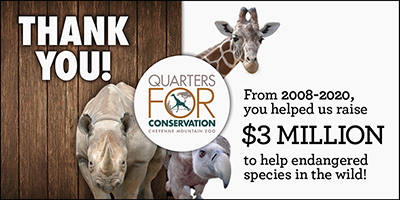
Every visit to the Zoo is conservation in action. Cheyenne Mountain Zoo and its guests and members are celebrating a huge milestone, having raised $3 million since the Zoo’s Quarters for Conservation program launched in 2008.
Quarters for Conservation, or Q4C, is the Zoo’s largest fundraiser for field conservation. It actively engages visitors and staff in supporting long-term projects championed by the Zoo. Known as legacy projects, these currently include biodiversity conservation on behalf of giraffe, Panama frogs, orangutans, black-footed ferrets, African elephants and rhinos, Wyoming toads and African vultures. Every visitor to the Zoo receives three “quarter” tokens representing the 75¢ Q4C allocation from their admission fee. They can then select the legacy projects they would like to support by placing their tokens in the corresponding slots in the Q4C kiosks. The kiosks record the number of tokens, so it’s easy to see how popular each project is.

“Our guests have helped us save animals from extinction simply by visiting the Zoo,” said Dr. Liza Dadone, vice president of mission and programs. “Three million dollars in conservation support is huge – and we want to thank our guests and members. Through this program, they are directly empowered to make a difference, and they did. It’s an example that no matter how small, when we all work together, we can change the world for the better.”

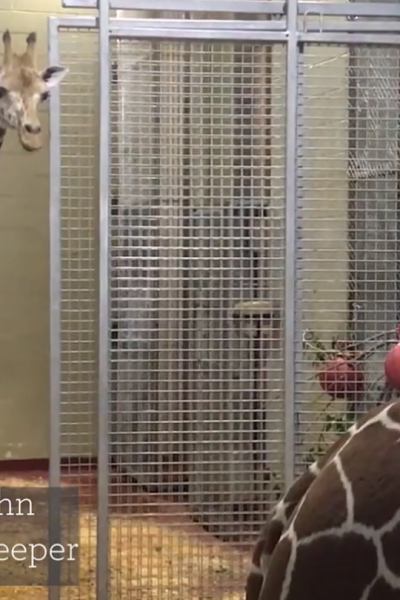
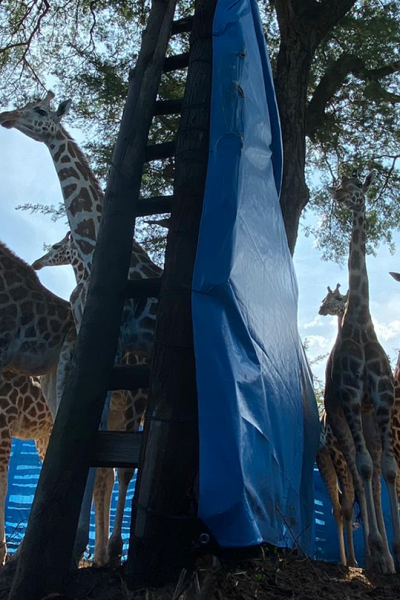
One of the projects that CMZoo recently supported and participated in on the front lines, is Operation Twiga. In November 2019, with financial support from Q4C, CMZoo staff traveled to Uganda for Operation Twiga IV. They helped transport 15 critically endangered Nubian giraffe to a safer home within Uganda, where their species has another chance at survival. As part of this project, CMZoo vet staff helped to collect important medical data for an ongoing study to help giraffe in their natural habitat and those in human care.

“We haven’t been involved in giraffe conservation that long, so this Q4c funding since 2008 has allowed us to really step up and take a leading role among Zoos in the past few years,” said Dr. Dadone. “It’s raised visibility in our Zoo community that giraffe populations aren’t safe. People see a large herd of giraffe here at the Zoo, and I think it’s easy to assume that they’re still doing okay across their native lands in Africa, but that’s no longer a reality. Giraffe are locally extinct in seven countries in Africa. Our Zoo, including our supportive community, is committed to ensuring that incredible animals like giraffe are around for the next generation.”

Q4C beneficiary species truly run the gamut, from 18-foot-tall giraffe in Africa, to tiny toads from Wyoming.
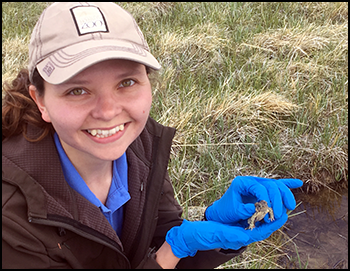
Staff member holding a Wyoming toad releasing them into the wild
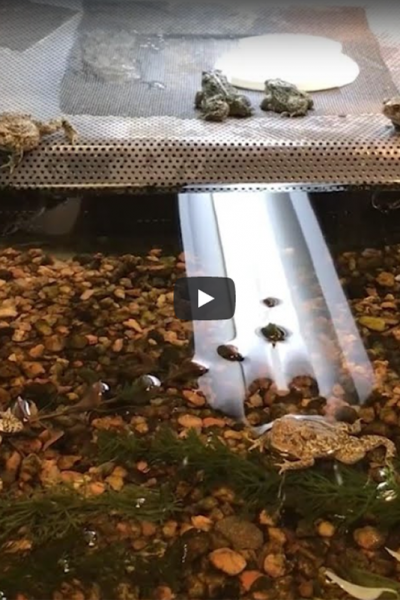
“Another program I’m especially proud of is our Wyoming toad breed and release program,” said Dr. Dadone. “This species was once thought to be extinct in the wild. The only reason they exist in the wild today is because of our work and our team’s collaborations with other institutions. Some might think Wyoming toads aren’t as cute as a baby giraffe, but the toadlets are really adorable and are critical to our ecosystem and to ensuring we have a viable wildlife population in our own backyard. The research that we’ve done on headstarting [raising the toads to adulthood in the Zoo and then releasing them] and their nutrition has really improved the overall health of the last few generations of the Wyoming toad, which gives them an advantage when they are released into the wild. We’re continuing to evaluate our best practices and have an even better chance at saving this species long-term.”

Wyoming toads are symbolic of so many amphibian species in decline all over the world, including Panamanian frogs, which also receive support thanks to Q4C funds and frontline CMZoo staff support. In February 2019, three CMZoo staff members went to Panama to assist the Panama Amphibian Rescue and Conservation Project by remodifying two feeder insect pods into frog pods. For this 10-day trip, the goal was to set up two shipping containers to house and breed approximately 450 additional frogs brought in from El Valle Amphibian Conservation Center, and later released. This involved disinfecting the shipping containers, painting, installing plumbing and water filtration, assembling racks, and drilling and prepping tanks.
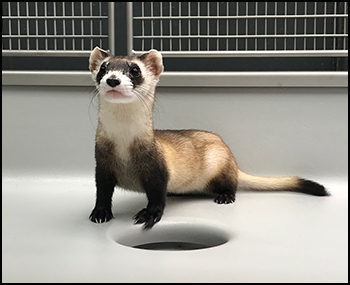
Black-footed ferret portrait
Q4C supports an in-house breed and release program for black-footed ferrets, as well. Since 1991, when CMZoo began breeding black-footed ferrets, 567 kits have been born. Roughly half of those kits are released into the wild while the others continue breeding at CMZoo and other facilities who support this recovery effort and the Species Survival Plan. This ongoing recovery effort supports the population of black-footed ferrets, who were once thought to be extinct, and which are vital to the prairie ecosystem in Wyoming.

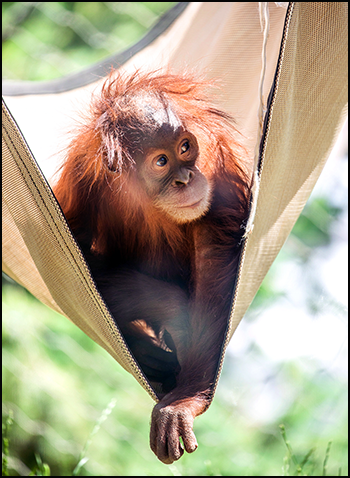
CMZoo’s work to save habitats for orangutans through advocacy for sustainable palm oil production is largely supported by Q4C. Thanks to that financial support, CMZoo’s sustainable palm oil team consults staff at other conservation organizations on starting their own palm oil programs and recently attended the Roundtable on Sustainable Palm Oil’s (RSPO) annual conference in Thailand to represent CMZoo in the RSPO’s proceedings. Those proceedings directly impact the ways companies that use palm oil can help preserving wild lands for orangutans and other species.

Through Q4C, CMZoo also supports a conservation partner called Tsavo Trust – an organization in Kenya that works to protect the last of the big tuskers, which are African elephants with tusks weighing more than 100 pounds. CMZoo’s funds helped Tsavo Trust build permanent housing that allowed staff to live on the land where these critically endangered giants live. It also paid for pilot hours – frontline aerial surveillance that protects rhinos and elephants from poachers seeking their ivory.

The seventh Q4C legacy partner is VulPro – protectors of African vultures. The dedicated staff at VulPro, in South Africa, save vultures who have been injured as wild birds, and rehabilitates them to release. Those that are too injured to survive in the wild find a permanent home at VulPro.

Before launching Q4C in 2008, CMZoo was supporting conservation, but at a fraction of what is possible now. In the past few years, CMZoo has collected about half a million dollars per year through Q4C. Even with our three-month COVID-19 closure this year, the Zoo was able to hit this substantial $3 million milestone as expected.

“Small change pooled together makes a big difference,” said Dr. Dadone. “Thanks to our guests and members, we have been able to support this amazing frontline work. When we work together, we can make a positive difference for our world.”

In addition to contributions from admissions to every Zoo visit and special event ticket, $2.50 from each individual plus membership, and $5 from each family or higher-level membership, is allocated to Q4C. EdVenture and Animal department programs also contribute to the cause.

For more information about these projects and Quarters for Conservation, visit cmzoo.org/conservation.
Back to The Waterhole


As America’s mountain Zoo, we know that our unique setting on the side of Cheyenne Mountain is part of what makes every visit magical. One of our core values is to live with the mountain and to preserve its natural beauty. That means designing exhibits that work with existing terrain and maintaining native plants that thrive and provide our animals with the most naturalistic habitats possible.

It also means using natural solutions to combat naturally-occurring inconveniences, like flies.

“The type of flies we most often deal with are attracted to manure, and we have plenty of that around here,” said Alex Crochet, Cheyenne Mountain Zoo’s horticulture curator. “The manure flies bite, and that makes them pretty pesky. So to help our animals, we have been implementing natural fly eliminators that are safe for our animals, our people, and the beautiful mountain we live on.”

The horticulture team has been introducing parasitic wasps to areas around the Zoo that receive the most fly traffic. The scary-sounding wasps are anything but.

“They’re native to our Rocky Mountain region, so we’re not interrupting the ecosystem, and they’re nocturnal, which means they’ll very rarely be active when our guests are present,” said Crochet. “These wasps don’t sting or bite the animals or us. They’re smaller than the tip of a pencil, but keepers say they’ve noticed the tiny wasps have made a noticeable difference for their animals.”

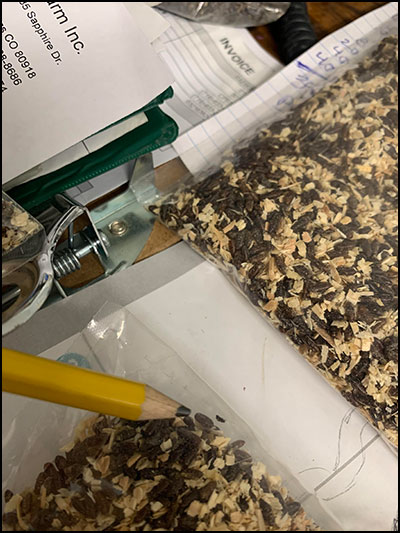
Crochet and his teammate, Denny Patton, senior horticulture tech, have identified where flies are most prevalent and let the wasp colonies go to work. The wasps are shipped in wood chips, which the team lays out near fly breeding grounds. The gnat-sized burrowing wasps lay their larvae into the fly pupae and when the wasp larvae hatches, it eats the fly pupae. This kills the fly in its pupal form, before it can grow into a bothersome resident at the Zoo.

“We use these in conjunction with sticky fly traps, because the flies will reproduce faster than the wasps can,” said Crochet. “We’re excited about this new solution, because we’re using two nontoxic tools to disrupt the flies’ life cycles. Nature usually knows how best to do things, so we’re using mother nature’s pest control in our natural environment. Permaculture with integrated pest management (IPM) is the way to go.”

The team will introduce a new colony of parasitic wasps every four weeks throughout the spring and summer months. In the fall and winter, when flies aren’t such a nuisance, the wasps will naturally go dormant.

“My whole philosophy is, ‘why fight nature with a harmful chemical when you can fight nature with itself?’,” said Crochet. “We have this beautiful mountainside and our main goal is to preserve that for our animals, guests and the native plants and animals who live here.”

Back to The Waterhole


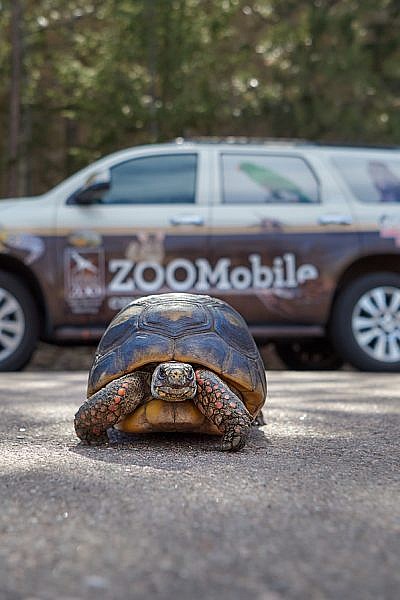
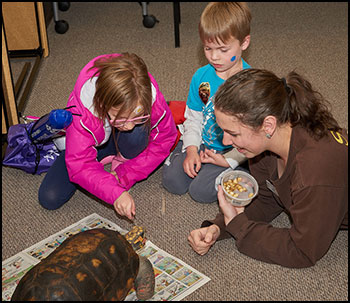
Would you like to invite a chinchilla to your corporate event? Or maybe a ferret to your family function? Having a snake at your socially distanced soirée would certainly make a statement! CMZoo’s EdVenture team is once again offering ZOOMobile, our animal ambassador community outreach program, after a several-month hiatus.

There are several different types of ZOOMobile programs to choose from – whether you are hosting a birthday party in your home, a corporate event or a senior community program, our animals and keepers can make your event even more exciting.

ZOOM Birthdays start at $280.75 and include four live animal ambassadors, a 45-minute engaging program with a Zoo staff member, touch opportunities with animal ambassadors (species dependent), and special animal interactions for the birthday guest of honor.

ZOOM Small Group Programs start at $220.75 and include a 45-minute engaging presentation with Zoo staff, four live animal ambassadors, touch opportunities with animal ambassadors (species dependent), and a natural animal behavior demonstration (species specific).

With COVID-19 guidelines in place, there are some changes to note. Currently, ZOOMobile programs are restricted to El Paso County. We also ask that programs occur outdoors whenever possible and that events are for groups of 25 people or less. For groups outside of El Paso County, larger groups, or for anyone who feels more comfortable, we also offer virtual ZOOMobile programs with live presentations of animal ambassadors.

Visit cmzoo.org/ZOOM to learn about all the programs ZOOMobile has to offer and to submit a program request.

Back to The Waterhole


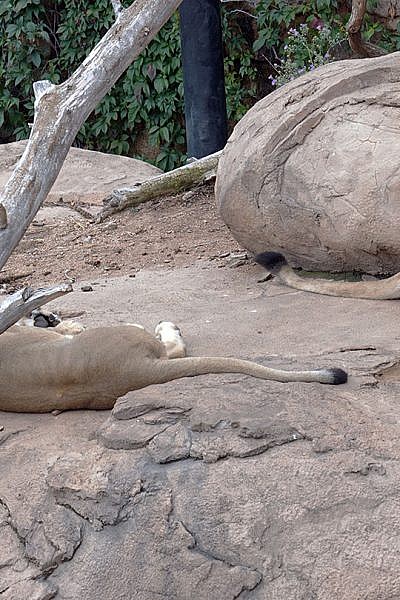
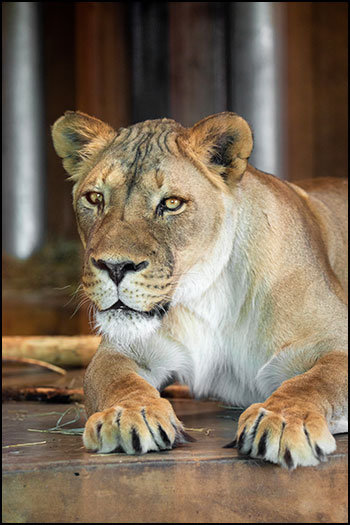
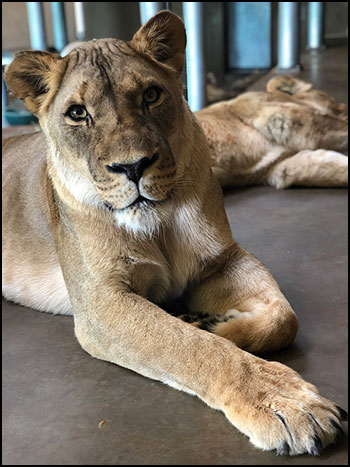
CMZoo’s animal care and veterinary teams are working hard to make Zwena, a 13-year-old African lioness who was born at CMZoo in 2007, as safe and comfortable as possible as she deals with increasing mobility issues. The 13-year-old sister to Lomela and aunt to Elsa, Boma and Aslan, has been showing symptoms that her team suspects may be due to neurological disease. The formerly agile lioness is now frequently unsteady on her paws.

“At this point we have performed many diagnostic tests to determine the cause of Zwena’s symptoms and have administered a variety of medications to potentially treat ‘treatable’ diseases,” said CMZoo Head Veterinarian, Dr. Jon Romano. “Now, our goal is to keep Zwena as comfortable as possible, so she can live her best life. Her keepers are dedicated to her care. We’ll continue tracking her quality of life markers. Right now, other than her mobility, they are all looking good.”

Keepers are tracking quality-of-life markers, as they do for any animal with health conditions. Those markers help identify trends that indicate her symptoms are worsening or her life is not fulfilling her needs as a lion. Over time, the data will help her care team make any future decisions necessary. Zwena’s four markers are social dynamics within the pride, mobility, appetite and vision.

“She follows us with her eyes, eats like a champion and still has healthy respect from the pride,” said Diana Miller, African Rift Valley keeper and Zwena’s primary trainer, who has worked with her for 8 years. “So, for now, we’re focused on maintaining those indicators and avoiding any injuries as a result of her decreased mobility. I just love her so much and want to give her the best life she has left.”

Zwena, known affectionately as “Z” by many CMZoo staff members, is well-loved and respected for her no-nonsense approach to building relationships with people.

“Zwena is a brave, sassy, playful lion with one of the best animal personalities I’ve ever known,” said Miller. “She isn’t shy about telling you how she feels about you. You have to earn her respect, so it’s like a rite of passage when ‘Z’ accepts you. She seems like she’s really tough, but she’s a nurturer, too. When her sister, Lomela, had the three cubs in 2015, Zwena was the first to lead them out into the main yard to play. She loves to play and pounce, and even playfully stalks keepers and guests, despite her mobility challenges. Those interactions with guests have made her an amazing animal ambassador for her species. I mean, who could forget a 300-pound lioness focusing on you like that?”

Her care team monitors her condition daily, and makes decisions about which spaces she can safely explore. On days she’s doing well, Zwena may be in the indoor relaxation room. When her unsteadiness is worse, it’s unsafe for her to explore the main lion yard, with its potentially dangerous drops from pride rock. The indoor lion relaxation room could also present potentially unsafe scenarios for Zwena when she’s unsteady, because of the high benches that she would likely attempt to jump to and from.

When keepers see she is less coordinated, she will spend her time in the behind-the-scenes outdoor ‘maternity yard,’ which will provide ample space for her to get safe exercise, fresh air and sunshine. She’ll also have access to off-exhibit indoor spaces where she can receive enrichment, participate in training and get lots of keeper attention.

“She’s not uncomfortable or suffering, and we want to keep her that way,” said Miller. “She’s mentally there, but she will sway or stumble as she walks, even on flat ground. We have seen her leaning against walls for stability or high-stepping over non-existent obstacles. These days, she more frequently half-jumps from low platforms and then pauses to steady herself before moving on, which could mean she’s not feeling confident about her mobility. So, we’re making adjustments to protect her from those environments that are no longer safe for her to navigate.”

Zwena’s symptoms have been intermittent since about 2015, but have recently become more chronic, so her care team is making changes now.

“Socializing is really important to lions, so we’re making sure Zwena still has time with her pride,” said Miller. “She and her sister, Lomela, are best buds. Even when it’s 90 degrees outside, we see them snuggling up together. They still play together, too. It is so fun to watch. Zwena is still living a fulfilling life, but she’s doing it in different spaces.”

Zwena will spend time with each member of her pride. At night, all four of the lions will share space together, to help Zwena maintain her respected position in the pride. Zwena’s vet and animal care team will continue exploring any new options available for keeping her safe and comfortable.

Back to The Waterhole


Our newest event, Silent Night, aims to provide the community with an environment of low-sensory respite. At the event, guests enjoy a quiet Zoo experience with only the natural sounds of animals and the mountainside. At a time when many of our community members need a mental break, this event encourages them to meander at a peaceful pace without a schedule or distractions. The next scheduled Silent Night is Friday, September 11, 2020, and tickets are on sale now at cmzoo.org/silentnight.

“This event presents our guests with a new way to connect with our animals and nature,” said Amanda Ulrich, CMZoo special events manager. “In addition to giving guests a calm, natural space to clear their minds, you can observe the animals in a new way. Even keepers who have worked here for multiple years have experienced things at Silent Night that they wouldn’t during the day, like hearing a vulture’s feathers rustle, or hearing the quiet chirp of a mountain lion.”

Attendees are asked to silence phones and other noisy devices, and to keep all communication to a whisper. Our goal is to create a peaceful environment in our natural surroundings, with as little background noise as possible. We don’t know if the lions are on board with this plan, but the humans who attend agree to keep the talking to a minimum and cell phones on silent. Guests can enjoy our beautiful mountainside setting, and practice mindfulness together. Giraffe and budgie feedings will be available, along with limited dining options at The Grizzly Grill. Unlike our Zoo evening events, there will be no live music, announcements over loud speakers, or keeper talks.

Staff will have notepads to communicate with guests who need anything. “Noise-friendly” buildings are open throughout the Zoo for those who may need to take a moment to regroup or take an important phone call. The rest of the Zoo will be quiet.

“You can get really creative about this silent theme and have fun establishing silent ways of communicating within your group,” said Ulrich. “For example, one family attended and had numbers as common indicators of needs. For example, holding up one finger meant you needed a drink. Holding up two fingers meant you were hungry. Holding up three fingers meant it was time for a bathroom break. When I saw them holding all five fingers on both hands and waving them, it meant they were really excited about what they were seeing. It was awesome to see that family making new memories and a new language.”

Countless studies have shown that time outside, time with animals and exercise all have direct correlations to reducing stress and anxiety.

“There’s so much noise in the world right now,” said Ulrich. “This is your chance to unplug from the digital world and engage in the natural world. Exercise, time outside, and time with animals are all known to improve mental health. We’re in the unique position to be able to provide our community with all three of those elements in one place.”

Advance e-tickets are required and available now at cmzoo.org/silentnight. Masks are required in buildings and are highly encouraged throughout the Zoo.

Fast Facts

Silent Night at Cheyenne Mountain Zoo
Friday, Sept. 11, 2020
5:30 to 7:30 p.m.
Adults: $17.75
Children (3 to 11): $12.75
Kids (2 and under): 75¢
Military and senior discounts available.
E-tickets and information are available at
www.cmzoo.org/silentnight.

Back to The Waterhole


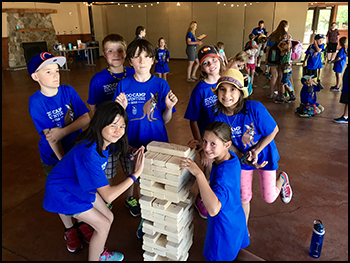
It finally feels like summer! The weather is warm, the Zoo is open, and camp is in full swing. Summer Camp at Cheyenne Mountain Zoo is a uniquely wild experience, and this summer is no different. Well, it’s a little different.

There are new guidelines in place to help keep staff, guests and campers happy and healthy during their visit. With smaller camp groups, we have been able to make our camp programs match guidelines put in place by our local and state health departments and the Centers for Disease Control. These smaller camp groups also mean that camps have sold out very quickly. There are a few spots left, but they likely won’t last long!

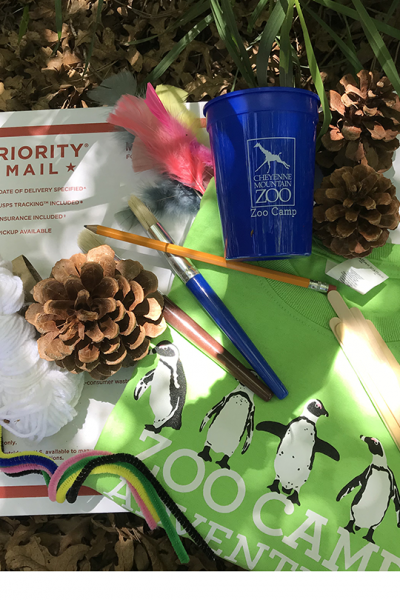
If your child did not get the chance to sign up or your family has decided that you feel safer at home, we have a camp option for you! Summer Camp in a Box is a new way to experience camp activities from the comfort of home. We take all the fun pieces of camp, pack them into a box and send camp to you! You can still connect with the Zoo and enjoy hands-on activities, guided virtual tours, virtual animal encounters and create fun animal enrichment!

Camp in a Box allows you to pick and choose your campers’ activities. You pick the content, we gather all the materials and send it home. It is a great blend of hand-on activities supplemented with virtual content. The goal is to still connect campers with wildlife and wild places, even if it means from your own backyard.

To start building your Summer Camp in a Box, visit cmzoo.org/virtual to get started!

Back to The Waterhole


Learn all about Ohe, newest member of the reticulated giraffe herd at Cheyenne Mountain Zoo.

Back to The Waterhole


To celebrate the recent release of 148 Wyoming toads to the wild, we’re looking at a year in the life of our toads, which are bred at CZOo in an effort to help recover this species once considered extinct in the wild.

Due to COVID-19 restrictions, things certainly look different at the Zoo this summer. The response to our reopening has been overwhelming, and we’re grateful for your support.

With a little planning, patience and information, our guests are enjoying America’s mountain Zoo with small changes that make a big impact. Read on to learn what you can do and expect to increase your chances of reserving our limited-but-required advance e-tickets, and then get the most of your visit when you arrive.

For a complete list of FAQs and other information that will make your next visit enjoyable, go to cmzoo.org/open.

E-Tickets
  • Advance e-tickets are required and can be reserved at cmzoo.org/open. Check daily for newly available tickets.
  • If you don’t see a date or time available, e-tickets for that date or time have been fully reserved.
  • We have asked members who can’t use the tickets they reserve to tell us so we can make those available for other members. We don’t have a release schedule for those, but we are receiving quite a few ‘recycled’ tickets, so please do continue to check back.
  • Members, please be considerate to your fellow members and limit the number of tickets you reserve at this time. Consider delaying a second visit to allow another family a chance to see their favorite animals while we’re still on restricted capacity.
  • All individuals visiting the Zoo must have their own advance e-ticket, including children age 2 and under.
  • We’re moving as quickly as possible based on when government restrictions change. We’re hopeful more tickets will be available soon, and we’ll be able to reopen at a capacity that relieves the compressed timelines within which everyone has been trying to purchase tickets.
Getting To and Around the Zoo Safely
  • Your timed e-ticket reflects the window of time you have to scan your ticket to enter the Zoo. Once you’re in the Zoo, you can stay until we close, regardless of what time you entered.
  • We have restructured our entry plaza to accommodate safe distancing as our guest services team scans your tickets and you enter the Zoo. Each group of people in line has six feet of space between other guests.
  • When you exit the Zoo to the parking lot, you will leave through the outgoing vehicle gate, not the pedestrian gates you used to leave through.
  • Closed and/or monitored capacity areas in and around the Zoo will be clearly defined with signage. Please understand there are temporary limitations and modifications put in place that may change the way you are used to experiencing the Zoo.
  • Masks are strongly encouraged for all Zoo guests.
  • We understand it’s hard to remember how important social distancing is when you’re hanging out with the herd, or watching a penguin waddling at your feet, but we’re depending on our guests to help us adhere to these guidelines set forth by state and local officials. We have placed six-foot tables in high-traffic areas, like hippo viewing and giraffe feeding, to help create a safe distance between groups attending the Zoo together. Also, keep looking for chalk bear tracks on the ground, in places like the elephant feeding lines. Those ground markers indicate six feet of space, so you can say hello to our African elephants and help keep your community safe.

Safely Visiting the Animals
  • To prevent the congregation of large groups of guests, no scheduled animal demonstrations will be available during this time. However, you may come across “pop-up” experiences throughout your visit.
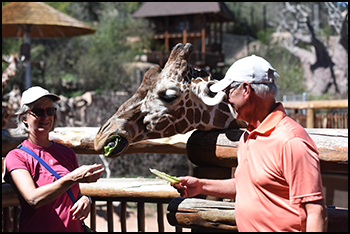
  • Giraffe feedings are available on the boardwalk, when the giraffe are outside. Lettuce is available for $3 or $5 per bundle.
  • Elephant feedings are available for $10 to $15 daily (weather dependent) at 11 a.m. and 2:30 p.m.
  • Rhino feedings are available for $10 to $15 daily (weather dependent) at noon.
  • Some buildings, like the giraffe barn and The Loft, will be closed because they do not allow for safe distancing.
  • Buildings have maximum capacities, and some will have a staff member regulating when new groups can enter a building.
Amenities Available
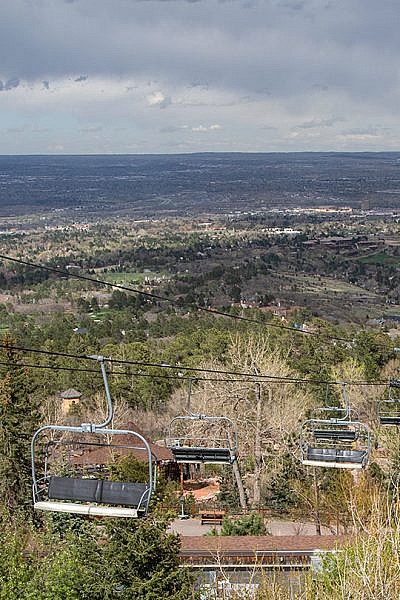
  • The Mountaineer Sky Ride is open.
  • The carousel is closed.
  • Due to current health guidelines, we are not able to honor free refills with reusable cups at this time. Soft drinks will be available for purchase in our eateries.
  • Drinking fountains will also be disabled at this time. Touchless water bottle filling stations will still be accessible, so please consider bringing your own reusable water bottle.
  • Food service will be limited during this time. All restaurants are open, with limited menus and spaced seating, both inside and outside as available.

We’re asking our members and guests to bring their patience and understanding to the Zoo, as we all work together to safely reopen and adhere to restrictions that allow us to open our gates again, after the Zoo’s longest closure in history. Some of the things mentioned in this article are subject to change, as we figure out best practices and react to new regulations.

For more information and to reserve limited availability e-tickets, visit cmzoo.org/open.

During such difficult times, we’re even more grateful to be a resource that can support our community’s mental well-being, by providing outdoor and nature-based activity – which has been proven to reduce stress and anxiety. Another way to bring positive thoughts and feelings into your own life, is to do something kind for others.

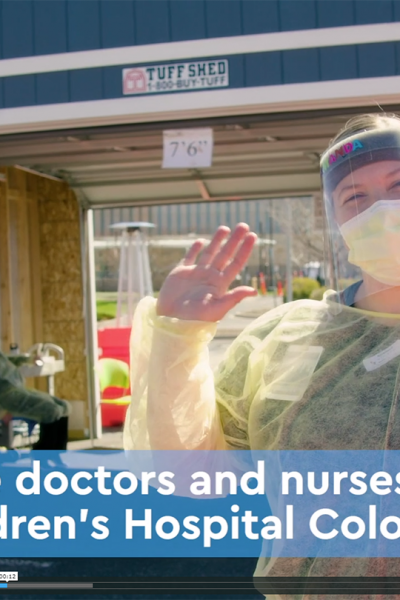
Our year-round sponsor, Children’s Hospital Colorado, is making it easy for us to do just that! On their website, guests can send a ‘Gratitude Gram’ to their amazing frontline co-workers, thanking them for putting our community’s needs before their own during the COVID-19 health crisis.

Send a ‘Gratitude Gram’ by clicking here.

We’re certainly grateful for Children’s Hospital Colorado’s partnership, and send a huge thanks for their support of the Zoo. We know how wonderful CHCO is, but we’re not the only ones.

Children’s Hospital Colorado has once again been recognized among the best-of-the-best children’s hospitals in the nation. According to the 2020-21 Best Children’s Hospitals rankings released by U.S. News & World Report, Children’s Colorado earned the No. 6 spot among the top 10 children’s hospitals on the Honor Roll, and again ranked highly in all ten recognized specialty areas.

The nonprofit pediatric health system is the only nationally ranked children’s hospital in Colorado and the surrounding 12 states. Out of the ten recognized specialty areas, seven of the Children’s Colorado specialties ranked among the top 10.

Speaking of ranking, CMZoo is once again nominated for Best Zoo and Best Zoo Exhibit in USA Today’s 10Best Readers’ Choice contest! If you’re looking for more ways to spread positivity, vote for CMZoo and Rocky Mountain Wild every single day until Monday, July 6 at 10 a.m. MT at cmzoo.org/vote.

Back to The Waterhole