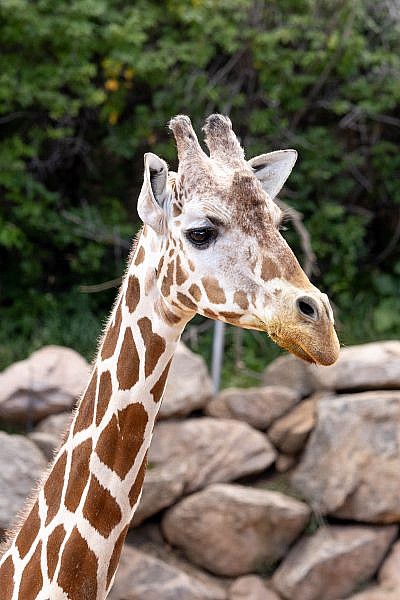
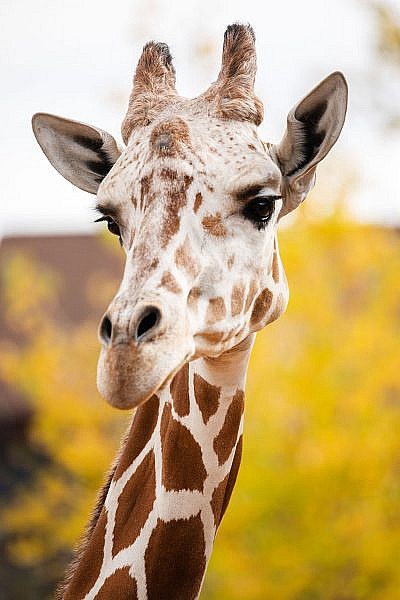
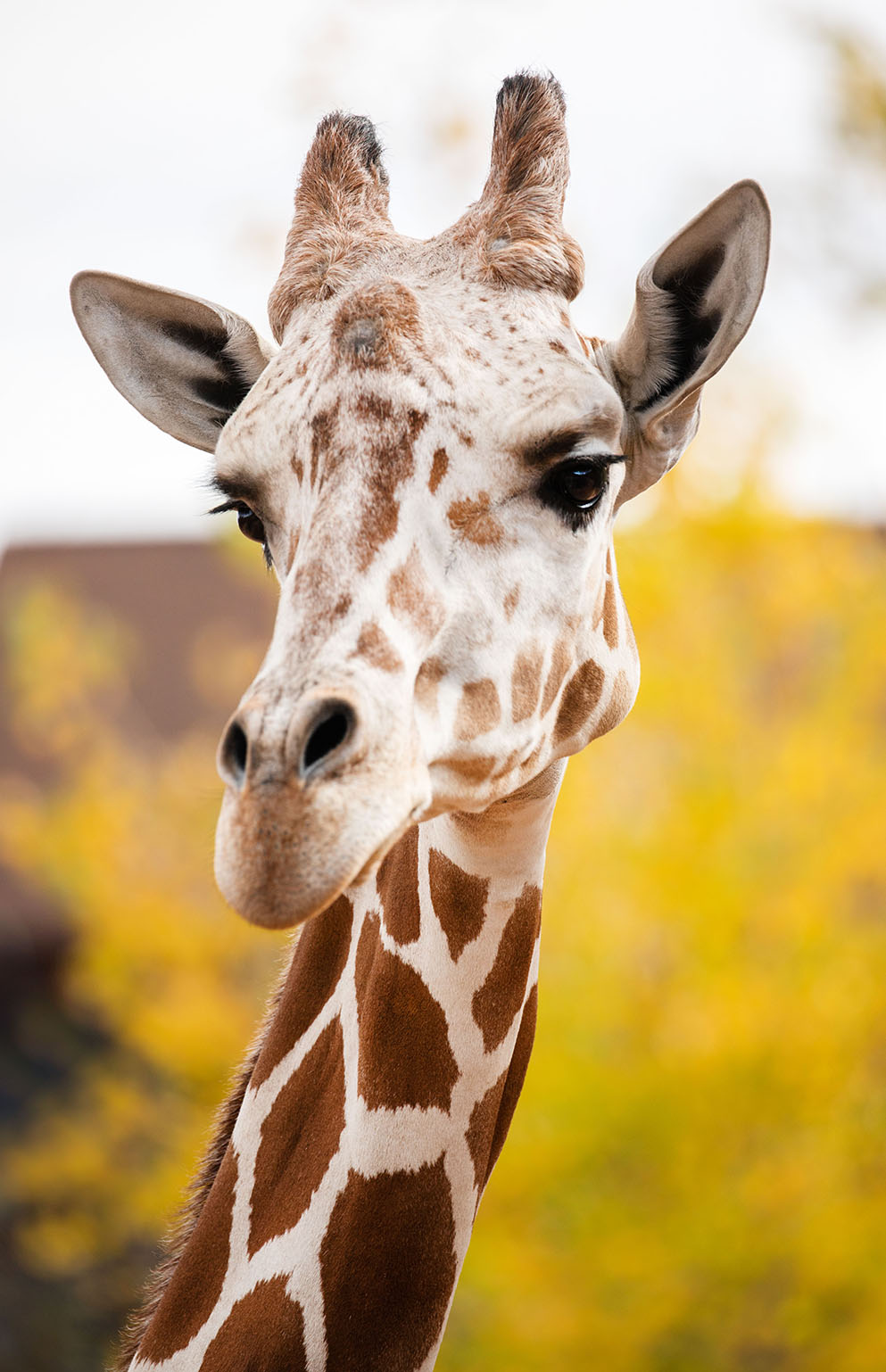
FOUR MILE WALK/RUN FUNDRAISER OFFERS ONCE-A-YEAR EXPERIENCE ON FOOT TO WILL ROGERS SHRINE OF THE SUN – Cheyenne Mountain Zoo hosts its 18th annual Run to the Shrine, featuring a reticulated giraffe as this year’s event mascot, from 5 to 8 p.m. on Sat., May 9 and Sun., May 10, 2026.
Where else can you hand-feed a giraffe, listen to lions roar, and then walk up the side of a mountain? (Nowhere!) The 4-mile round trip up-and-back course offers breathtaking views of Colorado Springs, Garden of the Gods, and parts of the Front Range as participants run by Amur leopards, African lions, wallabies, and African elephants through the Zoo, up to Will Rogers Shrine of the Sun and back into the Zoo. The breathtaking evergreen-forested course, with a nearly 1,000-foot elevation gain, is good practice for competitive runners gearing up for summer races and a fun challenge for weekend warriors and families. Runners and walkers are welcome.
Run to the Shrine is the only time of the year foot traffic is allowed on the picturesque route through and above the Zoo to the Will Rogers Shrine of the Sun, and back down. Participant and spectator tickets are available. Spectators can explore the Zoo from 5 to 8 p.m. when the event ends, but do not get access to Shrine Road.
Registration includes Zoo admission for the evening, a commemorative performance running T-shirt featuring a reticulated giraffe, and access to a post-event expo at the Zoo’s Lodge at Moose Lake. All proceeds help feed and care for Cheyenne Mountain Zoo’s animals. Since the Zoo doesn’t receive any tax support, community events like Run to the Shrine help keep the zoo “running.”
FAST FACTS Run to the Shrine at Cheyenne Mountain Zoo
5 to 8 p.m.
Saturday, May 9
Sunday, May 10
— 4-mile run/walk through the Zoo, up to Will Rogers Shrine of the Sun, and back to the Zoo — Post-race expo — Access to the Zoo from 5 to 8 p.m. — Runners and walkers can start the ascent up Shrine Road from 5 to 6:30 p.m. Shrine Road closes to pedestrians at 7:30 p.m. — Advance registration is required and capacity is limited. — Register now at cmzoo.org/run. — Run to the Shrine helps CMZoo – one of the only AZA-accredited, nonprofit zoos that doesn’t receive any tax support – fund Zoo operations, improvements, animal care and conservation.
We’re wild about our Run to the Shrine 2026 partners, Children’s Hospital Colorado, Raising Cane’s Chicken Fingers, Your Colorado Springs Toyota Dealers and Colorado Springs SCHEELS.
About Cheyenne Mountain Zoo
Cheyenne Mountain Zoological Society was founded in 1926. Today, Cheyenne Mountain Zoo, America’s mountain Zoo, offers comprehensive education programs, exciting conservation efforts and truly fantastic animal experiences. In 2026, Cheyenne Mountain Zoo was voted #2 Best Zoo in North America and CMZoo’s Rocky Mountain Wild was named #2 Best Zoo Exhibit in North America by USA TODAY’s 10Best Readers’ Choice Awards. It is Cheyenne Mountain Zoo’s goal to help guests fall in love with animals and nature, and take action to protect them. Since 2008, CMZoo’s Quarters for Conservation program has raised more than $6 million dedicated to frontline conservation efforts around the world. Of the 237 zoos and aquariums accredited by the Association of Zoos and Aquariums (AZA), Cheyenne Mountain Zoo is one of just a few operating without tax support. Cheyenne Mountain Zoo depends on admissions, membership dues, special event attendance and donations for funding.
IN PARTNERSHIP WITH CHILDREN’S HOSPITAL COLORADO – Preventive care is important for people and animals, alike. Cheyenne Mountain Zoo partners, Children’s Hospital Colorado, discuss the many benefits of well-child visits, and how pediatricians can support medical, behavioral and mental health at different stages of childhood development.
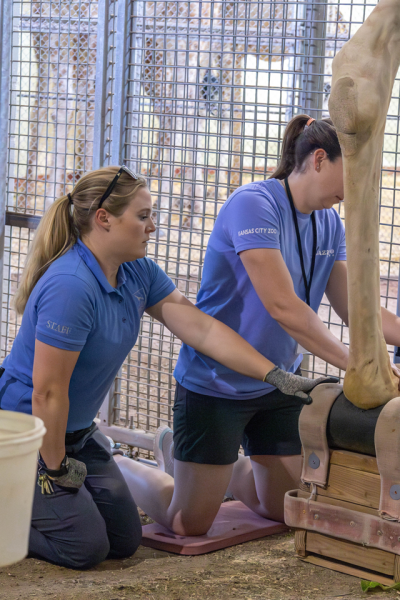
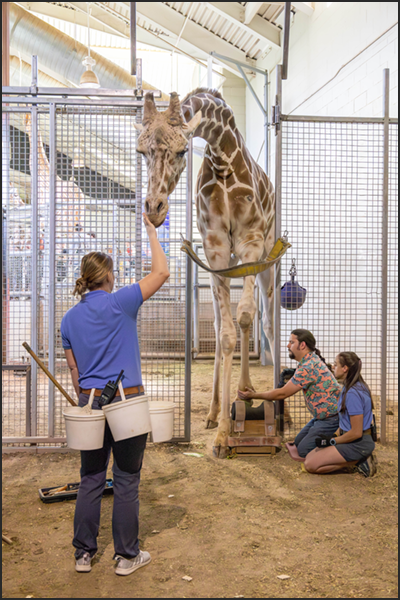
For more than 13 years, the team at the International Center for the Care and Conservation at CMZoo (the Giraffe Center), has led the animal care profession in cooperative husbandry training for giraffe.
Originally known for their leadership in hoof care, the Giraffe Center team has helped animals expand their cooperative care repertoires to include blood draws, injections, eye exams, x-rays, ultrasounds, acupuncture, chiropractic care, orthopedic hoof wear and more. These behaviors and more allow giraffe in human care to age with grace. Around forty percent of CMZoo’s herd is at, approaching or beyond the median life expectancy for their species in human care.
“It’s really exciting to see the younger members of our herd already benefiting from the preventive care training we’ve learned alongside our older giraffe,” Amy Schilz, senior animal behavior at the Giraffe Center, says. “This new generation of giraffe who grew up participating in hoof care aren’t experiencing the foot issues our older giraffe experienced at their age. That’s a huge win.”
In the early 2000s, the zoo profession at large was focusing relatively little on training giraffe. Without these trained behaviors, which allow animal care professionals to proactively address issues like hoof overgrowth, treatments had to be performed with an animal under anesthesia – which carries its own serious risks.
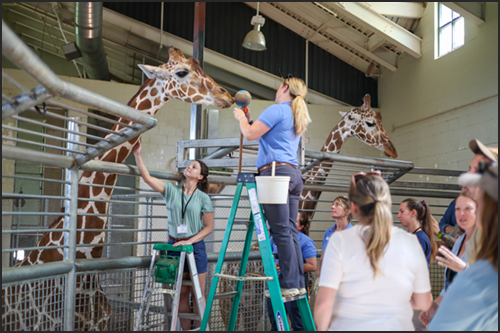
“What we’ve been able to learn and share with the greater giraffe care community is truly remarkable,” Diana Miller, giraffe specialist at the Giraffe Center, says. “Through our training workshops, virtual Q&As, consultations and community network, giraffe everywhere are benefitting from this care. That’s why we do what we do! The giraffe community is incredibly collaborative, from zoos to private owners to giraffe conservation organizations that treat wild giraffe.”
The Giraffe Center also collaborates with researchers and conservation organizations to learn about how wild giraffe feet compare to feet of giraffe in human care. They recently contributed to a first-of-its-kind anatomical study of the lower limbs of giraffe.
Researchers took CT (computed tomography) scans of giraffe feet in human care and in the wild, and dissected the feet of deceased giraffe to discover precisely how soft tissue, tendons, ligaments, blood vessels and heel bulbs (the cushy ‘shock absorbers’ in giraffe feet) play a role in overall foot health.
“We have incredible momentum, and that’s only going to grow with the opening of the Giraffe Center at our Zoo this summer,” Amy says. “We’re going to connect more people with giraffe and collaborate with even more giraffe care people so giraffe everywhere can benefit like our youngsters have.”
The International Center for the Care and Conservation of Giraffe, a currently-under-construction giraffe habitat at CMZoo, is set to open this summer. The new 12,000 square foot barn incorporates design elements that support giraffe’s natural behaviors and movements – their own kind of preventive care. Learn more at cmzoo.org/giraffecenter.
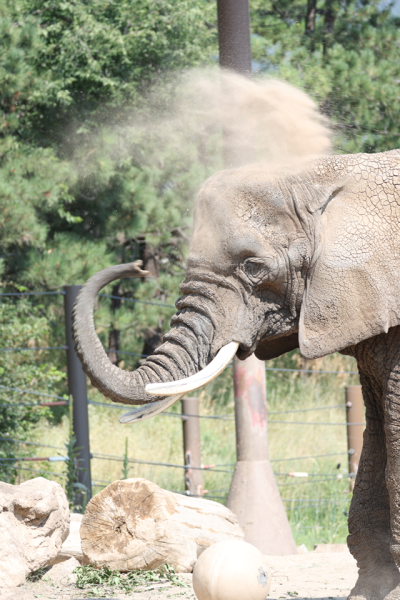
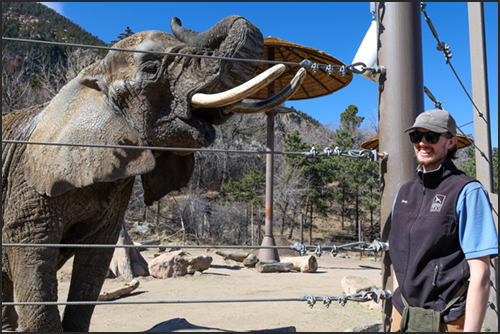
I met Missy for the first time in May of 2019. I had just started the summer as a Junior Zookeeper in the Wilgruen Elephant Center. Missy was 49 years old at the time. Now, Missy is 56 years old, and I have been working with her as a full-time keeper for more than two years. Throughout my journey from Junior Zookeeper to Keeper Assistant to Animal Keeper, Missy has been a steady constant.
Despite what you might expect from a geriatric elephant, Missy is still full of fire on most days. She’s not afraid to let the other elephants know that she’s still in charge. She’ll hustle over to you when you call her outside in the yard, and she’ll have her mouth open to be ready for whatever snacks you’ve brought for her. Missy’s favorite way to get food is what we call “direct-deposit.” She’ll open up her mouth and let you do all of the work by throwing food straight in.
Missy also loves spending time with her best friend, LouLou. They came to the Zoo together, back in 2015. It’s easy to tell Missy and LouLou apart because Missy has tusks and LouLou does not. Like all of our aging elephants, Missy has some issues we help her deal with, including a lack of strength and dexterity due to her trunk paralysis. So, like any of us with differences, she works to find ways to adapt, and we assist her. Missy likes to let LouLou work on the overhead barrel feeders that we fill with hay. Then, she’ll do what dominant elephants do and move LouLou out of the way to clean up all of the leftover hay.
Missy isn’t afraid to let you know that she’s in charge when you’re working with her. When we train for “elephant yoga,” a series of stretching behaviors, we use what’s called a target pole to communicate with the elephants where we’d like them to move certain body parts. Our target poles are really just wooden handles with duct tape rolled onto the ends of them. We just use them to point from a safe distance. Missy will use her trunk to move the target pole down to a lower height that’s easier for her to reach. It’s a little like cheating, but at 56, Missy is definitely allowed to cheat a little.
Training and taking care of Missy provides our team with some unique challenges, most of which are age-related. Consistent with her advanced age, she is blind in her left eye, has some challenges with dead skin build up, and no longer has a full set of teeth. We’re constantly making adjustments to the ways that we care for Missy as she ages. Missy receives hay that is chopped up into small pieces by a hay shredder, so she doesn’t have to chew as much. She also gets different food reinforcers that don’t need to be chewed during training like timothy hay cubes that we soak in water, bread and wafer cookies, sparingly. She also gets a bath twice a week when the weather is nice to help her get rid of some of the extra skin that builds up on her back. We use a hose with warm water, soap specially made for animals and a scrub brush to help her take care of her skin. After she’s finished getting rinsed by us, Missy likes to reapply her layer of dirt and mud that protects her skin from the sun and bugs. All of these adjustments are made possible by collaboration with multiple teams across the Zoo that allow us to give Missy the best care possible.
One of the things I appreciate the most about Missy is that she is an excellent teacher. When I first started training elephants, Missy provided a teaching moment in just about every training session. She is an elephant who knows the routine and very much likes to stick to it. If you move too slowly while training her, she won’t wait for you and moves on to the next behavior. Missy is also very focused on where you stand and how you move while training her, which can be especially important because of her vision deficit. Missy taught me how to be an adaptable trainer who can clearly communicate with her. She taught me to problem solve in the moment to make adjustments if the training session is starting to get off course.
Beyond being a strong teacher of the fundamentals, Missy is also exceptional at teaching some of the more challenging skills that an elephant keeper needs to know. All of the elephants that we care for are trained to participate in their own health care. This can look like voluntarily participating in a blood draw where we collect blood from the backs of their ears, presenting their feet for us to trim their nails and foot pads, or injections for vaccines. Missy is the first elephant I ever gave an injection to or drew blood from. She is patient and will stay in position while you are learning these new skills. She will stand extremely still with her mouth open while a trainer gives her some of her favorite treats like marshmallows and bread in a “direct-deposit” style straight into her mouth. This allows time to learn these new skills with the help of a capable mentor.
The best time to see Missy in our main elephant yard is in the mornings between 10 and 11:30 a.m. on days when the temperature is 40 degrees or warmer. The best way to get up close and personal with Missy is to come to our elephant hydration experience. As she has been having some “off days” recently, she doesn’t always choose to participate, and we support her choices. When she does want to participate, for $10-15, you can give Missy a cup or two of glacier freeze electrolyte drink (her favorite flavor) into her trunk. Some of these funds even go towards supporting Tsavo Trust, a conservation organization dedicated to maintaining protected areas that provide elephants with habitats in Kenya. Our elephant and rhino experiences raise around $75,000 annually for Tsavo Trust. Missy takes turns participating in the hydration with her best friend LouLou. There isn’t a set schedule for who participates on a given day, but we typically alternate every day. This chance happening makes it even more special for anyone who does get to meet Missy.
I would not be where I am today without Missy’s patience and the continuing support of great human and elephant mentors on my team. I feel grateful every day to work with such an amazing animal and to have the support of such a great team.
I feel so fortunate to have the opportunity to work with an elephant like Missy every single day, and it is a truly wonderful experience working with a team that is always trying new things to help Missy continue to age gracefully. I feel like every day with Missy is a gift. We’ve been fortunate that Missy has been in such great health for so long, but just like every other animal at the Zoo, there is a point when the quality of care can only extend her life so long.
Given that she’s recently having more ‘off days’ than she used to, we are now very focused on continuing to help Missy live comfortably and provide her as many reinforcing opportunities as possible, while also being realistic that there is no cure for old age. Hopefully, the next time you come to the Zoo, you’ll come and see Missy!
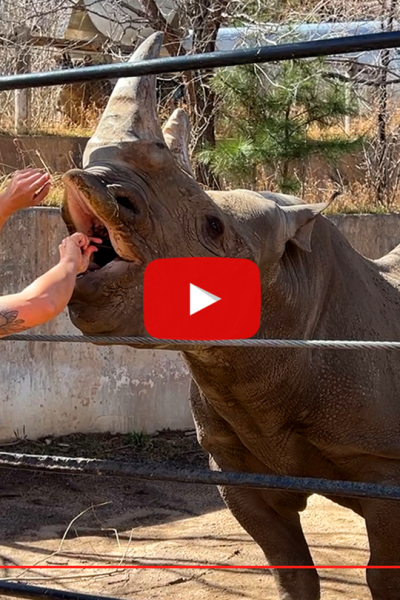
Catch up with Jumbe, Cheyenne Mountain Zoo’s 23-year-old Eastern black rhinoceros, who is working on a new kind of health training: dental care. As an aging rhino, Jumbe sometimes needs a little extra help with his teeth. His care team gently files his molars to smooth sharp edges that could cause sores. Take a look into how his keepers have trained him to participate in this important part of his health care.
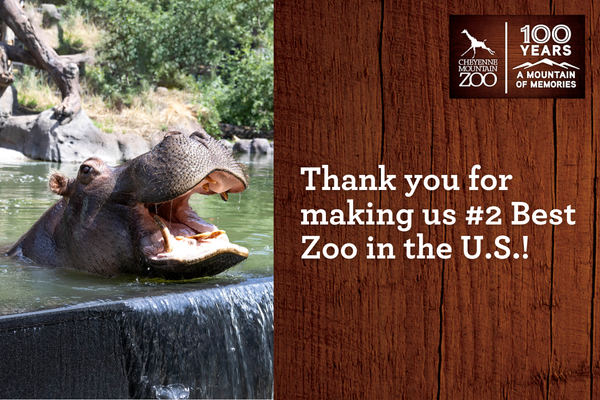
Cheyenne Mountain Zoo was ranked #2 Best Zoo in the country, in USA TODAY’s 10Best Readers’ Choice Awards 2026! Dedicated CMZoo supporters voted daily for a month, and their commitment earned the Zoo a tie for its highest ranking ever – second place – for the second year in a row.
According to popular vote and the 10Best Readers’ Choice editors, who nominated 20 zoos for Best Zoo consideration, the top-ten zoos in the nation are:
1. Omaha’s Henry Doorly Zoo and Aquarium (Omaha, Nebraska) 2. Cheyenne Mountain Zoo (Colorado Springs, Colorado)
3. Cincinnati Zoo & Botanical Garden (Cincinnati, Ohio)
4. Jacksonville Zoo and Botanical Gardens (Jacksonville, Florida)
5. Brevard Zoo (Melbourne, Florida)
6. Saint Louis Zoo (St. Louis, Missouri)
7. San Antonio Zoo (San Antonio, Texas)
8. North Carolina Zoo (Asheboro, North Carolina)
9. The Living Desert Zoo and Gardens (Palm Desert, California)
10. Sedgwick County Zoo (Wichita, Kansas)
“This is a remarkable year for us,” says Bob Chastain, president & CEO of Cheyenne Mountain Zoo. “We’re excited to celebrate 100 years of growth in animal care, conservation, education and community. Later this year, we’ll open the International Center for the Care and Conservation of Giraffe, and being recognized by USA TODAY’s 10Best Readers’ Choice Awards is a reflection of our community’s dedication and passion. Every day, our supporters inspire us to keep pushing for excellence, and moments like this help remind us why we do what we do. We’re grateful to everyone who makes Cheyenne Mountain Zoo such a special place for the community. Thanks for your ongoing support.”
For the second year in a row, voters helped the Zoo land a second-place hat trick across three categories this year. In addition to ranking #2 Best Zoo in the country, CMZoo again earned the #2 spot for Best Zoo Membership and CMZoo’s home for animals native to the Rocky Mountain region, Rocky Mountain Wild, was voted #2 Best Zoo Exhibit.
Understanding its unique opportunity to connect people to native, rare and endangered animals in a natural mountainside setting, CMZoo aims to make every visit inspiring and memorable. The Zoo does that by designing animal homes that bring guests closer than ever to species from all over the world, and right here in Colorado.
In 2025, CMZoo celebrated a huge conservation milestone: surpassing $6 million raised for frontline conservation efforts, including over a million dollars for African elephant and black rhino conservation. Every visit to the Zoo is conservation in action, because every ticket purchased raises 75¢ for Quarters for Conservation (Q4C).
CMZoo is celebrating its centennial year in 2026 and embarking on historic upgrades to its world-famous giraffe herd’s home – including a 12,000 square-foot International Center for the Care and Conservation of Giraffe (the Giraffe Center) and a 25 percent expansion to their outdoor space. Stay tuned for a grand opening date this summer.
About Cheyenne Mountain Zoo
Cheyenne Mountain Zoological Society was founded in 1926. Today, Cheyenne Mountain Zoo, America’s mountain Zoo, offers comprehensive education programs, exciting conservation efforts and truly fantastic animal experiences. In 2026, Cheyenne Mountain Zoo was voted #2 Best Zoo in North America and CMZoo’s Rocky Mountain Wild was named #2 Best Zoo Exhibit in North America by USA TODAY’s 10Best Readers’ Choice Awards. It is Cheyenne Mountain Zoo’s goal to help guests fall in love with animals and nature, and take action to protect them. Since 2008, CMZoo’s Quarters for Conservation program has raised more than $6 million dedicated to frontline conservation efforts around the world. Of the 237 zoos and aquariums accredited by the Association of Zoos and Aquariums (AZA), Cheyenne Mountain Zoo is one of just a few operating without tax support. Cheyenne Mountain Zoo depends on admissions, membership dues, special event attendance and donations for funding.
MUZIKI WAS THE OLDEST GIRAFFE IN THE CMZOO HERD, AND THE FIFTH OLDEST IN HUMAN CARE IN THE COUNTRY – Cheyenne Mountain Zoo said a grateful goodbye to Muziki (pronounced moo ZEE-key), a 27-year-old female reticulated giraffe, on Fri., March 13, 2026. After a quick decline in her health due to age related issues including bone density loss in her jaw, her care team made the difficult but compassionate decision to euthanize her. She was the oldest giraffe in the CMZoo herd and the fifth oldest female reticulated giraffe in the country.
Muziki was born at CMZoo, and she would have turned 28 years old on April 3, 2026. The median life expectancy for a female giraffe in human care is 20 years, according to the Association of Zoos and Aquariums.
“I’ll remember her as a leader in the herd,” Kacie Meffley, giraffe animal care manager, says. “She was gentle and confident. She taught newborn calves and giraffe who moved to our Zoo how to be giraffe at CMZoo because the herd would naturally follow her lead.”
Muziki also taught people. She was eager to participate in training, and her care team often relied on her skills at giraffe care workshops, hosted by the International Center for the Care and Conservation of Giraffe at CMZoo. When giraffe care teams from other organizations want to learn about giraffe care, they can attend the workshops and work directly with the CMZoo giraffe care team and herd to learn skills they can take home to benefit the giraffe in their care.
“Muziki was the herd matriarch, and giraffe and humans alike worked to earn her respect,” Kacie says. “She wouldn’t let just anyone train with her, so once you earned her trust and respect, it felt pretty special. I remember one day, when we were applying an ointment to her joints to help with arthritis. She would step away when others approached, but she stood perfectly still for me to do it. That’s when I knew we had formed a real bond.”
Supporting animals through their senior years is a privilege, and the giraffe care team provided excellent care for Muziki through the end of her life. The Zoo aims to give animals their Last Best Day, with a goal to find the best possible timing to say goodbye while giving the animal as many fulfilling days as they can.
“Muziki’s last best day was spent doing her favorite things, enjoying the sunshine outside and receiving lettuce from guests, volunteers and staff,” Kacie says. “At the end of the day, she had the entire barn, with lots of choices to rest on sand or participate in enrichment while she spent time with other giraffe and staff.”
Muziki’s death comes just five days after the death of Mashama, a 15-year-old reticulated giraffe who passed away on Sunday. Yesterday, Bob Chastain, CMZoo President & CEO, addressed the difficult week in a letter to CMZoo members.
About Cheyenne Mountain Zoo
Cheyenne Mountain Zoological Society was founded in 1926. Today, Cheyenne Mountain Zoo, America’s mountain Zoo, offers comprehensive education programs, exciting conservation efforts and truly fantastic animal experiences. In 2025, Cheyenne Mountain Zoo was voted #2 Best Zoo in North America and CMZoo’s Rocky Mountain Wild was named #2 Best Zoo Exhibit in North America by USA TODAY’s 10Best Readers’ Choice Awards. It is Cheyenne Mountain Zoo’s goal to help guests fall in love with animals and nature, and take action to protect them. Since 2008, CMZoo’s Quarters for Conservation program has raised more than $6 million dedicated to frontline conservation efforts around the world. Of the 237 zoos and aquariums accredited by the Association of Zoos and Aquariums (AZA), Cheyenne Mountain Zoo is one of just a few operating without tax support. Cheyenne Mountain Zoo depends on admissions, membership dues, special event attendance and donations for funding.
Cheyenne Mountain Zoo staff and giraffe fans around the world are remembering Mashama (pronounced muh-SHAW-muh), an older male giraffe who passed away early Sunday morning. He experienced sporadic ‘off’ days with bouts of lethargy and decreased appetite over the past few months, but he was still having far more good days than bad ones. Despite consistent care and monitoring, and weekly diagnostics, no patterns or causes for his ‘off’ days were clear. He passed away somewhat unexpectedly around 1 a.m. MT on Sun., March 8, 2026.
Mashama would have turned 16 years old on March 23, the median life expectancy for a male giraffe in human care. Cheyenne Mountain Zoo is now home to 15 giraffe, including Jasiri, a breeding bull who is visiting from Denver Zoo Conservation Alliance. Forty percent of the herd is either approaching, at or beyond the median life expectancy for giraffe in human care.
Mashama was born at Cheyenne Mountain Zoo and made millions of connections with visitors, fans online and staff over the years.
Amy Schilz, senior animal behaviorist at the International Center for the Care and Conservation of Giraffe at CMZoo, worked with Mashama for 13 years.
“He’s always been so gentle,” Amy says. “He was eager to please and eager to train. I’ll remember him as a calm, steady and gentle soul who absolutely loved training.”
He was easy to identify in the herd because his coat was lighter than most and he had a unique way of chewing with his mouth wide open. He was one of the tallest giraffe in the herd, and he would use his size and confidence to shift to the front of the herd to take lettuce from guests. If you have a selfie with a giraffe who’s chewing with his mouth open, that’s likely Mashama, Mash, Mash-Man or Mash Potato, as his keepers endearingly called him.
“Mashama was the best friend you could ask for on a hard day,” Amy says. “With his quiet presence, it felt like he somehow knew you needed him. He would come over, gently press his face against yours, breathe out slowly and simply stand there while you petted him. Most of the other giraffe expect food if you want to touch them, but not Mash. He just wanted to be close and spend time with you.”
Mashama was an important part of the herd. He was always the last one to shift into the barn from the main yard each night. He would make sure the entire herd came in first, and only then would he run from the main yard into the building.
“He loved the babies and the babies loved him,” Amy says. “Young calves would follow him around and peek out from under his huge legs. They must have felt safe with him.”
Many fans called him ‘Uncle Mashama’ because he was playful and gentle with new giraffe calves, often standing over them in the yard as they learned to navigate the outdoor space with the large herd. Just after the three-minute mark in this video, you can see Mashama excitedly meeting now 5-year-old BB during her first yard adventure in 2020. In his younger years, he would get the zoomies and encourage the whole herd to run around. As he got older, the zoomies happened less frequently, but his excitable spirit remained.
When Mashama wasn’t relaxing with the herd in the Colorado sunshine, getting lettuce snacks from guests or helping youngsters settle in, he was a powerhouse in the training barn. Positive reinforcement and cooperative care allow animals to participate in procedures that would otherwise require anesthesia – always risky for any animal. As with all positive reinforcement training at CMZoo, Mashama always had the choice to walk away from sessions without consequence, but he nearly always chose to stay and participate.
“When we have giraffe training workshops, Mashama was our go-to giraffe for helping giraffe caretakers learn how to perform hoof care and blood draws,” Amy says. “He was so stellar that he’d allow people he’d never met to learn these important skills with him so they could help their own giraffe.”
Mashama was a pioneer in giraffe husbandry care, eagerly participating in training and treatment sessions with his care team. In 2019, he fractured his foot when a particularly frolic-filled day in the yard ended in a stumble. To help mend his fracture, he received an innovative orthopedic shoe, and he stood still to have the shoe fitted.
To assist in healing, he trailblazed giraffe care again, by being the only known giraffe to receive multiple stem cell treatments while fully awake. He participated in acupuncture and laser therapy. He lived well for several more years thanks to this technology and his incredible enthusiasm to participate in these sessions.
He participated in cooperative blood draws. His team would gather blood samples from a vein in his neck while he stood still, getting lots of lettuce and crackers as a reward. That behavior allowed Mashama to contribute to the Giraffe Plasma Bank regularly, supplying emergency blood and plasma for giraffe throughout the country who needed supportive care. He saved many calves’ lives through this contribution, and allowed veterinarians to learn more about giraffe blood testing, which continues to serve giraffe in human care and in the wild.
This week, Amy is teaching a giraffe care workshop at CMZoo, and most of the lessons she will share, she learned alongside Mashama.
“I have a slide about him in my presentations that says, ‘Not all heroes wear capes. Some wear spots,’” Amy says. “He has saved many giraffe lives and taught us so much. He’s a hero.”
Mashama will continue to help people learn about giraffe. Veterinarians will perform a necropsy (an autopsy for animals) and the Giraffe Center team will study his hooves. What they learn will help inform giraffe hoof care and training practices for decades to come.
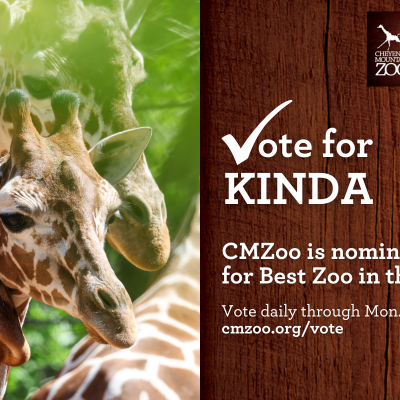
CMZOO IS NOMINATED FOR BEST ZOO IN THE U.S. BY USA TODAY’s 10BEST READERS’ CHOICE AWARDS – Supporters can vote daily atcmzoo.org/vote. Cheyenne Mountain Zoo has been holding strong at the #2 spot in USA TODAY’s 10Best Readers’ Choice Best Zoo in the U.S. contest. We’ve reached the point in the contest where the rankings are now hidden. CMZoo is asking the community to show its support during the final week by voting daily at cmzoo.org/vote through Mon., March 9.
A vote for CMZoo is a vote for your favorite animal and for your community, because a high ranking elevates the entire Zoo – and Colorado Springs.
10 reasons to vote for CMZoo in this top-ten contest:
In 2026, Cheyenne Mountain Zoo is celebrating 100 years of growth in animal care, conservation, education and community!
America’s mountain Zoo is one of the only nonprofit zoos accredited by the Association of Zoo and Aquariums (AZA) that does not receive any tax support. Zoo improvements, operations, animal care and field conservation are funded through admissions, memberships, programs, donations and grants.
More than 800,000 people visit the Zoo each year. While visiting the Zoo, guests to the Pikes Peak region also patronize Colorado Springs’ local lodging, restaurants and tourism attractions.
Understanding its unique opportunity to connect people to native, rare and endangered animals, CMZoo aims to make every visit inspiring. The Zoo does that by designing animal homes that bring guests closer than ever to species from all over the world, and right here in Colorado.
It’s one of the few zoos in the country where guests can see an Alaska moose, Atka, who was orphaned in the wild in 2020 when CMZoo took him in. CMZoo is also home to Mochi, one of only three mountain tapirs in human care in the country.
Through keeper talks and animal demonstrations during daily visits, special events just for the grown-ups, small-group tours, camps, birthday parties and more, Colorado Springs’ Zoo works to make everyone welcome to tap into their inner child and explore the mountain at their own pace.
In 2025, CMZoo celebrated raising $6 million for frontline conservation efforts, including over a million dollars for African elephant and black rhino conservation and over a million dollars raised for orangutan conservation.
Its latest AZA accreditation was historic. In nearly 50 years of AZA accreditations, CMZoo was only the fourth organization to earn a completely ‘clean’ report, which means there wasn’t a single major or minor concern reported.
Anyone who has made eye contact with a tiger, petted a wallaby, felt the roar of an African lion, hand-fed a giraffe or walked alongside an African penguin knows how special our hometown Zoo is. This friendly competition amongst zoos nationwide is an excellent way to show your support.
Voting continues now through 10 a.m. MT on Mon., March 9. Supporters are encouraged to vote every day atcmzoo.org/vote.
Cheyenne Mountain Zoological Society was founded in 1926. Today, Cheyenne Mountain Zoo, America’s mountain Zoo, offers comprehensive education programs, exciting conservation efforts and truly fantastic animal experiences. In 2025, Cheyenne Mountain Zoo was voted #2 Best Zoo in North America and CMZoo’s Rocky Mountain Wild was named #2 Best Zoo Exhibit in North America by USA TODAY’s 10Best Readers’ Choice Awards. It is Cheyenne Mountain Zoo’s goal to help guests fall in love with animals and nature, and take action to protect them. Since 2008, CMZoo’s Quarters for Conservation program has raised more than $6 million dedicated to frontline conservation efforts around the world. Of the 237 zoos and aquariums accredited by the Association of Zoos and Aquariums (AZA), Cheyenne Mountain Zoo is one of just a few operating without tax support. Cheyenne Mountain Zoo depends on admissions, membership dues, special event attendance and donations for funding.
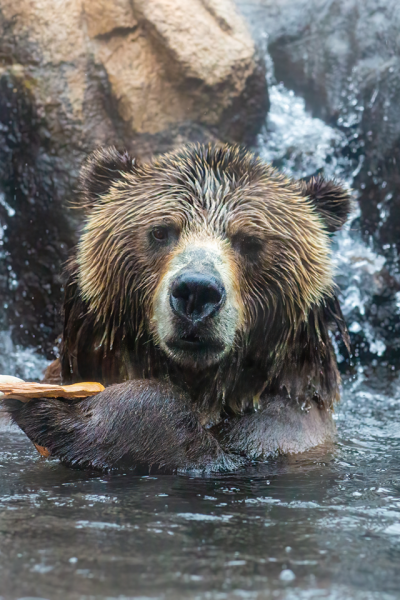
UPDATE MARCH 5, 2026: On Wed., Feb. 25, our grizzly bear Emmett underwent surgery to remove a cancerous mass from his tail. His incision is healing well, and Emmett’s care team is pleased with his progress so far. He’s a model patient, taking his meds, getting plenty of rest, and even letting his keepers clean the incision site. Emmett will continue to recover from surgery by resting in his den and back grizzly bear yard, while Digger, his grizzly roommate, remains visible to guests.
UPDATE FEBRUARY 26, 2026: On Wed., Feb. 25, 2026, our grizzly bear Emmett underwent surgery to remove a cancerous mass from his tail. Thanks to the dedication of CMZoo staff from multiple departments, the 750-pound bear was carefully transported to the Zoo’s hospital on a custom platform. Professionals from CSU Veterinary Health System and Focused Ultrasound Resources collaborated with the Zoo’s veterinary team during the procedure.
Emmett did well under anesthesia, and the cancerous mass, along with most of his tail, was successfully removed. Ultrasounds showed no obvious evidence that the cancer has spread. His care team also examined his teeth and trimmed his nails before safely returning him to his den in Rocky Mountain Wild. He appears to be recovering well and will spend the next few days resting in his den, while Digger, his grizzly roommate, remains visible to guests.
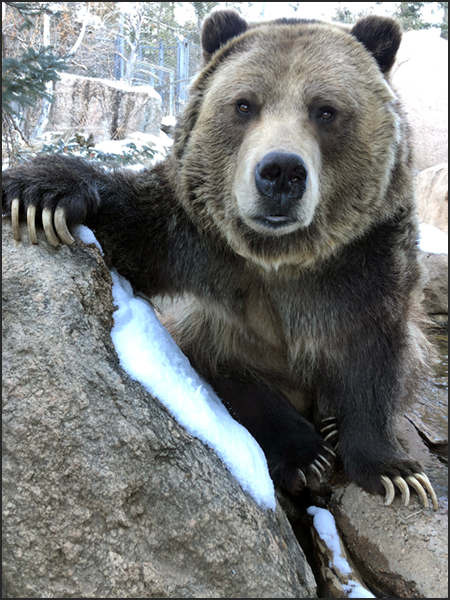
A PROCEDURE IS PLANNED FOR THE COMING DAYS – Cheyenne Mountain Zoo staff are rallying around a beloved colleague, Emmett, a 21-year-old grizzly bear. Biopsy results recently revealed that a lump at the base of Emmett’s tail is cancerous. His team is working to give him the best chance at fighting the disease, while balancing a humane quality of life for the famous bear.
Putting an animal under anesthesia is always risky, but his care team is optimistic because Emmett appears to be in good health otherwise. He was recently seen play-wrestling with his lifelong grizzly roommate, Digger. He’s still participating in training, eating, drinking water, sleeping, meeting his fans and doing all the things a fulfilled grizzly of his age does.
“I’m sure there are many people who can relate to what we’re dealing with,” Rebecca Zwicker, Rocky Mountain Wild animal care manager, says. “We’ve spent the past weeks preparing to give Emmett a fighting chance, and we’ll do everything we can to support him through this.”
Teams from nearly every department in the Zoo are preparing for Emmett’s surgery.
Emmett will receive a voluntary injection from his care team and the first steps of anesthesia by the Zoo’s veterinary team in his den. Then, the 750-pound bear will be carefully transported by heavy equipment on a platform constructed specifically for this procedure, driven by the Zoo’s skilled senior horticulturist, to the Zoo’s hospital. There, members of the Zoo’s park quality and maintenance teams will help shift the bear to the operating table. Professionals from CSU Veterinary Health System and Focused Ultrasound Resources will support the Zoo’s veterinary team during the procedure.
The cancerous skin mass is at the base of Emmett’s tail, so his tail will be removed along with the mass and affected surrounding tissue. Sonographers will use an ultrasound immediately before the procedure to look for tumors elsewhere in his body.
“There are a lot of unknowns, so we’re preparing for every possible outcome,” Dr. Jasmine Sarvi, CMZoo’s associate veterinarian who is leading Emmett’s case, says. “With every decision, we’ll be aiming to preserve his best quality of life and post-operative recovery. There are no guarantees, but Emmett is strong, so we have high hopes that he will recover and go back to his home. We all care about Emmett, and we’re determined to try and cure him of this disease.”
Emmett came to CMZoo as a youngster in 2007, and he has been stealing hearts and helping members and guests learn about and appreciate grizzlies ever since. His playful antics and impressive cooperative training behaviors make him easy to fall in love with. He most recently made international headlines while catching snowflakes on his tongue in an adorably relaxed position. Rebecca has worked with Emmett since 2009.
“We’re old friends, and it’s an honor to see animals through their golden years,” Rebecca says. “With any loved one facing cancer, of course you do everything you can to get the best care for them. Emmett is patient and really good at training, so we’re feeling hopeful that we’ll be able to support him through a recovery. I’ve seen this team do amazing things for the animals in our care, and everyone involved wants what’s best for him – whatever that looks like. Out of respect for Emmett, we want to give him as much life as we can.”
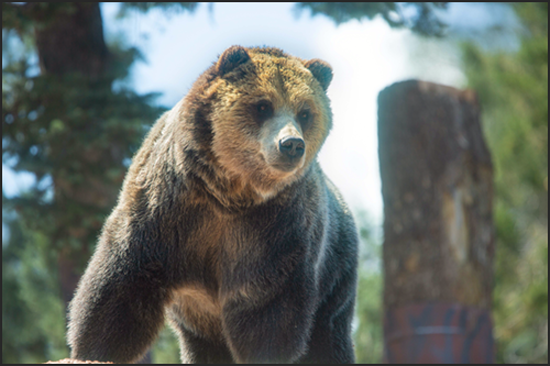
In the wild, Emmett and Digger were labeled as nuisance bears after several negative interactions with humans prior to being removed from the wild. Often, nuisance bears aren’t as lucky as these two, and once they receive several ‘strikes,’ they are often euthanized. Emmett and Digger were given a second chance, and a safe and enriching life at CMZoo.
For the past nineteen years, Emmett and Digger have spent their days exploring, training, playing and showing guests just how incredible grizzlies are – far from the temptations that got them into trouble in the wild. While grizzly bears don’t live in Colorado wilderness, black bears roam many urban and wild spaces throughout the state. With impressive senses of smell and problem-solving abilities, it’s up to humans to help them stay wild. Bear fans can do their part for Emmett’s relatives by securing trash, bringing in bird feeders at night and storing food in bear-safe locations, at home and out in nature.
“Emmett has needed no help from us to fulfill the Zoo’s mission to connect our guests with the natural world,” Rebecca says. “He has inspired and made connections with millions of people who have visited him at CMZoo and adored him online over the years, and we know everyone will be rooting for him. However, he does need our help now. We’re ready, and Emmett’s ready, for whatever comes next.”
While data varies, grizzlies typically live between 20 and 30 years in human care. His care team hopes this surgery and his post-operative care will give him many more years to enjoy living his best life at CMZoo. The Zoo will provide an update after Emmett’s procedure in the coming days.
About Cheyenne Mountain Zoo
Cheyenne Mountain Zoological Society was founded in 1926. Today, Cheyenne Mountain Zoo, America’s mountain Zoo, offers comprehensive education programs, exciting conservation efforts and truly fantastic animal experiences. In 2025, Cheyenne Mountain Zoo was voted #2 Best Zoo in North America and CMZoo’s Rocky Mountain Wild was named #2 Best Zoo Exhibit in North America by USA TODAY’s 10Best Readers’ Choice Awards. It is Cheyenne Mountain Zoo’s goal to help guests fall in love with animals and nature, and take action to protect them. Since 2008, CMZoo’s Quarters for Conservation program has raised more than $6 million dedicated to frontline conservation efforts around the world. Of the 237 zoos and aquariums accredited by the Association of Zoos and Aquariums (AZA), Cheyenne Mountain Zoo is one of just a few operating without tax support. Cheyenne Mountain Zoo depends on admissions, membership dues, special event attendance and donations for funding.
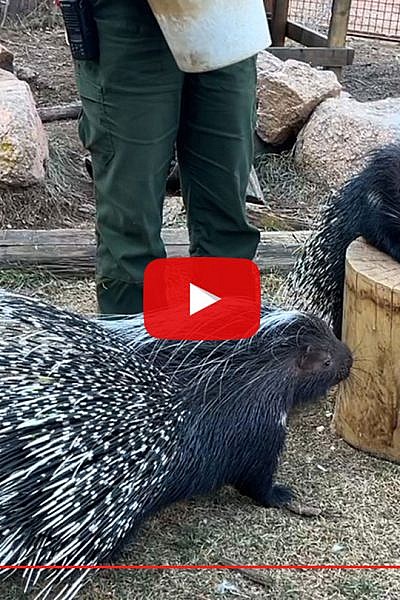
Say hello to Thistle, Waffles’ new companion! Thistle is settling in well and doing great with his training. Thistle and Waffles have a breeding recommendation through the Cape Porcupine Species Survival Plan, which helps manage genetic diversity and healthy populations in human care for their species. Waffles and Thistle have quickly bonded and can often be seen cuddling in their den or exploring their habitat in African Rift Valley together. Stay tuned for more Waffles and Thistle updates!