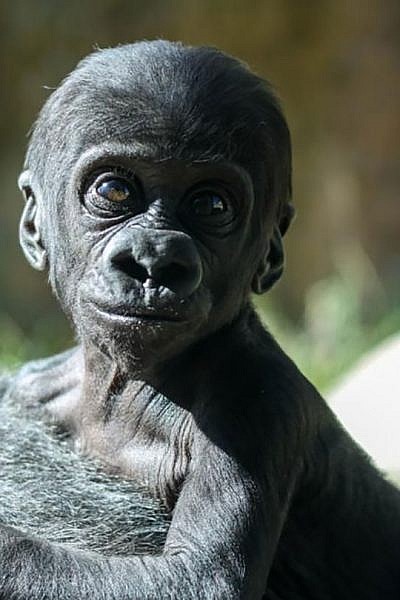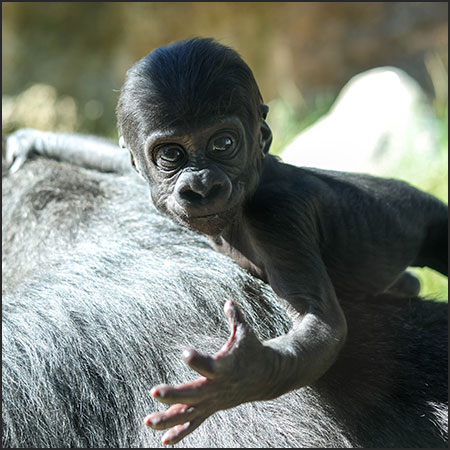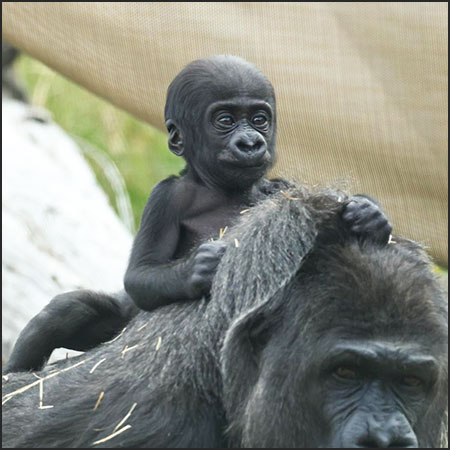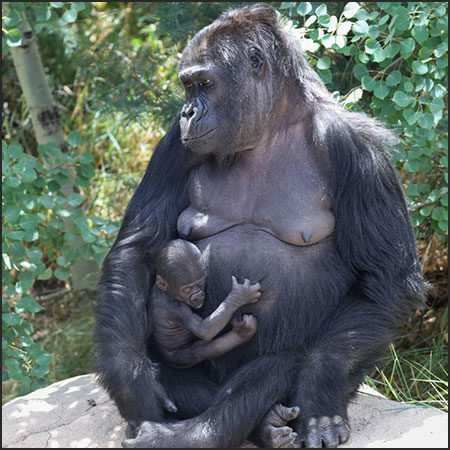
Gorilla Asha with baby July 2025

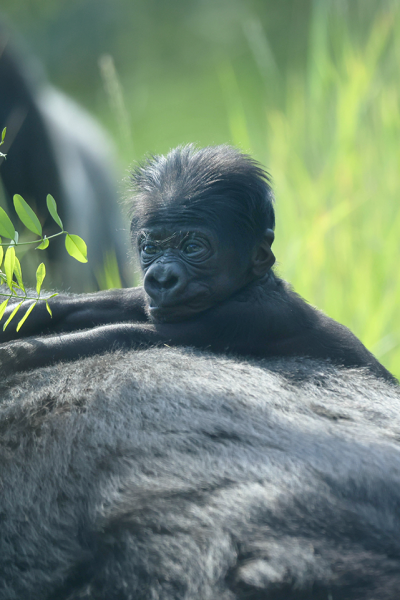
There were hushed moments of pure joy at Cheyenne Mountain Zoo this morning, as a small group of Primate World keepers and staff gathered to adore the Zoo’s newest addition: a brand-new gorilla baby bundle of joy born in the early hours of Mon., July 21, 2025.

Asha, a 32-year-old critically endangered Western lowland gorilla, and her new baby seem to be doing well. The baby has hit the milestones that indicate it is strong, including nursing and clinging to its mom.

“Asha is sitting and lying down with the baby and gently patting its back, which is really adorable,” Ashton Asbury, Primate World animal keeper, says. “The baby hangs onto Asha while she’s moving around and she supports it with one hand. They’re bonding really well, and we have seen her licking the baby’s head and grooming it.”

First-time dad, Goma, is showing interest in the baby, too.

“He seems to want to stick close to her and the baby,” Ashton says. “I heard him making happy gorilla grumbles at them, and Asha is doing a good job of showing him the baby while keeping a comfortable distance.”

Asha's Western Lowland gorilla baby in her arms, July 2025

It has been nearly 13 years since a gorilla was born at CMZoo. This little one is Asha’s third baby and the first for silverback dad, Goma. Asha was born at CMZoo on Oct. 5, 1992. Thirty-four-year-old Goma moved to CMZoo, in 2016, on a breeding recommendation from the Western Lowland Gorilla Species Survival Plan, supported by Association of Zoos and Aquariums-accredited organizations, including CMZoo.

Primate World is open to the public and will continue to be as long as Asha and the troop continue to do well. Asha’s care team will continue to monitor her and the baby – and the troop’s overall dynamic – and make adjustments as needed.

The sex and weight of the gorilla baby are not known yet. As long as keepers observe that baby and mom are doing well, they will continue to let Asha take the lead on providing care. The baby will likely cling to Asha for the first several weeks, but will start getting to know its dad, Goma, and ‘aunt’ Kwisha (who is unrelated genetically, but grew up with Asha and had a relationship with both of her offspring), as long as Asha is comfortable.

Asha's Western Lowland gorilla baby in her arms, July 2025

Asha is an experienced mother. She has welcomed two previous babies to the world during her time at CMZoo, both of whom now live in troops at other zoos. Although the goal is to let Asha take the lead on newborn care, her supportive team is ready to help if the need arises. As a first-time dad, Goma has been participating in training with his care team that aims to improve his comfort around the baby.

Following Cheyenne Mountain Zoo tradition, the baby will be named after he or she is at least 30 days old. CMZoo will provide updates on social media channels and in newsletter updates.

Western lowland gorillas are critically endangered in the wild, and their numbers continue to decline. Gorilla fans can help preserve wild gorilla habitats by recycling small electronic devices and cell phones at CMZoo.

In addition to disease and poaching, gorillas face habitat loss due to logging for agricultural use, human settlements and mining. Many of the West African lowland forests and swamps that these animals call home are also natural deposits of coltan, a mineral used in cell phones and other electronics. Due to the ever-increasing demand for cell phones across the world, the destruction of these gorillas’ habitats for mining purposes has unfortunately increased.

Coltan is recyclable, and by donating old cell phones, we can help supply valuable coltan for future phone production. Guests can bring electronics to CMZoo admissions or Primate World, where there’s a recycling collection bin near the gorillas’ indoor dens. CMZoo will send them to Eco-Cell, an organization that recycles the phones, as well as tablets, smart watches, Bluetooth devices, GPS devices, e-readers, digital cameras, handheld gaming systems and their accessories.

About Cheyenne Mountain Zoo

Cheyenne Mountain Zoological Society was founded in 1926. Today, Cheyenne Mountain Zoo, America’s mountain Zoo, offers comprehensive education programs, exciting conservation efforts and truly fantastic animal experiences. In 2020, Cheyenne Mountain Zoo was voted #4 Best Zoo in North America and CMZoo’s Rocky Mountain Wild was named #2 Best Zoo Exhibit in North America by USA TODAY 10Best Readers’ Choice Awards. It is Cheyenne Mountain Zoo’s goal to help guests fall in love with animals and nature, and take action to protect them. Of the 233 zoos and aquariums accredited by the Association of Zoos and Aquariums (AZA), Cheyenne Mountain Zoo is one of just a few operating without tax support. Cheyenne Mountain Zoo depends on admissions, membership dues, special event attendance and donations for funding.

ATTENDEES CAN ENJOY SIX LOAL MUSICIANS, UNLIMITED SMALL PLATES, ANIMALS AND INCREDIBLE MOUNTAINSIDE VIEWS – Cheyenne Mountain Zoo will kick off its three-date 21-and-up summer event series, Tails, Tunes & Tastes, from 6 to 9:30 p.m. on Thurs., July 31. Up on the mountain, the evenings are cool, and this event lineup is even cooler.

There’s nowhere else you can hand-feed a giraffe, have a drink, try a unique food menu, enjoy live music and watch the sunset from the mountainside. This truly unique event is perfect for a girls’ night out, summer work get-together, unique birthday celebration or date night.

The Zoo’s in-house catering team, Taste, provides the small plates. Executive Chef Craig Mears has created a mouthwatering menu for July. Small plates will include Korean beef bao bun, chickpea curry with spiced gremolata, Thai papaya salad, short rib croquette, plantain churros with spiced chocolate sauce, Bambolini doughnut, roasted oyster Rockefeller with cheesy pesto and sundried tomato, and more.

Tickets are $64.75 per person. (Tickets increase $10 on July 31.) Each ticket includes unlimited small plates, so attendees will enjoy delicious bites throughout the night, in addition to two included drinks plus access to cash bars, six local musical acts, and visits to most animal areas. Capacity is limited, so attendees can feel like they have the Zoo to themselves in some locations, while enjoying a livelier atmosphere near live music. Advance tickets are required and available now at cmzoo.org/tails. This event is for adults only, 21-and-up.

Attendees will have a wild night on the mountain for a worthy cause. 75¢ from every Tails, Tunes & Tastes ticket goes to CMZoo’s Quarters for Conservation program, which has raised nearly $6 million for frontline conservation efforts around the world since 2008.

What can you do at Tails, Tunes & Tastes?

• Observe scheduled animal demonstrations and keeper talks.
• Your ticket includes two drink tickets for use at any bar throughout the event. Cash bars are also available.
• Enjoy unlimited chef-created small plates from our custom Tails, Tunes & Tastes menu at our eateries.
• Enjoy local musicians performing throughout the Zoo.
• Visit your favorite animals.
• Watch the sunset from the mountainside.
• Feed the giraffe herd ($3 per lettuce bundle or $5 for two).
• Ride the Sky Ride (weather dependent; $4 for Zoo members, $5 for non-members).

July’s Tails, Tunes & Tastes musical lineup:
• Angel of Harp – Pop/Classical/Celtic
• Danny Trammel – Rock/Country
• Guys on Boxes – Americana/Roots/Bluegrass
• Hot Boots Duo – Country/Pop/Rock/Jazz
• Jason Lee Band – Rock
• Sabrina Rose Duvall – Pop/Rock/Folk

Summer 2025 Tails, Tunes & Tastes dates:

– 6 to 9:30 p.m. on Thurs., July 31

– 6 to 9:30 p.m. on Thurs., Aug. 28

– 6 to 9:30 p.m. on Thurs., Sept. 25

Tails, Tunes & Tastes is presented with support your Colorado Springs Toyota dealers. Thank you, event sponsor!

About Cheyenne Mountain Zoo

Cheyenne Mountain Zoological Society was founded in 1926. Today, Cheyenne Mountain Zoo, America’s mountain Zoo, offers comprehensive education programs, exciting conservation efforts and truly fantastic animal experiences. In 2025, Cheyenne Mountain Zoo was voted #2 Best Zoo in North America and CMZoo’s Rocky Mountain Wild was named #2 Best Zoo Exhibit in North America by USA TODAY’s 10Best Readers’ Choice Awards. It is Cheyenne Mountain Zoo’s goal to help guests fall in love with animals and nature, and take action to protect them. Since 2008, CMZoo’s Quarters for Conservation program has raised nearly $6 million dedicated to frontline conservation efforts around the world. Of the 237 zoos and aquariums accredited by the Association of Zoos and Aquariums (AZA), Cheyenne Mountain Zoo is one of just a few operating without tax support. Cheyenne Mountain Zoo depends on admissions, membership dues, special event attendance and donations for funding.

SHE WAS THE OLDEST ASIATIC BLACK BEAR IN HUMAN CARE IN THE COUNTRY WHEN SHE PASSED – On Sunday morning, Cheyenne Mountain Zoo said goodbye to Beezler, the oldest Asiatic black bear in human care in the U.S. She came to CMZoo in 1994 with her sister Honey, who passed away in 2022.

Part of planning her Last Best Day included giving Zoo Family a chance to say goodbye. Before Beezler was humanely euthanized, staff, docents and board members gathered to express their gratitude for her. Staff shared their appreciation for Beezler’s contributions, signed a card and shared in the joy of watching Beezler relaxing in the sunshine, enjoying cookies, whipped cream, muffins and meatballs.

“It may sound strange, but we work hard and have hours of discussions to make sure we’re giving each animal its Last Best Day,” Bob Chastain, president and CEO at CMZoo, says. “We wanted to make sure Beezler was healthy enough to pass peacefully. That meant a few things for us. She needed to eat something so we could keep her medicated, and we needed her to be comfortable and peaceful while the process took place. The team was able to achieve that peaceful passing for Beezler, and that’s comforting to all of us. She’ll be deeply missed.”

Beezler, with her bright brown eyes, big round ears and fluffy mane, has kept a quiet corner of the Zoo for many years. Up above the playhill and tapir-okapi yard, many Zoo visitors enjoyed the calm and peaceful setting, taking time for lunch at the picnic tables or quietly watching Beezler.

Beezler has been a celebrated member of the community for decades, and she was especially inspirational to many in their golden years.

“She was the oldest Asiatic black bear in human care in the country, but it seems like she only turned ‘old’ really recently,” Jessi Palmer, Rocky Mountain Wild animal keeper, says. “She was still so mentally sharp, observant and engaged. It’s like we knew she was old, but she didn’t believe it. I think many people who are aging related to her and were inspired by her. She just kept going.”

At 30 years old, Beezler surprised her care team by climbing up a structure, about 15 feet high.

“We were delivering an enrichment item via zip line into her outdoor area, and it got stuck just above the structure,” Kelsey Walker, Rocky Mountain Wild senior animal keeper, says. “Before we could shake it loose, Beezler was scaling a diagonal tree trunk and balancing on her back legs to reach it. That was typical Beezler – defying the odds and making you rethink everything you thought you knew.”

Erika Furnes, Rocky Mountain Wild senior animal keeper, worked with Beezler for nine years, and can attest to the adorable bear’s ability to keep you on your toes. Erika describes Beezler as sweet, confident and patient – with a side of respectable sass.

“During training sessions, sometimes Beezler was training us,” Erika says. “If you weren’t delivering her training rewards the right way – holding the tongs at just the right angle, getting the food portions perfect and pacing them as quickly as she wanted them – she would start taking the food from the tongs with a bit more quickness and intensity. She was still gentle, taking the food just with her lips, but she would definitely communicate if your performance wasn’t up to her standards.”

Over nearly a decade, Erika and Beezler worked closely together, learning new training techniques and making accommodations that allowed Beezler to cooperate in her own health care as she aged.

“She taught us a lot about making accommodations for aging animals, to support their natural behaviors as their bodies slow down,” Erika says. “In her later years, we turned one of her pools into a dirt pile, which she loved. We made adjustments to her enrichment, so she was still challenged and we could encourage her to stay flexible, but she could still feel accomplished. We never stopped offering her ‘young bear’ enrichment, like a log that smelled like one of our porcupines. We weren’t sure if she’d be interested, but she tore it up like a cub.”

Beezler got a smaller pool, along with mud wallows and 24/7 access to her climate controlled den to keep cool. Guests often shared sentiments of support, knowing the Zoo was offering Beezler opportunities to nap in the cool den, where they couldn’t see her.

“A lot of members came to the Zoo just to see Beezler,” Courtney Rogers, CMZoo registrar and former Rocky Mountain Wild keeper, says. “They would sometimes ask where she was, and when I explained that she might be choosing to take a nap in her den, they would say, ‘Good for her!’. People respected Beezler, and like us, wanted what was best for her.”

Asiatic black bears are not commonly found in zoos, making Beezler a rare and special resident. Despite her small stature, standing only about two-and-a-half feet tall at the shoulder, Beezler had a giant presence at CMZoo and around the world through the Zoo’s social media channels.

“A big part of our role is to help guests fall in love with animals, but she didn’t need us,” Erika says. “She did that on her own. People connected with her in so many ways, and she was the perfect ambassador for her species.”

About Cheyenne Mountain Zoo

Cheyenne Mountain Zoological Society was founded in 1926. Today, Cheyenne Mountain Zoo, America’s mountain Zoo, offers comprehensive education programs, exciting conservation efforts and truly fantastic animal experiences. In 2025, Cheyenne Mountain Zoo was voted #2 Best Zoo in North America and CMZoo’s Rocky Mountain Wild was named #2 Best Zoo Exhibit in North America by USA TODAY’s 10Best Readers’ Choice Awards. It is Cheyenne Mountain Zoo’s goal to help guests fall in love with animals and nature, and take action to protect them. Since 2008, CMZoo’s Quarters for Conservation program has raised nearly $6 million dedicated to frontline conservation efforts around the world. Of the 237 zoos and aquariums accredited by the Association of Zoos and Aquariums (AZA), Cheyenne Mountain Zoo is one of just a few operating without tax support. Cheyenne Mountain Zoo depends on admissions, membership dues, special event attendance and donations for funding.

CMZOO’s MOST POPULAR 21 AND UP EVENT IS THURSDAY, JUNE 26 – Where else can you listen to live music, feed a giraffe, and enjoy an adult beverage on a mountainside? (Nowhere!)

Make plans for an unforgettable evening on Thurs., June 26, from 6 to 9:30 p.m. at Cheyenne Mountain Zoo. Moonlight on the Mountain is the Zoo’s most popular after-hours event exclusively for adults 21-and-up. VIP tickets are sold out and general admission is going fast!

Attendees can enjoy the talents of 10 local musicians, and generously donated food and drink samples from around 40 breweries, restaurants and more from the Front Range region. A full list of vendors and musicians is below.

Moonlight on the Mountain general admission tickets are $79.75 per person. Tickets increase to $89.75 on June 26. Advance tickets are required and available at cmzoo.org/moonlight. This event is likely to sell out.

General admission tickets include:
– Complimentary souvenir sampling cup and spork, which help us make this a waste-wise event.
– All-inclusive beverage sampling from regional breweries, wineries, distilleries, and non-alcoholic beverage purveyors, while supplies last.
– All-inclusive food sampling from regional restaurants, while supplies last.
– Live musical entertainment throughout the Zoo.
– Evening animal viewing, including giraffe feeding for $3 per lettuce bundle! Most animal areas will be open from 6 to 9 p.m. Primate World will be closed. The penguin building and grizzly bear viewing area will close at dusk.
– Access to scheduled animal demonstrations and keeper talks:
  • 6:30 p.m. Hippo Demo – Water’s Edge: Africa, Hippo Plaza
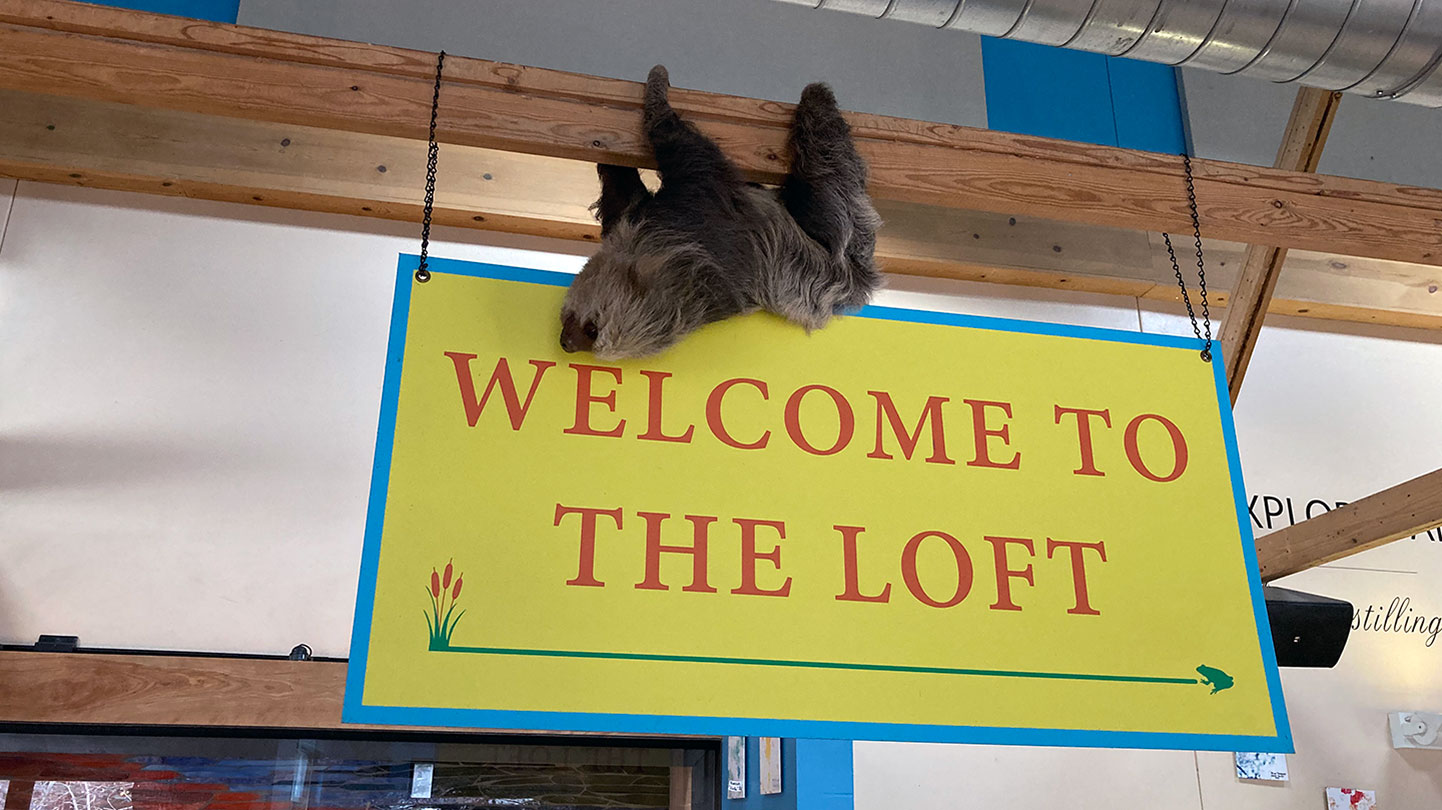
  • 7 p.m. Sloth Family Demo – Scutes Family Gallery
  • 8 p.m. Elephant Keeper Chat – Encounter Africa, Elephant Barn

Moonlight on the Mountain is made possible thanks to your Colorado Springs Toyota dealers and Blue Federal Credit Union!

BEVERAGES
Sample beer, wine, liquor and coffee from these regional companies!
– 3 Hundred Days Distilling
– Atomic Cowboy
– Blackhat Distillery
– Bristol Brewing
– BrewCHA
– Cheers Liquor Mart
– Dos Dos
– Drip Queen Coffee
– Kangaroo Coffee
– Lebowski’s Taproom
– Locoworks LLC
– Lost Friend Brewing
– Manitou Brewing Company
– Manitou Winery
– Occult Herbs & Tonics
– Phantom Canyon Brewery
– Raising Cane’s Chicken Fingers
– Red Leg Brewing Company
– Rock Bottom Brewing
– Rock N Roll Sushi
– The Paleta Bar
– VAQIT
– Voodoo Brewing Company
(Cash bar and complimentary fountain soda at Rocky Mountain Wild Barbeque Co.)

FOOD
Savor food from some of your local favorites!
– Colonel Mustard’s Sandwich Emporium
– Dickey’s BBQ Pit
– Dos Dos
– Edelweiss German Restaurant
– Heng Heng ThaiCo
– Hyatt Place at Garden of the Gods
– Light of Mine Bakery
– My Neighbor Felix
– Nothing Bundt Cake
– Occult Herbs & Tonics
– Phantom Canyon Brewery
– Rock N Roll Sushi
– Texas Roadhouse
– The Paleta Bar
– ViewHouse
– Voodoo Brewing Company
– The Homestead Collective

MUSIC
– All Through the Night
– Alyssa Mongiovi
– Cool Katz
– George Whitesell
– John Spengler & Frenemies
– Joshua Janitell
– Peter Wooten Band
– Rafiel & the Roomshakers
– Restless Hearts
– Ryan Flores

About Cheyenne Mountain Zoo

Cheyenne Mountain Zoological Society was founded in 1926. Today, Cheyenne Mountain Zoo, America’s mountain Zoo, offers comprehensive education programs, exciting conservation efforts and truly fantastic animal experiences. In 2025, Cheyenne Mountain Zoo was voted #2 Best Zoo in North America and CMZoo’s Rocky Mountain Wild was named #2 Best Zoo Exhibit in North America by USA TODAY’s 10Best Readers’ Choice Awards. It is Cheyenne Mountain Zoo’s goal to help guests fall in love with animals and nature, and take action to protect them. Since 2008, CMZoo’s Quarters for Conservation program has raised nearly $6 million dedicated to frontline conservation efforts around the world. Of the 237 zoos and aquariums accredited by the Association of Zoos and Aquariums (AZA), Cheyenne Mountain Zoo is one of just a few operating without tax support. Cheyenne Mountain Zoo depends on admissions, membership dues, special event attendance and donations for funding.

Mother’s Day is extra special in Primate World, at Cheyenne Mountain Zoo, this year. Asha, a 32-year-old critically endangered Western lowland gorilla, is pregnant. She is due between mid-May and the end of July.

Western Lowland gorilla Asha,

“It has been nearly 13 years since a gorilla was born here, so many visitors will get to experience this for the first time, along with our silverback, Goma, who will become a first-time dad with this little one,” Jon Wild, lead animal keeper in Primate World, says. “It’s not Asha’s first time, and she has been a great mom in the past.”

Asha is mom to two gorillas who have moved on to other troops now: 12-year-old male, Dembe, who lives at North Carolina Zoo, and 18-year-old female, Tumani, who lives at Audubon Zoo, in New Orleans.

Asha was born at CMZoo on Oct. 5, 1992. Thirty-four-year-old Goma moved to CMZoo, in 2016, on a breeding recommendation from the Western Lowland Gorilla Species Survival Plan, supported by Association of Zoos and Aquariums-accredited organizations, including CMZoo.

Before he came to CMZoo, Goma lived with a bachelor troop, so he had to learn how to lead a troop of females. As an experienced mom, Asha helped Goma learn how to breed.

“Since Goma moved here, nine years ago, the gorilla care team has been working to integrate him into the troop, and the troop has been helping him learn to lead as a silverback, with this pregnancy as a goal,” Wild says. “It’s incredibly exciting to see the gorillas achieve a healthy cohesive troop dynamic, and knowing there’s a baby on the way makes it even more meaningful to see this family grow.”

Asha’s previous experiences have helped Goma learn, and they have helped her care team provide prenatal check-ups throughout her pregnancy. Asha participates in cooperative care, like ultrasounds that have revealed a healthily growing baby. The Zoo first confirmed her pregnancy in December 2024 with a positive urine pregnancy test.

“Asha is super smart, and she approaches a training panel and presents her stomach so we can touch it with the ultrasound wand,” Wild says. “She’ll stand and get training rewards for participating, and her methods of presenting her stomach to us are adorable.”

Western Lowland gorilla Asha

During ultrasounds, Asha stands next to the mesh training panel and leans her stomach sideways against the mesh, with her arms outstretched above her. Keepers, from the other side of the protective barrier, slip an ultrasound wand through the mesh and press it against her abdomen. Animal keepers say the ultrasound gel is often off-putting for animals – even if they warm it up. Animals typically don’t like the texture, but Asha doesn’t mind. She participates in the ultrasound sessions for around 30 minutes, and is free to leave the sessions any time she pleases. She offers her belly to keepers in a more ‘theatrical’ way, too.

“She has an especially graceful stomach presentation, where she lifts one leg straight up against the mesh, like a ballerina, so we can position the wand on the underside of her round tummy,” Wild says. “Guests get a real kick out of seeing that, and it gives us great wand placement options to see the baby moving around.”

Gorilla gestation typically lasts eight-and-a-half months. As long as Asha and her baby continue to do well, guests can visit her in Primate World. When she gives birth, the Zoo will share updates.

Gorilla babies are typically on their mothers for the first year, taking time to crawl, explore and play periodically. In the first 15 days, the gorilla care team will be looking for the baby to hit milestones that indicate good development, including grasping onto its mother, nursing, holding its head up independently, making eye contact and following movement with its eyes.

In its first month, they’ll look for the baby to smile, laugh quietly, roll over from its stomach to its back, initiate soft play and start teething.

Western Lowland gorilla Asha, side portrait pregnant May 2025

Western lowland gorillas are critically endangered in the wild, and their numbers continue to decrease in the wild. Gorilla fans can help preserve wild gorilla habitats by recycling small electronic devices and cell phones at CMZoo.

In addition to disease and poaching, gorillas face habitat loss due to logging for agricultural use, human settlements and mining. Many of the West African lowland forests and swamps that these animals call home are also natural deposits of coltan, a mineral used in cell phones and other electronics. Due to the ever-increasing demand for cell phones across the world, the destruction of these gorillas’ habitats for mining purposes has unfortunately increased.

Coltan is recyclable, and by donating old cell phones, we can help supply valuable coltan for future phone production. Guests can bring electronics to CMZoo admissions or Primate World, where there’s a recycling collection bin near the gorillas’ indoor dens. CMZoo will send them to Eco-Cell, an organization that recycles the phones, as well as tablets, smart watches, Bluetooth devices, GPS devices, e-readers, digital cameras, handheld gaming systems and their accessories.

About Cheyenne Mountain Zoo

Cheyenne Mountain Zoological Society was founded in 1926. Today, Cheyenne Mountain Zoo, America’s mountain Zoo, offers comprehensive education programs, exciting conservation efforts and truly fantastic animal experiences. In 2025, Cheyenne Mountain Zoo was voted #2 Best Zoo in North America and CMZoo’s Rocky Mountain Wild was named #2 Best Zoo Exhibit in North America by USA TODAY 10Best Readers’ Choice Awards. It is Cheyenne Mountain Zoo’s goal to help guests fall in love with animals and nature, and take action to protect them. Since 2008, CMZoo’s Quarters for Conservation program has raised more than $5 million dedicated to frontline conservation efforts around the world. Of the 237 zoos and aquariums accredited by the Association of Zoos and Aquariums (AZA), Cheyenne Mountain Zoo is one of just a few operating without tax support. Cheyenne Mountain Zoo depends on admissions, membership dues, special event attendance and donations for funding.

Water’s Edge Africa at Cheyenne Mountain Zoo is home to three wide-eyed, stripe-tailed and utterly adorable ring-tailed lemur pups! The leading lady of Lemur Island, 12-year-old ring-tailed lemur matriarch, Allagash, has her hands full.

Ring-tailed lemur Allagash with new pups April, 2025

She’s caring for all three bundles of joy, born on Thurs., March 20, 2025, but she didn’t give birth to all three. Rogue, Allagash’s sister, also gave birth on March 20, and Allagash has accepted Rogue’s offspring as her own.

Lemur conspiracies (what a group of lemurs is called) are matriarchal, and Allagash has led the CMZoo troop since its early days. The dominant female’s offspring are typically second-in-command, followed in rank by any other females, with males at the bottom of the social ranks. When Allagash and Rogue had their babies on the same day, staff saw that complex hierarchy in action.

The day after the births, chasing ensued on Lemur Island, and Rogue was displaced. During a chase, Rogue was separated from her offspring. Staff attempted to reunite them, but Rogue did not accept the baby. Allagash immediately accepted the baby when staff presented it to her.

Since then, in efforts to reestablish peace and safety for the troop, staff have kept Rogue separated by mesh from the rest of the lemur group. Staff are monitoring all lemurs closely, and have seen calm interactions through mesh between the group and Rogue. They have seen Rogue grooming Allagash (a sign of calm respect and bonding between the sisters) and the babies. Rogue and the troop often choose to sleep next to each other on either sides of the mesh. Staff hope to begin taking steps to reunite the troop in the future.

All three babies are consistently nursing and clinging to Allagash. Both of those behaviors indicate the pups are healthy and bonding well, and they’re growing like wildflowers!

“The babies are quite active while climbing on Allagash, which makes her kind of like a lemur jungle gym for the little ones,” Michael Barnas, animal keeper in Water’s Edge, says. “While two are nursing, the other rides on her back, and they rotate positions to nurse.”

Watch a short video of Allagash and the three new pups

The babies are typically attached to Allagash while they’re this little. At four weeks old, they are getting more curious about the world around them. They have started venturing off Allagash for brief moments, onto tree branches and their dad, Hercules. They seem to really enjoy jumping up and down in the sunshine, too. One baby recently jumped from Allagash’s torso to her face.

“Allagash looked a little surprised at its landing spot and gently moved the baby from her nose to her neck, where it quickly settled in for another nap,” Michael says. “She’s a great mom, and the babies seem strong. In between rotating nursing opportunities, she rotates grooming them, which is important for their bonds and cleanliness.”

Leaning on their trusting relationship with Allagash, keepers have been able to monitor Mom and the pups by asking Allagash to come over to them for visual checks. The little ones are starting to recognize things, notably other lemurs and their keepers. The sexes of the babies have not been identified, and there are no plans to name the babies yet. CMZoo will share updates on its social media channels as the team learns more about them. As long as all continues to go well for the lemurs, guests can see them right away.

The seven lemurs are all visible on Lemur Island. They take turns exploring spaces on either side of the mesh ‘nursery’ on the inside portion of the island, and Rogue explores the outdoor section of Lemur Island on warm and sunny days.

According to the Lemur Conservation Foundation, lemurs are among the most threatened groups of mammals. The International Union for the Conservation of Nature (IUCN) estimates that over 95 percent of lemurs face extinction in the next 20 years. Ring-tailed lemurs are endangered, according to the IUCN. Hercules has breeding recommendations with Allagash and Rogue, as part of the ring-tailed lemur Species Survival Plan, managed cooperatively by members of Association of Zoos and Aquariums-accredited facilities, like CMZoo.

Lemur gestation lasts about 135 days. Newborn lemurs typically cling closely to the mother for about two weeks, then will start to ride on her back. After about a month, young lemurs will start exploring more independently and are typically fully weaned at about five or six months.

HE WAS THE SECOND-OLDEST MALE GIRAFFE IN HUMAN CARE IN THE COUNTRY WHEN HE PASSED – Cheyenne Mountain Zoo staff and giraffe fans are reflecting on the life of a legendary giraffe, Mahali [ma-HAUL-ee]. After an age-related decline in his health, Mahali’s care team made the difficult but compassionate decision to euthanize him on Thurs., April 10. Mahali was the second-oldest male reticulated giraffe in Association of Zoos and Aquariums facilities in the country at 22 years old.

Mahali, male reticulated giraffe looking at the camera

Mahali’s team remembers him as self-assured and particular, and they’re most grateful for what he taught them. Later in life, Mahali experienced foot and leg issues that affected his mobility. In 2017 and 2020, Mahali went under anesthesia to receive treatments, and those procedures helped him heal and return to a good quality of life. In 2023, his care team decided to avoid future risky anesthesia, and focus on helping Mahali live well as an old giraffe by making environmental accommodations for him.

“Mahali changed the way we think about caring for aging giraffe,” Rick Hester, CMZoo animal behaviors curator, says. “It’s not often you have the opportunity to work with a male giraffe this old, and once we understood each other, we could try all sorts of accommodations to help him age comfortably.”

Mahali advanced giraffe care by allowing his team to glue orthopedic shoes to his hooves, and by helping his team understand quality-of-life measurements that made sense for him as an old giraffe, as opposed to a young giraffe. A good quality of life for an aging giraffe includes having comfortable places to rest, participating in husbandry training, socializing with giraffe friends, eating well, being able to lie down and stand up, and traversing all terrains.

When keepers noticed Mahali was ‘saying no’ to training consistently around 2017, Amy Schilz, senior animal behaviorist at the International Center for the Care and Conservation of Giraffe at CMZoo, asked Rick to put his decade of animal training experience to the test with Mahali. After Mahali developed a communicative and trusting relationship with Rick, it was game on.

Even in a busy barn, Rick could call out, ‘Hey, Mahali,’ in a low monotone voice. Mahali’s eyes would sharpen focus, his ears would perk up, and he’d start scanning the crowd. Once he spotted Rick, he’d walk right over. Rick and Amy worked consistently together with Mahali’s training, and Mahali learned to trust that he was in control with these humans, who were going to notice his subtle communication cues.

Mahali, male reticulated giraffe outside

“Mahali had special needs, and what worked for the rest of the herd wasn’t working for him as he aged, so we worked to find the right nuance for Mahali,” Rick says. “When we were together, we were really focused on each other, and Mahali responded well for many years.”

Rick and Mahali stayed focused on each other for Mahali’s remaining years, perfecting the animal-human communication that all CMZoo animal trainers strive for, to provide excellent cooperative care for an animal. Thanks to his dedicated team, Mahali got many more years of quality health, and giraffe fans got many more years of Mahali.

“Mahali was a rascal in his younger years,” Amy says. Amy worked with Mahali for 12 years. “Some might remember we used to sell lettuce for giraffe feedings near the railing of the giraffe yard. We moved it because Mahali could reach over the railing, and he kept nudging staff to give him lettuce, like, ‘Hey, I see what you have there.’”

As Mahali grew up, his confidence was on full display. His team described him as ‘tactile.’ He was known for pulling on keepers’ shirts or pushing other giraffe out of his way to be the center of keepers’ attention. If Mahali didn’t want to move, he wasn’t moving. At the end of the day, when keepers welcomed giraffe to the barn from the yard, he would sometimes opt for a few more hours outside.

“He had a great last day,” Jason Bredahl, CMZoo curator of animal environments and former giraffe animal care manager, says. Jason was present for Mahali’s entire life. “He went out into the yard with an enthusiasm we hadn’t seen in a few days. He soaked up the sunshine and ate lettuce and tree branches while socializing with his herd and our guests. We’re proud of the ‘bonus years’ we’ve been able to give Mahali, and we’re grateful for all the guests he has inspired and animal welfare he has taught us. It’s always hard when we know it’s time to say goodbye, but it’s also our final act of compassion and stewardship for our animals.”

Mahali was the first giraffe calf born in the current giraffe barn, hours before Mother’s Day in May 2003. As the Zoo makes progress on its giraffe habitat expansion and a new 12,000 square-foot giraffe building, giraffe staff say they will take the lessons Mahali taught them to their new giraffe center, and share with keepers around the world through the International Center for the Care and Conservation of Giraffe’s workshops, information sharing and consultations. His legacy will live on in every giraffe that gets to live old well.

About Cheyenne Mountain Zoo

Cheyenne Mountain Zoological Society was founded in 1926. Today, Cheyenne Mountain Zoo, America’s mountain Zoo, offers comprehensive education programs, exciting conservation efforts and truly fantastic animal experiences. In 2025, Cheyenne Mountain Zoo was voted #2 Best Zoo in North America and CMZoo’s Rocky Mountain Wild was named #2 Best Zoo Exhibit in North America by USA TODAY 10Best Readers’ Choice Awards. It is Cheyenne Mountain Zoo’s goal to help guests fall in love with animals and nature, and take action to protect them. Since 2008, CMZoo’s Quarters for Conservation program has raised more than $5 million dedicated to frontline conservation efforts around the world. Of the 237 zoos and aquariums accredited by the Association of Zoos and Aquariums (AZA), Cheyenne Mountain Zoo is one of just a few operating without tax support. Cheyenne Mountain Zoo depends on admissions, membership dues, special event attendance and donations for funding.

THE FEMALE WESTERN LOWLAND GORILLA WAS THE THIRD OLDEST IN THE U.S. WHEN SHE PASSED – Cheyenne Mountain Zoo is remembering the long life of Roxie, a 48-year-old female Western lowland gorilla. Roxie was humanely euthanized, due to age-related decline, on Tues., April 8, surrounded by her animal care team.

Roxie was an icon, as the Zoo’s longest living resident. She was born at the Zoo in 1976, and she was a constant on the mountain for generations of staff and visitors ever since. As the fifth oldest Western lowland gorilla in Association of Zoos and Aquariums (AZA) human care in the U.S., and the third oldest female, she was well known throughout the gorilla care community.

Although Roxie did not have offspring, she contributed to the Western Lowland Gorilla Species Survival Plan and SAFE (Saving Animals From Extinction) Gorilla in many important ways – including playing a key role in the cohesiveness of the troop at CMZoo.

Roxie was the ‘cool aunt’ to 32-year-old female gorilla, Asha, often playing and wrestling with her when she was a baby. She also helped now-32-year-old Kwisha settle in at CMZoo, when Kwisha was not accepted by her mother at another zoo and moved to CMZoo at 8 months old.

Roxie adored Asha’s daughter, Tumani, and son, Dembe, who were born at CMZoo and now live at other AZA-accredited zoos. Many will remember Roxie wrestling and chasing with the young gorillas when they lived at CMZoo. Most recently, Roxie was an instrumental social support, leading Asha and the troop one step closer to future offspring by helping Goma, CMZoo silverback, learn his place in the troop.

Roxie’s confidence around Goma helped him learn how to lead female gorillas with respectful dominance. Partly because of Roxie’s calm and gentle leadership, the other female members of the group followed her lead and learned to embrace him.

“She was the first gorilla we ever saw have a tickle fight with Goma,” Ashton Asbury, Primate World keeper, says. “Goma and Roxie shared a special relationship. She gave him grace and reacted calmly to his natural displays, which helped the troop’s level of calmness during some of those introductions, but she also banded with other females to help him learn limits.”

Roxie was known for her playfulness and excitability. She would often ‘tap’ other gorillas on the rear end when they walked by her to initiate play. Even in her older years, she would beat her chest, clap and grumble (which is a ‘happy gorilla noise’) when she saw a keeper preparing to train with her.

“I think about how much her life and world changed over the years, and how much our profession has advanced in terms of animal welfare during Roxie’s life,” Debbie Fenton, senior keeper in Primate World, says. Debbie first worked with Roxie 20 years ago. “She taught us that you can teach an older gorilla new husbandry tactics, and make things better together. She became quite the expert at participating in her own care.”

Gorillas are extremely intelligent and social. After she passed, Roxie’s care team moved her back into the space with her troop, so they could say goodbye and understand her absence. The loss of Roxie will likely be felt by the CMZoo gorilla troop, Asha, Kwisha and Goma, as much as the humans who cared for her.

Animals are extremely resilient, and the troop’s dedicated care team will monitor behaviors closely and respond as needed. Roxie’s legacy will continue to serve Asha, Kwisha and Goma as they settle into a party of three.

Keepers ask supporters to honor Roxie and the troop and help save their wild counterparts by recycling small electronic devices at Cheyenne Mountain Zoo.

Western lowland gorillas are critically endangered, and their numbers continue to decrease in the wild. In addition to disease and poaching, they face habitat loss due to logging for agricultural use, human settlements and mining. Many of the West African lowland forests and swamps that these animals call home are also natural deposits of coltan, a mineral used in cell phones and other electronics. Due to the ever-increasing demand for cell phones across the world, the destruction of these gorillas’ habitats for mining purposes has unfortunately increased.

Coltan is recyclable, and by donating old cell phones, we can help supply valuable coltan for future phone production. Guests can bring electronics to CMZoo admissions or Primate World, where there’s a recycling collection bin near the gorillas’ indoor dens. CMZoo will send them to Eco-Cell, an organization that recycles the phones, as well as tablets, smart watches, Bluetooth devices, GPS devices, e-readers, digital cameras, handheld gaming systems and their accessories.

Cheyenne Mountain Zoo was ranked #2 Best Zoo in the country, in USA TODAY’s 10Best Readers’ Choice Awards 2025! Dedicated CMZoo supporters voted daily for a month, and earned the Zoo its highest ranking ever.

According to popular vote and the 10Best Readers’ Choice editors, who nominated 20 zoos for Best Zoo consideration, the top-ten zoos in the nation are:

1. Omaha’s Henry Doorly Zoo and Aquarium (Omaha, Nebraska)
2. Cheyenne Mountain Zoo (Colorado Springs, Colorado)
3. Columbus Zoo and Aquarium (Powell, Ohio)
4. Jacksonville Zoo and Gardens (Jacksonville, Florida)
5. Cincinnati Zoo & Botanical Garden (Cincinnati, Ohio)
6. Brevard Zoo (Melbourne, Florida)
7. North Carolina Zoo (Asheboro, North Carolina)
8. Audubon Zoo (New Orleans, Louisiana)
9. Riverbanks Zoo & Garden (Columbia, South Carolina)
10. Saint Louis Zoo (St. Louis, Missouri)

“We could not have done this without our supporters, who spent their own time promoting the Zoo through the voting period,” Bob Chastain, president & CEO of Cheyenne Mountain Zoo, says. “Honors like this are earned through the dedicated efforts of people who know, trust and believe in our organization. Thank you for your effort.”

Voters earned the Zoo a ‘Second Place Triple Crown’ this year. In addition to ranking #2 Best Zoo in the country, CMZoo earned the #2 spot for Best Zoo Membership and CMZoo’s home for animals native to the Rocky Mountain region, Rocky Mountain Wild, was voted #2 Best Zoo Exhibit.

With daily keeper talks and animal demonstrations, special events just for the grown-ups, small-group tours, camps, birthday parties, and more, Colorado Springs’ Zoo welcomes more than 800,000 people annually, encouraging them to tap into their inner child, explore the mountain and connect with nature.

Understanding its unique opportunity to connect people to native, rare and endangered animals in a natural mountainside setting, CMZoo aims to make every visit inspiring and memorable. The Zoo does that by designing animal homes that bring guests closer than ever to species from all over the world, and right here in Colorado.

In 2024, CMZoo celebrated a huge conservation milestone: surpassing $5 million raised for frontline conservation efforts, including over a million dollars for African elephant and black rhino conservation. Every visit to the Zoo is conservation in action, because every ticket purchased raises 75¢ for Quarters for Conservation (Q4C).

Looking ahead, CMZoo is embarking on historic upgrades to its world-famous giraffe herd’s home – including a 12,000 square-foot International Center for the Care and Conservation of Giraffe (the Giraffe Center) and a 25 percent expansion to their outdoor space. Soon, the community will have an opportunity to get behind something big. Learn more at cmzoo.org/giraffeproject.

About Cheyenne Mountain Zoo

Cheyenne Mountain Zoological Society was founded in 1926. Today, Cheyenne Mountain Zoo, America’s mountain Zoo, offers comprehensive education programs, exciting conservation efforts and truly fantastic animal experiences. In 2025, Cheyenne Mountain Zoo was voted #2 Best Zoo in North America and CMZoo’s Rocky Mountain Wild was named #2 Best Zoo Exhibit in North America by USA TODAY 10Best Readers’ Choice Awards. It is Cheyenne Mountain Zoo’s goal to help guests fall in love with animals and nature, and take action to protect them. Since 2008, CMZoo’s Quarters for Conservation program has raised more than $5 million dedicated to frontline conservation efforts around the world. Of the 237 zoos and aquariums accredited by the Association of Zoos and Aquariums (AZA), Cheyenne Mountain Zoo is one of just a few operating without tax support. Cheyenne Mountain Zoo depends on admissions, membership dues, special event attendance and donations for funding.

CMZOO IS NOMINATED FOR BEST ZOO IN THE U.S. BY USA TODAY’S 10BEST READERS’ CHOICE AWARDS. SUPPORTERS CAN VOTE DAILY AT www.cmzoo.org/vote Cheyenne Mountain Zoo had been holding strong at the #1 spot in USA TODAY’s 10Best Readers’ Choice Best Zoo in the U.S. contest, but slipped to #2 over the weekend. We’ve reached the point in the contest when the rankings are hidden, and the Zoo is asking the community to show its strength in the final week of voting, and to vote daily at cmzoo.org/vote through Mon., March 10.

10 reasons to vote for CMZoo in this top-ten contest:

1. America’s mountain Zoo is one of only a few nonprofit zoos accredited by the Association of Zoo and Aquariums (AZA) that does not receive any tax support. Zoo improvements, operations, animal care and field conservation are funded through admissions, memberships, programs, donations and grants.

2. CMZoo’s International Center for the Care and Conservation of Giraffe connects giraffe care teams across the globe to resources, best practices, trainings and emergency care, improving and even saving the lives of countless giraffe.

3. Nearly 800,000 people visit the Zoo each year. While visiting the Zoo, visitors to the Pikes Peak region also patronize Colorado Springs’ local lodging, restaurants and tourism attractions.

4. Understanding its unique opportunity to connect people to native, rare and endangered animals, CMZoo aims to make every visit inspiring. The Zoo does that by designing animal homes that bring guests closer than ever to species from all over the world, and right here in Colorado.

5. CMZoo is one of the few zoos in the country where guests can see an Alaska moose, Atka, who was orphaned in the wild in 2020 when CMZoo took him in.

6. CMZoo is home to Mochi, one of only three mountain tapirs in human care in the country.

7. Through keeper talks and animal demonstrations during daily visits, special events just for the grown-ups, small-group tours, camps, birthday parties, and more, Colorado Springs’ Zoo works to make everyone welcome to tap into their inner child and explore the mountain at their own pace.

8. In 2024, CMZoo celebrated raising $5 million for frontline conservation efforts, including over a million dollars for African elephant and black rhino conservation.

9. Its latest AZA accreditation was historic. In nearly 50 years of AZA accreditations, CMZoo was only the fourth organization to earn a completely ‘clean’ report, which means there wasn’t a single major or minor concern reported.

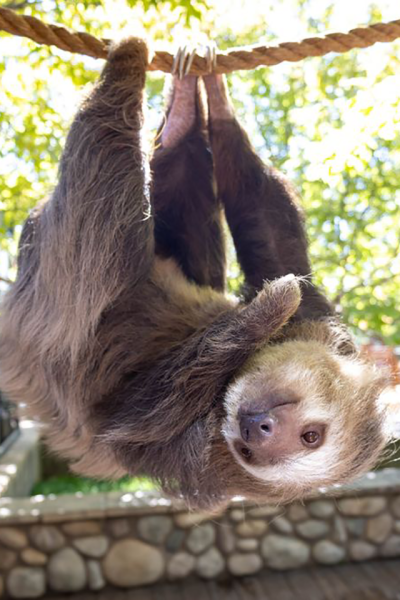
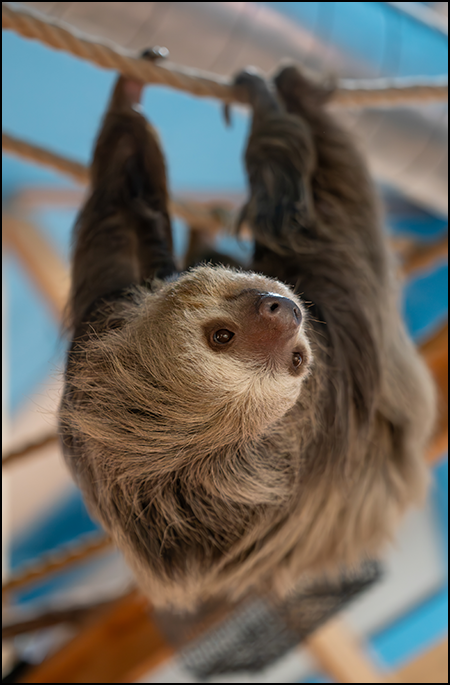
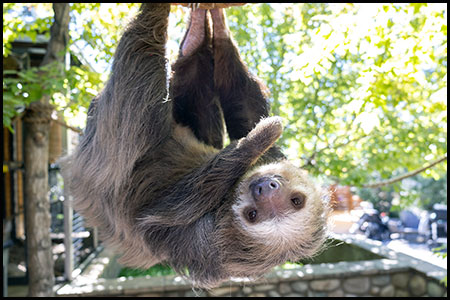
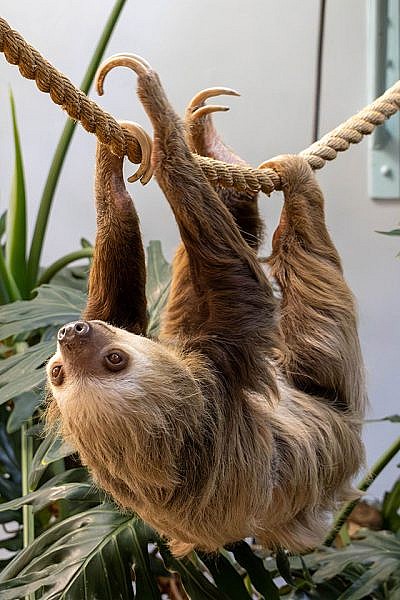
10. In the past year, the Zoo welcomed a red panda, snow leopard, baby sloth and more to the family, while continuing its important work breeding and releasing critically endangered native black-footed ferrets and Wyoming toads. 2024 was the Zoo’s most successful black-footed ferret breeding year ever.

Anyone who has made eye contact with a tiger, pet a wallaby, felt the roar of an African lion, hand-fed a giraffe or walked alongside an African penguin knows how special our hometown Zoo is. This friendly competition amongst zoos nationwide is an excellent way to show your support.

Supporters can sign up to receive daily text and email reminders to vote here:
• Get a daily text: www.cmzoo.org/votetext
• Get a daily email: www.cmzoo.org/voteemail

Voting continues now through 9:59 a.m. MT on Mon., March 10. Supporters can vote every day at cmzoo.org/vote.

About Cheyenne Mountain Zoo

Cheyenne Mountain Zoological Society was founded in 1926. Today, Cheyenne Mountain Zoo, America’s mountain Zoo, offers comprehensive education programs, exciting conservation efforts and truly fantastic animal experiences. In 2023, Cheyenne Mountain Zoo was voted #4 Best Zoo in North America and CMZoo’s Rocky Mountain Wild was named #2 Best Zoo Exhibit in North America by USA TODAY 10Best Readers’ Choice Awards. It is Cheyenne Mountain Zoo’s goal to help guests fall in love with animals and nature, and take action to protect them. Since 2008, CMZoo’s Quarters for Conservation program has raised $5 million dedicated to frontline conservation efforts around the world. Of the 238 zoos and aquariums accredited by the Association of Zoos and Aquariums (AZA), Cheyenne Mountain Zoo is one of just a few operating without tax support. Cheyenne Mountain Zoo depends on admissions, membership dues, special event attendance and donations for funding.