Construction for The Giraffe Project barn July 2025

CMZoo’s Giraffe Center Makes Impressive Progress and Nears Pivotal Deadline

The International Center for the Care and Conservation of Giraffe is getting taller, and this week, construction teams celebrated the arrival and placement of the first steel beams. Finalizing the steel structure of the Giraffe Center this fall is pivotal. To open on time in 2026, teams are working diligently to beat the deadline – before winter weather presents new challenges.

Visitors can already see some of the beams in place from the guest parking lot. From the top of the concrete walls, already in place, the beams will elevate the building to its highest point, about 35 feet above the top of the concrete walls.

The $40 million dollar project, funded through Zoo revenue and donations, will increase the herd’s outdoor space by 25% and expand their indoor space with a 12,000-square-foot giraffe barn.

It’s hard to believe, but the Zoo’s African Rift Valley habitat, home to the Zoo’s iconic 15-member giraffe herd was built more than 20 years ago. In that time, giraffe professionals have learned a lot about providing world-class care. Home to the International Center for the Care and Conservation of Giraffe (the Giraffe Center), established in 2022, CMZoo is recognized as a leader in the professional field of giraffe care. This exhibit will reflect that expertise. The Giraffe Center is a concentrated effort to connect giraffe experts and to expand educational programs to improve and enrich the lives of giraffe in human care throughout the world.

The new giraffe barn is all about choice for giraffe and guests. Giraffe will have opportunities to interact with guests in new and exciting ways, and engage in enriching activities in their habitat independent of keepers and guests. The goal is to fill each giraffe’s day with positively reinforcing activities, such as exploring new spaces, munching on leaves and twigs or taking advantage of some quiet time. With a large herd of giraffe that has various preferences and different personalities, the habitat will be filled with meaningful choices. For example, it will have 11 feeding zones, in comparison to the three zones available in their former exhibit.

The giraffe barn will have an ETFE roof that will flood the interior space with natural light. This innovative material is low maintenance and fire- and hail-resistant. This lightweight material is used in sports stadiums, airports, and some European zoos to create visually striking and functional spaces. The clear roof that will cover the giraffe barn and gift shop will be the largest of its kind covering an animal exhibit in North America. It will bring the outdoors inside on cooler days, keeping guests and giraffe comfortable in Colorado’s 300 days of sunshine.

The relocation of the Zoo’s main road is making room to expand the giraffe yard to the west. The expanded yard will have additional spaces for giraffe to discover, and includes a new feeding tower to encourage giraffe to navigate the hills of CMZoo for the first time. The larger, more geographically diverse yard will provide the herd with new space to explore, contributing to their overall well-being. The giraffe herd will have expanded outdoor space and their barn with natural floors and fresh air, provided by giraffe-size garage doors – and guests can feed them from each location.

For more information, and to be part of something BIG, visit cmzoo.org/giraffeproject.


Scenic Ride to the Shrine Jeep Tours, Summer 2025

Explore Will Rogers Shrine of the Sun with a Limited-Time Guided Jeep Tour

Through Sun., Aug. 31 only, CMZoo members and guests can see Will Rogers Shrine of the Sun in a new adventurous way — by guided tour in a 4×4! This summer, the Zoo partnered with El Pomar Foundation and Adventures Out West to improve experiences for visitors to the Zoo and to Will Rogers Shrine of the Sun. By reducing vehicle traffic in the Zoo, Zoo guests share the road with vehicles less frequently. Instead of driving themselves to the Shrine, Shrine guests can sit back and enjoy the views — all while learning about area wildlife, history, geology and more!

Once guests reach Will Rogers Shrine of the Sun, they meet a Shrine tour guide and explore the unique structure, learning about the incredible legacy of Spencer Penrose, who founded the Zoo in 1926, and catching stunning views of Colorado Springs, North Cheyenne Cañon and Garden of the Gods from Cheyenne Mountain.
  • Scenic Rides to the Shrine are available Tuesdays through Sundays from 9:45 a.m. to 2:45 p.m.
  • Price: $5 per seat
  • The full experience lasts about 1 hour, including the Jeep tour (up and down) and around 35 minutes to explore the Shrine.
  • Scenic Ride to the Shrine tickets are limited and may sell out. Advance reservations are not required, but they are available at cmzoo.org/ride.
  • The Shrine is closed on Mondays and most holidays.
  • Daytime tickets to the Zoo are required to gain entry to the Scenic Ride to the Shrine pick-up area, near Grizzly Grill and the play hills.
  • Reserve Scenic Ride to the Shrine tickets for the same day as your Zoo visit.
  • Book Scenic Ride to the Shrine tickets at cmzoo.org/ride.
  • Questions? Call our partners at Adventures Out West at 719-578-0935.

Guided Jeep tours are available through Sun., Aug. 31. After Labor Day, Zoo members and guests can drive themselves to the Shrine. Guests requiring wheelchair-accessible vehicle access to the Shrine are allowed to visit The Shrine at no cost by driving their own vehicles to the Shrine. Show your daytime Zoo admission at the drive-in gates to gain admission.


Rideshare tickets, entry guaranteed anytime, save money, no parking!

Skip the Parking Lot with Anytime Rideshare Tickets

Is your favorite time to visit the Zoo sold out? Try our new rideshare tickets — they're always available and can be used at any time for daytime admission.

For the past six summers, we have managed our parking lots by limiting capacity to the Zoo. Our goal is to reduce visitors' frustrations with limited on-site parking, and to avoid the hassle of off-site shuttles. Now, CMZoo members and guests can book rideshare Zoo admission tickets at cmzoo.org/rideshare. Arrive at your leisure and show your Uber, Lyft or taxi receipt with your rideshare tickets at admissions.

Rideshare tickets are free for members, and they're $5 less than peak-time nonmember tickets. They can be used any time during normal daytime admission (9 a.m. to 3:30 p.m. when the Zoo closes at 5 p.m. Early member entry is at 8 a.m. on Saturdays and Sundays through Labor Day).

Visit cmzoo.org/rideshare to reserve your rideshare tickets today! Questions? Email [email protected].

Back to The Waterhole

Written by Savannah Woods, African lion keeper

I have worked full-time at Cheyenne Mountain Zoo for about three years, and I currently work in the Rocky Mountain Wild, Asian Highlands and African lion areas of the Zoo. I always knew I wanted to be a Zookeeper when I grew up, and visiting our Zoo as a kid definitely reinforced that idea! One of the many species (and my favorite species) that I work with are the African lions. There’s one lion in particular that has made a lifelong impact on me: Abuto.

Abuto, male African lion portrait

Abuto means a lot to me. I remember visiting as a guest when he first arrived at CMZoo, in 2013, and watching him grow into the very handsome and dignified patriarch he is now. He was one of the first animals I trained with. He has taught me a lot. Abuto is patient and has a great communication system set up so he can easily communicate, “yes, I am ready to train.” or “no, I am not ready” by exhibiting different behaviors.

If he’s ready to train, he’s still, calm and focused. We look for subtle movements, like an ear or tail twitch, that tell us we need to adjust his environment to make him more comfortable – which we happily do! This communication system sets the trainer and him up for success, so you get early wins that build your confidence and a positive relationship with him.

His training is important because it allows us to care for him. Abuto, like many older felines, has kidney disease. We do voluntary blood draws and blood pressure readings on his tail once a month to monitor his kidney levels and other levels and other health factors.

Just like with all of his training, he is in control and gets to make choices. He always has the ability to leave or choose not to participate. For his blood draw behavior, we support him with two trainers. He goes into the training space (we never share space with the big cats for our safety and theirs), where one trainer positions themselves near his head for feeding and communication with Abuto. The other trainer positions at his rear and helps our veterinary team draw the blood from a large vein in his tail. He has a very thick tail. My finger and thumb just barely fit around it when I gently hold it still it for a blood draw! Even though he is 14 years old and dealing with kidney disease, we have been able to prevent it from progressing with diet and medications, and he seems to be doing great.

Abuto, male African lion portrait

I have worked with Abuto my whole time at CMZoo, and he really is full of personality. One of my favorite things he does is a ‘stalking’ behavior. When you ask him to come inside for his medication meatball, he will stand behind a wall and very slowly move his head into the doorframe until about half his face is visible. Then, he stands there and stares at you, acting invisible, until he sees that you have a meatball and then he will slowly stalk about five steps up to you, still acting invisible despite being in the middle of the room, and then he quickly runs up to lie down and get his meatball.

Something else that makes Abuto so easy to love is that most of the time while you’re training him, he gets a very serious and focused look on his face and makes very intense eye contact. He is completely ‘locked in’ when we’re training, and he is really smart.

This look is most prominent when we are doing CAB (calm attentive behavior), or his blood draw behavior, but if you ask him to show you his paws or stand up (both important behaviors to gauge his health) he lets his mouth hang open. He also likes to try to catch meatballs we drop down the feed chute with his front paws, and although he rarely catches them, I love that he tries every time.

He is very active in his own health care, and with the two female lions, Lomela and Elsa. He’s a particularly fun dad with Elsa, his daughter. They are very playful together, and often cuddle up for naps.

He loves engaging with enrichment items. He recently found a new favorite: a blue ball that he carries around the yard for a while before putting it in a safe spot and moving on with his day. Just like when he was much younger, he is still our ‘toy tester.’ When we get a new enrichment item, we give it to Abuto first because his technique for solving puzzle feeders is to use all his incredible strength and smack it around until he breaks it or food comes out. Our lions get what we call ‘stinky stuff’ multiple times a week, which encourages their important natural behavior of scent masking (rolling in the scent to mask their natural predator smell). These stinky smells range from nicer things like perfume, all the way to pungent elephant poop. For Abuto, the stinkier the better, with the exception of his favorite spice: cumin.

Abuto is a fantastic ambassador for his species, and just by being his wonderful self, he helps us educate people about lions. When he’s interacting with enrichment, we can talk about all the physical adaptions lions have to hunt and what they eat. If he’s rolling in stinky stuff we have provided for him, we can talk about scent masking, and when he’s sleeping, we talk about how lions sleep 18 to 20 hours per day. When people see him up close, we hope they feel connected to him, like we do.

Abuto, male African lion portrait

We also point out his nose and whisker pattern to talk about how our conservation partners at Ewaso Lions, in Kenya, use nose and whisker patterns to identify the wild lions that they watch over. Then, we get to tell people about the rest of the amazing work they do, like the Lions Kids Camp and Mama Simbas, which are both projects CMZoo Members have voted to support in the past, through the annual Members-Only Conservation Vote each spring!

We hope the next time they see a lion on television or social media, they’ll think about their experience with Abuto, and they will have a deeper connection with lions as a species.

World Lion Day is Sun., Aug. 10 (the best day ever!) and we are celebrating the African lions from 10 a.m. to 2 p.m. in African Rift Valley. Come visit Abuto, learn about lions in Africa, and get to know Abuto, Elsa, Lomela, and Aslan, at CMZoo!


World Lion Day at Cheyenne Mountain Zoo
On Sun., Aug. 10 from 10 a.m. to 2 p.m., guests are invited to participate in special lion-themed activities in African Rift Valley.

CMZoo docents will be running booths around the lion viewing areas, including:
– a photo booth
– African lion biofacts
– coloring pages and lion conservation information
– a matching game featuring the CMZoo pride!

Advance tickets are required. If your favorite time to visit CMZoo is sold out, take advantage of the Zoo’s rideshare tickets! Take an Uber, Lyft or taxi to the Zoo with your rideshare tickets, skip the parking and arrive any time. Rideshare tickets are always available at cmzoo.org/rideshare.

Back to The Waterhole

Cue the ‘awws,’ because in addition to welcoming an adorable baby gorilla, Primate World recently celebrated the arrival of two tiny-but-bold bearded sisters: 4-year-old Mattessich (pronounced mad-eh-sitch) and 3-year-old Gianna.

Emperor tamarin 2025

The sisters are difficult to tell apart, even for the keepers who work closely with them. Each tamarin has a microchip, so staff can keep accurate records, but the best way for guests to distinguish them is by their beards. Mattessich tends to have a less groomed beard and Gianna’s beard is typically more kempt.

The bearded emperor tamarin sisters came from another zoo accredited by the Association of Zoos and Aquariums in July. Cheyenne Mountain Zoo is supporting the Bearded Emperor Tamarin Species Survival Plan by providing homes for the two sisters until they have breeding recommendations.

Emperor tamarin 2025

“They are really outgoing and interested in guests,” Madi Ort, animal keeper in Primate World, says. “They’ll come right over to the glass with such curious energy, and they always want to see what people are holding in their hands.”

Mattessich and Gianna are curious, energetic, adorable and playful! They like to pounce around their exhibit, exploring the perching system and enrichment keepers provide for them. They’re also expert students, and they participate in important husbandry training with their care team.

“They’re eager to interact with keepers, so we’re quickly building trusting relationships with them through training sessions,” Madi says. “They know how to ‘station’ at a specific location, stand on a scale for regular weight checks and get into their crates. We’re currently fine-tuning body presentation training, where we ask them to stand up on their hind legs and reach up, so we can visually check their abdomens and limbs.”

Both sisters are bold, but Gianna seems to be the dominant tamarin of the two. That dynamic could change as the two continue to settle in. Madi says both sisters are confident and comfortable around each other, politely taking turns for training sessions with keepers and sharing meals side-by-side. Still, Gianna employs a little ‘extra.’ Sometimes, she will jump over Mattessich to access high-value reinforcers, like her favorite snacks – bananas, watermelon and tree branches.

“It’s hard to put into words how adorable they are,” Madi says. “They have these big ears, pink noses, wide eyes and precious little hands and feet. They weigh about one pound each, so they’re really small, but normal weight for full-grown emperor tamarins. Plus, they make really cute chirps, almost like birds, when they vocalize. Combined with their beautiful mustaches and markings, they’re just a joy to see.”

Guests can visit Mattessich and Gianna in Primate World right away.

Back to The Waterhole

Catch up with Missy, CMZoo’s eldest African elephant!

Missy, who recently turned 56 years old, shares space with her longtime companion, LouLou. Some of her favorite activities include wallowing in mud puddles, training with her keepers, munching on hay and tree branches, and exploring the trek space, vacation yard and main elephant yards.

Our elephant care and veterinary teams tailor individualized health and exercise programs for Missy (and all of our elephants), based on her unique needs and preferences. Missy excels in training and participates in cooperative blood draws and injections. This helps her care team closely monitor her health as she ages and administer medications — like pills or injections — to ease inflammation, arthritis and other age-related aches and pains. She especially enjoys a ‘direct deposit’ snack delivery during these training sessions — tossing her trunk over her head while keepers gently lob her favorites straight into her wide-open mouth.

Back to The Waterhole

CHILDREN’S HOSPITAL COLORADO AND CMZOO PARTNER TO CELEBRATE CHILDREN”S COLORADO SPECIAL GUEST AND SLOTH MOM, AYSAN – Although the Colorado Springs community has widely celebrated baby sloth Olive’s birthday and development since she was born in December 2024, it’s time to celebrate her mom, Aysan (pronounced ICE-on)! In partnership with Children’s Hospital Colorado, Cheyenne Mountain Zoo is throwing a birthday party for Aysan on Fri., July 25, 2025 – and you’re invited!

All the activities are free, and advance Zoo tickets are required for members and the general public. They’re available at cmzoo.org. If timed advance tickets are sold out, get rideshare tickets at cmzoo.org/rideshare. They’re always available and they’re $5 cheaper than peak-time tickets (they’re still free for Zoo members)!

Aysan’s 10th Birthday Party
Fri., July 25
10 a.m. to noon
Scutes Family Gallery (inside and outside!)
Advance daytime admission to the Zoo is required and limited.

10 a.m. to noon
-Learn about sloths from the amazing team of docents at booths near the sloths.
-Make a birthday card for Aysan!
-Visit the Children’s Colorado photo booth – complete with animal photo props!
-Participate in healthy activities, led by our partners at Children’s Colorado.

10:30 a.m.

Get to know the sloth family during a special sloth keeper talk.

11 a.m.
– Help sing happy birthday to Aysan, and watch a special guest from Children’s Colorado meet Aysan up-close.

“Aysan has been an incredible first-time mom to Olive for the past six months, and we’re excited to welcome everyone to the Zoo to celebrate her double-digit birthday,” Amber Callen-Ward, lead keeper in Scutes Family Gallery, says. “Olive is growing up big and strong, thanks to Aysan’s patient and nurturing mothering style. Aysan even lets Olive eat food right from her mouth.”

Aysan moved to CMZoo to support a breeding recommendation by the Hoffmann’s Two-Toed Sloth Species Survival Plan. She was introduced to Bosco, the Zoo’s long-time male sloth, in June 2023.

With Olive’s birth in December 2024, Bosco, a 33-year-old male Hoffmann’s two-toed sloth, became a second-time dad. His first daughter, 6-year-old Bean, lives in The Loft at Cheyenne Mountain Zoo.

Sloth babies will cling to their mothers for the first several months of their lives, separating only for a few moments to explore the branches around them. Despite getting closer and closer in size, sloth moms are impressive climbers, even with a baby on board.

The birthday party is open to all members and guests with advance tickets to the Zoo, which are available at cmzoo.org. Summer daytime admission sells out fast, so don’t wait long to make your timed ticket reservation! If timed advance tickets are sold out, get rideshare tickets at cmzoo.org/rideshare. They’re always available and they’re $5 cheaper than peak-time tickets (they’re still free for Zoo members)!

About Cheyenne Mountain Zoo

Cheyenne Mountain Zoological Society was founded in 1926. Today, Cheyenne Mountain Zoo, America’s mountain Zoo, offers comprehensive education programs, exciting conservation efforts and truly fantastic animal experiences. In 2024, Cheyenne Mountain Zoo was voted #5 Best Zoo in North America and CMZoo’s Rocky Mountain Wild was named #2 Best Zoo Exhibit in North America by USA TODAY’s 10Best Readers’ Choice Awards. It is Cheyenne Mountain Zoo’s goal to help guests fall in love with animals and nature, and take action to protect them. Since 2008, CMZoo’s Quarters for Conservation program has raised nearly $6 million dedicated to frontline conservation efforts around the world. Of the 237 zoos and aquariums accredited by the Association of Zoos and Aquariums (AZA), Cheyenne Mountain Zoo is one of just a few operating without tax support. Cheyenne Mountain Zoo depends on admissions, membership dues, special event attendance and donations for funding.

Gorilla Asha with baby July 2025

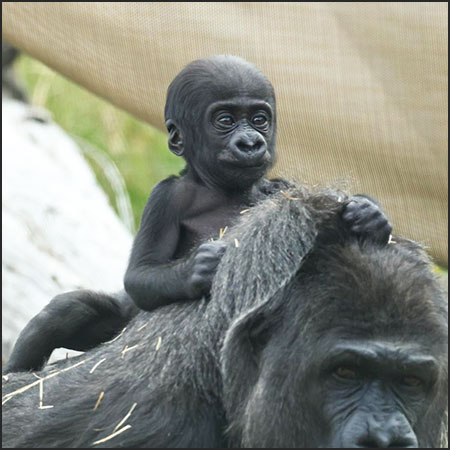
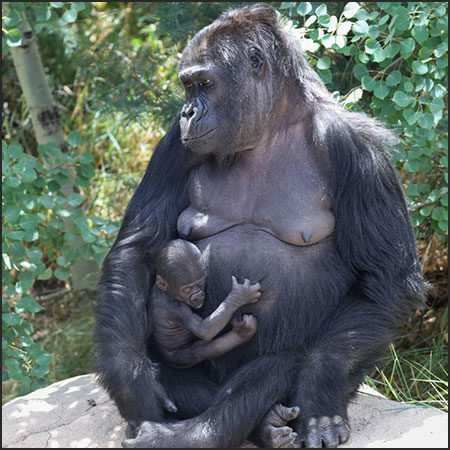
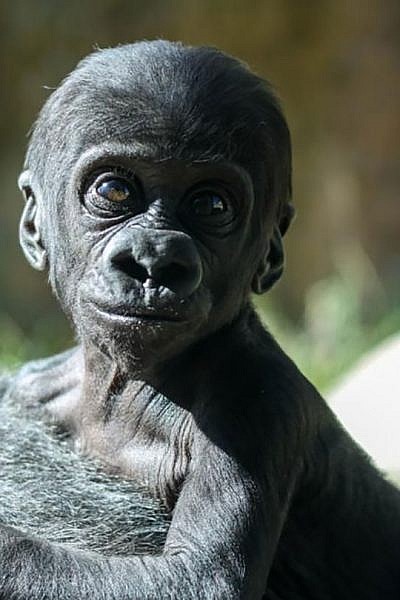
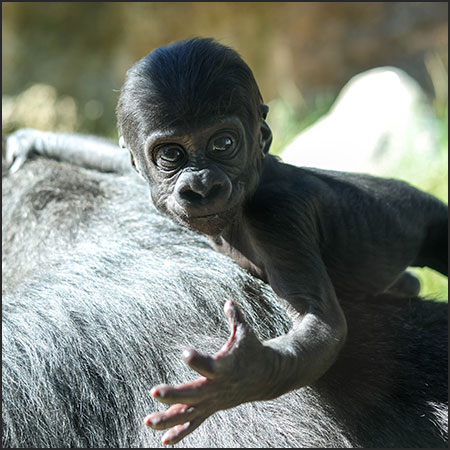
There were hushed moments of pure joy at Cheyenne Mountain Zoo this morning, as a small group of Primate World keepers and staff gathered to adore the Zoo’s newest addition: a brand-new gorilla baby bundle of joy born in the early hours of Mon., July 21, 2025.

Asha, a 32-year-old critically endangered Western lowland gorilla, and her new baby seem to be doing well. The baby has hit the milestones that indicate it is strong, including nursing and clinging to its mom.

“Asha is sitting and lying down with the baby and gently patting its back, which is really adorable,” Ashton Asbury, Primate World animal keeper, says. “The baby hangs onto Asha while she’s moving around and she supports it with one hand. They’re bonding really well, and we have seen her licking the baby’s head and grooming it.”

First-time dad, Goma, is showing interest in the baby, too.

“He seems to want to stick close to her and the baby,” Ashton says. “I heard him making happy gorilla grumbles at them, and Asha is doing a good job of showing him the baby while keeping a comfortable distance.”

Asha's Western Lowland gorilla baby in her arms, July 2025

It has been nearly 13 years since a gorilla was born at CMZoo. This little one is Asha’s third baby and the first for silverback dad, Goma. Asha was born at CMZoo on Oct. 5, 1992. Thirty-four-year-old Goma moved to CMZoo, in 2016, on a breeding recommendation from the Western Lowland Gorilla Species Survival Plan, supported by Association of Zoos and Aquariums-accredited organizations, including CMZoo.

Primate World is open to the public and will continue to be as long as Asha and the troop continue to do well. Asha’s care team will continue to monitor her and the baby – and the troop’s overall dynamic – and make adjustments as needed.

The sex and weight of the gorilla baby are not known yet. As long as keepers observe that baby and mom are doing well, they will continue to let Asha take the lead on providing care. The baby will likely cling to Asha for the first several weeks, but will start getting to know its dad, Goma, and ‘aunt’ Kwisha (who is unrelated genetically, but grew up with Asha and had a relationship with both of her offspring), as long as Asha is comfortable.

Asha's Western Lowland gorilla baby in her arms, July 2025

Asha is an experienced mother. She has welcomed two previous babies to the world during her time at CMZoo, both of whom now live in troops at other zoos. Although the goal is to let Asha take the lead on newborn care, her supportive team is ready to help if the need arises. As a first-time dad, Goma has been participating in training with his care team that aims to improve his comfort around the baby.

Following Cheyenne Mountain Zoo tradition, the baby will be named after he or she is at least 30 days old. CMZoo will provide updates on social media channels and in newsletter updates.

Western lowland gorillas are critically endangered in the wild, and their numbers continue to decline. Gorilla fans can help preserve wild gorilla habitats by recycling small electronic devices and cell phones at CMZoo.

In addition to disease and poaching, gorillas face habitat loss due to logging for agricultural use, human settlements and mining. Many of the West African lowland forests and swamps that these animals call home are also natural deposits of coltan, a mineral used in cell phones and other electronics. Due to the ever-increasing demand for cell phones across the world, the destruction of these gorillas’ habitats for mining purposes has unfortunately increased.

Coltan is recyclable, and by donating old cell phones, we can help supply valuable coltan for future phone production. Guests can bring electronics to CMZoo admissions or Primate World, where there’s a recycling collection bin near the gorillas’ indoor dens. CMZoo will send them to Eco-Cell, an organization that recycles the phones, as well as tablets, smart watches, Bluetooth devices, GPS devices, e-readers, digital cameras, handheld gaming systems and their accessories.

About Cheyenne Mountain Zoo

Cheyenne Mountain Zoological Society was founded in 1926. Today, Cheyenne Mountain Zoo, America’s mountain Zoo, offers comprehensive education programs, exciting conservation efforts and truly fantastic animal experiences. In 2020, Cheyenne Mountain Zoo was voted #4 Best Zoo in North America and CMZoo’s Rocky Mountain Wild was named #2 Best Zoo Exhibit in North America by USA TODAY 10Best Readers’ Choice Awards. It is Cheyenne Mountain Zoo’s goal to help guests fall in love with animals and nature, and take action to protect them. Of the 233 zoos and aquariums accredited by the Association of Zoos and Aquariums (AZA), Cheyenne Mountain Zoo is one of just a few operating without tax support. Cheyenne Mountain Zoo depends on admissions, membership dues, special event attendance and donations for funding.

ATTENDEES CAN ENJOY SIX LOAL MUSICIANS, UNLIMITED SMALL PLATES, ANIMALS AND INCREDIBLE MOUNTAINSIDE VIEWS – Cheyenne Mountain Zoo will kick off its three-date 21-and-up summer event series, Tails, Tunes & Tastes, from 6 to 9:30 p.m. on Thurs., July 31. Up on the mountain, the evenings are cool, and this event lineup is even cooler.

There’s nowhere else you can hand-feed a giraffe, have a drink, try a unique food menu, enjoy live music and watch the sunset from the mountainside. This truly unique event is perfect for a girls’ night out, summer work get-together, unique birthday celebration or date night.

The Zoo’s in-house catering team, Taste, provides the small plates. Executive Chef Craig Mears has created a mouthwatering menu for July. Small plates will include Korean beef bao bun, chickpea curry with spiced gremolata, Thai papaya salad, short rib croquette, plantain churros with spiced chocolate sauce, Bambolini doughnut, roasted oyster Rockefeller with cheesy pesto and sundried tomato, and more.

Tickets are $64.75 per person. (Tickets increase $10 on July 31.) Each ticket includes unlimited small plates, so attendees will enjoy delicious bites throughout the night, in addition to two included drinks plus access to cash bars, six local musical acts, and visits to most animal areas. Capacity is limited, so attendees can feel like they have the Zoo to themselves in some locations, while enjoying a livelier atmosphere near live music. Advance tickets are required and available now at cmzoo.org/tails. This event is for adults only, 21-and-up.

Attendees will have a wild night on the mountain for a worthy cause. 75¢ from every Tails, Tunes & Tastes ticket goes to CMZoo’s Quarters for Conservation program, which has raised nearly $6 million for frontline conservation efforts around the world since 2008.

What can you do at Tails, Tunes & Tastes?

• Observe scheduled animal demonstrations and keeper talks.
• Your ticket includes two drink tickets for use at any bar throughout the event. Cash bars are also available.
• Enjoy unlimited chef-created small plates from our custom Tails, Tunes & Tastes menu at our eateries.
• Enjoy local musicians performing throughout the Zoo.
• Visit your favorite animals.
• Watch the sunset from the mountainside.
• Feed the giraffe herd ($3 per lettuce bundle or $5 for two).
• Ride the Sky Ride (weather dependent; $4 for Zoo members, $5 for non-members).

July’s Tails, Tunes & Tastes musical lineup:
• Angel of Harp – Pop/Classical/Celtic
• Danny Trammel – Rock/Country
• Guys on Boxes – Americana/Roots/Bluegrass
• Hot Boots Duo – Country/Pop/Rock/Jazz
• Jason Lee Band – Rock
• Sabrina Rose Duvall – Pop/Rock/Folk

Summer 2025 Tails, Tunes & Tastes dates:

– 6 to 9:30 p.m. on Thurs., July 31

– 6 to 9:30 p.m. on Thurs., Aug. 28

– 6 to 9:30 p.m. on Thurs., Sept. 25

Tails, Tunes & Tastes is presented with support your Colorado Springs Toyota dealers. Thank you, event sponsor!

About Cheyenne Mountain Zoo

Cheyenne Mountain Zoological Society was founded in 1926. Today, Cheyenne Mountain Zoo, America’s mountain Zoo, offers comprehensive education programs, exciting conservation efforts and truly fantastic animal experiences. In 2025, Cheyenne Mountain Zoo was voted #2 Best Zoo in North America and CMZoo’s Rocky Mountain Wild was named #2 Best Zoo Exhibit in North America by USA TODAY’s 10Best Readers’ Choice Awards. It is Cheyenne Mountain Zoo’s goal to help guests fall in love with animals and nature, and take action to protect them. Since 2008, CMZoo’s Quarters for Conservation program has raised nearly $6 million dedicated to frontline conservation efforts around the world. Of the 237 zoos and aquariums accredited by the Association of Zoos and Aquariums (AZA), Cheyenne Mountain Zoo is one of just a few operating without tax support. Cheyenne Mountain Zoo depends on admissions, membership dues, special event attendance and donations for funding.

SHE WAS THE OLDEST ASIATIC BLACK BEAR IN HUMAN CARE IN THE COUNTRY WHEN SHE PASSED – On Sunday morning, Cheyenne Mountain Zoo said goodbye to Beezler, the oldest Asiatic black bear in human care in the U.S. She came to CMZoo in 1994 with her sister Honey, who passed away in 2022.

Part of planning her Last Best Day included giving Zoo Family a chance to say goodbye. Before Beezler was humanely euthanized, staff, docents and board members gathered to express their gratitude for her. Staff shared their appreciation for Beezler’s contributions, signed a card and shared in the joy of watching Beezler relaxing in the sunshine, enjoying cookies, whipped cream, muffins and meatballs.

“It may sound strange, but we work hard and have hours of discussions to make sure we’re giving each animal its Last Best Day,” Bob Chastain, president and CEO at CMZoo, says. “We wanted to make sure Beezler was healthy enough to pass peacefully. That meant a few things for us. She needed to eat something so we could keep her medicated, and we needed her to be comfortable and peaceful while the process took place. The team was able to achieve that peaceful passing for Beezler, and that’s comforting to all of us. She’ll be deeply missed.”

Beezler, with her bright brown eyes, big round ears and fluffy mane, has kept a quiet corner of the Zoo for many years. Up above the playhill and tapir-okapi yard, many Zoo visitors enjoyed the calm and peaceful setting, taking time for lunch at the picnic tables or quietly watching Beezler.

Beezler has been a celebrated member of the community for decades, and she was especially inspirational to many in their golden years.

“She was the oldest Asiatic black bear in human care in the country, but it seems like she only turned ‘old’ really recently,” Jessi Palmer, Rocky Mountain Wild animal keeper, says. “She was still so mentally sharp, observant and engaged. It’s like we knew she was old, but she didn’t believe it. I think many people who are aging related to her and were inspired by her. She just kept going.”

At 30 years old, Beezler surprised her care team by climbing up a structure, about 15 feet high.

“We were delivering an enrichment item via zip line into her outdoor area, and it got stuck just above the structure,” Kelsey Walker, Rocky Mountain Wild senior animal keeper, says. “Before we could shake it loose, Beezler was scaling a diagonal tree trunk and balancing on her back legs to reach it. That was typical Beezler – defying the odds and making you rethink everything you thought you knew.”

Erika Furnes, Rocky Mountain Wild senior animal keeper, worked with Beezler for nine years, and can attest to the adorable bear’s ability to keep you on your toes. Erika describes Beezler as sweet, confident and patient – with a side of respectable sass.

“During training sessions, sometimes Beezler was training us,” Erika says. “If you weren’t delivering her training rewards the right way – holding the tongs at just the right angle, getting the food portions perfect and pacing them as quickly as she wanted them – she would start taking the food from the tongs with a bit more quickness and intensity. She was still gentle, taking the food just with her lips, but she would definitely communicate if your performance wasn’t up to her standards.”

Over nearly a decade, Erika and Beezler worked closely together, learning new training techniques and making accommodations that allowed Beezler to cooperate in her own health care as she aged.

“She taught us a lot about making accommodations for aging animals, to support their natural behaviors as their bodies slow down,” Erika says. “In her later years, we turned one of her pools into a dirt pile, which she loved. We made adjustments to her enrichment, so she was still challenged and we could encourage her to stay flexible, but she could still feel accomplished. We never stopped offering her ‘young bear’ enrichment, like a log that smelled like one of our porcupines. We weren’t sure if she’d be interested, but she tore it up like a cub.”

Beezler got a smaller pool, along with mud wallows and 24/7 access to her climate controlled den to keep cool. Guests often shared sentiments of support, knowing the Zoo was offering Beezler opportunities to nap in the cool den, where they couldn’t see her.

“A lot of members came to the Zoo just to see Beezler,” Courtney Rogers, CMZoo registrar and former Rocky Mountain Wild keeper, says. “They would sometimes ask where she was, and when I explained that she might be choosing to take a nap in her den, they would say, ‘Good for her!’. People respected Beezler, and like us, wanted what was best for her.”

Asiatic black bears are not commonly found in zoos, making Beezler a rare and special resident. Despite her small stature, standing only about two-and-a-half feet tall at the shoulder, Beezler had a giant presence at CMZoo and around the world through the Zoo’s social media channels.

“A big part of our role is to help guests fall in love with animals, but she didn’t need us,” Erika says. “She did that on her own. People connected with her in so many ways, and she was the perfect ambassador for her species.”

About Cheyenne Mountain Zoo

Cheyenne Mountain Zoological Society was founded in 1926. Today, Cheyenne Mountain Zoo, America’s mountain Zoo, offers comprehensive education programs, exciting conservation efforts and truly fantastic animal experiences. In 2025, Cheyenne Mountain Zoo was voted #2 Best Zoo in North America and CMZoo’s Rocky Mountain Wild was named #2 Best Zoo Exhibit in North America by USA TODAY’s 10Best Readers’ Choice Awards. It is Cheyenne Mountain Zoo’s goal to help guests fall in love with animals and nature, and take action to protect them. Since 2008, CMZoo’s Quarters for Conservation program has raised nearly $6 million dedicated to frontline conservation efforts around the world. Of the 237 zoos and aquariums accredited by the Association of Zoos and Aquariums (AZA), Cheyenne Mountain Zoo is one of just a few operating without tax support. Cheyenne Mountain Zoo depends on admissions, membership dues, special event attendance and donations for funding.

IN PARTNERSHIP WITH CHILDREN’S HOSPITAL COLORADO – In the lush atrium in Scutes Family Gallery, a family of Hoffmann’s two-toed sloths explores the treetops to onlooking guests’ delight. Aysan (pronounced ICE-on), a first-time mom, expertly traverses ropes and branches with her adorable 6-month-old baby, Olive, in tow.

Aysan, eating lettuce portrait

Although the Colorado Springs community has widely celebrated Olive’s birthday and development since she was born in December 2024, it’s time to celebrate Aysan! In partnership with Children’s Hospital Colorado, Cheyenne Mountain Zoo is throwing a birthday party for Aysan on Fri., July 25, 2025 – and you’re invited!

Aysan’s 10th Birthday Party
Friday, July 25
10 a.m. to noon

Scutes Family Gallery (inside and outside!)
Advance daytime admission to the Zoo is required and limited.
(Schedule is subject to Aysan’s choice to participate or not.)

10 a.m. to noon
– Learn about sloths from the amazing team of docents and their biofacts at booths near the sloths.
– Make a birthday card for Aysan!
– the Children’s Colorado photo booth – complete with animal and sloth photo props!
– Participate in healthy activities, led by our partners at Children’s Colorado.

10:30 a.m.
– Get to know the sloth family and fun facts about sloths during a special Sloth Keeper Talk.

11 a.m.
– Help sing happy birthday to Aysan, and watch a special guest from Children’s Colorado meet Aysan up-close and give her birthday ‘cake.’

“Aysan has been an incredible first-time mom to Olive for the past six months, and we’re excited to welcome everyone to the Zoo to celebrate her double-digit birthday,” Amber Callen-Ward, lead keeper in Scutes Family Gallery, says. “Olive is growing up big and strong, thanks to Aysan’s patient and nurturing mothering style. Aysan even lets Olive eat food right from her mouth.”

Just like human babies meet milestones over their first year, Olive is hitting all the marks that show keepers she’s growing well, including eating solid foods, exploring branches next to Aysan and taking food from her keeper team – showing she’s building trust with them. Learn more about a human baby’s first-year milestones and health checks from our partners at Children’s Colorado here.

Aysan moved to CMZoo to support a breeding recommendation by the Hoffmann’s Two-Toed Sloth Species Survival Plan. She was introduced to Bosco, the Zoo’s long-time male sloth, in June 2023.

With Olive’s birth in December 2024, Bosco, a 33-year-old male Hoffmann’s two-toed sloth, became a second-time dad. His first daughter, 6-year-old Bean, lives in The Loft at Cheyenne Mountain Zoo.

Sloth babies will cling to their mothers for the first several months of their lives, separating only for a few moments to explore the branches around them. Despite getting closer and closer in size, sloth moms are impressive climbers, even with a baby on board.

The birthday party is open to all members and guests with advance tickets to the Zoo, which are available at cmzoo.org. Summer daytime admission sells out fast, so don’t wait long to make your timed ticket reservation!

Back to The Waterhole

Kinda (rhymes with Linda) arrived at Cheyenne Mountain Zoo on May 27, 2025. She’s easy to spot in the herd because she’s currently the smallest, and her coat is a darker brown than others. The 1-year-old female giraffe is impressing her keepers with her confidence and adaptability.

Kinda, eating browse up-close portrait

“She may be the smallest in the herd, but she is certainly holding her own,” Jake Beiermann, African Rift Valley giraffe keeper, says. “It’s normal for established members of a herd to be curious about new giraffe, and some are more tactile than others in their approach. Kinda is super laid back, and she just rolls with whatever is going on around her with confidence.”

Some giraffe have been seen nuzzling Kinda, like Panya, a 7-year-old female. Ohe (pronounced OH-hee) is a 6-year-old male giraffe with a reputation for paying extra attention to the littlest members of the herd. Jake has seen Ohe positioning himself between Kinda and other members of the herd who might not understand personal space. Others have followed Kinda around, like 3-year-old Kay, who seems keen to get Kinda to respond to little nudges.

While she settles in, Kinda spends evenings – when keepers check in overnight via surveillance cameras, but aren’t there to watch continuously – with Muziki (27), Laikipia (18), and Amani (25) – or some combination of that group. Giraffe are social animals, and are most comfortable in groups. In the future, Kinda and her ‘nanny giraffe’ will return to spending the nights with the full herd, but they are comfortable in a smaller group for now.

Kinda seems mostly focused on getting to know her surroundings, and she has been confidently exploring since the moment she stepped off the trailer and into the barn.

Kinda, in the herd of giraffe at Cheyenne Mountain Zoo

“It’s so much fun to see her in the yard, exploring every inch of the space,” Jake says. “She’s so little compared to the others. She’ll stand next to Tumbili, who is about two-and-a-half times her size, but she’s right up there at the fences, stretching up as high as she can to take lettuce from guests.”

[Pro tip: Kinda and the shorter giraffe can more easily reach guests’ lettuce offerings near the drawbridge by the giraffe barn.]

Kinda has been outgoing with giraffe, guests, members and her keeper team. Jake says Kinda is eager to get close to keepers in the barn, with a fence between them for safety.

“She’s already a great ambassador for her species because she’s so interested in people,” Jake says. “It’s exciting to see the future of our herd, and to see how our new Giraffe Center will support giraffe who grow up in that space.”

Kinda is one of three giraffe in the herd under the age of four, along with Wednesday (3) and Kay (3). The International Center for the Care and Conservation of Giraffe, opening in 2026, was designed with the latest innovations and knowledge to support giraffe wellbeing and care. Kinda and future calves will benefit from the giraffe care expertise gathered since the last CMZoo giraffe barn was built, 22 years ago. To learn more about the Giraffe Center, visit cmzoo.org/giraffeproject.

Kinda will continue to settle into the herd, exploring outdoors and indoors as she chooses and weather permits. Next time you’re at CMZoo, swing by the giraffe feeding, and visit the newest and littlest member of the tower!

Back to The Waterhole