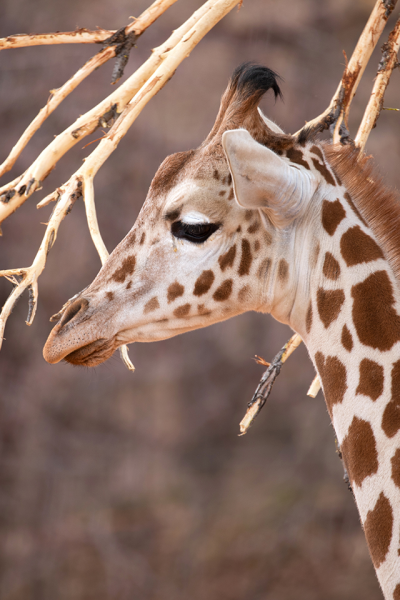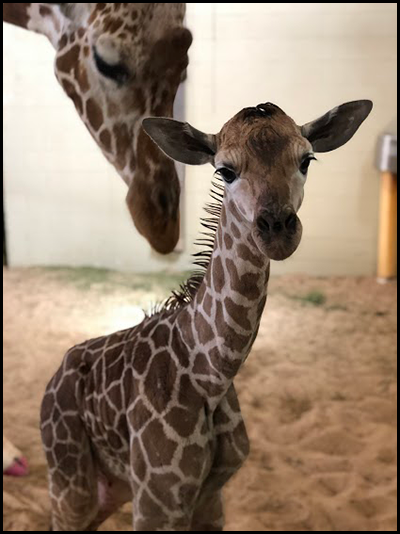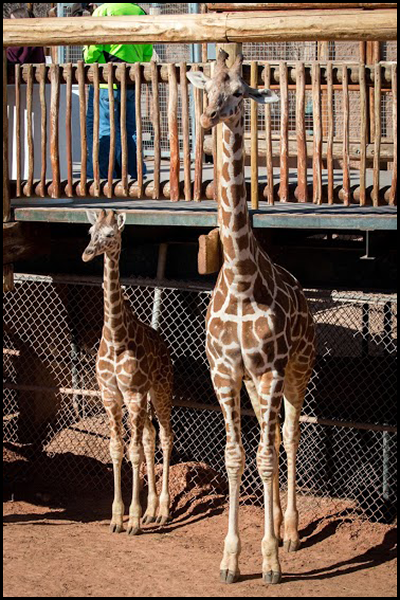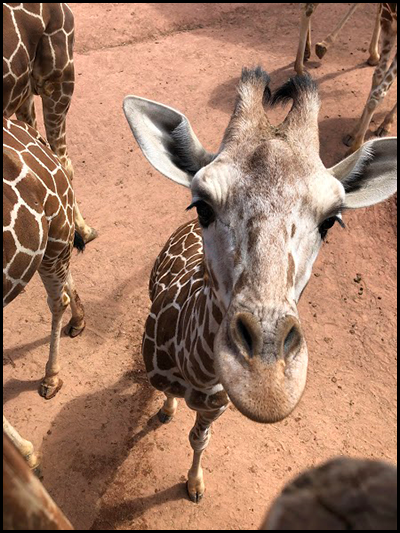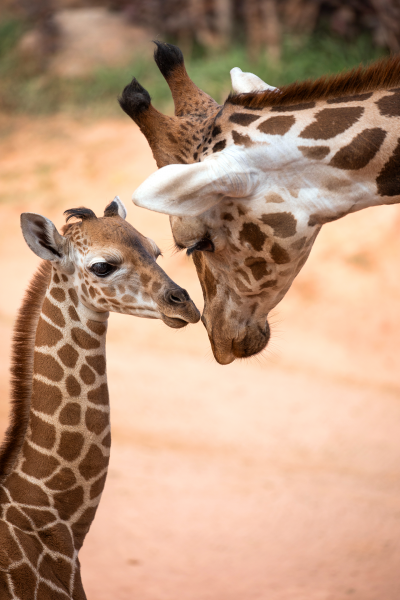
Our ‘firecracker,’ Viv, is turning two years old! Born two days after the Fourth of July, on July 6, 2019, Msitu and Khalid’s daughter gained her nickname pretty much immediately and has lived up to it ever since. Just six hours after she was born, Viv famously leap-frogged over Msitu’s back (while she was lying down), gaining an adorable reputation as independent, strong and super-charged.

Our partner, Children’s Hospital Colorado, is also celebrating the ‘terrific twos!’ They opened southern Colorado’s first pediatric-only hospital, right here in Colorado Springs, on July 17, 2019. To celebrate, Children’s Hospital Colorado is throwing our ever-vivacious Viv a birthday party – and you’re invited. Join us for a belated birthday on Sat., July 17, 2021, from 10 a.m. to noon in African Rift Valley for Viv’s second birthday party, complete with a ‘birthday cake’ for Viv, served at 11:15 a.m. The celebration will include opportunities for Viv’s fans to write her a birthday card, sing her happy birthday and visit our 17-member herd of giraffe.

“Knowing our Viv, she’ll continue to keep us on our toes as she has from day one,” said Amy Schilz, senior lead keeper in African Rift Valley, and Viv’s primary trainer. “This girl has become known for her adorable antics, like running after the cranes and guinea fowl in the yard, or stretching to reach a tree we didn’t intend to be giraffe food. Pretty much any time we get a radio call that one of the giraffe is up to something, we know it’s probably Viv!”

Viv seemed to surpass giraffe calf milestones with ease, but her independence meant that she seemed to prefer to be alone more than other giraffe, too. That has all changed since 2-year-old Ohe, 9-month-old BB and 3-year-old Panya joined the herd. Viv’s keepers say she seems to have come out of her shell with guests and the herd, since her three ‘besties’ have boosted her confidence.

“She has become really outgoing since becoming part of the four ‘littles’ group,” said Schilz. “You can usually find Viv and Ohe together. They get each other going in the yard, and will kick up the dirt and encourage each other to run around. We’ve also seen them ‘cuddling,’ when they take naps and lie down right next to each other in the barn mid-day. Because they seem to really like to be together, we have ‘baby training days,’ in the barn.”

To perform the important hoof care work that is vital the giraffe’s overall health, keepers train the giraffe to voluntarily participate. Through positive reinforcement training, the giraffe learn to approach a hoof care block, place one foot on the block and keep it there while their trainers trim their hooves. Viv has mastered the approach and placement, but has other plans about what happens next. Each time a giraffe completes a successful step in the training, they get a reward. Smart and sassy Viv is well aware.

“Sometimes she outsmarts me in those training sessions,” said Schilz. “She’s learned if she touches her hoof to the block and then takes it off and puts it on again, she gets more treats. So now I’m having to go back in my training and figure out a new way to move forward. It’s been a really great team bonding experience, because we all share what works for her unique needs. We tailor training to each giraffe, and she is certainly pushing us and challenging us to stay flexible. We’ll get there.”

Please join us in wishing Viv a very happy second birthday, and in thanking our friends at Children’s Hospital Colorado for their partnership!

Viv’s 2nd Birthday Party
In Partnership with Children’s Hospital Colorado
All are invited; Zoo admission is required
Saturday, July 17, 2021
African Rift Valley
10 a.m to noon
11:15 a.m. ‘birthday cake’ for Viv

Back to The Waterhole


Animals age in many different ways. Some get to their golden years sooner than you might think, while others take a surprisingly long time to achieve that status. The Loft and My Big Backyard, at Cheyenne Mountain Zoo, are home to a few furry (and scaly!) friends that have recently entered the golden years of life.

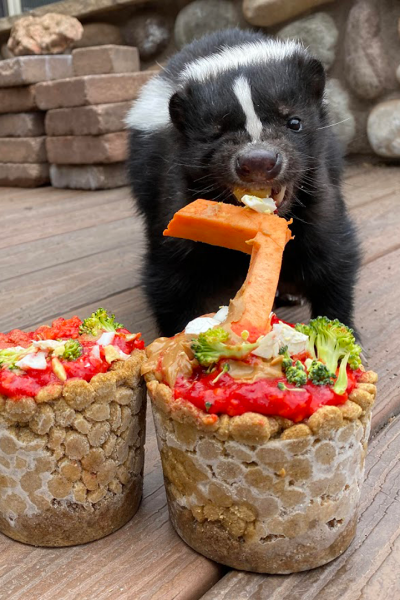
Striped skunk brothers, Fred and George, recently turned seven years old! That might not sound like an old age, but skunks in the wild live three-to-five years, on average. In human care, a 10-year-old skunk would be very old. Fred and George are still as mischievous as ever, but we have noticed that they have started to slow down a bit and prefer to spend more time napping than running around.

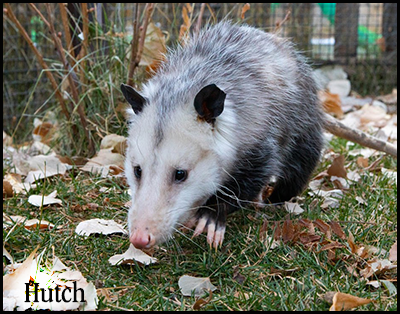
Virginia opossum, Hutch, is three years old, but in opossum terms he has reached the geriatric stage. Opossums tend to live three-to-four years in human care, and two-to-three years in the wild. You might see Hutch frequently sleeping while on exhibit, and this is because opossums are nocturnal and are more active at night. For now, Hutch is still participating in lots of training, encounters, and going for walkabouts around the Zoo. Though we know he’s starting to age, and keepers are monitoring him accordingly, he is still showing his care team he’s enriched and comfortable.

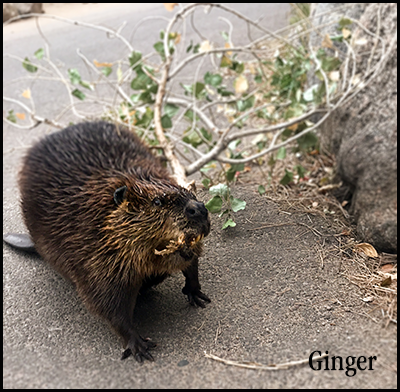
American beaver, Ginger, just celebrated her twelfth birthday!! This means she is a little over a year older than the median life expectancy for beavers. Ginger is also nocturnal and spends most of her day napping, but she usually wakes up in the late afternoon for a swim, some snacks and the occasional walkabout. She has some arthritis, which gives her a little wobble in her walk, but we monitor her closely and give her regular medicine and treatments to help her deal with her aches and pains.

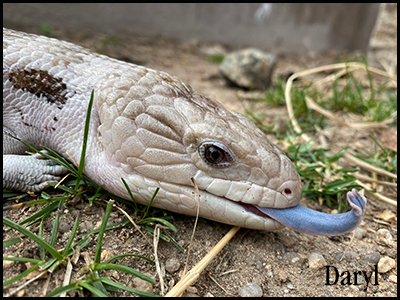
Blue-tongued skink, Daryl, is 22 years old. Many blue-tongued skinks live into their twenties in human care, so Daryl has officially entered his golden years. Skinks are easy to recognize with long, wide bodies, and short stubby legs. Due to this body type, they are not particularly fast animals, and Darryl is no exception to that. He often spends his days napping and waking up to grab a couple bites of food, before enjoying another nap. Daryl receives nutritional supplements in his diet, but hasn’t shown keepers he needs additional medications or treatments at this point.

All of these animals are part of CMZoo’s animal ambassador team, which means they go on ZOOMobile programs, do meet-and-greets, and participate in special hands-on encounters for many different education programs, at the Zoo and off-site.

As they get older, they may start to show signs that they are no longer interested in these programs. Their keepers track their behaviors and any physical signs of discomfort, and when that data reveals trends that need to be addressed, their roles may change. They also receive medications, like anti-inflammatory and pain medications, when needed, and treatments like laser therapy, which helps them have a good quality of life, despite aging joints and other age-related ailments. When their care team sees that they’re ready to retire from programming, their schedules focus more on enrichment and care at the Zoo.

You can visit our ‘golden gang’ in The Loft and My Big Backyard at Cheyenne Mountain Zoo, where they’ll continue training, receiving care, and getting all the naps, snacks and scratches from keepers they want.

Back to The Waterhole


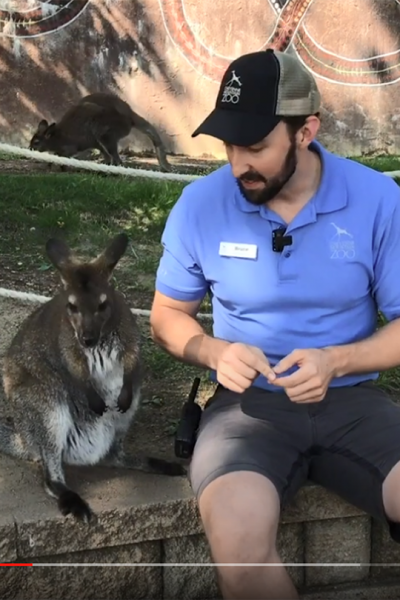
Earlier this month, we announced that Gidgee, our 2-year-old red-necked wallaby, has a joey in her pouch! Join us as we get another pouch peek at this little one, who is still hairless and is starting to try to open his eyes. Bruce, Australia Walkabout keeper, will tell you more about the joey, its family, and its upcoming milestones.

Back to The Waterhole


FOUR DATES, STARTING JUNE 24, OF LIVE LOCAL MUSIC AND YOUR FAVORITE ANIMALS – Ready for an adults-only night out with live music and your favorite CMZoo animals under the stars? Join us for Tails & Tunes on the last Thursday night of the month, June through September! The first summer music event of the season is Thursday, June 24 from 6 to 9:30 p.m.

Enjoy a magical evening on the mountain, exclusively reserved for those age 21 and up. Local musicians will set the mood throughout the Zoo until 9:30 p.m. Feed the giraffe and visit most of our animals while you unwind on a cool Colorado summer evening on the mountain with five local bands and musicians at different locations around the Zoo.

Small plates will be available for purchase and your entry includes two drink tickets. Cash bars are also available.
Tickets are available now at cmzoo.org/tails

6 to 9:30 p.m.
—Thursday, June 24, 2021
—Thursday, July 29, 2021
—Thursday, August 26, 2021
—Thursday, September 30, 2021

This is a popular event and some dates may sell out, so don’t wait to get your tickets. They’re available now at cmzoo.org/tails. Thanks to our Tails & Tunes partners, Cordera and Green for Life!

Activities:

  • Feed the giraffe herd
  • Ride the Sky Ride
  • Enjoy five local musicians playing live as you travel through the Zoo
  • Visit your favorite animals
  • Watch the sunset from the mountainside
  • Play cornhole and other party games

Event Details:
– Advance tickets are required. No tickets sales at the front gate.
– Ticket purchase includes 2 drink tickets for use at any bar. Must be used the evening of the event. No outside alcoholic beverages are allowed.
– Small plates are available for purchase at our eateries.
– Full Zoo experience from 6 to 9:30 p.m. Animal exhibits close at 9:30 p.m.
– Live musical entertainment throughout the Zoo until 9:30 p.m.
Mountaineer Sky Ride will have its last ride at 8 p.m. Be in line by 7:30 p.m. ($4 for Zoo members, $5 for non-members). Tickets available at Sky Ride cashier booth.
– General admission entrance from 6 p.m. to 7:30 p.m.
– Dress for a night of dancing, but remember you will be walking up and down the hills of the Zoo!
– Designate a driver, or better yet, don’t drive at all! Take a taxi or use a ride-sharing service like Lyft or Uber.

Food & Beverages:

Multiple Bar Locations (Drink ticket redemption and for purchase):

Grizzly Grill
– Signature Drink – Vodka Strawberry Lemonade
– Canned beer, wine and seltzers
– Blue Bayou ICEE
– Liquor available

Pizza with a View
– Beer and wine on tap
– Liquor available

Elson’s Place
– Signature Drink – Dole Whip Colada
– Canned beer, wine and seltzers

Rocky Mountain Barbeque Co.
– Signature Drink – Arnold Palmer
– Canned beer, wine and seltzers

Selections at our Food Outlets (for purchase):

Small Plates – $5 each

Grizzly Grill
– Double Wild Style Burger Slider – 2 Beef Patties, American Cheese, Grilled Onion, Wild Style Saus’ (Veggie Burger Available)
– Flam’n Hot Cheeto Coney Dog Slider – Nathan’s Hot Dog Slider, Chili, Cheese and Flam’n Hot Cheeto Crumble
– Dry Rub Super Crunch Wings Two Ways (Pick One)
— Jerk
— Garlic Herb (GF/DF)
– The Elvez Sundae – Vanilla Ice Cream, Jalapeno Bacon Praline, Banana, Tequila Caramel (GF)
– Truffle Herb or Garlic Parmesan Frites with Charred Lemon Garlic Aioli (GF/V)

Pizza with a View
– Roasted Lemon Truffle Brussels (GF/DF/V)
– Caprese – Fresh Mozzarella, Grape Tomato, Garlic Oil, Balsamic Gastric, Fresh Herbs (GF/V)
– Baguette Pizza Two Ways (Pick One)
— Garlic Oil, Béchamel, Mozzarella, Roasted Chicken, Bacon, Shaved Red Onion, Fresh Herbs
— Garlic Oil, Pesto, Mozzarella, Feta, Grana Padano, Ground Tomato (V)
– Cannoli’s

Elson’s Place
– Artisan Pretzel Bites with Beehive Beer Cheese (V)
– Pineapple Whip Soft Serve, Toasted Coconut, Lime (V/DF)

Rocky Mountain Barbecue Co.
– Hardwood Smoked BBQ Pork or Beef on a Cuban Roll with Pickles, Onions and Saus’ (DF)
– Pimento Cheese Crudité – RMBBQCO House Pimento Cheese, Celery, Carrot, Crusty Bread (V/DF)
– Elote – Roasted Corn on de Cob, Lime Aioli, Cotija Cheese, Tajin (V/GF)
– Blueberry Crumb Cake

About Cheyenne Mountain Zoo

Cheyenne Mountain Zoological Society was founded in 1926. Today, Cheyenne Mountain Zoo, America’s mountain Zoo, offers comprehensive education programs, exciting conservation efforts and truly fantastic animal experiences. In 2021, Cheyenne Mountain Zoo was voted #4 Best Zoo in North America and CMZoo’s Rocky Mountain Wild was named #3 Best Zoo Exhibit in North America by USA TODAY 10Best Readers’ Choice Awards. It is Cheyenne Mountain Zoo’s goal to help guests fall in love with animals and nature, and take action to protect them. Of the 233 zoos and aquariums accredited by the Association of Zoos and Aquariums (AZA), Cheyenne Mountain Zoo is one of very few operating without tax support. Cheyenne Mountain Zoo depends on admissions, membership dues, special event attendance and donations for funding.
BID ON AMAZING ITEMS, LIKE THE CHANCE TO NAME OUR BABY LEMUR OR RED RIVER HOGLET! – Cheyenne Mountain Zoo’s annual fundraising gala is going virtual! You can be part of this CMZoo tradition from the comfort of your couch through online trivia, the Zoo’s social media channels and a virtual auction!

“Our Zoo Ball auction has incredible items this year, including the opportunity to name our new baby lemur and our Red River hoglet,” said Kelley Parker, director of development at CMZoo. “We’re excited to be able to invite more people to participate in Zoo Ball this year by offering it online instead of exclusively in-person. No matter where you are on Thursday evening, you can join in the fun and test your Zoo knowledge as we share CMZoo trivia videos on Facebook and YouTube.”

The online auction opens Monday, June 14, 2021 at 8 a.m. MT at cmzoo.org/ZooBall.

Auction items include:

– Naming privileges for our 6-week-old ring-tailed lemur
– Naming privileges for our 7-week-old Red River hoglet
– Breakfast with the sloths
– Breakfast with the African penguins
– Breakfast on Safari Trail with the giraffe, zebra, vultures and more
– A photograph on canvas of BB, our 9-month-old giraffe calf, and her mother, Bailey, taken the day BB was born
– Painting session with a North American porcupine
– Paintings created by our elephants and orangutans
– Giraffe hoof print painting
– A decorative “Poo Planter” pottery piece created with CMZoo elephant dung
– A tour of Lemur Island
– Private cocktail party at the Zoo
– A Waterford Crystal sculpture, “Eagle’s Wing”
– And more! See photos and full descriptions here

Save the Dates

Online Virtual Auction
8 a.m. MT, Monday, June 14 – 8 p.m. MT, Sunday, June 20

Online Zoo Ball Trivia
6:30 p.m. MT Thursday, June 17
Cheyenne Mountain Zoo Facebook
Cheyenne Mountain Zoo YouTube
cmzoo.org/ZooBall

All proceeds from Zoo Ball will benefit the Zoo’s general operating budget, which funds all of our critical work in conservation, education and animal care. In addition to bidding on auction items, CMZoo supporters can purchase VIP tickets or a Premier Patron “table.” These enhanced tickets come with an exclusive Zoo Ball swag bag and invitations to an exclusive cocktail party at the Zoo on Friday, September 10, 2021.

About Cheyenne Mountain Zoo

Cheyenne Mountain Zoological Society was founded in 1926. Today, Cheyenne Mountain Zoo, America’s mountain Zoo, offers comprehensive education programs, exciting conservation efforts and truly fantastic animal experiences. In 2021, Cheyenne Mountain Zoo was voted #4 Best Zoo in North America and CMZoo’s Rocky Mountain Wild was named #3 Best Zoo Exhibit in North America by USA TODAY 10Best Readers’ Choice Awards. It is Cheyenne Mountain Zoo’s goal to help guests fall in love with animals and nature, and take action to protect them. Of the 233 zoos and aquariums accredited by the Association of Zoos and Aquariums (AZA), Cheyenne Mountain Zoo is one of very few operating without tax support. Cheyenne Mountain Zoo depends on admissions, membership dues, special event attendance and donations for funding.
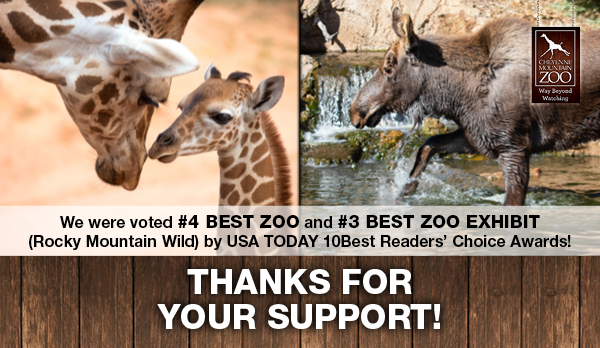
ROCKY MOUNTAIN WILD NAMED #3 BEST ZOO EXHIBIT IN NORTH AMERICA – For the fifth consecutive year, Cheyenne Mountain Zoo has been voted one of the top ten zoos in North America in the USA TODAY 10Best Readers’ Choice Awards. This time, America’s mountain Zoo was recognized in two categories: #4 Best Zoo in North America and #3 Best Zoo Exhibit in North America, for its Rocky Mountain Wild exhibit.

Cheyenne Mountain Zoo aims to set itself apart by making every guest experience inspiring. With its simply stated vision, “Every Kid. Every Time. Goosebumps.” at its cultural core, CMZoo creates environments and experiences that bring people closer to animals. Exhibits are designed to remove as many physical barriers as safely possible between guests and animals. Guests can experience this for themselves by hand feeding the giraffe herd – one of the largest herds in North America, with 17 giraffe – or by waddling alongside penguins or getting eye-to-eye with a hippo at CMZoo’s newest exhibit, Water’s Edge: Africa. CMZoo’s goal is to foster connections that inspire guests to take action to protect animals and their habitats in the wild.

Rocky Mountain Wild, an area of the Zoo that is home to animals from the Zoo’s native region, was named #3 Best Zoo Exhibit in North America. Rocky Mountain Wild opened in the summer of 2008, appropriately hugging the highest elevations of CMZoo’s developed mountainside acreage. The area is home to a pack of endangered Mexican wolves, four Canada lynx, an Alaska moose, two North American porcupines, a bald eagle, two grizzly bears, three mountain lions, two river otters, free-roaming turkeys and a flock of wood ducks. Rocky Mountain Wild is known for its expansive natural exhibits, exquisite views, and enthusiastic and passionate team of animal keepers.

This is the third time Rocky Mountain Wild has been nominated in the Best Zoo Exhibit category, and the fifth time Cheyenne Mountain Zoo has been nominated in the Best Zoo category. A panel of travel experts, recruited by USA TODAY editors, nominated 20 North American Association of Zoos and Aquariums-accredited zoos and exhibits, and supporters had four weeks to cast their votes once per day for the nominees of their choice.

The 2021 USA TODAY 10Best Readers’ Choice Top Ten Best Zoos in North America, in ranking order, are:

  1. Cincinnati Zoo & Botanical Garden – Cincinnati
  2. Fort Worth Zoo – Fort Worth
  3. Omaha’s Henry Doorly Zoo and Aquarium – Omaha, Neb.
  4. Cheyenne Mountain Zoo – Colorado Springs
  5. Nashville Zoo – Nashville Zoo
  6. Brevard Zoo – Melbourne, Fla.
  7. Audubon Zoo – New Orleans
  8. Saint Louis Zoo – Saint Louis
  9. Dallas Zoo – Dallas
  10. Denver Zoo – Denver

About Cheyenne Mountain Zoo

Cheyenne Mountain Zoological Society was founded in 1926. Today, Cheyenne Mountain Zoo, America’s mountain Zoo, offers comprehensive education programs, exciting conservation efforts and truly fantastic animal experiences. In 2021, Cheyenne Mountain Zoo was voted #4 Best Zoo in North America and CMZoo’s Rocky Mountain Wild was named #3 Best Zoo Exhibit in North America by USA TODAY 10Best Readers’ Choice Awards. It is Cheyenne Mountain Zoo’s goal to help guests fall in love with animals and nature, and take action to protect them. Of the 233 zoos and aquariums accredited by the Association of Zoos and Aquariums (AZA), Cheyenne Mountain Zoo is one of very few operating without tax support. Cheyenne Mountain Zoo depends on admissions, membership dues, special event attendance and donations for funding.
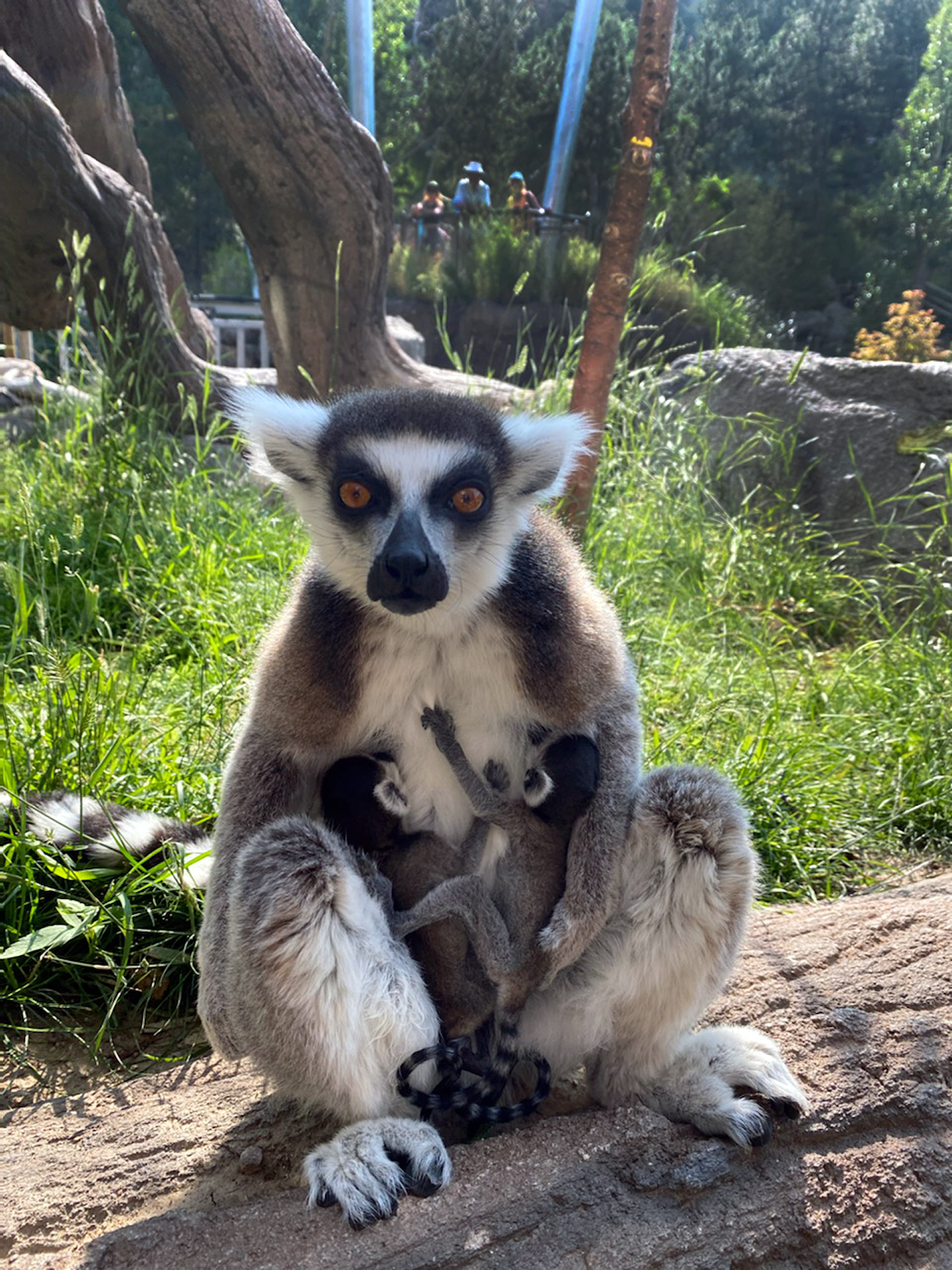
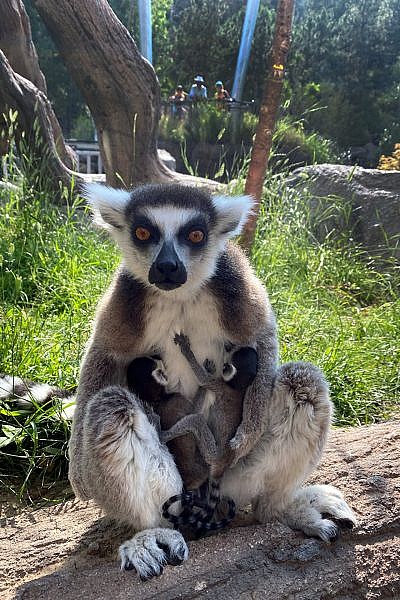
Get up-close with the Zoo’s newest addition, a one-month-old ring-tailed lemur, born Monday, April 26, to first-time mom, Rogue.

The first baby born in our new exhibit, Water’s Edge: Africa, is surpassing milestones and stealing our hearts with ease. Join Philip, lead keeper in Water’s Edge, on lemur island to learn how Rogue is embracing motherhood, how the little one is showing signs of strength, and how Hercules and Allagash – the baby’s father and aunt – are warming up to their tiny new relative.

Because baby and mom are bonding so well, we haven’t thoroughly checked the baby, so we haven’t confirmed its sex. We don’t have naming plans to share, yet, but we’ll keep you posted.

You can visit the baby, Rogue, Allagash and Hercules in Water’s Edge: Africa. Baby is still clinging to Rogue most of the time, so it can be hard to see in-person. Philip says one of the best times to spot the baby is when the lemurs are sunning on the trees outside each morning. The baby is often snuggled on Rogue’s chest while she stretches out in the warm sunshine.

Back to The Waterhole


Wolf Woods is arguably the wildest place at Cheyenne Mountain Zoo. Seven Mexican wolves, led by 13-year-old matriarch, Luna, roam the expansive yard which was designed to preserve our wolves’ wild instincts as much as possible. As part of the Association of Zoos and Aquariums (AZA) Mexican Wolf Species Survival Plan (SSP), they or their offspring could one day be released into the wild to support those populations.

Their exhibit, full of trees, boulders, tall grasses and mountainside terrain, mimics the wolves’ natural habitat, but can sometimes make the elusive species harder to spot.

Usually, it’s brave and curious Luna who leads her pack into view. With her snout to the ground, she trots toward the front of the exhibit with a confidence most wolves don’t possess. The white fur on her face reveals her advancing age, but her intense approach reminds us that she’s a mother on a mission.

“Most guests know we try to keep this part of the Zoo a little quieter, out of respect for the wolves and their species’ survival,” said Kristen Cox, senior animal keeper in Rocky Mountain Wild. “But sometimes we’ll hear excited gasps coming from the viewing area, and we know our Luna just earned another admirer for her species.”

Chances are, if you have seen a wolf at CMZoo in the last five years, it was Luna. She’s by far the bravest wolf in the pack, which gives our guests the opportunity to observe this majestic species and form connections we hope will inspire them to advocate for wild Mexican wolves.

In addition to helping people fall in love with and learn about wolves by making those connections, Luna and her mate, Navarro, have contributed six healthy pups to the Mexican Wolf SSP. Phoenix, Shadow, Bluestem, Hope and Lupa were born in 2018 and Uno was born in 2019. For many years, the Zoo housed a bachelor pack of wolves. Later, the SSP placed various unsuccessful breeding pairs here. Until Luna and Navarro’s first litter, in 2018, it had been 20 years since wolf pups were born at CMZoo.

“She immediately took care of her pups, and knew just what to do,” said Rebecca Zwicker, Rocky Mountain Wild animal care manager. “All of a sudden, she had all of these babies and she was totally comfortable every step of the way.”

Even with five yearling pups and a brand-new pup, when Uno was born in 2019, utterly capable Luna adapted her methods to meet her growing family’s needs.

“To be honest, she does everything,” said Cox. “She’s the mom! When the pups were young, she would bring their meat to them. When Uno was born, she taught her daughters, Hope, Bluestem, and Shadow, how to be nurturing mothers.”

The girls were very curious about Uno. When Uno was a few weeks old, she let them into the den and they would submissively observe her. They also went into the den when Luna went into labor with Uno, and she allowed them to see what was happening. Those experiences will help prepare the daughters as they mature and possibly become mothers one day.

“The ‘alpha,’ ‘beta,’ and ‘omega’ theory on roles in a wolf pack is an outdated perception of wolves’ family dynamics,” said Cox. “They’re more like a family unit, and Luna’s role is caretaker, hunter, protector and leader. As she ages, we’re seeing that dynamic shift a bit.”

Luna has surpassed the median life expectancy of Mexican wolves by two years. Now that she’s older and her offspring are maturing, she’s taking a step back.

“At this point, Luna is still holding court, but she does get tested a bit more often,” said Zwicker. “That’s natural for our wolf pack. Luna is clearly holding her own. She’s still the mama, but she’s letting them grow up, too.”

The pups still look to Luna for leadership. They will even call her to inspect something that makes them unsure. Recently, one of the older pups was seen growling at something above the wolf exhibit. After some tail wagging, barking and stomping at the unidentified object, the pup ran to get Luna, who positioned herself in front of the pack to confront the perceived threat (which was never identified).


“Luna has taught me to be brave,” said Cox. “She’s always been this mature, well-rounded wolf from the moment she arrived. Because of Luna, I really admire the concept of motherhood. Family is everything to her.”

Recently, Luna’s keepers noticed some stiffness in her hind legs during her daily patrols around the yard. Because the wolves are intentionally kept as wild as possible, they don’t participate in husbandry training that would allow them to participate in their health care – like most animals at CMZoo.

“Because she’s the dominant wolf in the pack and is always the first to eat, we could provide medication in a separate meatball for her, to help her deal with that stiffness if it progresses,” said Zwicker. “We’re keeping a close eye on her and for now, she’s looking good, but we’re realistic about her age.”

Her keepers say she’s running around the yard like a 5-year-old on most days. But, they know the day Luna’s story becomes a memory continues to grow closer.

“We’ll make the most compassionate decision for Luna when that time comes,” said Cox. “Until then, I’m sure she’s going to continue to inspire me – and many others – to do more for her species. She raised healthy pups that could help save their endangered species. But, maybe more importantly, she’s helped people fall in love with wolves. She’s the most outgoing wolf I’ve ever met. Her contributions as an ambassador for her wild counterparts is huge.”

Only about 186 Mexican wolves live in the wild, and only about 300 live in assurance populations in human care. The number of wild individuals has increased, thanks in part to contributions made by SSP partners, by 14 percent in 2020 – its fifth consecutive year of wild population growth.

Until the 1900s, the Mexican wolf thrived throughout central Mexico, Arizona, New Mexico and western Texas. But by the 1950s, the species was virtually eradicated, with the last known wild wolf in the U.S. shot in 1970. When the Endangered Species Act went into effect in 1973, it led to the Mexican wolf being declared an endangered subspecies.

The population of Mexican wolves in human care at AZA-accredited zoos is an important part of the plan to repopulate the species in the wild. The Mexican Wolf Recovery Program is run by U.S. Fish & Wildlife Service, with cooperation from the AZA Mexican Wolf Species Survival Plan. Cheyenne Mountain Zoo has been a participant in the program since 1994.

Back to The Waterhole


Spring has sprung, which means our koi pond in My Big Backyard has thawed and our three koi fish are waking up. Soon, we will install their enrichment tank, which “floats” above their pond. They swim up into the tank to see you at eye level and show off their beautiful scales!

Did you know that our koi actually stay in their pond all year round? In the winter, the top several inches of their pond freezes, but the deeper water does not. During this time, the koi go into a sort of hibernation, where they don’t eat or move much. When the water thaws and the temperatures start to rise, they start to perk up and look for food. We give them a very bland and minimal diet at first (usually a few plain cheerios) to help restart their digestive systems. After a few weeks, they are ready for their higher-calorie and protein diet!

Our three koi all have names and are easy to tell apart. Princess Peach is the largest and is mostly white with peach and black spots. It is difficult to identify the sex of the koi, so it’s possible that Princess Peach is actually a prince. Luigi is second-largest and is all silver in color. Mario is the smallest and is mostly orange with black spots. Though we do not have exact ages of the koi, we do know that Mario is at least 20 years old and the other two have been at the Zoo for 11 years.

Like nearly every animal in the Zoo, our koi participate in various training opportunities. My Big Backyard keepers have worked with them to target train, which means they know to swim to a “target stick” (a wooden pole with a ball on the end of it) for positive reinforcement. Princess Peach seems to be the most curious of the group and tends to participate more frequently than the other two. Luigi is the most cautious and prefers to observe training from afar. Our keepers do not touch the koi, as they have a protective layer of mucus all over their scales to help keep them healthy. So when you come to visit the koi, be sure to look, but please don’t touch.

The koi, like all of our other animals, also enjoy enrichment provided by their keepers. Each spring, a large fish tank is placed in their pond upside down. We then suck the air out the tank so that it fills with water. The koi get more swimming space and the opportunity to swim above their normal pond level, and it allows guests to really see their size, color, and very funny fish faces! Be sure to stop by My Big Backyard on your next Zoo visit to see Princess Peach, Luigi and Mario.

Back to The Waterhole


Learn all about Ohe, Viv, BB and Panya, our four giraffe under four years old!

Their primary trainers detail their personalities, roles in the herd, training progress, and relationships as the herd’s youngsters. You’ll also get to see behind-the-scenes training footage of each giraffe and its trainer, as well as a mini-zoomie session in the main yard.

Back to The Waterhole