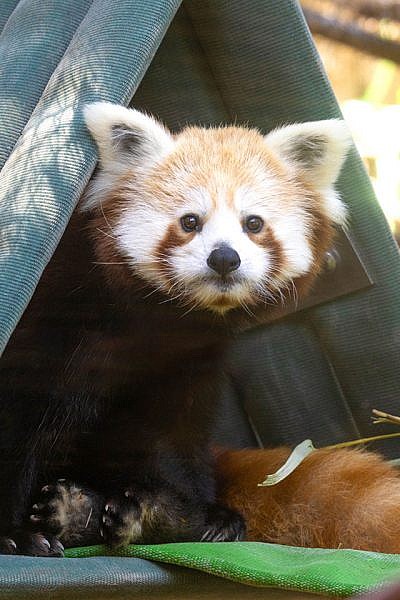
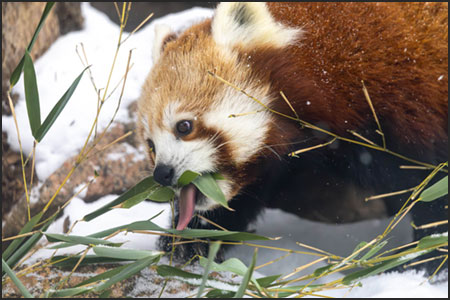
Cora, red panda at Cheyenne Mountain Zoo

Written by Jessi DiCola, Asian Highlands animal keeper

Cora is Cheyenne Mountain Zoo’s first red panda in over 20 years! Cora joined the CMZoo family in July 2024, and as part of her care team, I have loved getting to know more about her and her wild counterparts. Cora’s name is a nod to wildlife corridors. They can be found all over the world, and even here in Colorado. Wildlife corridors are protected bridges or strips of land that help animals travel safely. If their habitat has been interrupted or disconnected by human developments, wildlife corridors help reconnect them for migration, breeding or searching for food or shelter.

Cora is a smart and playful girl. Her favorite treats include apples and grapes, and she participates in training sessions for those yummy rewards! Most of her behaviors are husbandry behaviors, meaning she helps us help her stay healthy through training.
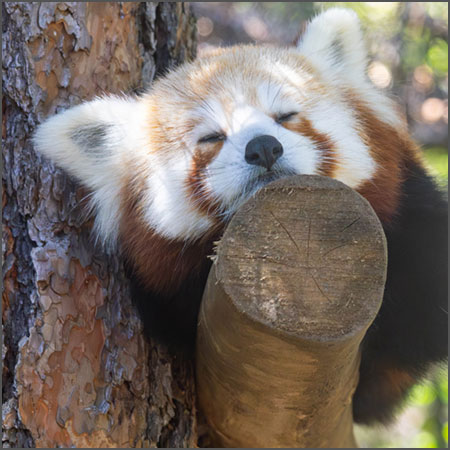
Cora, red panda at Cheyenne Mountain Zoo

Cora is very smart! She participates in a voluntary injection behavior so she can receive vaccines. She voluntarily loads into a crate so we can take her from one place to another (like the veterinary clinic or another location within her habitat) comfortably. She knows how to touch her nose to a target stick and she’s working on a ‘station’ behavior where we can ask her to stay on her station while we move about her exhibit.

Morning is her favorite time to train; that’s when she’s ready for snacks! After training in the morning, we then set up her habitat with lots of bamboo and chow. She is likely to go for the bamboo right away! Red pandas have a sixth pseudo-thumb to help hold their bamboo and she’s mighty cute holding her bamboo and munching. Then, she will go for whatever enrichment or puzzle feeders we have used to distribute her chow!
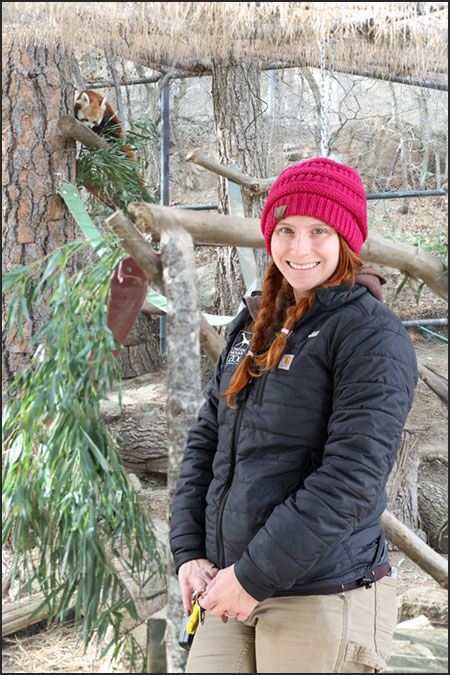
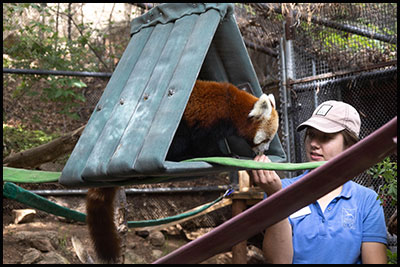
Jessi with Cora, red panda at Cheyenne Mountain Zoo

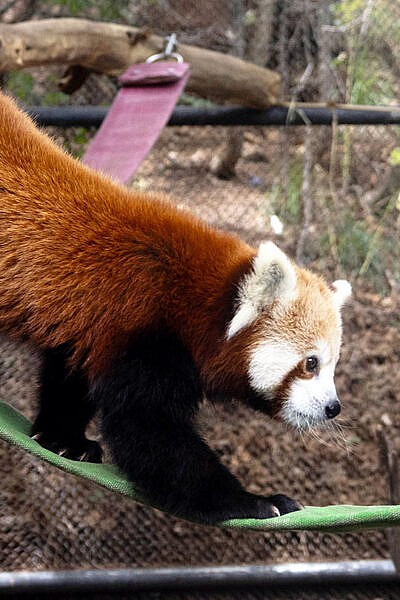
If you make it up to Asian Highlands somewhere between 9:15 and 10:30 a.m., you’ll likely catch Cora being the most active. If you’re lucky, you’ll see her get her zoomies! She runs around, climbs, and does the classic “red panda stances” where they stand up on their hind legs and put their front paws up in the air! Watching her play is pure joy.

Her favorite enrichment toy is a ball! Any kind of ball will do. We get all sorts of balls – volleyballs, holey balls, tennis balls, or rubber balls – and she’ll play with them all! If you are in Asian Highlands late morning and all afternoon, you might see Cora taking a snooze in one of her favorite spots: her tree or one of her triangle beds!

Red pandas’ primary diet is bamboo. But, did you know that they are still considered to be carnivores? That’s right! Generations ago, red pandas ate primarily meat, and their teeth and digestive tract are still considered carnivorous. There have been reports of red pandas in the wild still eating small rodents and even some birds. Cora is dead-set on her bamboo, though, and has shown no interest in other types of food.

We’re often asked if red pandas are related to the giant pandas. They are not! In fact, they were the first species to be called “panda,” meaning “bamboo eater.” When giant pandas were discovered, they were seen feasting on bamboo as well, so the name “panda” went to them, too. So, red pandas were the original panda and their closest relative is actually the raccoon.

We love working with Cora and are all creating a special bond with her. I even dyed my hair red to match her! (Just kidding, but we do look alike now!) We hope you enjoy seeing her adorable face in Asian Highlands as much as we do.
Back to The Waterhole

IN PARTNERSHIP WITH CHILDREN’S HOSPITAL COLORADO – As summer vacation ends and school bells start to ring, many families are embracing a new academic year. For some, this means managing the whirlwind of new routines, teachers and environments. Long before the first day back, parents help their children prepare and adjust with earlier bedtimes, school shopping and teacher visits. Cheyenne Mountain Zoo partner, Children’s Hospital Colorado, has advice for helping kids settle in to the new year.

Keeper training session with red panda Cora

For Cora, a 1-year-old red panda who recently moved to Cheyenne Mountain Zoo (CMZoo), her transition has been a bit like starting at a new school, but with bamboo snacks and triangle hammocks!

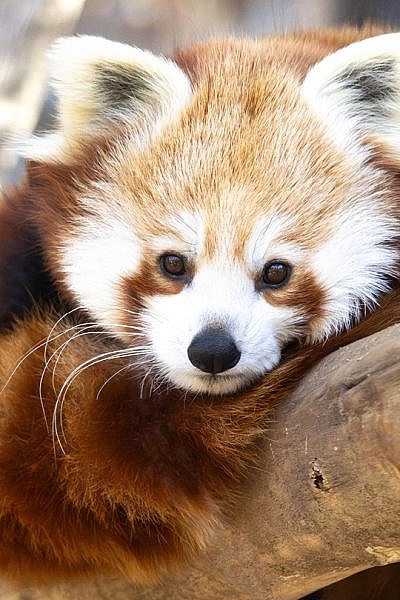
Cora’s arrival at CMZoo in July was a big event for the Zoo and the little panda. This adorable red panda, with her button nose, extra-fluffy tail and twinkling eyes, is the first of her kind at the Zoo in over two decades. Her new home in Asian Highlands was thoughtfully prepared to help her settle in smoothly.

“We’ve gone all out to make Cora’s new home as comfy as possible for her,” says Kelsey Walker, senior animal keeper in Asian Highlands. “We’ve been thoughtful about creating a peaceful space for her and incorporating some of her favorite things from her previous habitat to help her feel at ease.”

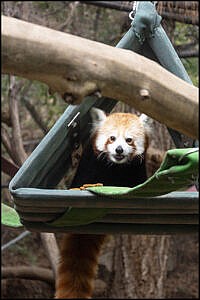
Cora’s new digs include everything from triangle hammocks – her favorite napping spots — to recycled firehose ‘vines’ she loves to climb. She also has lots of tree branches for climbing, perching or relaxing in her adorable ‘leopard lay’ position, where she lies on her tummy with her legs dangling on either side.

“Before Cora arrived, our team met with her keepers at her previous home to learn all about her favorite things, learned behaviors and individual tendencies,” Kelsey says. “We work to create a space and routine that meets her needs as a red panda and makes her feel comfortable, confident and in control, as an individual.”

Red panda Cora training with a keeper

Her previous primary keeper and CMZoo Asian Highlands team members met via video conference. On those video calls, Cora’s keeper introduced them to Cora and showed the CMZoo team some of her favorite habitat features.

In addition to creating those triangle hammocks, fire hose ‘vines’ and perching systems, CMZoo also installed a mister system in her main habitat and air conditioning in her den, because red pandas prefer cool climates.

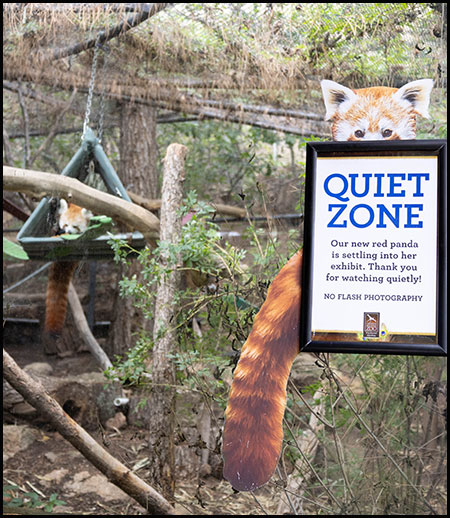
Just like human children, who need time to get used to new classmates and teachers, Cora was given time to adjust to her new surroundings. In her previous home, she lived behind the scenes, so meeting guests is a new experience for Cora. To help her ease into her new environment, keepers initially set up a ‘quiet zone’ around her enclosure.

“At first, we had some guest barriers set up, and we added some leafy branches to the front windows, so guests could see her, and so she could get used to seeing guests a little bit at a time,” Kelsey says. “They were sort of like curtains. She’s really curious, so it wasn’t long until we saw her start to peek between the branches to check out her adoring visitors.”

Seeing Cora was comfortable, her team removed the barriers, and later the ‘window curtain’ branches a bit at a time. Cora has adjusted so well that she doesn’t need them at all anymore, and guests can get face-to-fuzzy-face with her at the windows. Cora’s welcome plan also includes training to help her get comfortable with her new routine and keepers.

“Her previous keeper team did a great job preparing her for the move with voluntary crate training and interactions that make Cora feel confident around people,” Kelsey says. “Since she arrived, we have been working on simple tasks, like asking her to move between her den and her main habitat. That helps build her confidence and establishes a foundational behavior that will help us expand her training repertoire. It also helps us build trust with her.”

Red panda cora in her area

The team at CMZoo is keeping a close eye on Cora’s behavior, even when they’re busy caring for other animals or greeting guests. Cora’s habitat has a 24-hour video surveillance system, so keepers can track data and quickly observe her behavior, routines and interactions with enriching items in her environment when they’re with her. As CMZoo does with all animals, the priority is creating a home that’s enriching for the animals, so they’re not entirely dependent on keepers for stimulation.

Making Cora feel confident in her new home allows her to do her job: connecting with guests and inspiring them to care for her wild counterparts. With only around 2,500 red pandas left in the wild, her arrival supports the Association of Zoos and Aquariums’ SAFE (Saving Animals From Extinction) Red Panda program. By providing Cora with a top-notch home and care, CMZoo is helping support a diverse and healthy population of red pandas, both in human care and in the wild.

As Cora gets more comfortable in her new surroundings, she’s been seen lounging on her favorite log or climbing around her perches, often using her tail to make the perfect comfy resting spots.

“She’s ridiculously cute,” says Kelsey. “We have seen her using her tail as a pillow under her chin, or wrapping it around her head as an eye mask for a mid-day nap. We’re still getting to know her, and we’re so excited to share her with everyone.”

Guests can see Cora in Asian Highlands. She has access to her den, behind the scenes, but most often chooses to hang out in her habitat, with guests quietly observing her every joy-inducing move.

Back to The Waterhole

Support your favorites with digital, traditional, gift package, and group adoptions. Gifting any adopt choice is available by simply completing the gift area at checkout.

Twinkly-eyed, button-nosed Cora is adjusting to her new home in Asian Highlands. The 1-year-old female red panda, who arrived at CMZoo on July 9, is enjoying an enriching environment with branches, triangle perches, recycled firehose ‘vines’ and bamboo snacks.

It’s been more than 20 years since a red panda lived at CMZoo, and in that time, their wild population has declined by half. Only approximately 2,500 red pandas remain in their native Eastern Himalayan forests, with habitat loss and fragmentation being the leading threats.

Cora’s arrival supports the Association of Zoos and Aquariums SAFE (Saving Animals From Extinction) Red Panda and the Red Panda Species Survival Plan, helping to manage a diverse and healthy population in human care while inspiring red panda preservation for their wild counterparts.

Cora is mostly visible to guests when she’s out in her main yard. To help her settle into her new home, keepers have added a few branches to the front of her enclosure for extra privacy. They’ve also put up a ‘quiet zone’ sign and set up barriers to keep guests a few feet farther away than usual while she gets comfortable. Stay tuned to our social media platforms for updates on Cora!

Back to The Waterhole

Foster any animal and you’ll help Cheyenne Mountain Zoo continue to provide outstanding care. Whether given as a gift or used to celebrate a favorite species, symbolic adoptions come with a variety of benefits only adoptive parents can enjoy.

Ways to adopt your favorites:
  1. Digital Adoption – ($35) choose any Zoo animal from the full list provided below.
  2. Group Adoption – ($35+) pick a herd, chatter or family for your classroom or group, offered for certain featured animals below.
  3. Traditional Adoption – ($50+) choose any Zoo animal from the full list provided below.
  4. Wild Adopt Gift Packages – ($65) includes a cuddly plush, offered for many featured animals below.
  5. Gift any Adoption – ($35+) gifting any adoption is offered during check-out.