Cheyenne Mountain Zoo and its guests and members are celebrating a huge milestone, having raised $4 million for wildlife and wild places, since the Zoo’s Quarters for Conservation (Q4C) program launched in 2008.

Every visitor to the Zoo receives three “quarter” tokens representing the 75¢ Q4C allocation from their admission fee. They can then show support for the legacy projects they love by placing their tokens in the corresponding slots in the Q4C kiosks.

In recent years, CMZoo staff have traveled to Africa, Central America, Indonesia and the prairies of Wyoming and Colorado, to lend their expertise in support of our partner organizations around the world. Our guests’ support is far-reaching. It benefits the organizations we support, their teams, local communities and the animals they protect. It also enriches the lives of our teammates who return to the Zoo to share new experiences and reignited passions for protecting wildlife and wild places.

Before launching Q4C in 2008, CMZoo was supporting conservation, but at a fraction of what is possible now. As more people visit the Zoo each year, we can contribute more money to conservation. In the past few years, CMZoo has collected about half a million dollars per year through Q4C. In the Zoo’s 2021 fiscal year, guests contributed nearly three-quarters of a million dollars. The Zoo’s membership and EdVenture programs also contribute to conservation. CMZoo’s current beneficiary species include giraffe, Panama frogs, orangutans, black-footed ferrets, African elephants and rhinos, Wyoming toads and African vultures.

About Our Current Q4C Legacy Projects

Q4C beneficiary species truly run the gamut, from 18-foot-tall giraffe in Africa, to tiny toads in Wyoming.
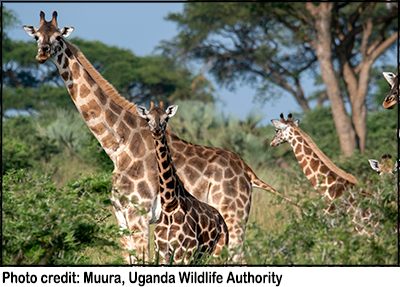
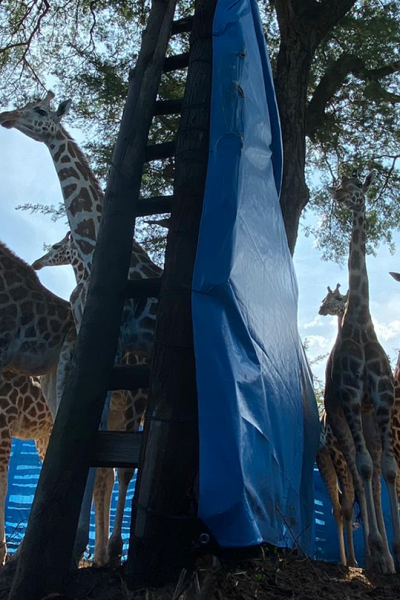
Q4C helps support a multi-organizational giraffe conservation project in Uganda, called Operation Twiga. Operation Twiga began in 2016 to give giraffe a better chance of survival by establishing new populations of giraffe in safe habitats, in partnership with Giraffe Conservation Foundation, Uganda Wildlife Authority and others. Operation Twiga V (2020) was a continuation of Operation Twiga IV (2019), which CMZoo staff attended to assist with anesthesia and moving the giraffe. Both giraffe translocations contributed to populations in Pian Upe Wildlife Reserve, an historic habitat in Uganda where giraffe hadn’t existed for more than 20 years. Ongoing Q4C funding supports the teams who continue to monitor and protect these newly established wild populations.

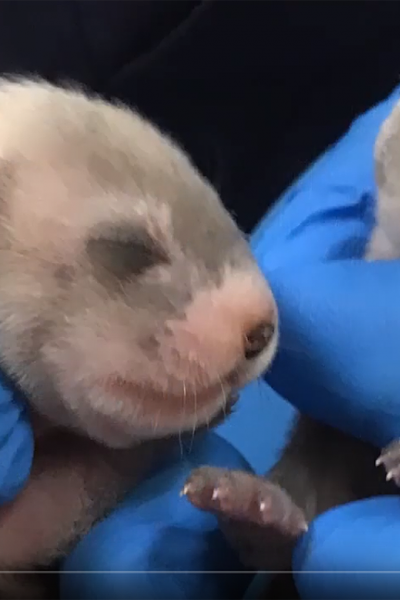
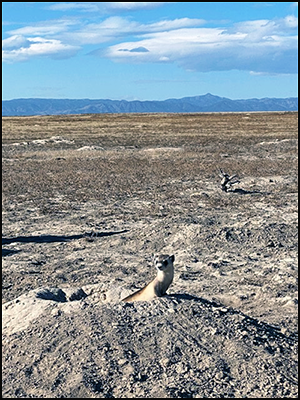
Q4C also funds CMZoo’s on-site breeding programs for black-footed ferrets and Wyoming toads. These endangered prairie species were declared extinct in the wild in the 1980s and early 1990s, and are only around today because of decades of recovery efforts from zoos and partner organizations. 18 ferret kits were born at CMZoo in the 2021 breeding season, and six juveniles were released into their natural habitat by CMZoo staff and wildlife partners in the fall. In Spring and Summer 2021, CMZoo staff released 228 yearling “headstart” toads, 58 metamorph toadlets, and 5,338 tadpoles to their native habitat in Wyoming. Summer 2022 breed-and-release efforts are well underway, and later this year, more of these vital species will join their relatives in the wild, thanks to CMZoo guests’ support.
Wyoming toads are symbolic of so many amphibian species in decline all over the world, including Panamanian frogs, which also receive support thanks to Q4C funds and frontline CMZoo staff support. In February 2019, three CMZoo staff members went to Panama to assist the Panama Amphibian Rescue and Conservation Project by remodifying two feeder insect pods into frog pods. For this 10-day trip, the goal was to set up two shipping containers to house and breed approximately 450 additional frogs brought in from El Valle Amphibian Conservation Center, and later released. This involved disinfecting the shipping containers, painting, installing plumbing and water filtration, assembling racks, and drilling and prepping tanks.

CMZoo’s work to save habitats for orangutans through advocacy for sustainable palm oil production is also largely supported by Q4C. Thanks to that financial support, CMZoo’s sustainable palm oil team consults staff at other conservation organizations on starting their own palm oil programs. The CMZoo sustainable palm oil team continued to focus on international work through the World Association of Zoos and Aquariums (WAZA). The team was instrumental in the creation of the WAZA Short Guide on Sustainable Palm Oil and the sustainable palm oil shopping app, which allows shoppers to scan the barcodes of items to learn whether producers have committed to using sustainable palm oil.
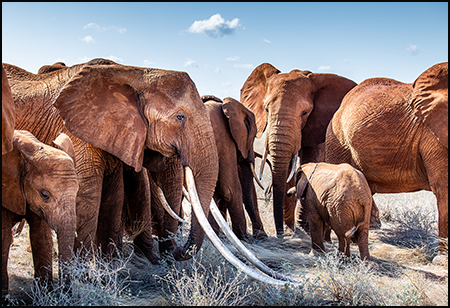
Through Q4C, CMZoo also supports a conservation partner called Tsavo Trust – an organization in Kenya that works to protect the last of the big tuskers, which are African elephants with tusks weighing more than 100 pounds. CMZoo’s funds helped Tsavo Trust build permanent housing that allowed staff to live on the land where these critically endangered giants live. It also paid for pilot hours of frontline aerial surveillance that protects rhinos and elephants from poachers seeking their ivory.

The seventh Q4C legacy partner is VulPro – protectors of African vultures. The dedicated staff at VulPro, in South Africa, save vultures who have been injured as wild birds, and rehabilitates them to release. Those that are too injured to survive in the wild find a permanent home at VulPro.

For more information about these projects and Quarters for Conservation, visit cmzoo.org/conservation.

About Cheyenne Mountain Zoo

Cheyenne Mountain Zoological Society was founded in 1926. Today, Cheyenne Mountain Zoo, America’s mountain Zoo, offers comprehensive education programs, exciting conservation efforts and truly fantastic animal experiences. In 2021, Cheyenne Mountain Zoo was voted #4 Best Zoo in North America and CMZoo’s Rocky Mountain Wild was named #3 Best Zoo Exhibit in North America by USA TODAY 10Best Readers’ Choice Awards. It is Cheyenne Mountain Zoo’s goal to help guests fall in love with animals and nature, and take action to protect them. Of the 242 zoos and aquariums accredited by the Association of Zoos and Aquariums (AZA), Cheyenne Mountain Zoo is one of just a few operating without tax support. Cheyenne Mountain Zoo depends on admissions, membership dues, special event attendance and donations for funding.
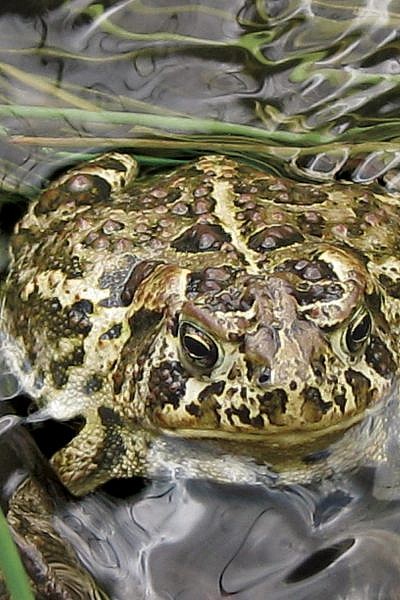
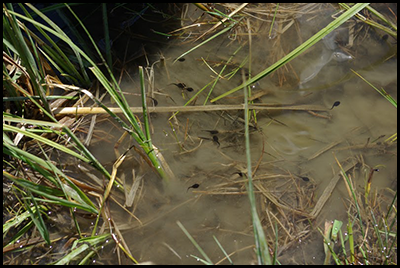
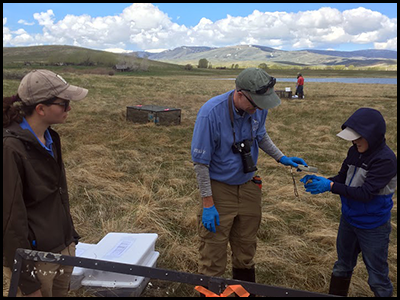
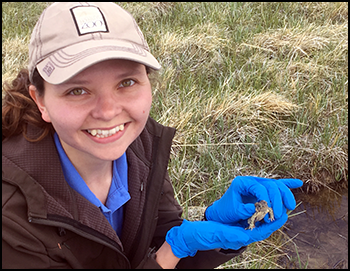
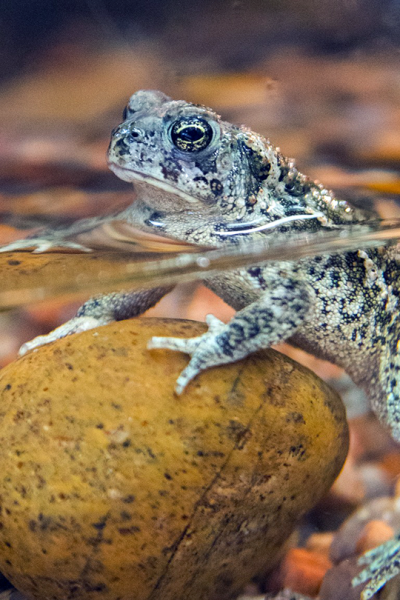
June is an exciting time in the Laramie Basin of Wyoming. Every year, our dedicated team of conservationists travels at the crack of dawn to this special place to release toads they’ve been raising for a year, and tadpoles recently hatched at Cheyenne Mountain Zoo. Earlier this month, they released 220 ‘headstart’ toads and this week released 5,638 tadpoles into the basin’s waters, celebrating 25 years of saving this species once thought to be extinct.

Why care about toads? They need our help. Amphibians are important members of their ecosystems. They’re also known as indicator species, which means they indicate the overall health of their habitat and its other residents.

“Toads and other amphibians play a vital role in the middle of the food chain,” said Jeff Baughman, CMZoo field conservation coordinator, who has been intimately involved in CMZoo’s role in the multi-zoo effort to help Wyoming toads recover since 2008. “They help control insect populations and feed larger animals, like birds, fish and mammals. Without toads, many species would go hungry and insects could get out of control, wreaking havoc on plant life and, in turn, waterways.”

Amphibians worldwide are facing mass extinction due to a pandemic known as the Chytrid fungus. Chytrid fungus causes a skin infection that hinders amphibians’ ability to breathe and absorb water. This often leads to organ failure and death. But, thanks to zoos like CMZoo, these hoppers stand a chance.

The yearly process begins by simulating hibernation for the toads. They’re placed in moss-lined containers inside a hibernaculum, which reduces their temperature slowly over a few days to 38 degrees Fahrenheit. The toads stay at that temperature for 35 days, receiving periodic checks from the conservation team who mist and monitor the sleeping beauties.

Over the final few days of their comfy freezer slumber party, the toads’ temperatures are slowly raised and they start to wake up. The cycle triggers their instinct to breed, as they would in the wild after winter, and that’s when the magic happens.

“We bring them out of the hibernaculum and place breeding pairs into tanks,” said Baughman. “We also play audio tracks from the Laramie Basin, which include Wyoming toad breeding calls, so the environment is just right. It only takes about a week for fertilized eggs to develop into tadpoles. We had 10 breeding pairs this year and nine of them laid egg strands.”

Some of the tadpoles born this year will stay at the Zoo, under the care of the conservation team, to grow into yearling toads before being released the following summer. The tadpoles held back get a yearlong head start at the Zoo, hence the term ‘headstart toads.’ Clean Chytrid fungus-free water, climate controls and plenty of crickets and cockroaches to eat in our safe conservation barn give them a better chance at surviving in the wild. Most importantly, it means there are more toads breeding in the wild because they will have survived and reached sexual maturity at a year old.


Over the next year, each toad is microchipped, so when the team goes back, they can track any trends that need to be addressed as breeding continues. The microchips also help the team identify and monitor individuals during their stay at CMZoo. Recognizing individuals with microchips also allows the team to appropriately administer hormones, which encourage them to breed once they’re freed.

Over this quarter-century commitment, CMZoo’s conservation team has released more than 40,000 tadpoles and nearly 1,400 toads into the wild.

“It’s a really fulfilling time of year, because we take care of these guys year-round so they can support their species,” said Baughman. “When we travel to Wyoming, see other toads in the wild and see this year’s headstart toads hop away into the wild, it makes our meticulous work all worth it.”

Toad lovers don’t need a hibernaculum and year-round dedication to help. Disinfecting outdoor recreation gear used in and near water can stop the spread of the deadly Chytrid fungus. Using a diluted bleach solution to clean fishing or kayaking gear, or leaving that gear in a hot car, will kill the fungus and prevent water enthusiasts from accidentally transferring it to another body of water.

Visiting the Zoo is another way to help. Every visit to CMZoo is conservation in action. Through CMZoo’s Quarters for Conservation program, by which 75¢ of every admission is dedicated to frontline conservation efforts like this, guests can enjoy a day on the mountain with their favorite animals and support important programs dedicated to saving wildlife and wild places. Since 2008, when Q4C started, CMZoo’s guests and members have contributed $3.4 million to conservation projects worldwide.

Back to The Waterhole


Every visit to the Zoo is conservation in action. Cheyenne Mountain Zoo and its guests and members are celebrating a huge milestone, having raised $3 million since the Zoo’s Quarters for Conservation program launched in 2008.

Quarters for Conservation, or Q4C, is the Zoo’s largest fundraiser for field conservation. It actively engages visitors and staff in supporting long-term projects championed by the Zoo. Known as legacy projects, these currently include biodiversity conservation on behalf of giraffe, Panama frogs, orangutans, black-footed ferrets, African elephants and rhinos, Wyoming toads and African vultures. Every visitor to the Zoo receives three “quarter” tokens representing the 75¢ Q4C allocation from their admission fee. They can then select the legacy projects they would like to support by placing their tokens in the corresponding slots in the Q4C kiosks. The kiosks record the number of tokens, so it’s easy to see how popular each project is.

“Our guests have helped us save animals from extinction simply by visiting the Zoo,” said Dr. Liza Dadone, vice president of mission and programs. “Three million dollars in conservation support is huge – and we want to thank our guests and members. Through this program, they are directly empowered to make a difference, and they did. It’s an example that no matter how small, when we all work together, we can change the world for the better.”

One of the projects that CMZoo recently supported and participated in on the front lines, is Operation Twiga. In November 2019, with financial support from Q4C, CMZoo staff traveled to Uganda for Operation Twiga IV. They helped transport 15 critically endangered Nubian giraffe to a safer home within Uganda, where their species has another chance at survival. As part of this project, CMZoo vet staff helped to collect important medical data for an ongoing study to help giraffe in their natural habitat and those in human care.

“We haven’t been involved in giraffe conservation that long, so this Q4c funding since 2008 has allowed us to really step up and take a leading role among Zoos in the past few years,” said Dr. Dadone. “It’s raised visibility in our Zoo community that giraffe populations aren’t safe. People see a large herd of giraffe here at the Zoo, and I think it’s easy to assume that they’re still doing okay across their native lands in Africa, but that’s no longer a reality. Giraffe are locally extinct in seven countries in Africa. Our Zoo, including our supportive community, is committed to ensuring that incredible animals like giraffe are around for the next generation.”

Q4C beneficiary species truly run the gamut, from 18-foot-tall giraffe in Africa, to tiny toads from Wyoming.
Staff member holding a Wyoming toad releasing them into the wild
“Another program I’m especially proud of is our Wyoming toad breed and release program,” said Dr. Dadone. “This species was once thought to be extinct in the wild. The only reason they exist in the wild today is because of our work and our team’s collaborations with other institutions. Some might think Wyoming toads aren’t as cute as a baby giraffe, but the toadlets are really adorable and are critical to our ecosystem and to ensuring we have a viable wildlife population in our own backyard. The research that we’ve done on headstarting [raising the toads to adulthood in the Zoo and then releasing them] and their nutrition has really improved the overall health of the last few generations of the Wyoming toad, which gives them an advantage when they are released into the wild. We’re continuing to evaluate our best practices and have an even better chance at saving this species long-term.”

Wyoming toads are symbolic of so many amphibian species in decline all over the world, including Panamanian frogs, which also receive support thanks to Q4C funds and frontline CMZoo staff support. In February 2019, three CMZoo staff members went to Panama to assist the Panama Amphibian Rescue and Conservation Project by remodifying two feeder insect pods into frog pods. For this 10-day trip, the goal was to set up two shipping containers to house and breed approximately 450 additional frogs brought in from El Valle Amphibian Conservation Center, and later released. This involved disinfecting the shipping containers, painting, installing plumbing and water filtration, assembling racks, and drilling and prepping tanks.
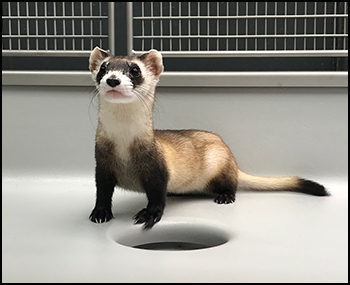
Black-footed ferret portrait
Q4C supports an in-house breed and release program for black-footed ferrets, as well. Since 1991, when CMZoo began breeding black-footed ferrets, 567 kits have been born. Roughly half of those kits are released into the wild while the others continue breeding at CMZoo and other facilities who support this recovery effort and the Species Survival Plan. This ongoing recovery effort supports the population of black-footed ferrets, who were once thought to be extinct, and which are vital to the prairie ecosystem in Wyoming.

CMZoo’s work to save habitats for orangutans through advocacy for sustainable palm oil production is largely supported by Q4C. Thanks to that financial support, CMZoo’s sustainable palm oil team consults staff at other conservation organizations on starting their own palm oil programs and recently attended the Roundtable on Sustainable Palm Oil’s (RSPO) annual conference in Thailand to represent CMZoo in the RSPO’s proceedings. Those proceedings directly impact the ways companies that use palm oil can help preserving wild lands for orangutans and other species.

Through Q4C, CMZoo also supports a conservation partner called Tsavo Trust – an organization in Kenya that works to protect the last of the big tuskers, which are African elephants with tusks weighing more than 100 pounds. CMZoo’s funds helped Tsavo Trust build permanent housing that allowed staff to live on the land where these critically endangered giants live. It also paid for pilot hours – frontline aerial surveillance that protects rhinos and elephants from poachers seeking their ivory.

The seventh Q4C legacy partner is VulPro – protectors of African vultures. The dedicated staff at VulPro, in South Africa, save vultures who have been injured as wild birds, and rehabilitates them to release. Those that are too injured to survive in the wild find a permanent home at VulPro.

Before launching Q4C in 2008, CMZoo was supporting conservation, but at a fraction of what is possible now. In the past few years, CMZoo has collected about half a million dollars per year through Q4C. Even with our three-month COVID-19 closure this year, the Zoo was able to hit this substantial $3 million milestone as expected.

“Small change pooled together makes a big difference,” said Dr. Dadone. “Thanks to our guests and members, we have been able to support this amazing frontline work. When we work together, we can make a positive difference for our world.”

In addition to contributions from admissions to every Zoo visit and special event ticket, $2.50 from each individual plus membership, and $5 from each family or higher-level membership, is allocated to Q4C. EdVenture and Animal department programs also contribute to the cause.

For more information about these projects and Quarters for Conservation, visit cmzoo.org/conservation.

Back to The Waterhole


CMZoo’s conservation team gives an update on its black-footed ferret and Wyoming toad breeding programs. The two important breeding and release efforts contribute to saving species that were once considered extinct in the wild.

CMZoo continues work to repopulate Wyoming toads, listed as extinct in the wild

As amphibians face mass extinction, Cheyenne Mountain Zoo’s conservation team works to repopulate the Wyoming toad. Hear from Field Conservation Coordinator, Jeff Baughman, about what’s contributing to the widespread eradication, what CMZoo is doing to try to stop it, and how you can help.

Support your favorites with digital, traditional, gift package, and group adoptions. Gifting any adopt choice is available by simply completing the gift area at checkout.

Foster any animal and you’ll help Cheyenne Mountain Zoo continue to provide outstanding care. Whether given as a gift or used to celebrate a favorite species, symbolic adoptions come with a variety of benefits only adoptive parents can enjoy.

Ways to adopt your favorites:
  1. Digital Adoption – ($35) choose any Zoo animal from the full list provided below.
  2. Group Adoption – ($35+) pick a herd, chatter or family for your classroom or group, offered for certain featured animals below.
  3. Traditional Adoption – ($50+) choose any Zoo animal from the full list provided below.
  4. Wild Adopt Gift Packages – ($65) includes a cuddly plush, offered for many featured animals below.
  5. Gift any Adoption – ($35+) gifting any adoption is offered during check-out.